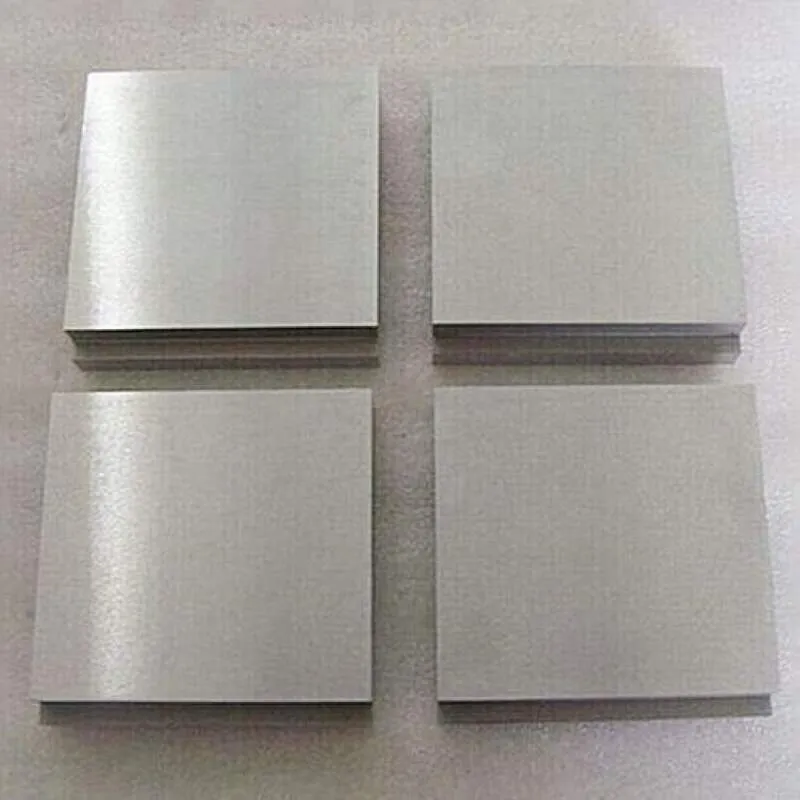
AISI Type P21 Low carbon Mold Steel Sheet,Plate (UNS T51621)
Product Code : STI-GSTI-092-CU
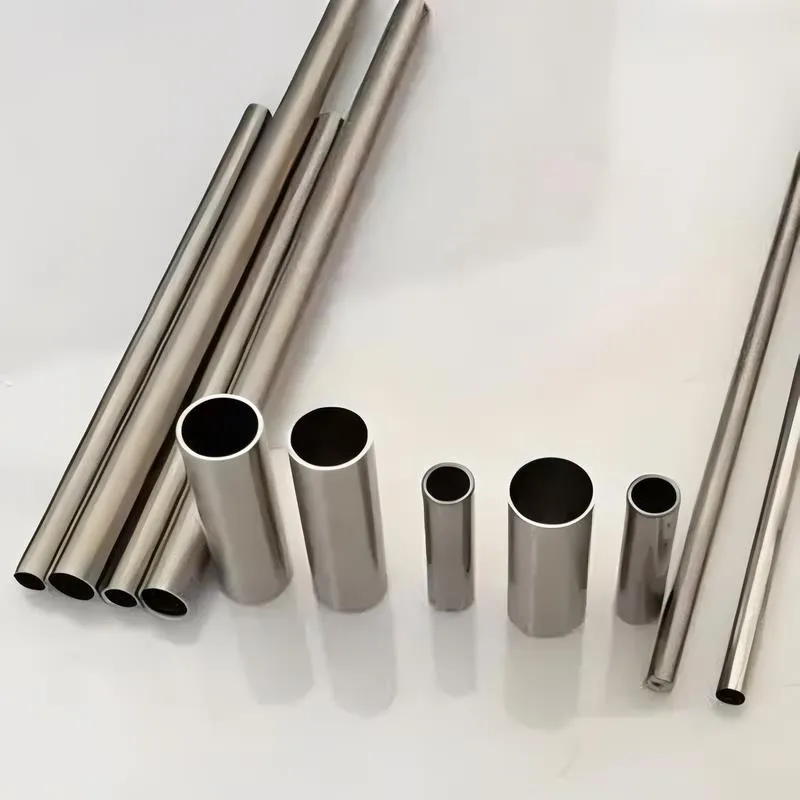
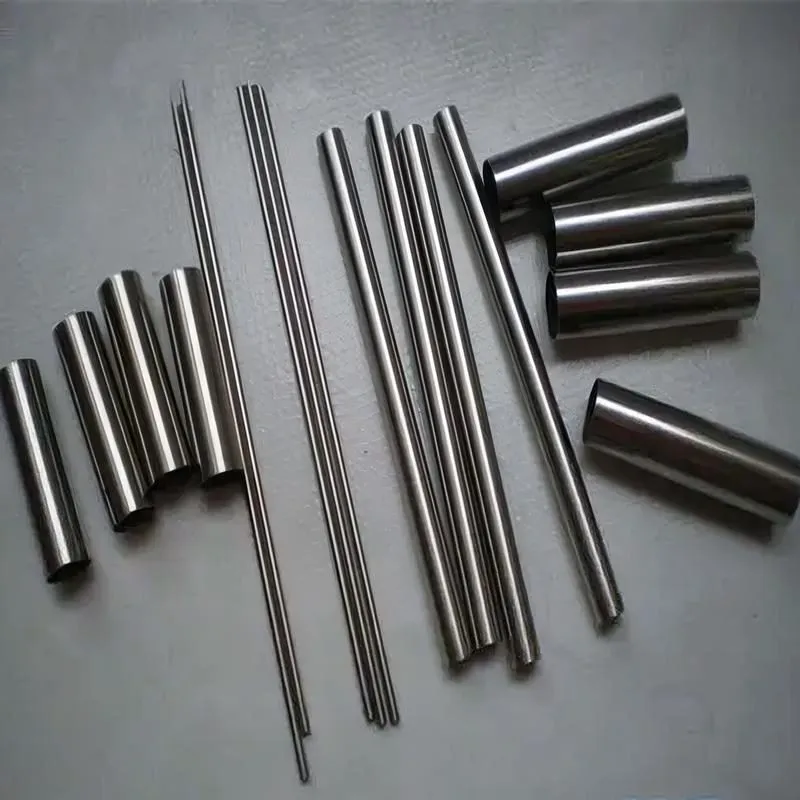
We provide AISI Type P21 Low carbon Mold Steel Sheet/Plate (UNS T51621) is available in Bar (Round bar, Flat bar), Ribbon, Wire, Rods, Tube,Seamless Tube,Pipe, Ingots, Plate, Sheet/Plate, Strip and Forging Stock.,Purity, chemical composition, size, etc. can all be customized to meet specific requirements.
Please contact us if you need customized services. We will contact you with the price and availability in 24 hours.
AISI Type P21 Low carbon Mold Steel Sheet/Plate (UNS T51621) Product Information
-:-
For detailed product information, please contact sales.
-:
AISI Type P21 Low carbon Mold Steel Sheet/Plate (UNS T51621) Synonyms
-:-
For detailed product information, please contact sales.
-:
AISI Type P21 Low carbon Mold Steel (UNS T51621) Product Information
-:-
For detailed product information, please contact sales.
-:
# **Product Introduction: AISI Type P21 Low-Carbon Mold Steel (UNS T51621)**
## **Overview**
**AISI P21 (UNS T51621)** is a specialized **low-carbon, nickel-aluminum age-hardening (precipitation hardening) mold steel**. Unlike conventional quench-and-tempering steels, P21 achieves its final high strength and hardness through a **low-temperature aging process** after solution annealing and machining. This unique characteristic makes it exceptionally valuable for manufacturing **large, complex plastic injection molds and die-casting dies** where minimal distortion after final heat treatment is absolutely critical. P21 is designed to be machined in a soft, ductile condition and then hardened with negligible dimensional change.
## **1. Chemical Composition (Nominal %)**
The composition is designed to facilitate age hardening through the formation of nickel-aluminum (Ni₃Al) intermetallic precipitates.
| Element | Content (%) | Primary Function |
|---------|------------|------------------|
| **Carbon (C)** | 0.18 - 0.22 | **Very low.** Minimizes distortion and ensures excellent machinability and weldability in the annealed state. Does not contribute to martensitic hardening. |
| **Nickel (Ni)** | 3.90 - 4.25 | **Key element.** Forms the primary hardening precipitates (Ni₃Al) with aluminum upon aging. Also provides exceptional core toughness. |
| **Aluminum (Al)** | 1.05 - 1.25 | **Key element.** Combines with nickel to form the fine, hard Ni₃Al precipitates responsible for age hardening. |
| **Manganese (Mn)** | 0.20 - 0.40 | Aids in deoxidation and provides slight solid solution strengthening. |
| **Silicon (Si)** | 0.20 - 0.40 | Deoxidizer. |
| **Chromium (Cr)** | 0.20 - 0.40 | Provides slight hardenability and improves polishability. |
| **Molybdenum (Mo)** | 0.20 - 0.40 | Enhances toughness and provides secondary hardening during aging. |
| **Iron (Fe)** | Balance | Base metal. |
**Key Chemistry Note:** P21's metallurgy is fundamentally different from other P-series steels (like P20). It is a **maraging-type steel**, where hardening is achieved not by carbon-martensite transformation but by the **precipitation of coherent intermetallic compounds (Ni₃Al)** from a supersaturated low-carbon martensitic or bainitic matrix. This process occurs at relatively low temperatures (~480-540°C / 900-1000°F), causing minimal thermal stress and distortion.
## **2. Physical & Mechanical Properties**
Properties depend heavily on the thermal processing cycle (Solution Annealed vs. Aged).
| Property | Solution Annealed Condition | Aged (Hardened) Condition |
|----------|-----------------------------|----------------------------|
| **Hardness** | **~28-32 HRC** (Soft, machinable) | **~40-44 HRC** (Achieved through aging, **not quenching**) |
| **Tensile Strength** | ~1000 MPa (145 ksi) | ~1350-1550 MPa (196-225 ksi) |
| **Yield Strength (0.2%)** | ~850 MPa (123 ksi) | ~1250-1450 MPa (181-210 ksi) |
| **Elongation** | ~15% | ~10-12% |
| **Impact Toughness** | **Excellent** | **Very Good** (Superior to through-hardened steels of equivalent hardness) |
| **Machinability** | **Excellent** (comparable to pre-hardened P20) | N/A (Machining done before aging) |
| **Dimensional Change During Aging** | **Negligible** (< 0.0005 in/in). **The primary advantage.** | |
| **Wear Resistance** | Fair | Good (Better than P20, but below high-carbon tool steels) |
| **Polishability** | Good (can be pre-polished before aging) | Very Good (aging can slightly improve it) |
| **Weldability** | **Excellent** (low carbon content) | Good (but welding should be done in the annealed condition, followed by re-aging) |
## **3. International Standards & Cross-References**
P21 is a unique grade with specific equivalents focused on its age-hardening characteristic.
| Standard | Designation | Notes |
|----------|------------|-------|
| **UNS** | T51621 | |
| **AISI/ASTM (USA)** | P21 (ASTM A681) | |
| **Proprietary/Common Names** | **NAK55, NAK80** (Hitachi Metals, Japan) | **These are the most well-known commercial equivalents.** They are modified P21-type steels, often with added sulfur (NAK55) for even better machinability. |
| **DIN (Germany)** | No direct equivalent. Conceptually similar to some low-carbon maraging steels. | |
| **JIS (Japan)** | No direct JIS standard. Marketed as proprietary brands (e.g., NAK55, NAK80). | |
| **GB (China)** | No direct common equivalent. | |
| **Common Description** | **Nickel-Aluminum Age-Hardening Mold Steel, Maraging-Type Mold Steel** | |
## **4. Product Applications**
P21 (and its commercial variants like NAK55/80) is the premier choice for **high-precision, long-run production molds** where dimensional accuracy and stability are non-negotiable.
**Primary Applications:**
* **High-Precision Plastic Injection Molds:**
* Molds for **optical components** (lenses, light guides), **connectors, gears**, and other parts with tight tolerances.
* **Large automotive exterior body panels** (bumpers, fenders) where minimal post-machining after heat treatment is required.
* **Molds for electronic components** (housing, frames).
* **Die Casting Dies** for zinc and aluminum for applications requiring high dimensional stability.
* **Compression Molds** for critical rubber or composite parts.
* **Master Models and Electrodes** for EDM, where stability is key.
**Typical Application Process:**
1. **Purchase:** Material is supplied in the **solution annealed condition** (~30 HRC).
2. **Rough Machine:** Bulk removal of material.
3. **Stress Relieve** (optional but recommended for complex cores).
4. **Finish Machine:** Complete all machining, drilling, and tapping to final dimensions.
5. **Polish/Texture:** Perform polishing or texturing in the soft state (easier than in the hardened state).
6. **Aging (Final Hardening):** Heat to **480-540°C (900-1000°F)** for 6-12 hours. **Air cool.** This causes precipitation hardening with near-zero distortion.
7. **Final Assembly:** The mold is ready for service.
## **5. Heat Treatment Process**
The entire heat treatment cycle is typically controlled by the steel producer. The mold maker only performs the final **aging** step.
* **Solution Annealing (Done by Mill):**
* Heated to ~815-845°C (1500-1550°F) and quenched to form a soft, low-carbon martensite/bainite structure.
* Supplied in this condition.
* **Aging (Done by Mold Maker):**
* **Temperature:** **495-525°C (925-975°F)** is typical.
* **Time:** 6-12 hours, depending on section size.
* **Atmosphere:** Air furnace is sufficient. No special atmosphere required.
* **Cooling:** Air cool. No quench.
* **Result:** Nickel and aluminum diffuse to form fine, coherent Ni₃Al precipitates, strengthening the matrix and increasing hardness to 40-44 HRC.
## **6. Key Advantages & Limitations**
**Advantages:**
* **Minimal Distortion:** Aging at low temperature causes negligible size change (<0.05%). This is its **defining advantage**.
* **Excellent Machinability and Polishability** in the supplied condition.
* **High Dimensional Stability** throughout the mold's life.
* **Good Toughness at High Hardness** (40+ HRC), better than through-hardened steels.
* **Simple Final Heat Treatment:** Only a low-temperature aging furnace is required, no risk of quench cracking.
**Limitations:**
* **Higher Material Cost** than standard P20.
* **Lower Maximum Hardness** (~44 HRC max) compared to through-hardening tool steels (which can reach >50 HRC).
* **Limited Wear Resistance:** Although good, it is not suitable for highly abrasive plastics without coatings.
* **No Corrosion Resistance:** Will rust; requires plating for corrosive polymers.
* **Not for High-Temperature Applications:** The precipitates will over-age and soften if exposed to temperatures near or above the aging temperature for prolonged periods (e.g., in hot runner systems).
---
**Disclaimer:** AISI P21 and its commercial equivalents (NAK55/NAK80) are premium materials for specific, high-value applications where stability outweighs cost. They are not general-purpose replacements for P20. The aging process is straightforward but must be controlled to achieve consistent hardness. Always follow the material producer's specific recommended aging cycle for their grade. For the most demanding wear applications, a through-hardened steel like H13 or a corrosion-resistant grade like 420SS may be more appropriate despite their greater distortion during heat treatment.
-:-
For detailed product information, please contact sales.
-:
AISI Type P21 Low carbon Mold Steel (UNS T51621) Specification
Dimensions
Size:
Diameter 20-1000 mm Length <6748 mm
Size:We can customized as required
Standard:
Per your request or drawing
We can customized as required
Properties(Theoretical)
Chemical Composition
-:-
For detailed product information, please contact sales.
-:
AISI Type P21 Low carbon Mold Steel (UNS T51621) Properties
-:-
For detailed product information, please contact sales.
-:
Applications of AISI Type P21 Low carbon Mold Steel Sheet,Plate (UNS T51621)
-:-
For detailed product information, please contact sales.
-:
Chemical Identifiers AISI Type P21 Low carbon Mold Steel Sheet,Plate (UNS T51621)
-:-
For detailed product information, please contact sales.
-:
Packing of AISI Type P21 Low carbon Mold Steel Sheet/Plate (UNS T51621)
-:-
For detailed product information, please contact sales.
-:
Standard Packing:
-:-
For detailed product information, please contact sales.
-:
Typical bulk packaging includes palletized plastic 5 gallon/25 kg. pails, fiber and Steel Sheet/Plate drums to 1 ton super sacks in full container (FCL) or truck load (T/L) quantities. Research and sample quantities and hygroscopic, oxidizing or other air sensitive materials may be packaged under argon or vacuum. Solutions are packaged in polypropylene, plastic or glass jars up to palletized 3219 gallon liquid totes Special package is available on request. E FORUs’ is carefully handled to minimize damage during storage and transportation and to preserve the quality of our products in their original condition