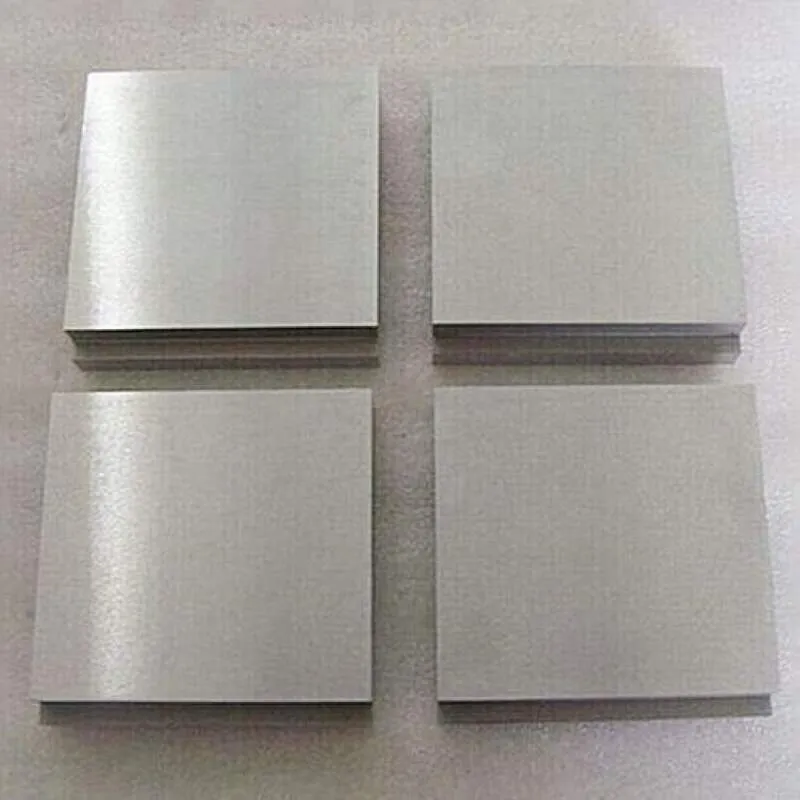
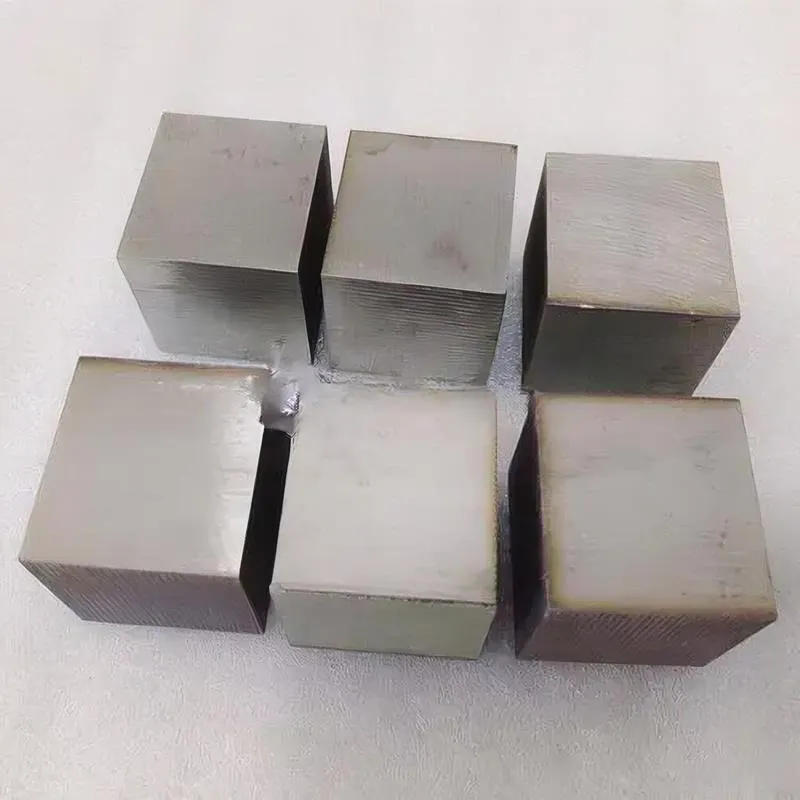
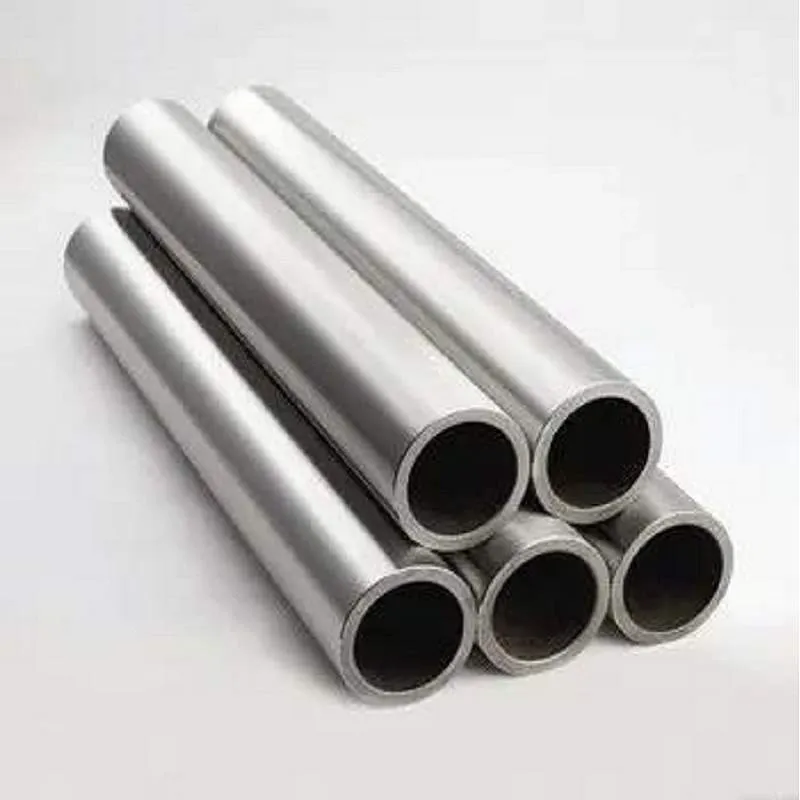
AISI Type P4 Mold Steel Sheet,Plate
Product Code : STI-GSTI-094-CU
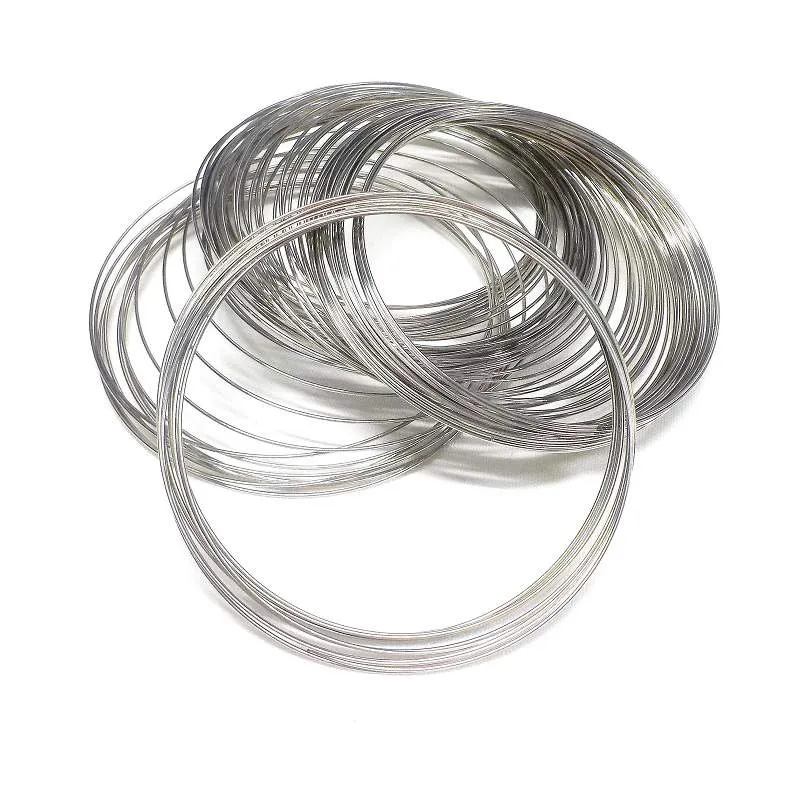
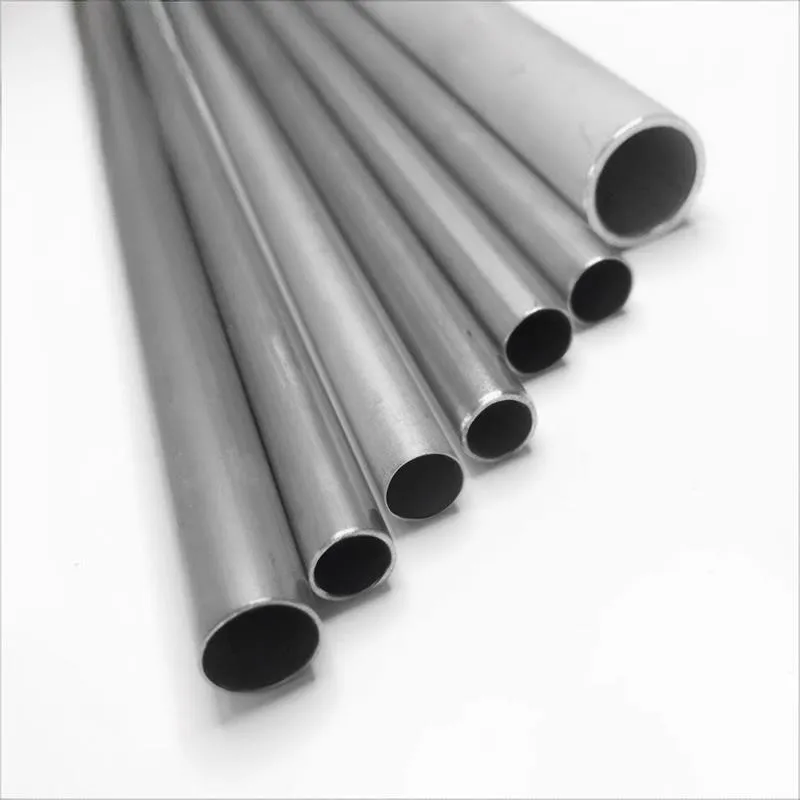
We provide AISI Type P4 Mold Steel Sheet/Plate, air cooled from 955°C, tempered at 425°C is available in Bar (Round bar, Flat bar), Ribbon, Wire, Rods, Tube,Seamless Tube,Pipe, Ingots, Plate, Sheet/Plate, Strip and Forging Stock.,Purity, chemical composition, size, etc. can all be customized to meet specific requirements.
Please contact us if you need customized services. We will contact you with the price and availability in 24 hours.
AISI Type P4 Mold Steel Sheet/Plate, air cooled from 955°C, tempered at 425°C Product Information
-:-
For detailed product information, please contact sales.
-:
AISI Type P4 Mold Steel Sheet/Plate, air cooled from 955°C, tempered at 425°C Synonyms
-:-
For detailed product information, please contact sales.
-:
AISI Type P4 Mold Steel, air cooled from 955°C, tempered at 425°C Product Information
-:-
For detailed product information, please contact sales.
-:
# **Product Introduction: AISI Type P4 Mold Steel (UNS T51604)**
## **Overview**
**AISI P4 (UNS T51604)** is a **low-carbon, high-chromium carburizing mold steel** specifically developed for applications requiring **exceptional wear resistance and polishability**, particularly in the plastics molding industry. Like other early P-series grades, P4 is a **carburizing steel**, supplied in a soft-annealed condition for machining, with final surface hardness achieved through case hardening. Its defining characteristic is a **high chromium content** (significantly higher than P1-P3), which, after carburizing, creates a case rich in hard chromium carbides. This makes it a precursor to modern through-hardening, high-chromium, cold-work steels like D2. The specified heat treatment (air cool from 955°C, temper at 425°C) represents a typical hardening cycle for the **high-carbon case** after carburization.
## **1. Chemical Composition (Nominal %)**
P4's composition is designed to create a carbide-rich, highly wear-resistant case after carburizing.
| Element | Content (%) | Primary Function |
|---------|------------|------------------|
| **Carbon (C)** | ≤ 0.07 | **Very low** in the base material to ensure machinability and allow for carburizing. The final high carbon in the case comes from the carburizing process. |
| **Chromium (Cr)** | 4.00 - 5.00 | **Key element.** Provides deep hardenability and, after carburizing, forms a high volume of hard chromium carbides (Cr₇C₃) in the case, imparting outstanding wear resistance and polishability. |
| **Manganese (Mn)** | 0.20 - 0.60 | Enhances core hardenability. |
| **Silicon (Si)** | ≤ 0.30 | Deoxidizer. |
| **Molybdenum (Mo)** | 0.40 - 0.60 | Increases hardenability (especially of the core), improves toughness, and refines grain structure. |
| **Vanadium (V)** | 0.15 - 0.30 | Refines grain size and forms fine, secondary carbides that enhance wear resistance and toughness. |
| **Iron (Fe)** | Balance | Base metal. |
**Key Chemistry Note:** P4 is essentially a **low-carbon version of a high-chromium, cold-work die steel**. Its composition is similar to **AISI D2 (1.5%C, 12%Cr) but with very low carbon (~0.07% vs. 1.5%)**. This allows it to be machined easily in the soft state. During carburizing, carbon is diffused into the surface, reacting with the high chromium content to create a **case with a microstructure and properties resembling D2**, while the core remains a tougher, lower-carbon material. The **molybdenum and vanadium** additions improve the hardenability and refine the carbides, leading to better toughness than earlier carburizing grades.
## **2. Physical & Mechanical Properties**
*Properties after carburizing and the specified heat treatment (Air cool from 955°C, Temper at 425°C).*
| Property | Typical Value / Condition |
|----------|--------------------------|
| **Density** | ~7.75 g/cm³ |
| **Melting Point** | ~1500°C (2730°F) |
| **Thermal Conductivity** | ~30 W/m·K (Relatively low due to high alloy content). |
| **Coefficient of Thermal Expansion** | ~11.0 × 10⁻⁶/K (20-100°C) |
| **Supplied Condition (Annealed)** | **~150-200 HB** |
| **Core Hardness (After Case HT)** | **~40-50 HRC** (Strong, moderately hard core due to air hardening of the alloyed base material). |
| **Case Hardness (After Carburize & HT)** | **~58-62 HRC** (High-carbon, high-chromium martensite with abundant carbides). |
| **Effective Case Depth** | Typically 1.0mm to 2.0mm (0.040" to 0.080"). |
| **Core Toughness** | **Good** (Better than a fully through-hardened D2 due to lower carbon content). |
| **Wear Resistance (Case)** | **Excellent.** Comparable to D2 or similar high-chromium steels. Superior to P1-P3 grades. |
| **Polishability (Case)** | **Excellent to Outstanding.** The high chromium content and fine carbides allow it to be polished to a superb, pit-free mirror finish (SPI A-1). |
| **Dimensional Stability** | **Fair to Good.** Air cooling from 955°C minimizes quenching distortion compared to oil or water quenching, but the carburizing process itself can cause size change. |
## **3. International Standards & Cross-References**
P4 is a historical grade with conceptual links to modern high-chromium steels.
| Standard | Designation | Notes |
|----------|------------|-------|
| **UNS** | T51604 | |
| **AISI/ASTM (USA)** | P4 (ASTM A681) | |
| **ISO (International)** | No direct equivalent. Conceptually similar to carburizing versions of high-chromium steels. | |
| **DIN (Germany)** | **~1.2360** (X38CrMoV5-1) is a **through-hardening** hot-work steel with similar Cr-Mo-V levels but ~0.38% C. Not a direct equivalent but shares metallurgical philosophy. | |
| **Common Analogy** | **"Carburizing-grade D2"** or **"Low-carbon H13"** (in terms of Cr-Mo-V balance). | |
| **Modern Successors** | **Through-hardening steels like D2 (1.2379), D3 (1.2080), or corrosion-resistant mold steels like 420SS (1.2083)** have largely replaced P4 for most applications. | |
## **4. Product Applications**
P4 was designed for **high-wear, high-polish plastic injection molds** where the superior wear resistance of a high-chromium steel was needed, but the size or complexity of the mold made using a fully hard, difficult-to-machine steel like D2 impractical.
**Historical & Niche Applications:**
* **High-Wear Plastic Injection Molds:** For molding **abrasive plastics** (e.g., fiberglass-filled, mineral-filled) or for **very long production runs** where wear on the cavity was a primary concern.
* **Molds Requiring Superior Polishability:** For optical components, lenses, and cosmetic parts requiring a flawless SPI #1 (A-1) mirror finish.
* **Extrusion Dies** and **Blow Molds** for abrasive materials.
* **Die Casting Cores and Inserts** for zinc and aluminum where wear was an issue.
**Why this specific heat treatment?**
* **Air cooling from 955°C:** After carburizing, the high-carbon case has ample chromium and other alloys to achieve full hardness via air cooling, minimizing the distortion and cracking risks associated with liquid quenching. This also hardens the alloy-rich core to a significant degree.
* **Tempering at 425°C:** This temperature relieves quenching stresses from the air cooling, provides a good balance of hardness and toughness in the case, and tempers the core to a tough state. It avoids the embrittlement range around 250-350°C.
## **5. Specified Heat Treatment Process (Post-Carburizing)**
This cycle applies to the **carburized component**.
1. **Austenitizing (Hardening):**
* Heat uniformly to **950-960°C (1740-1760°F)**. The 955°C (1750°F) target is appropriate for the high-carbon, high-chromium case.
* Soak for sufficient time (e.g., 30-60 min per inch of case depth).
* **Cooling:** **Air cool** in still air or forced air. The high hardenability ensures the case transforms to hard martensite.
2. **Tempering:**
* **Temper immediately** after the part reaches near room temperature.
* Heat to **425°C (795°F)** and hold for **2-4 hours**.
* **Double tempering** is strongly recommended to ensure complete transformation of retained austenite and optimal stress relief.
* Cool in air after each temper.
## **6. Key Advantages & Limitations**
**Advantages (in its historical context):**
* **Excellent Wear Resistance & Polishability:** The high-chromium carbide case provided performance nearing that of D2.
* **Good Core Toughness:** The lower-carbon core was tougher than a through-hardened D2 block.
* **Machinable in Annealed State:** Complex cavities could be machined before hardening.
**Limitations & Reasons for Obsolescence:**
* **Complex Processing:** Requires carburizing followed by precision heat treatment.
* **Significant Distortion:** Despite air cooling, the carburizing process itself causes unpredictable size changes.
* **Decarburization Risk:** During carburizing, careful atmosphere control is needed.
* **Superseded by Technology:** The advent of **Electrical Discharge Machining (EDM)** allowed complex cavities to be machined into **fully hardened blocks of D2, D3, or 420 stainless steel**, eliminating the need for carburizing. Pre-hardened mold steels (P20, 420SS) also offer a better combination of machinability and performance for most applications.
---
**Disclaimer:** **AISI P4 is largely obsolete** in modern mold making. It represents an ingenious but complex solution to a problem that has been solved more effectively by advancements in machining technology (EDM, high-speed milling) and the widespread availability of high-quality pre-hardened and through-hardening steels. The specified heat treatment is for reference only. For any new application requiring high wear resistance and polishability, materials like **420 Stainless Steel (1.2083/1.2085), D2 (1.2379), or hardened H13 (1.2344)** should be evaluated first. Specifying P4 today would be highly unconventional and require specialized metallurgical support.
-:-
For detailed product information, please contact sales.
-:
AISI Type P4 Mold Steel, air cooled from 955°C, tempered at 425°C Specification
Dimensions
Size:
Diameter 20-1000 mm Length <6750 mm
Size:We can customized as required
Standard:
Per your request or drawing
We can customized as required
Properties(Theoretical)
Chemical Composition
-:-
For detailed product information, please contact sales.
-:
AISI Type P4 Mold Steel, air cooled from 955°C, tempered at 425°C Properties
-:-
For detailed product information, please contact sales.
-:
Applications of AISI Type P4 Mold Steel Sheet,Plate, air cooled from 955°C, tempered at 425°C
-:-
For detailed product information, please contact sales.
-:
Chemical Identifiers AISI Type P4 Mold Steel Sheet,Plate, air cooled from 955°C, tempered at 425°C
-:-
For detailed product information, please contact sales.
-:
Packing of AISI Type P4 Mold Steel Sheet/Plate, air cooled from 955°C, tempered at 425°C
-:-
For detailed product information, please contact sales.
-:
Standard Packing:
-:-
For detailed product information, please contact sales.
-:
Typical bulk packaging includes palletized plastic 5 gallon/25 kg. pails, fiber and Steel Sheet/Plate drums to 1 ton super sacks in full container (FCL) or truck load (T/L) quantities. Research and sample quantities and hygroscopic, oxidizing or other air sensitive materials may be packaged under argon or vacuum. Solutions are packaged in polypropylene, plastic or glass jars up to palletized 3221 gallon liquid totes Special package is available on request. E FORUs’ is carefully handled to minimize damage during storage and transportation and to preserve the quality of our products in their original condition