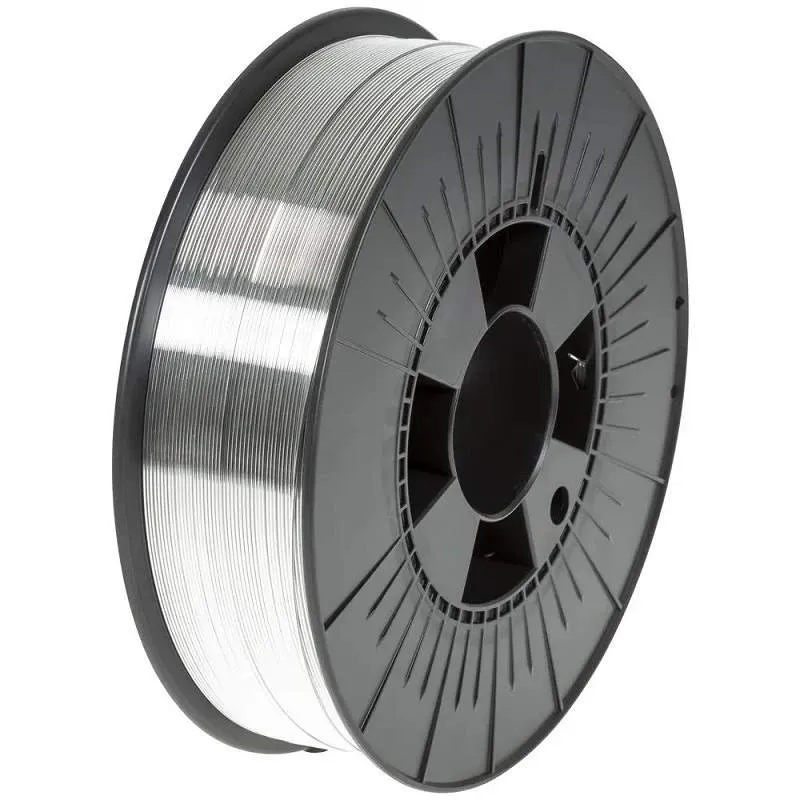
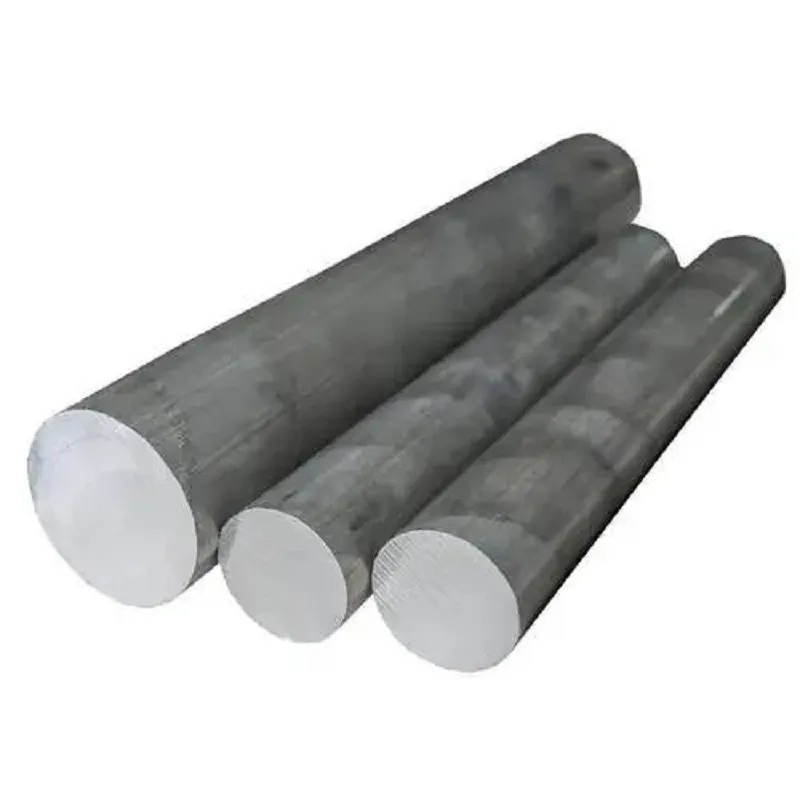
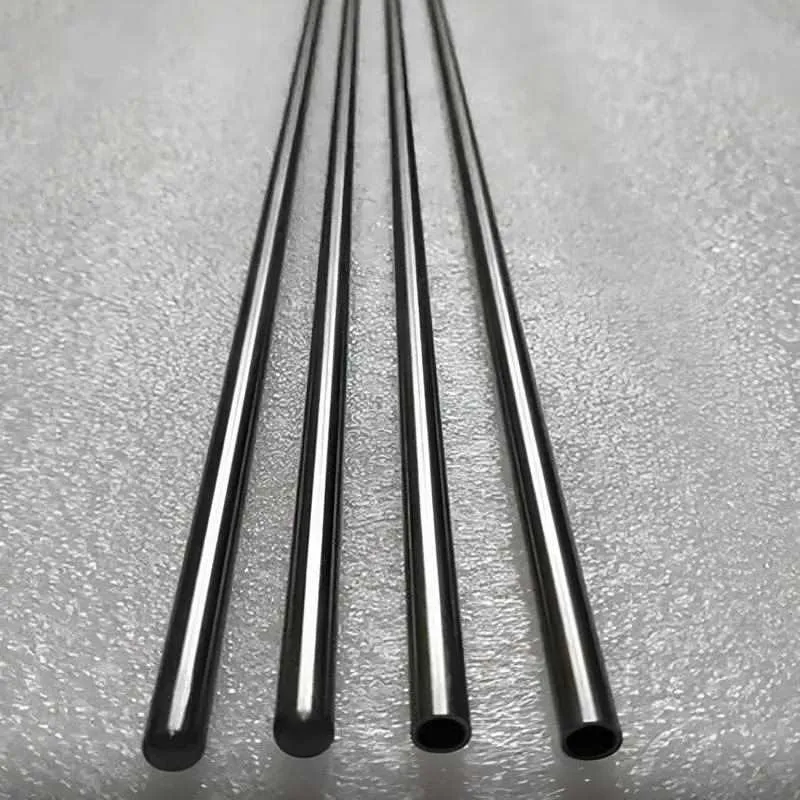
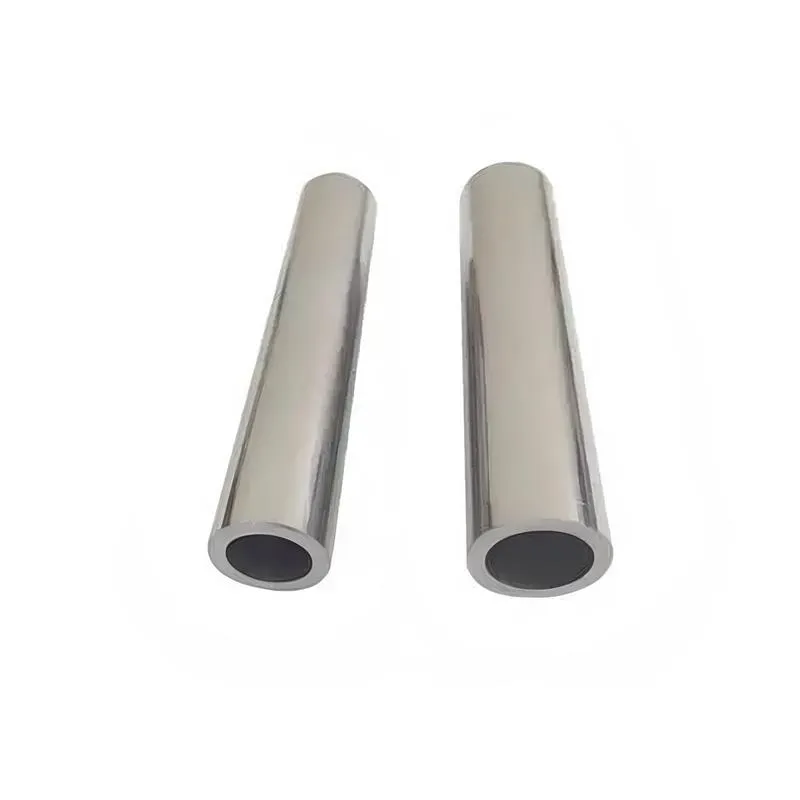
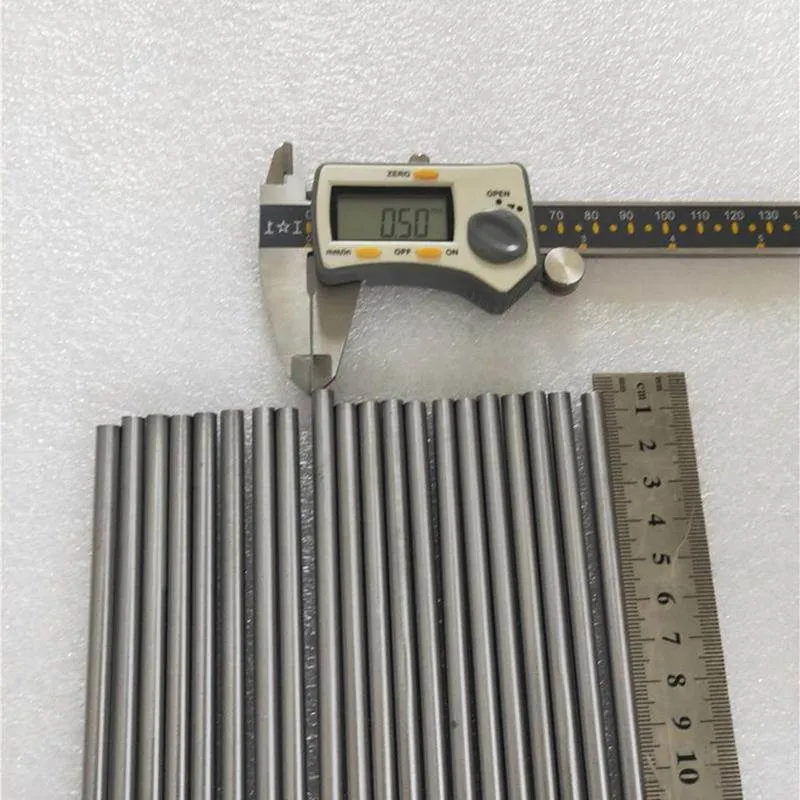
AISI Type P5 Low carbon Mold Steel Wire (UNS T51605)
Product Code : STI-GSTI-095-CU
We provide AISI Type P5 Low carbon Mold Steel Wire (UNS T51605) is available in Bar (Round bar, Flat bar), Ribbon, Wire, Rods, Tube,Seamless Tube,Pipe, Ingots, Plate, Sheet, Strip and Forging Stock.,Purity, chemical composition, size, etc. can all be customized to meet specific requirements.
Please contact us if you need customized services. We will contact you with the price and availability in 24 hours.
AISI Type P5 Low carbon Mold Steel Wire (UNS T51605) Product Information
-:-
For detailed product information, please contact sales.
-:
AISI Type P5 Low carbon Mold Steel Wire (UNS T51605) Synonyms
-:-
For detailed product information, please contact sales.
-:
AISI Type P5 Low carbon Mold Steel (UNS T51605) Product Information
-:-
For detailed product information, please contact sales.
-:
# **Product Introduction: AISI Type P5 Low-Carbon Mold Steel (UNS T51605)**
## **Overview**
**AISI P5 (UNS T51605)** is a **low-carbon, chromium-molybdenum carburizing mold steel** representing a middle ground within the traditional P-series. It combines the **moderate alloy content of P2 with a higher chromium level**, creating a steel designed for **general-purpose plastic injection molds and die casting dies** requiring a good balance of wear resistance, core strength, and toughness. Like other early P-series grades, P5 is supplied in a soft-annealed condition and must undergo **carburizing (case hardening)** to develop its final wear-resistant surface and strengthened core.
## **1. Chemical Composition (Nominal %)**
P5's composition provides enhanced hardenability and wear potential compared to P1/P2 through increased chromium.
| Element | Content (%) | Primary Function |
|---------|------------|------------------|
| **Carbon (C)** | ≤ 0.10 | **Very low.** Ensures excellent machinability and weldability in the annealed state, allowing for deep carburization. |
| **Chromium (Cr)** | 2.00 - 2.50 | **Key element.** Significantly enhances hardenability of both core and case. Forms chromium carbides in the carburized layer for improved wear resistance over P1/P2. |
| **Molybdenum (Mo)** | 0.35 - 0.55 | Increases hardenability (especially in heavier sections), improves toughness, and enhances tempering resistance. |
| **Manganese (Mn)** | 0.30 - 0.70 | Improves core hardenability and acts as a deoxidizer. |
| **Silicon (Si)** | 0.20 - 0.50 | Deoxidizer. |
| **Nickel (Ni)** | ≤ 0.25 | May be present in trace amounts but is not a specified key element in P5. |
| **Sulfur (S)** | ≤ 0.03 | Residual impurity (kept low). |
| **Phosphorus (P)** | ≤ 0.03 | Residual impurity (kept low). |
| **Iron (Fe)** | Balance | Base metal. |
**Key Chemistry Note:** P5 is characterized by its **"C-Mo-Cr" system**, similar to many low-alloy engineering steels. The **~2.25% chromium content** is its defining feature, placing it between the low-chromium P2 and the high-chromium P4. This provides better through-hardenability than P2, allowing for a stronger core after heat treatment, and better wear resistance in the carburized case due to chromium carbide formation. It is a **general-purpose carburizing steel** optimized for reliable heat treatment response.
## **2. Physical & Mechanical Properties**
Final properties are defined by the carburizing and subsequent heat treatment.
| Property | Typical Value / Condition |
|----------|--------------------------|
| **Density** | ~7.85 g/cm³ |
| **Melting Point** | ~1505°C (2740°F) |
| **Thermal Conductivity** | ~42 W/m·K (Moderate) |
| **Coefficient of Thermal Expansion** | ~11.8 × 10⁻⁶/K (20-100°C) |
| **Modulus of Elasticity** | 205 GPa (29.7 × 10⁶ psi) |
| **Supplied Condition (Annealed)** | **~125-150 HB** (Soft, excellent machinability). |
| **Core Hardness (After Carburize & HT)** | **30-40 HRC** (Moderately hard and tough low-alloy martensite). |
| **Case Hardness (After Carburize & HT)** | **58-62 HRC** (High-carbon martensite with fine chromium-molybdenum carbides). |
| **Effective Case Depth** | Typically 0.75mm to 2.0mm (0.030" to 0.080"). |
| **Core Tensile Strength** | ~900-1150 MPa |
| **Core Toughness (Impact)** | **Good.** Adequate for most mold applications, though not as high as nickel-bearing grades like P2 or P3. |
| **Wear Resistance (Case)** | **Good to Very Good.** Superior to P1/P2 due to chromium carbides. |
| **Dimensional Stability During HT** | **Fair.** The higher alloy content allows for oil quenching (reducing distortion vs. water), but carburizing inherently causes size changes. |
## **3. International Standards & Cross-References**
P5 is a defined but largely historical carburizing mold steel.
| Standard | Designation | Notes |
|----------|------------|-------|
| **UNS** | T51605 | |
| **AISI/ASTM (USA)** | P5 (ASTM A681) | |
| **ISO (International)** | **~20CrMo5** (ISO 4957) is a close functional equivalent for carburizing engineering steels. | |
| **DIN (Germany)** | **~1.7262** (15CrMo5) or similar Cr-Mo carburizing steels. | |
| **JIS (Japan)** | No direct equivalent in JIS mold steel series. Similar to SCM series carburizing steels (e.g., SCM415/418/420). | |
| **GB (China)** | No direct common equivalent in tool steel standards. | |
| **Common Name** | **Chromium-Molybdenum Carburizing Mold Steel** | |
## **4. Product Applications**
P5 was intended as a versatile, general-purpose carburizing steel for a wide range of medium-duty mold applications.
**Historical & General Applications:**
* **Medium to Large Plastic Injection Molds:** For automotive components, appliance parts, and general industrial products.
* **Zinc Die-Casting Dies:** For cavity inserts, cores, and ejector pins.
* **Compression and Transfer Molds** for rubber and thermosets.
* **Extrusion Dies** for plastics.
* **General Tooling and Fixtures** requiring a hard wear surface over a strong core.
**Typical Application Process:**
1. **Rough Machine** the soft P5 to near-final shape.
2. **Carburize** using pack or gas carburizing.
3. **Heat Treat:** Harden from ~830-860°C (1525-1580°F) with an **oil quench**. The alloy content makes it a good oil-hardening steel.
4. **Temper** at 150-200°C (300-390°F) for high case hardness, or higher for stress relief.
5. **Finish Machine/Grind** the hardened case to final dimensions.
**Modern Context:** Like other carburizing P-series steels, P5 has been **almost entirely replaced by pre-hardened mold steels**. The process of machining soft steel, then carburizing and heat treating (with associated distortion), and finally machining the hardened case is economically and technically inferior to machining a pre-hardened block of **P20 (1.2311)** or similar steel to final dimensions in a single step.
## **5. Heat Treatment (Carburizing & Hardening)**
* **Carburizing:**
* **Method:** Gas carburizing preferred for control.
* **Temperature:** 900-925°C (1650-1700°F).
* **Goal:** Achieve a surface carbon content of 0.70-0.85%.
* **Hardening (Post-Carburize):**
* **Austenitize:** **830-860°C (1525-1580°F).** This temperature hardens the medium-carbon core and the high-carbon case.
* **Quench:** **Oil quench.** The chromium and molybdenum content provide excellent oil hardenability.
* Cool to hand-warm.
* **Tempering:**
* **Temper immediately.**
* For molds: Temper at **150-200°C (300-390°F)** for 2+ hours to achieve high case hardness (~60-62 HRC).
* **Double tempering** is recommended.
## **6. Key Advantages & Limitations**
**Advantages (Historical Context):**
* **Good Balance of Properties:** Offered better wear resistance than P1/P2 and better hardenability than P1.
* **Reliable Oil Hardenability:** Reduced risk of cracking and distortion compared to water-quenched grades.
* **Good Machinability** in the annealed state.
**Limitations & Reasons for Obsolescence:**
* **Obsolete Manufacturing Process:** The carburizing route is no longer competitive.
* **Distortion:** Inherent in the carburizing and quenching process.
* **No Advantage Over Pre-Hardened Steels:** Modern **P20 (1.2311)** at ~30 HRC offers similar or better machinability, no heat treatment distortion, and sufficient wear resistance for the vast majority of applications P5 was designed for. For more wear resistance, **pre-hardened 420 stainless steel (1.2083)** is a superior choice.
* **No Corrosion Resistance.**
---
**Disclaimer:** **AISI P5 is a historical grade of primarily academic and metallurgical interest.** It represents a step in the evolution of mold steels towards higher alloy content for better performance. For any contemporary mold or tooling application, **pre-hardened mold steels (P20, 420SS, H13) or through-hardening steels (D2, S7)** should be evaluated. Specifying P5 for a new project would be highly unusual and economically unjustifiable, given the superior alternatives available. The information provided is for historical reference and understanding the development of tool steel technology.
-:-
For detailed product information, please contact sales.
-:
AISI Type P5 Low carbon Mold Steel (UNS T51605) Specification
Dimensions
Size:
Diameter 20-1000 mm Length <6751 mm
Size:We can customized as required
Standard:
Per your request or drawing
We can customized as required
Properties(Theoretical)
Chemical Composition
-:-
For detailed product information, please contact sales.
-:
AISI Type P5 Low carbon Mold Steel (UNS T51605) Properties
-:-
For detailed product information, please contact sales.
-:
Applications of AISI Type P5 Low carbon Mold Steel Wire (UNS T51605)
-:-
For detailed product information, please contact sales.
-:
Chemical Identifiers AISI Type P5 Low carbon Mold Steel Wire (UNS T51605)
-:-
For detailed product information, please contact sales.
-:
Packing of AISI Type P5 Low carbon Mold Steel Wire (UNS T51605)
-:-
For detailed product information, please contact sales.
-:
Standard Packing:
-:-
For detailed product information, please contact sales.
-:
Typical bulk packaging includes palletized plastic 5 gallon/25 kg. pails, fiber and Steel Wire drums to 1 ton super sacks in full container (FCL) or truck load (T/L) quantities. Research and sample quantities and hygroscopic, oxidizing or other air sensitive materials may be packaged under argon or vacuum. Solutions are packaged in polypropylene, plastic or glass jars up to palletized 3222 gallon liquid totes Special package is available on request. E FORUs’ is carefully handled to minimize damage during storage and transportation and to preserve the quality of our products in their original condition