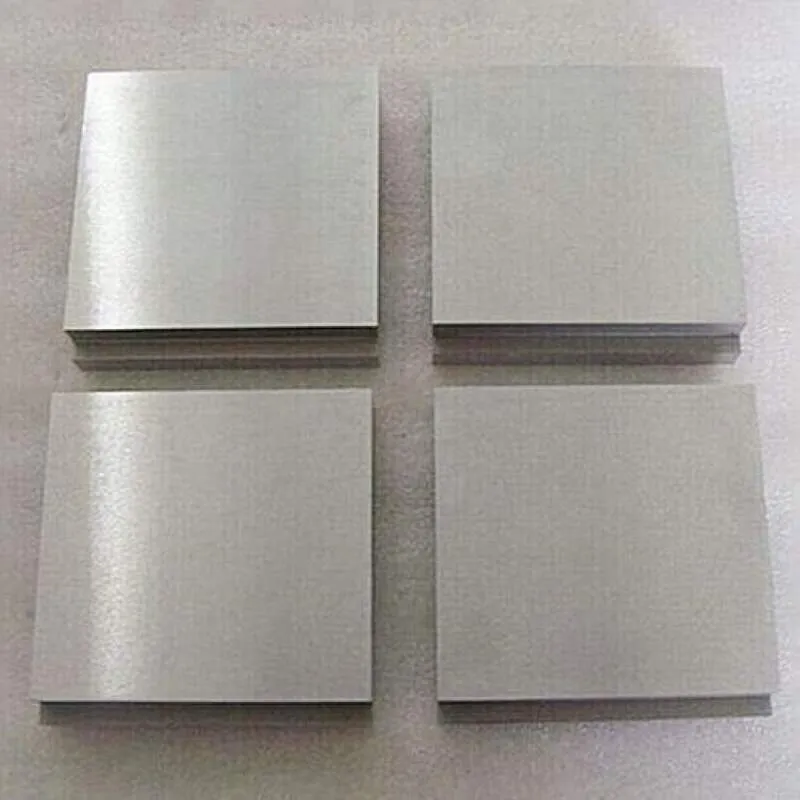
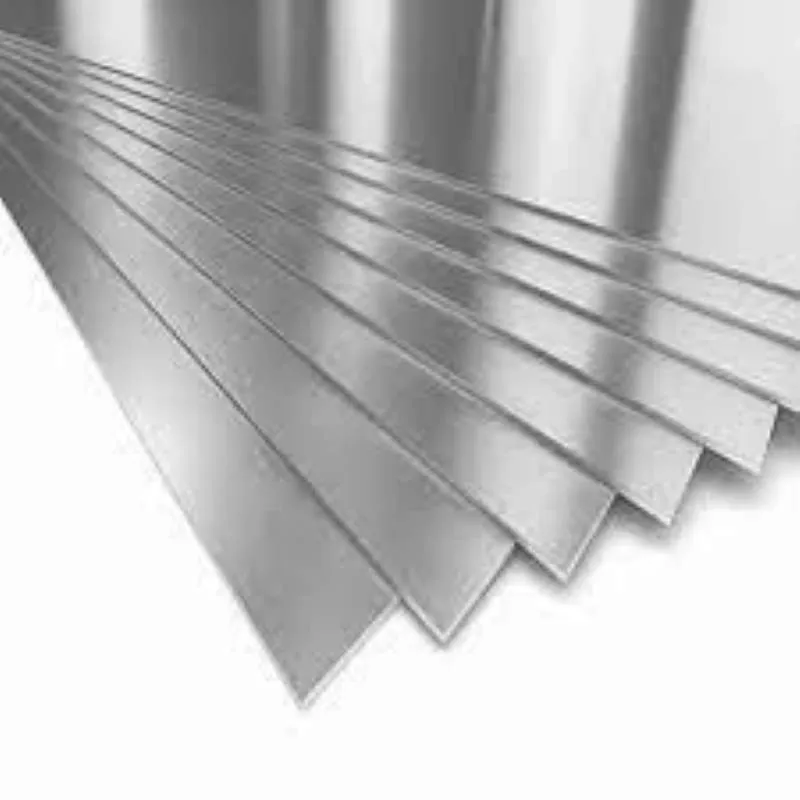
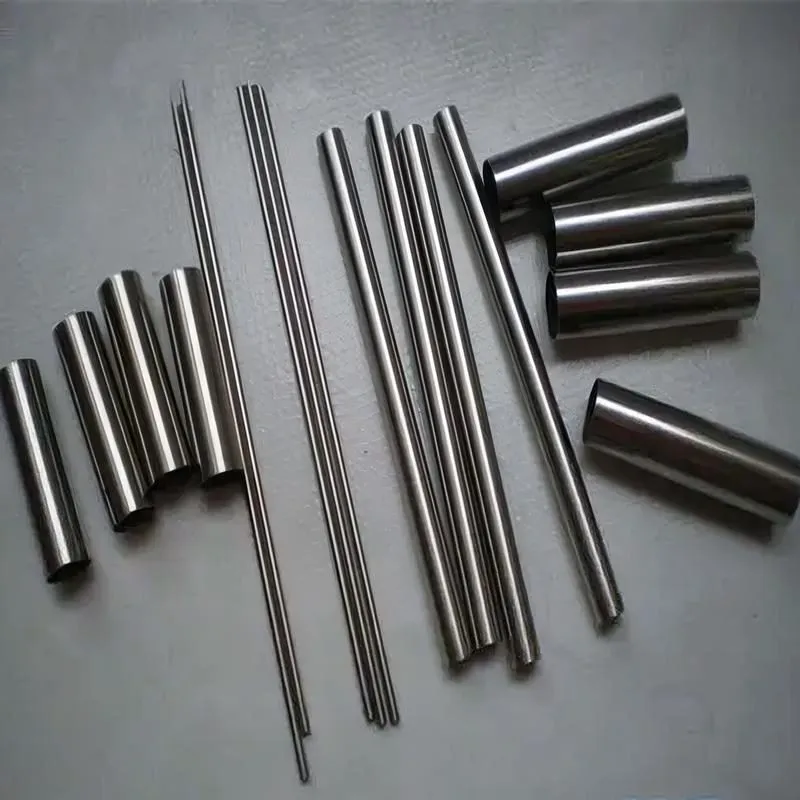
AISI Type W6 Water Hardening Tool Steel Sheet,Plate
Product Code : STI-GSTI-127-CU
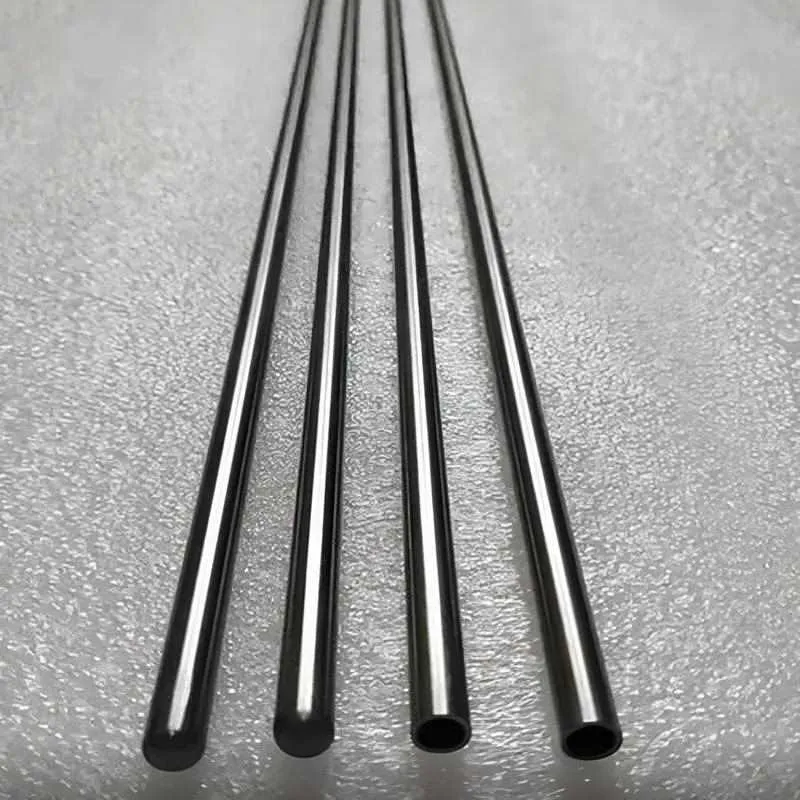
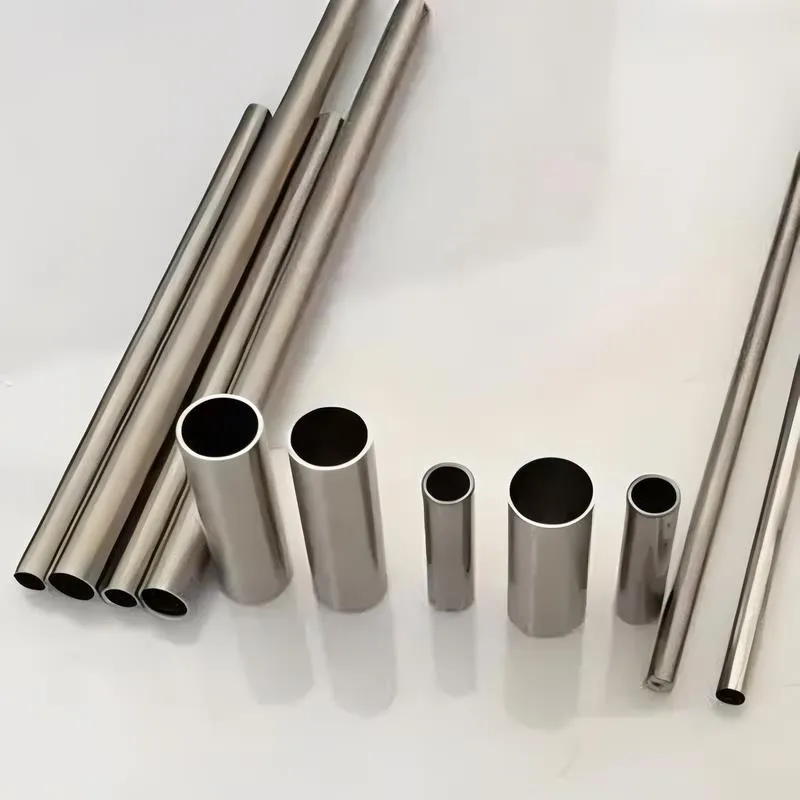
We provide AISI Type W6 Water Hardening Tool Steel Sheet/Plate is available in Bar (Round bar, Flat bar), Ribbon, Wire, Rods, Tube,Seamless Tube,Pipe, Ingots, Plate, Sheet/Plate, Strip and Forging Stock.,Purity, chemical composition, size, etc. can all be customized to meet specific requirements.
Please contact us if you need customized services. We will contact you with the price and availability in 24 hours.
AISI Type W6 Water Hardening Tool Steel Sheet/Plate Product Information
-:-
For detailed product information, please contact sales.
-:
AISI Type W6 Water Hardening Tool Steel Sheet/Plate Synonyms
-:-
For detailed product information, please contact sales.
-:
AISI Type W6 Water Hardening Tool Steel Product Information
-:-
For detailed product information, please contact sales.
-:
# **Product Introduction: AISI Type W6 Water-Hardening Tool Steel (UNS T72306)**
## **Overview**
**AISI W6 (UNS T72306)** is a **high-carbon, vanadium-modified, water-hardening tool steel**. As part of the traditional W-series, it shares the core characteristics of shallow hardenability and the requirement for a severe water quench. However, W6 is distinguished by a **significantly higher carbon content range** (up to ~1.40%) and the inclusion of **vanadium for grain refinement**, making it conceptually a **specialized, ultra-high carbon variant** within the series. This composition was likely aimed at achieving **maximum attainable hardness** for applications like file cutting or other severe abrasion resistance needs. Like other high-carbon W-grades, it suffers from extreme brittleness and is largely obsolete.
## **1. Chemical Composition (Nominal %)**
Based on historical and reference data, W6 features very high carbon with vanadium.
| Element | Historical Content (%) | Primary Function |
|---------|-----------------------|------------------|
| **Carbon (C)** | **~1.25 - 1.40** | **Exceptionally high.** Aims to achieve the absolute maximum hardness possible in a tool steel (approaching 68-69 HRC as-quenched) and provide massive carbide volume for wear resistance. |
| **Vanadium (V)** | **~0.20 - 0.40** | Added to refine the coarse grain structure that would otherwise result from such high carbon content during heat treatment. Improves toughness marginally. |
| **Manganese (Mn)** | ~0.10 - 0.40 | Minimal effect. |
| **Silicon (Si)** | ~0.10 - 0.40 | Deoxidizer. |
| **Chromium (Cr)** | ≤ 0.15 (Residual) | Not a primary alloy. |
| **Iron (Fe)** | Balance | Base metal. |
**Key Chemistry Note:** W6 appears to be designed as a **"file steel" or extreme-wear water-hardening grade**. The **carbon content approaches the hypereutectoid maximum (~1.4%)** used in some file steels. This creates an enormous volume of hard, brittle cementite (Fe₃C) networks. The **vanadium addition is critical** to mitigate the resulting grain coarseness and catastrophic brittleness, but it can only do so much. This steel would be **notoriously difficult to heat treat without cracking** and would possess **extremely low toughness** even after tempering.
## **2. Inferred Physical & Mechanical Properties**
*Inferred properties if heat treated and tempered to a usable state (~64-66 HRC).*
| Property | Estimated Typical Value / Condition |
|----------|-------------------------------------|
| **As-Quenched Hardness (Water)** | Could reach **67-69 HRC**, near the theoretical maximum for steel. |
| **Tempered Hardness** | **64-66 HRC** (Even high tempering would retain very high hardness due to massive carbide volume). |
| **Tensile Strength** | Very High (>2100 MPa) but with negligible ductility. |
| **Impact Toughness** | **Extremely Low.** Would be exceedingly brittle and prone to chipping or shattering under any impact. |
| **Wear Resistance (Abrasion)** | **Theoretically Excellent** due to high hardness and carbide volume. |
| **Hardenability** | **Extremely Shallow.** Hardening depth measured in millimeters. |
| **Grindability** | Difficult due to high hardness. |
| **Primary Historical Focus** | **Maximum hardness and abrasion resistance** for tools like files, certain cutting blades, or wear parts, accepting very low toughness. |
## **3. Historical & Approximate Cross-References**
W6 is an obscure and obsolete grade.
| Standard / Era | Approximate Equivalent / Context | Notes |
|----------------|-----------------------------------|-------|
| **Historical AISI** | W6 | Obsolete designation. |
| **Modern AISI/ASTM** | **Not Listed** in common standards. | |
| **Conceptual Equivalent** | **High-carbon file steels** (e.g., certain specs for W1-13, W1-14). | Often simply supplied as high-carbon W1. |
| **ISO (Conceptual)** | A very high carbon version of water-hardening steel. | |
| **Common Description** | **High-Carbon Vanadium Water-Hardening Steel, File Steel** | |
## **4. Historical & Potential Applications**
Given its inferred properties, W6 would have been used for applications where **extreme hardness and wear resistance were the sole requirements**, and the tool was used in a stable, non-impact manner.
**Theoretical/Historical Applications:**
* **Files and Rasps:** For cutting very hard materials.
* **Lathe Tools & Cutting Blades:** For finishing cuts on soft materials where a supremely sharp, hard edge was needed.
* **Knives for Cutting Abrasive Non-Metallics:** e.g., asbestos, certain composites (historically).
* **Burnishing Tools and Precision Gauges.**
* **Certain Woodworking Tools** for hardwoods.
## **5. Heat Treatment Challenges**
Heat treating W6 would be exceptionally demanding:
1. **Severe Quenching Stress:** The high carbon content increases martensite formation stress, making water quenching even more prone to cause cracking.
2. **Narrow Austenitizing Window:** Requires precise control to avoid burning or excessive grain growth.
3. **Critical Tempering:** Even after quenching, tempering must be done carefully to avoid embrittlement zones while trying to achieve some minimal toughness.
## **6. Why It is Obsolete & Modern Alternatives**
W6 represents a **metallurgical dead-end** that highlights the severe trade-offs of traditional water-hardening, high-carbon steels.
**Fundamental Flaws:**
1. **Unusable Toughness:** The brittleness makes tools unreliable and dangerous in many applications.
2. **Manufacturing Difficulty:** High scrap rates from heat treatment cracking.
3. **Superior Alternatives Exist:** Modern metallurgy provides far better solutions:
* **For Extreme Wear Resistance:** **AISI D2 (1.5%C, 12%Cr)** or **A2 (1.0%C, 5%Cr)** offer vastly better toughness, deep hardenability, and comparable or better wear resistance without the quenching nightmare.
* **For Files and Cutting Edges:** Modern **alloy tool steels** or **powder metallurgy (PM) high-speed steels** are used, offering a balance of properties W6 could never achieve.
* **General Hardness Needs:** **O1** or **W2** with lower carbon are more than sufficient and much safer to process.
**Conclusion:** AISI W6 is a **historical curiosity** that exemplifies the pursuit of a single property (hardness) to an extreme, at the expense of all other practical considerations. Its composition is essentially a **worst-case scenario for quench cracking** and brittleness. There is **no rational modern application** for which W6 would be the best choice. Its existence in historical records serves primarily as a lesson in the importance of balanced alloy design and the reasons why the industry abandoned such formulations.
---
**Disclaimer:** Information on AISI W6 is based on limited and inconsistent historical references. **It is not a standardized, commercially available tool steel in the modern era.** This profile is for **educational and historical analysis only**. Attempting to use or heat treat a steel of this inferred composition would be highly likely to result in failed, cracked tools. For any application requiring high hardness and wear resistance, select from modern, standardized grades such as **O1, A2, D2, or M2**.
-:-
For detailed product information, please contact sales.
-:
AISI Type W6 Water Hardening Tool Steel Specification
Dimensions
Size:
Diameter 20-1000 mm Length <6783 mm
Size:We can customized as required
Standard:
Per your request or drawing
We can customized as required
Properties(Theoretical)
Chemical Composition
-:-
For detailed product information, please contact sales.
-:
AISI Type W6 Water Hardening Tool Steel Properties
-:-
For detailed product information, please contact sales.
-:
Applications of AISI Type W6 Water Hardening Tool Steel Sheet,Plate
-:-
For detailed product information, please contact sales.
-:
Chemical Identifiers AISI Type W6 Water Hardening Tool Steel Sheet,Plate
-:-
For detailed product information, please contact sales.
-:
Packing of AISI Type W6 Water Hardening Tool Steel Sheet/Plate
-:-
For detailed product information, please contact sales.
-:
Standard Packing:
-:-
For detailed product information, please contact sales.
-:
Typical bulk packaging includes palletized plastic 5 gallon/25 kg. pails, fiber and Steel Sheet/Plate drums to 1 ton super sacks in full container (FCL) or truck load (T/L) quantities. Research and sample quantities and hygroscopic, oxidizing or other air sensitive materials may be packaged under argon or vacuum. Solutions are packaged in polypropylene, plastic or glass jars up to palletized 3254 gallon liquid totes Special package is available on request. E FORUs’ is carefully handled to minimize damage during storage and transportation and to preserve the quality of our products in their original condition