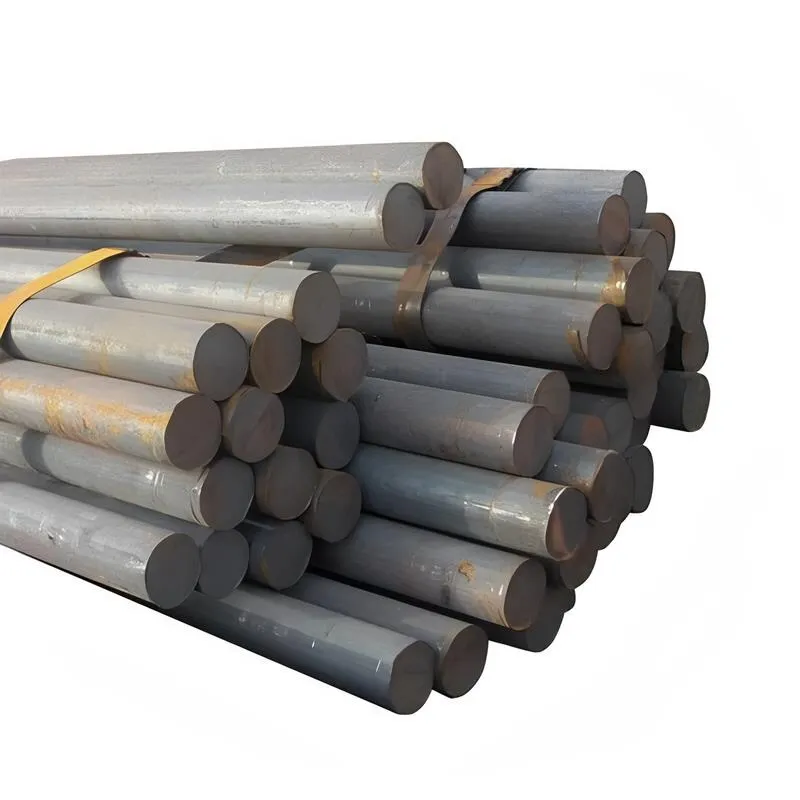
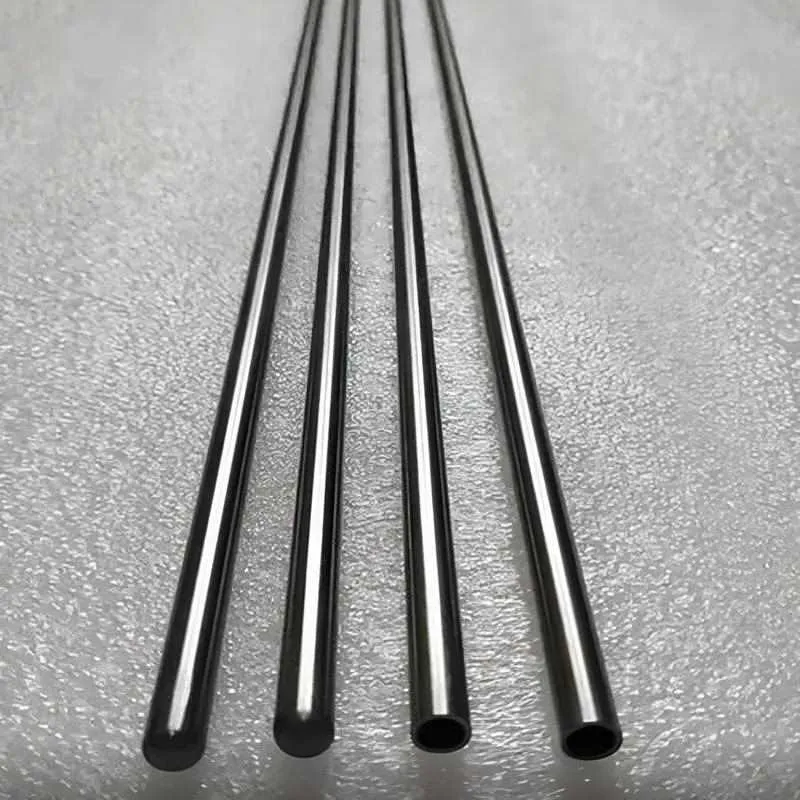
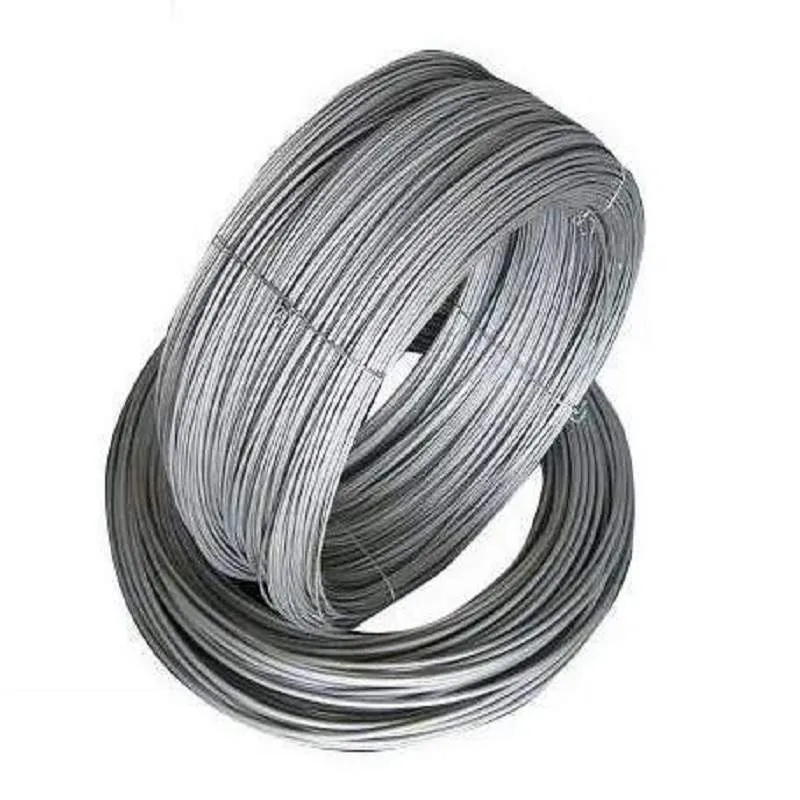
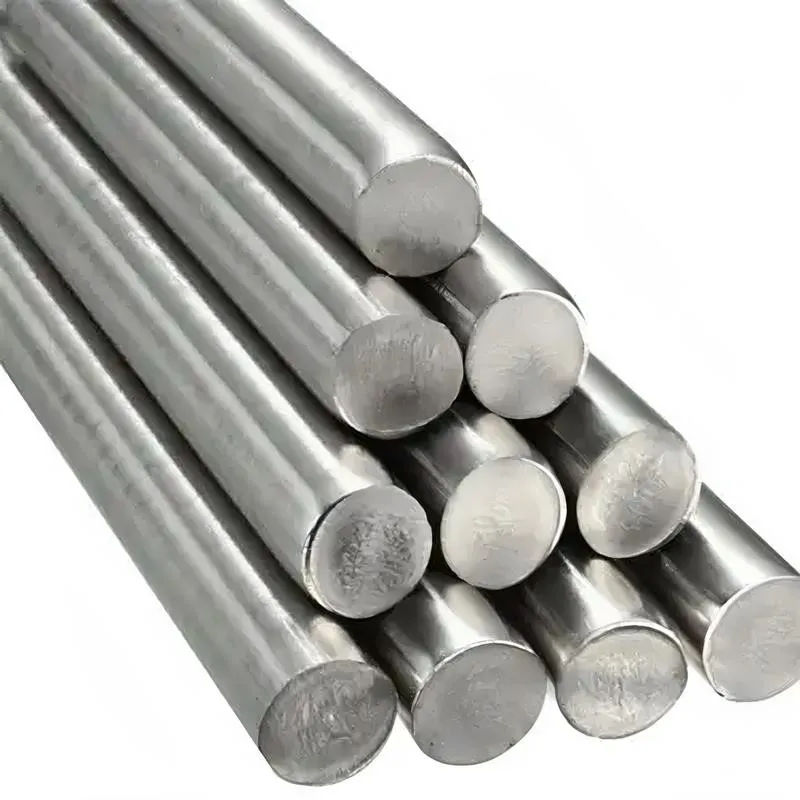
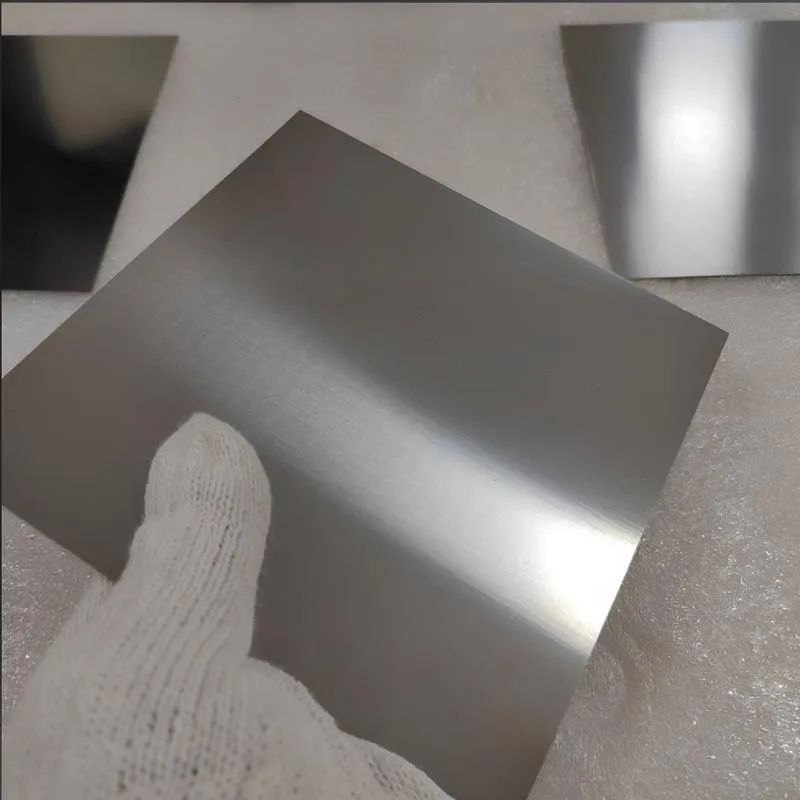
Assab Steel Rod/Bars,VANADIS 4 Cold Work Steel Rod/Bar
Product Code : STI-GSTI-579-CU
We provide Assab Steel Rod/Bars VANADIS 4 Cold Work Steel Rod/Bar is available in Bar (Round bar, Flat bar), Ribbon, Wire, Rod/Bars, Tube,Seamless Tube,Pipe, Ingots, Plate, Sheet, Strip and Forging Stock.,Purity, chemical composition, size, etc. can all be customized to meet specific requirements.
Please contact us if you need customized services. We will contact you with the price and availability in 24 hours.
Assab Steel Rods VANADIS 4 Cold Work Steel Rod Product Information
-:-
For detailed product information, please contact sales.
-:
Assab Steel Rods VANADIS 4 Cold Work Steel Rod Synonyms
-:-
For detailed product information, please contact sales.
-:
Assab Steels VANADIS 4 Cold Work Steel Product Information
-:-
For detailed product information, please contact sales.
-:
# **Assab Steels VANADIS 4 Cold Work Tool Steel**
## **Product Overview**
**VANADIS 4** is a **premium powder metallurgy (PM) cold work tool steel** developed and manufactured by **Assab Steels** (a subsidiary of **Uddeholm AB**, Sweden). This third-generation powder metallurgy steel represents the pinnacle of cold work tool steel technology, engineered to deliver **exceptional wear resistance combined with superior toughness** – a combination traditionally difficult to achieve in conventional tool steels. Through advanced powder metallurgy manufacturing, VANADIS 4 achieves an **extremely homogeneous microstructure with fine, uniformly distributed carbides**, resulting in performance characteristics that significantly outperform conventional high-chromium steels in demanding applications.
## **Material Classification & Revolutionary Features**
| Category | Specification |
|----------|---------------|
| **Type** | Powder metallurgy ledeburitic cold work tool steel |
| **Manufacturing Process** | Gas atomization + Hot Isostatic Pressing (HIP) |
| **Primary Technology** | Third-generation PM process (3GPM) |
| **Key Innovation** | Ultra-fine, homogeneous carbide distribution |
| **Market Position** | Premium performance tier for demanding applications |
### **Revolutionary Advantages:**
- **Unprecedented Wear Resistance:** 2-3 times better than conventional D2 steels
- **Exceptional Toughness:** Superior to conventional steels at same hardness levels
- **Isotropic Properties:** Uniform performance in all directions
- **Superior Grindability:** Despite high hardness and wear resistance
- **Excellent Polishability:** Achieves optical-quality surface finishes
- **Minimal Distortion:** Consistent dimensional changes during heat treatment
- **Consistent Performance:** Batch-to-batch uniformity
---
## **CHEMICAL COMPOSITION**
### **Elemental Composition (wt%)**
| Element | Content Range | Metallurgical Function in PM Structure |
|---------|---------------|----------------------------------------|
| **Carbon (C)** | 1.50-1.60 | Balanced for optimal carbide formation without brittleness |
| **Chromium (Cr)** | 7.80-8.50 | Forms hard M₇C₃ carbides, corrosion resistance |
| **Molybdenum (Mo)** | 1.40-1.80 | Secondary hardening, toughness enhancement |
| **Vanadium (V)** | 3.70-4.20 | **Key element** - forms extremely hard MC carbides (HV 2800) |
| **Silicon (Si)** | 0.40-0.70 | Deoxidizer, solid solution strengthening |
| **Manganese (Mn)** | 0.40-0.70 | Hardenability, microstructure control |
| **Tungsten (W)** | 0.40-0.70 | Additional carbide formation, hot hardness |
| **Sulfur (S)** | ≤ 0.003 | **Ultra-low** for maximum toughness |
| **Phosphorus (P)** | ≤ 0.003 | **Ultra-low** for maximum toughness |
| **Oxygen (O)** | ≤ 50 ppm | Controlled for purity and property consistency |
### **Microstructural Characteristics:**
- **Carbide Volume:** ~12-14%
- **Carbide Types:** MC (V-rich), M₇C₃ (Cr-rich), M₆C (Mo-rich)
- **Carbide Size:** Typically 2-4 μm (vs. 10-30 μm in conventional steels)
- **Carbide Distribution:** Homogeneous, isotropic
- **Matrix Structure:** Clean, fine-grained martensite
- **Inclusion Content:** Near-zero non-metallic inclusions
### **Key Composition Features:**
- **High Vanadium Content:** Primary driver of exceptional wear resistance
- **Balanced Chromium:** Provides hard carbides while maintaining toughness
- **Ultra-low Impurities:** S and P below 30 ppm for maximum toughness
- **Optimized Carbon:** For maximum carbide formation without excessive retained austenite
---
## **HEAT TREATMENT SPECIFICATIONS**
### **Annealing**
- **Temperature:** 850-900°C (1562-1652°F)
- **Soak Time:** 2-4 hours, slow furnace cool (≤ 20°C/hour to 500°C)
- **Resulting Hardness:** 220-240 HB
- **Microstructure:** Fine spheroidized carbides in ferritic matrix
### **Stress Relieving**
- **Temperature:** 600-650°C (1112-1202°F)
- **Time:** 2 hours per 25 mm thickness
- **Purpose:** Reduce machining stresses with minimal effect on hardness
### **Hardening Process**
1. **Preheating:** 650°C (1202°F) and 850°C (1562°F) - **CRITICAL**
2. **Austenitizing:** 1050-1100°C (1922-2012°F) - typical 1070-1080°C
3. **Soak Time:** 20-40 minutes (section size dependent)
4. **Quenching:** Air or gas (high-pressure nitrogen)
5. **Immediate Tempering:** Required within 1 hour
### **Tempering Guidelines**
| Tempering Temperature | Resulting Hardness (HRC) | Compressive Strength | Toughness (Impact J) |
|----------------------|--------------------------|---------------------|----------------------|
| **180-220°C** | 62-64 | 2900-3100 MPa | 25-35 J |
| **250-300°C** | 60-62 | 2700-2900 MPa | 35-45 J |
| **350-400°C** | 58-60 | 2500-2700 MPa | 45-55 J |
| **450-500°C** | 56-58 | 2300-2500 MPa | 55-65 J |
| **500-550°C** | 54-56 | 2100-2300 MPa | 65-75 J |
### **Advanced Heat Treatment Options:**
- **Cryogenic Treatment:** -150°C to -196°C after quenching (maximizes dimensional stability)
- **Multiple Tempering:** Triple tempering for maximum property stability
- **Surface Treatments:** Excellent response to nitriding, PVD coatings
### **Heat Treatment Notes:**
- **Higher Austenitizing Temperatures:** Required compared to conventional steels
- **Quenching Rate:** Less critical due to high hardenability
- **Tempering Response:** Strong secondary hardening at 500-550°C
- **Dimensional Stability:** Excellent - typically < 0.05% growth
---
## **MECHANICAL PROPERTIES**
### **Annealed Condition**
- **Hardness:** 220-240 HB
- **Tensile Strength:** ~800-850 MPa
- **Yield Strength:** ~650-700 MPa
- **Elongation:** 12-15%
- **Machinability:** 40-45% (relative to free-cutting steel)
### **Hardened & Tempered Condition (60-64 HRC)**
| Property | Typical Value | Advantage vs Conventional D2 | Notes |
|----------|---------------|------------------------------|-------|
| **Compressive Strength** | 2600-3100 MPa | +15-20% | Excellent for high-pressure forming |
| **Bending Strength** | 3200-3800 MPa | +20-25% | Superior load-bearing capability |
| **Impact Toughness** | 30-50 J | **+100-150%** | Breakthrough property |
| **Young's Modulus** | 215 GPa | Similar | |
| **Fatigue Strength** | 700-900 MPa | +30-40% | R = -1, 10⁷ cycles |
| **Fracture Toughness** | 30-40 MPa√m | **+50-100%** | KIC values |
| **Wear Resistance** | **2-3× better** | **Primary advantage** | Abrasion, adhesion, erosion |
### **Property Comparison Matrix**
| Property | VANADIS 4 | Conventional D2 | Improvement |
|----------|-----------|-----------------|-------------|
| **Abrasive Wear** | 100% | 35-40% | 2.5-3.0× |
| **Adhesive Wear** | 100% | 45-50% | 2.0-2.2× |
| **Impact Toughness** | 100% | 40-50% | 2.0-2.5× |
| **Fatigue Strength** | 100% | 70-75% | 1.3-1.4× |
| **Grindability** | 100% | 60-70% | 1.4-1.7× |
| **Polishability** | 100% | 80-85% | 1.2-1.3× |
### **Anisotropy Characteristics:**
- **Longitudinal vs Transverse Properties:** Ratio ~1.05:1 (near isotropic)
- **Hardness Uniformity:** ±0.5 HRC through cross-section
- **Property Consistency:** Excellent in all orientations
---
## **PHYSICAL PROPERTIES**
| Property | Value | Conditions/Notes |
|----------|-------|------------------|
| **Density** | 7.70 g/cm³ | 20°C |
| **Thermal Conductivity** | 18.5 W/m·K | 20°C |
| | 21.0 W/m·K | 400°C |
| **Coefficient of Thermal Expansion** | 10.2 × 10⁻⁶/K | 20-100°C |
| | 11.4 × 10⁻⁶/K | 20-400°C |
| **Specific Heat Capacity** | 465 J/kg·K | 20°C |
| **Modulus of Elasticity** | 215 GPa | 20°C |
| **Poisson's Ratio** | 0.30 | |
| **Electrical Resistivity** | 0.65 μΩ·m | 20°C |
| **Magnetic Properties** | Ferromagnetic | Hardened condition |
### **Transformation Characteristics:**
- **Ac1 Temperature:** ~830°C (1526°F)
- **Ac3 Temperature:** ~910°C (1670°F)
- **Ms Temperature:** ~180°C (356°F)
- **Mf Temperature:** ~70°C (158°F)
---
## **INTERNATIONAL STANDARDS & EQUIVALENTS**
| Standard System | Designation | Similar PM Grades | Notes |
|-----------------|-------------|-------------------|-------|
| **Assab Proprietary** | VANADIS 4 | - | Original manufacturer's grade |
| **ISO** | - | No direct equivalent | Unique PM composition |
| **Uddeholm** | Vanadis 4 | Identical | Same product, different branding |
| **Böhler** | S790 | | Similar PM performance category |
| **Carpenter** | CPM 10V | | Different chemistry, similar PM technology |
| **Erasteel** | ASP 2023 | | Different PM approach |
| **Common Reference** | 3GPM Steel | Third-generation PM steel | Technology category |
### **Performance Comparison:**
- **vs. Conventional D2:** 2-3× wear resistance, 2× toughness
- **vs. Other PM Steels:** Superior toughness at high hardness
- **vs. Carbides:** Better toughness, machinability, and polishability
- **vs. Coatings:** Bulk properties, not just surface enhancement
---
## **MACHINING & PROCESSING CHARACTERISTICS**
### **Machining (Annealed Condition)**
- **Relative Machinability:** 40-45% (challenging but feasible)
- **Cutting Tools:** Premium carbide or CBN recommended
- **Cutting Speed:** 20-35 m/min (turning with carbide)
- **Feed Rate:** 0.08-0.20 mm/rev
- **Depth of Cut:** 0.5-3.0 mm (light to moderate)
- **Coolant:** Essential for tool life
- **Note:** Despite high hardness in use, annealed machinability is reasonable
### **Grinding (Breakthrough Advantage)**
- **Relative Grindability:** 70-80% (vs. conventional steels)
- **Wheel Type:** Aluminum oxide or CBN
- **Coolant Requirement:** Standard practices sufficient
- **Grinding Ratio:** 50-100% better than conventional steels
- **Surface Finish:** Excellent achievable finishes
- **Key Advantage:** Can be ground in hardened state more easily than conventional steels
### **EDM Machining**
- **Suitability:** Excellent
- **White Layer:** Minimal compared to conventional steels
- **Surface Integrity:** Better preserved
- **Recommendation:** Standard EDM parameters with fine finish passes
### **Polishing & Superfinishing**
1. **Initial Grinding:** 220-320 grit
2. **Pre-polish:** 400-600 grit diamond
3. **Fine Polish:** 800-1200 grit diamond
4. **Superfinish:** 2000-3000 grit diamond paste
5. **Achievable Finish:** SPI A0-A1 (Ra < 0.010 μm)
6. **Time Savings:** 30-50% less time than conventional steels
---
## **PRIMARY APPLICATIONS**
### **High-Performance Blanking & Punching**
- **Advanced High-Strength Steels:** Automotive safety components
- **Silicon Electrical Steels:** High-efficiency motor laminations
- **Abrasive Composites:** Carbon fiber, fiberglass materials
- **Pre-coated Materials:** Galvanized, aluminized, painted sheets
- **High-Volume Production:** Where tool life is production-critical
### **Precision Forming & Stamping**
- **Progressive Dies:** For automotive, electronics, aerospace
- **Fine Blanking:** Precision mechanical components
- **High-Pressure Forming:** Complex geometries requiring durability
- **Transfer Press Tooling:** Multi-stage forming operations
### **Cutting & Shearing (Severe Applications)**
- **Shear Blades:** For abrasive materials (composites, prepainted metals)
- **Slitting Knives:** High-speed coil processing
- **Cut-off Tools:** For difficult-to-machine materials
- **Industrial Knives:** Cutting blades for abrasive products
### **Powder Compaction**
- **Hard Metal Powders:** Tungsten carbide, ceramic-filled powders
- **High-Density Compaction:** Complex PM parts
- **Long-Run Production:** Where die life determines economic viability
### **Specialized Tooling**
- **Thread Rolling:** For high-strength, abrasive materials
- **Cold Forging:** Punches and dies for severe operations
- **Extrusion Tools:** For abrasive non-ferrous materials
- **Wear Parts:** Critical components in abrasive environments
---
## **INDUSTRY-SPECIFIC APPLICATIONS**
### **Automotive (Advanced Manufacturing)**
- **AHSS Stamping:** Ultra-high-strength steel components (A-pillars, bumpers)
- **Electric Vehicle Motors:** High-silicon steel laminations
- **Lightweight Components:** Aluminum, magnesium, and composite forming
- **Safety Components:** Airbag components, seat belt parts
### **Aerospace & Defense**
- **Composite Trimming:** Carbon fiber reinforced polymer (CFRP) tools
- **Titanium Forming:** Tools for aerospace alloys
- **Precision Components:** Critical aircraft and defense parts
- **Radome Manufacturing:** Composite material tooling
### **Electronics & Electrical**
- **Lead Frame Stamping:** High-precision semiconductor packaging
- **Connector Production:** High-speed, high-precision stamping
- **Motor Core Laminations:** High-efficiency electric motors
- **Transformer Components:** Precision electrical steel stamping
### **Energy Sector**
- **Wind Turbine Components:** Composite blade tooling
- **Solar Panel Manufacturing:** Precision cutting and forming
- **Nuclear Components:** Specialized tooling for nuclear applications
- **Oil & Gas:** Downhole tooling for abrasive environments
### **Medical Device Manufacturing**
- **Surgical Instrument Components:** High-precision, wear-resistant parts
- **Implant Tooling:** Forging and forming tools for medical implants
- **Disposable Device Production:** High-volume precision components
---
## **DESIGN & FABRICATION GUIDELINES**
### **Section Size Considerations**
- **Maximum Effective Size:** ~200 mm diameter (full density)
- **Minimum Feature Size:** Down to 1 mm possible
- **Wall Thickness:** As thin as 3 mm in certain applications
- **Complex Geometries:** Excellent for intricate tool designs
### **Design for PM Steel Advantages**
1. **Utilize Isotropy:** Design without directional property limitations
2. **Thin Sections:** Can be used effectively due to uniform properties
3. **Complex Shapes:** Suitable for EDM and complex machining
4. **High Stress Areas:** Can withstand complex stress states
### **Heat Treatment Considerations**
- **Higher Temperatures:** Account for higher austenitizing temperatures
- **Minimal Distortion:** Can design to tighter tolerances
- **Surface Treatments:** Excellent substrate for advanced coatings
---
## **CORROSION RESISTANCE**
### **General Performance**
- **Atmospheric:** Moderate - similar to other tool steels
- **Aqueous:** Limited - requires protection for wet environments
- **Chemical:** Not suitable for corrosive chemical service
- **Practical Approach:** Use coatings for corrosion protection when needed
### **Surface Enhancement Options**
- **Nitriding:** Excellent response - deep, hard case with good toughness
- **PVD Coatings:** TiN, TiCN, AlCrN, DLC - excellent adhesion
- **CVD Coatings:** TiC, TiCN - good performance
- **Electroless Nickel:** For corrosion protection
- **Hard Chrome:** Traditional option still effective
---
## **QUALITY ASSURANCE & CERTIFICATION**
### **Premium Quality Standards**
- **Microcleanliness:** ASTM E45 Method D ≤ 0.5
- **Carbide Size:** Maximum 5 μm, typical 2-3 μm
- **Density:** ≥ 99.9% theoretical
- **Homogeneity:** Verified by microstructure analysis
- **Traceability:** Full manufacturing history documentation
### **Available Forms**
- **Round Bars:** 20-200 mm diameter
- **Flat Bars:** 20-150 mm thickness
- **Blocks:** Custom dimensions
- **Near-net Shapes:** Minimize machining requirements
- **Pre-hardened:** Available for certain applications
### **Certification**
- **Full PM Process Documentation:** From powder to final product
- **Comprehensive Testing:** Chemical, mechanical, microstructural
- **3.2 Certificate:** EN 10204 Type 3.2
- **Application-specific Testing:** Available on request
---
## **ECONOMIC JUSTIFICATION**
### **Cost Analysis**
- **Initial Cost:** 2-4× conventional tool steels
- **Tool Life:** 3-10× conventional in appropriate applications
- **Downtime Reduction:** Significant reductions in tool changes
- **Quality Improvement:** More consistent part quality
- **Total Cost of Ownership:** Often 50-70% lower in demanding applications
### **Application Selection Criteria**
1. **Wear-Limited Applications:** Where conventional tools fail rapidly
2. **High-Value Production:** Where downtime costs exceed tool costs
3. **Precision Requirements:** Where consistent performance is critical
4. **Complex Tooling:** Where replacement costs are high
5. **New Material Processing:** Advanced materials requiring new solutions
---
## **TECHNICAL SUPPORT**
### **Assab PM Expertise**
- **Application Engineering:** Specialized support for PM steel applications
- **Design Consultation:** Optimizing designs for PM steel advantages
- **Failure Analysis:** Advanced metallurgical investigation
- **Processing Guidance:** Heat treatment, machining, finishing
### **Global Support Network**
- **Technical Centers:** Application testing and development
- **Authorized Processors:** Certified heat treatment and machining
- **Training Programs:** PM steel technology workshops
- **Digital Tools:** Selection software, application databases
---
## **FUTURE DEVELOPMENTS**
### **Technology Trends**
- **Additive Manufacturing:** PM steel powders for 3D printing
- **Hybrid Tooling:** PM steel inserts in conventional tool bodies
- **Smart Tooling:** Integrated sensors in PM tool components
- **Sustainable Manufacturing:** Longer tool life for reduced environmental impact
### **Research Directions**
- **Nanostructured PM Steels:** Next-generation microstructures
- **Functional Grading:** Property gradients within tools
- **Multi-material Tools:** Combined PM and conventional steels
- **Digital Twins:** Simulation of PM tool performance
---
**ASSAB Steels - Uddeholm Group**
*Pioneering Powder Metallurgy Tool Steel Solutions*
www.assab.com
---
**Disclaimer:** This technical data sheet provides general information about VANADIS 4 powder metallurgy cold work tool steel. For specific applications, comprehensive consultation with Assab technical experts is essential. PM steels require specialized knowledge for optimal application. Properties and performance may vary based on specific processing and application conditions. Always conduct application-specific testing before full-scale implementation.
-:-
For detailed product information, please contact sales.
-:
Assab Steels VANADIS 4 Cold Work Steel Specification
Dimensions
Size:
Diameter 20-1000 mm Length <7235 mm
Size:We can customized as required
Standard:
Per your request or drawing
We can customized as required
Properties(Theoretical)
Chemical Composition
-:-
For detailed product information, please contact sales.
-:
Assab Steels VANADIS 4 Cold Work Steel Properties
-:-
For detailed product information, please contact sales.
-:
Applications of Assab Steel Rods VANADIS 4 Cold Work Steel Rod
-:-
For detailed product information, please contact sales.
-:
Chemical Identifiers Assab Steel Rods VANADIS 4 Cold Work Steel Rod
-:-
For detailed product information, please contact sales.
-:
Packing of Assab Steel Rods VANADIS 4 Cold Work Steel Rod
-:-
For detailed product information, please contact sales.
-:
Standard Packing:
-:-
For detailed product information, please contact sales.
-:
Typical bulk packaging includes palletized plastic 5 gallon/25 kg. pails, fiber and Steel Rod drums to 1 ton super sacks in full container (FCL) or truck load (T/L) quantities. Research and sample quantities and hygroscopic, oxidizing or other air sensitive materials may be packaged under argon or vacuum. Solutions are packaged in polypropylene, plastic or glass jars up to palletized 3706 gallon liquid totes Special package is available on request. E FORUs’ is carefully handled to minimize damage during storage and transportation and to preserve the quality of our products in their original condition