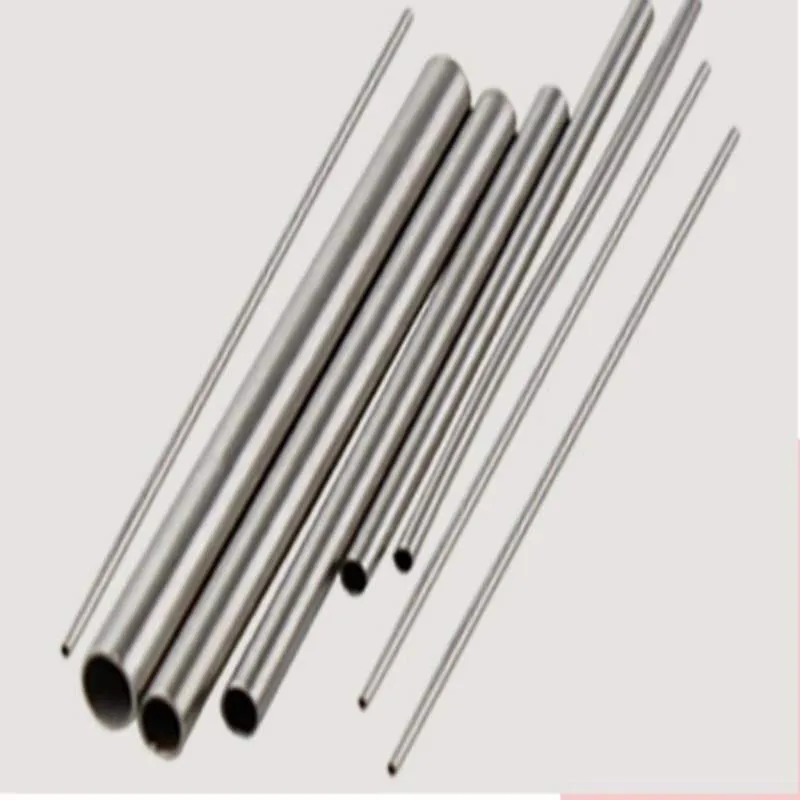
Assab Steels ASP 23 Cold Work Steel
Product Code : STI-GSTI-195-CU
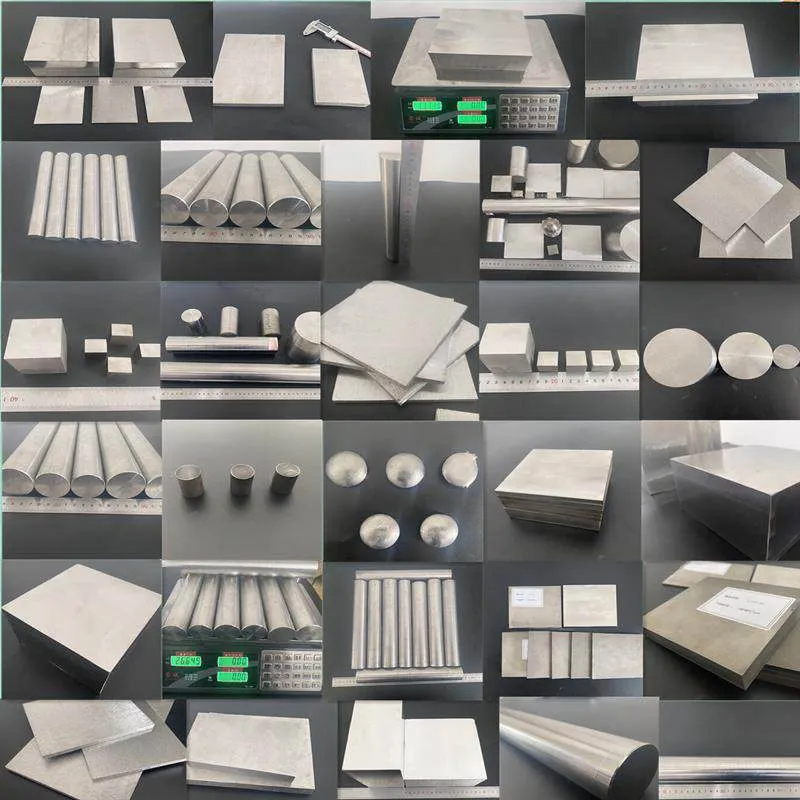
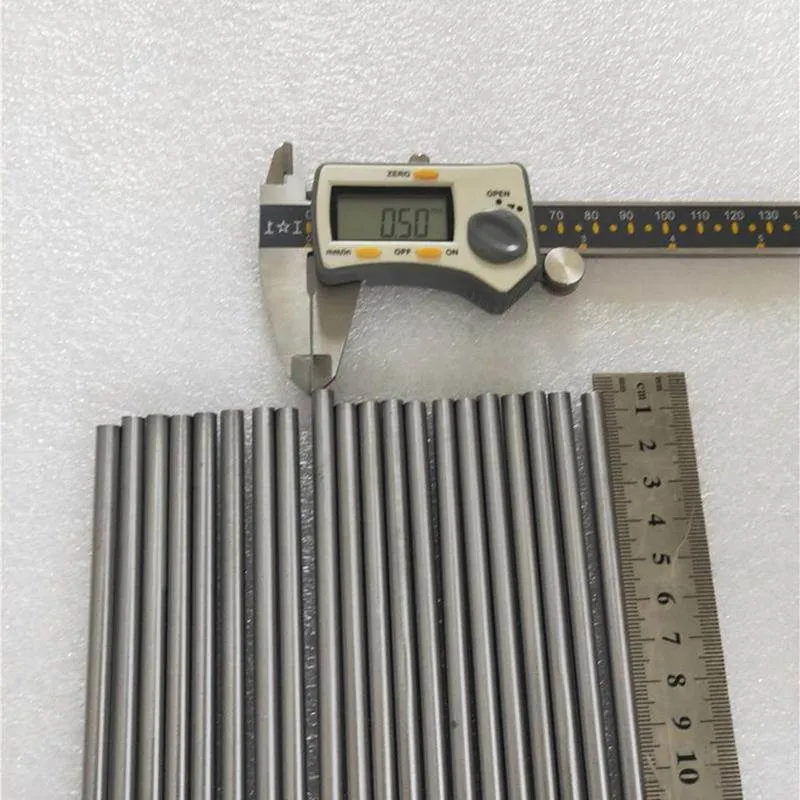
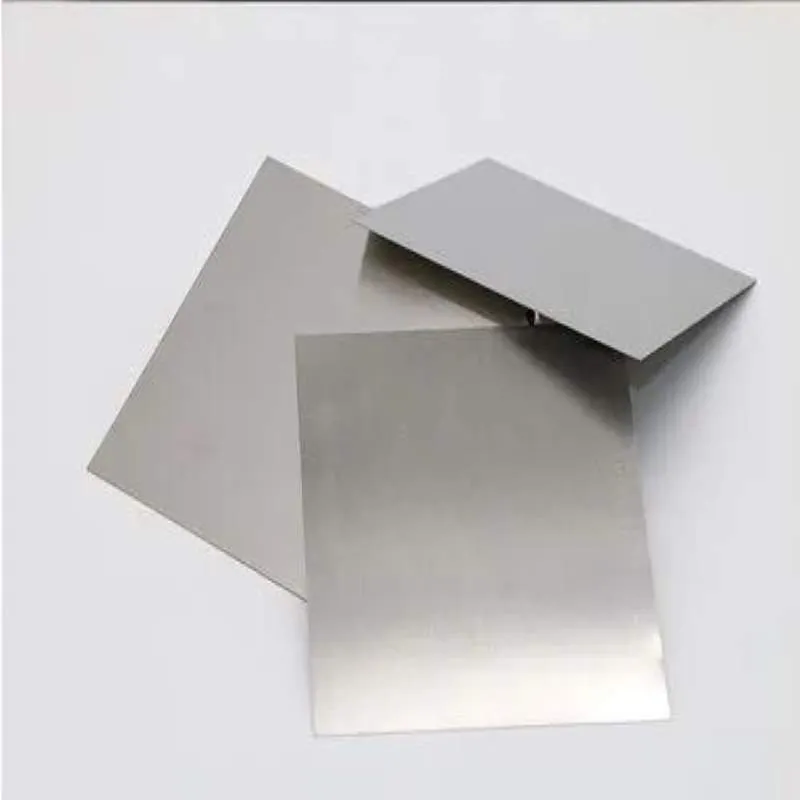
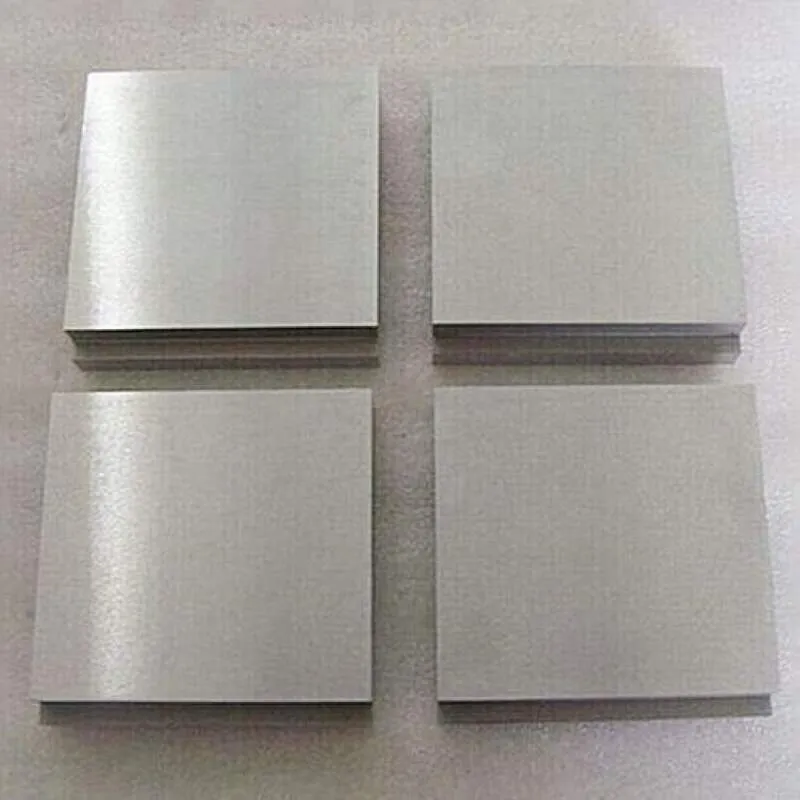
We provide Assab Steels ASP 23 Cold Work Steel is available in Bar (Round bar, Flat bar), Ribbon, Wire, Rods, Tube,Seamless Tube,Pipe, Ingots, Plate, Sheet, Strip and Forging Stock.,Purity, chemical composition, size, etc. can all be customized to meet specific requirements.
Please contact us if you need customized services. We will contact you with the price and availability in 24 hours.
Assab Steels ASP 23 Cold Work Steel Product Information
-:-
For detailed product information, please contact sales.
-:
Assab Steels ASP 23 Cold Work Steel Synonyms
-:-
For detailed product information, please contact sales.
-:
Assab Steels ASP 23 Cold Work Steel Product Information
-:-
For detailed product information, please contact sales.
-:
# Product Datasheet: Assab Steels ASP 23 Powder Metallurgy High-Speed Cold Work Tool Steel
## Product Overview
**Assab Steels ASP 23** is a premium **powder metallurgy (PM) high-speed cold work tool steel** that combines the **wear resistance of high-vanadium steels with the toughness of well-balanced high-speed steels**. Part of the renowned ASP series (Always Superior Performance), ASP 23 is engineered to deliver exceptional performance in demanding applications where conventional tool steels fall short. Its unique microstructure, achieved through advanced powder metallurgy manufacturing, provides a superior balance of properties that makes it ideal for high-performance tooling applications.
## Key Characteristics & Advantages
- **Excellent Wear Resistance:** High vanadium content ensures superior abrasion resistance
- **Good Toughness:** Balanced alloy design maintains good impact resistance
- **High Hardness Capability:** Can achieve and maintain high hardness levels (64-66 HRC)
- **Superior Grindability:** PM microstructure enables easier grinding than equivalent ingot-cast steels
- **Good Dimensional Stability:** Minimal distortion during heat treatment
- **Uniform Properties:** Consistent performance throughout material cross-section
- **Excellent Polishability:** Capable of achieving very fine surface finishes
- **Good High-Temperature Performance:** Maintains properties at elevated temperatures
## Standard Specifications & International Designations
| **Standard** | **Designation** |
|--------------|-----------------|
| **Assab/Uddeholm** | ASP 23 |
| **Manufacturing Process** | Powder Metallurgy (ASP Process) |
| **AISI/ASTM Equivalent** | Modified M3:2 (PM version) |
| **DIN/EN Equivalent** | ~1.3344 (Enhanced PM version) |
| **ISO Classification** | PM High-Speed Steel |
| **Material Category** | PM Cold Work/High-Speed Tool Steel |
## Chemical Composition (Typical, Weight %)
| Element | Content (%) | Primary Function |
|---------|-------------|------------------|
| **Carbon (C)** | 1.28 | Matrix hardening & carbide formation |
| **Chromium (Cr)** | 4.20 | Hardenability & wear resistance |
| **Molybdenum (Mo)** | 5.00 | Secondary hardening & hot strength |
| **Vanadium (V)** | 3.10 | Primary carbide formation for wear resistance |
| **Tungsten (W)** | 6.40 | Solid solution strengthening & hot hardness |
| **Cobalt (Co)** | - | Not present in standard ASP 23 |
| **Silicon (Si)** | 0.40 | Deoxidizer & solid solution strengthener |
| **Manganese (Mn)** | 0.30 | Hardenability improvement |
| **Iron (Fe)** | Balance | Matrix material |
*Special Note: The absence of cobalt distinguishes ASP 23 from cobalt-containing high-speed steels, making it more cost-effective while maintaining excellent performance characteristics.*
## Microstructural Characteristics
- **Carbide Types:** MC (vanadium), M₆C (tungsten/molybdenum), and M₇C₃ (chromium) carbides
- **Carbide Size:** Typically 2-4 μm, uniformly distributed
- **Carbide Volume Fraction:** Approximately 10-12%
- **Grain Size:** Very fine (ASTM 10-11)
- **Inclusion Rating:** Significantly better than conventional ingot-cast steels
- **Homogeneity:** Excellent throughout all sections
## Typical Heat Treatment
### Soft Annealing
- **Temperature:** 850-900°C (1560-1650°F)
- **Cooling:** Slow furnace cool at 10-20°C/hour to 600°C, then air cool
- **Annealed Hardness:** 240-280 HB
- **Purpose:** Optimal condition for machining
### Stress Relieving
- **Temperature:** 600-650°C (1110-1200°F)
- **Application:** After rough machining operations
- **Duration:** 2 hours per 25 mm section thickness
### Hardening
1. **Preheating:**
- First stage: 450-500°C (840-930°F)
- Second stage: 800-850°C (1470-1560°F)
2. **Austenitizing:** **1150-1180°C (2100-2155°F)**
- Standard applications: 1160-1170°C (2120-2140°F)
- Maximum wear resistance: 1170-1180°C (2140-2155°F)
- Enhanced toughness: 1150-1160°C (2100-2120°F)
3. **Soaking Time:** 2-4 minutes per mm of thickness
4. **Quenching Methods:**
- Salt bath (500-550°C) then air cool (most common)
- High-pressure gas quenching (4-6 bar)
- Vacuum oil quenching
### Tempering
- **Immediate Requirement:** Temper immediately after cooling to 50-70°C (120-160°F)
- **Recommended:** **Triple tempering** with cooling to room temperature between cycles
- **Temperature Range:** 540-580°C (1005-1075°F)
- **Hardness Development:**
- 540°C (1005°F): 65-67 HRC
- 560°C (1040°F): 64-66 HRC
- 580°C (1075°F): 63-65 HRC
- 600°C (1110°F): 61-63 HRC
### Optional Cryogenic Treatment
- **Temperature:** -70°C to -80°C (-95°F to -110°F)
- **Duration:** 2-3 hours
- **Benefits:** Reduces retained austenite, improves dimensional stability
- **Application:** Recommended for highest precision requirements
## Physical Properties
| Property | Value | Unit | Conditions |
|----------|-------|------|------------|
| **Density** | 8.10 | g/cm³ | At 20°C |
| **Modulus of Elasticity** | 230 | GPa | At 20°C |
| **Thermal Expansion Coefficient** | 10.8 | ×10⁻⁶/K | 20-100°C |
| **Thermal Conductivity** | 20.5 | W/(m·K) | At 20°C |
| **Specific Heat Capacity** | 430 | J/(kg·K) | At 20°C |
## Mechanical Properties (Hardened & Tempered)
### Standard Condition (1170°C/560°C×3)
| Property | Value Range | Unit | Test Method |
|----------|-------------|------|-------------|
| **Hardness** | 64-66 | HRC | ISO 6508 |
| **Compressive Strength** | 3,500-3,800 | MPa | ISO 3785 |
| **Transverse Rupture Strength** | 4,000-4,500 | MPa | ISO 3325 |
| **Yield Strength (0.2%)** | 3,200-3,500 | MPa | ISO 6892 |
| **Impact Toughness (Charpy V)** | 35-50 | J | ISO 148 |
| **Red Hardness** | 62-64 HRC after 1h/600°C | - | Special test |
| **Wear Resistance** | 3-4× Conventional HSS | - | Relative comparison |
### Wear Performance Comparison
| Material | Relative Wear Resistance (ASP 23 = 100%) | Relative Toughness (ASP 23 = 100%) |
|----------|------------------------------------------|-----------------------------------|
| **Conventional M2** | 60-70% | 80-90% |
| **Conventional M3:2** | 80-90% | 70-80% |
| **Conventional D2** | 90-100% | 40-50% |
| **ASP 23** | 100% | 100% (Baseline) |
| **ASP 30** | 90-95% | 110-120% |
## Primary Applications
### Cutting Tools
- **Gear Cutting Tools:** Hobs, shaper cutters, shaving tools
- **Broaches:** Both internal and external broaching
- **Milling Cutters:** End mills, face mills, slotting cutters
- **Turning Tools:** For difficult-to-machine materials
- **Thread Cutting Tools:** Taps, dies, thread milling cutters
- **Saw Blades:** For metal cutting applications
### Forming & Stamping Tools
- **Cold Forming Tools:** For high-strength materials
- **Thread Rolling Dies:** For high-quality fasteners
- **Stamping Punches:** For progressive dies
- **Fineblanking Tools:** For precision components
- **Drawing Dies:** For wire and bar drawing
### Plastic & Rubber Molds
- **Injection Molds:** For abrasive plastics:
- Glass-filled polymers
- Mineral-filled compounds
- Engineering plastics
- **Extrusion Dies:** For filled polymers
- **Compression Molds:** For rubber and composites
### Special Applications
- **Woodworking Tools:** For processed wood and composites
- **Wear Parts:** In abrasive environments
- **Machine Parts:** Requiring high wear resistance
- **Precision Components:** Requiring stability and wear resistance
## Processing Guidelines
### Machining Operations
- **Recommended Condition:** Annealed state (~260 HB)
- **Machinability:** Moderate (40-50% relative to 1% C-steel)
- **Tool Requirements:**
- Carbide tools recommended
- CBN or PCD for finishing operations
- Positive rake angles
- **Cutting Parameters:**
- Turning: 25-40 m/min
- Milling: 70-100 m/min
- Feed rates: Conservative to avoid tool wear
- **Coolant:** Recommended for all operations
### Grinding Operations
- **Wheel Selection:**
- Aluminum oxide wheels for rough grinding
- CBN wheels for precision grinding
- Diamond wheels for final finishing
- **Parameters:**
- Wheel speed: 20-30 m/s
- Light infeeds: 0.005-0.015 mm/pass
- Frequent dressing
- **Coolant:** Essential to prevent overheating
### Electrical Discharge Machining
- **Suitable:** Yes, with proper settings
- **Settings:** Medium to fine settings recommended
- **Post-EDM:** Stress relieve and remove white layer
### Surface Treatments
- **PVD Coatings:** TiN, TiCN, TiAlN, AlCrN
- **Nitriding:** Possible, but may reduce surface toughness
- **Polishing:** Good polishability to fine finishes
## Comparative Performance
### Advantages Over Conventional Steels
1. **Better Grindability:** Compared to equivalent ingot-cast steels
2. **More Consistent Properties:** Throughout cross-section
3. **Higher Possible Hardness:** While maintaining toughness
4. **Improved Wear Resistance:** Due to uniform carbide distribution
### Performance Positioning
- **Wear Resistance:** Between conventional M3:2 and high-vanadium steels
- **Toughness:** Better than high-vanadium steels, slightly less than some high-speed steels
- **Cost-Performance:** Excellent value in its performance category
## Technical Specifications
### Available Forms
| Form | Standard Sizes | Surface Condition |
|------|---------------|-------------------|
| **Round Bars** | Ø10-250 mm | Black, ground, or peeled |
| **Flat Bars** | Various thicknesses/widths | Ground surfaces |
| **Forged Blocks** | Custom dimensions | Rough machined |
| **Pre-machined Blanks** | As specified | Semi-finished |
### Quality Assurance
- **Chemical Analysis:** Full certification
- **Hardness Testing:** Multiple point verification
- **Ultrasonic Testing:** Available for critical applications
- **Microstructural Analysis:** Available upon request
## Application Recommendations
### Ideal For:
- Tools requiring high wear resistance and good toughness
- Applications where conventional steels wear too quickly
- High-performance cutting and forming tools
- Situations where consistent performance is critical
### Consider Alternatives When:
- Maximum toughness is primary requirement
- Cost is primary consideration
- Simpler heat treatment is required
- Applications don't justify premium material
### Heat Treatment Notes:
- Requires precise temperature control
- Triple tempering essential for optimal properties
- Higher austenitizing temperatures than conventional steels
## Economic Considerations
- **Material Cost:** Premium, but competitive for PM steels
- **Tool Life:** Significantly longer than conventional steels in many applications
- **Processing Cost:** Higher due to specialized heat treatment
- **Overall Value:** Excellent for demanding applications
---
**Important Note:** ASP 23 is a premium powder metallurgy tool steel requiring proper heat treatment and processing techniques. Consultation with technical experts is recommended for optimal results. The material's performance is highly dependent on correct heat treatment procedures. Always verify current technical data and processing recommendations before use.
-:-
For detailed product information, please contact sales.
-:
Assab Steels ASP 23 Cold Work Steel Specification
Dimensions
Size:
Diameter 20-1000 mm Length <6851 mm
Size:We can customized as required
Standard:
Per your request or drawing
We can customized as required
Properties(Theoretical)
Chemical Composition
-:-
For detailed product information, please contact sales.
-:
Assab Steels ASP 23 Cold Work Steel Properties
-:-
For detailed product information, please contact sales.
-:
Applications of Assab Steels ASP 23 Cold Work Steel
-:-
For detailed product information, please contact sales.
-:
Chemical Identifiers Assab Steels ASP 23 Cold Work Steel
-:-
For detailed product information, please contact sales.
-:
Packing of Assab Steels ASP 23 Cold Work Steel
-:-
For detailed product information, please contact sales.
-:
Standard Packing:
-:-
For detailed product information, please contact sales.
-:
Typical bulk packaging includes palletized plastic 5 gallon/25 kg. pails, fiber and steel drums to 1 ton super sacks in full container (FCL) or truck load (T/L) quantities. Research and sample quantities and hygroscopic, oxidizing or other air sensitive materials may be packaged under argon or vacuum. Solutions are packaged in polypropylene, plastic or glass jars up to palletized 3322 gallon liquid totes Special package is available on request. E FORUs’ is carefully handled to minimize damage during storage and transportation and to preserve the quality of our products in their original condition