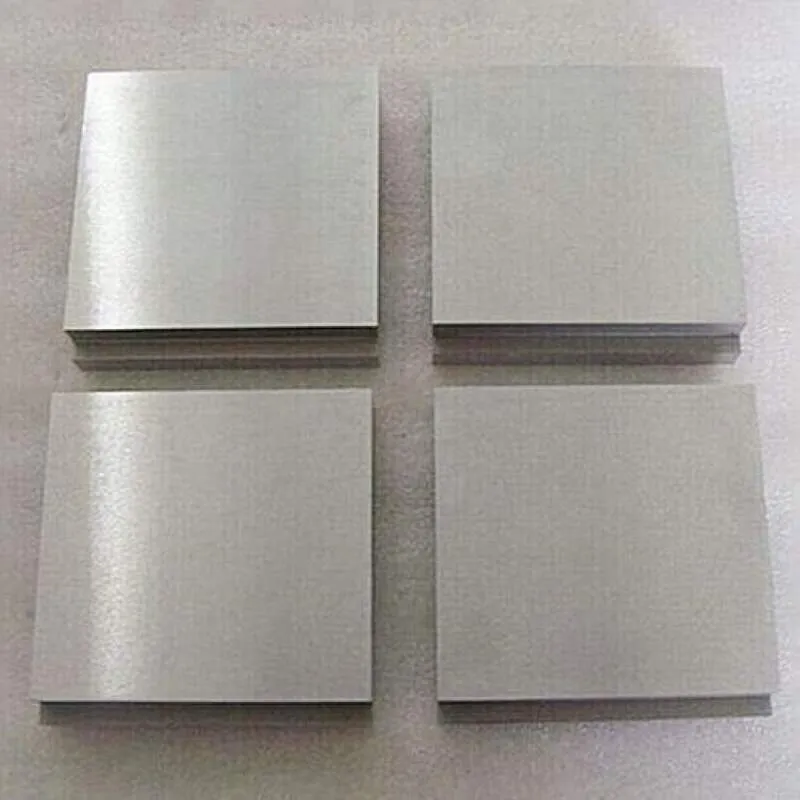
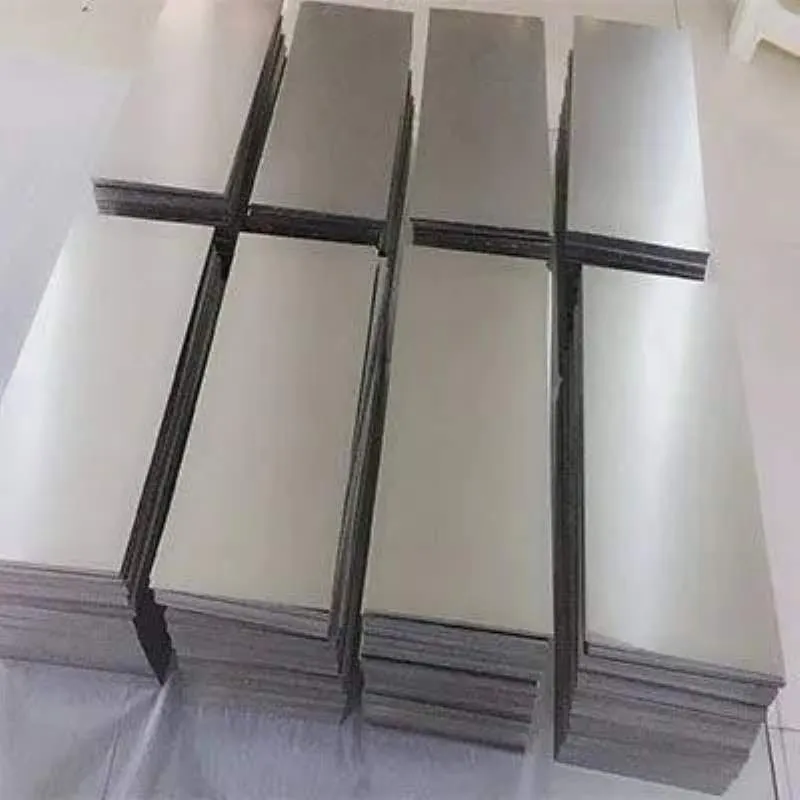
ASTM A897/A897M-06 Grade 1 (130-90-09) Austempered Ductile Iron Sheet,Plate
Product Code : STI-IFe-087-CU
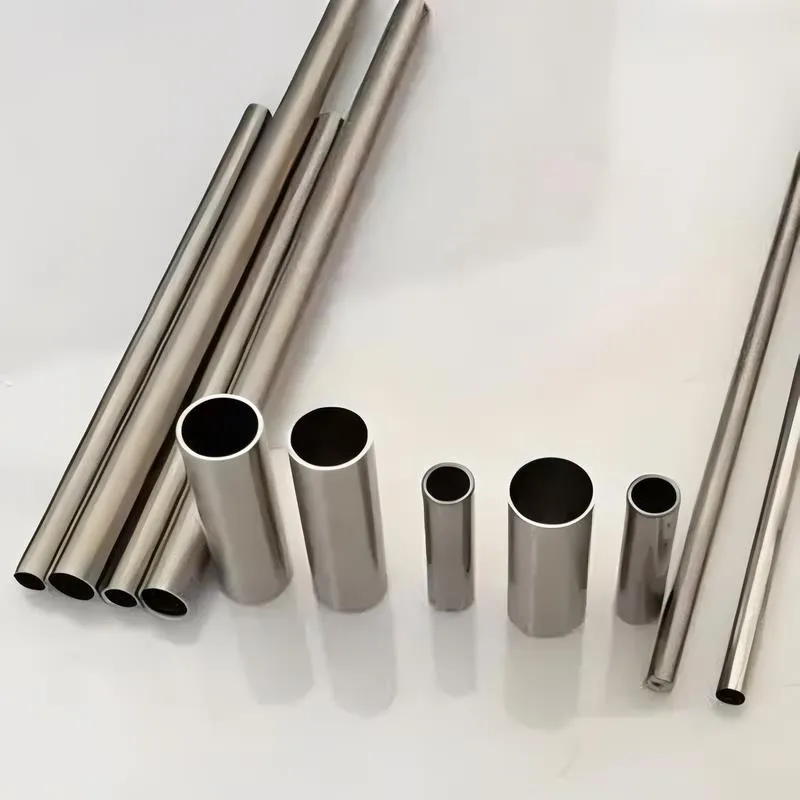
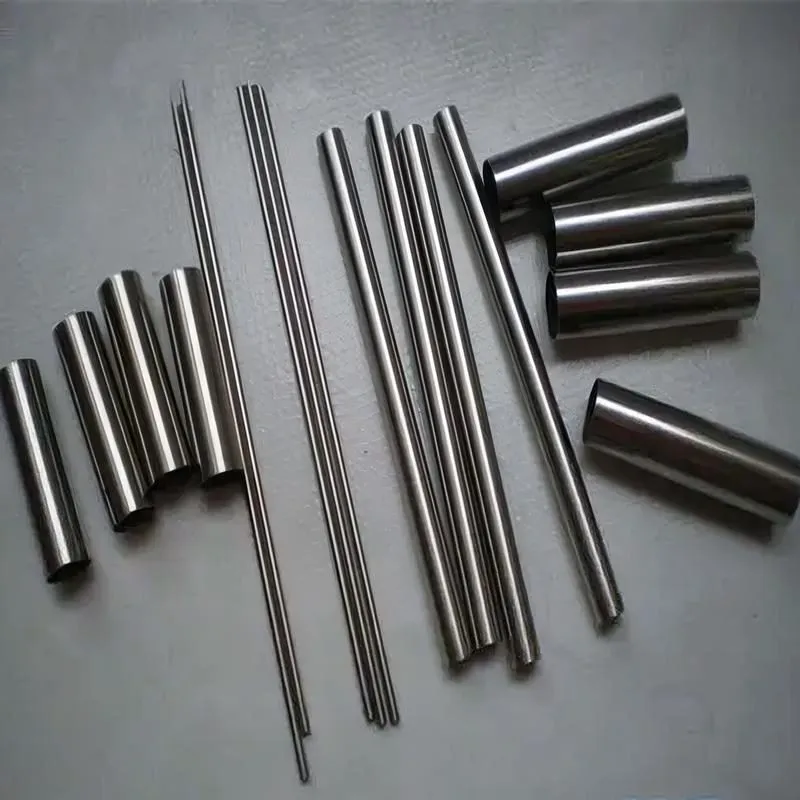
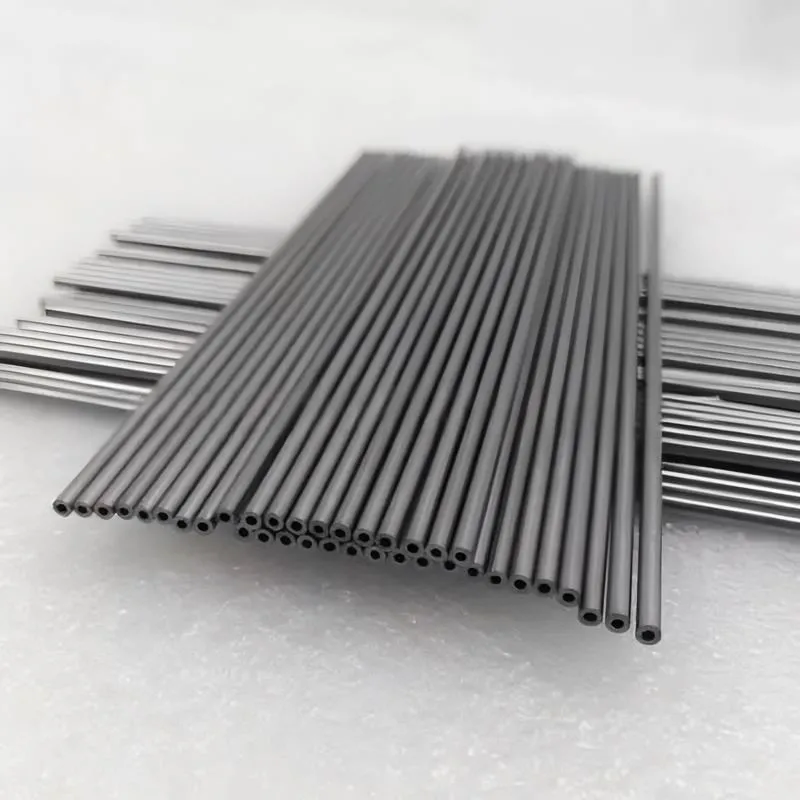
We provide ASTM A897/A897M-06 Grade 1 (130-90-09) Austempered Ductile Iron Sheet/Plate is available in Bar (Round bar, Flat bar), Ribbon, Wire, Rods, Tube,Seamless Tube,Pipe, Ingots, Plate, Sheet/Plate, Strip and Forging Stock.,Purity, chemical composition, size, etc. can all be customized to meet specific requirements.
Please contact us if you need customized services. We will contact you with the price and availability in 24 hours.
ASTM A897/A897M-06 Grade 1 (130-90-09) Austempered Ductile Iron Sheet/Plate Product Information
-:-
For detailed product information, please contact sales.
-:
ASTM A897/A897M-06 Grade 1 (130-90-09) Austempered Ductile Iron Sheet/Plate Synonyms
-:-
For detailed product information, please contact sales.
-:
ASTM A897/A897M-06 Grade 1 (130-90-09) Austempered Ductile Iron Product Information
-:-
For detailed product information, please contact sales.
-:
# **Product Technical Data Sheet: ASTM A897/A897M-06 Grade 1 (130/90/09) Austempered Ductile Iron (ADI)**
---
## **1. Product Overview**
**ASTM A897/A897M-06 Grade 130/90/09** is a **very high-strength Austempered Ductile Iron (ADI)** grade, representing one of the strongest commercially standardized ADI materials. Designated by its tensile strength (130 ksi / 900 MPa minimum), yield strength (90 ksi / 620 MPa minimum), and elongation (9% minimum), this grade delivers an **exceptional combination of ultra-high strength, good ductility, and outstanding wear resistance**. It is achieved through a precisely controlled low-temperature austempering process that produces a very fine, high-strength ausferritic microstructure. This grade is engineered for the most demanding applications where extreme load-bearing capacity, resistance to deformation, and durability under severe service conditions are paramount, effectively competing with high-strength forged or heat-treated steels.
---
## **2. Governing Standards & Specifications**
This premium-grade ADI is formally defined by the ASTM austempering standard, with clear international equivalents.
* **Primary Standard:**
* **ASTM A897/A897M-06 (and later revisions)** - *Standard Specification for Austempered Ductile Iron Castings*
* **International Equivalents:**
* **ISO 17804:** *Austempered spheroidal graphite cast irons – Classification*. Grade 130/90/09 corresponds to **ADI 900-650-09** or **JS/900/9/320/12**.
* **SAE J2477:** Recognizes equivalent grades.
* **Key Referenced Testing Standards:**
* **ASTM E8:** Tensile Testing
* **ASTM E23:** Charpy Impact Testing
* **ASTM A247:** Microstructure Evaluation (Graphite & Matrix)
* **ASTM E466:** Fatigue Testing
* **ASTM E384:** Microindentation Hardness (for microstructure analysis)
---
## **3. Typical Base Iron Chemical Composition**
Achieving this strength level requires a meticulously controlled base iron chemistry optimized for hardenability and response to low-temperature austempering.
| Element | Target Range (wt.%) | Functional Role for Grade 130/90/09 ADI |
| :--- | :--- | :--- |
| **Carbon (C)** | 3.5 - 3.8 | Provides carbon for ausferrite formation; high carbon stabilizes the austenite, but the matrix is stronger and contains less retained austenite than lower-strength ADI grades. |
| **Silicon (Si)** | **2.4 - 2.7** | **Critical.** Must be high enough to suppress carbide formation during austempering, but controlled. Higher Si can over-stabilize austenite, reducing the strength achievable at low austempering temperatures. |
| **Manganese (Mn)** | **≤ 0.25** | **Stringently limited.** Minimal segregation is acceptable; high Mn leads to unstable austenite or martensite in intercellular regions, severely reducing toughness and ductility. |
| **Molybdenum (Mo)** | **0.30 - 0.50** | **Essential.** Provides the necessary hardenability to ensure the entire casting section transforms to ausferrite during rapid quench to the very low austempering temperature, preventing pearlite formation. |
| **Copper (Cu)** | **0.8 - 1.2** | **Primary alloying element.** Works synergistically with Mo to provide uniform, deep hardenability and strengthens the matrix. |
| **Nickel (Ni)** | **0.8 - 1.5** | Commonly added with Mo, especially for complex or heavy-section castings, to ensure consistent through-hardening and improve toughness. |
| **Magnesium (Mg)** | 0.03 - 0.05 | Ensures high nodularity (>90%). |
| **Trace Elements (Sn, Sb)** | **Near Zero** | Strong pearlite promoters; must be minimized to allow full ausferritic transformation. |
---
## **4. Physical & Mechanical Properties**
Grade 130/90/09 is characterized by its position at the high-strength frontier of ADI properties.
| Property | Minimum Requirement (ASTM A897) | Typical Value / Significance |
| :--- | :--- | :--- |
| **Tensile Strength (UTS)** | **900 MPa (130 ksi)** | Ultra-high strength, comparable to high-strength low-alloy (HSLA) steels. |
| **Yield Strength (0.2% YS)** | **620 MPa (90 ksi)** | Exceptionally high yield strength, providing great resistance to permanent deformation. |
| **Elongation** | **9%** | **Good ductility for its strength level.** Provides crucial damage tolerance and safety margin against brittle fracture. |
| **Hardness (Brinell)** | **302 - 375 HBW** | Typically 321-363 HBW (approx. 34-38 HRC). Provides excellent resistance to abrasive and adhesive wear. |
| **Modulus of Elasticity** | **165 - 175 GPa** | Similar to other ductile irons. |
| **Charpy Impact (Unnotched)** | **45 - 80 J** | Good impact resistance, though lower than lower-strength ADI grades due to finer, stronger microstructure. |
| **Charpy Impact (V-notch)** | **Typically 12 - 20 J @ 23°C** | Moderate fracture toughness. Design must account for notch sensitivity. |
| **Fatigue Endurance Limit** | **~410 - 495 MPa** | **Excellent.** Approximately 0.45-0.55 x UTS. Superior to quenched and tempered steels of similar hardness due to compressive stresses and crack-blunting graphite. |
| **Density** | **~7.1 g/cm³** | Lightweight advantage over steel. |
| **Damping Capacity** | **Good (~3x steel)** | Beneficial for noise and vibration reduction. |
| **Microstructure** | **Very Fine Ausferrite.** Extremely fine acicular ferrite with a **lower percentage of high-carbon austenite** (typically 15-25%). Achieved via a **low austempering temperature (~230-270°C / 450-520°F)**. This fine structure is responsible for the high strength and hardness. |
---
## **5. Product Applications**
This grade is specified for extreme-duty components where failure is not an option and weight savings are critical.
* **Heavy Mining & Construction Equipment:**
* **Gears and pinions** for large haul truck differentials and final drives.
* **Track system components** (rollers, links, idlers) for giant excavators.
* **Crusher jaws, cones, and hammerheads.**
* **High-Performance Automotive & Racing:**
* **High-load transmission gears, dog rings, and sequential gearbox components.**
* **High-stress suspension components** (uprights, links) in top-tier motorsport.
* **Defense & Aerospace:**
* **Lightweight armor components, track pads for armored vehicles, and high-integrity structural castings.**
* **Industrial Machinery:**
* **High-torque gearbox components, heavy-duty press rams, and anvil blocks.**
* **Rolls for rolling mills** requiring extreme surface durability.
* **Oil & Gas:**
* **Components for frac pumps, mud pumps, and high-pressure valves.**
---
## **6. Austempering Process & Fabrication Notes**
* **Heat Treatment Process (Austempering):** The key to this grade is a **low austempering temperature**.
1. **Austenitizing:** 870-900°C.
2. **Quenching:** Rapid quench into salt bath at **230-270°C**.
3. **Isothermal Hold:** 2-4 hours to form fine ausferrite.
4. **Air Cool.**
* **Process Sensitivity:** This grade has the **narrowest processing window** of the standard ADI grades. Precise control of time and temperature is critical to avoid forming brittle martensite or upper bainite.
* **Machinability:** **Very Difficult** in the final austempered condition. **Nearly all machining must be done in a soft, normalized condition prior to austempering.** Final dimensions are achieved via **grinding, honing, or hard turning with PCBN/CBN tooling**.
* **Weldability:** **Not Recommended.** The microstructure is severely compromised by welding heat, leading to untempered martensite and cracking. ADI components are designed as-cast and heat-treated.
* **Grindability:** Fair to good. Can be ground to precise tolerances, but the hardness requires appropriate wheels and parameters.
---
## **7. Ordering Information**
**Specify:** **"Austempered Ductile Iron (ADI) Castings, ASTM A897/A897M-06 Grade 130/90/09 (or Grade 900/650/09)."**
**Critical Details to Provide:**
* **Full standard and grade designation.**
* **Part Drawing & Specification,** including critical sections and stress areas.
* **Section Size/Weight:** Absolutely critical for the heat treater to design the proper austempering cycle.
* **Certification Requirements (Mandatory):**
* Base iron chemistry.
* Final mechanical properties (Tensile, Yield, Elongation, Hardness).
* **Microstructure report** confirming fine ausferrite, nodularity, and absence of deleterious phases (martensite, carbides).
* Charpy impact test results are often required.
* **Non-Destructive Testing (NDT):** 100% magnetic particle or fluorescent penetrant inspection is standard. Ultrasonic testing for internal soundness is common for high-integrity parts.
---
## **8. Key Advantages & Design Considerations**
* **Advantages:**
* **Ultra-High Strength & Hardness:** Enables lightweight, compact designs.
* **Excellent Fatigue & Wear Resistance:** For long service life in harsh conditions.
* **Good Damping & Casting Complexity:** Benefits over fabricated steel.
* **Design Considerations:**
* **High Notch Sensitivity:** Use generous fillet radii; avoid sharp corners and machining marks in high-stress areas.
* **Residual Stress:** The process induces high compressive surface stresses. Deep machining can relieve these, altering performance.
* **Quality Assurance:** Requires a highly capable supply chain with rigorous process control and certification.
* **Cost:** Premium material due to alloy content and specialized, precise heat treatment.
**ASTM A897 Grade 130/90/09 ADI is a premium, high-performance engineering material that allows designers to achieve steel-like strength with the unique advantages of a casting. It is the material of choice for reducing weight, consolidating parts, and improving durability in the most demanding mechanical systems on earth.**
-:-
For detailed product information, please contact sales.
-:
ASTM A897/A897M-06 Grade 1 (130-90-09) Austempered Ductile Iron Specification
Dimensions
Size:
Diameter 20-1000 mm Length <6562 mm
Size:We can customized as required
Standard:
Per your request or drawing
We can customized as required
Properties(Theoretical)
Chemical Composition
-:-
For detailed product information, please contact sales.
-:
ASTM A897/A897M-06 Grade 1 (130-90-09) Austempered Ductile Iron Properties
-:-
For detailed product information, please contact sales.
-:
Applications of ASTM A897/A897M-06 Grade 1 (130-90-09) Austempered Ductile Iron Sheet,Plate
-:-
For detailed product information, please contact sales.
-:
Chemical Identifiers ASTM A897/A897M-06 Grade 1 (130-90-09) Austempered Ductile Iron Sheet,Plate
-:-
For detailed product information, please contact sales.
-:
Packing of ASTM A897/A897M-06 Grade 1 (130-90-09) Austempered Ductile Iron Sheet/Plate
-:-
For detailed product information, please contact sales.
-:
Standard Packing:
-:-
For detailed product information, please contact sales.
-:
Typical bulk packaging includes palletized plastic 5 gallon/25 kg. pails, fiber and Steel Sheet/Plate drums to 1 ton super sacks in full container (FCL) or truck load (T/L) quantities. Research and sample quantities and hygroscopic, oxidizing or other air sensitive materials may be packaged under argon or vacuum. Solutions are packaged in polypropylene, plastic or glass jars up to palletized 3033 gallon liquid totes Special package is available on request. E FORUs’ is carefully handled to minimize damage during storage and transportation and to preserve the quality of our products in their original condition