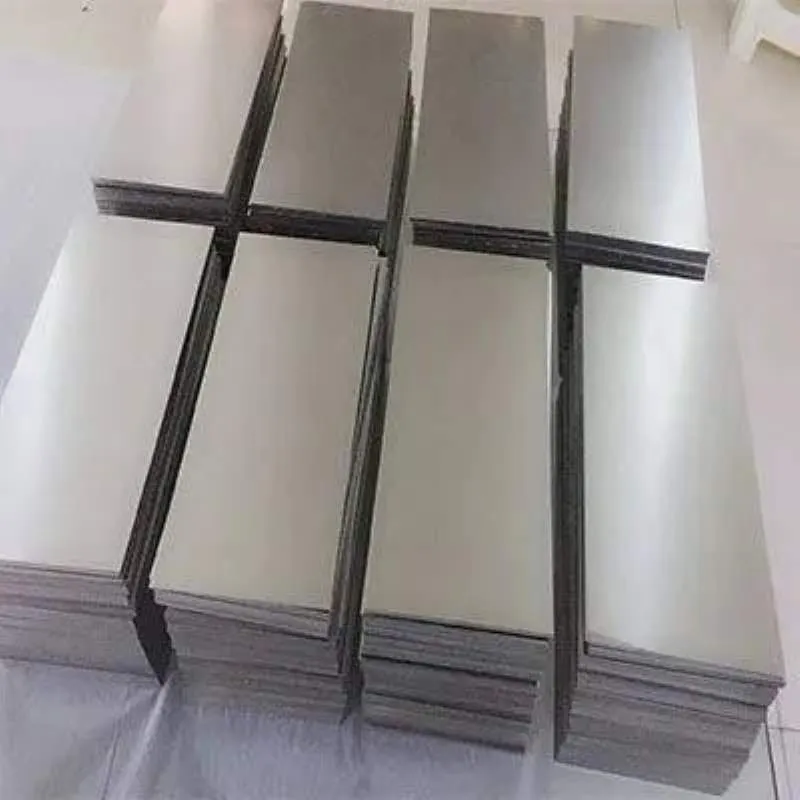
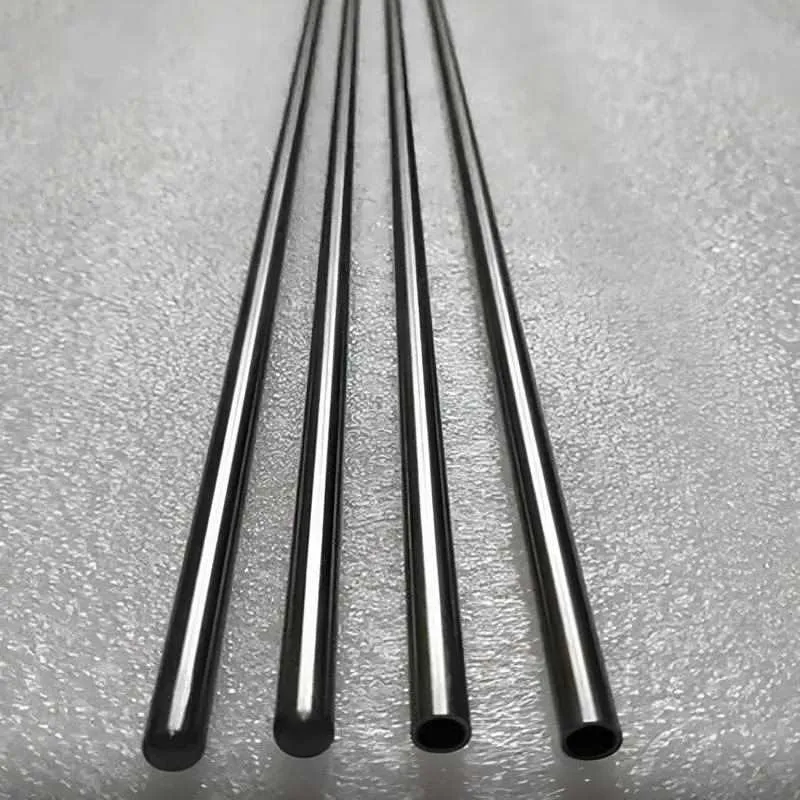
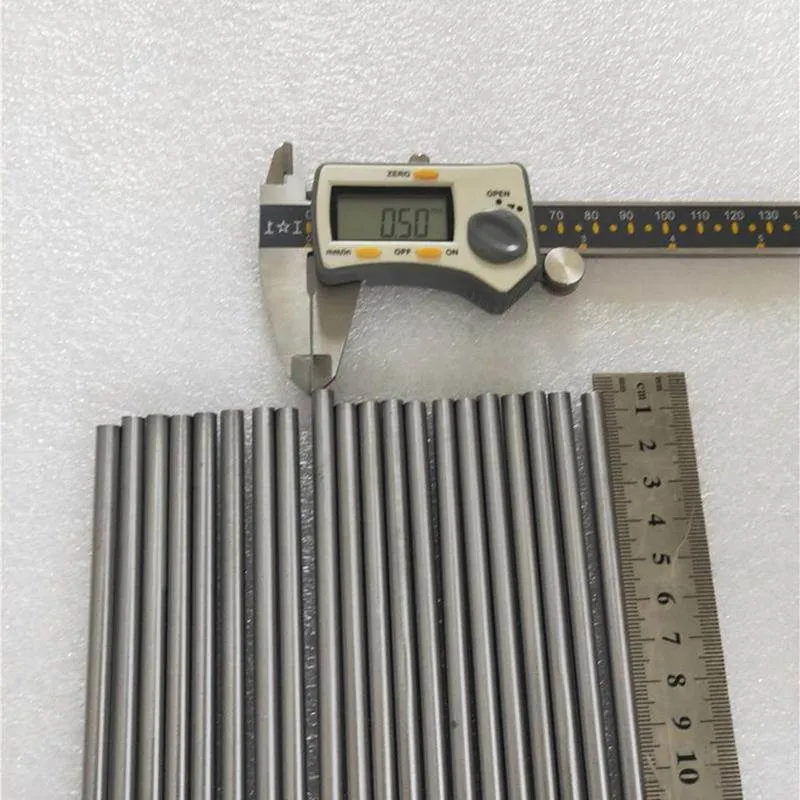
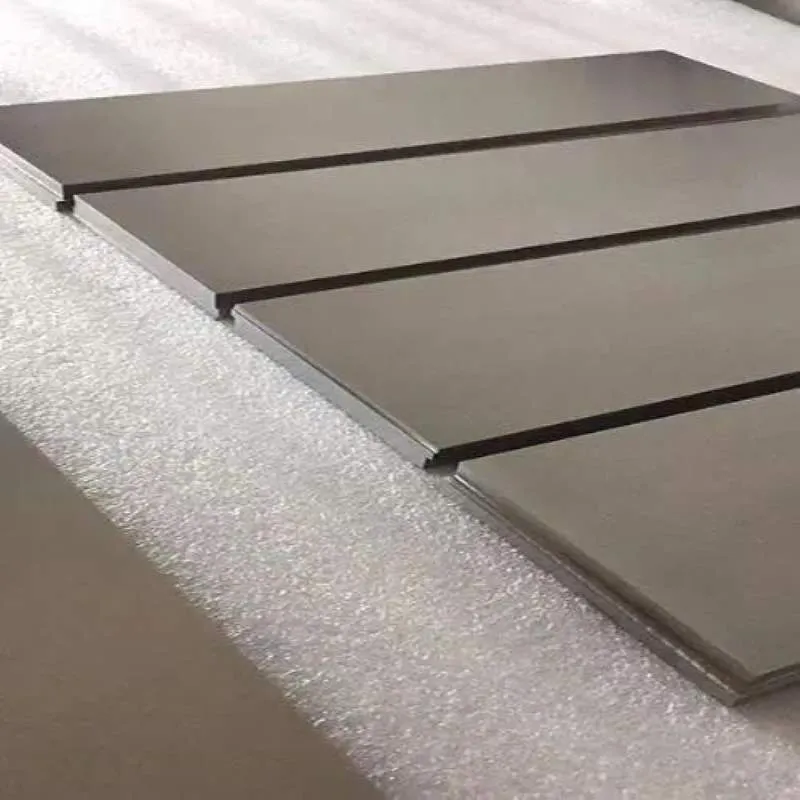
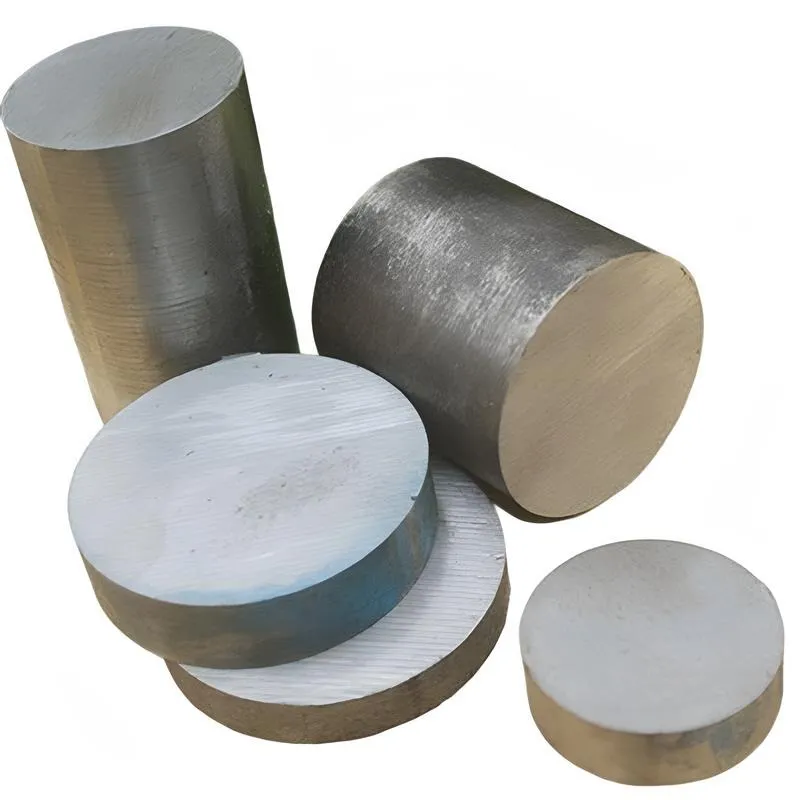
Crucible Steel Sheet,Plate,161 Tool Steel Sheet,Plate, High Carbon H13
Product Code : STI-GSTI-341-CU
We provide Crucible Steel Sheet/Plate 161 Tool Steel Sheet/Plate, High Carbon H13 is available in Bar (Round bar, Flat bar), Ribbon, Wire, Rods, Tube,Seamless Tube,Pipe, Ingots, Plate, Sheet/Plate, Strip and Forging Stock.,Purity, chemical composition, size, etc. can all be customized to meet specific requirements.
Please contact us if you need customized services. We will contact you with the price and availability in 24 hours.
Crucible Steel Sheet/Plate 161 Tool Steel Sheet/Plate, High Carbon H13 Product Information
-:-
For detailed product information, please contact sales.
-:
Crucible Steel Sheet/Plate 161 Tool Steel Sheet/Plate, High Carbon H13 Synonyms
-:-
For detailed product information, please contact sales.
-:
Crucible Steel 161 Tool Steel, High Carbon H13 Product Information
-:-
For detailed product information, please contact sales.
-:
# **Product Introduction: Crucible Steel 161 Tool Steel (High Carbon H13)**
Crucible Steel 161 is a premium, high-carbon modification of the classic AISI H13 hot work tool steel, engineered to deliver **enhanced wear resistance, higher attainable hardness, and improved hot strength** while retaining the core benefits of excellent hardenability and good thermal shock resistance characteristic of the H13 family. By elevating the carbon content beyond the standard H13 specification, this grade strategically shifts the performance balance to better combat abrasive wear, metal soldering, and deformation under high pressure at elevated temperatures.
This modified composition is particularly suited for demanding hot work applications where standard H13 exhibits premature failure due to erosion, washing, or excessive plastic deformation rather than thermal fatigue cracking. Crucible 161 maintains the chromium-molybdenum-vanadium-silicon foundation of H13, ensuring deep air hardenability and oxidation resistance, but with the added carbon providing a greater volume of stable carbides for improved load-bearing capacity and die life in severe service conditions.
---
## **1. Chemical Composition (Weight %)**
The composition modifies the standard H13 formula with a controlled increase in carbon content.
| **Element** | **Carbon (C)** | **Chromium (Cr)** | **Molybdenum (Mo)** | **Vanadium (V)** | **Silicon (Si)** | **Manganese (Mn)** |
| :--- | :--- | :--- | :--- | :--- | :--- | :--- |
| **Content** | **0.45 - 0.55** | 4.75 - 5.50 | 1.25 - 1.75 | 0.90 - 1.20 | 0.90 - 1.20 | 0.30 - 0.60 |
| **Role** | **Key Modifier.** Increased carbon enhances hardness, wear resistance, and hot strength by promoting greater carbide formation. This shifts the property balance from maximum toughness (standard H13) towards greater wear resistance. | Provides deep hardenability, hot hardness, and oxidation resistance. Forms chromium carbides contributing to wear. | Enhances hardenability, hot strength, and resistance to tempering; refines grain structure. | Forms hard, stable vanadium carbides (VC) that resist coarsening at high temperatures, providing abrasion resistance and grain refinement. | Improves oxidation resistance and provides solid solution strengthening at elevated temperatures. | Aids in deoxidation and contributes to hardenability. |
*Note: Iron (Fe) constitutes the remainder. Compared to standard H13 (C: 0.37-0.42%), the carbon in Grade 161 is significantly higher, placing it in a "high-carbon H13" category.*
---
## **2. Physical & Mechanical Properties**
*Properties are optimized for service at a slightly higher hardness than standard H13, typically in the range of 46-50 HRC after tempering.*
* **Density:** ~7.80 g/cm³ (0.282 lb/in³)
* **Modulus of Elasticity:** ~210 GPa (30.5 x 10⁶ psi)
* **Thermal Conductivity:** Slightly lower than standard H13 due to higher carbide volume, but still good.
* **Hot Hardness & Temper Resistance:** **Excellent.** The higher carbon and alloy content provide improved resistance to softening at elevated temperatures (up to ~540°C / 1000°F), offering better load-bearing capacity under heat.
* **Wear & Abrasion Resistance:** **Very Good to Excellent.** The primary advantage over standard H13. The increased carbide volume provides significantly better resistance to erosive wear, metal soldering (in die casting), and abrasive forging scale.
* **Thermal Fatigue Resistance:** **Good.** While still good, the higher hardness and slightly lower toughness compared to standard H13 may make it marginally more susceptible to heat-check initiation under extreme thermal cycling. However, its wear resistance often prevents the surface degradation that initiates cracks.
* **Toughness:** **Good (but lower than standard H13).** The increased hardness and carbon content result in lower impact toughness. It is suitable for applications with controlled mechanical shock but is not the choice for high-impact forging.
* **Dimensional Stability:** **Excellent.** Maintains the excellent air-hardening characteristics of H13 with minimal distortion.
---
## **3. Heat Treatment**
Heat treatment is similar to H13 but requires adjustments for the higher carbon content to achieve optimal toughness.
* **Annealing:** Heat to 845-870°C (1555-1600°F), slow cool. Annealed hardness: 210-240 HB.
* **Stress Relieving:** 650-675°C (1200-1250°F), hold, then slow cool.
* **Preheating:** **Critical.** Thorough preheat at 790-815°C (1450-1500°F).
* **Austenitizing:** **1000-1040°C (1830-1900°F).** A common range is **1015-1025°C (1860-1875°F)**. Slightly lower than standard H13 top-end to manage grain growth and retained austenite.
* **Quenching:** **Air quench** (forced air preferred) or high-pressure gas quench.
* **Tempering:** **Mandatory Double or Triple Temper.** Temper immediately after quenching. **Must be tempered at high temperatures.**
* **Typical Tempering Range:** **560-600°C (1040-1110°F)** for a working hardness of 46-50 HRC.
* **Multiple tempers (2-3)** are essential to transform retained austenite and ensure toughness.
* **Never use in the as-quenched state.**
---
## **4. Key Applications**
Crucible 161 is designed for hot work applications where standard H13 wears out too quickly or deforms under pressure.
* **Aluminum Die Casting:** For high-wear components such as **shot sleeves, nozzles, gooseneck liners, and high-pressure area inserts** where erosion and soldering are problems. Also for casting highly abrasive high-silicon aluminum alloys.
* **Brass, Bronze, and Copper Alloy Forging/Extrusion Dies:** Where high temperatures and abrasive oxides cause rapid die wear.
* **Hot Forging Dies for Steel:** For applications where wear and deformation are greater concerns than extreme thermal shock.
* **Tooling for Abrasive Plastics:** Molds for glass-filled or mineral-reinforced polymers.
* **General Hot Work Tooling** requiring a harder, more wear-resistant surface than H13 can provide.
---
## **5. International Standards & Cross-References**
Crucible 161 is a proprietary modified grade based on high-carbon H13 chemistry. It does not have a direct AISI number but is recognized within the industry as a high-carbon H13 variant.
* **Common Designation:** **High Carbon H13, Modified H13 (HC)**
* **AISI/SAE:** Not a standard AISI grade. Based on modified **H13**.
* **European (EN):** Similar in concept to some modified **1.2344** types with elevated carbon.
* **Industry Equivalents:** Similar to other manufacturers' high-carbon H13 offerings, such as certain **DIN 1.2344+** variants or proprietary grades like **Uddeholm VIDAR SUPERIOR** (which is a different composition but addresses similar wear issues).
* **Comparison:** Positioned between standard **H13** and more highly alloyed, wear-focused hot work steels like **H10/H19** types (e.g., Crucible WR-95).
---
## **6. Advantages & Limitations**
**Advantages:**
* **Enhanced Wear & Deformation Resistance:** Solves the primary weakness of standard H13 in abrasive/pressure-intensive applications.
* **Higher Hot Hardness:** Maintains better mechanical properties at operating temperature.
* **Good Hardenability & Stability:** Retains the excellent processing benefits of the H13 family.
* **Cost-Effective Upgrade:** Provides a significant performance increase over H13 without the cost of moving to a more exotic alloy (like tungsten-based hot work steels).
**Limitations:**
* **Reduced Toughness:** Not suitable for high-impact applications like hammer forging; more prone to chipping or cracking under severe mechanical shock.
* **More Sensitive Heat Treatment:** Requires precise control to balance hardness and toughness.
* **Potential for Increased Heat Checking:** In applications with extreme, uncontrolled thermal cycling, the lower toughness may be a liability.
* **Not a Drop-in Replacement:** Requires reassessment of die design and process conditions versus standard H13.
---
## **7. Summary**
**Crucible Steel 161 (High Carbon H13) is a targeted engineering solution that enhances the H13 platform for applications dominated by wear and pressure.** It is the strategic choice when die life is limited by erosion, soldering, or plastic deformation rather than by a network of heat checks. By selectively increasing carbon content, it delivers a harder, more wear-resistant die surface capable of withstanding the abrasive nature of molten metals and forging scales, extending production runs and reducing downtime. For die casters and forgers who have pushed standard H13 to its limits, Grade 161 offers a logical and effective performance upgrade, providing longer life and greater process stability in the most punishing hot work environments.
-:-
For detailed product information, please contact sales.
-:
Crucible Steel 161 Tool Steel, High Carbon H13 Specification
Dimensions
Size:
Diameter 20-1000 mm Length <6997 mm
Size:We can customized as required
Standard:
Per your request or drawing
We can customized as required
Properties(Theoretical)
Chemical Composition
-:-
For detailed product information, please contact sales.
-:
Crucible Steel 161 Tool Steel, High Carbon H13 Properties
-:-
For detailed product information, please contact sales.
-:
Applications of Crucible Steel Sheet,Plate 161 Tool Steel Sheet,Plate, High Carbon H13
-:-
For detailed product information, please contact sales.
-:
Chemical Identifiers Crucible Steel Sheet,Plate 161 Tool Steel Sheet,Plate, High Carbon H13
-:-
For detailed product information, please contact sales.
-:
Packing of Crucible Steel Sheet/Plate 161 Tool Steel Sheet/Plate, High Carbon H13
-:-
For detailed product information, please contact sales.
-:
Standard Packing:
-:-
For detailed product information, please contact sales.
-:
Typical bulk packaging includes palletized plastic 5 gallon/25 kg. pails, fiber and Steel Sheet/Plate drums to 1 ton super sacks in full container (FCL) or truck load (T/L) quantities. Research and sample quantities and hygroscopic, oxidizing or other air sensitive materials may be packaged under argon or vacuum. Solutions are packaged in polypropylene, plastic or glass jars up to palletized 3468 gallon liquid totes Special package is available on request. E FORUs’ is carefully handled to minimize damage during storage and transportation and to preserve the quality of our products in their original condition