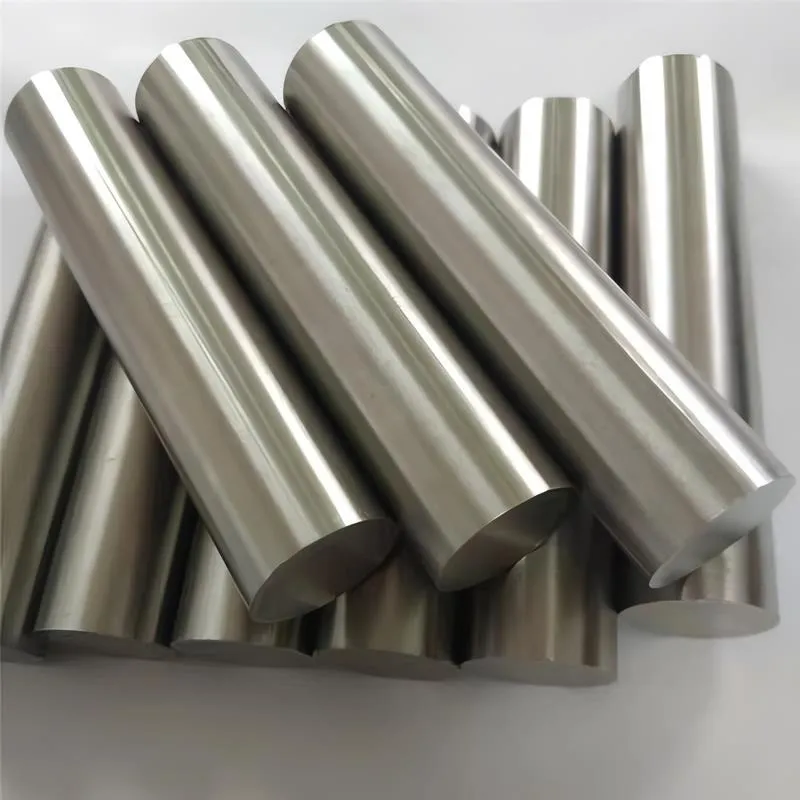
International Mold Steel Rod/Bar,DC53 General-Purpose Cold Work Die and Mold Steel Rod/Bar
Product Code : STI-GSTI-373-CU
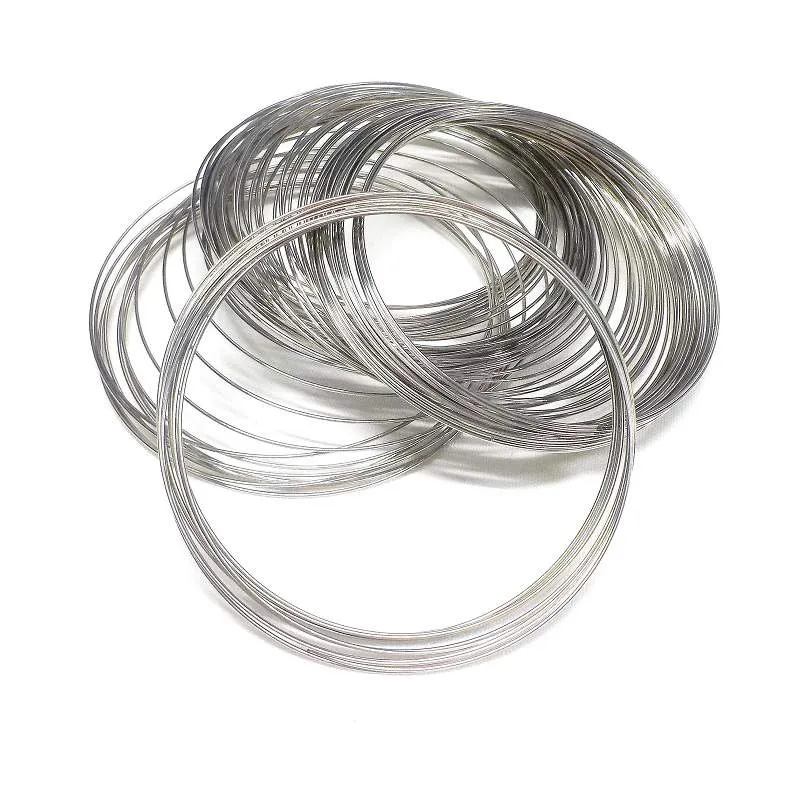
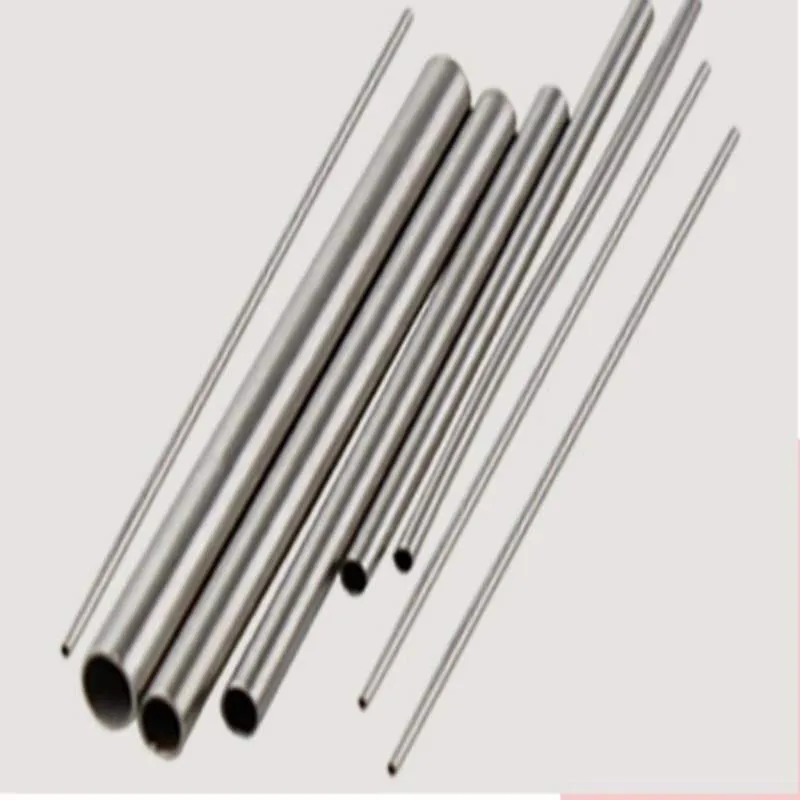
We provide International Mold Steel Rod/Bar DC53 General-Purpose Cold Work Die and Mold Steel Rod/Bar is available in Bar (Round bar, Flat bar), Ribbon, Wire, Rod/Bars, Tube,Seamless Tube,Pipe, Ingots, Plate, Sheet, Strip and Forging Stock.,Purity, chemical composition, size, etc. can all be customized to meet specific requirements.
Please contact us if you need customized services. We will contact you with the price and availability in 24 hours.
International Mold Steel Rod DC53 General-Purpose Cold Work Die and Mold Steel Rod Product Information
-:-
For detailed product information, please contact sales.
-:
International Mold Steel Rod DC53 General-Purpose Cold Work Die and Mold Steel Rod Synonyms
-:-
For detailed product information, please contact sales.
-:
International Mold Steel DC53 General-Purpose Cold Work Die and Mold Steel Product Information
-:-
For detailed product information, please contact sales.
-:
# **Product Introduction: DC53 General-Purpose Cold Work Die and Mold Steel**
## **1. Overview**
**DC53** is a high-performance, general-purpose **cold work tool steel** developed as an enhanced alternative to the traditional **D2 (AISI)** / **1.2379 (DIN)** steel. Characterized by its improved **toughness, machinability, and dimensional stability during heat treatment**, DC53 is manufactured using advanced **secondary refining processes** to ensure superior microstructural homogeneity and purity. As a **high-carbon, high-chromium, molybdenum-vanadium alloy steel**, it offers an excellent balance of **wear resistance, compressive strength, and toughness** – making it an ideal choice for a wide range of cold work tooling applications where reliability, precision, and extended service life are essential.
## **2. International Standards & Specifications**
While DC53 originated as a Japanese-developed improvement over D2, it has gained global recognition and is often specified as a premium alternative.
* **Primary Reference Standard:**
* **JIS G4404 SKD11 (Modified):** While not an official JIS grade, DC53 is chemically based on and considered an enhanced version of SKD11 (equivalent to AISI D2).
* **Daido Steel Proprietary Grade:** Originally developed and trademarked by Daido Steel Co., Ltd.
* **Key International Equivalents & Comparisons:**
* **AISI D2 (Modified):** The closest American equivalent, though DC53 offers superior toughness and grindability.
* **DIN 1.2379 / 1.2080:** The European high-chromium cold work steels. DC53 is often compared favorably due to its better machinability.
* **ISO 4957 X153CrMoV12:** The international classification for steel of this type.
* **Common Industry Designations:** Often referred to as "**Super D2**" or "**Tough D2**" in the global market to denote its enhanced properties.
## **3. Chemical Composition (Weight %, Typical)**
The composition is optimized to refine carbides and improve toughness compared to standard D2/SKD11.
| Element | Typical Range (%) | Role & Benefit |
| :--- | :--- | :--- |
| **Carbon (C)** | 0.90 – 1.05 | Provides high hardness and wear resistance through the formation of hard carbides. Slightly lower than D2 to improve toughness. |
| **Chromium (Cr)** | 7.50 – 8.50 | **Primary alloy.** Forms abundant chromium carbides (Cr₇C₃) for exceptional wear resistance. Provides moderate corrosion resistance. |
| **Molybdenum (Mo)** | 1.40 – 2.00 | **Key enhancer.** Improves hardenability, refines grain structure, increases toughness, and contributes to secondary hardening. Higher than typical D2. |
| **Vanadium (V)** | 0.10 – 0.30 | Forms very hard vanadium carbides for additional wear resistance and grain refinement. Amount optimized for balance. |
| **Silicon (Si)** | 0.80 – 1.10 | **Important differentiator.** Higher than D2. Acts as a potent solid-solution strengthener, improves tempering resistance, and enhances toughness. |
| **Manganese (Mn)** | 0.30 – 0.50 | Aids in hardenability and deoxidation. |
| **Phosphorus (P)** | ≤ 0.025 | Impurity, controlled for toughness. |
| **Sulfur (S)** | ≤ 0.010 | Impurity, kept very low to ensure optimal toughness and polishability. |
## **4. Typical Physical & Mechanical Properties (Heat Treated)**
* **Recommended Heat Treatment:**
* **Preheating:** 650-700°C (1200-1290°F) then 850-900°C (1560-1650°F)
* **Austenitizing:** 1020-1040°C (1870-1905°F)
* **Quenching:** Air or oil (exhibits less distortion than D2)
* **Tempering:** Double tempering recommended. Typical tempering range: **180-250°C (355-480°F)** for high hardness, or **520-550°C (970-1020°F)** for high toughness applications. Exhibits significant **secondary hardening** peak around 500-550°C.
* **Mechanical Properties (Hardened & Tempered):**
* **Hardness:** **60 – 63 HRC** (typical for high-wear applications)
* **Tensile Strength:** 2000 – 2300 MPa (290,000 – 333,000 psi)
* **Yield Strength (Compressive):** ~ 2500 – 2800 MPa (363,000 – 406,000 psi)
* **Impact Toughness (Charpy U-Notch):** **~8 – 12 J** – **Approximately twice that of conventional D2 at equivalent hardness**, a key advantage.
* **Bending Strength:** Excellent, superior to D2.
* **Physical Properties:**
* **Density:** 7.80 g/cm³
* **Modulus of Elasticity:** ~ 210 GPa (30.5 x 10⁶ psi)
* **Thermal Conductivity:** ~ 20 W/m·K (at 20°C)
* **Coefficient of Thermal Expansion:** 10.5 x 10⁻⁶/K (20-100°C)
* **Dimensional Stability:** **Very good.** Exhibits less distortion during heat treatment compared to D2 due to its refined microstructure and optimized alloy content.
## **5. Product Application**
DC53 is a versatile steel suitable for a broad spectrum of cold work tooling.
* **Precision Stamping and Blanking:**
* **Progressive Dies** for electronic components, automotive parts, and appliances.
* **Blank and Pierce Dies**, especially for medium to thick materials.
* **Fine Blanking Dies** where high edge strength is critical.
* **Forming and Drawing:**
* **Cold Forming Dies** and **Roll Forming Rolls**.
* **Deep Drawing Dies** for metals.
* **Bending and Hemming Tools**.
* **Slitting and Cutting:**
* **Shear Blades** and **Slitter Knives**.
* **Cut-off Dies** and **Trimming Tools**.
* **Mold and General Tooling:**
* **Plastic Injection Mold Cavities and Cores** for abrasive or glass-filled plastics.
* **Cold Forging Dies** and **Extrusion Punches**.
* **Gauges, Jigs, and Fixtures** requiring high wear resistance.
* **Knives and Industrial Blades**.
## **6. Key Features & Advantages**
* **Superior Toughness:** The most significant advantage over D2. Higher impact resistance reduces chipping and catastrophic failure in demanding applications.
* **Excellent Wear Resistance:** Maintains very high hardness (60+ HRC) with a fine distribution of hard carbides, ensuring long service life.
* **Improved Machinability and Grindability:** Softer in the annealed state and less abrasive during grinding compared to D2, reducing machining time and cost.
* **Reduced Distortion During Heat Treatment:** Exhibits better dimensional stability, allowing for tighter tolerances and less post-heat-treatment machining.
* **Good Through-Hardenability:** Suitable for larger cross-sections with consistent core properties.
* **Versatile Tempering Response:** Can be tempered at both low temperatures for maximum hardness or at higher temperatures (500-550°C) to achieve a favorable combination of high toughness and good hardness (~58-60 HRC).
* **Better Polishability:** The finer, more uniform carbide structure allows for achieving very fine surface finishes.
## **7. Processing Guidelines**
* **Annealed Condition:** Typically supplied at ~210-240 HB for machining.
* **Machining:** Good machinability in annealed state. Use proper tool geometry and coolant.
* **Grinding:** Use aluminum oxide or CBN wheels with appropriate feeds to avoid burning. Its better grindability is a notable advantage.
* **Electrical Discharge Machining (EDM):** Can be machined via EDM. A stress-relief temper is recommended after roughing to remove the brittle "white layer."
* **Welding:** Repairs are possible but challenging. Requires thorough preheating (400-450°C), use of matching or high-toughness tool steel electrodes, and immediate post-weld tempering.
**Summary:**
International Mold Steel DC53 represents a significant advancement in cold work die steel technology. By addressing the primary weakness of traditional D2 steel – brittleness – while maintaining excellent wear resistance, it provides toolmakers and manufacturers with a more reliable and versatile material. Its enhanced toughness, better machinability, and improved dimensional stability make it a superior general-purpose choice for a wide array of demanding cold work applications, often leading to longer tool life, reduced downtime, and lower total cost of ownership.
-:-
For detailed product information, please contact sales.
-:
International Mold Steel DC53 General-Purpose Cold Work Die and Mold Steel Specification
Dimensions
Size:
Diameter 20-1000 mm Length <7029 mm
Size:We can customized as required
Standard:
Per your request or drawing
We can customized as required
Properties(Theoretical)
Chemical Composition
-:-
For detailed product information, please contact sales.
-:
International Mold Steel DC53 General-Purpose Cold Work Die and Mold Steel Properties
-:-
For detailed product information, please contact sales.
-:
Applications of International Mold Steel Rod DC53 General-Purpose Cold Work Die and Mold Steel Rod
-:-
For detailed product information, please contact sales.
-:
Chemical Identifiers International Mold Steel Rod DC53 General-Purpose Cold Work Die and Mold Steel Rod
-:-
For detailed product information, please contact sales.
-:
Packing of International Mold Steel Rod DC53 General-Purpose Cold Work Die and Mold Steel Rod
-:-
For detailed product information, please contact sales.
-:
Standard Packing:
-:-
For detailed product information, please contact sales.
-:
Typical bulk packaging includes palletized plastic 5 gallon/25 kg. pails, fiber and Steel Rod drums to 1 ton super sacks in full container (FCL) or truck load (T/L) quantities. Research and sample quantities and hygroscopic, oxidizing or other air sensitive materials may be packaged under argon or vacuum. Solutions are packaged in polypropylene, plastic or glass jars up to palletized 3500 gallon liquid totes Special package is available on request. E FORUs’ is carefully handled to minimize damage during storage and transportation and to preserve the quality of our products in their original condition