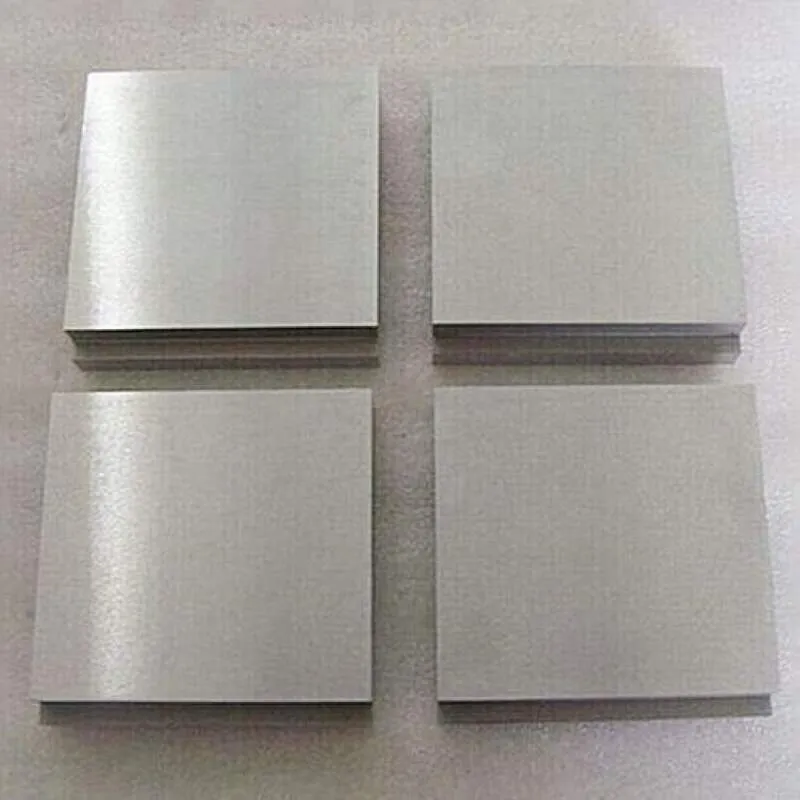
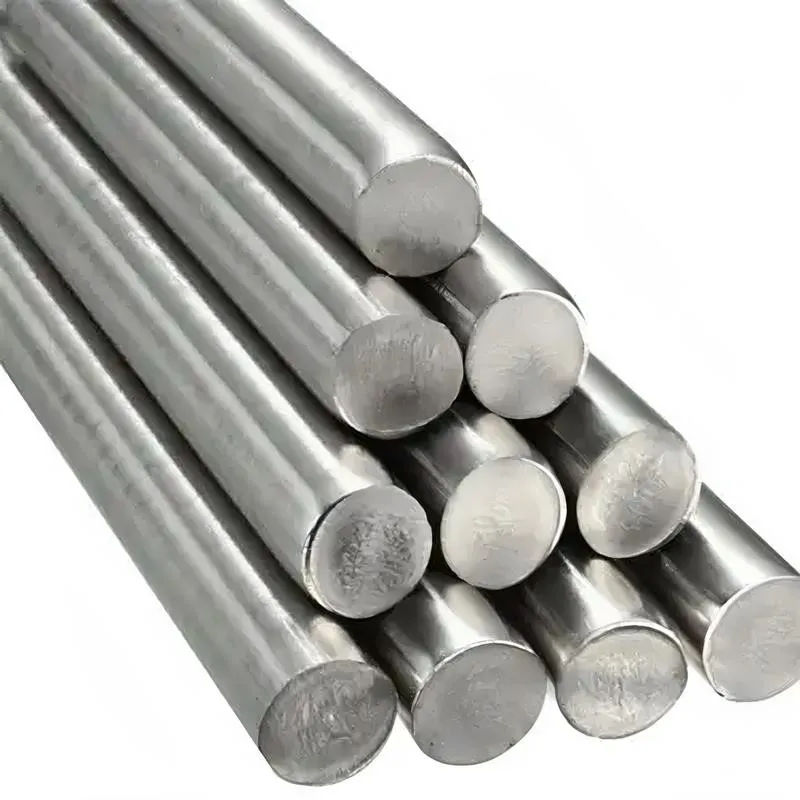
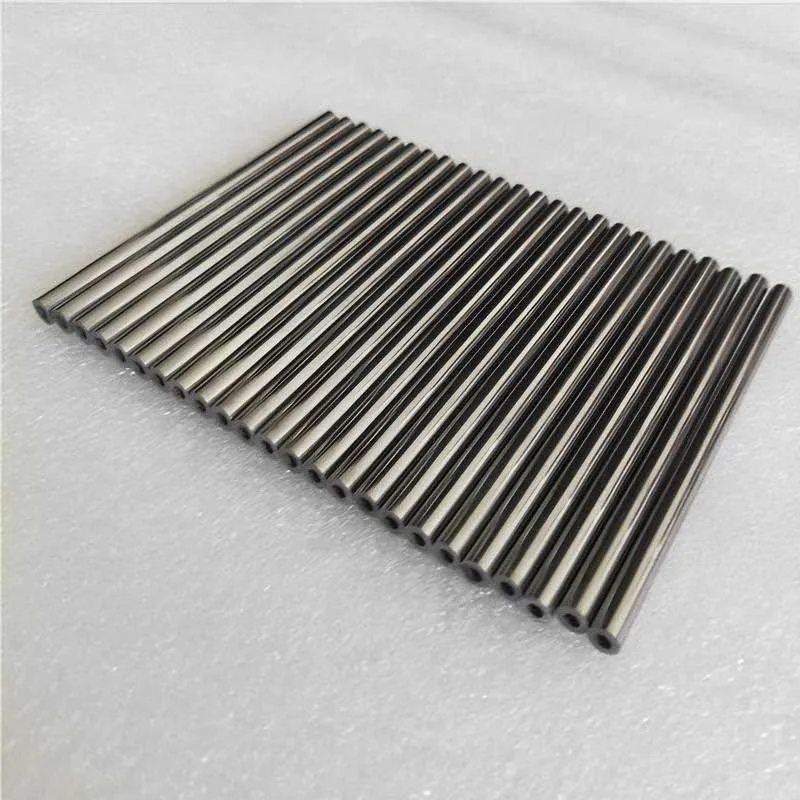
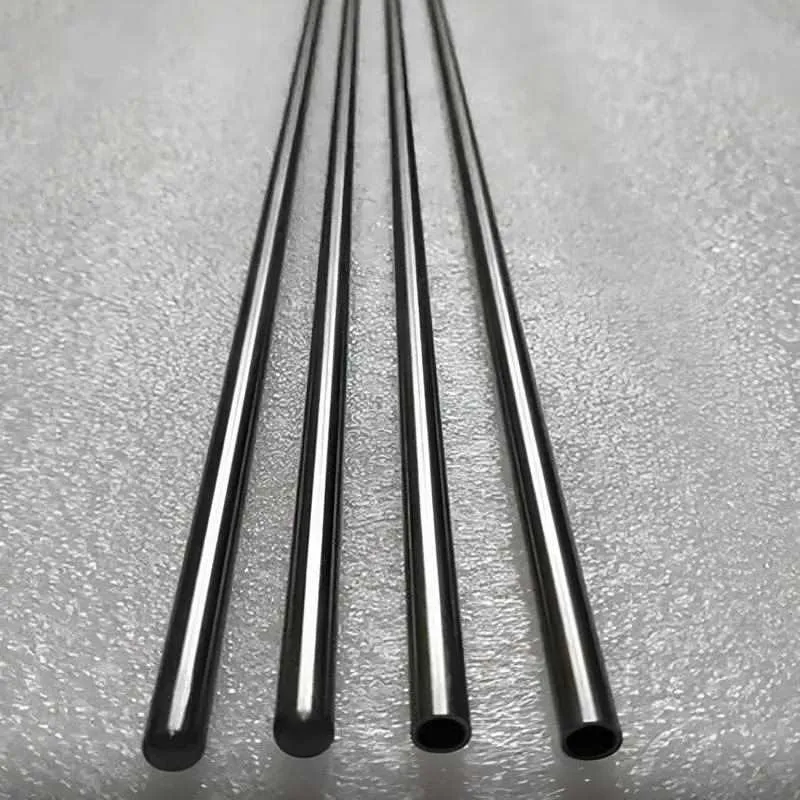
Iron Sheet,Plate tension grade 120-90-02
Product Code : STI-IFe-059-CU
We provide Ductile Iron Sheet/Plate tension grade 120-90-02 is available in Bar (Round bar, Flat bar), Ribbon, Wire, Rods, Tube,Seamless Tube,Pipe, Ingots, Plate, Sheet/Plate, Strip and Forging Stock.,Purity, chemical composition, size, etc. can all be customized to meet specific requirements.
Please contact us if you need customized services. We will contact you with the price and availability in 24 hours.
Ductile Iron Sheet/Plate tension grade 120-90-02 Product Information
-:-
For detailed product information, please contact sales.
-:
Ductile Iron Sheet/Plate tension grade 120-90-02 Synonyms
-:-
For detailed product information, please contact sales.
-:
Ductile Iron tension grade 120-90-02 Product Information
-:-
For detailed product information, please contact sales.
-:
### **Product Technical Data Sheet: Ductile Iron – Tensile Grade 120-90-02 (Ultra-High Strength, Heat-Treated)**
---
#### **1. Product Overview**
**Tensile Grade 120-90-02** is an **ultra-high-strength, low-ductility ductile iron** defined by its guaranteed mechanical properties: **minimum 120 ksi (830 MPa) tensile strength, 90 ksi (620 MPa) yield strength, and 2% elongation**. This designation represents the **pinnacle of conventional ductile iron strength**, engineered for applications demanding the absolute maximum in load-bearing capacity, wear resistance, and fatigue performance where weight savings are critical. Achieving these properties **requires specialized heat treatment**—most commonly **Austempering (to produce Austempered Ductile Iron, ADI) or Quenching & Tempering (QT)**. It bridges the performance gap between standard ductile irons and low-alloy forged steels, offering the design freedom of casting with near-steel strength.
---
#### **2. Governing International Standards**
This tensile grade is often specified by performance requirements that exceed standard as-cast grades, leading to governance by heat treatment standards.
* **Primary Reference Standard: ASTM A536** - *Standard Specification for Ductile Iron Castings*. Formally includes **Grade 120-90-02**, but this is a target for heat-treated material.
* **Primary Heat Treatment Standards:**
* **ASTM A897 / A897M** - *Standard Specification for Austempered Ductile Iron Castings*. This is the most relevant specification. Grade 120-90-02 properties align with **ADI Grades 850/550/10, 900/650/08, or 1050/700/05**.
* **ISO 17804:** *Austempered spheroidal graphite cast irons – Classification*. Defines grades such as **JS/900/8/380/12** (900 MPa UTS) which meet or exceed these properties.
* **Proprietary QT Specifications:** Often defined by foundry or customer-specific requirements for quenched & tempered ductile iron.
* **Global Equivalents (Base Material):**
* **ISO 1083 / EN 1563:** **EN-GJS-800-5** or **EN-GJS-900-2** serve as approximate base iron references.
* **SAE J434c (Automotive):** **Grade D7003** (covers 100-70-03, with 120-90-02 being a higher-performance variant).
* **Key Referenced Testing Standards:**
* **Tensile Test:** ASTM E8 / ISO 6892-1
* **Hardness:** ASTM E10 / ISO 6506 (Brinell), ASTM E18 (Rockwell)
* **Impact Test:** ASTM E23 / ISO 148-1 (Charpy) – Often specified.
* **Microstructure:** ASTM A247 / ISO 945 (for ADI, ausferrite structure is evaluated).
---
#### **3. Typical Chemical Composition (Base Iron for ADI/QT)**
The base iron chemistry is meticulously controlled to ensure optimal response to severe heat treatment, focusing on hardenability.
| Element | Target Range (%) | Critical Role |
| :--- | :--- | :--- |
| **Carbon (C)** | 3.5 - 3.7 | Provides strength potential; balanced for hardenability. |
| **Silicon (Si)** | **2.4 - 2.8** | **Crucially high.** Suppresses carbide formation during austempering, raises tempering resistance in QT, and is essential for forming the beneficial high-carbon austenite in ADI. |
| **Manganese (Mn)** | **0.20 - 0.40 (Max)** | **Stringently limited.** High Mn segregates and can stabilize brittle phases; kept low for maximum toughness at this strength level. |
| **Phosphorus (P)** | **≤ 0.035** | Very low to minimize boundary embrittlement. |
| **Sulfur (S)** | **≤ 0.015** | Very low. |
| **Magnesium (Mg)** | 0.03 - 0.05 | Essential for nodulization. |
| **Copper (Cu)** | **0.6 - 1.2** | Strong hardenability agent and pearlite/bainite promoter. Essential for through-thickness properties. |
| **Molybdenum (Mo)** | **0.3 - 0.6** | **The most critical alloy for hardenability.** Prevents formation of soft transformation products during quenching, especially in heavy sections. |
| **Nickel (Ni)** | 0.5 - 1.5 | Often used with Mo to improve hardenability, refine microstructure, and enhance toughness. |
| **Trace Elements (Sn, Sb)** | **Near Zero** | Tightly controlled to prevent segregation and embrittlement. |
---
#### **4. Physical & Mechanical Properties**
This grade operates at the performance frontier of cast ferrous materials.
| Property | Minimum Requirement / Typical Value | Notes & Significance |
| :--- | :--- | :--- |
| **Tensile Strength, min.** | **830 MPa (120,000 psi)** | Can reach **>1000 MPa (145 ksi)** in optimized ADI/QT grades. |
| **Yield Strength (0.2% offset), min.** | **620 MPa (90,000 psi)** | Exceptionally high yield-to-tensile ratio (>0.75), enabling lightweight, high-stress design. |
| **Elongation, min.** | **2%** (in 2 inches / 50 mm) | Limited but crucial ductility, providing a safety margin over purely brittle materials. ADI can offer higher elongation at similar strength. |
| **Hardness** | **280 - 360 HBW** (Approx. 30 - 38 HRC) | Provides outstanding resistance to abrasion, galling, and contact fatigue. |
| **Modulus of Elasticity** | 165 - 175 GPa (24 - 25.5 x 10⁶ psi) | Maintains high stiffness. |
| **Charpy Impact (V-Notch) @ 21°C** | **8 - 15 J (Typical for QT)**
**15 - 30 J (Typical for ADI)** | **A key ADI advantage:** Superior toughness at equivalent hardness/strength compared to QT martensite. |
| **Fatigue Endurance Limit** | **350 - 400 MPa** (≈ 0.4-0.45 x UTS) | **Excellent,** often superior to quenched and tempered steels of similar hardness due to graphite nodules' crack-blunting effect. |
| **Density** | 7.1 - 7.2 g/cm³ (0.256 lb/in³) | |
| **Primary Microstructure** | **ADI:** **Ausferrite** (fine acicular ferrite + 20-40% high-carbon austenite).
**QT:** **Tempered Martensite** (low-temperature tempered). | The ausferritic structure of ADI provides the best combination of ultra-high strength and good toughness. |
---
#### **5. Product Applications**
Tensile Grade 120-90-02 is specified for the most extreme duty cycles where performance limits are pushed, and failure is not an option.
* **High-Performance Automotive & Racing:** **High-output engine crankshafts, connecting rods, gearbox gears, and suspension uprights** for ultimate weight savings and strength.
* **Heavy Mining & Earthmoving:** **Gears and pinions for ultra-class haul trucks & excavators, crusher cones and jaws, heavy-duty track system components.**
* **Defense & Aerospace:** **Lightweight armor components, tracked vehicle road wheels, landing gear components, and high-integrity actuator housings.**
* **Industrial & Manufacturing:** **High-load precision gears, anvils for forging, rolls for strip processing, and high-pressure isostatic press components.**
* **Oil & Gas:** **Gearbox components for top drives, mud pump crankshafts, and frac pump fluid end blocks.**
---
#### **6. Fabrication & Quality Notes**
* **Production Route:** **Exclusively Heat-Treated.** Supplied as **Austempered Ductile Iron (ADI)** or **Quenched & Tempered (QT) Ductile Iron**.
* **Machinability:** **Very Difficult.** Nearly all machining must be completed in a soft, annealed state prior to final heat treatment. Post-heat treatment machining is limited to grinding, honing, or hard turning with PCBN/PCD tools.
* **Weldability:** **Not Recommended.** The engineered microstructure is irreversibly damaged by welding heat. Components are not designed to be welded.
* **Quality Assurance:** Requires the highest level of process control. **100% non-destructive testing (UT, MPI)** is standard. **Lot-specific mechanical testing, microstructure verification, and often component-level fatigue testing** are mandatory.
---
#### **7. Ordering Information**
Specification must be explicit regarding the heat treatment process.
**Specify:** **"Austempered Ductile Iron (ADI) Castings, per ASTM A897, Grade 900/650/08 [or higher] targeting Tensile Grade 120-90-02 properties"** OR **"Quenched and Tempered Ductile Iron Castings, Tensile Grade 120-90-02 per [Proprietary Specification]."**
**Mandatory Requirements:**
* **Exact Heat Treatment Process & Standard.**
* **Minimum Mechanical Properties** (may exceed 120-90-02 minimums).
* **Section Size & Weight** of casting (for hardenability validation).
* **Certification Requirements:** Full traceability MTR, heat treatment charts, mechanical & impact test reports, microstructure report, and NDT reports.
* **Special Testing:** Charpy impact, fatigue testing, or other validation as required by design.
**Tensile Grade 120-90-02 (and its ADI/QT equivalents) represents the pinnacle of ductile iron technology, offering designers a cast material solution capable of replacing high-performance steels in the most demanding applications on earth.**
-:-
For detailed product information, please contact sales.
-:
Ductile Iron tension grade 120-90-02 Specification
Dimensions
Size:
Diameter 20-1000 mm Length <6534 mm
Size:We can customized as required
Standard:
Per your request or drawing
We can customized as required
Properties(Theoretical)
Chemical Composition
-:-
For detailed product information, please contact sales.
-:
Ductile Iron tension grade 120-90-02 Properties
-:-
For detailed product information, please contact sales.
-:
Applications of Ductile Iron Sheet,Plate tension grade 120-90-02
-:-
For detailed product information, please contact sales.
-:
Chemical Identifiers Ductile Iron Sheet,Plate tension grade 120-90-02
-:-
For detailed product information, please contact sales.
-:
Packing of Ductile Iron Sheet/Plate tension grade 120-90-02
-:-
For detailed product information, please contact sales.
-:
Standard Packing:
-:-
For detailed product information, please contact sales.
-:
Typical bulk packaging includes palletized plastic 5 gallon/25 kg. pails, fiber and Steel Sheet/Plate drums to 1 ton super sacks in full container (FCL) or truck load (T/L) quantities. Research and sample quantities and hygroscopic, oxidizing or other air sensitive materials may be packaged under argon or vacuum. Solutions are packaged in polypropylene, plastic or glass jars up to palletized 3005 gallon liquid totes Special package is available on request. E FORUs’ is carefully handled to minimize damage during storage and transportation and to preserve the quality of our products in their original condition