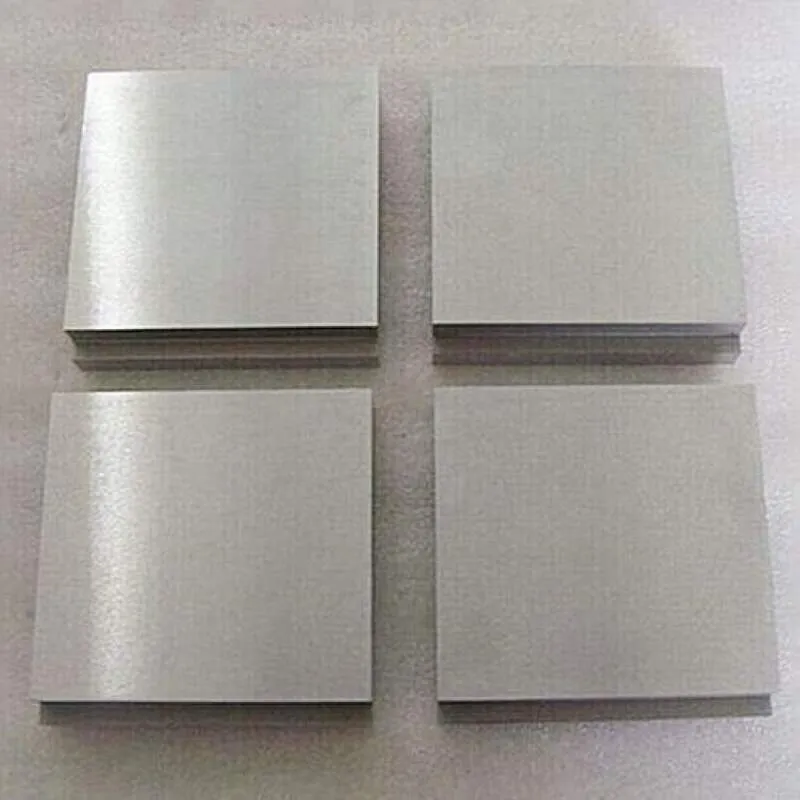
JIS SKD4 Chromium Hot Work Tool Steel Sheet,Plate
Product Code : STI-GSTI-145-CU
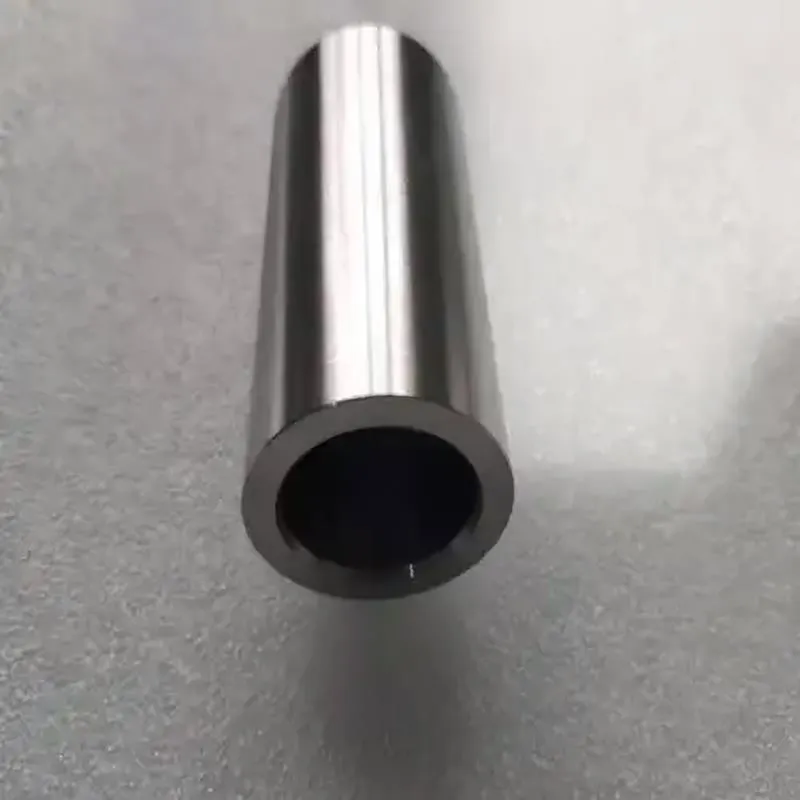
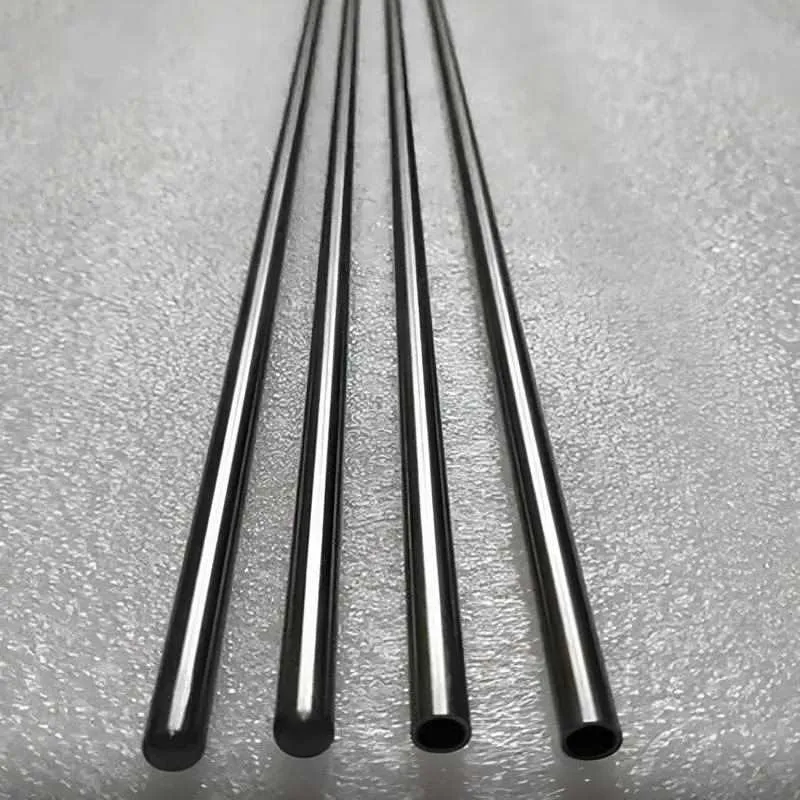
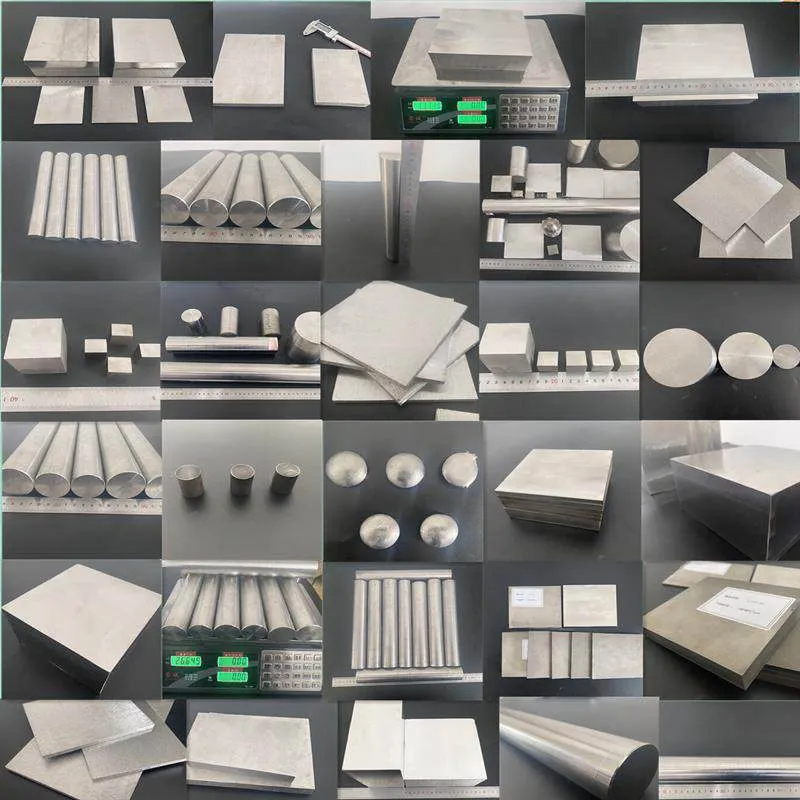
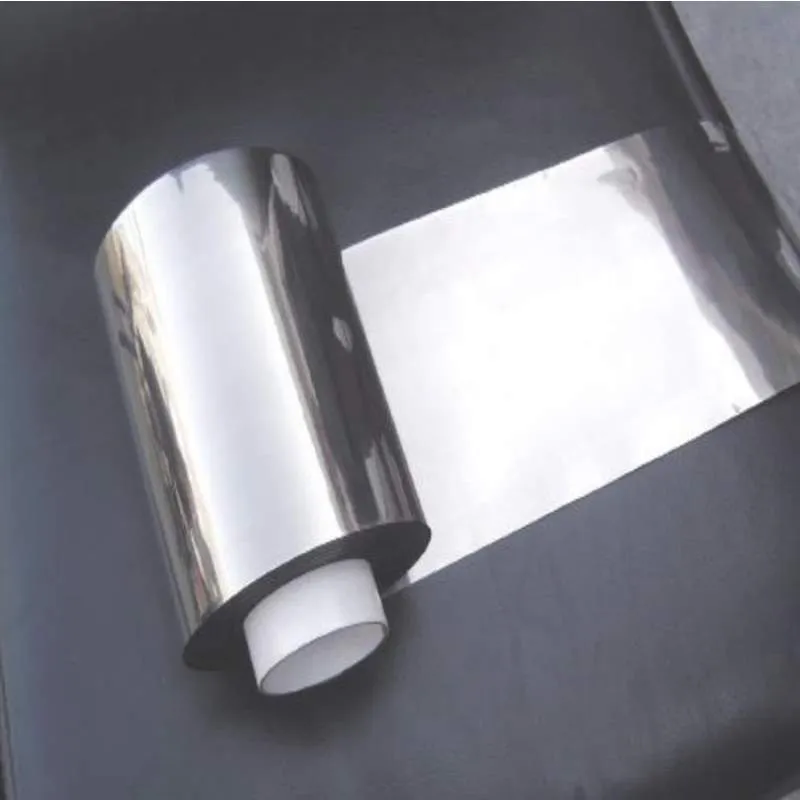
We provide JIS SKD4 Chromium Hot Work Tool Steel Sheet/Plate is available in Bar (Round bar, Flat bar), Ribbon, Wire, Rods, Tube,Seamless Tube,Pipe, Ingots, Plate, Sheet/Plate, Strip and Forging Stock.,Purity, chemical composition, size, etc. can all be customized to meet specific requirements.
Please contact us if you need customized services. We will contact you with the price and availability in 24 hours.
JIS SKD4 Chromium Hot Work Tool Steel Sheet/Plate Product Information
-:-
For detailed product information, please contact sales.
-:
JIS SKD4 Chromium Hot Work Tool Steel Sheet/Plate Synonyms
-:-
For detailed product information, please contact sales.
-:
JIS SKD4 Chromium Hot Work Tool Steel Product Information
-:-
For detailed product information, please contact sales.
-:
### **Product Technical Datasheet: JIS SKD4 Chromium Hot Work Tool Steel**
---
#### **1. Product Overview**
**JIS SKD4** is a classic **medium-carbon, medium-alloy, air-hardening chromium hot work tool steel** specified under Japanese Industrial Standard (JIS) G 4404. It belongs to the first generation of chromium-type hot work steels, designed to maintain high strength, hardness, and wear resistance at elevated temperatures (typically up to **500-550°C**). SKD4 achieves its performance through a balanced composition of chromium, tungsten, and vanadium, which provides good **red-hardness (hot hardness), temper resistance, and thermal fatigue resistance**. It is a robust and reliable material for various hot forming applications, though it has been largely supplemented by more advanced molybdenum-type grades (like SKD61/H13) in many modern applications due to their superior toughness and thermal conductivity.
---
#### **2. International Standard Cross-Reference**
SKD4 has direct historical equivalents in other standards, though its use has declined in favor of newer grades.
| Standard System | Equivalent / Similar Grade | Note |
| :--- | :--- | :--- |
| **JIS G 4404 (Japan)** | **SKD4** | Defining Standard |
| **AISI (USA)** | **H11** | The closest traditional equivalent (5% Cr hot work steel). |
| **DIN (Germany)** | **1.2343 / X37CrMoV5-1** | Similar 5% Cr hot work steel. |
| **BS (UK)** | **BH11** | Hot work steel type. |
| **ISO** | **~35CrMoV5** | ISO chemical designation. |
| **GB (China)** | **4Cr5MoSiV** | China's equivalent, though closer to H13/SKD61 in modern context. |
*Note: There is often confusion. SKD4 is functionally similar to **AISI H11**, while the more common **SKD61 is equivalent to AISI H13**. H13 has higher vanadium and carbon, offering better wear resistance.*
---
#### **3. Chemical Composition (Typical, weight % per JIS G 4404)**
The composition is based on a 5% chromium system with additions of molybdenum, tungsten, and vanadium for high-temperature strength.
| Element | Carbon (C) | Silicon (Si) | Manganese (Mn) | Chromium (Cr) | Molybdenum (Mo) | Tungsten (W) | Vanadium (V) |
| :--- | :--- | :--- | :--- | :--- | :--- | :--- | :--- |
| **Content (%)** | 0.32 - 0.42 | 0.80 - 1.20 | 0.20 - 0.50 | 4.50 - 5.50 | 1.00 - 1.50 | 1.00 - 1.50 | 0.30 - 0.50 |
**Function of Key Alloying Elements:**
* **Chromium (4.50-5.50%):** Provides **oxidation resistance** at high temperatures, improves hardenability, and contributes to tempering resistance.
* **Molybdenum (1.00-1.50%) & Tungsten (1.00-1.50%):** Provide **solid solution strengthening** at high temperatures, increase temper resistance, and improve hot hardness. They also enhance hardenability and reduce temper embrittlement.
* **Vanadium (0.30-0.50%):** Forms fine, stable carbides that increase **wear resistance and hot hardness**, and helps refine grain size.
* **Silicon (0.80-1.20%):** Improves oxidation resistance and strengthens the ferrite matrix.
---
#### **4. Physical & Mechanical Properties**
* **Density:** ~7.80 g/cm³.
* **Thermal Conductivity:** **Moderate to Low** (~25-30 W/m·K at 20°C). Lower than newer molybdenum-based hot work steels, which can affect heat dissipation in dies.
* **Thermal Expansion Coefficient:** ~11.5 x 10⁻⁶ /K (20-550°C).
* **Specific Heat Capacity:** ~460 J/kg·K.
* **Machinability (Annealed State):** **Fair.** Better than high-speed steels but more challenging than low-alloy steels due to its alloy content.
* **Hardenability:** **Excellent (Air-Hardening).** Can be through-hardened in very large sections with minimal distortion.
* **Key High-Temperature Properties:**
* **Red Hardness:** Can maintain a hardness of **~45-50 HRC at 500°C** after tempering.
* **Tempering Resistance:** Exhibits strong **secondary hardening** in the range of **500-600°C**, allowing it to be used at high service temperatures.
* **Thermal Fatigue Resistance:** **Good**, but generally considered inferior to higher-toughness grades like SKD61/H13 due to its lower thermal conductivity and different carbide structure.
* **Typical Working Hardness:** **48-52 HRC** (after tempering at 550-600°C for hot work applications).
---
#### **5. Heat Treatment Guidelines**
* **Forging:** Heat slowly to **1100-1150°C**. Forge between **1050-900°C**. Cool slowly in furnace or insulating material to 500°C, then air cool.
* **Annealing:** Heat to **840-880°C**, hold, then furnace cool very slowly (≤20°C/hour) to 600°C, then air cool. Target hardness: ≤ 229 HB.
* **Stress Relieving (after rough machining):** **650-750°C**, slow cool.
* **Hardening:**
1. **Preheating:** **Critical.** Preheat at **550-650°C** and again at **800-850°C**.
2. **Austenitizing:** **1000-1030°C.** Soak time: 20-30 minutes per inch.
3. **Quench:** Cool in **still or forced air (air-hardening)**. For maximum toughness, high-pressure gas quenching or oil quenching (for smaller sections) can be used.
* **Tempering:**
* **Must be performed immediately** after quenching.
* **Double tempering is mandatory.** Typical tempering range for hot work applications is **540-600°C**, for 2+ hours each cycle. This utilizes the secondary hardening peak.
* Tempering at lower temperatures (e.g., 180-250°C) yields higher room-temperature hardness (55-58 HRC) for cold work or structural applications.
---
#### **6. Product Applications**
SKD4 is suitable for hot work tooling that requires good high-temperature strength and moderate thermal shock resistance.
* **Aluminum Die Casting:** **Cores, pins, inserts, and cavities** for smaller or less severe aluminum die-casting applications. (Largely superseded by SKD61/H13 for this use).
* **Hot Forging Dies:** **Dies, inserts, and punches** for forging hammers and presses, particularly for non-ferrous metals or smaller steel components.
* **Hot Extrusion Tools:** **Liners, stems, and dummy blocks** for extruding aluminum and copper alloys.
* **Hot Punching and Piercing Tools:** Tools for punching hot steel.
* **Plastic Molds:** For high-temperature thermoplastics or hot-runner system components.
* **General Purpose Hot Work Tools:** Where cost is a consideration and the extreme performance of newer grades is not required.
---
#### **7. Advantages & Limitations**
| Advantages | Limitations |
| :--- | :--- |
| • **Good hot hardness and strength** up to ~550°C.
• **Excellent hardenability and dimensional stability** (air-hardening).
• **Good resistance to thermal softening** (temper resistance).
• **Better machinability** than high-speed steels.
• **Good oxidation resistance** compared to low-alloy steels. | • **Lower thermal conductivity** compared to SKD61/H13, leading to **higher susceptibility to heat checking (thermal fatigue)** in severe cyclic heating applications.
• **Generally lower toughness** than SKD61/H13 at equivalent hardness, making it more prone to cracking under severe thermal or mechanical shock.
• **Largely considered a legacy grade** in many markets, with limited availability compared to SKD61.
• **Performance** in severe die-casting or forging is often inferior to modern H13-type steels. |
---
#### **8. Selection Guidance: SKD4 vs. SKD61 (H11 vs. H13)**
* **Choose SKD4 (H11) when:** The application requires good hot hardness but operates with **less severe thermal cycling** or where **higher room-temperature toughness at a given hardness** is needed for certain structural components. It is sometimes preferred for **mandrels and rams**.
* **Choose SKD61 (H13) when:** The application involves **severe thermal cycling (e.g., aluminum die-casting)**, where **superior thermal fatigue resistance and higher wear resistance** are critical. H13 is the **modern, de facto standard** for most hot work applications.
* **General Trend:** SKD61/H13 has largely replaced SKD4/H11 in die-casting and hot forging due to its better all-around performance, especially thermal fatigue resistance.
**Conclusion:**
JIS SKD4 is a **robust and historically significant chromium hot work tool steel** that laid the foundation for modern hot work die materials. While it has been surpassed in popularity and performance for the most demanding applications by molybdenum-rich grades like SKD61, it remains a **viable and cost-effective material** for specific hot work tooling where extreme thermal shock is not the primary concern. Its properties make it suitable for **less severe hot forging, extrusion, and specialized hot work tools**. For new tool designs, SKD61/H13 should be the first consideration, but SKD4 represents a proven alternative in its specific performance window.
-:-
For detailed product information, please contact sales.
-:
JIS SKD4 Chromium Hot Work Tool Steel Specification
Dimensions
Size:
Diameter 20-1000 mm Length <6801 mm
Size:We can customized as required
Standard:
Per your request or drawing
We can customized as required
Properties(Theoretical)
Chemical Composition
-:-
For detailed product information, please contact sales.
-:
JIS SKD4 Chromium Hot Work Tool Steel Properties
-:-
For detailed product information, please contact sales.
-:
Applications of JIS SKD4 Chromium Hot Work Tool Steel Sheet,Plate
-:-
For detailed product information, please contact sales.
-:
Chemical Identifiers JIS SKD4 Chromium Hot Work Tool Steel Sheet,Plate
-:-
For detailed product information, please contact sales.
-:
Packing of JIS SKD4 Chromium Hot Work Tool Steel Sheet/Plate
-:-
For detailed product information, please contact sales.
-:
Standard Packing:
-:-
For detailed product information, please contact sales.
-:
Typical bulk packaging includes palletized plastic 5 gallon/25 kg. pails, fiber and Steel Sheet/Plate drums to 1 ton super sacks in full container (FCL) or truck load (T/L) quantities. Research and sample quantities and hygroscopic, oxidizing or other air sensitive materials may be packaged under argon or vacuum. Solutions are packaged in polypropylene, plastic or glass jars up to palletized 3272 gallon liquid totes Special package is available on request. E FORUs’ is carefully handled to minimize damage during storage and transportation and to preserve the quality of our products in their original condition