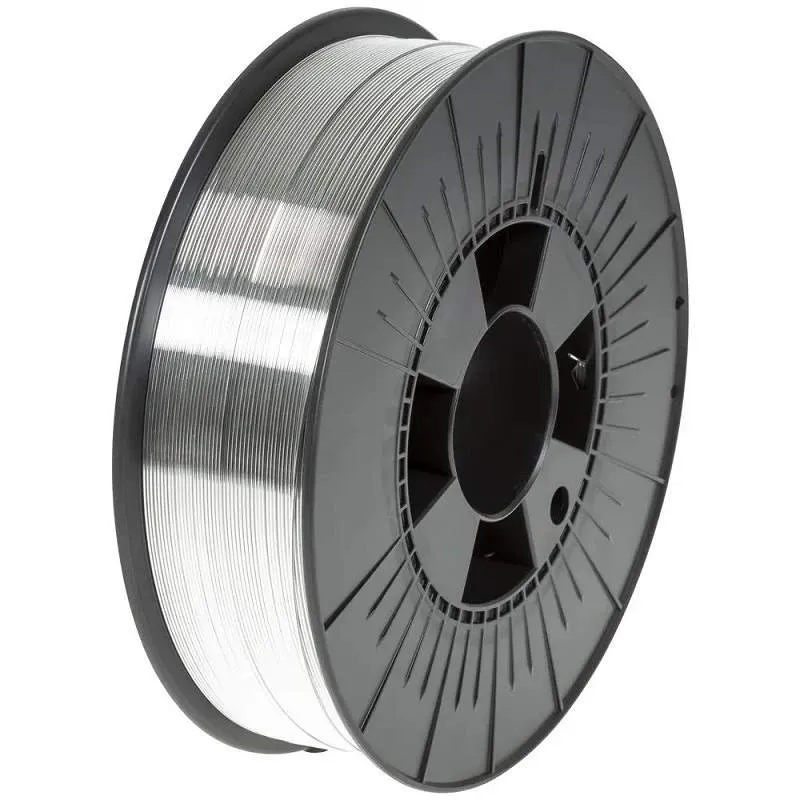
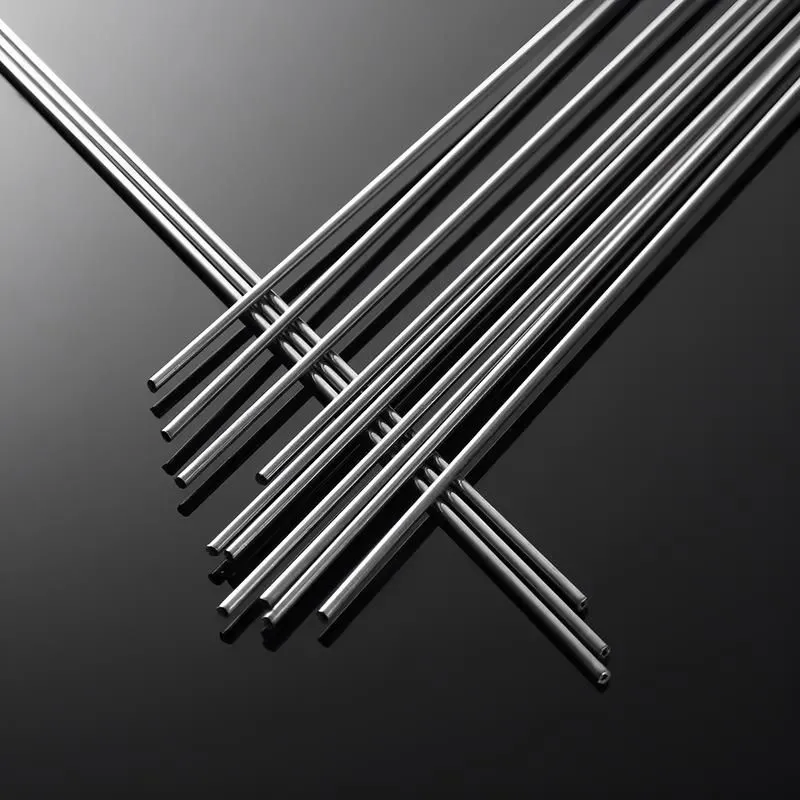
JIS SKS41 Shock Resisting Tool Steel Wire
Product Code : STI-GSTI-169-CU
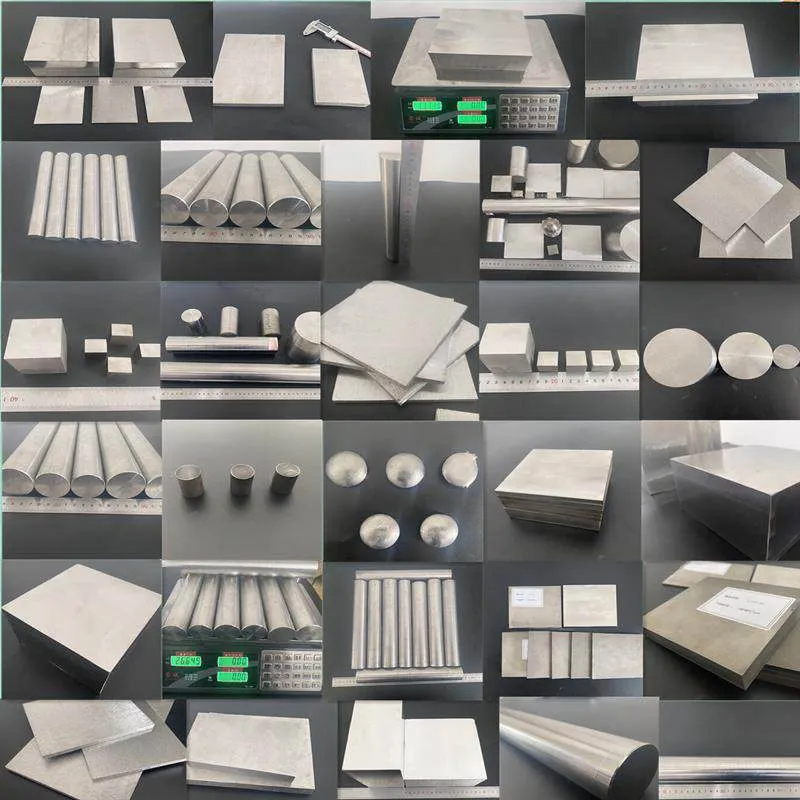
We provide JIS SKS41 Shock Resisting Tool Steel Wire is available in Bar (Round bar, Flat bar), Ribbon, Wire, Rods, Tube,Seamless Tube,Pipe, Ingots, Plate, Sheet, Strip and Forging Stock.,Purity, chemical composition, size, etc. can all be customized to meet specific requirements.
Please contact us if you need customized services. We will contact you with the price and availability in 24 hours.
JIS SKS41 Shock Resisting Tool Steel Wire Product Information
-:-
For detailed product information, please contact sales.
-:
JIS SKS41 Shock Resisting Tool Steel Wire Synonyms
-:-
For detailed product information, please contact sales.
-:
JIS SKS41 Shock Resisting Tool Steel Product Information
-:-
For detailed product information, please contact sales.
-:
# **JIS SKS41 Shock-Resisting Tool Steel**
**International Standard:** JIS G4404 (Japan Industrial Standard) - Tool Steels
---
## **1. Overview**
JIS SKS41 is a **silicon-chromium-molybdenum shock-resisting tool steel** specifically engineered for applications requiring **exceptional impact toughness, fatigue resistance, and shock absorption**. Characterized by its **medium carbon content and significant silicon addition**, this steel belongs to the "S" series (shock-resisting) in international classifications and is designed to withstand repeated impact loading, high stress concentrations, and fatigue conditions that would cause fracture in conventional tool steels. SKS41 combines good hardenability with outstanding toughness, making it ideal for tools subjected to severe mechanical shock.
---
## **2. Chemical Composition (Typical Weight %)**
| Element | Content (%) |
| :------ | :---------- |
| C | 0.45–0.55 |
| Si | 1.00–1.50 |
| Mn | 0.20–0.50 |
| Cr | 1.00–1.50 |
| Mo | 0.40–0.60 |
| V | 0.15–0.30 |
| Ni | ≤ 0.25 |
| P (max) | 0.030 |
| S (max) | 0.030 |
**Balance:** Iron (Fe).
**Key Characteristics:** SKS41 features a **deliberately balanced composition** where:
- **Medium carbon (0.45–0.55%)** provides adequate hardenability while maximizing toughness
- **High silicon (1.00–1.50%)** is the key shock-resisting element, improving elastic limit and fatigue strength
- **Chromium (1.00–1.50%) and molybdenum (0.40–0.60%)** provide hardenability and temper resistance
- **Vanadium (0.15–0.30%)** refines grain structure and contributes to secondary hardening
---
## **3. Physical & Mechanical Properties**
### **Physical Properties**
- **Density:** ~7.80 g/cm³
- **Thermal Conductivity:** ~38 W/m·K (at 20°C) – Lower than simple carbon steels due to alloy content
- **Coefficient of Thermal Expansion:** ~11.8 ×10⁻⁶ /K (20–200°C)
- **Specific Heat Capacity:** ~0.46 kJ/kg·K
- **Modulus of Elasticity:** ~205 GPa
- **Poisson's Ratio:** ~0.29
### **Mechanical Properties (Heat-Treated)**
- **Annealed Hardness:** 187–229 HB
- **Hardened & Tempered Hardness:** **50–58 HRC** (typical working range)
- Can achieve 54–58 HRC with low tempering (200–300°C)
- Typically operated at 52–56 HRC for optimal toughness-hardness balance
- **Tensile Strength:** ~1700–2000 MPa (at 55 HRC)
- **Yield Strength:** ~1500–1800 MPa
- **Elongation:** **Excellent** – 10–15% (superior to most tool steels)
- **Reduction of Area:** 35–50%
- **Impact Toughness (Charpy):** **Exceptional** – Typically 30–50 J at 55 HRC (2–4× higher than conventional tool steels)
- **Fatigue Strength:** **Excellent** – High resistance to cyclic loading
- **Wear Resistance:** **Good** – Adequate for many applications, enhanced by proper heat treatment
- **Compressive Strength:** ~2200–2600 MPa
- **Shear Strength:** ~1000–1200 MPa
---
## **4. Heat Treatment Specifications**
### **1. Annealing**
- **Temperature:** 790–820°C
- **Process:** Heat uniformly, hold for 2–4 hours, furnace cool slowly (≤ 20°C/h) to 550°C, then air cool
- **Resulting Hardness:** 187–229 HB
- **Spheroidize Annealing:** 760–790°C for 4–8 hours, slow cool to 600°C at 10°C/h (optimal for machinability)
### **2. Stress Relieving**
- **Temperature:** 600–650°C
- **Hold Time:** 1–2 hours per 25mm thickness
- **Purpose:** Critical for complex tools to minimize distortion
### **3. Hardening (Quenching)**
- **Preheating:** **Essential** to prevent cracking and ensure uniform heating
- **First Preheat:** 450–550°C
- **Second Preheat:** 750–800°C
- **Austenitizing Temperature:** **900–950°C** (typically 910–930°C)
- **Soaking Time:** 20–40 minutes per 25mm at temperature
- **Quenching Medium:** **Oil** (40–80°C recommended for minimal distortion)
- Air quenching possible for simple shapes
- **Hardenability Depth:** Good – can fully harden sections up to 75mm diameter
### **4. Tempering**
- **Immediate Tempering Required:** Begin when tool reaches 50–80°C
- **Temperature Range:**
- **Low Temperature (200–300°C):** For higher hardness (56–58 HRC)
- **Medium Temperature (300–450°C):** For optimal balance (52–56 HRC)
- **High Temperature (450–550°C):** For maximum toughness (50–52 HRC)
- **Hold Time:** 1–2 hours per 25mm, minimum 1.5 hours
- **Cycles:** **Double tempering recommended** for maximum toughness and dimensional stability
- **Secondary Hardening:** Exhibits slight secondary hardening around 500–550°C
### **5. Special Considerations:**
- **Decarburization Resistance:** Better than many tool steels due to silicon content
- **Temper Resistance:** Good – maintains hardness at elevated temperatures better than simple steels
- **Minimal Distortion:** Oil quenching provides good dimensional control
- **Retained Austenite:** Typically low (<5%) with proper tempering
---
## **5. Key Features & Advantages**
1. **Exceptional Shock Resistance:** Primary advantage – withstands severe impact loading without fracturing
2. **Outstanding Fatigue Strength:** Excellent resistance to cyclic loading and stress reversals
3. **Good Toughness-Hardness Balance:** Maintains useful hardness while providing high impact resistance
4. **High Elastic Limit:** Silicon content improves yield strength and elastic behavior
5. **Good Hardenability:** Can through-harden moderate sections effectively
6. **Temper Resistance:** Maintains properties at moderately elevated temperatures
7. **Dimensional Stability:** Good control during heat treatment
8. **Moderate Wear Resistance:** Adequate for many applications when properly hardened
**Limitations:**
- **Lower Maximum Hardness:** Cannot achieve very high hardness levels (>58 HRC)
- **Moderate Wear Resistance:** Not suitable for highly abrasive applications without surface treatment
- **Specialized Application:** Not a general-purpose tool steel
- **Higher Cost:** More expensive than simple carbon or low-alloy tool steels
---
## **6. Typical Applications**
SKS41 is specifically designed for **tools and components subjected to severe impact, shock loading, and fatigue conditions**.
### **Percussive & Impact Tools:**
- **Chipping and Scaling Hammers:** For removing weld spatter, rust, scale
- **Rivet Busting Tools:** For heavy rivet removal
- **Demolition Tools:** Chisels, points, breakers
- **Blacksmith Tools:** Hot work tools (within temperature limits)
- **Pneumatic Tools:** Jackhammer bits, rock drill steels
### **Shearing & Cutting Tools (Heavy Duty):**
- **Shear Blades for Thick Material:** Subjected to high shock during cutting
- **Slitters for Plate:** Heavy-duty plate cutting
- **Hot Shears:** For cutting at elevated temperatures
- **Bolt Cutters:** For high-strength bolts and rods
### **Forming & Forging Tools:**
- **Hot Work Punches and Dies:** For forging operations
- **Swaging Dies:** Subjected to repeated impact
- **Heading Dies:** For bolt and rivet manufacturing
- **Trimming Dies:** For flash removal in forging
### **Machine Components (High Fatigue):**
- **Gears and Sprockets:** Subjected to shock loading
- **Clutch Parts:** Requiring impact and fatigue resistance
- **Springs and Spring Tools:** High-stress applications
- **Cams and Followers:** Subjected to cyclic loading
### **Special Applications:**
- **Plastic Injection Mold Components:** Ejector pins, cores for abrasive plastics
- **Die Casting Machine Parts:** Plunger tips, shot sleeves (aluminum)
- **Mining Tools:** Drill bits, cutting picks
- **Agricultural Tools:** Cultivator points, plough shares
### **Safety-Critical Components:**
- **Tool Holders:** For heavy machining operations
- **Safety Clamps and Latches:** Where failure would be hazardous
- **Lifting Equipment Components:** Subjected to dynamic loading
---
## **7. International Standard Equivalents**
| Standard | Grade Designation | Notes |
| :--------------- | :------------------ | :----------------------------------------- |
| **JIS** | SKS41 | Original specification (JIS G4404) |
| **AISI/SAE (USA)**| S1 | **Direct Equivalent** (Shock-resisting 1) |
| **DIN (Germany)** | 1.2550 | 50SiCrMo6 |
| **ISO** | 50SiCrMo6 | International designation |
| **BS (UK)** | Type S1 | British classification |
| **GB (China)** | 6SiCrMoV | Similar characteristics |
| **UNS** | T41901 | Unified Numbering System |
**Note:** SKS41 corresponds to the classic S1 shock-resisting steel, optimized for maximum impact resistance through silicon content and balanced alloying.
---
## **8. Machining & Fabrication Guidelines**
### **Machining (In Annealed State):**
- **Good Machinability:** Comparable to medium-alloy steels
- **Tooling:** High-speed steel tools work well; carbide for production
- **Cutting Speeds:** Moderate speeds recommended
- **Feeds:** Can use moderate feeds with good chip control
- **Surface Finish:** Produces good surface finishes
- **Work Hardening:** Moderate tendency – use positive rake angles
### **Grinding:**
- **Good Grindability:** But requires attention to prevent overheating
- **Wheel Selection:** Aluminum oxide wheels (A46-JV or similar)
- **Coolant:** Essential to prevent thermal damage and maintain properties
- **Parameters:** Moderate infeeds recommended
- **Stress Relief:** Consider low-temperature tempering after heavy grinding
### **Electrical Discharge Machining (EDM):**
- **Suitable:** Can be EDMed in hardened or annealed state
- **Parameters:** Standard EDM settings generally suitable
- **Post-EDM:** Temper at 180–220°C to relieve white layer stresses
- **Surface Integrity:** Good with proper finishing passes
### **Welding:**
- **Weldable with Care:** Better than high-carbon tool steels
- **Preheat:** 300–400°C recommended
- **Filler Material:** Use matching or similar shock-resisting steel filler
- **Post-Weld Heat Treatment:** Stress relieve at 600–650°C or re-harden
- **Techniques:** SMAW with low-hydrogen electrodes, GTAW with proper filler
### **Forging:**
- **Good Forgeability:** Can be forged with proper procedures
- **Forging Temperature:** 1100–900°C
- **Start:** 1100°C maximum
- **Finish:** 900°C minimum
- **Cooling:** Slow furnace cool or bury in insulating material after forging
- **Annealing:** Always anneal after forging before machining
### **Cold Working:**
- **Possible in Annealed State:** With intermediate annealing if needed
- **Formability:** Moderate – better than high-carbon steels
---
## **9. Surface Treatment**
### **1. Nitriding:**
- **Highly Effective:** Creates hard case while maintaining tough core
- **Process:** Gas or plasma nitriding at 500–550°C
- **Case Depth:** 0.1–0.3 mm
- **Surface Hardness:** 700–900 HV
- **Benefits:** Significantly improves wear resistance without compromising core toughness
- **Note:** Silicon content may affect nitride layer formation
### **2. Induction Hardening:**
- **Excellent Candidate:** For selective hardening of wear surfaces
- **Depth:** Typically 1.5–3.0 mm
- **Surface Hardness:** 55–58 HRC
- **Applications:** For localized wear areas on impact-resistant components
### **3. Carburizing:**
- **Possible but Less Common:** Already adequate carbon content
- **Process:** Gas carburizing at 900–950°C
- **Consideration:** May require special procedures due to silicon content
### **4. Coatings:**
- **Hard Chrome Plating:** For wear and corrosion resistance
- **PVD Coatings:** TiN, TiCN for specialized applications
- **Phosphate Coating:** For corrosion resistance and lubricity
### **5. Shot Peening:**
- **Highly Beneficial:** Induces compressive surface stresses
- **Benefits:** Greatly improves fatigue life and stress corrosion resistance
- **Applications:** Critical for high-fatigue components
---
## **10. Performance Comparison**
### **Within Shock-Resisting Tool Steels:**
| Property | SKS41 (S1) | SKS31 (S5-type) | S7 | H13 (Hot Work) |
|-----------------------|---------------|-----------------|--------------|----------------|
| **Carbon Content** | 0.45–0.55% | 0.35–0.45% | 0.45–0.55% | 0.32–0.45% |
| **Silicon Content** | 1.00–1.50% | 0.15–0.35% | 0.20–0.80% | 0.80–1.20% |
| **Typical Hardness** | 50–58 HRC | 45–55 HRC | 54–58 HRC | 44–52 HRC |
| **Impact Toughness** | **Excellent** | Exceptional | **Best** | Very Good |
| **Fatigue Strength** | **Excellent** | Very Good | Excellent | Good |
| **Wear Resistance** | Good | Moderate | Fair | Very Good |
| **Hot Hardness** | Fair | Poor | Good | **Excellent** |
| **Primary Use** | Shock/Cold | Heavy Impact | Shock/Cold | Hot Work |
### **Compared to Other Tool Steel Categories:**
| Property | SKS41 (Shock) | SKS2 (Oil-H) | SKD11 (Air-H) | SKH51 (HSS) |
|-----------------------|---------------|---------------|---------------|---------------|
| **Impact Toughness** | **Best** | Good | Fair | Good |
| **Fatigue Resistance**| **Best** | Good | Fair | Good |
| **Wear Resistance** | Good | Very Good | **Excellent** | **Excellent** |
| **Max Hardness** | 58 HRC | 62 HRC | 62 HRC | 66 HRC |
| **Hot Hardness** | Fair | Poor | Good | **Excellent** |
| **Cost** | Medium | Low | High | High |
| **Primary Strength** | Toughness | Wear | Wear | Red Hardness |
---
## **11. Design Considerations**
### **Section Size Capability:**
- **Full Hardening:** Up to 75 mm diameter/thickness
- **Large Components:** Good for moderately large tools and machine parts
- **Thin Sections:** Can be through-hardened effectively
- **Optimal Range:** 10–50 mm sections
### **Stress Concentration Management:**
- **Tolerant of Stress Raisers:** Better than hard, brittle steels
- **Still Recommended:** Generous radii (minimum 1.0 mm) for optimum life
- **Design Approach:** Can allow slightly sharper features than wear-resistant steels
### **Hardness Selection Strategy:**
- **For Maximum Impact Resistance:** Temper at 450–550°C (50–52 HRC)
- **For Balanced Properties:** Temper at 300–400°C (52–56 HRC)
- **For Increased Wear Resistance:** Temper at 200–300°C (56–58 HRC) with surface treatment
### **Fatigue Design Considerations:**
- **Surface Finish:** Critical – smoother surfaces improve fatigue life
- **Compressive Stresses:** Beneficial – consider shot peening for critical areas
- **Avoid Tensile Stresses:** In surface layers of highly stressed areas
### **Dimensional Stability:**
- **During Hardening:** Moderate distortion – typically 0.05–0.15%
- **During Tempering:** Minimal change with proper double tempering
- **Machining Allowance:** 0.1–0.3 mm per side for finish grinding
### **Case Hardening Applications:**
- **When Needed:** For components requiring both impact resistance and wear resistance
- **Methods:** Nitriding preferred over carburizing
- **Design:** Ensure adequate core strength to support hard case
---
## **12. Quality Control & Inspection**
### **Material Certification:**
- **Chemistry:** Verify silicon and carbon content particularly
- **Hardenability Test:** Jominy test to confirm hardenability profile
- **Cleanliness:** Good cleanliness important for fatigue applications
### **Heat Treatment Validation:**
- **Hardness Testing:** Multiple locations through cross-section
- **Impact Testing:** Charpy tests for critical applications
- **Microstructure:** Tempered martensite with fine carbides
- **Case Depth Measurement:** For surface-treated components
### **Non-Destructive Testing:**
- **Magnetic Particle Inspection:** For surface cracks after heat treatment
- **Ultrasonic Testing:** For internal defects in critical components
- **Dye Penetrant:** Alternative for complex geometries
- **Dimensional Verification:** Important for precision tools
### **Performance Testing (Critical Applications):**
- **Fatigue Testing:** For components subject to cyclic loading
- **Impact Testing:** Charpy V-notch at service temperature
- **Field Testing:** For new or critical applications
---
## **13. Summary & Selection Guidelines**
JIS SKS41 is a **specialized shock-resisting tool steel** optimized for applications where impact toughness and fatigue resistance are paramount.
### **Select SKS41 When:**
1. Tools are subjected to **severe impact or shock loading**
2. **Fatigue failure** from cyclic loading is a concern
3. Components experience **high stress concentrations**
4. **Tool fracture** would cause safety hazards or significant downtime
5. A **balance of hardness and toughness** is needed (50–58 HRC range)
6. **Moderate wear resistance** with high impact resistance is required
7. Tools operate under **dynamic or variable loading conditions**
### **Optimal Application Examples:**
- **Percussive tools** (hammers, chisels, demolition tools)
- **Shear blades for thick materials** subject to shock during cutting
- **Machine components** subjected to repeated impact or fatigue loading
- **Safety-critical tools** where failure could be hazardous
- **Tools for unpredictable loading conditions**
- **Components requiring both strength and toughness**
### **Consider Alternatives When:**
1. **Maximum wear resistance** is the primary requirement (consider D2, high-speed steels)
2. **Very high hardness** (>60 HRC) is necessary for the application
3. **High-temperature operation** (>400°C) is involved (consider hot work steels)
4. **Extreme abrasion resistance** is needed without impact
5. **Cost is primary driver** and impact requirements are minimal
### **Heat Treatment Philosophy:**
- **Prioritize toughness** over maximum hardness for impact applications
- **Use double tempering** for maximum toughness and dimensional stability
- **Consider surface treatments** (nitriding, induction hardening) for wear surfaces
- **Control decarburization** during heating (protective atmosphere recommended)
### **Economic Value:**
- **Material cost:** Moderate among tool steels
- **Tool life:** Exceptional in impact/fatigue applications compared to harder steels
- **Downtime reduction:** Fewer catastrophic failures in demanding applications
- **Safety value:** Reduced risk in safety-critical applications
### **Industry Applications:**
SKS41 is particularly valued in industries with severe mechanical demands:
- Metal forging and forming
- Demolition and construction
- Heavy equipment manufacturing
- Mining and quarrying
- Railroad and transportation
- Safety tool manufacturing
### **Fatigue Performance Enhancement:**
For maximum fatigue life:
1. **Shot peen** critical surfaces to induce compressive stresses
2. **Polish** highly stressed areas to minimize surface irregularities
3. **Avoid** machining marks in tension zones
4. **Consider** nitriding for improved surface fatigue properties
### **Final Recommendation:**
JIS SKS41 fills the **critical niche of impact- and fatigue-resistant tooling**. Its balanced composition with significant silicon content provides exceptional shock absorption and fatigue resistance that cannot be matched by conventional wear-resistant tool steels.
For applications where tools **"take a beating"** through impact, shock, or cyclic loading, SKS41 offers **proven performance that prioritizes survival and reliability** over maximum hardness or wear resistance. When combined with appropriate surface treatments for wear resistance, it provides a comprehensive solution for the most demanding mechanical applications.
When failure modes involve **fracture, chipping, or fatigue cracking** rather than gradual wear, SKS41 represents the **engineered solution** that has proven its value across decades of industrial use in the world's toughest applications. Its continued relevance is assured by the fundamental need for materials that can withstand severe mechanical punishment while maintaining functional integrity.
-:-
For detailed product information, please contact sales.
-:
JIS SKS41 Shock Resisting Tool Steel Specification
Dimensions
Size:
Diameter 20-1000 mm Length <6825 mm
Size:We can customized as required
Standard:
Per your request or drawing
We can customized as required
Properties(Theoretical)
Chemical Composition
-:-
For detailed product information, please contact sales.
-:
JIS SKS41 Shock Resisting Tool Steel Properties
-:-
For detailed product information, please contact sales.
-:
Applications of JIS SKS41 Shock Resisting Tool Steel Wire
-:-
For detailed product information, please contact sales.
-:
Chemical Identifiers JIS SKS41 Shock Resisting Tool Steel Wire
-:-
For detailed product information, please contact sales.
-:
Packing of JIS SKS41 Shock Resisting Tool Steel Wire
-:-
For detailed product information, please contact sales.
-:
Standard Packing:
-:-
For detailed product information, please contact sales.
-:
Typical bulk packaging includes palletized plastic 5 gallon/25 kg. pails, fiber and Steel Wire drums to 1 ton super sacks in full container (FCL) or truck load (T/L) quantities. Research and sample quantities and hygroscopic, oxidizing or other air sensitive materials may be packaged under argon or vacuum. Solutions are packaged in polypropylene, plastic or glass jars up to palletized 3296 gallon liquid totes Special package is available on request. E FORUs’ is carefully handled to minimize damage during storage and transportation and to preserve the quality of our products in their original condition