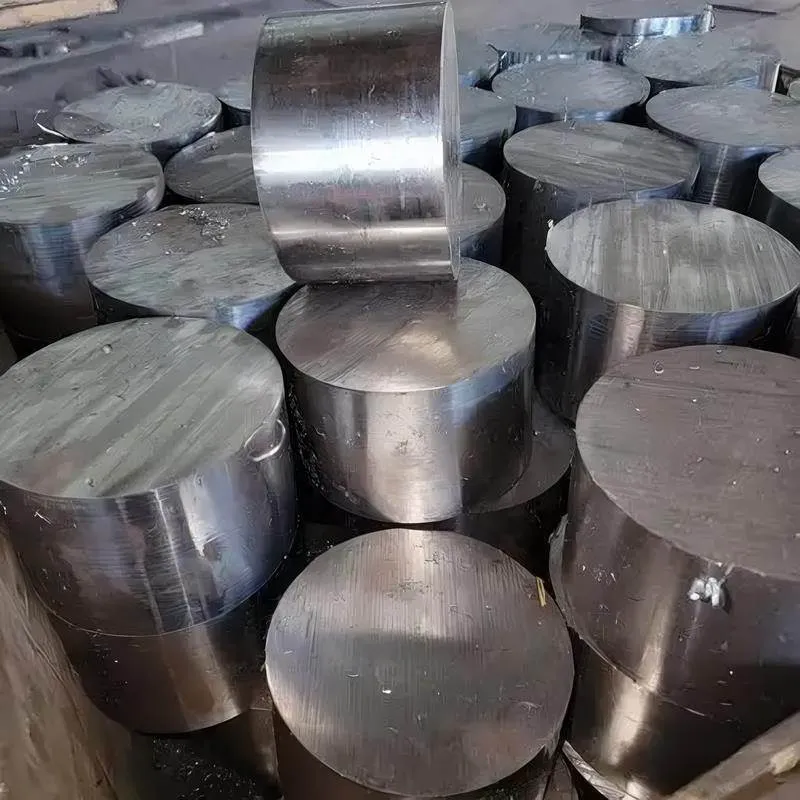
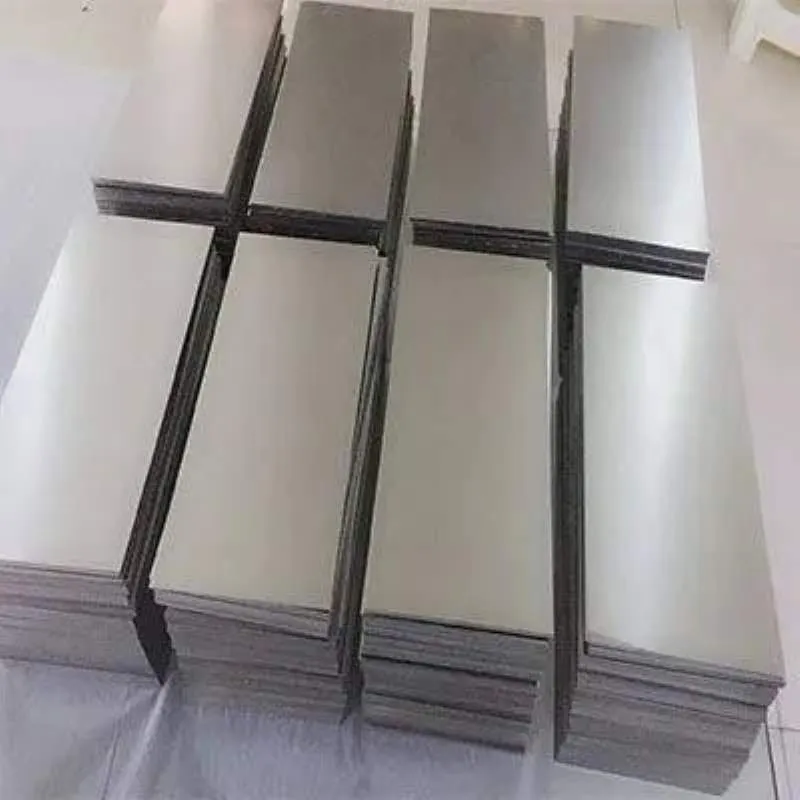
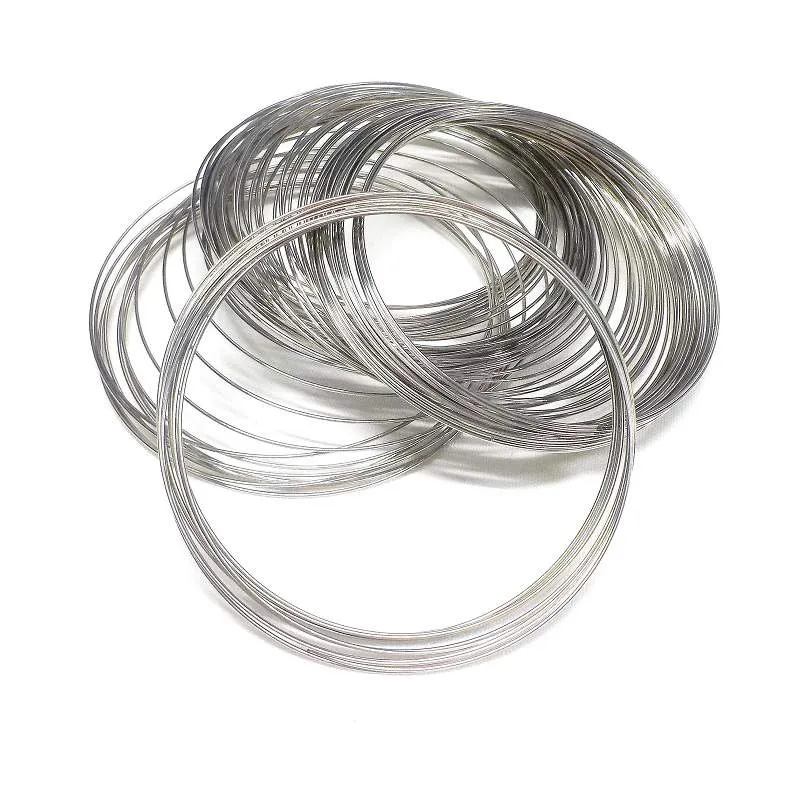
Malleable Iron Rod/Bar casting, Class M4504
Product Code : STI-IFe-110-CU
We provide Malleable Iron Rod/Bar casting, Class M4504 air quenched and tempered is available in Bar (Round bar, Flat bar), Ribbon, Wire, Rod/Bars, Tube,Seamless Tube,Pipe, Ingots, Plate, Sheet, Strip and Forging Stock.,Purity, chemical composition, size, etc. can all be customized to meet specific requirements.
Please contact us if you need customized services. We will contact you with the price and availability in 24 hours.
Malleable Iron Rod casting, Class M4504 air quenched and tempered Product Information
-:-
For detailed product information, please contact sales.
-:
Malleable Iron Rod casting, Class M4504 air quenched and tempered Synonyms
-:-
For detailed product information, please contact sales.
-:
Malleable iron casting, Class M4504 air quenched and tempered Product Information
-:-
For detailed product information, please contact sales.
-:
## **Malleable Iron Casting - Class M4504 Air Quenched & Tempered**
### **1. Overview**
**Class M4504** is a **high-strength pearlitic malleable iron** grade produced through a specialized heat treatment process involving **air quenching followed by tempering**. Designated by its minimum tensile strength of **450 MPa (65,000 psi)** and **4% elongation**, this grade represents an advanced manufacturing approach that balances exceptional strength with useful ductility. The air quenching and tempering process creates a refined microstructure that provides superior wear resistance, good fatigue properties, and enhanced dimensional stability compared to conventional oil-quenched grades. Class M4504 fills a critical niche between standard pearlitic malleable irons and alloy steels, offering a cost-effective alternative for demanding applications requiring high strength-to-weight ratio.
### **2. International Standards & Specifications**
**Primary Governing Standards:**
- **ASTM A220/A220M** - Standard Specification for Pearlitic Malleable Iron Castings
- **ASTM A602** - Automotive Malleable Iron Castings (for specific applications)
- **ISO 5922** - Malleable Cast Irons - Classification
**International Equivalents:**
| Standard | Designation | Region | Notes |
|----------|-------------|--------|-------|
| **ISO 5922** | **JMB 450-4** | International | Direct equivalent |
| **EN 1562** | EN-GJMB-450-4 | European Union | European standard |
| **JIS G 5705** | FCMB 450 | Japan | Pearlitic malleable iron |
| **GB/T 9440** | JMB 450 | China | Chinese classification |
| **SAE J158** | Grade 45004 | North America | Automotive applications |
**Process-Specific Note:** The "Air Quenched and Tempered" designation indicates a specific heat treatment variant that may be called out in customer specifications or internal foundry standards, though the resulting properties align with standard M4504 classification requirements.
### **3. Chemical Composition**
**Target Composition Range (Weight %):**
| Element | Range | Critical Function in Air Quenching Process |
|---------|-------|------------------------------------------|
| **Carbon (C)** | 2.30-2.80 | Strength foundation; balanced for air hardenability |
| **Silicon (Si)** | 1.40-2.00 | Enhances hardenability; promotes pearlite refinement |
| **Manganese (Mn)** | **1.00-1.60** | **Essential** for sufficient air hardenability |
| **Chromium (Cr)** | **0.20-0.45** | **Critical addition** for air quenching response |
| **Molybdenum (Mo)** | **0.10-0.30** | Improves hardenability in heavier sections |
| **Copper (Cu)** | 0.20-0.60 | Aids hardenability; improves corrosion resistance |
| **Nickel (Ni)** | 0.10-0.40 | Optional; improves toughness |
| **Vanadium (V)** | 0.05-0.15 | Optional; refines grain structure |
| **Phosphorus (P)** | ≤ 0.08 | Strictly controlled for toughness preservation |
| **Sulfur (S)** | ≤ 0.08 | Strictly controlled; affects machinability |
**Alloy Design for Air Quenching:**
- **Hardenability Index:** DI (Ideal Diameter) ≥ 3 inches for air quenching
- **Alloy Synergy:** Mn + Cr + Mo ≥ 1.8% (minimum for consistent air hardening)
- **Carbon Equivalent:** 3.8-4.2% for optimal castability and properties
- **Silicon-Manganese Balance:** Si/Mn ratio optimized for pearlite formation
**Key Process Distinction:** Unlike oil-quenched grades that rely on rapid cooling, air-quenched M4504 requires carefully balanced alloy chemistry to achieve transformation during slower air cooling, resulting in more uniform properties with reduced distortion.
### **4. Physical & Mechanical Properties**
**Minimum Requirements per ASTM A220:**
| Property | Minimum Value | Typical Achievable Range |
|----------|---------------|--------------------------|
| **Tensile Strength** | 450 MPa (65,000 psi) | 450-550 MPa |
| **Yield Strength (0.2%)** | 310 MPa (45,000 psi) | 310-380 MPa |
| **Elongation** | 4% | 4-7% |
| **Hardness** | 207-269 HB | 225-255 HB typical |
**Comprehensive Property Profile:**
**Mechanical Properties:**
- **Tensile Strength:** 450-550 MPa (65,000-80,000 psi)
- **Yield Strength:** 310-380 MPa (45,000-55,000 psi)
- **Yield Ratio:** 0.69-0.72
- **Elongation:** 4-7% in 50 mm
- **Reduction of Area:** 10-20%
- **Modulus of Elasticity:** 175-185 GPa (25.4-26.8 × 10⁶ psi)
- **Shear Modulus:** 68-72 GPa
- **Poisson's Ratio:** 0.26-0.28
- **Compressive Strength:** 600-750 MPa
**Hardness & Wear Characteristics:**
- **Brinell Hardness:** 207-269 HB (typically 225-255 HB)
- **Rockwell Hardness:** 98-108 HRB equivalent
- **Vickers Hardness:** 235-285 HV
- **Abrasion Resistance:** Excellent (3-4× ferritic grades)
- **Surface Hardness Consistency:** More uniform than oil-quenched parts
- **Wear Coefficient:** 1.8-2.8 × 10⁻⁶ mm³/N·m (pin-on-disk)
**Fatigue & Impact Properties:**
- **Fatigue Limit (10⁷ cycles):** 200-250 MPa (rotating bending)
- **Fatigue Ratio:** 0.44-0.48
- **Charpy V-Notch Impact:** 8-15 J at 20°C
- **Fracture Toughness (K₁c):** 35-50 MPa√m
- **Ductile-Brittle Transition:** 0-20°C
- **Fatigue Crack Growth:** da/dN = 1.5-3.0 × 10⁻⁸ m/cycle (ΔK=20 MPa√m)
**Physical Properties:**
- **Density:** 7.28-7.38 g/cm³
- **Melting Range:** 1140-1210°C
- **Thermal Conductivity:** 38-44 W/m·K at 20°C
- **Specific Heat:** 460-500 J/kg·K
- **Thermal Expansion:** 10.6-11.4 × 10⁻⁶/°C (20-200°C)
- **Electrical Resistivity:** 0.35-0.42 μΩ·m
- **Damping Capacity:** 4-6× better than equivalent steels
- **Dimensional Stability:** Excellent due to reduced quenching stresses
### **5. Air Quenching & Tempering Process**
**Specialized Heat Treatment Sequence:**
**Stage 1: Complete Graphitization**
- Temperature: 900-940°C
- Time: 10-25 hours (depending on section size)
- Atmosphere: Neutral to slightly oxidizing
- Result: Full decomposition of carbides to temper carbon
**Stage 2: Austenitization for Air Quenching**
- Temperature: 850-890°C (optimized for alloy chemistry)
- Time: 2-4 hours (sufficient for full austenitization)
- Uniformity: Critical for consistent air hardening response
**Stage 3: Controlled Air Quenching**
- **Cooling Method:** Still or forced air (velocity: 1-5 m/s)
- **Cooling Rate:** 0.5-3°C/second (depending on section and air velocity)
- **Temperature Range:** 800°C to 300°C (critical transformation zone)
- **Equipment:** Specialized air quenching chambers with uniform airflow
- **Advantage:** Reduced thermal gradients → less distortion
**Stage 4: Tempering Treatment**
- Temperature: 450-550°C (optimized for strength-toughness balance)
- Time: 2-4 hours (minimum for full tempering effect)
- Atmosphere: Air or protective atmosphere
- Purpose: Stress relief, toughness improvement, property stabilization
**Stage 5: Final Stabilization (Optional)**
- Temperature: 180-250°C
- Time: 1-2 hours
- Purpose: Dimensional stabilization, stress equalization
**Resulting Microstructure:**
- **Matrix:** Fine pearlite (80-95%) with possible bainitic regions
- **Temper Carbon:** Well-dispersed aggregates (20-50 μm)
- **Pearlite Interlamellar Spacing:** 0.3-0.8 μm
- **Grain Size:** ASTM 6-8 (fine grain structure)
- **Phase Distribution:** More uniform than oil-quenched equivalents
- **Residual Stresses:** Lower than oil-quenched parts (typically 20-40% lower)
### **6. Manufacturing Advantages of Air Quenching**
**Process Benefits:**
1. **Reduced Distortion:** Lower thermal gradients minimize warping
2. **Better Dimensional Control:** More predictable size changes
3. **Lower Residual Stresses:** Reduced risk of cracking and distortion
4. **Energy Efficiency:** No quenching oil heating/cooling systems
5. **Environmental Advantages:** No oil disposal or contamination concerns
6. **Surface Quality:** Reduced risk of quenching marks or stains
**Production Considerations:**
- **Higher Alloy Cost:** Increased Mn, Cr, Mo content required
- **Longer Cycle Times:** Slower cooling requires extended furnace time
- **Equipment Requirements:** Controlled atmosphere air quenching chambers
- **Section Limitations:** Maximum effective section ~40 mm
- **Process Control:** Critical monitoring of air flow and temperature
### **7. Product Applications**
**Automotive & Transportation:**
- **Heavy-Duty Truck Components:**
- Steering knuckles and hubs
- Wheel ends and brake components
- Suspension linkages and brackets
- Fifth wheel components
- **Powertrain Applications:**
- Transmission gears and synchronizers
- Differential carriers and ring gear blanks
- Clutch components and flywheels
- Engine brackets and mounts
**Agricultural & Construction Equipment:**
- **High-Stress Implement Parts:**
- Tractor linkage components
- Implement hitch points and brackets
- Hydraulic cylinder mounts
- Loader arm connections
- **Drive Train Components:**
- Gearbox housings and covers
- PTO shafts and yokes
- Final drive carriers
**Industrial & General Machinery:**
- **Material Handling Equipment:**
- Conveyor system components
- Crane and hoist parts
- Forklift mast components
- **Process Equipment:**
- Pump housings and brackets
- Compressor components
- Valve bodies and fittings
**Specialized Applications Benefiting from Air Quenching:**
- **Precision Components:** Where dimensional stability is critical
- **Thin-Wall Castings:** Reduced distortion risk
- **Complex Geometries:** Minimized stress concentrations
- **High-Volume Production:** Consistent quality with lower scrap rates
### **8. Design Engineering Guidelines**
**Section Size Optimization:**
- **Optimal Wall Thickness:** 6-25 mm
- **Maximum Air-Hardenable Section:** 35-40 mm
- **Minimum Practical Section:** 4 mm
- **Uniformity Requirement:** Avoid extreme thickness variations
**Design Stress Recommendations:**
- **Static Design Stress:** 150-200 MPa (21,800-29,000 psi)
- **Fatigue Design Stress:** 100-150 MPa (14,500-21,800 psi)
- **Impact Applications:** Suitable for moderate impact loading
- **Safety Factors:** 2.5-3.0 for dynamic applications
**Geometric Design Advantages with Air Quenching:**
1. **Tighter Tolerances:** Possible due to reduced distortion
2. **Complex Shapes:** More feasible than with oil quenching
3. **Thin Features:** Reduced risk of cracking
4. **As-Cast Surfaces:** Often acceptable with minimal machining
**Machining Considerations:**
- **Pre-Machining:** Often possible before final heat treatment
- **Dimensional Stability:** Minimal movement during/after heat treatment
- **Fixture Design:** Simplified compared to oil-quenched parts
- **Final Machining:** Typically light finishing operations only
### **9. Quality Assurance & Testing**
**Special Process Controls:**
1. **Air Flow Verification:** Calibrated anemometers in quenching chamber
2. **Temperature Uniformity:** Multiple thermocouples in load
3. **Cooling Rate Monitoring:** Critical for transformation control
4. **Metallurgical Verification:** Microstructure confirmation
**Standard Testing Protocol:**
- **Chemical Analysis:** Each heat/lot
- **Mechanical Testing:** Tensile tests from separately cast bars
- **Hardness Testing:** Multiple locations including core
- **Microstructural Examination:** Pearlite content and distribution
- **Dimensional Verification:** Pre- and post-heat treatment
**Advanced Testing (When Specified):**
- **Distortion Analysis:** CMM comparison before/after heat treatment
- **Residual Stress Measurement:** X-ray diffraction methods
- **Fatigue Testing:** Component-level validation
- **Non-Destructive Testing:** UT, MT per requirements
**Certification Requirements:**
- **Material Certification:** ASTM A220 compliance
- **Process Certification:** Heat treatment procedure qualification
- **Statistical Process Control:** Cooling rate and temperature monitoring
- **Traceability:** Full thermal history documentation
### **10. Comparative Analysis**
**Air-Quenched vs. Oil-Quenched M4504:**
| Property/Characteristic | Air-Quenched M4504 | Oil-Quenched M4504 |
|-------------------------|---------------------|---------------------|
| **Distortion** | Lower (typically 30-50% less) | Higher |
| **Residual Stress** | Lower | Higher |
| **Dimensional Control** | Better | More challenging |
| **Hardenability Requirement** | Higher alloy content needed | Standard alloy content |
| **Energy Consumption** | Lower (no oil systems) | Higher |
| **Environmental Impact** | Lower | Higher (oil disposal) |
| **Section Limitations** | More restrictive (~40 mm max) | Less restrictive (~50 mm max) |
**vs. Alternative High-Strength Materials:**
- **Forged Steel (1045):** Similar strength, better casting complexity, lower cost for complex shapes
- **Ductile Iron (800-550-06):** Higher ductility, lower strength, similar manufacturability
- **ADI (Grade 3):** Different property profile, often higher cost
- **Aluminum Alloys (A356-T6):** Lower density, much lower strength, different applications
### **11. Economic & Manufacturing Considerations**
**Cost Structure Analysis:**
- **Raw Material Cost:** 10-20% higher than standard M4504 due to alloying
- **Processing Cost:** Similar or slightly lower than oil quenching
- **Energy Cost:** Lower (no oil heating/cooling systems)
- **Scrap/Rework Cost:** Lower due to reduced distortion
- **Tooling/Fixturing Cost:** Lower complexity requirements
**Production Economics:**
- **Batch Size Flexibility:** Suitable for medium to high volumes
- **Lead Time:** Similar to conventional heat treatment
- **Setup Requirements:** Standard heat treatment equipment with air quenching capability
- **Secondary Operations:** Reduced due to better as-heat-treated dimensions
**Value Proposition:**
- **Total Cost:** Competitive for precision components
- **Quality Consistency:** High due to reduced process variability
- **Performance:** Excellent for applications requiring dimensional stability
- **Sustainability:** Improved environmental profile
### **12. Technical Limitations & Constraints**
**Material & Process Limitations:**
- **Maximum Section Size:** ~40 mm for full hardening
- **Alloy Sensitivity:** Requires precise chemistry control
- **Cooling Rate Control:** Critical and equipment-dependent
- **Production Volume:** Best suited for medium to high volumes
- **Geometric Constraints:** Still requires uniform section design
**Performance Limitations:**
- **Maximum Service Temperature:** 400°C continuous
- **Impact Toughness:** Lower than ferritic grades at low temperatures
- **Weldability:** Generally not recommended
- **Corrosion Resistance:** Similar to other cast irons (requires protection)
**Supply Chain Considerations:**
- **Limited Specialized Suppliers:** Few foundries offer controlled air quenching
- **Technical Expertise Required:** Process knowledge not widely available
- **Equipment Investment:** Specialized air quenching chambers needed
- **Process Development:** Often requires customer-supplier collaboration
### **13. Future Developments & Trends**
**Technology Advancements:**
1. **Advanced Air Quenching Systems:** Computational fluid dynamics optimization
2. **Alloy Development:** Improved hardenability with lower alloy content
3. **Process Monitoring:** Real-time transformation analysis
4. **Hybrid Processes:** Combined air/oil quenching for specific applications
**Market Trends:**
- **Increased Adoption** in precision automotive components
- **Growing Use** in renewable energy equipment
- **Expansion** into aerospace ground support equipment
- **Development** of sustainable manufacturing processes
**Research Directions:**
- **Predictive Modeling:** Distortion prediction for complex geometries
- **Microstructure Control:** Tailored properties through process optimization
- **Surface Engineering:** Enhanced wear resistance treatments
- **Digital Integration:** Industry 4.0 process monitoring and control
### **14. Implementation Strategy**
**Success Factors:**
1. **Early Design Involvement:** Optimize geometry for air quenching
2. **Supplier Qualification:** Verify air quenching capability and experience
3. **Prototype Development:** Test actual heat treatment response
4. **Process Validation:** Statistical process capability demonstration
**Risk Mitigation:**
- **First Article Inspection:** Comprehensive dimensional verification
- **Process Monitoring:** Real-time cooling rate documentation
- **Alternative Sources:** Identify backup suppliers if possible
- **Design Margin:** Conservative safety factors during development
**Recommended Development Process:**
- Phase 1: Material and process suitability analysis
- Phase 2: Prototype casting and heat treatment trials
- Phase 3: Dimensional and property validation
- Phase 4: Production process qualification
- Phase 5: Ramp-up with statistical process control
### **15. Conclusion**
**Class M4504 Air Quenched & Tempered** represents a **sophisticated evolution** of traditional pearlitic malleable iron technology, offering a unique combination of **high strength, good ductility, and exceptional dimensional stability**. The air quenching process provides distinct advantages for applications where **minimal distortion, consistent quality, and precise dimensions** are critical success factors.
This grade serves as an **excellent compromise** between the extreme properties of higher-strength grades (with their associated processing challenges) and the more conventional oil-quenched materials. Its **balanced property profile** makes it suitable for a wide range of demanding applications in automotive, agricultural, and industrial equipment.
The **successful implementation** of Air Quenched M4504 requires:
- **Technical collaboration** between design engineers and foundry specialists
- **Understanding** of the specific advantages and limitations of air quenching
- **Investment** in proper process development and validation
- **Commitment** to quality assurance and process control
For applications that can benefit from its unique characteristics—particularly those requiring **high precision, complex geometries, and consistent performance**—Air Quenched M4504 offers a **compelling value proposition** that bridges the gap between conventional cast irons and more expensive forged or machined alternatives.
As manufacturing technology continues to advance, air quenching processes are likely to see **increased adoption** across various industries, making Class M4504 Air Quenched & Tempered an increasingly relevant and valuable material choice for engineers facing challenging design requirements.
-:-
For detailed product information, please contact sales.
-:
Malleable iron casting, Class M4504 air quenched and tempered Specification
Dimensions
Size:
Diameter 20-1000 mm Length <6585 mm
Size:We can customized as required
Standard:
Per your request or drawing
We can customized as required
Properties(Theoretical)
Chemical Composition
-:-
For detailed product information, please contact sales.
-:
Malleable iron casting, Class M4504 air quenched and tempered Properties
-:-
For detailed product information, please contact sales.
-:
Applications of Malleable Iron Rod casting, Class M4504 air quenched and tempered
-:-
For detailed product information, please contact sales.
-:
Chemical Identifiers Malleable Iron Rod casting, Class M4504 air quenched and tempered
-:-
For detailed product information, please contact sales.
-:
Packing of Malleable Iron Rod casting, Class M4504 air quenched and tempered
-:-
For detailed product information, please contact sales.
-:
Standard Packing:
-:-
For detailed product information, please contact sales.
-:
Typical bulk packaging includes palletized plastic 5 gallon/25 kg. pails, fiber and Steel Rod drums to 1 ton super sacks in full container (FCL) or truck load (T/L) quantities. Research and sample quantities and hygroscopic, oxidizing or other air sensitive materials may be packaged under argon or vacuum. Solutions are packaged in polypropylene, plastic or glass jars up to palletized 3056 gallon liquid totes Special package is available on request. E FORUs’ is carefully handled to minimize damage during storage and transportation and to preserve the quality of our products in their original condition