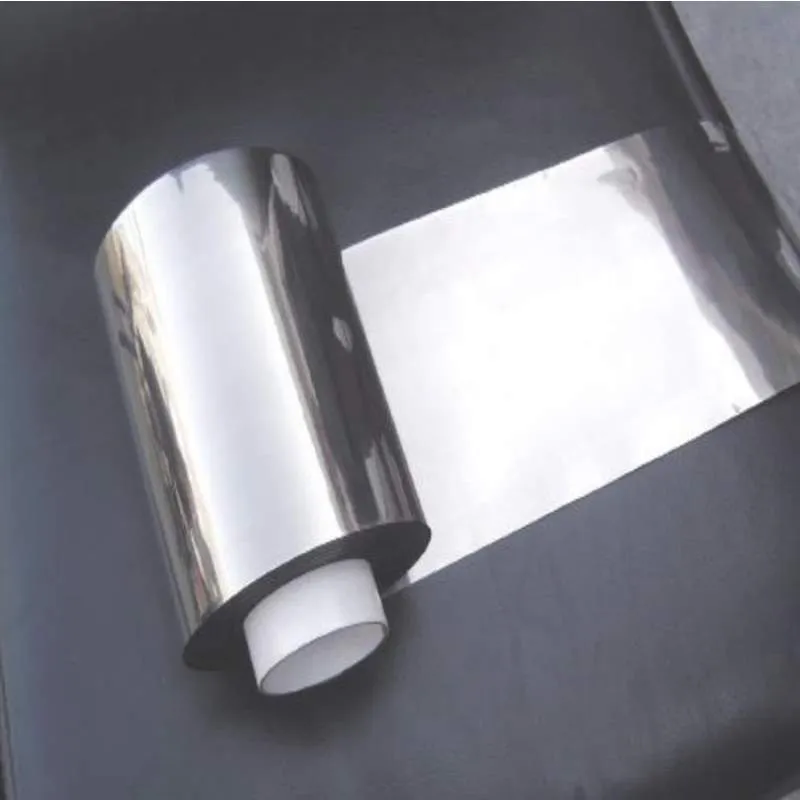
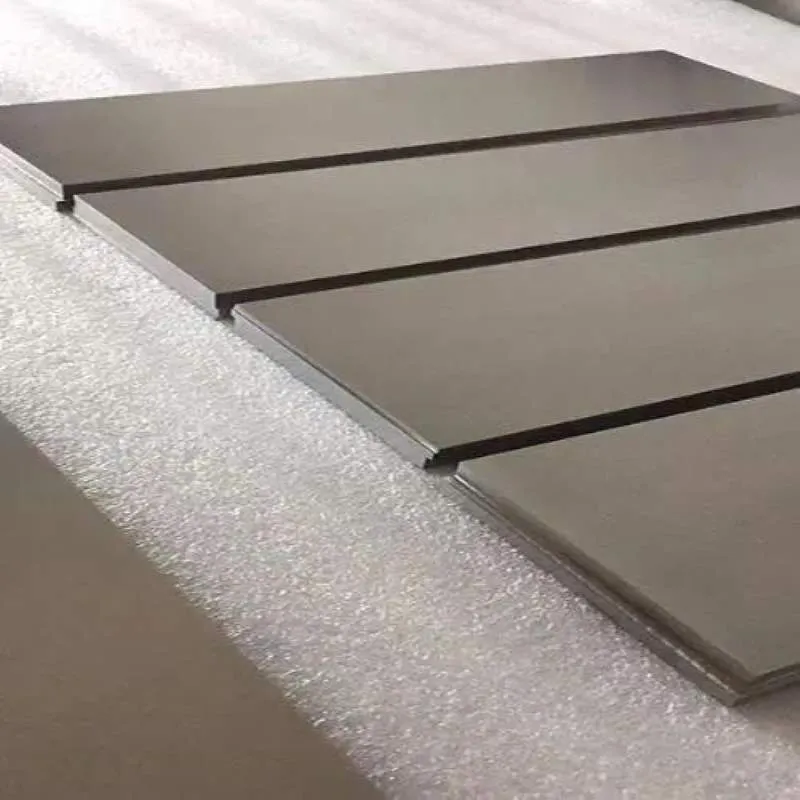
Markforged 3D Printed H13 Tool Steel, As-Sintered
Product Code : STI-GSTI-407-CU
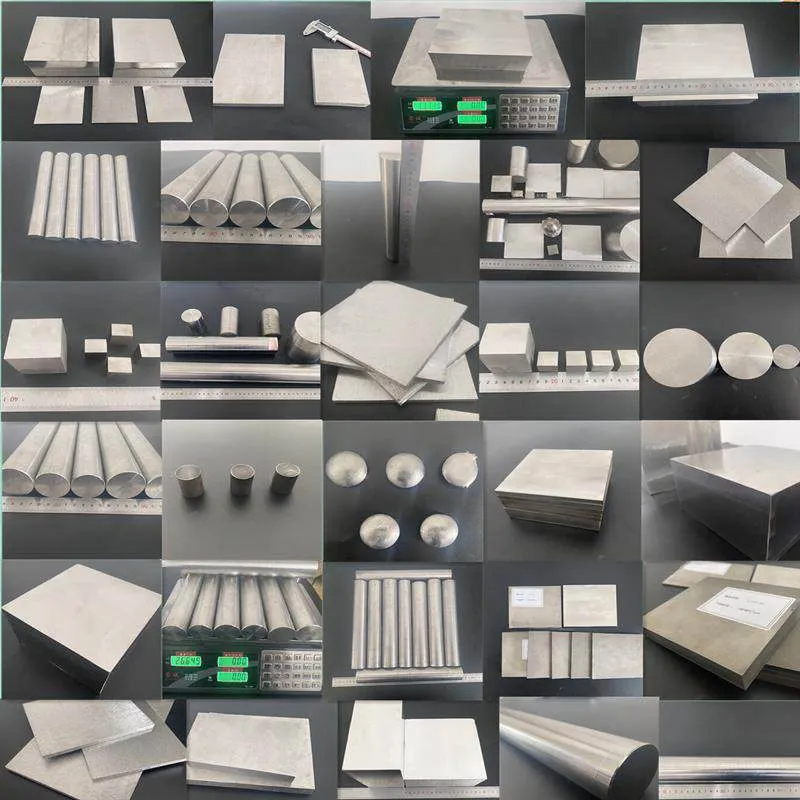
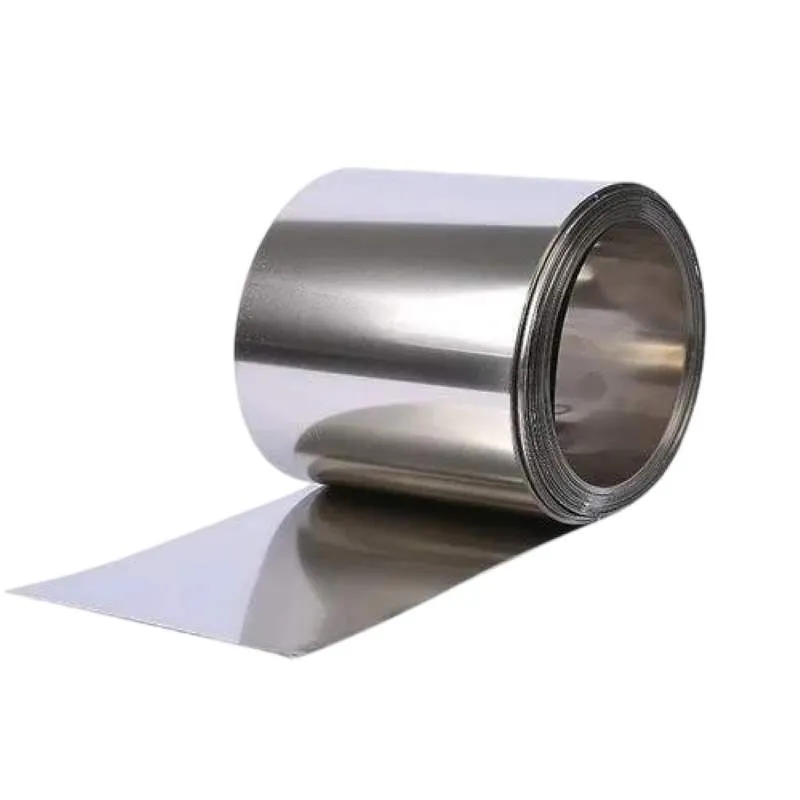
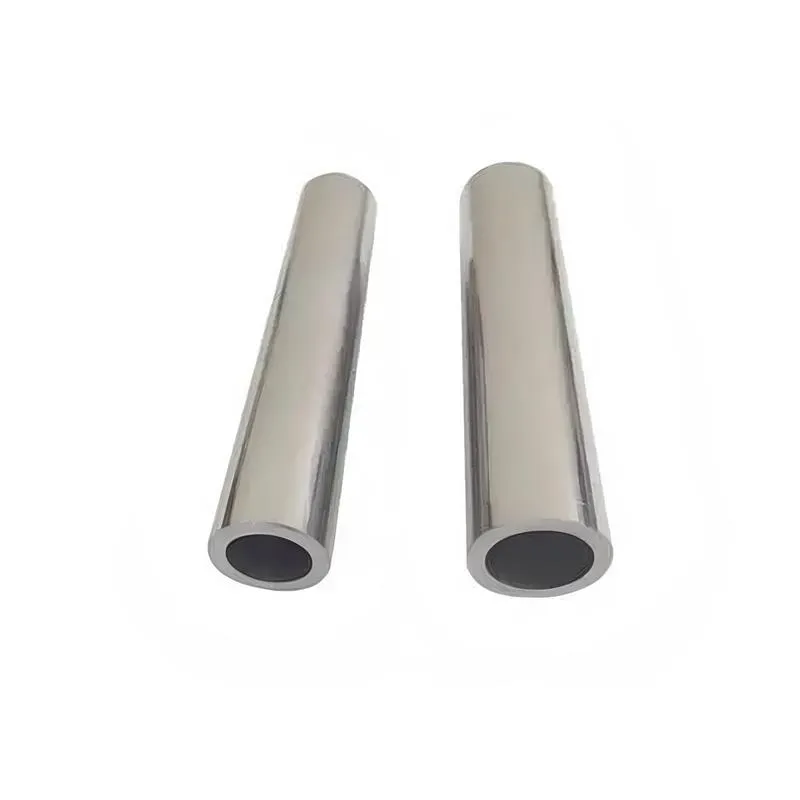
We provide Markforged 3D Printed H13 Tool Steel, As-Sintered is available in Bar (Round bar, Flat bar), Ribbon, Wire, Rods, Tube,Seamless Tube,Pipe, Ingots, Plate, Sheet, Strip and Forging Stock.,Purity, chemical composition, size, etc. can all be customized to meet specific requirements.
Please contact us if you need customized services. We will contact you with the price and availability in 24 hours.
Markforged 3D Printed H13 Tool Steel, As-Sintered Product Information
-:-
For detailed product information, please contact sales.
-:
Markforged 3D Printed H13 Tool Steel, As-Sintered Synonyms
-:-
For detailed product information, please contact sales.
-:
Markforged 3D Printed H13 Tool Steel, As-Sintered Product Information
-:-
For detailed product information, please contact sales.
-:
# **Product Introduction: Markforged 3D Printed H13 Tool Steel (As-Sintered)**
## **1. Overview**
**Markforged 3D Printed H13 Tool Steel (As-Sintered)** is an **additively manufactured, near-net-shape H13 alloy** produced via **Metal Fused Filament Fabrication (Metal FFF)** technology, supplied in its **as-sintered condition** without final heat treatment. This material represents the digitally manufactured equivalent of the industry-standard **AISI H13 (UNS T20813) hot work tool steel**, delivered in a soft, machinable state ready for final machining, finishing, and user-specified heat treatment. The "as-sintered" designation indicates the component has completed the debinding and high-temperature sintering cycles but has not undergone the austenitize-quench-temper (AQT) hardening process. This provides manufacturers with maximum flexibility to perform final machining on complex geometries before applying their own tailored heat treatment protocol, making it ideal for producing conformally cooled die inserts, hot work tooling prototypes, and custom components requiring H13's high-temperature properties in intricate forms.
## **2. Manufacturing Process & Specifications**
This material is defined by a complete additive digital workflow that stops at the sintered metallurgical state.
* **Primary Manufacturing Process:**
* **Markforged Metal FFF Process (Metal X System):** A two-stage, office-friendly additive process:
1. **Printing:** Layer-by-layer extrusion of a metal-polymer composite filament (H13 steel powder in a binder matrix) to create a "green" part.
2. **Post-Processing:**
* **Debinding:** Catalytic or solvent removal of the primary polymer binder.
* **Sintering:** High-temperature furnace cycle (~1300°C+) in a controlled atmosphere to densify the metal particles, achieving >99% density and creating a fully metallic, homogeneous "brown" part. **This is the final state for "as-sintered" delivery.**
* **Material Classification:**
* **Type:** **Additively Manufactured H13 Tool Steel in Sintered (Annealed) Condition**.
* **Standard Reference:** Aims to match the sintered chemistry of **ASTM A681 AISI H13 / UNS T20813**. It is **not** the final heat-treated H13. The user is responsible for all post-sintering heat treatment.
* **Key Distinction:** Unlike Markforged's pre-hardened offerings, this material is supplied **soft** (~20-30 HRC), prioritizing machinability and user-controlled final hardening over immediate use.
## **3. Chemical Composition (Weight %, Target - As-Sintered)**
The filament is formulated to yield a post-sintering chemistry approximating standard H13.
| Element | Target Range (%) (Post-Sintering) | Role in H13 |
|---------|-----------------------------------|------------|
| **Carbon (C)** | ~0.32 – 0.45 | Base element for hardness; controlled during sintering to prevent decarburization. |
| **Chromium (Cr)** | ~4.75 – 5.50 | Provides tempering resistance and oxidation resistance. |
| **Molybdenum (Mo)** | ~1.10 – 1.75 | Critical for high-temperature strength and toughness. |
| **Vanadium (V)** | ~0.80 – 1.20 | For wear resistance and grain refinement. |
| **Silicon (Si)** | ~0.80 – 1.20 | Enhances oxidation and thermal fatigue resistance. |
| **Iron (Fe)** | Balance. | |
## **4. Typical Physical & Mechanical Properties (As-Sintered Condition)**
* **State Definition:** **Soft and Machinable.** Analogous to annealed or spheroidized condition in wrought steel.
* **Hardness:** **20 – 30 HRC** (Typical). This is ideal for machining, drilling, and EDM operations.
* **Ultimate Tensile Strength (UTS):** **700 – 900 MPa** (102,000 – 131,000 psi)
* **Yield Strength (0.2% Offset):** **500 – 700 MPa** (73,000 – 102,000 psi)
* **Elongation at Break:** **5 – 10%.** Higher ductility than the heat-treated state, allowing for some mechanical adjustment.
* **Density:** >99% of theoretical density. Near-full density minimizes concerns about porosity in final applications.
* **Microstructure:** Consists of fine, equiaxed ferrite grains with a uniform dispersion of alloy carbides. **No martensite is present.**
* **Key Characteristic:** **Isotropic Machinability.** The as-sintered microstructure is more uniform in all directions compared to the anisotropic properties of the final hardened AM part, making it predictable to machine.
## **5. Product Application**
This material is strategically used for **complex tooling components that require significant post-print machining or user-specific hardening.**
* **Prototype & Pre-Production Tooling:**
* **Test inserts for die casting or hot forging** where cooling channel performance is validated before committing to final hardening.
* **Forming die prototypes** that can be machined and fitted before heat treatment.
* **Complex, Finished Tooling:**
* **Conformally cooled injection mold or die casting inserts** where cooling channels are printed, but critical sealing surfaces, threads, or precise bores are machined post-sintering for highest accuracy.
* **Hot work tooling with integrated sensor ports or complex internal galleries** requiring precise finishing.
* **Hybrid Tooling & Repair:**
* **Replacement cores for large molds** that are printed, then machined to match existing cavities before hardening.
* **Components for Further Processing:**
* **Custom electrodes for sinker EDM** made from machinable H13.
## **6. Key Features & Advantages**
* **Design Freedom for Complex Cooling:** Enables the production of monolithic tools with optimized conformal cooling channels that follow the part contour.
* **Excellent Machinability in As-Sintered State:** Softer than wrought annealed H13 in some cases, allowing for faster machining, better surface finish, and lower tool wear when adding final features.
* **User-Controlled Final Properties:** Provides complete flexibility for the end-user to apply their own optimized heat treatment cycle (e.g., for specific hardness, toughness balance, or to match existing tools).
* **Material Efficiency & Lead Time Reduction:** Creates near-net-shape blanks with internal complexity, drastically reducing material waste and initial lead time compared to machining from a solid block.
* **Good Sintered Density:** Minimizes concerns about porosity affecting thermal conductivity or surface finish after machining.
## **7. Critical Processing & Workflow Considerations**
* **Mandatory User Heat Treatment:** **The part is not ready for service as-delivered.** A full AQT heat treatment cycle (preheat, austenitize ~1010-1040°C, quench, double temper) **must** be performed by the user to achieve H13's service properties (44-52 HRC, high toughness, etc.).
* **Account for Sintering Shrinkage:** The part undergoes significant, predictable shrinkage (~17-20%) during sintering. The initial print file must be scaled accordingly.
* **Post-Sintering Machining is Expected:** This is the intended workflow. Plan for CNC machining or EDM operations to achieve final dimensions and surface finishes on critical features.
* **Distortion During Final Heat Treatment:** The complex, thin-walled structures enabled by AM can be prone to distortion during the user's hardening process. Consider stress relieving after machining and before final hardening.
* **Surface Finish:** As-sintered surfaces have a characteristic granular texture. All functional surfaces will require machining or polishing post-sintering.
**Summary:**
Markforged 3D Printed H13 Tool Steel (As-Sintered) is a **manufacturing intermediary** rather than a final product. Its value lies in providing a **complex, near-net-shape "blank"** in a highly machinable form, made from a premium hot-work steel alloy. It is the optimal choice for producing advanced tooling where external cooling is insufficient and internal conformal cooling is required, but where the highest precision is needed on critical features best achieved by post-sintering machining. This material shifts the value proposition of AM from just geometric freedom to **enabling a superior hybrid manufacturing workflow**, combining the cooling efficiency of additive design with the precision and property control of traditional machining and heat treatment.
-:-
For detailed product information, please contact sales.
-:
Markforged 3D Printed H13 Tool Steel, As-Sintered Specification
Dimensions
Size:
Diameter 20-1000 mm Length <7063 mm
Size:We can customized as required
Standard:
Per your request or drawing
We can customized as required
Properties(Theoretical)
Chemical Composition
-:-
For detailed product information, please contact sales.
-:
Markforged 3D Printed H13 Tool Steel, As-Sintered Properties
-:-
For detailed product information, please contact sales.
-:
Applications of Markforged 3D Printed H13 Tool Steel, As-Sintered
-:-
For detailed product information, please contact sales.
-:
Chemical Identifiers Markforged 3D Printed H13 Tool Steel, As-Sintered
-:-
For detailed product information, please contact sales.
-:
Packing of Markforged 3D Printed H13 Tool Steel, As-Sintered
-:-
For detailed product information, please contact sales.
-:
Standard Packing:
-:-
For detailed product information, please contact sales.
-:
Typical bulk packaging includes palletized plastic 5 gallon/25 kg. pails, fiber and steel drums to 1 ton super sacks in full container (FCL) or truck load (T/L) quantities. Research and sample quantities and hygroscopic, oxidizing or other air sensitive materials may be packaged under argon or vacuum. Solutions are packaged in polypropylene, plastic or glass jars up to palletized 3534 gallon liquid totes Special package is available on request. E FORUs’ is carefully handled to minimize damage during storage and transportation and to preserve the quality of our products in their original condition