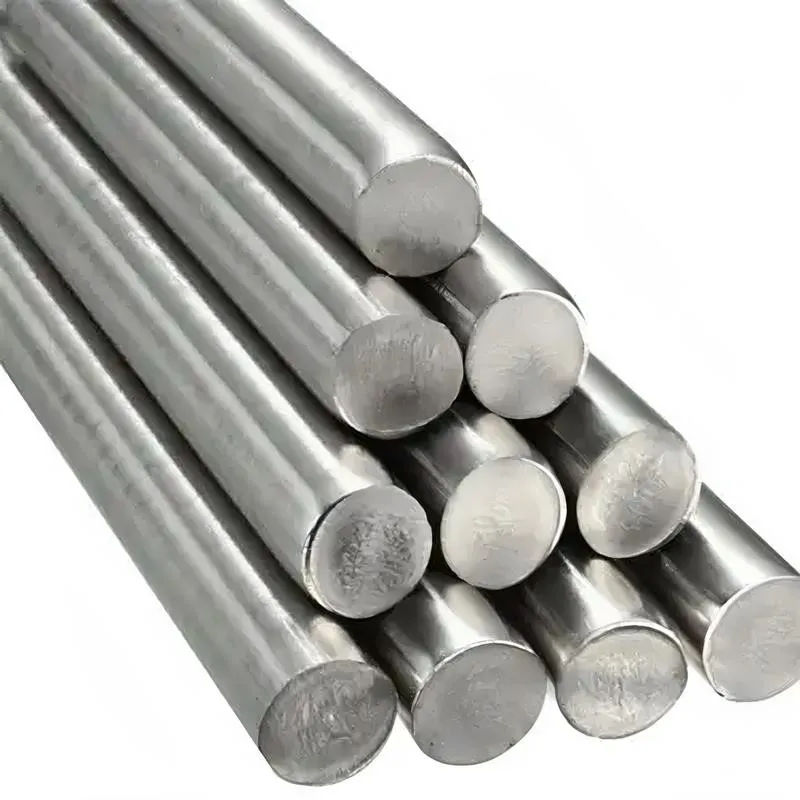
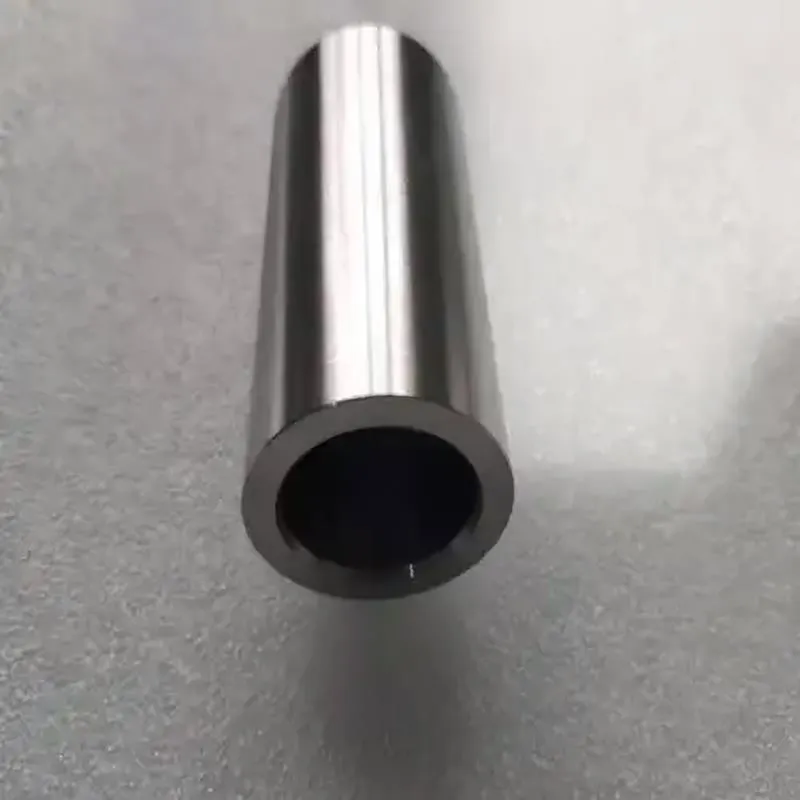
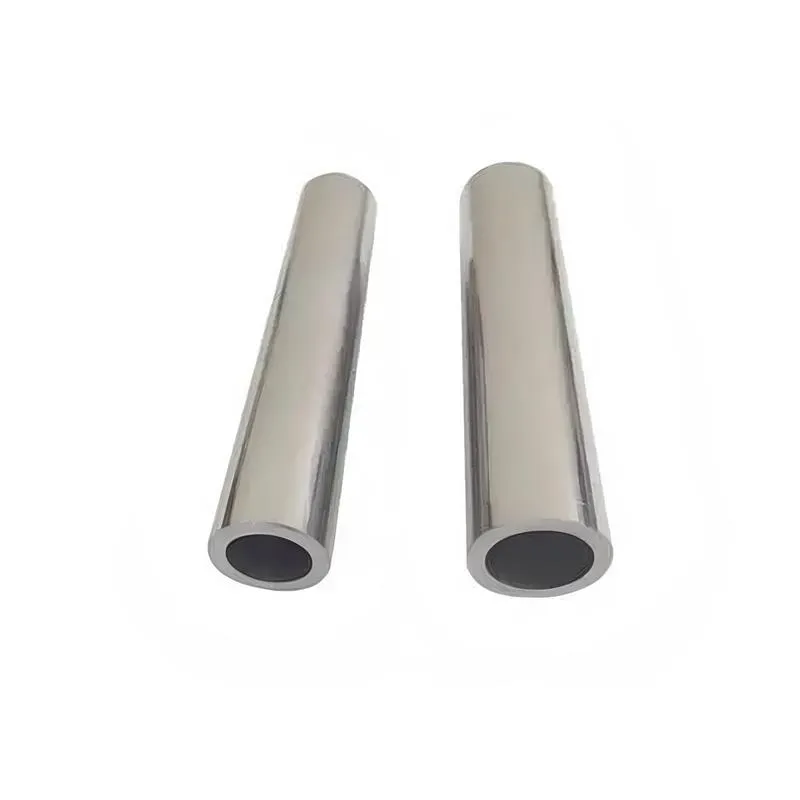
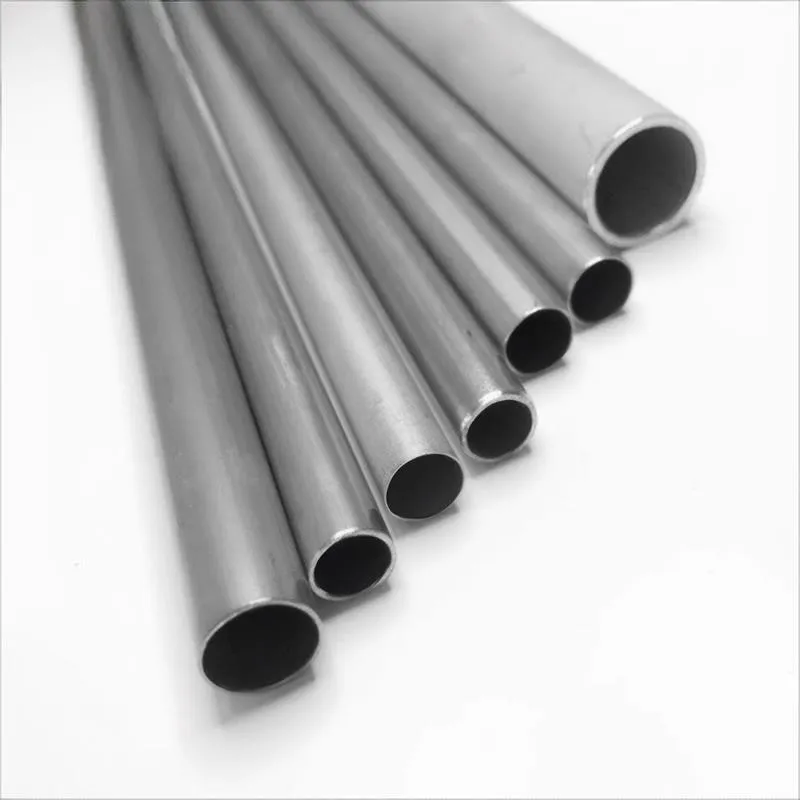
SAE J2477 AD 1050 Automotive Austempered Ductile Iron Rod/Bar
Product Code : STI-IFe-094-CU
We provide SAE J2477 AD 1050 Automotive Austempered Ductile Iron Rod/Bar is available in Bar (Round bar, Flat bar), Ribbon, Wire, Rod/Bars, Tube,Seamless Tube,Pipe, Ingots, Plate, Sheet, Strip and Forging Stock.,Purity, chemical composition, size, etc. can all be customized to meet specific requirements.
Please contact us if you need customized services. We will contact you with the price and availability in 24 hours.
SAE J2477 AD 1050 Automotive Austempered Ductile Iron Rod Product Information
-:-
For detailed product information, please contact sales.
-:
SAE J2477 AD 1050 Automotive Austempered Ductile Iron Rod Synonyms
-:-
For detailed product information, please contact sales.
-:
SAE J2477 AD 1050 Automotive Austempered Ductile Iron Product Information
-:-
For detailed product information, please contact sales.
-:
# **Product Technical Data Sheet: SAE J2477 AD 1050 Automotive Austempered Ductile Iron (ADI)**
---
## **1. Product Overview**
**SAE J2477 AD 1050** is the **highest-strength automotive-grade Austempered Ductile Iron** specification within the SAE standard, representing the pinnacle of ADI performance for volume vehicle production. With a minimum tensile strength of **1050 MPa (152 ksi)**, this premium material achieves **exceptional strength-to-weight ratio and wear characteristics** that directly compete with high-performance forged alloy steels. Developed through sophisticated low-temperature austempering, AD 1050 features an **ultra-fine ausferritic microstructure** that delivers an optimal balance of **extreme strength, controlled ductility, and outstanding fatigue resistance**. This grade is engineered specifically for the most critical, highly stressed components in advanced powertrains and chassis systems where maximum performance, weight reduction, and durability are non-negotiable requirements.
---
## **2. Governing Standards & Specifications**
This specification defines the upper performance tier for automotive ADI applications, with clear linkages to international standards.
* **Primary Standard:**
* **SAE J2477** - *Austempered Ductile (Nodular) Iron Castings (Automotive)*
* **Direct Equivalents:**
* **ASTM A897/A897M:** Directly equivalent to **Grade 1050/750/07** (1050 MPa UTS, 750 MPa YS, 7% elongation).
* **ISO 17804:** Corresponds to **ADI 1050-750-07** or **JS/1050/7/360/12**.
* **Automotive Compliance Requirements:**
* **IATF 16949** certification mandatory for suppliers.
* **Advanced PPAP (Production Part Approval Process)** with extensive validation testing.
* **Key Referenced Testing Standards:**
* **Tensile Test:** ASTM E8
* **Hardness:** ASTM E10 (Brinell), ASTM E18 (Rockwell)
* **Impact Test:** ASTM E23 (Charpy) - Required for qualification.
* **Microstructure:** ASTM A247 (with deep etch examination)
* **Fatigue Testing:** Component-level testing per SAE J1099 or customer-specific protocols.
---
## **3. Typical Chemical Composition (Base Iron)**
Achieving consistent AD 1050 properties demands exacting chemistry control and strategic alloy optimization.
| Element | Target Range (%) | Critical Function for AD 1050 |
| :--- | :--- | :--- |
| **Carbon (C)** | 3.4 - 3.7 | Precisely balanced - sufficient for ausferrite formation while maximizing matrix strength through controlled graphite content. |
| **Silicon (Si)** | **2.3 - 2.6** | **Tightly optimized** - must suppress carbide formation during rapid quenching to very low temperatures, yet prevent excessive austenite stabilization that would compromise strength. |
| **Manganese (Mn)** | **≤ 0.20** | **Extremely low** - critical to prevent micro-segregation and formation of embrittling phases at cell boundaries, which would catastrophically reduce toughness. |
| **Molybdenum (Mo)** | **0.35 - 0.60** | **Essential hardenability agent** - ensures complete ausferritic transformation at ultra-low austempering temperatures throughout production casting sections. |
| **Copper (Cu)** | **0.9 - 1.3** | **Primary alloying element** - provides robust, uniform hardenability and significant solid solution strengthening of the matrix. |
| **Nickel (Ni)** | **0.8 - 1.5** | **Virtually mandatory** - enhances hardenability depth, improves toughness at this strength level, and ensures microstructural consistency in complex geometries. |
| **Chromium (Cr)** | 0.1 - 0.3 | Sometimes added in minute amounts for additional hardenability and wear resistance. |
| **Magnesium (Mg)** | 0.04 - 0.06 | Ensures superior nodularity (>92%). |
| **Trace Elements** | **Near-elimination** | Elements like Sn, Sb, Pb, Bi strictly controlled via high-purity charge materials. |
---
## **4. Physical & Mechanical Properties**
AD 1050 delivers premium performance characteristics that challenge traditional steel components.
| Property | SAE J2477 AD 1050 Requirement / Typical Value | Automotive Performance Significance |
| :--- | :--- | :--- |
| **Tensile Strength (UTS), min.** | **1050 MPa (152 ksi)** | Strength level comparable to premium alloy steels (e.g., 4340, 300M in high-strength condition). |
| **Yield Strength (0.2% YS), min.** | **750 MPa (109 ksi)** | Exceptionally high yield strength providing excellent resistance to permanent deformation in precision components. |
| **Elongation, min.** | **7%** | **Maintains critical ductility** for energy absorption and stress redistribution, a key safety factor distinguishing it from brittle materials. |
| **Hardness (Brinell)** | **341 - 401 HBW** | Typically 360-380 HBW (~37-40 HRC). Provides outstanding resistance to abrasive wear, pitting, and contact fatigue. |
| **Modulus of Elasticity** | ~165 - 175 GPa | Maintains high stiffness for precision applications. |
| **Charpy Impact (Unnotched)** | **30 - 55 J (Typical)** | Good energy absorption considering extreme strength level. |
| **Charpy Impact (V-notch)** | **Typically 10 - 16 J @ 23°C** | Moderate fracture toughness; design must meticulously manage stress concentrations. |
| **Fatigue Endurance Limit** | **~470 - 580 MPa** (≈ 0.45-0.55 x UTS) | **Exceptional fatigue performance** - often superior to quenched & tempered steels of equivalent hardness, a decisive advantage in cyclic loading applications. |
| **Density** | **~7.1 g/cm³** | **Approximately 10% lighter than steel**, directly supporting vehicle lightweighting and efficiency targets. |
| **Damping Capacity** | **~2-3 times greater than steel** | Provides measurable NVH benefits in driveline and chassis applications. |
| **Microstructure** | **Ultra-Fine Ausferrite** with controlled high-carbon austenite content (typically 15-25%). Achieved via **austempering at 220-260°C (430-500°F)**. | The very fine, low-temperature ausferritic structure is responsible for the exceptional strength and fatigue properties. |
---
## **5. Product Applications in Automotive**
AD 1050 is reserved for the most demanding, safety-critical applications in advanced vehicle architectures.
* **High-Performance & Electric Vehicle Powertrains:**
* **Reduction gear sets** for high-torque electric drive units (EDUs).
* **High-stress transmission components** in performance dual-clutch and automatic transmissions.
* **Differential gears and carriers** for high-power AWD systems.
* **Premium Chassis & Suspension Systems:**
* **Steering knuckles and uprights** for performance EVs and luxury vehicles where unsprung mass reduction is critical.
* **High-load suspension links** in advanced suspension designs.
* **Commercial Vehicle & Heavy-Duty Applications:**
* **Critical gearing** in heavy-duty truck transmissions and axles.
* **High-wear components** in off-highway equipment.
* **Specialty Performance Components:**
* **High-stress brackets and mounts** for performance applications.
---
## **6. Austempering Process & Manufacturing Considerations**
* **Heat Treatment Process:** Demands precision industrial control.
* **Austenitizing:** 880-910°C with controlled atmosphere.
* **Quenching & Austempering:** Extremely rapid quench to **220-260°C** salt bath, held for 2-4 hours.
* **Cooling:** Controlled air cooling.
* **Process Criticality:** The **very narrow low-temperature processing window** requires state-of-the-art equipment with ±5°C control. **Advanced SPC (Statistical Process Control)** and **real-time monitoring** are essential for production consistency.
* **Machinability Strategy:** **Very difficult** in final condition. Standard automotive production approaches include:
* **Near-net-shape casting** with minimal stock allowance.
* **Hard machining** with advanced carbide or PCBN tooling for final operations.
* **Two-stage machining** - rough machining in soft condition, austempering, then finish grinding/hard turning.
* **Weldability:** **Fundamentally incompatible** with welding processes for service components.
* **Quality Challenges:** Achieving consistent **7% minimum elongation** across production lots is the primary technical challenge and quality benchmark.
---
## **7. Quality Assurance & Automotive Compliance**
**Specify:** **"Austempered Ductile Iron Castings, SAE J2477 AD 1050."**
**Mandatory Requirements for Automotive Production:**
1. **Full Digital Traceability:** Complete pedigree from melt to finished component.
2. **Comprehensive Certification Package:**
* MTR with full chemistry (including trace element reporting).
* Mechanical property data from separately cast bars **and** from coupons taken from actual castings.
* Detailed microstructure report with quantitative analysis of ausferrite content and nodularity.
* Austempering process validation data (furnace charts).
3. **Advanced PPAP Requirements:**
* **Level 4** submission typical for new components.
* Includes **extended validation testing**: component fatigue testing, microstructural analysis at multiple locations, dimensional capability studies.
4. **100% Non-Destructive Testing:**
* **Fluorescent Penetrant Inspection (FPI)** for all highly stressed surfaces.
* **Ultrasonic Testing (UT)** for critical internal soundness in high-integrity components.
5. **Process Capability Validation:**
* **Cpk ≥ 1.67** for key mechanical properties (hardness, strength).
* **Microstructure consistency** validation across multiple production runs.
---
## **8. Value Proposition & Design Implementation**
**SAE J2477 AD 1050 enables breakthrough automotive engineering solutions:**
* **Direct Replacement of High-Strength Steel Forgings** with 10% weight savings and potential cost reduction through part consolidation.
* **Superior Fatigue Performance** enabling more aggressive design optimization and extended service life.
* **Design Freedom** for complex, integrated components that would be impossible or prohibitively expensive to forge and machine from steel.
* **System-Level NVH Improvement** through inherent material damping.
**Critical Design Implementation Guidelines:**
* **Generous Geometric Transitions:** Minimum fillet radius R = 3-5mm in high-stress areas.
* **Surface Finish Requirements:** Ra ≤ 1.6 µm on critical fatigue surfaces.
* **Residual Stress Management:** Account for compressive surface stresses in tolerance stack-ups.
* **Validation Testing:** Mandatory component-level fatigue and durability testing.
**SAE J2477 AD 1050 represents the frontier of high-volume automotive material technology, offering a transformative solution for engineers designing next-generation vehicle systems where performance, weight, and cost must be optimally balanced.**
-:-
For detailed product information, please contact sales.
-:
SAE J2477 AD 1050 Automotive Austempered Ductile Iron Specification
Dimensions
Size:
Diameter 20-1000 mm Length <6569 mm
Size:We can customized as required
Standard:
Per your request or drawing
We can customized as required
Properties(Theoretical)
Chemical Composition
-:-
For detailed product information, please contact sales.
-:
SAE J2477 AD 1050 Automotive Austempered Ductile Iron Properties
-:-
For detailed product information, please contact sales.
-:
Applications of SAE J2477 AD 1050 Automotive Austempered Ductile Iron Rod
-:-
For detailed product information, please contact sales.
-:
Chemical Identifiers SAE J2477 AD 1050 Automotive Austempered Ductile Iron Rod
-:-
For detailed product information, please contact sales.
-:
Packing of SAE J2477 AD 1050 Automotive Austempered Ductile Iron Rod
-:-
For detailed product information, please contact sales.
-:
Standard Packing:
-:-
For detailed product information, please contact sales.
-:
Typical bulk packaging includes palletized plastic 5 gallon/25 kg. pails, fiber and Steel Rod drums to 1 ton super sacks in full container (FCL) or truck load (T/L) quantities. Research and sample quantities and hygroscopic, oxidizing or other air sensitive materials may be packaged under argon or vacuum. Solutions are packaged in polypropylene, plastic or glass jars up to palletized 3040 gallon liquid totes Special package is available on request. E FORUs’ is carefully handled to minimize damage during storage and transportation and to preserve the quality of our products in their original condition