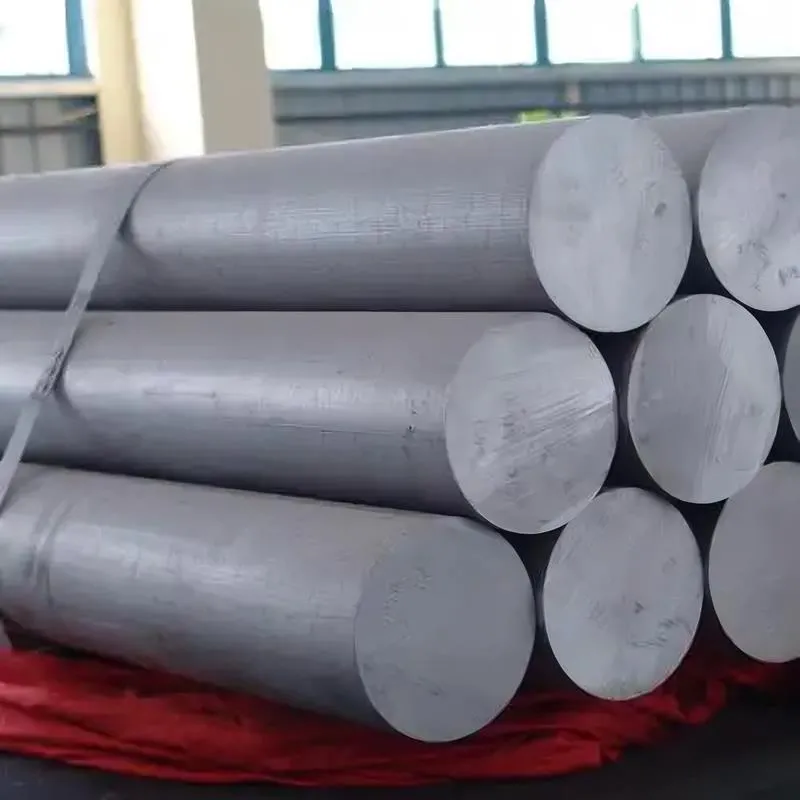
Schmolz + Bickenbach,P-20 High Hard Plastic Mold Steel Rod/Bar
Product Code : STI-GSTI-467-CU
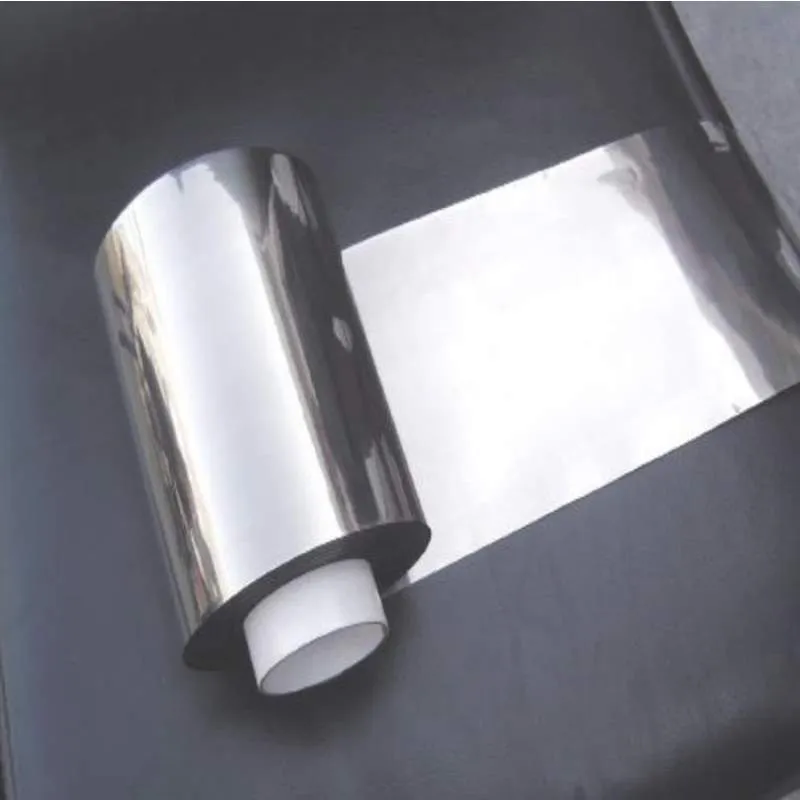
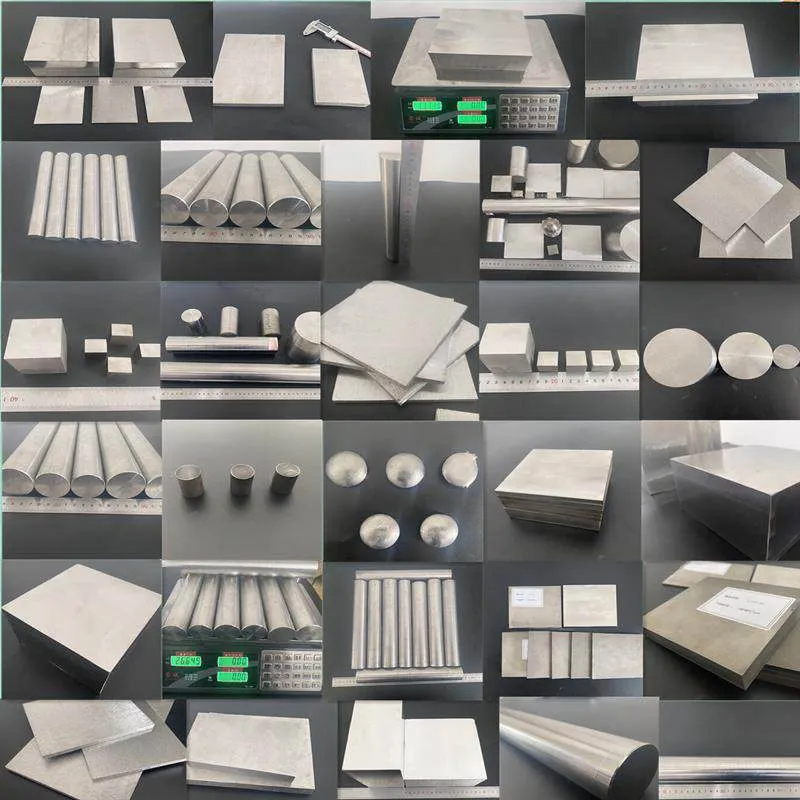
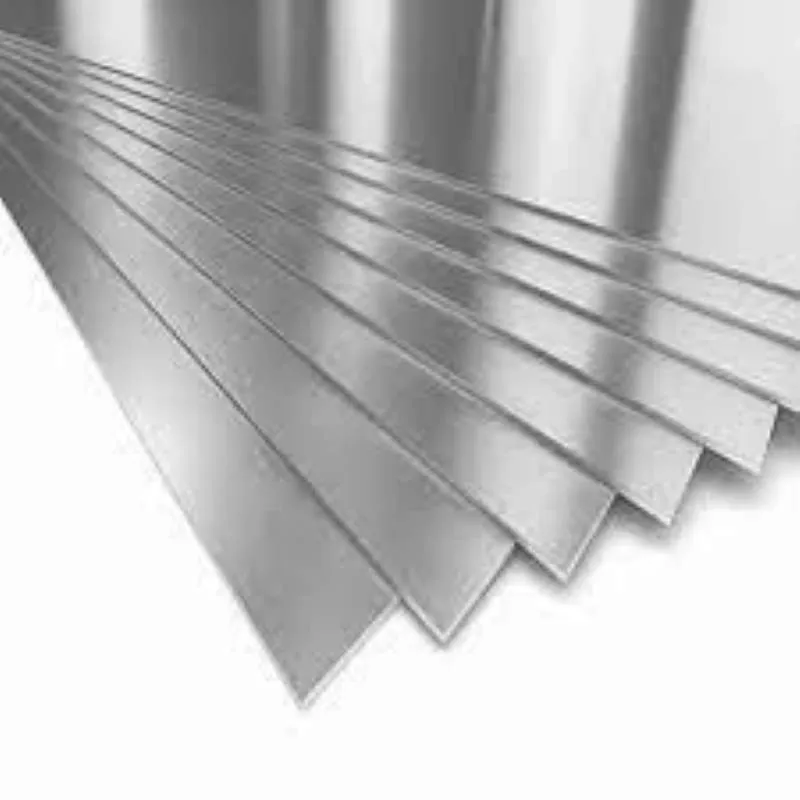
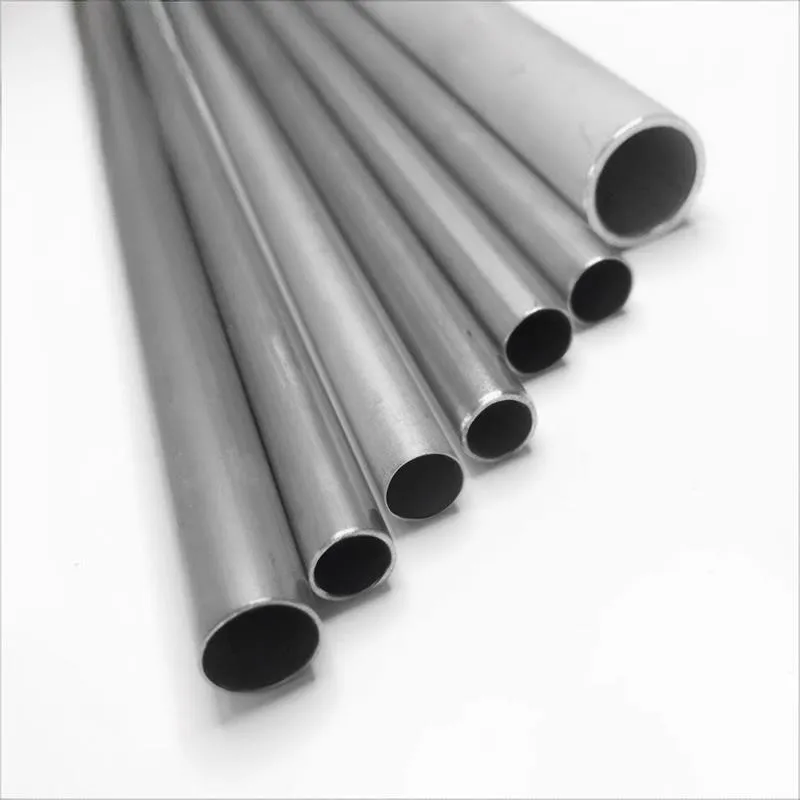
We provide Schmolz + Bickenbach P-20 High Hard Plastic Mold Steel Rod/Bar is available in Bar (Round bar, Flat bar), Ribbon, Wire, Rod/Bars, Tube,Seamless Tube,Pipe, Ingots, Plate, Sheet, Strip and Forging Stock.,Purity, chemical composition, size, etc. can all be customized to meet specific requirements.
Please contact us if you need customized services. We will contact you with the price and availability in 24 hours.
Schmolz + Bickenbach P-20 High Hard Plastic Mold Steel Rod Product Information
-:-
For detailed product information, please contact sales.
-:
Schmolz + Bickenbach P-20 High Hard Plastic Mold Steel Rod Synonyms
-:-
For detailed product information, please contact sales.
-:
Schmolz + Bickenbach P-20 High Hard Plastic Mold Steel Product Information
-:-
For detailed product information, please contact sales.
-:
# **SCHMOLZ + BICKENBACH Formadur® P-20 High Hard | Premium Pre-Hardened Plastic Mold Steel**
## **Overview**
SCHMOLZ + BICKENBACH **Formadur® P-20 High Hard** is a specialized variant of the classic P20 mold steel, engineered to provide **enhanced hardness and wear resistance in the as-delivered, pre-hardened condition**. While standard P20-type steels are typically supplied at 28-34 HRC, the "High Hard" modification is processed to achieve a significantly higher pre-hardened hardness range, typically between **36-40 HRC (340-380 HB)**, without sacrificing machinability or requiring customer-side heat treatment. This grade is specifically designed for plastic injection molds where increased resistance to abrasion, higher clamping pressures, or longer production runs are required, but where through-hardening and associated distortion risks are undesirable.
## **Key Features:**
* **Elevated Pre-Hardened Hardness:** Supplied at a uniform hardness of approximately **36-40 HRC (340-380 HB)**, offering a 15-25% increase in surface hardness over standard pre-hardened P20.
* **Excellent Wear & Pressure Resistance:** The higher initial hardness provides better resistance to abrasive filled plastics and reduces the risk of indentation under high injection pressures.
* **Good Machinability (Considering Hardness):** Despite the higher hardness, it retains good machinability due to optimized composition and microstructure, allowing for efficient milling, drilling, and EDM.
* **Eliminates Heat Treatment:** Supplied ready-to-machine, removing the cost, time, and distortion risks associated with through-hardening operations.
* **Good Polishability:** Maintains the ability to achieve high-quality surface finishes, suitable for technical or semi-gloss parts.
* **High Dimensional Stability:** As a pre-hardened steel, it offers excellent dimensional consistency during and after machining.
* **Good Nitriding Response:** Responds well to surface treatments like gas or plasma nitriding for even higher surface hardness (>1000 HV) in extreme wear applications.
---
## **Material Specifications: Formadur® P-20 High Hard**
### **1. Chemical Composition (wt%)**
| Element | Content Range (wt%) | Function & Contribution to "High Hard" Property |
| :--- | :--- | :--- |
| **Carbon (C)** | 0.35 - 0.42 | Provides the fundamental matrix hardness and strength. Slightly elevated or optimized within P20 range for higher attainable hardness. |
| **Silicon (Si)** | 0.20 - 0.40 | Deoxidizer and solid solution strengthener. |
| **Manganese (Mn)** | 1.40 - 1.70 | Enhances hardenability, ensuring the higher hardness can be achieved throughout the cross-section of the delivered block. |
| **Chromium (Cr)** | 1.80 - 2.10 | Improves hardenability and provides mild corrosion/wear resistance. |
| **Molybdenum (Mo)** | 0.20 - 0.35 | A key element for hardenability and tempering resistance. The controlled Mo content helps achieve and maintain the higher hardness level. |
| **Nickel (Ni)** | 0.90 - 1.20 | **Critical Modifier.** Enhances core toughness at the higher hardness level and improves hardenability uniformity, preventing soft spots. |
| **Sulfur (S)** | ≤ 0.005 | **Very Low.** Ensures optimal polishability, etching characteristics, and isotropic mechanical properties. |
| **Phosphorus (P)** | ≤ 0.015 | Minimized for good toughness. |
**Metallurgical Basis for High Hardness:**
* **Optimized C+Mn+Cr+Mo Balance:** The chemistry is fine-tuned to shift the continuous cooling transformation (CCT) diagram, allowing a harder microstructure (e.g., finer bainite/low-carbon martensite) to form during the mill's controlled cooling process.
* **Nickel Addition:** The consistent Ni content (0.9-1.2%) is crucial. It increases hardenability, allowing thicker sections to reach the target hardness, and more importantly, it improves the toughness of the higher-hardness matrix, preventing brittleness.
* **Precise Heat Treatment:** The steel undergoes a proprietary thermal cycle at the mill involving austenitizing followed by controlled cooling and tempering to "lock in" the higher hardness at the desired level.
### **2. Physical & Mechanical Properties (As-Delivered)**
| Property | Typical Value / Range | Condition / Test Standard | Notes |
| :--- | :--- | :--- | :--- |
| **Delivery Hardness** | **360 - 400 HB** / **36 - 40 HRC** | Brinell HBW 10/3000 / Rockwell C | Core property. Uniform across standard block sizes. |
| **Tensile Strength (Rm)** | 1150 - 1300 MPa | ~ | Directly correlates with hardness. |
| **0.2% Yield Strength (Rp0.2)** | 1000 - 1150 MPa | ~ | High resistance to plastic deformation. |
| **Elongation (A₅)** | ≥ 10 % | ~ | Maintains reasonable ductility. |
| **Reduction of Area (Z)** | ≥ 35 % | ~ | |
| **Impact Toughness (KV)** | ≥ 25 J @ +20°C | Charpy V-notch (ISO 148-1) | Sufficient for mold application stresses. |
| **Modulus of Elasticity (E)** | ~210,000 MPa | ~ | |
| **Thermal Conductivity** | ~35 W/m·K (20°C) | ~ | Slightly lower than standard P20 due to higher alloy content/hardness. |
| **Coefficient of Thermal Expansion** | ~11.5 x 10⁻⁶ /K (20-100°C) | ~ | |
**Comparative Hardness Table:**
| Steel Grade | Typical Delivery Hardness (HRC) | Relative Wear Resistance (Index) |
| :--- | :--- | :--- |
| **Standard P20 (1.2311)** | 30 - 34 | 100 (Baseline) |
| **P-20 High Hard** | **36 - 40** | **~130 - 150** |
| **Through-Hardened Tool Steel (e.g., 1.2344)** | 48 - 52 | ~250 - 300 |
### **3. Machining & Finishing Properties**
| Operation | Performance & Recommendations |
| :--- | :--- |
| **Machinability** | **Good (for its hardness class).** Machinability index is approximately **70-80%** of standard pre-hardened P20 (30 HRC). Use rigid setups, positive geometry carbide tools, and moderate speeds/feeds. Adequate coolant is essential. |
| **Electrical Discharge Machining (EDM)** | **Good.** Standard wire and sinker EDM perform well. The higher hardness may require slight adjustments to parameters (e.g., reduced wire feed speed in Wire EDM). A stress relief (*~550°C*) after rough EDM is recommended. |
| **Grinding** | **Good to Very Good.** The uniform hardness provides consistent grinding behavior. Use appropriate wheel grades (softer than for through-hardened steels). |
| **Polishing** | **Very Good.** Capable of achieving SPI #2 (B1/B2) or better finishes. The fine, uniform microstructure supports good polishability. For SPI A1 mirror finishes, a standard P20 (1.2311) may still be superior. |
| **Texturing (Etching)** | **Good.** Suitable for most common texture applications. |
| **Welding** | **Possible with extreme caution.** Pre-heat to 350-400°C is mandatory. Use low-hydrogen, matching electrodes. Post-weld tempering at 500-550°C is essential. Not generally recommended for repair of cavities. |
### **4. Surface Treatment**
* **Nitriding (Gas/Plasma):** Highly effective and recommended for extending tool life against highly abrasive plastics. Produces a hard case (700-1100 HV) with excellent anti-sticking properties.
* **Hard Chrome Plating:** Applicable for additional corrosion resistance or release properties.
* **PVD Coatings (TiN, CrN, DLC):** Can be applied to further enhance surface hardness and reduce friction.
---
## **Applicable International Standards & Cross-References**
| Standard | Designation / Relation | Note |
| :--- | :--- | :--- |
| **SCHMOLZ + BICKENBACH** | **Formadur® P-20 High Hard** | Proprietary brand name for this specific high-hardness variant. |
| **DIN / EN / W-Nr.** | Based on **1.2311** / **1.2738** | Chemistry aligns with these but processed to a higher hardness specification. |
| **AISI / ASTM** | **P20+Ni (High Hard Variant)** | Not a standard AISI designation; a common industry descriptor. |
| **General Industry Term** | **Pre-hardened 40 HRC Mold Steel** | Functional description. |
| **Similar Concept Grades** | Uddeholm **IMPAX® Hi-Hard** (38-42 HRC), Bohler **M300 VMR** (High Hard) | Competitor products with similar positioning. |
---
## **Product Applications**
Formadur® P-20 High Hard is designed for **demanding plastic injection molds** where standard pre-hardened steels lack sufficient wear resistance, but full through-hardening is unnecessary or problematic.
**Ideal Application Areas:**
* **Molds for Abrasive Plastics:** Engineering plastics with **glass, mineral, or carbon fiber fillers** (e.g., PA-GF30, PBT-GF20, PP-Talc). The higher base hardness resists erosive wear better than standard P20.
* **High-Pressure Molds:** Molds for thin-wall parts or large projected areas requiring very high injection and holding pressures, where resistance to indentation is critical.
* **Long-Run Production Molds:** Molds with expected lifetimes of 500,000+ cycles, where increased wear resistance prolongs time between maintenance.
* **Molds with Texture:** Where a textured surface must maintain its integrity over many cycles without polishing out.
**Typical Mold Components:**
* Cavity and core inserts (especially for abrasive materials)
* Stripper plates
* High-wear areas of mold plates
* Nozzle tips and sprue bushings (for less demanding applications)
* Slides and lifters subject to abrasion
**Less Suitable / Not Recommended For:**
* **Optical parts requiring SPI A1 mirror finishes** (Standard 1.2311 is better).
* **Highly corrosive plastics** (e.g., PVC, flame-retardant grades) – Use a corrosion-resistant grade like 1.2316.
* **Extreme wear applications** that would typically require a through-hardened hot-work or cold-work tool steel (e.g., >1 million cycles with 40%+ glass filler).
* **Components subject to severe impact loading.**
---
## **Processing Guidelines (Summary)**
1. **Material State:** Machine in the as-delivered, pre-hardened condition (36-40 HRC).
2. **Tool Selection:** Use premium, sharp carbide tooling. Positive rake angles are beneficial.
3. **Machining Parameters:** Start with conservative speeds and feeds, then optimize. Ensure rigid clamping.
4. **Stress Relieving:** After heavy rough machining or EDM, a **stress relief anneal at 520-550°C for 2 hours per 25mm thickness** is highly recommended to ensure dimensional stability.
5. **Finishing:** Conduct final machining, polishing, and texturing.
6. **Surface Enhancement (Optional):** Apply nitriding or a PVD coating for maximum performance.
**Key Advantage:** This steel provides a practical **"sweet spot"** between the easy machining of standard P20 and the high wear resistance of through-hardened steels, often delivering the best **total economic efficiency** for a wide range of demanding but not extreme applications.
---
**Disclaimer:**
The information provided is based on typical data for SCHMOLZ + BICKENBACH Formadur® P-20 High Hard. Properties can vary within specification ranges and are influenced by processing conditions. This document is for informational purposes only and does not constitute a guarantee of properties or performance. For critical applications, always consult the official manufacturer's documentation and conduct trials under specific operating conditions. The suitability of this material must be verified for each specific mold design, plastic material, and production requirement.
-:-
For detailed product information, please contact sales.
-:
Schmolz + Bickenbach P-20 High Hard Plastic Mold Steel Specification
Dimensions
Size:
Diameter 20-1000 mm Length <7123 mm
Size:We can customized as required
Standard:
Per your request or drawing
We can customized as required
Properties(Theoretical)
Chemical Composition
-:-
For detailed product information, please contact sales.
-:
Schmolz + Bickenbach P-20 High Hard Plastic Mold Steel Properties
-:-
For detailed product information, please contact sales.
-:
Applications of Schmolz + Bickenbach P-20 High Hard Plastic Mold Steel Rod
-:-
For detailed product information, please contact sales.
-:
Chemical Identifiers Schmolz + Bickenbach P-20 High Hard Plastic Mold Steel Rod
-:-
For detailed product information, please contact sales.
-:
Packing of Schmolz + Bickenbach P-20 High Hard Plastic Mold Steel Rod
-:-
For detailed product information, please contact sales.
-:
Standard Packing:
-:-
For detailed product information, please contact sales.
-:
Typical bulk packaging includes palletized plastic 5 gallon/25 kg. pails, fiber and Steel Rod drums to 1 ton super sacks in full container (FCL) or truck load (T/L) quantities. Research and sample quantities and hygroscopic, oxidizing or other air sensitive materials may be packaged under argon or vacuum. Solutions are packaged in polypropylene, plastic or glass jars up to palletized 3594 gallon liquid totes Special package is available on request. E FORUs’ is carefully handled to minimize damage during storage and transportation and to preserve the quality of our products in their original condition