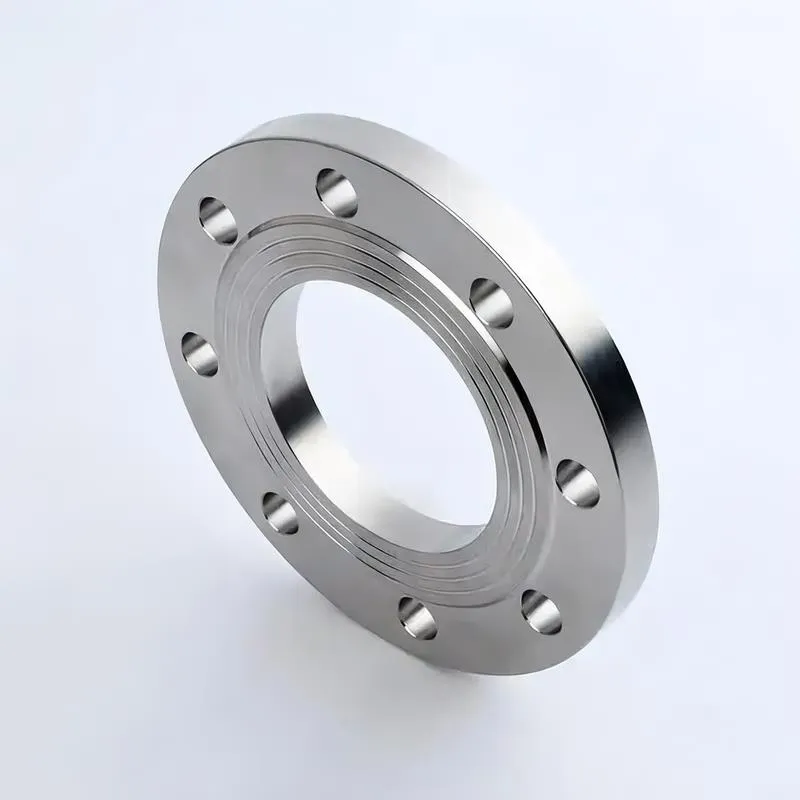
1,We Manufacturing processes are primarily classified into four types:
1:Forging,
2:Casting,
3:Cutting,
4:Rolling.
2,We can manufacture in accordance with these standards.
Standards:
GB Series (Chinese Standards), JB Series (Machinery Standards), HG Series (Chemical Industry Standards), ASME B16.5 (American Standards), BS4504 (British Standards), DIN (German Standards), and JIS (Japanese Standards).
Internationally, there are two primary systems of pipe flange standards: the European system, represented by the German DIN standards (including those of the former Soviet Union), and the American system, represented by the US ANSI pipe flange standards. Other common standards include: the Chinese Ministry of Machinery Industry standards (JB series), the Ministry of Chemical Industry standards (HG series), the Chinese National Standard *GB/T 9112–9124-2010 Steel Pipe Flanges*, as well as US standards (ASME B16.5), British standards (BS4504), German standards (DIN), Japanese standards (JIS), and marine standards (CBM), among others.
The nominal pressure ratings for the PN series are designated by "PN" and comprise the following nine levels: PN2.5, PN6, PN10, PN16, PN25, PN40, PN63, PN100, and PN160.
The nominal pressure ratings for the Class series are designated by "Class" and comprise the following six levels: Class150, Class300, Class600, Class900, Class1500, and Class2500.
Flange Classification
1. **According to Chemical Industry Standards:** Flanges are classified as follows:
Plate Flat Welding Flange (PL), Necked Flat Welding Flange (SO), Necked Butt Welding Flange (WN), Integral Flange (IF), Socket Welding Flange (SW), Threaded Flange (Th), Butt Welding Ring Loose Flange (PJ/SE), Blind Flange (BL), Flat Welding Ring Loose Flange (PJ/PJ), and Lined Blind Flange (BL(s)).
2. **According to Petrochemical (SH) Industry Standards:** Flanges are classified as follows:
Threaded Flange (PL), Butt Welding Flange (WN), Flat Welding Flange (SO), Socket Welding Flange (SW), Loose Flange (LJ), and Blind Flange (no specific designation).
3. **According to Machinery (JB) Industry Standards:** Flanges are classified as follows:
Integral Flange, Butt Welding Flange, Plate Flat Welding Flange, Butt Welding Ring Plate Loose Flange, Flat Welding Ring Plate Loose Flange, Lap Joint Ring Plate Loose Flange, and Blind Flange.
4. **According to Connection Method/Type:** Flanges are classified as follows:
Plate Flat Welding Flange, Necked Flat Welding Flange, Necked Butt Welding Flange, Socket Welding Flange, Threaded Flange, Blind Flange, Necked Butt Welding Ring Loose Flange, Flat Welding Ring Loose Flange, Ring-Type Joint (RTJ) Flange and Blind Flange, Large-Diameter Plate Flange, Large-Diameter High-Neck Flange, Figure-8 Blind Plate, Butt Welding Ring Loose Flange, etc.
5. **According to the Component Being Connected:** Flanges can be classified into Vessel Flanges and Pipe Flanges.
6. **According to Structural Type:** Flanges include Integral Flanges, Threaded Flanges, Flat Welding Flanges, Butt Welding Flanges, Lap Joint (Loose/Swivel) Flanges, and Blind Flanges.
A flange—also referred to as a flange plate or rim—is a component used to connect shafts to one another, or, more commonly, to join the ends of pipes. Flanges are also utilized at the inlet and outlet ports of equipment to facilitate connections between two devices—for instance, the flange on a speed reducer. A "flange connection" or "flanged joint" refers to a detachable joint assembly comprising three interconnected elements—a flange, a gasket, and bolts—that together form a sealed structural unit. In the context of piping systems, a "pipe flange" specifically denotes a flange used for plumbing within the installation; when applied to equipment, it refers to the inlet or outlet flange of that specific device. Flanges feature a series of holes through which bolts are inserted to securely fasten the two flanges together, while a gasket placed between the flanges ensures a leak-proof seal. Flanges are broadly categorized into three types: threaded (screw-in) flanges, welded flanges, and clamp-type flanges. Flanges are invariably used in pairs; threaded flanges are suitable for low-pressure piping applications, whereas welded flanges are required for systems operating at pressures exceeding 4 kilograms per square centimeter. A sealing gasket is inserted between the two flange plates, which are then firmly secured using bolts. The thickness of a flange—as well as the specifications of the bolts used to fasten it—vary depending on the specific pressure rating required for the application. When connecting equipment such as water pumps or valves to piping systems, the corresponding connection points on these devices are often manufactured in the shape of a matching flange; this method of attachment is also referred to as a "flange connection." Generally, any connecting component that utilizes bolts to join and seal the perimeters of two flat surfaces—such as the joints in ventilation ducts—is termed a "flange"; such components may collectively be classified as "flange-type parts." However, since such a connection often constitutes merely a *portion* of a larger device—for instance, the interface between a flange and a water pump—it would be inappropriate to classify the entire water pump itself as a "flange-type part." Conversely, smaller components—such as valves—that feature such flanged interfaces may indeed be appropriately categorized as "flange-type parts."
-:-
For detailed product information, please contact sales.
-:
AISI 4032 Steel Flange, Annealed Cold Drawn Bar Product Information
-:-
For detailed product information, please contact sales.
-:
AISI 4032 Steel Flange, Annealed Cold Drawn Bar Synonyms
-:-
For detailed product information, please contact sales.
-:
AISI 4032 Steel, Annealed Cold Drawn Bar Product Information
-:-
For detailed product information, please contact sales.
-:
# **Product Introduction: AISI 4032 Steel – Annealed Cold Drawn Bar**
## **Executive Summary**
**AISI 4032** is a **medium-carbon molybdenum alloy steel** that, in its **annealed cold drawn bar** form, represents a premium-grade material engineered for applications demanding exceptional dimensional accuracy, superior surface finish, enhanced mechanical properties, and excellent machinability. This product combines the inherent strength and hardenability benefits of molybdenum alloying with the precision manufacturing advantages of cold drawing and annealing processes. The result is a high-quality bar stock with tight tolerances, improved mechanical properties through cold work, and a stress-relieved microstructure ideal for subsequent machining and heat treatment operations. AISI 4032 annealed cold drawn bars are particularly valued in the manufacturing of precision components for automotive, hydraulic, and general machinery applications where dimensional stability and material consistency are critical.
---
## **1. Chemical Composition & Metallurgical Design**
### **Standard Composition Ranges**
| Element | Content Range (% by weight) - **AISI 4032** | Role in Cold Drawn Bar Application |
| :--- | :--- | :--- |
| **Carbon (C)** | 0.30 - 0.35 | Provides fundamental strength; balanced for optimal cold work response and subsequent heat treatment capability |
| **Molybdenum (Mo)** | 0.20 - 0.30 | Enhances hardenability, improves strength-to-ductility ratio after cold working, refines grain structure |
| **Manganese (Mn)** | 0.70 - 0.90 | Increases hardenability, improves response to cold deformation, enhances machinability |
| **Silicon (Si)** | 0.15 - 0.35 | Deoxidizer, solid solution strengthener, improves surface quality during drawing |
| **Phosphorus (P)** | 0.035 max | Controlled at low levels to maintain ductility after cold work |
| **Sulfur (S)** | 0.040 max | Typically kept low; may be slightly elevated (0.08-0.13%) in free-machining variants |
| **Iron (Fe)** | Balance | Matrix element optimized for cold deformation |
### **Cold Drawing & Annealing Process Specifics**
The production of annealed cold drawn AISI 4032 bars involves a carefully controlled sequence:
**Process Flow:**
1. **Hot Rolling:** Initial reduction to approximate size
2. **Pickling & Cleaning:** Removal of scale and surface contaminants
3. **Cold Drawing:** Reduction through dies at room temperature (typically 10-30% area reduction)
4. **Annealing:** Heat treatment to relieve stresses and restore ductility
5. **Final Processing:** Straightening, cutting, inspection
**Cold Drawing Effects:**
- **Strain Hardening:** Increases tensile and yield strength through dislocation multiplication
- **Dimensional Accuracy:** Achieves tight tolerances (±0.001-0.005 inches depending on size)
- **Surface Enhancement:** Produces smooth, bright surface finishes (32-125 microinch Ra)
- **Grain Refinement:** Elongates grains in drawing direction, creating directional properties
**Annealing Treatment:**
- **Temperature:** 650-700°C (1200-1290°F)
- **Atmosphere:** Protective (endothermic gas) to prevent decarburization
- **Purpose:** Relieve internal stresses, partially recrystallize microstructure, restore ductility
- **Result:** Balanced combination of cold-worked strength and machinable ductility
---
## **2. Physical & Mechanical Properties**
### **A. Physical Properties (Annealed Cold Drawn Condition)**
| Property | Value/Range | Comparison to Hot-Rolled |
| :--- | :--- | :--- |
| **Density** | 7.85 g/cm³ | Same |
| **Thermal Conductivity** | 43.0 W/m·K (100°C) | Slightly reduced due to dislocations |
| **Thermal Expansion Coefficient** | 11.8 × 10⁻⁶/°C | Similar |
| **Electrical Resistivity** | 0.23 μΩ·m | Increased due to cold work |
| **Surface Roughness** | 32-125 μin Ra | **Significantly improved** |
| **Decarburization Depth** | ≤0.005 inches | **Minimized by controlled annealing** |
| **Dimensional Tolerance** | ±0.001-0.005 inches | **Far superior to hot-rolled** |
| **Straightness** | 0.005-0.020 inches/ft | **Excellent compared to hot-rolled** |
### **B. Mechanical Properties (As-Supplied Annealed Cold Drawn)**
*These properties represent the material as supplied, ready for machining*
#### **Typical Room Temperature Properties**
| Property | Longitudinal Direction | Transverse Direction | Notes |
| :--- | :--- | :--- | :--- |
| **Hardness** | 187-229 HB | 187-229 HB | Consistent due to annealing |
| **Tensile Strength** | 620-760 MPa (90-110 ksi) | 600-740 MPa (87-107 ksi) | **Enhanced by cold work** |
| **Yield Strength (0.2%)** | 485-620 MPa (70-90 ksi) | 470-600 MPa (68-87 ksi) | **Significantly higher than hot-rolled** |
| **Elongation (2")** | 18-22% | 15-20% | **Reduced vs. hot-rolled but adequate** |
| **Reduction of Area** | 50-60% | 45-55% | **Anisotropic due to cold work** |
| **Young's Modulus** | 200-205 GPa | 200-205 GPa | Similar |
| **Shear Modulus** | 80-82 GPa | 80-82 GPa | Similar |
#### **Comparative Analysis: Hot-Rolled vs. Cold-Drawn Annealed**
| Property | Hot-Rolled AISI 4032 | Cold-Drawn Annealed AISI 4032 | Improvement |
| :--- | :--- | :--- | :--- |
| **Yield Strength** | 350-500 MPa | **485-620 MPa** | **+25-40%** |
| **Tensile Strength** | 550-700 MPa | **620-760 MPa** | **+10-15%** |
| **Surface Finish** | 125-250 μin Ra | **32-125 μin Ra** | **2-4x smoother** |
| **Dimensional Tolerance** | ±0.010-0.030" | **±0.001-0.005"** | **5-10x tighter** |
| **Straightness** | 0.040-0.080"/ft | **0.005-0.020"/ft** | **4-8x better** |
| **Machinability** | Good | **Very Good** | **Improved chip control** |
### **C. Properties After Subsequent Heat Treatment**
*Material is designed for further processing by customers*
#### **Through-Hardening Response**
- **As-Quenched Hardness:** 50-55 HRC (oil quenched from 830-850°C)
- **Tempered Hardness Ranges:**
- 205°C (400°F): 48-52 HRC
- 425°C (800°F): 38-42 HRC
- 540°C (1000°F): 30-34 HRC
- **Distortion:** Reduced compared to hot-rolled due to uniform cold-worked structure
#### **Case Hardening Response**
- **Carburizing:** Excellent response due to controlled surface condition
- **Case Depth Consistency:** Improved by uniform starting microstructure
- **Distortion Control:** Superior dimensional stability during case hardening
---
## **3. International Standards & Specifications**
### **Primary Governing Standards**
| Standard/Organization | Designation | Relevance to Cold Drawn Annealed Bar |
| :--- | :--- | :--- |
| **AISI/SAE** | 4032 | Base grade designation |
| **ASTM** | **A311/A311M** | Standard for Cold-Drawn Stress-Relieved Carbon Steel Bars |
| **ASTM** | **A108** | Standard for Steel Bars, Carbon, Cold-Finished |
| **ASTM** | A29/A29M | General specification (referenced for chemistry) |
| **SAE** | J404, J412 | Chemical composition standards |
| **UNS** | G40320 | Unified Numbering System |
### **Cold Drawn Bar Specific Standards**
| Standard | Title | Key Requirements for AISI 4032 |
| :--- | :--- | :--- |
| **ASTM A311** | Cold-Drawn Stress-Relieved Bars | Mechanical properties, straightness, decarb |
| **ASTM A108** | Cold-Finished Bars | Dimensional tolerances, surface finish |
| **AMS 2301** | Premium Aircraft Quality | For aerospace applications |
| **ISO 683-11** | Heat-treatable steels | International equivalent guidance |
### **Dimensional & Tolerance Standards**
| Specification | Tolerance Class | Typical Application |
| :--- | :--- | :--- |
| **ASTM A108 Table 5** | Cold Drawn, Turned or Ground | Standard precision |
| **ASTM A108 Table 6** | Turned & Polished or Ground & Polished | High precision |
| **ASTM A108 Table 7** | Centerless Ground | Ultra precision |
| **Commercial Quality** | ±0.003" on diameters ≤1" | General machining |
| **Precision Quality** | ±0.0015" on diameters ≤1" | CNC machining |
### **International Equivalents**
| Region | Equivalent Grade | Cold Drawn Designation |
| :--- | :--- | :--- |
| **Europe** | **34MnMo6** | +C (+C for cold formed per EN 10263) |
| **Germany** | **34MnMo6** | +C (+C for cold formed) |
| **Japan** | **SMn433** | Similar concept, different specs |
| **China** | **35Mo** | GB/T 3077 equivalent |
---
## **4. Product Applications & Industries**
### **Product Form Specifications**
- **Standard Sizes:** 0.125" to 6.0" diameter (3mm to 150mm)
- **Lengths:** Random (12-20 ft), cut-to-length, or specific mill lengths
- **Surface Conditions:** Bright (plain), phosphated, or coated as specified
- **Straightness:** Commercial (0.020"/ft) or precision (0.005"/ft)
- **Packaging:** Bundled, crated, or custom packaged
### **Primary Industry Applications**
#### **1. Automotive Components**
- **Transmission Parts:** Shift forks, synchronizer sleeves, gear blanks
- **Steering Components:** Tie rod ends, steering arms, linkage parts
- **Engine Components:** Valve train parts, cam followers, push rods
- **Fasteners:** High-strength bolts, studs, special fasteners
- **Advantages:** Consistent machining, reduced scrap, better heat treatment control
#### **2. Hydraulic & Pneumatic Systems**
- **Cylinder Rods:** For hydraulic and pneumatic cylinders
- **Piston Rods:** Precision ground from cold drawn stock
- **Valve Components:** Spools, stems, bodies requiring precision
- **Pump Parts:** Shafts, rotors, housings
- **Advantages:** Excellent surface finish reduces sealing issues, tight tolerances
#### **3. Industrial Machinery & Equipment**
- **Shafting:** Drive shafts, line shafts, countershafts
- **Spindles:** Machine tool spindles requiring precision
- **Bushings & Bearings:** Precision-machined bearing surfaces
- **Gear Blanks:** For subsequent hobbing or shaping
- **Fastener Stock:** For cold heading of high-strength fasteners
#### **4. General Manufacturing**
- **Tooling Components:** Jigs, fixtures, die components
- **Precision Parts:** Any component requiring tight dimensional control
- **Fastener Manufacturing:** Cold heading wire and rod
- **Assembly Components:** Pins, axles, spacers requiring precision
### **Economic Advantages in Manufacturing**
- **Reduced Machining Time:** Less material removal needed
- **Improved Tool Life:** Consistent hardness and structure
- **Lower Reject Rates:** Better dimensional control
- **Reduced Inspection:** Consistent quality reduces checking
- **Faster Assembly:** Better fit of precision parts
---
## **5. Manufacturing & Fabrication Characteristics**
### **A. Machinability in Annealed Cold Drawn Condition**
**Rating: 65-70% of B1112 – Very Good**
#### **Machining Advantages**
- **Consistent Chip Formation:** Uniform structure produces predictable chips
- **Reduced Tool Wear:** Controlled hardness extends tool life
- **Good Surface Finish:** Capable of fine finishes with proper technique
- **Dimensional Stability:** Minimal movement during machining
#### **Recommended Machining Parameters**
| Operation | Speed (SFM) | Feed (IPR) | Tool Material | Notes |
| :--- | :--- | :--- | :--- | :--- |
| **Turning** | 250-350 | 0.008-0.015 | Carbide | Excellent surface finish achievable |
| **Drilling** | 70-100 | 0.004-0.010 | HSS/Carbide | Good chip clearance |
| **Milling** | 300-400 | 0.004-0.012 | Carbide | Stable cutting |
| **Tapping** | 20-40 | - | HSS | Standard practices work well |
| **Threading** | 100-200 | - | Carbide/HSS | Clean threads achievable |
### **B. Further Processing Capabilities**
#### **Heat Treatment After Machining**
- **Through-Hardening:** Excellent response to quenching and tempering
- **Case Hardening:** Suitable for carburizing or induction hardening
- **Stress Relieving:** 540-650°C if required after heavy machining
- **Annealing:** Full anneal possible if needed for further cold work
#### **Cold Forming After Annealing**
- **Additional Drawing:** Can be further cold drawn if re-annealed
- **Cold Heading:** Suitable for fastener manufacturing
- **Bending:** Good bendability in annealed condition
- **Swaging:** Can be reduced or shaped by swaging
### **C. Welding Considerations**
**Rating: FAIR (with precautions)**
#### **Recommended Practices**
- **Preheat:** 150-250°C depending on section size
- **Filler:** Low-hydrogen electrodes (E7018, E8018)
- **PWHT:** Stress relief at 590-650°C recommended
- **Limitations:** Not recommended for highly stressed welded assemblies
### **D. Grinding & Finishing**
- **Excellent Grindability:** Consistent hardness allows precise grinding
- **Surface Treatments:** Suitable for plating, painting, or other coatings
- **Polishing:** Can be polished to high luster if required
---
## **6. Quality Assurance & Inspection**
### **Standard Testing & Certification**
Each lot of annealed cold drawn AISI 4032 bars typically includes:
#### **Mandatory Testing**
1. **Chemical Analysis:** Spectrographic verification of composition
2. **Hardness Testing:** Brinell or Rockwell across multiple locations
3. **Tensile Testing:** Longitudinal properties per ASTM A370
4. **Dimensional Inspection:** Diameter, straightness, length verification
5. **Surface Inspection:** Visual and sometimes NDT for defects
#### **Optional Testing (When Specified)**
- **Microstructure Evaluation:** Grain size, decarburization depth
- **Non-Destructive Testing:** Ultrasonic, magnetic particle, or dye penetrant
- **Special Straightness:** Precision straightness certification
- **Surface Roughness:** Quantitative Ra measurement
### **Typical Certifications Provided**
- **Mill Test Certificate:** With all test results
- **Material Test Report:** 3.1 or 3.2 per EN 10204
- **Origin Certificates:** Country of origin documentation
- **Heat Treatment Certificates:** Annealing process documentation
---
## **7. Design & Engineering Guidelines**
### **A. Advantages of Specifying Annealed Cold Drawn**
1. **Dimensional Precision:** Eliminates need for rough turning operations
2. **Superior Surface Finish:** Reduces or eliminates finishing operations
3. **Enhanced Properties:** Higher yield strength than hot-rolled material
4. **Consistent Quality:** Lot-to-lot consistency improves manufacturing reliability
5. **Reduced Waste:** Less material removal reduces scrap generation
### **B. Design Considerations**
- **Anisotropy:** Mechanical properties differ slightly by direction
- **Residual Stress:** Minimal due to annealing, but consider for critical applications
- **Further Processing:** Design for intended heat treatment after machining
- **Surface Integrity:** Maintain for fatigue-critical applications
### **C. Economic Justification Analysis**
**Cost Comparison: Hot-Rolled vs. Cold-Drawn Annealed**
| Cost Factor | Hot-Rolled Bar | Cold-Drawn Annealed Bar | Net Effect |
| :--- | :--- | :--- | :--- |
| **Material Cost** | 1.0x (baseline) | 1.3-1.8x | Higher initial cost |
| **Machining Time** | 1.0x (baseline) | 0.6-0.8x | **20-40% reduction** |
| **Tooling Cost** | 1.0x | 0.7-0.9x | **10-30% reduction** |
| **Scrap Rate** | 5-10% | 2-5% | **3-8% reduction** |
| **Inspection Time** | 1.0x | 0.5-0.7x | **30-50% reduction** |
| **Total Cost** | 1.0x | **0.9-1.1x** | **Often cost-neutral or savings** |
### **D. Selection Guidelines**
#### **Choose Annealed Cold Drawn AISI 4032 When:**
1. Component requires tight dimensional tolerances (±0.005" or better)
2. Excellent surface finish is needed for sealing or bearing surfaces
3. Manufacturing process involves significant machining operations
4. Consistent material properties are critical for process control
5. Component will undergo subsequent heat treatment requiring dimensional stability
#### **Consider Hot-Rolled AISI 4032 When:**
1. Dimensional requirements are not critical (±0.030" acceptable)
2. Surface finish is not important (will be fully machined)
3. Cost minimization is the primary driver
4. Component is simple with minimal machining required
5. Further processing does not require precise starting dimensions
---
## **8. Storage, Handling & Processing Recommendations**
### **A. Storage Conditions**
- **Environment:** Dry, temperature-controlled preferred
- **Protection:** Coat with rust preventive if long-term storage
- **Stacking:** Properly supported to prevent bending
- **Identification:** Clearly marked with heat numbers and specifications
### **B. Processing Recommendations**
1. **First Operation:** Always remove any surface contamination
2. **Stress Equalization:** Consider stress relief after heavy machining
3. **Heat Treatment:** Follow recommended parameters for cold worked material
4. **Quality Verification:** Check critical dimensions after significant processing
### **C. Safety Considerations**
- **Material Handling:** Proper lifting equipment for long bars
- **Machining:** Standard steel machining safety protocols
- **Heat Treatment:** Follow furnace and quenching safety procedures
---
## **9. Comparative Analysis with Similar Materials**
### **AISI 4032 vs. Other Cold Drawn Medium-Carbon Steels**
| Grade | C% | Key Alloying | Typical Applications | Relative Cost |
| :--- | :--- | :--- | :--- | :--- |
| **AISI 4032** | 0.30-0.35 | **Mo (0.20-0.30%)** | Precision shafts, gears, high-strength parts | 1.0x (baseline) |
| **AISI 1045** | 0.43-0.50 | None | General machinery parts, bolts | 0.7-0.8x |
| **AISI 4140** | 0.38-0.43 | Cr, Mo | High-strength shafts, gears, fasteners | 1.2-1.4x |
| **AISI 8620** | 0.18-0.23 | Ni, Cr, Mo | Case-hardened gears, bearings | 1.3-1.5x |
### **Performance Comparison**
| Property | AISI 4032 (Annealed CD) | AISI 1045 (Annealed CD) | AISI 4140 (Annealed CD) |
| :--- | :--- | :--- | :--- |
| **As-Supplied Hardness** | 187-229 HB | 170-210 HB | 197-235 HB |
| **Yield Strength** | 485-620 MPa | 450-550 MPa | 500-650 MPa |
| **Hardenability** | Good | Fair | Very Good |
| **Machinability** | Very Good | Excellent | Good |
| **Cost Effectiveness** | High | Very High | Medium |
---
## **10. Technical Summary & Procurement Guidelines**
### **Specification Checklist for Procurement**
When ordering AISI 4032 Annealed Cold Drawn Bars, specify:
1. **Material Grade:** AISI 4032 (UNS G40320)
2. **Condition:** Annealed after cold drawing
3. **Dimensions:** Diameter, length, tolerances
4. **Surface Finish:** Ra requirement if critical
5. **Straightness:** Commercial or precision
6. **Testing Requirements:** Standard or additional
7. **Certification:** MTR type required
8. **Packaging:** Protective requirements
9. **Marking:** Heat number, grade identification
10. **Additional Requirements:** Stress relief, special cleaning, etc.
### **Supplier Qualification Criteria**
- **Steelmaking Capability:** Electric arc furnace preferred
- **Cold Drawing Experience:** Modern drawing equipment
- **Annealing Facilities:** Controlled atmosphere furnaces
- **Quality Systems:** ISO 9001 or equivalent
- **Testing Capabilities:** Full mechanical and chemical testing
### **Receiving Inspection Recommendations**
1. Verify heat number and certification
2. Check dimensions at multiple locations
3. Confirm surface condition and straightness
4. Perform hardness tests on samples
5. Document all findings for traceability
---
## **Market Position & Technical Significance**
### **Technical Significance**
AISI 4032 Annealed Cold Drawn Bars represent an optimal solution for manufacturers seeking to balance material performance, manufacturing efficiency, and final component quality. The combination of molybdenum alloying for enhanced properties and cold drawing for precision creates a material that reduces total manufacturing cost while improving component performance.
### **Market Position**
- **Primary Markets:** North America, Europe, developed Asian markets
- **Key Industries:** Automotive, hydraulics, general machinery
- **Growth Drivers:** Increasing demand for precision components, automation in manufacturing
- **Future Trends:** Tighter tolerances, improved surface finishes, enhanced certifications
### **Sustainability Considerations**
- **Material Efficiency:** Reduced machining waste
- **Energy Efficiency:** Less energy required for final machining
- **Recyclability:** 100% recyclable at end of life
- **Process Efficiency:** Improved manufacturing yield reduces overall environmental impact
---
**AISI 4032 Annealed Cold Drawn Bar** represents a premium material solution that bridges the gap between standard hot-rolled stock and fully finished components. By providing enhanced mechanical properties, superior dimensional accuracy, and excellent machinability in a single product form, it enables manufacturers to optimize their production processes, reduce total manufacturing costs, and improve final product quality. For engineers and procurement specialists, this material offers a compelling value proposition that justifies its specification in applications where precision, reliability, and manufacturing efficiency are paramount. The initial material cost premium is typically offset by significant savings in machining time, tooling costs, and quality assurance, making AISI 4032 Annealed Cold Drawn Bars a smart choice for quality-driven manufacturing operations across multiple industries.
-:-
For detailed product information, please contact sales.
-:
AISI 4032 Steel, Annealed Cold Drawn Bar Specification
Dimensions
Size:
Diameter 20-1000 mm Length <4021 mm
Size:We can customized as required
Standard:
Per your request or drawing
We can customized as required
Properties(Theoretical)
Chemical Composition
-:-
For detailed product information, please contact sales.
-:
AISI 4032 Steel, Annealed Cold Drawn Bar Properties
-:-
For detailed product information, please contact sales.
-:
Applications of AISI 4032 Steel Flange, Annealed Cold Drawn Bar
-:-
For detailed product information, please contact sales.
-:
Chemical Identifiers AISI 4032 Steel Flange, Annealed Cold Drawn Bar
-:-
For detailed product information, please contact sales.
-:
Packing of AISI 4032 Steel Flange, Annealed Cold Drawn Bar
-:-
For detailed product information, please contact sales.
-:
Standard Packing:
-:-
For detailed product information, please contact sales.
-:
Typical bulk packaging includes palletized plastic 5 gallon/25 kg. pails, fiber and Steel Flange drums to 1 ton super sacks in full container (FCL) or truck load (T/L) quantities. Research and sample quantities and hygroscopic, oxidizing or other air sensitive materials may be packaged under argon or vacuum. Solutions are packaged in polypropylene, plastic or glass jars up to palletized 492 gallon liquid totes Special package is available on request. E FORUs’ is carefully handled to minimize damage during storage and transportation and to preserve the quality of our products in their original condition