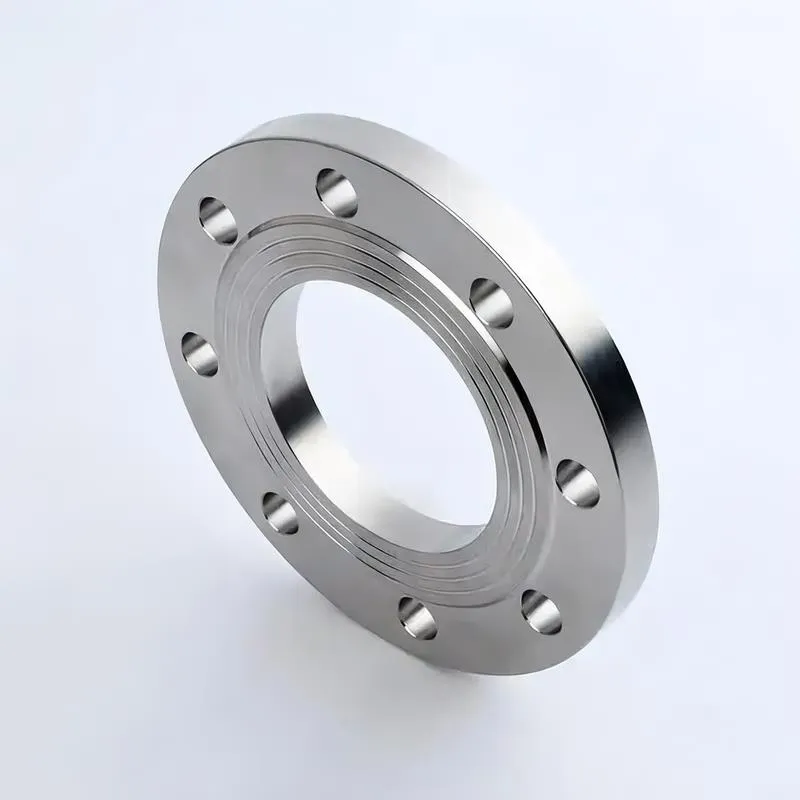
1,We Manufacturing processes are primarily classified into four types:
1:Forging,
2:Casting,
3:Cutting,
4:Rolling.
2,We can manufacture in accordance with these standards.
Standards:
GB Series (Chinese Standards), JB Series (Machinery Standards), HG Series (Chemical Industry Standards), ASME B16.5 (American Standards), BS4504 (British Standards), DIN (German Standards), and JIS (Japanese Standards).
Internationally, there are two primary systems of pipe flange standards: the European system, represented by the German DIN standards (including those of the former Soviet Union), and the American system, represented by the US ANSI pipe flange standards. Other common standards include: the Chinese Ministry of Machinery Industry standards (JB series), the Ministry of Chemical Industry standards (HG series), the Chinese National Standard *GB/T 9112–9124-2010 Steel Pipe Flanges*, as well as US standards (ASME B16.5), British standards (BS4504), German standards (DIN), Japanese standards (JIS), and marine standards (CBM), among others.
The nominal pressure ratings for the PN series are designated by "PN" and comprise the following nine levels: PN2.5, PN6, PN10, PN16, PN25, PN40, PN63, PN100, and PN160.
The nominal pressure ratings for the Class series are designated by "Class" and comprise the following six levels: Class150, Class300, Class600, Class900, Class1500, and Class2500.
Flange Classification
1. **According to Chemical Industry Standards:** Flanges are classified as follows:
Plate Flat Welding Flange (PL), Necked Flat Welding Flange (SO), Necked Butt Welding Flange (WN), Integral Flange (IF), Socket Welding Flange (SW), Threaded Flange (Th), Butt Welding Ring Loose Flange (PJ/SE), Blind Flange (BL), Flat Welding Ring Loose Flange (PJ/PJ), and Lined Blind Flange (BL(s)).
2. **According to Petrochemical (SH) Industry Standards:** Flanges are classified as follows:
Threaded Flange (PL), Butt Welding Flange (WN), Flat Welding Flange (SO), Socket Welding Flange (SW), Loose Flange (LJ), and Blind Flange (no specific designation).
3. **According to Machinery (JB) Industry Standards:** Flanges are classified as follows:
Integral Flange, Butt Welding Flange, Plate Flat Welding Flange, Butt Welding Ring Plate Loose Flange, Flat Welding Ring Plate Loose Flange, Lap Joint Ring Plate Loose Flange, and Blind Flange.
4. **According to Connection Method/Type:** Flanges are classified as follows:
Plate Flat Welding Flange, Necked Flat Welding Flange, Necked Butt Welding Flange, Socket Welding Flange, Threaded Flange, Blind Flange, Necked Butt Welding Ring Loose Flange, Flat Welding Ring Loose Flange, Ring-Type Joint (RTJ) Flange and Blind Flange, Large-Diameter Plate Flange, Large-Diameter High-Neck Flange, Figure-8 Blind Plate, Butt Welding Ring Loose Flange, etc.
5. **According to the Component Being Connected:** Flanges can be classified into Vessel Flanges and Pipe Flanges.
6. **According to Structural Type:** Flanges include Integral Flanges, Threaded Flanges, Flat Welding Flanges, Butt Welding Flanges, Lap Joint (Loose/Swivel) Flanges, and Blind Flanges.
A flange—also referred to as a flange plate or rim—is a component used to connect shafts to one another, or, more commonly, to join the ends of pipes. Flanges are also utilized at the inlet and outlet ports of equipment to facilitate connections between two devices—for instance, the flange on a speed reducer. A "flange connection" or "flanged joint" refers to a detachable joint assembly comprising three interconnected elements—a flange, a gasket, and bolts—that together form a sealed structural unit. In the context of piping systems, a "pipe flange" specifically denotes a flange used for plumbing within the installation; when applied to equipment, it refers to the inlet or outlet flange of that specific device. Flanges feature a series of holes through which bolts are inserted to securely fasten the two flanges together, while a gasket placed between the flanges ensures a leak-proof seal. Flanges are broadly categorized into three types: threaded (screw-in) flanges, welded flanges, and clamp-type flanges. Flanges are invariably used in pairs; threaded flanges are suitable for low-pressure piping applications, whereas welded flanges are required for systems operating at pressures exceeding 4 kilograms per square centimeter. A sealing gasket is inserted between the two flange plates, which are then firmly secured using bolts. The thickness of a flange—as well as the specifications of the bolts used to fasten it—vary depending on the specific pressure rating required for the application. When connecting equipment such as water pumps or valves to piping systems, the corresponding connection points on these devices are often manufactured in the shape of a matching flange; this method of attachment is also referred to as a "flange connection." Generally, any connecting component that utilizes bolts to join and seal the perimeters of two flat surfaces—such as the joints in ventilation ducts—is termed a "flange"; such components may collectively be classified as "flange-type parts." However, since such a connection often constitutes merely a *portion* of a larger device—for instance, the interface between a flange and a water pump—it would be inappropriate to classify the entire water pump itself as a "flange-type part." Conversely, smaller components—such as valves—that feature such flanged interfaces may indeed be appropriately categorized as "flange-type parts."
-:-
For detailed product information, please contact sales.
-:
AISI 4150 Steel Flange, oil quenched 830°C (1525°F), 595°C (1100°F) temper, 13 mm (0.5 in.) round Product Information
-:-
For detailed product information, please contact sales.
-:
AISI 4150 Steel Flange, oil quenched 830°C (1525°F), 595°C (1100°F) temper, 13 mm (0.5 in.) round Synonyms
-:-
For detailed product information, please contact sales.
-:
AISI 4150 Steel, oil quenched 830°C (1525°F), 595°C (1100°F) temper, 13 mm (0.5 in.) round Product Information
-:-
For detailed product information, please contact sales.
-:
# **AISI 4150 Steel - Quenched and Tempered Product Specification**
## **1. Product Definition & Heat Treatment History**
This specification covers **AISI 4150** alloy steel supplied as **13 mm (0.5 inch) diameter round bars** that have been heat treated to achieve an optimal balance of strength, toughness, and dimensional stability.
**Complete Heat Treatment History:**
1. **Material Base:** AISI 4150 - High-carbon chromium-molybdenum alloy steel
2. **Austenitizing:** 830°C (1525°F) - Lower temperature for high-carbon grade
3. **Quenching:** Oil quench (fast oil, agitated, 50-60°C)
4. **Tempering:** 595°C (1100°F) - High temperature tempering for toughness
5. **Cooling:** Air cooled after tempering
6. **Final Condition:** Quenched and tempered to 30-34 HRC range
7. **Special Feature:** Small diameter ensures full through-hardening and uniform properties
## **2. International Standards & Designations**
- **Primary Standard:** ASTM A29/A29M (Heat Treated Condition)
- **Material Designation:** AISI 4150 Q&T 595°C
- **UNS Designation:** G41500 (Tempered)
- **European Equivalent:** 1.7228 (42CrMo5) or 1.7227 (42CrMo4+)
- **Japanese Equivalent:** SCM440/445 (modified)
- **Chinese Equivalent:** 50CrMo per GB/T 3077
- **ISO Equivalent:** 42CrMo5 (similar)
- **Specific Designation:** Often called "4150-QT-1100F" in industry
- **Condition:** Heat treated, tempered, ready for final machining or use
## **3. Chemical Composition (Weight %)**
*High carbon content distinguishes 4150 from lower grades*
| Element | Composition Range (%) | Typical Aim (%) | Metallurgical Significance for This Treatment |
|---------|----------------------|-----------------|-----------------------------------------------|
| **Carbon (C)** | 0.48 - 0.53 | 0.50 | High carbon provides maximum hardenability and strength potential; 595°C temper optimizes carbide distribution |
| **Manganese (Mn)** | 0.75 - 1.00 | 0.85 | Enhances hardenability; critical for full transformation in oil quench |
| **Phosphorus (P)** | ≤ 0.035 | 0.020 | Kept low to prevent temper embrittlement at high tempering temperature |
| **Sulfur (S)** | ≤ 0.040 | 0.025 | Controlled level for machinability improvement |
| **Silicon (Si)** | 0.15 - 0.35 | 0.25 | Solid solution strengthener; improves tempering resistance |
| **Chromium (Cr)** | 0.80 - 1.10 | 0.95 | Enhances hardenability and wear resistance; forms stable carbides |
| **Molybdenum (Mo)** | 0.15 - 0.25 | 0.20 | **Critical:** Prevents temper embrittlement during 595°C tempering |
**Special Notes for 4150 Chemistry:**
- Carbon content at the high end of medium-carbon steels
- Typically produced with controlled grain size (ASTM 5-8)
- May include trace boron (0.0005-0.003%) for enhanced hardenability in some heats
## **4. Hardenability Characteristics**
*13 mm diameter ensures full through-hardening with this treatment*
### **Jominy Test Data (Typical)**
| Distance from Quenched End | As-Quenched Hardness (HRC) | After 595°C Temper (HRC) |
|----------------------------|----------------------------|---------------------------|
| **J₁ (Surface)** | 58 - 62 | 32 - 36 |
| **J₄ (1/4" depth)** | 54 - 58 | 31 - 35 |
| **J₈ (1/2" depth)** | 48 - 52 | 30 - 34 |
| **Center of 13 mm bar** | ~50 HRC | ~32 HRC |
**Hardenability Performance:**
- **Ideal Critical Diameter (Dᵢ):** ~4.0 inches (100 mm) in oil
- **95% Martensite Diameter (D₉₅):** ~3.2 inches (80 mm) in oil
- **For 13 mm diameter:** 100% martensite after quench, uniform transformation
- **Quench Severity Required:** Moderate (H=0.35-0.40)
## **5. Physical Properties (After 595°C Tempering)**
| Property | Value | Conditions/Notes |
|----------|-------|------------------|
| **Density** | 7.85 g/cm³ (0.284 lb/in³) | At 20°C |
| **Melting Range** | 1400-1490°C (2550-2715°F) | Higher carbon reduces melting point slightly |
| **Modulus of Elasticity (E)** | 205 GPa (29.7 × 10⁶ psi) | At 20°C |
| **Shear Modulus (G)** | 80 GPa (11.6 × 10⁶ psi) | At 20°C |
| **Poisson's Ratio (ν)** | 0.29 | At 20°C |
| **Thermal Conductivity** | 42.0 W/m·K | At 100°C (improved by high temper) |
| **Specific Heat Capacity** | 475 J/kg·K | At 20°C |
| **Coefficient of Thermal Expansion** | 12.1 × 10⁻⁶ /K | 20-100°C range |
| **Electrical Resistivity** | 0.23 µΩ·m | At 20°C |
| **Magnetic Properties** | Ferromagnetic | Fully magnetic |
## **6. Mechanical Properties - Guaranteed Minimums**
*For 13 mm diameter after specified heat treatment*
| Property | Minimum Value | Typical Value | Test Standard |
|----------|---------------|---------------|---------------|
| **Hardness** | 30 HRC | 32 HRC | ASTM E18 |
| **Hardness (Brinell)** | 285 HB | 302 HB | ASTM E10 |
| **Tensile Strength** | 965 MPa (140 ksi) | 1035 MPa (150 ksi) | ASTM A370 |
| **Yield Strength (0.2%)** | 860 MPa (125 ksi) | 930 MPa (135 ksi) | ASTM A370 |
| **Elongation in 50 mm** | 18% | 22% | ASTM A370 |
| **Reduction of Area** | 50% | 55% | ASTM A370 |
| **Charpy V-Notch Impact (20°C)** | 54 J (40 ft-lb) | 68 J (50 ft-lb) | ASTM A370 |
| **Charpy V-Notch Impact (-40°C)** | 34 J (25 ft-lb) | 41 J (30 ft-lb) | ASTM A370 |
| **Fatigue Strength (10⁷ cycles)** | 480 MPa (70 ksi) | 550 MPa (80 ksi) | ASTM E466 |
| **Fracture Toughness (K₁c)** | 80 MPa√m | 95 MPa√m | ASTM E399 |
**Section Size Advantage:** 13 mm diameter ensures:
- Uniform hardness (±1 HRC through cross-section)
- Consistent mechanical properties
- Minimal residual stress after heat treatment
- Predictable dimensional changes during processing
## **7. Microstructural Characteristics**
### **Microstructure After 595°C Tempering**
- **Matrix:** Tempered martensite with significant carbide spheroidization
- **Carbide Types:**
- M₃C (Fe₃C): Mostly spheroidized
- M₇C₃ (Cr-rich): Fine, dispersed carbides
- Mo₂C: Very fine precipitates (5-20 nm)
- **Carbide Size:** 0.2-0.8 μm diameter
- **Prior Austenite Grain Size:** ASTM 6-8 (fine due to 830°C austenitizing)
- **Dislocation Density:** Moderate (10¹²-10¹³/m²)
- **Residual Austenite:** <1% (effectively eliminated)
### **Heat Treatment Rationale**
```
Why 830°C Austenitizing?
- Lower temperature for high-carbon steel prevents grain growth
- Reduces risk of quench cracking
- Sufficient for full austenitization in 13 mm section
- Optimal for oil quenching response
Why 595°C (1100°F) Tempering?
- Above temper embrittlement range (375-575°C)
- Provides excellent toughness while maintaining good strength
- Good carbide spheroidization for machinability
- Stable microstructure for service up to 400°C
```
## **8. Heat Treatment Process Details**
### **Complete Thermal Cycle**
```
Step 1: PREHEAT (Optional but Recommended)
Temperature: 650°C (1200°F)
Time: 15 minutes
Purpose: Minimize thermal shock, reduce distortion
Step 2: AUSTENITIZING
Temperature: 830°C ±10°C (1525°F)
Time: 20 minutes for 13 mm diameter
Atmosphere: Protective or neutral
Result: Fine austenite grain size
Step 3: QUENCHING
Medium: Fast quenching oil (ISO VG 46 or similar)
Temperature: 50-60°C, well agitated
Quench Delay: <3 seconds
Result: Full martensitic transformation
Step 4: TEMPERING
Temperature: 595°C ±5°C (1100°F)
Time: 2 hours (extended for complete tempering)
Cooling: Air cool
Result: Optimized toughness-strength balance
```
### **Critical Process Controls**
1. **Temperature Accuracy:** ±5°C throughout cycle
2. **Quench Uniformity:** Agitation ensures even cooling
3. **Tempering Soak:** Sufficient time for complete transformation
4. **Cooling Rate:** Controlled to prevent new stress formation
## **9. Machinability & Manufacturing Characteristics**
### **Machinability in 30-34 HRC Condition**
- **Relative Machinability:** 55% (compared to B1112 steel)
- **Rating:** Fair to Good
- **Chip Formation:** Produces segmented chips, good for automation
- **Surface Finish:** Capable of 1.6-3.2 µm Ra
- **Tool Life:** 30-40% longer than harder tempers of 4150
### **Recommended Machining Parameters**
| Operation | Speed (m/min) | Feed (mm/rev) | Tool Recommendations |
|-----------|--------------|---------------|----------------------|
| **Turning** | 40-70 | 0.15-0.30 | C5/C6 carbide, positive rake |
| **Drilling** | 20-35 | 0.10-0.20 | HSS-Co or carbide-tipped drills |
| **Milling** | 35-60 | 0.10-0.25 | Carbide end mills |
| **Tapping** | 8-15 | - | Premium HSS-E taps |
| **Grinding** | 25-30 | - | Aluminum oxide wheels |
### **Special Processing Capabilities**
1. **Good Weldability:** With proper precautions (preheat 150-200°C)
2. **Cold Forming:** Moderate capability
3. **Thread Rolling:** Excellent for high-strength threads
4. **Plating:** Chrome or other platings adhere well with proper preparation
## **10. Product Applications**
### **Precision Machinery Components**
- **Shafts** and **spindles** for machine tools
- **Gears** and **pinions** (13 mm pitch diameter range)
- **Bearing races** and **sleeves**
- **Hydraulic cylinder rods** (small diameter)
- **Linear motion components**
### **Automotive & Transportation**
- **Transmission shafts** (0.5 inch diameter)
- **Steering components** - tie rods, ball studs
- **Suspension pins** and **bushings**
- **High-strength fasteners** (Grade 10.9+ equivalent)
- **Valve train components**
### **Oil & Gas Equipment**
- **Valve stems** for small valves
- **Downhole tool components**
- **Instrumentation shafts**
- **Pump plungers** and **rods**
### **Aerospace & Defense**
- **Actuator components**
- **Control linkage rods**
- **Landing gear pins** (secondary applications)
- **Weapon system components**
### **Industrial Manufacturing**
- **Die components** for stamping/pressing
- **Mold cores** and **ejector pins**
- **Fixtures** and **jigs**
- **Measuring instrument components**
## **11. Quality Assurance & Testing**
### **Standard Testing Package**
1. **Hardness Testing:** Multiple locations (surface and center)
2. **Tensile Testing:** Full bar testing per ASTM A370
3. **Charpy Impact:** 3 specimens at 20°C
4. **Microstructure Examination:** Verify tempered martensite
5. **Decarburization Check:** ≤0.13 mm total depth
### **Optional Enhanced Testing**
- **Ultrasonic Testing:** For internal defects (important for 13 mm bars)
- **Magnetic Particle Inspection:** Surface defects
- **Bend Testing:** For ductility verification
- **Fatigue Testing:** For dynamic applications
- **Corrosion Testing:** If used in aggressive environments
## **12. Technical Advantages of This Condition**
### **Unique Property Combinations**
1. **Optimal Strength-Toughness Balance:** 595°C temper provides best combination
2. **Excellent Fatigue Resistance:** Good for cyclic loading applications
3. **Good Wear Resistance:** Suitable for moderate wear applications
4. **Dimensional Stability:** High tempering temperature minimizes residual stress
5. **Machinability:** Best compromise between hardness and machinability for 4150
### **Comparison with Other Tempers of 4150**
| Tempering Temperature | Hardness | Tensile Strength | Charpy Impact | Primary Use |
|-----------------------|----------|------------------|---------------|-------------|
| **205°C (400°F)** | 52-56 HRC | 1725-1860 MPa | 10-20 J | Maximum wear resistance |
| **425°C (800°F)** | 42-46 HRC | 1450-1590 MPa | 20-34 J | High strength, moderate toughness |
| **540°C (1000°F)** | 35-39 HRC | 1170-1310 MPa | 41-54 J | Good balance |
| **595°C (1100°F)** | **30-34 HRC** | **965-1100 MPa** | **54-81 J** | **Optimal toughness** |
| **650°C (1200°F)** | 26-30 HRC | 860-965 MPa | 81-108 J | Maximum toughness |
## **13. Design & Engineering Guidelines**
### **Design Allowables (ASME Section VIII)**
- **Maximum Allowable Stress:** 172 MPa (25 ksi) at room temperature
- **Design Temperature Limit:** 425°C (800°F) for continuous service
- **Allowable Shear Stress:** 103 MPa (15 ksi)
- **Fatigue Strength Reduction Factor:** 1.2-1.5 for notched conditions
### **Design Recommendations**
1. **Fillet Radii:** Minimum R1 mm (0.04 in) for 13 mm diameter
2. **Surface Finish:** Critical areas ≤3.2 µm Ra
3. **Corrosion Protection:** Required for outdoor or corrosive environments
4. **Joining Methods:** Threading, press fits, adhesive bonding all suitable
5. **Heat Treatment:** No additional heat treatment needed
## **14. Comparison with Similar Materials**
### **vs. AISI 4140 at Same Temper**
| Property | AISI 4150 (This) | AISI 4140 595°C Temper | Advantage |
|----------|------------------|------------------------|-----------|
| **Hardness** | 30-34 HRC | 28-32 HRC | 4150: Higher strength |
| **Tensile Strength** | 965-1100 MPa | 860-1000 MPa | 4150: +10-15% |
| **Yield Strength** | 860-965 MPa | 760-900 MPa | 4150: +10-15% |
| **Impact Toughness** | 54-81 J | 68-95 J | 4140: Better toughness |
| **Wear Resistance** | Better | Good | 4150: Superior |
| **Cost** | Higher | Lower | 4140: More economical |
### **vs. AISI 4340 at Similar Hardness**
| Aspect | AISI 4150 | AISI 4340 | Consideration |
|--------|-----------|-----------|--------------|
| **Carbon Content** | 0.48-0.53% | 0.38-0.43% | 4150: Higher hardenability |
| **Nickel Content** | None | 1.65-2.00% | 4340: Superior toughness |
| **Cost** | 1.0× | 1.4-1.6× | 4150: More economical |
| **Applications** | General high-strength | Critical toughness | Choose based on requirements |
## **15. Economic & Performance Considerations**
### **Cost Factors**
- **Base Material Cost:** 1.2-1.3× AISI 4140
- **Heat Treatment Included:** No additional customer processing needed
- **Machining Costs:** Moderate (easier than harder tempers)
- **Tooling Costs:** Standard carbide tools sufficient
- **Total Cost of Ownership:** Competitive for performance level
### **Life Cycle Benefits**
1. **Extended Service Life:** Good fatigue and wear resistance
2. **Reduced Maintenance:** Less frequent replacement needed
3. **Reliability:** Consistent properties from heat treatment
4. **Versatility:** Suitable for wide range of applications
---
## **Technical Appendix: Calculations & Predictions**
### **Property Relationships for 595°C Temper**
1. **Tensile Strength (MPa) ≈ 3.3 × HB**
*Example: 302 HB → 3.3 × 302 = 997 MPa (matches typical)*
2. **Yield Strength ≈ 0.90 × Tensile Strength**
*Example: 997 MPa × 0.90 = 897 MPa*
3. **Fatigue Endurance Limit ≈ 0.52 × Tensile Strength (polished)**
*Example: 997 MPa × 0.52 = 518 MPa*
### **Size Effect Considerations**
For 13 mm diameter:
- **Surface Hardness:** 32-33 HRC
- **Center Hardness:** 31-32 HRC
- **Uniformity:** Within 1 HRC point
- **Strength Reduction vs. Large Sections:** Negligible
---
## **Summary: Application Suitability**
### **Ideal Applications for This Product**
- Components requiring 950-1100 MPa tensile strength
- Applications needing good impact resistance (50-80 J)
- Small precision parts requiring uniform properties
- Situations where heat treatment by customer is impractical
- Components subject to moderate wear and fatigue loading
### **When to Choose This Material**
1. **Strength Requirement:** Need >950 MPa tensile strength
2. **Toughness Requirement:** Need >50 J Charpy impact
3. **Size Constraint:** Component diameter ~13 mm
4. **Manufacturing:** Prefer pre-heat-treated material
5. **Cost:** Need performance between 4140 and 4340
### **Limitations to Consider**
- Not for applications requiring >100 J impact energy
- Not for continuous service above 425°C
- Not for highly corrosive environments without protection
- Not for applications requiring welding without post-weld heat treatment
### **Value Proposition**
This AISI 4150 material provides:
- **Ready-to-use** heat-treated condition
- **Optimal balance** of strength and toughness for the grade
- **Full certification** and traceability
- **Consistent properties** in small diameter form
- **Cost-effective** alternative to nickel-alloy steels for many applications
---
**Final Recommendation:** This AISI 4150 with 595°C temper represents an excellent choice for high-strength applications where both strength and toughness are important. The 13 mm diameter ensures uniform properties throughout the cross-section, making it ideal for precision components in demanding service conditions.
---
**Disclaimer:** This product specification is for technical reference. Actual properties may vary based on specific manufacturing processes, exact heat treatment parameters, and testing methods. For critical applications, verify material certifications, conduct incoming inspection, and perform qualification testing as appropriate. Always consult with materials engineering specialists for safety-critical applications. The information presented represents typical values but should not be used as the sole basis for design decisions.
-:-
For detailed product information, please contact sales.
-:
AISI 4150 Steel, oil quenched 830°C (1525°F), 595°C (1100°F) temper, 13 mm (0.5 in.) round Specification
Dimensions
Size:
Diameter 20-1000 mm Length <4051 mm
Size:We can customized as required
Standard:
Per your request or drawing
We can customized as required
Properties(Theoretical)
Chemical Composition
-:-
For detailed product information, please contact sales.
-:
AISI 4150 Steel, oil quenched 830°C (1525°F), 595°C (1100°F) temper, 13 mm (0.5 in.) round Properties
-:-
For detailed product information, please contact sales.
-:
Applications of AISI 4150 Steel Flange, oil quenched 830°C (1525°F), 595°C (1100°F) temper, 13 mm (0.5 in.) round
-:-
For detailed product information, please contact sales.
-:
Chemical Identifiers AISI 4150 Steel Flange, oil quenched 830°C (1525°F), 595°C (1100°F) temper, 13 mm (0.5 in.) round
-:-
For detailed product information, please contact sales.
-:
Packing of AISI 4150 Steel Flange, oil quenched 830°C (1525°F), 595°C (1100°F) temper, 13 mm (0.5 in.) round
-:-
For detailed product information, please contact sales.
-:
Standard Packing:
-:-
For detailed product information, please contact sales.
-:
Typical bulk packaging includes palletized plastic 5 gallon/25 kg. pails, fiber and Steel Flange drums to 1 ton super sacks in full container (FCL) or truck load (T/L) quantities. Research and sample quantities and hygroscopic, oxidizing or other air sensitive materials may be packaged under argon or vacuum. Solutions are packaged in polypropylene, plastic or glass jars up to palletized 522 gallon liquid totes Special package is available on request. E FORUs’ is carefully handled to minimize damage during storage and transportation and to preserve the quality of our products in their original condition