1,We Manufacturing processes are primarily classified into four types:
1:Forging,
2:Casting,
3:Cutting,
4:Rolling.
2,We can manufacture in accordance with these standards.
Standards:
GB Series (Chinese Standards), JB Series (Machinery Standards), HG Series (Chemical Industry Standards), ASME B16.5 (American Standards), BS4504 (British Standards), DIN (German Standards), and JIS (Japanese Standards).
Internationally, there are two primary systems of pipe flange standards: the European system, represented by the German DIN standards (including those of the former Soviet Union), and the American system, represented by the US ANSI pipe flange standards. Other common standards include: the Chinese Ministry of Machinery Industry standards (JB series), the Ministry of Chemical Industry standards (HG series), the Chinese National Standard *GB/T 9112–9124-2010 Steel Pipe Flanges*, as well as US standards (ASME B16.5), British standards (BS4504), German standards (DIN), Japanese standards (JIS), and marine standards (CBM), among others.
The nominal pressure ratings for the PN series are designated by "PN" and comprise the following nine levels: PN2.5, PN6, PN10, PN16, PN25, PN40, PN63, PN100, and PN160.
The nominal pressure ratings for the Class series are designated by "Class" and comprise the following six levels: Class150, Class300, Class600, Class900, Class1500, and Class2500.
Flange Classification
1. **According to Chemical Industry Standards:** Flanges are classified as follows:
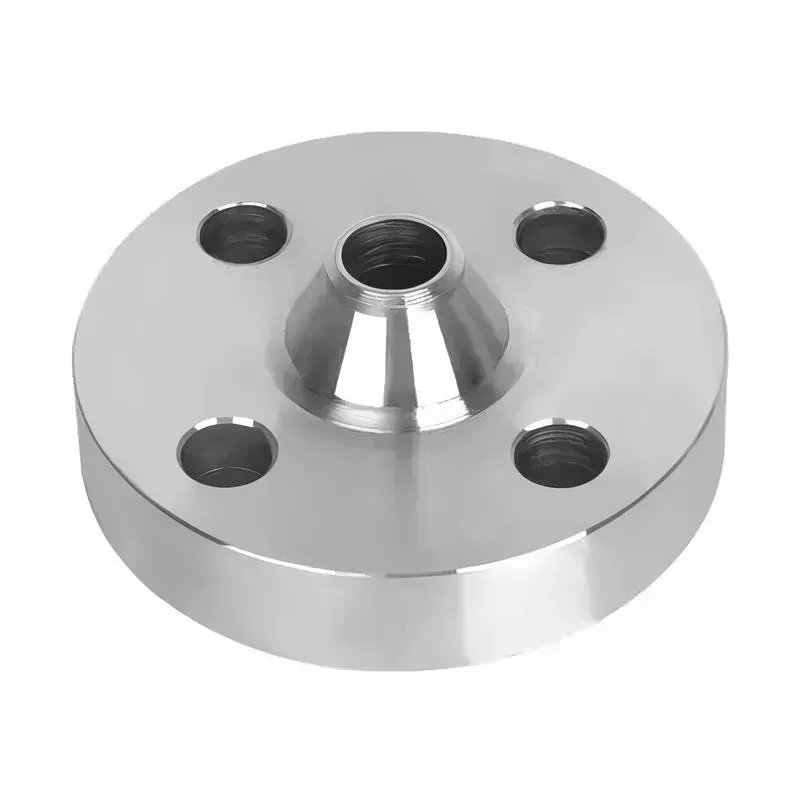
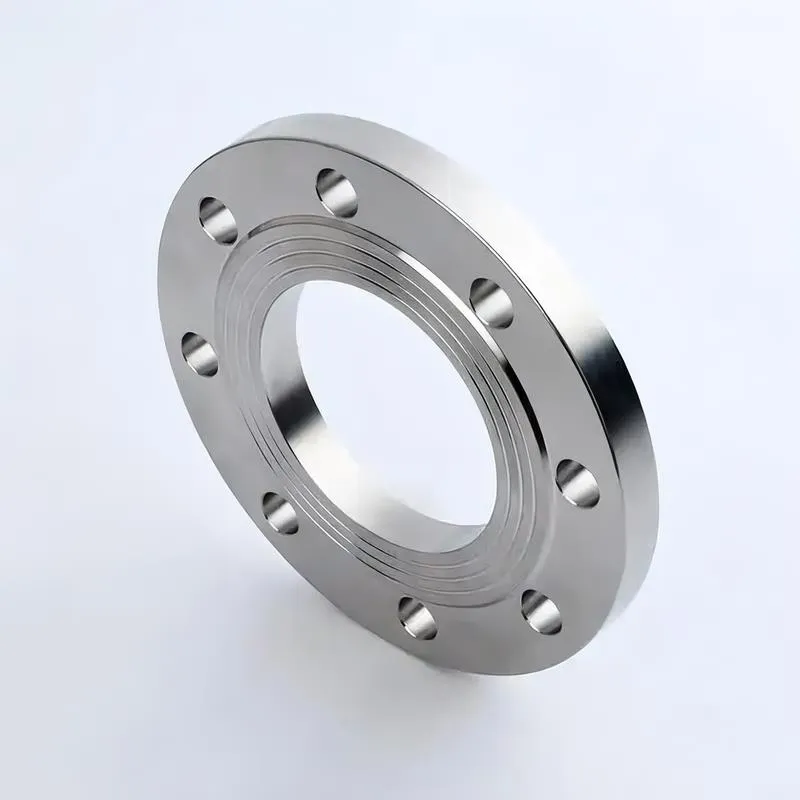
Plate Flat Welding Flange (PL), Necked Flat Welding Flange (SO), Necked Butt Welding Flange (WN), Integral Flange (IF), Socket Welding Flange (SW), Threaded Flange (Th), Butt Welding Ring Loose Flange (PJ/SE), Blind Flange (BL), Flat Welding Ring Loose Flange (PJ/PJ), and Lined Blind Flange (BL(s)).
2. **According to Petrochemical (SH) Industry Standards:** Flanges are classified as follows:
Threaded Flange (PL), Butt Welding Flange (WN), Flat Welding Flange (SO), Socket Welding Flange (SW), Loose Flange (LJ), and Blind Flange (no specific designation).
3. **According to Machinery (JB) Industry Standards:** Flanges are classified as follows:
Integral Flange, Butt Welding Flange, Plate Flat Welding Flange, Butt Welding Ring Plate Loose Flange, Flat Welding Ring Plate Loose Flange, Lap Joint Ring Plate Loose Flange, and Blind Flange.
4. **According to Connection Method/Type:** Flanges are classified as follows:
Plate Flat Welding Flange, Necked Flat Welding Flange, Necked Butt Welding Flange, Socket Welding Flange, Threaded Flange, Blind Flange, Necked Butt Welding Ring Loose Flange, Flat Welding Ring Loose Flange, Ring-Type Joint (RTJ) Flange and Blind Flange, Large-Diameter Plate Flange, Large-Diameter High-Neck Flange, Figure-8 Blind Plate, Butt Welding Ring Loose Flange, etc.
5. **According to the Component Being Connected:** Flanges can be classified into Vessel Flanges and Pipe Flanges.
6. **According to Structural Type:** Flanges include Integral Flanges, Threaded Flanges, Flat Welding Flanges, Butt Welding Flanges, Lap Joint (Loose/Swivel) Flanges, and Blind Flanges.
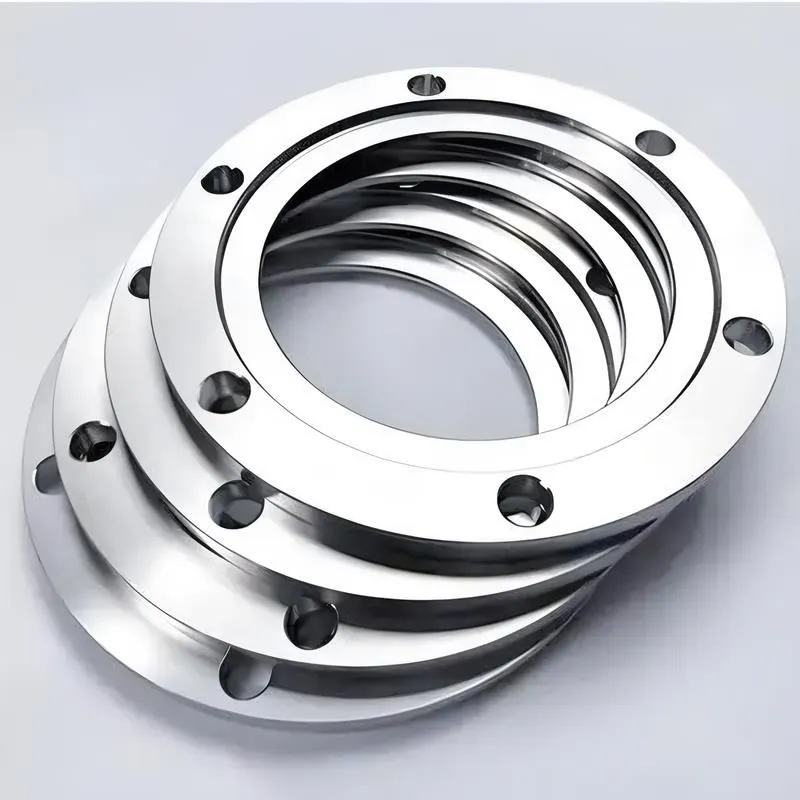
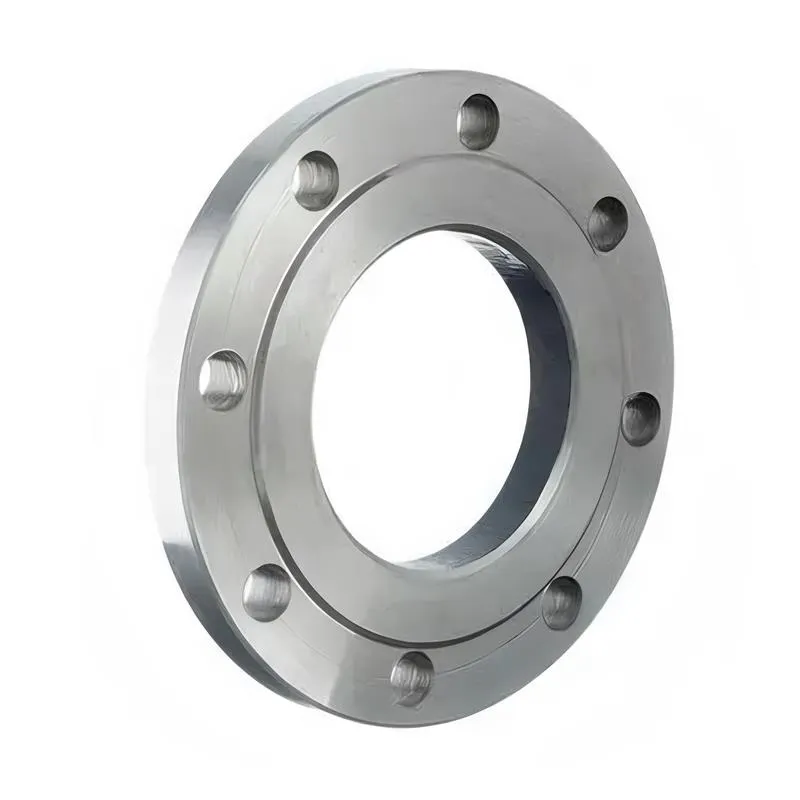
A flange—also referred to as a flange plate or rim—is a component used to connect shafts to one another, or, more commonly, to join the ends of pipes. Flanges are also utilized at the inlet and outlet ports of equipment to facilitate connections between two devices—for instance, the flange on a speed reducer. A "flange connection" or "flanged joint" refers to a detachable joint assembly comprising three interconnected elements—a flange, a gasket, and bolts—that together form a sealed structural unit. In the context of piping systems, a "pipe flange" specifically denotes a flange used for plumbing within the installation; when applied to equipment, it refers to the inlet or outlet flange of that specific device. Flanges feature a series of holes through which bolts are inserted to securely fasten the two flanges together, while a gasket placed between the flanges ensures a leak-proof seal. Flanges are broadly categorized into three types: threaded (screw-in) flanges, welded flanges, and clamp-type flanges. Flanges are invariably used in pairs; threaded flanges are suitable for low-pressure piping applications, whereas welded flanges are required for systems operating at pressures exceeding 4 kilograms per square centimeter. A sealing gasket is inserted between the two flange plates, which are then firmly secured using bolts. The thickness of a flange—as well as the specifications of the bolts used to fasten it—vary depending on the specific pressure rating required for the application. When connecting equipment such as water pumps or valves to piping systems, the corresponding connection points on these devices are often manufactured in the shape of a matching flange; this method of attachment is also referred to as a "flange connection." Generally, any connecting component that utilizes bolts to join and seal the perimeters of two flat surfaces—such as the joints in ventilation ducts—is termed a "flange"; such components may collectively be classified as "flange-type parts." However, since such a connection often constitutes merely a *portion* of a larger device—for instance, the interface between a flange and a water pump—it would be inappropriate to classify the entire water pump itself as a "flange-type part." Conversely, smaller components—such as valves—that feature such flanged interfaces may indeed be appropriately categorized as "flange-type parts."
-:-
For detailed product information, please contact sales.
-:
AK Steel Flange ASTM A 570, Grade 30 Hot Rolled Carbon Steel Flange, Structural Quality (SQ) Product Information
-:-
For detailed product information, please contact sales.
-:
AK Steel Flange ASTM A 570, Grade 30 Hot Rolled Carbon Steel Flange, Structural Quality (SQ) Synonyms
-:-
For detailed product information, please contact sales.
-:
AK Steel ASTM A 570, Grade 30 Hot Rolled Carbon Steel, Structural Quality (SQ) Product Information
-:-
For detailed product information, please contact sales.
-:
# **Product Introduction: AK Steel ASTM A570 Grade 30 (SQ) Hot Rolled Carbon Steel**
**AK Steel ASTM A570 Grade 30 (Structural Quality - SQ)** is a **general-purpose, hot-rolled carbon steel sheet and strip** designed for a wide range of **structural and light fabrication applications**. This grade offers a **minimum yield strength of 30 ksi (205 MPa)**, providing a fundamental strength level for basic structural components. As part of the A570 specification, the "SQ" designation indicates it is produced to meet standard **structural quality** requirements, balancing cost-effectiveness with adequate mechanical properties for many commercial and industrial uses where high formability and weldability are essential. It is a workhorse material in the hot-rolled steel category.
---
## **International Standard & Key Specifications**
* **Primary Standard:** **ASTM A570/A570M** - Standard Specification for Steel, Sheet and Strip, Carbon, Hot-Rolled, Structural Quality.
* **Quality Designation:** **Structural Quality (SQ)** - This denotes standard commercial quality suitable for structural applications where specific hardening or aging requirements are not necessary.
* **Governing Standard:** General requirements are typically governed by standard mill practices for hot-rolled products. ASTM A568 may be referenced for dimensional tolerances.
* **Related Standards:**
* **SAE J1392** - HSLA Steel - Hot Rolled Sheet and Strip.
* **ASTM A1011** - Standard Specification for Steel, Sheet and Strip, Hot-Rolled, Carbon, Structural, High-Strength Low-Alloy and High-Strength Low-Alloy with Improved Formability.
* **Key Distinction:** This is a **non-alloyed, carbon-manganese steel** without intentional microalloy additions, distinguishing it from HSLA grades like ASTM A607 or A715.
---
## **Chemical Composition (Weight %, max)**
The chemistry is typical for basic hot-rolled carbon steel, with carbon and manganese as the primary strengthening elements.
| Element | Composition (%) | Role in Performance |
| :--- | :--- | :--- |
| **Carbon (C)** | 0.25 max | Primary strengthener; higher limit than drawing quality steels, providing adequate strength for structural use. |
| **Manganese (Mn)** | 0.90 max | Enhances strength and hardenability; works synergistically with carbon. |
| **Phosphorus (P)** | 0.04 max | Impurity, controlled for weldability and formability. |
| **硫 (S)** | 0.05 max | Impurity, controlled to prevent hot shortness during welding. |
| **硅 (Si)** | - (Residual) | Deoxidizer; typically present in small amounts. |
| **Carbon Equivalent (CE)** | ~0.35 - 0.40 | Moderate, indicating good weldability with standard practices. |
**Note:** Actual mill chemistry may vary within these limits to optimize rolling and final properties. It is a commodity-grade steel with a standard composition range.
---
## **Typical Physical & Mechanical Properties (Hot-Rolled, Grade 30)**
| Property | Value / Description |
| :--- | :--- |
| **Tensile Strength** | 345 - 480 MPa (50,000 - 70,000 psi) |
| **Yield Strength (min)** | **205 MPa (30,000 psi)** |
| **Elongation in 2-in (50 mm) (min)** | **25%** (This high elongation is a key feature, indicating excellent ductility and formability). |
| **Modulus of Elasticity** | ~200 GPa (29 x 10⁶ psi) |
| **密度** | ~7.85 g/cm³ (0.284 lb/in³) |
| **Formability** | **Excellent.** Suitable for moderate bending, roll forming, and stamping. Minimum bend radius is typically **0-0.5 x material thickness** for a 90° bend. |
| **Weldability** | **Very Good.** Can be easily welded using all common processes (SMAW, GMAW, GTAW, RW). Preheating is generally not required for thin to moderate gauges. |
---
## **Product Applications**
AK Steel A570 Grade 30 (SQ) is used in a vast array of applications where a balance of low cost, good strength, and easy fabrication is paramount.
**Primary Industries and Products:**
1. **Light Structural Framing & Construction:**
* **Purlins, girts, and studs** in metal building systems.
* **Light structural supports, brackets, and frames** in commercial and residential construction.
* **Guardrails, fencing, and scaffolding components.**
2. **Fabricated Metal Products:**
* **Electrical enclosures and cabinets.**
* **HVAC ductwork and fittings.**
* **Base plates, shims, and mounting hardware.**
3. **Transportation & Automotive:**
* **Non-critical structural parts** for trailers, truck bodies, and agricultural equipment.
* **Flooring, side panels, and interior supports.**
4. **Material Handling & Storage:**
* **Shelving units, lockers, and industrial furniture.**
* **Pallets, skids, and crates.**
5. **General Manufacturing:**
* **Machine guards, covers, and shields.**
* **Bases and frames for light machinery.**
---
## **Advantages and Fabrication Considerations**
* **Advantages:**
* **Cost-Effective:** One of the most economical hot-rolled steels available.
* **Excellent Formability:** High elongation allows for complex shapes without cracking.
* **Superior Weldability:** Easily joined with minimal preparation or special procedures.
* **Readily Available:** A standard inventory item at steel service centers.
* **Fabrication Considerations:**
* **Surface Condition:** Hot-rolled sheet has a characteristic mill scale (oxide layer). This must be removed by pickling, grinding, or blasting prior to painting or galvanizing for good adhesion. "Pickled and Oiled" (P&O) is a common supplied condition for improved surface.
* **Flatness:** May exhibit slight camber or edge wave; may require leveling for precision fabrication.
* **Strain Aging:** May be prone to slight aging (an increase in yield strength and decrease in ductility) over time after cold working, which can affect subsequent forming operations.
* **Not for High-Stress Applications:** The 30 ksi yield strength is relatively low. It should not be used for primary, highly loaded structural members in critical applications; higher strength grades (e.g., A572 Grade 50) are more appropriate.
* **Corrosion Protection:** Requires painting, galvanizing, or other coatings for corrosion protection in exposed environments.
**In summary, AK Steel ASTM A570 Grade 30 (SQ) is the fundamental, versatile workhorse of the hot-rolled steel world. It offers an unbeatable combination of low cost, easy fabrication, and adequate strength for countless light structural and general manufacturing applications. Its value lies in its predictability, availability, and ease of use in the workshop.**
-:-
For detailed product information, please contact sales.
-:
AK Steel ASTM A 570, Grade 30 Hot Rolled Carbon Steel, Structural Quality (SQ) Specification
Dimensions
Size:
Diameter 20-1000 mm Length <4554 mm
Size:We can customized as required
Standard:
Per your request or drawing
We can customized as required
Properties(Theoretical)
Chemical Composition
-:-
For detailed product information, please contact sales.
-:
AK Steel ASTM A 570, Grade 30 Hot Rolled Carbon Steel, Structural Quality (SQ) Properties
-:-
For detailed product information, please contact sales.
-:
Applications of AK Steel Flange ASTM A 570, Grade 30 Hot Rolled Carbon Steel Flange, Structural Quality (SQ)
-:-
For detailed product information, please contact sales.
-:
Chemical Identifiers AK Steel Flange ASTM A 570, Grade 30 Hot Rolled Carbon Steel Flange, Structural Quality (SQ)
-:-
For detailed product information, please contact sales.
-:
Packing of AK Steel Flange ASTM A 570, Grade 30 Hot Rolled Carbon Steel Flange, Structural Quality (SQ)
-:-
For detailed product information, please contact sales.
-:
Standard Packing:
-:-
For detailed product information, please contact sales.
-:
Typical bulk packaging includes palletized plastic 5 gallon/25 kg. pails, fiber and Steel Flange drums to 1 ton super sacks in full container (FCL) or truck load (T/L) quantities. Research and sample quantities and hygroscopic, oxidizing or other air sensitive materials may be packaged under argon or vacuum. Solutions are packaged in polypropylene, plastic or glass jars up to palletized 1025 gallon liquid totes Special package is available on request. E FORUs’ is carefully handled to minimize damage during storage and transportation and to preserve the quality of our products in their original condition