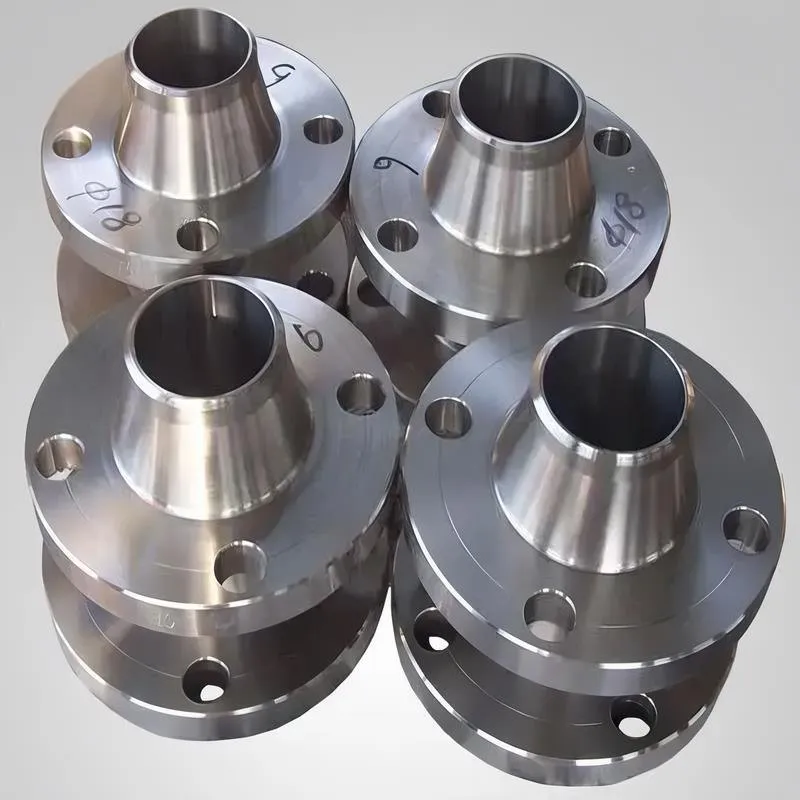
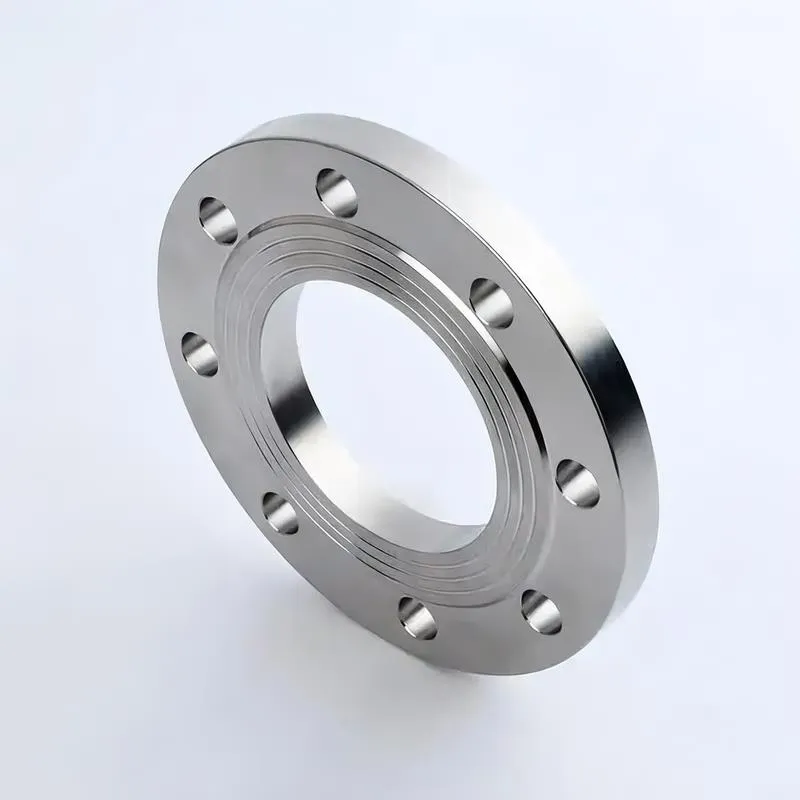
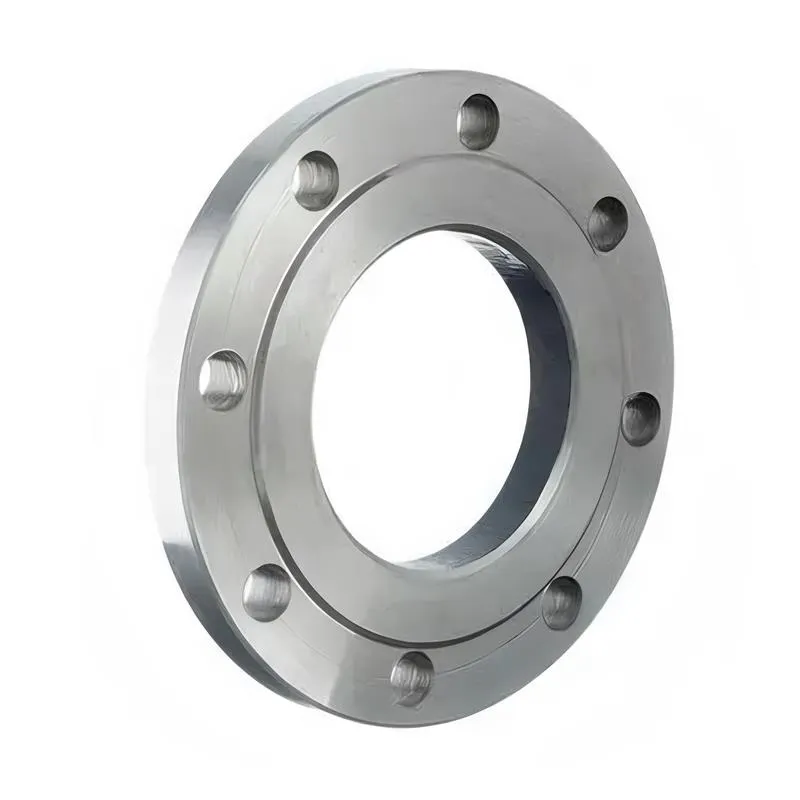
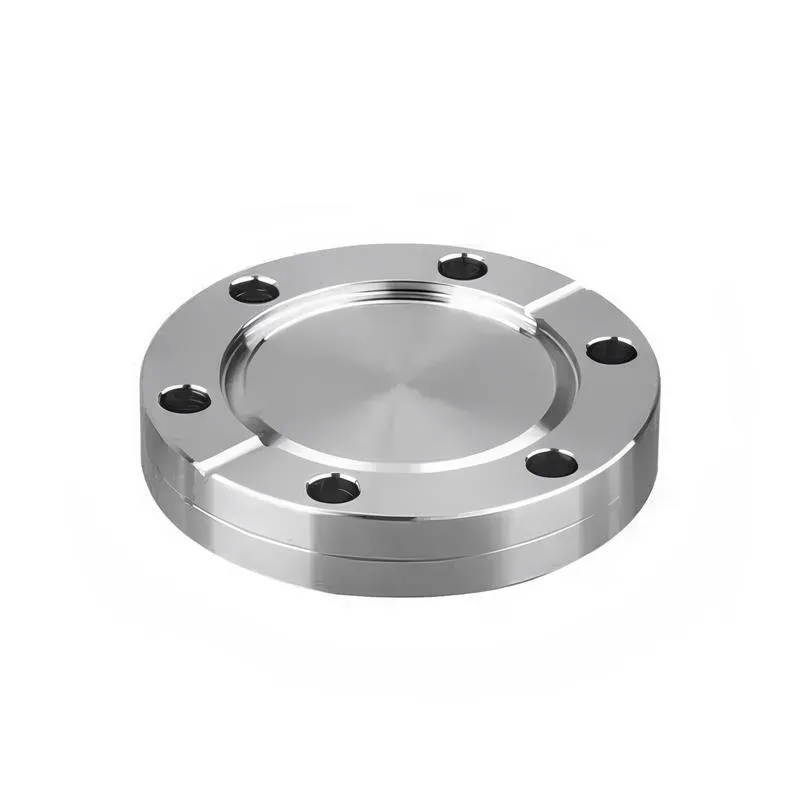
1,We Manufacturing processes are primarily classified into four types:
1:Forging,
2:Casting,
3:Cutting,
4:Rolling.
2,We can manufacture in accordance with these standards.
Standards:
GB Series (Chinese Standards), JB Series (Machinery Standards), HG Series (Chemical Industry Standards), ASME B16.5 (American Standards), BS4504 (British Standards), DIN (German Standards), and JIS (Japanese Standards).
Internationally, there are two primary systems of pipe flange standards: the European system, represented by the German DIN standards (including those of the former Soviet Union), and the American system, represented by the US ANSI pipe flange standards. Other common standards include: the Chinese Ministry of Machinery Industry standards (JB series), the Ministry of Chemical Industry standards (HG series), the Chinese National Standard *GB/T 9112–9124-2010 Steel Pipe Flanges*, as well as US standards (ASME B16.5), British standards (BS4504), German standards (DIN), Japanese standards (JIS), and marine standards (CBM), among others.
The nominal pressure ratings for the PN series are designated by "PN" and comprise the following nine levels: PN2.5, PN6, PN10, PN16, PN25, PN40, PN63, PN100, and PN160.
The nominal pressure ratings for the Class series are designated by "Class" and comprise the following six levels: Class150, Class300, Class600, Class900, Class1500, and Class2500.
Flange Classification
1. **According to Chemical Industry Standards:** Flanges are classified as follows:
Plate Flat Welding Flange (PL), Necked Flat Welding Flange (SO), Necked Butt Welding Flange (WN), Integral Flange (IF), Socket Welding Flange (SW), Threaded Flange (Th), Butt Welding Ring Loose Flange (PJ/SE), Blind Flange (BL), Flat Welding Ring Loose Flange (PJ/PJ), and Lined Blind Flange (BL(s)).
2. **According to Petrochemical (SH) Industry Standards:** Flanges are classified as follows:
Threaded Flange (PL), Butt Welding Flange (WN), Flat Welding Flange (SO), Socket Welding Flange (SW), Loose Flange (LJ), and Blind Flange (no specific designation).
3. **According to Machinery (JB) Industry Standards:** Flanges are classified as follows:
Integral Flange, Butt Welding Flange, Plate Flat Welding Flange, Butt Welding Ring Plate Loose Flange, Flat Welding Ring Plate Loose Flange, Lap Joint Ring Plate Loose Flange, and Blind Flange.
4. **According to Connection Method/Type:** Flanges are classified as follows:
Plate Flat Welding Flange, Necked Flat Welding Flange, Necked Butt Welding Flange, Socket Welding Flange, Threaded Flange, Blind Flange, Necked Butt Welding Ring Loose Flange, Flat Welding Ring Loose Flange, Ring-Type Joint (RTJ) Flange and Blind Flange, Large-Diameter Plate Flange, Large-Diameter High-Neck Flange, Figure-8 Blind Plate, Butt Welding Ring Loose Flange, etc.
5. **According to the Component Being Connected:** Flanges can be classified into Vessel Flanges and Pipe Flanges.
6. **According to Structural Type:** Flanges include Integral Flanges, Threaded Flanges, Flat Welding Flanges, Butt Welding Flanges, Lap Joint (Loose/Swivel) Flanges, and Blind Flanges.
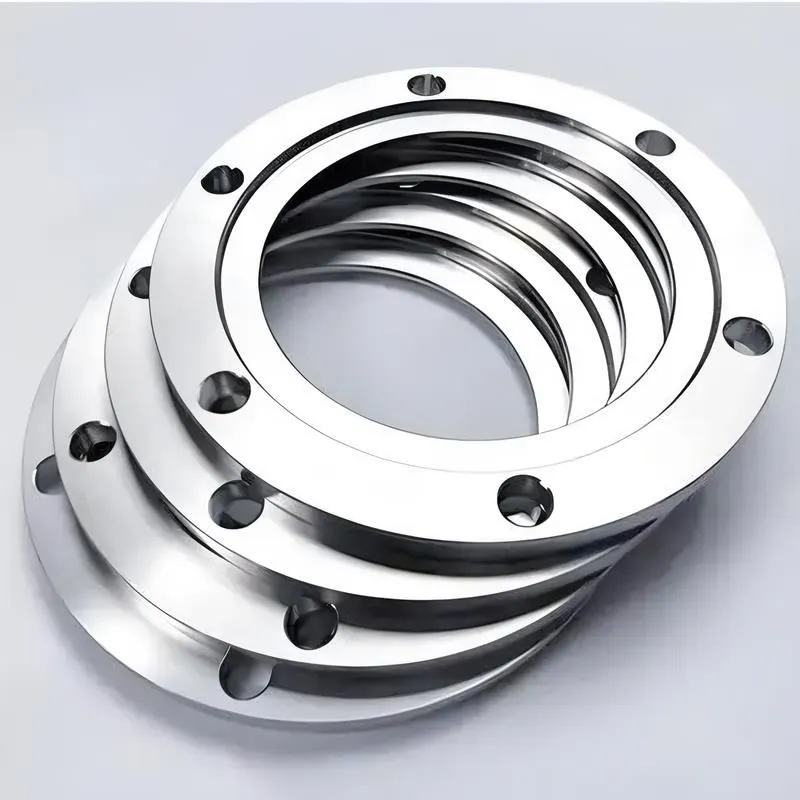
A flange—also referred to as a flange plate or rim—is a component used to connect shafts to one another, or, more commonly, to join the ends of pipes. Flanges are also utilized at the inlet and outlet ports of equipment to facilitate connections between two devices—for instance, the flange on a speed reducer. A "flange connection" or "flanged joint" refers to a detachable joint assembly comprising three interconnected elements—a flange, a gasket, and bolts—that together form a sealed structural unit. In the context of piping systems, a "pipe flange" specifically denotes a flange used for plumbing within the installation; when applied to equipment, it refers to the inlet or outlet flange of that specific device. Flanges feature a series of holes through which bolts are inserted to securely fasten the two flanges together, while a gasket placed between the flanges ensures a leak-proof seal. Flanges are broadly categorized into three types: threaded (screw-in) flanges, welded flanges, and clamp-type flanges. Flanges are invariably used in pairs; threaded flanges are suitable for low-pressure piping applications, whereas welded flanges are required for systems operating at pressures exceeding 4 kilograms per square centimeter. A sealing gasket is inserted between the two flange plates, which are then firmly secured using bolts. The thickness of a flange—as well as the specifications of the bolts used to fasten it—vary depending on the specific pressure rating required for the application. When connecting equipment such as water pumps or valves to piping systems, the corresponding connection points on these devices are often manufactured in the shape of a matching flange; this method of attachment is also referred to as a "flange connection." Generally, any connecting component that utilizes bolts to join and seal the perimeters of two flat surfaces—such as the joints in ventilation ducts—is termed a "flange"; such components may collectively be classified as "flange-type parts." However, since such a connection often constitutes merely a *portion* of a larger device—for instance, the interface between a flange and a water pump—it would be inappropriate to classify the entire water pump itself as a "flange-type part." Conversely, smaller components—such as valves—that feature such flanged interfaces may indeed be appropriately categorized as "flange-type parts."
-:-
For detailed product information, please contact sales.
-:
AISI 1049 Steel Flange, Cold Drawn Bar (UNS G10490) Product Information
-:-
For detailed product information, please contact sales.
-:
AISI 1049 Steel Flange, Cold Drawn Bar (UNS G10490) Synonyms
-:-
For detailed product information, please contact sales.
-:
AISI 1049 Steel, Cold Drawn Bar (UNS G10490) Product Information
-:-
For detailed product information, please contact sales.
-:
# **Technical Datasheet: AISI 1049 Cold Drawn Steel Bar (UNS G10490)**
---
## **1. Product Overview**
AISI 1049 Cold Drawn Bar (UNS G10490) is a precision-engineered medium-high carbon steel product manufactured through a cold drawing process that significantly enhances mechanical properties, dimensional accuracy, and surface quality. This grade features carbon content at the upper range of medium-carbon steels, providing exceptional strength, good wear resistance, and excellent hardenability. The cold working process induces substantial strain hardening, resulting in superior yield strength, tight tolerances, and a smooth, scale-free surface ideal for precision mechanical components requiring high performance and reliability.
---
## **2. Key Characteristics & Advantages**
- **Enhanced Mechanical Properties**: Cold working increases yield strength by 40-60% compared to hot-rolled material
- **Superior Dimensional Accuracy**: Maintains tight diameter tolerances (±0.05 mm / ±0.002 in typical)
- **Excellent Surface Finish**: Produces smooth, bright surface (0.8-1.6 µm Ra / 32-63 µin Ra) suitable for bearing surfaces
- **Improved Hardenability**: High carbon content provides excellent response to heat treatment
- **Good Strength-to-Weight Ratio**: Offers exceptional strength without alloying element costs
- **Predictable Performance**: Consistent material characteristics for reliable manufacturing
- **Better Straightness**: Essential for high-precision rotating components and assemblies
---
## **3. Chemical Composition**
| Element | Composition Range (%) | Standard Reference |
|---------|----------------------|-------------------|
| **Carbon (C)** | 0.46 - 0.53 | ASTM A108 / SAE J403 |
| **Manganese (Mn)** | 0.60 - 0.90 | ASTM A108 / SAE J403 |
| **Phosphorus (P)** | ≤ 0.040 | ASTM A108 / SAE J403 |
| **Sulfur (S)** | ≤ 0.050 | ASTM A108 / SAE J403 |
| **Silicon (Si)** | 0.15 - 0.35 | ASTM A108 / SAE J403 |
| **Iron (Fe)** | Balance | - |
*Note: Carbon content approaches high-carbon steel classification, providing maximum strength for non-alloy steels.*
---
## **4. Typical Mechanical Properties (Cold Drawn Condition)**
### **As-Cold Drawn Properties**
| Property | Value Range | Test Standard |
|----------|-------------|---------------|
| **Tensile Strength** | 750 - 900 MPa (109 - 131 ksi) | ASTM A370 |
| **Yield Strength (0.2% offset)** | 650 - 800 MPa (94 - 116 ksi) | ASTM A370 |
| **Elongation in 50 mm (2")** | 10% - 15% | ASTM A370 |
| **Reduction of Area** | 35% - 45% | ASTM A370 |
| **Brinell Hardness** | 229 - 285 HB | ASTM E10 |
| **Surface Roughness (Ra)** | 0.8 - 1.6 µm (32 - 63 µin) | ASME B46.1 |
| **Modulus of Elasticity** | 200 GPa (29,000 ksi) | ASTM E111 |
| **Shear Modulus** | 80 GPa (11,600 ksi) | ASTM E143 |
| **Poisson's Ratio** | 0.29 | ASTM E132 |
| **Fatigue Strength (10⁷ cycles)** | 320 - 400 MPa | Rotating bending |
| **Machinability Rating** | ~35% (relative to 1212 steel) | - |
### **Physical Properties**
| Property | Value |
|----------|-------|
| **Density** | 7.87 g/cm³ (0.284 lb/in³) |
| **Thermal Conductivity** | 48.2 W/m·K (33.4 BTU·in/hr·ft²·°F) |
| **Specific Heat Capacity** | 486 J/kg·K (0.116 BTU/lb·°F) |
| **Coefficient of Thermal Expansion** | 11.3 µm/m·°C (6.3 µin/in·°F) 20-100°C |
| **Electrical Resistivity** | 0.230 µΩ·m |
---
## **5. Dimensional Specifications & Tolerances**
### **Standard Tolerances (ASTM A108)**
| Diameter Range (mm) | Diameter Tolerance (±mm) | Out-of-Round (max) | Straightness (mm/m) |
|---------------------|--------------------------|-------------------|-------------------|
| 16.0 - 22.0 | 0.05 | 0.03 | 0.3 |
| 22.1 - 32.0 | 0.05 | 0.04 | 0.4 |
| 32.1 - 50.0 | 0.08 | 0.05 | 0.5 |
### **Surface Finish Standards**
- **As-drawn**: 0.8-1.6 µm Ra (32-63 µin Ra)
- **Polished**: 0.2-0.4 µm Ra (8-16 µin Ra) available
- **Ground**: 0.4-0.8 µm Ra (16-32 µin Ra) upon request
---
## **6. International Standard Equivalents**
| Standard System | Designation | Primary Specification |
|----------------|-------------|----------------------|
| **UNS** | G10490 | Unified Numbering System |
| **SAE/AISI** | 1049 | SAE J403 |
| **ASTM** | Grade 1049 | ASTM A108 (Cold-Finished) |
| **EN (Europe)** | 1.1194 (C50E) | EN 10083-2 |
| **ISO** | C50E | ISO 683-18 |
| **JIS (Japan)** | S50C | JIS G4051 |
| **GB (China)** | 50# (50钢) | GB/T 699 |
| **DIN (Germany)** | 1.1194, Ck50 | DIN 17200 |
---
## **7. Heat Treatment Response & Capabilities**
### **Recommended Heat Treatment Parameters**
| Process | Temperature Range | Holding Time | Cooling Method |
|---------|------------------|--------------|----------------|
| **Annealing** | 790-815°C (1450-1500°F) | 1-2 hr/inch | Furnace cool ≤55°C/hr |
| **Normalizing** | 870-925°C (1600-1700°F) | 30 min/inch | Air cool |
| **Quenching** | 830-855°C (1525-1575°F) | 20 min/inch | Oil (H25-H35) |
| **Tempering** | 200-650°C (400-1200°F) | 1-2 hr/inch | Air cool |
### **Typical Heat-Treated Properties**
| Condition | Tensile Strength | Yield Strength | Hardness (HRC) | Impact Energy |
|-----------|------------------|----------------|----------------|---------------|
| **Q&T @ 200°C** | 1800-2000 MPa | 1650-1850 MPa | 52-56 | 15-25 J |
| **Q&T @ 400°C** | 1400-1600 MPa | 1250-1450 MPa | 42-46 | 25-35 J |
| **Q&T @ 600°C** | 1000-1200 MPa | 900-1100 MPa | 30-35 | 40-50 J |
### **Hardenability Characteristics**
- **Jominy Test Results**:
- 1.5 mm (1/16"): 63-66 HRC
- 10 mm (3/8"): 45-55 HRC
- 20 mm (3/4"): 35-45 HRC
- **Maximum Hardness Depth**: ~50 mm (2") effective hardening
- **Ideal Quenchant**: Fast oil (H25-H35 severity)
---
## **8. Primary Applications**
### **Precision Automotive Components**
- High-performance transmission shafts and gears
- Racing crankshafts and connecting rods
- Steering system precision shafts
- Turbocharger shafts and components
- High-strength fasteners and studs
- Suspension system high-load components
### **Industrial Machinery & Equipment**
- CNC machine tool spindles and lead screws
- High-speed pump shafts and impellers
- Hydraulic cylinder rods for extreme pressure
- Precision bearing races and sleeves
- Rolling mill rolls and components
- Heavy-duty gear blanks and pinions
### **Aerospace & Defense Applications**
- Landing gear components
- Actuator shafts and mechanisms
- Missile guidance components
- Aircraft control system parts
- Defense vehicle transmission parts
### **Medical & Dental Equipment**
- Surgical instrument precision components
- Dental drill handpieces and shafts
- Diagnostic equipment rotating parts
- Medical imaging system components
### **Energy & Power Generation**
- Turbine shaft components
- Pump shafts for power plants
- Valve stems for high-pressure systems
- Generator shaft components
### **Precision Manufacturing**
- Linear motion shafts and guide rods
- Precision fixtures and jigs
- Metrology equipment components
- Semiconductor manufacturing parts
---
## **9. Fabrication & Processing Guidelines**
### **Machining Operations**
- **Tool Selection**: Premium carbide or CBN tools recommended
- **Cutting Parameters**:
- Turning: 25-40 m/min (80-130 ft/min)
- Milling: 30-50 m/min (100-165 ft/min)
- Drilling: 15-25 m/min (50-80 ft/min)
- **Coolant Requirement**: High-pressure coolant essential
- **Chip Control**: Use chip breakers for continuous chips
- **Surface Integrity**: Minimum affected layer depth
### **Welding Procedures**
- **Pre-heating**: 250-350°C (480-660°F) mandatory
- **Electrodes**: E10018, E11018 low-hydrogen required
- **Interpass Temperature**: 200-250°C (400-480°F)
- **Post-Weld Treatment**: 600-650°C (1110-1200°F) stress relief
- **Alternative Joining**: Consider brazing or mechanical fastening
### **Grinding & Finishing**
- **Grinding Wheels**: Aluminum oxide or CBN wheels
- **Parameters**: Light cuts, frequent dressing
- **Surface Finish**: Capable of <0.2 µm Ra with proper technique
- **Deburring**: Essential for high-stress applications
### **Forming & Bending**
- **Cold Forming**: Limited; annealing recommended first
- **Hot Forming**: 1150-900°C (2100-1650°F) optimal range
- **Bend Radius**: Minimum 4× diameter for cold bending
- **Springback**: Significant; account for in tool design
---
## **10. Quality Assurance & Inspection**
### **Standard Testing Requirements**
| Test Type | Frequency | Standard | Acceptance Criteria |
|-----------|-----------|----------|-------------------|
| Chemical Analysis | Per heat | ASTM E415 | Within specification |
| Tensile Test | Per lot | ASTM A370 | Meet minimum values |
| Hardness Test | Per bundle | ASTM E10 | Within specified range |
| Surface Finish | Per batch | ASME B46.1 | ≤1.6 µm Ra |
| Dimensional | 100% | ASTM A108 | Within tolerance |
| Straightness | 100% | - | ≤0.5 mm/m |
### **Advanced Testing Options**
- **Ultrasonic Testing**: Detect internal defects
- **Magnetic Particle**: Surface crack detection
- **Microstructural Analysis**: ASTM E112 grain size
- **Residual Stress**: X-ray diffraction measurement
- **Fatigue Testing**: Rotating bending or axial
- **Fracture Toughness**: ASTM E1820 testing available
### **Certification & Documentation**
- **Mill Test Reports**: Complete traceability
- **Chemical Certificate**: Each heat analysis
- **Mechanical Certificate**: Each test lot
- **Process Certificates**: Heat treatment records
- **NDT Reports**: Upon customer request
- **Material Traceability**: Full chain of custody
---
## **11. Storage, Handling & Packaging**
### **Storage Conditions**
- **Environment**: Controlled humidity (<50% RH)
- **Temperature**: 15-25°C (59-77°F) stable
- **Protection**: VCI paper or protective coating
- **Stacking**: Maximum 1.5m height with proper supports
- **Separation**: By grade, size, and heat number
### **Packaging Standards**
- **Individual Protection**: Plastic end caps, VCI wrapping
- **Bundling**: Steel strapping with edge protection
- **Identification**: Clear, weather-resistant labeling
- **Shipping**: Secured to prevent movement
### **Handling Procedures**
- **Lifting**: Non-marring nylon slings
- **Transportation**: Flatbed with proper securing
- **Unloading**: Avoid dropping or impact
- **Inspection**: Visual check upon receipt
---
## **12. Comparison with Competitive Grades**
### **Performance Comparison**
| Grade | Carbon % | Yield Strength | Hardenability | Machinability | Cost Index |
|-------|----------|----------------|---------------|---------------|------------|
| **1045 CD** | 0.43-0.50 | 585-725 MPa | Good | 40% | 100 |
| **1049 CD** | 0.46-0.53 | 650-800 MPa | Very Good | 35% | 110 |
| **1050 CD** | 0.48-0.55 | 620-760 MPa | Excellent | 30% | 115 |
| **4140 CD** | 0.38-0.43 | 655-795 MPa | Excellent | 45% | 150 |
### **Application Selection Guide**
| Application | Recommended Grade | Reason |
|-------------|------------------|--------|
| High-wear gears | 1049 CD | High hardness capability |
| Precision shafts | 1049 CD | Good dimensional stability |
| Heavy-duty fasteners | 1049 CD | High strength |
| Complex machined parts | 1045 CD | Better machinability |
| Critical aerospace | 4140 | Better toughness |
---
## **13. Technical Guidelines & Best Practices**
### **Design Considerations**
1. **Stress Concentration**: Minimize sharp corners and notches
2. **Surface Finish**: Specify ≤0.8 µm Ra for fatigue applications
3. **Heat Treatment**: Plan for distortion allowance
4. **Quality Requirements**: Define testing levels based on criticality
5. **Safety Factors**: Use appropriate factors for dynamic loading
### **Manufacturing Best Practices**
1. **Machining Sequence**: Rough machine, heat treat, finish machine
2. **Tool Management**: Regular inspection and replacement
3. **Process Control**: Statistical process monitoring
4. **Quality Verification**: First article and in-process inspection
5. **Documentation**: Complete process records
### **Troubleshooting Guide**
| Issue | Possible Cause | Solution |
|-------|---------------|----------|
| Excessive tool wear | Incorrect tool material | Use premium carbide |
| Poor surface finish | Incorrect cutting parameters | Optimize speed/feed |
| Dimensional variation | Temperature changes | Control shop temperature |
| Cracking during HT | Rapid heating/cooling | Control heating rates |
| Warping after machining | Residual stress | Stress relieve before finish |
---
## **14. Economic & Supply Chain Considerations**
### **Cost Factors**
- **Raw Material**: 60-70% of total cost
- **Processing**: 20-30% (drawing, finishing)
- **Testing**: 5-10% (depending on requirements)
- **Packaging/Shipping**: 3-5%
### **Lead Time Considerations**
- **Standard Sizes**: 4-6 weeks
- **Special Sizes**: 8-12 weeks
- **Heat Treatment**: Additional 2-3 weeks
- **Testing**: Additional 1-2 weeks
### **Minimum Order Quantities**
- **Standard Grades**: 500 kg minimum
- **Special Processing**: 1000 kg minimum
- **Certified Material**: 2000 kg minimum
---
## **15. Environmental & Sustainability**
### **Environmental Compliance**
- **REACH Compliance**: Fully compliant
- **RoHS Compliance**: Contains no restricted substances
- **Recyclability**: 100% recyclable
- **Carbon Footprint**: Lower than alloy steels
### **Sustainable Practices**
- **Energy Efficiency**: Cold drawing reduces energy vs. machining
- **Material Efficiency**: Near-net shape reduces waste
- **Lifecycle**: Long service life reduces replacement frequency
- **End-of-Life**: Fully recyclable at end of service
---
## **16. Technical Support & Services**
### **Available Support**
- **Material Selection**: Engineering assistance
- **Process Optimization**: Manufacturing guidance
- **Troubleshooting**: Problem-solving support
- **Training**: Technical seminars and workshops
### **Value-Added Services**
- **Just-in-Time Delivery**: Inventory management
- **Kanban Systems**: Automated replenishment
- **Vendor Managed Inventory**: Complete supply chain management
- **Technical Documentation**: Complete material data packages
---
**Disclaimer**: This technical data sheet provides comprehensive information about AISI 1049 Cold Drawn Steel Bars. Actual properties may vary based on specific manufacturing parameters, heat treatment conditions, and processing history. For critical applications, consult with material engineers, review certified test reports, and conduct application-specific validation testing. Professional engineering judgment should always be applied for safety-critical applications. The information contained herein is subject to change without notice and is provided for informational purposes only.
---
**Revision**: 1.0
**Date**: November 2023
**Status**: Current Specification
**Contact**: Technical Services Department
-:-
For detailed product information, please contact sales.
-:
AISI 1049 Steel, Cold Drawn Bar (UNS G10490) Specification
Dimensions
Size:
Diameter 20-1000 mm Length <4817 mm
Size:We can customized as required
Standard:
Per your request or drawing
We can customized as required
Properties(Theoretical)
Chemical Composition
-:-
For detailed product information, please contact sales.
-:
AISI 1049 Steel, Cold Drawn Bar (UNS G10490) Properties
-:-
For detailed product information, please contact sales.
-:
Applications of AISI 1049 Steel Flange, Cold Drawn Bar (UNS G10490)
-:-
For detailed product information, please contact sales.
-:
Chemical Identifiers AISI 1049 Steel Flange, Cold Drawn Bar (UNS G10490)
-:-
For detailed product information, please contact sales.
-:
Packing of AISI 1049 Steel Flange, Cold Drawn Bar (UNS G10490)
-:-
For detailed product information, please contact sales.
-:
Standard Packing:
-:-
For detailed product information, please contact sales.
-:
Typical bulk packaging includes palletized plastic 5 gallon/25 kg. pails, fiber and Steel Flange drums to 1 ton super sacks in full container (FCL) or truck load (T/L) quantities. Research and sample quantities and hygroscopic, oxidizing or other air sensitive materials may be packaged under argon or vacuum. Solutions are packaged in polypropylene, plastic or glass jars up to palletized 1288 gallon liquid totes Special package is available on request. E FORUs’ is carefully handled to minimize damage during storage and transportation and to preserve the quality of our products in their original condition