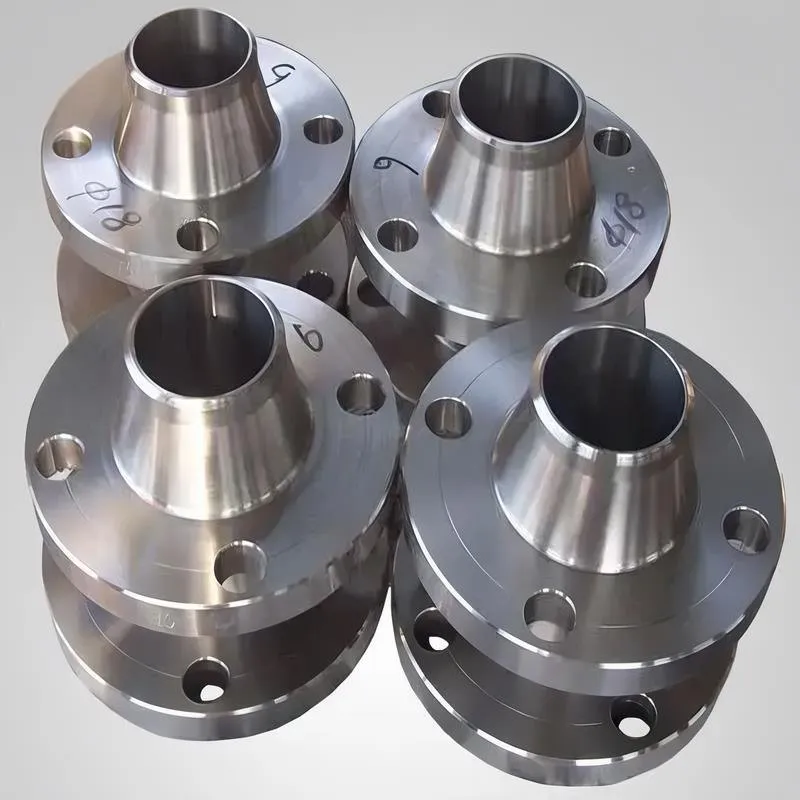
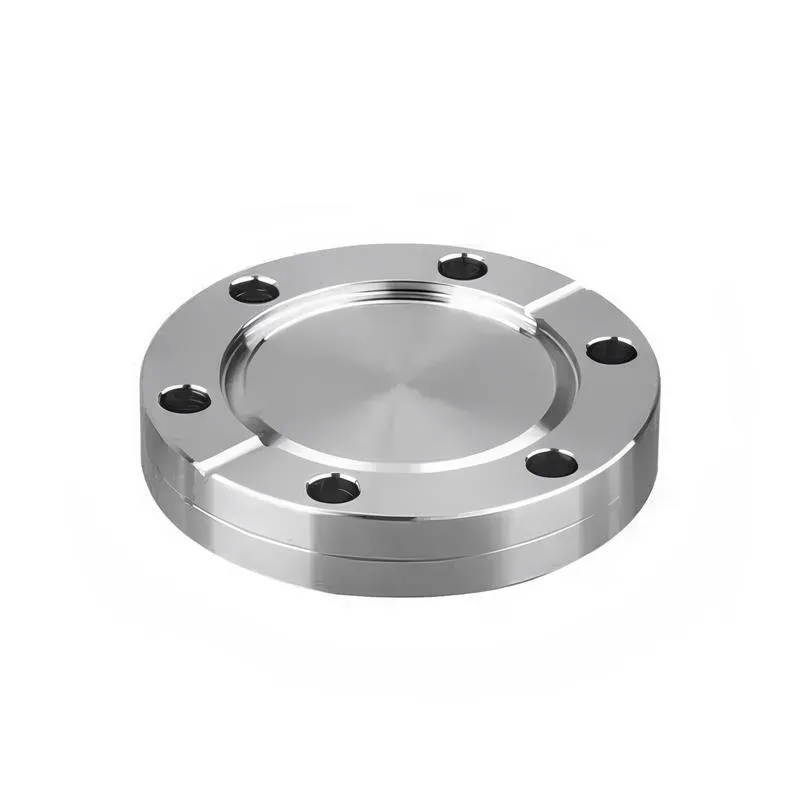
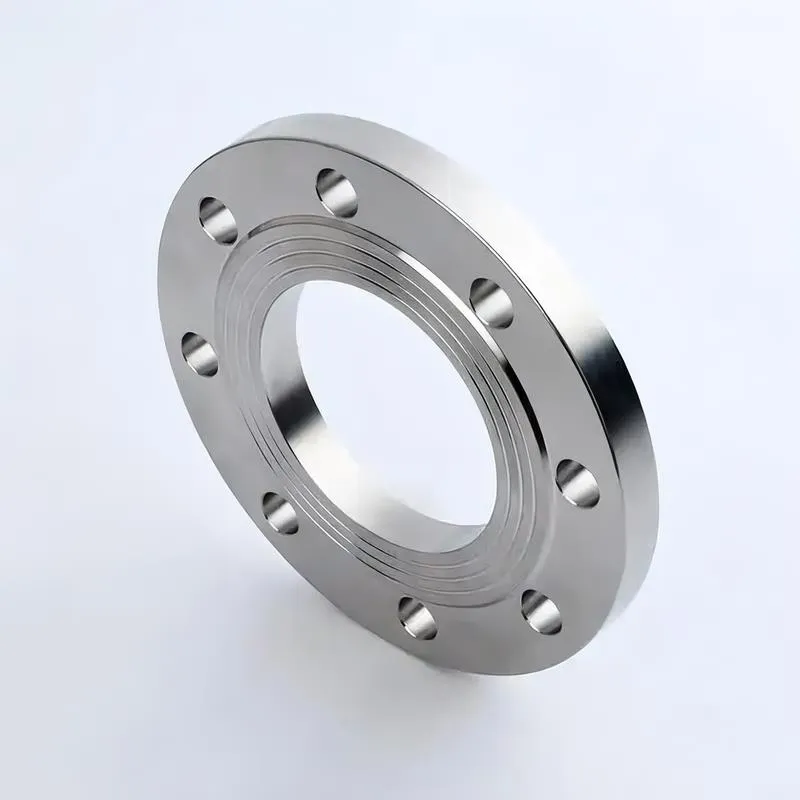
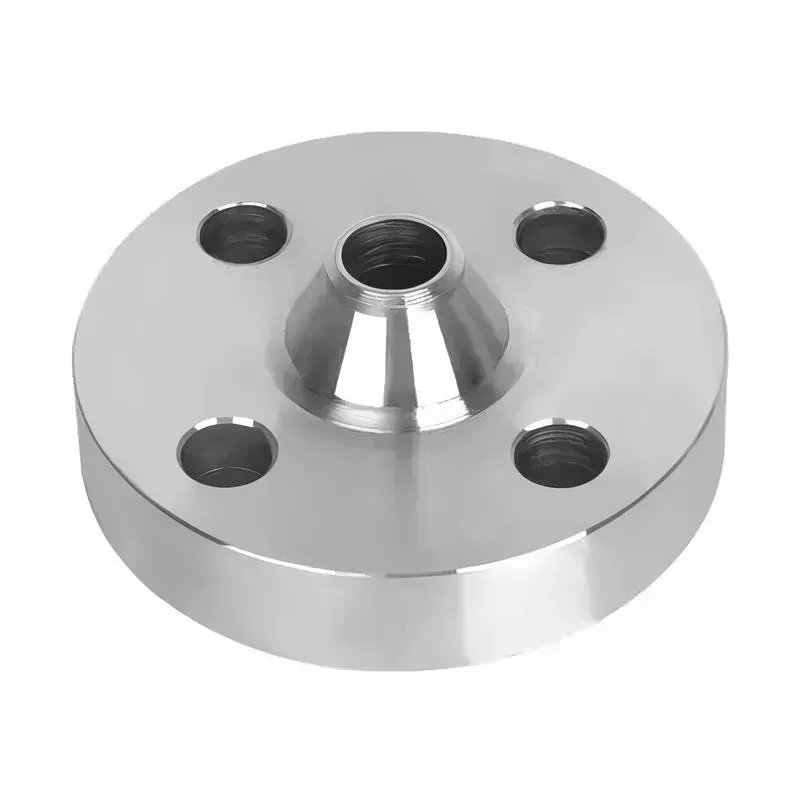
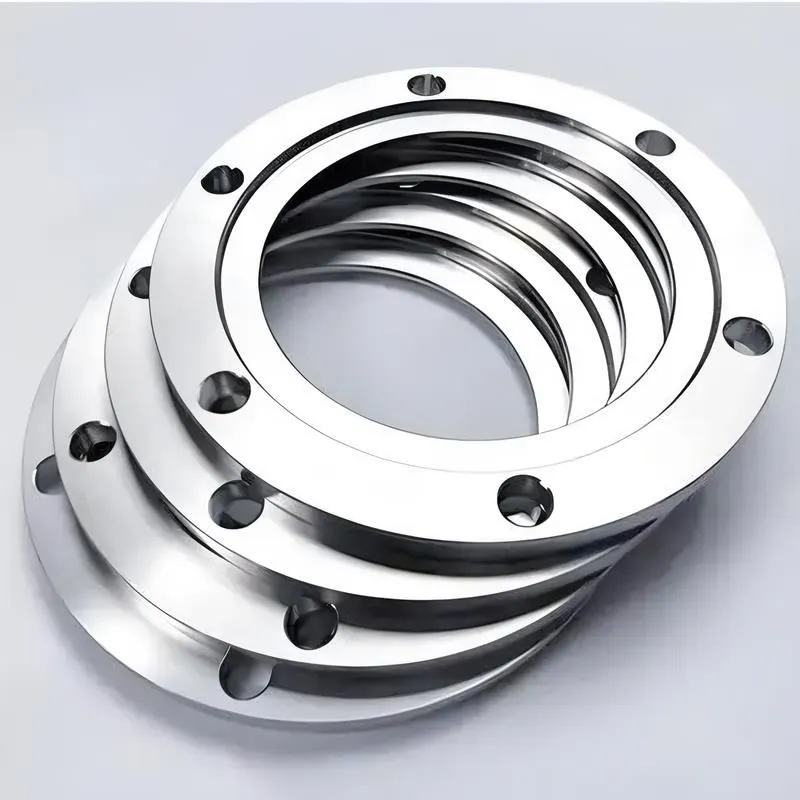
1,We Manufacturing processes are primarily classified into four types:
1:Forging,
2:Casting,
3:Cutting,
4:Rolling.
2,We can manufacture in accordance with these standards.
Standards:
GB Series (Chinese Standards), JB Series (Machinery Standards), HG Series (Chemical Industry Standards), ASME B16.5 (American Standards), BS4504 (British Standards), DIN (German Standards), and JIS (Japanese Standards).
Internationally, there are two primary systems of pipe flange standards: the European system, represented by the German DIN standards (including those of the former Soviet Union), and the American system, represented by the US ANSI pipe flange standards. Other common standards include: the Chinese Ministry of Machinery Industry standards (JB series), the Ministry of Chemical Industry standards (HG series), the Chinese National Standard *GB/T 9112–9124-2010 Steel Pipe Flanges*, as well as US standards (ASME B16.5), British standards (BS4504), German standards (DIN), Japanese standards (JIS), and marine standards (CBM), among others.
The nominal pressure ratings for the PN series are designated by "PN" and comprise the following nine levels: PN2.5, PN6, PN10, PN16, PN25, PN40, PN63, PN100, and PN160.
The nominal pressure ratings for the Class series are designated by "Class" and comprise the following six levels: Class150, Class300, Class600, Class900, Class1500, and Class2500.
Flange Classification
1. **According to Chemical Industry Standards:** Flanges are classified as follows:
Plate Flat Welding Flange (PL), Necked Flat Welding Flange (SO), Necked Butt Welding Flange (WN), Integral Flange (IF), Socket Welding Flange (SW), Threaded Flange (Th), Butt Welding Ring Loose Flange (PJ/SE), Blind Flange (BL), Flat Welding Ring Loose Flange (PJ/PJ), and Lined Blind Flange (BL(s)).
2. **According to Petrochemical (SH) Industry Standards:** Flanges are classified as follows:
Threaded Flange (PL), Butt Welding Flange (WN), Flat Welding Flange (SO), Socket Welding Flange (SW), Loose Flange (LJ), and Blind Flange (no specific designation).
3. **According to Machinery (JB) Industry Standards:** Flanges are classified as follows:
Integral Flange, Butt Welding Flange, Plate Flat Welding Flange, Butt Welding Ring Plate Loose Flange, Flat Welding Ring Plate Loose Flange, Lap Joint Ring Plate Loose Flange, and Blind Flange.
4. **According to Connection Method/Type:** Flanges are classified as follows:
Plate Flat Welding Flange, Necked Flat Welding Flange, Necked Butt Welding Flange, Socket Welding Flange, Threaded Flange, Blind Flange, Necked Butt Welding Ring Loose Flange, Flat Welding Ring Loose Flange, Ring-Type Joint (RTJ) Flange and Blind Flange, Large-Diameter Plate Flange, Large-Diameter High-Neck Flange, Figure-8 Blind Plate, Butt Welding Ring Loose Flange, etc.
5. **According to the Component Being Connected:** Flanges can be classified into Vessel Flanges and Pipe Flanges.
6. **According to Structural Type:** Flanges include Integral Flanges, Threaded Flanges, Flat Welding Flanges, Butt Welding Flanges, Lap Joint (Loose/Swivel) Flanges, and Blind Flanges.
A flange—also referred to as a flange plate or rim—is a component used to connect shafts to one another, or, more commonly, to join the ends of pipes. Flanges are also utilized at the inlet and outlet ports of equipment to facilitate connections between two devices—for instance, the flange on a speed reducer. A "flange connection" or "flanged joint" refers to a detachable joint assembly comprising three interconnected elements—a flange, a gasket, and bolts—that together form a sealed structural unit. In the context of piping systems, a "pipe flange" specifically denotes a flange used for plumbing within the installation; when applied to equipment, it refers to the inlet or outlet flange of that specific device. Flanges feature a series of holes through which bolts are inserted to securely fasten the two flanges together, while a gasket placed between the flanges ensures a leak-proof seal. Flanges are broadly categorized into three types: threaded (screw-in) flanges, welded flanges, and clamp-type flanges. Flanges are invariably used in pairs; threaded flanges are suitable for low-pressure piping applications, whereas welded flanges are required for systems operating at pressures exceeding 4 kilograms per square centimeter. A sealing gasket is inserted between the two flange plates, which are then firmly secured using bolts. The thickness of a flange—as well as the specifications of the bolts used to fasten it—vary depending on the specific pressure rating required for the application. When connecting equipment such as water pumps or valves to piping systems, the corresponding connection points on these devices are often manufactured in the shape of a matching flange; this method of attachment is also referred to as a "flange connection." Generally, any connecting component that utilizes bolts to join and seal the perimeters of two flat surfaces—such as the joints in ventilation ducts—is termed a "flange"; such components may collectively be classified as "flange-type parts." However, since such a connection often constitutes merely a *portion* of a larger device—for instance, the interface between a flange and a water pump—it would be inappropriate to classify the entire water pump itself as a "flange-type part." Conversely, smaller components—such as valves—that feature such flanged interfaces may indeed be appropriately categorized as "flange-type parts."
-:-
For detailed product information, please contact sales.
-:
AISI 12L15 Steel Flange, cold drawn, 19-38 mm round Product Information
-:-
For detailed product information, please contact sales.
-:
AISI 12L15 Steel Flange, cold drawn, 19-38 mm round Synonyms
-:-
For detailed product information, please contact sales.
-:
AISI 12L15 Steel, cold drawn, 19-38 mm round Product Information
-:-
For detailed product information, please contact sales.
-:
### **Product Introduction: AISI 12L15 Steel, Cold Drawn Round Bar (19-38 mm)**
**Overview**
AISI 12L15 is an advanced, low-carbon **leaded, resulfurized, and calcium-treated** free-machining steel supplied as a **cold drawn round bar** in the diameter range of **19-38 mm**. This product represents the pinnacle of modern free-machining steel technology, combining three key performance enhancers: lead for internal lubrication, sulfur for chip breaking, and calcium for inclusion shape control. The cold drawing process further refines this premium material, delivering exceptional dimensional accuracy, enhanced mechanical properties, and a superior surface finish. Engineered for the most demanding high-volume, high-speed precision machining applications, 12L15 CD offers **unmatched productivity, extended tool life, and superior part quality** in controlled manufacturing environments.
**Key Features & Advantages**
* **Ultimate Machinability Performance:** The synergistic effect of lead lubrication, calcium-modified inclusions, and strain hardening from cold work delivers exceptional cutting performance, typically rated at 200-230% of the AISI 1212 standard. This enables maximum feasible cutting speeds with minimal tool wear.
* **Exceptional Tool Life:** Calcium treatment transforms hard, abrasive manganese sulfide inclusions into softer, more globular calcium-manganese sulfides, dramatically reducing abrasive wear on cutting tools and extending tool life by 30-50% compared to standard leaded grades.
* **Superior Chip Control & Surface Finish:** Produces small, easily manageable chips and outstanding as-machined surface finishes (often Ra < 3.2 μm), frequently eliminating secondary finishing operations and enhancing part functionality and appearance.
* **Precision Dimensional Consistency:** Cold drawing ensures tight diameter tolerances (ASTM A108), excellent straightness, and uniform cross-sections, providing reliable performance in automated production systems.
* **Enhanced Mechanical Properties:** The cold working process increases yield strength by 20-30% over hot-rolled material, providing a stronger base for machined components.
* **Production Cost Optimization:** Delivers the lowest total cost per part in suitable high-volume applications through reduced cycle times, extended tool life, and minimized secondary processing.
---
### **1. Chemical Composition (Standard Conformance)**
| Element | Standard Range (%) | Key Function |
| :--- | :--- | :--- |
| **Carbon (C)** | ≤ 0.09 (max) | Minimized to prevent work hardening and maximize machinability. |
| **Manganese (Mn)** | 0.75 – 1.05 | Combines with sulfur and calcium to form modified sulfide inclusions. |
| **Phosphorus (P)** | 0.04 – 0.09 | Enhances chip brittleness and machinability. |
| **Sulfur (S)** | 0.26 – 0.35 | **Elevated.** Primary chip-breaking agent through modified sulfide formation. |
| **Lead (Pb)** | **0.15 – 0.35** | **Critical lubricant.** Provides internal lubrication at the tool-chip interface. |
| **Calcium (Ca)** | **0.002 – 0.006** | **Inclusion modifier.** Transforms elongated MnS into softer, globular inclusions, reducing tool wear. |
| **Iron (Fe)** | Balance | Base element. |
**Key International Standard Equivalents:**
* **UNS:** G12154
* **AISI/SAE:** 12L15
* **ASTM:** **A108** (Standard Specification for Steel Bar, Carbon and Alloy, Cold-Finished)
* **Specialized Standards:** Often supplied to proprietary specifications with controlled calcium treatment.
* **DIN (Germany):** Modified 10SPb20 with Ca treatment
* **JIS (Japan):** Enhanced SUM24L grade
---
### **2. Typical Physical & Mechanical Properties (Cold Drawn Condition, 19-38 mm)**
| Property | Typical Value / Description |
| :--- | :--- |
| **Density** | ~7.87 g/cm³ (Slightly elevated due to lead) |
| **Machinability Rating** | **~200-230%** (Relative to AISI 1212=100%) – Among the highest practical ratings |
| **Tensile Strength** | 440 – 580 MPa (64 – 84 ksi) |
| **Yield Strength (0.2% Offset)** | **370 – 510 MPa (54 – 74 ksi)** – Enhanced via cold work |
| **Elongation (in 50mm)** | 10% – 20% *(Highly anisotropic)* |
| **Brinell Hardness (HB)** | 145 – 200 |
| **Surface Roughness (Ra)** | 1.6 – 3.2 μm (63 – 125 μin) – Bright, smooth finish |
| **Tolerances** | ASTM A108 cold-drawn precision tolerances |
| **Tool Life Improvement** | 30-50% longer vs. standard 12L14 under same conditions |
---
### **3. Product Applications**
AISI 12L15 cold drawn rounds are specified for the most demanding, high-value precision machining applications:
* **High-Volume Precision Components:** Critical automotive fuel injector parts, transmission components, and brake system fittings.
* **Medical Device Components:** Surgical instrument parts, orthopedic fasteners, and diagnostic equipment components requiring exceptional surface finish.
* **Aerospace Fittings:** Non-structural hydraulic and pneumatic fittings requiring reliability and precision.
* **Electronics & Connectors:** High-precision connector pins, shielding components, and semiconductor equipment parts.
* **Premium Fasteners:** Specialized bolts, nuts, and fasteners for automotive and industrial applications where reliability is critical.
* **Any application** where maximizing machining productivity and part quality justifies the material premium and handling requirements.
---
### **4. Critical Considerations & Limitations**
* **Health, Safety & Environmental Compliance:** **CONTAINS LEAD (0.15-0.35%).** **Mandatory engineering controls** required: LEV systems, proper PPE (respirators, gloves), and documented safety programs. Swarf and coolant are **hazardous waste** requiring certified disposal. Subject to RoHS, REACH, and other global regulations.
* **Regulatory Restrictions:** **Prohibited** in food-contact, potable water, children's products, and many consumer applications. May require supply chain documentation and material certifications.
* **Non-Weldable & Non-Heat-Treatable:** **ABSOLUTELY UNWELDABLE** – lead vaporization creates toxic fumes and causes severe cracking. Cannot be strengthened by heat treatment.
* **Mechanical Limitations:** **Not for structural use.** Poor transverse ductility and impact toughness. Maximum practical yield strength limited to ~500 MPa.
* **Thermal Restrictions:** Maximum service temperature ~150°C (300°F) to prevent lead migration. Avoid temperatures above 250°C (480°F).
* **Cost Structure:** Premium material cost + hazardous waste disposal + compliance overhead. Typically 15-25% higher total cost than 12L14.
* **Specialized Handling:** Requires segregated storage, dedicated machinery, and trained personnel for safe handling.
* **Comparison to 12L14 CD:** 12L15 offers superior tool life (30-50% improvement) and more consistent machining but at higher cost and with identical regulatory burdens.
**Disclaimer:** **AISI 12L15 Cold Drawn is a specialized high-performance manufacturing material with significant regulatory and safety implications.** Its use is justified only in controlled industrial settings where productivity gains outweigh compliance costs. It is **not an engineering material** and is unsuitable for welded, heat-treated, or structurally critical applications. Users must maintain comprehensive safety programs, provide proper training, and ensure full compliance with OSHA, EPA, and international regulations regarding lead handling. Material selection requires formal risk assessment and management approval.
-:-
For detailed product information, please contact sales.
-:
AISI 12L15 Steel, cold drawn, 19-38 mm round Specification
Dimensions
Size:
Diameter 20-1000 mm Length <5016 mm
Size:We can customized as required
Standard:
Per your request or drawing
We can customized as required
Properties(Theoretical)
Chemical Composition
-:-
For detailed product information, please contact sales.
-:
AISI 12L15 Steel, cold drawn, 19-38 mm round Properties
-:-
For detailed product information, please contact sales.
-:
Applications of AISI 12L15 Steel Flange, cold drawn, 19-38 mm round
-:-
For detailed product information, please contact sales.
-:
Chemical Identifiers AISI 12L15 Steel Flange, cold drawn, 19-38 mm round
-:-
For detailed product information, please contact sales.
-:
Packing of AISI 12L15 Steel Flange, cold drawn, 19-38 mm round
-:-
For detailed product information, please contact sales.
-:
Standard Packing:
-:-
For detailed product information, please contact sales.
-:
Typical bulk packaging includes palletized plastic 5 gallon/25 kg. pails, fiber and Steel Flange drums to 1 ton super sacks in full container (FCL) or truck load (T/L) quantities. Research and sample quantities and hygroscopic, oxidizing or other air sensitive materials may be packaged under argon or vacuum. Solutions are packaged in polypropylene, plastic or glass jars up to palletized 1487 gallon liquid totes Special package is available on request. E FORUs’ is carefully handled to minimize damage during storage and transportation and to preserve the quality of our products in their original condition