1,We Manufacturing processes are primarily classified into four types:
1:Forging,
2:Casting,
3:Cutting,
4:Rolling.
2,We can manufacture in accordance with these standards.
Standards:
GB Series (Chinese Standards), JB Series (Machinery Standards), HG Series (Chemical Industry Standards), ASME B16.5 (American Standards), BS4504 (British Standards), DIN (German Standards), and JIS (Japanese Standards).
Internationally, there are two primary systems of pipe flange standards: the European system, represented by the German DIN standards (including those of the former Soviet Union), and the American system, represented by the US ANSI pipe flange standards. Other common standards include: the Chinese Ministry of Machinery Industry standards (JB series), the Ministry of Chemical Industry standards (HG series), the Chinese National Standard *GB/T 9112–9124-2010 Steel Pipe Flanges*, as well as US standards (ASME B16.5), British standards (BS4504), German standards (DIN), Japanese standards (JIS), and marine standards (CBM), among others.
The nominal pressure ratings for the PN series are designated by "PN" and comprise the following nine levels: PN2.5, PN6, PN10, PN16, PN25, PN40, PN63, PN100, and PN160.
The nominal pressure ratings for the Class series are designated by "Class" and comprise the following six levels: Class150, Class300, Class600, Class900, Class1500, and Class2500.
Flange Classification
1. **According to Chemical Industry Standards:** Flanges are classified as follows:
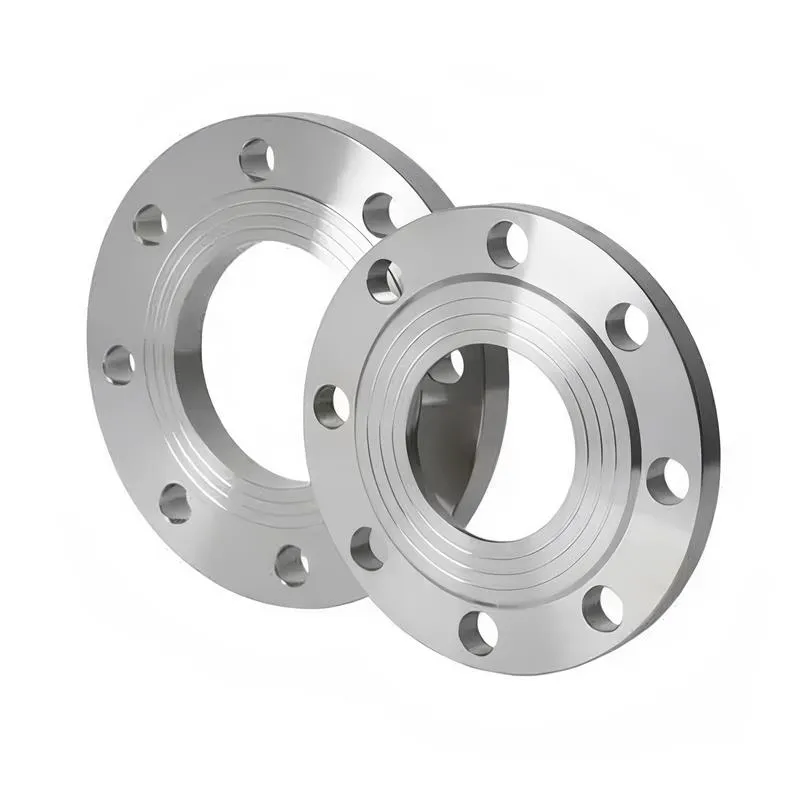
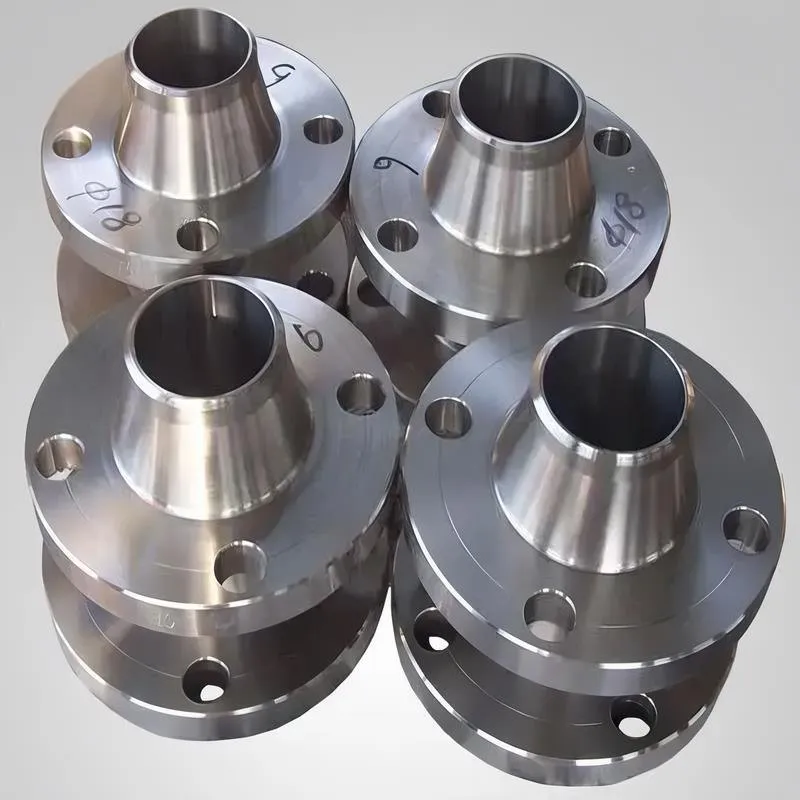
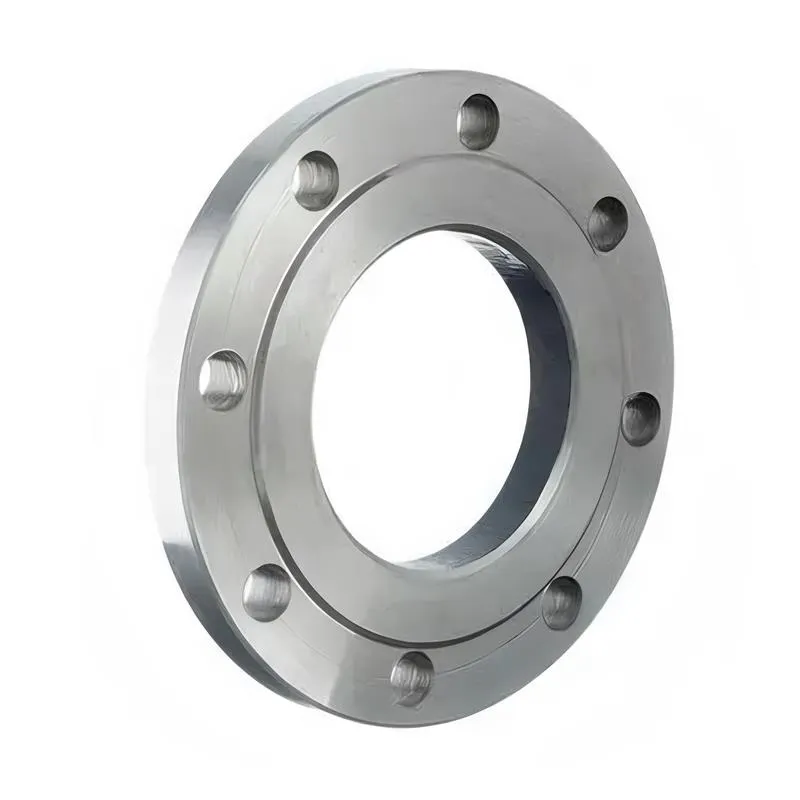
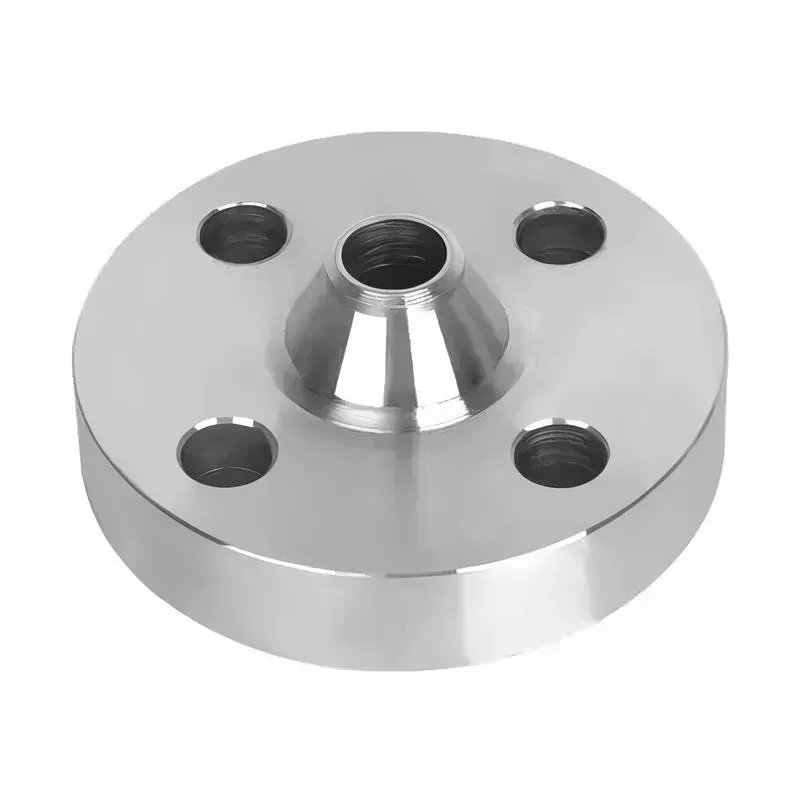
Plate Flat Welding Flange (PL), Necked Flat Welding Flange (SO), Necked Butt Welding Flange (WN), Integral Flange (IF), Socket Welding Flange (SW), Threaded Flange (Th), Butt Welding Ring Loose Flange (PJ/SE), Blind Flange (BL), Flat Welding Ring Loose Flange (PJ/PJ), and Lined Blind Flange (BL(s)).
2. **According to Petrochemical (SH) Industry Standards:** Flanges are classified as follows:
Threaded Flange (PL), Butt Welding Flange (WN), Flat Welding Flange (SO), Socket Welding Flange (SW), Loose Flange (LJ), and Blind Flange (no specific designation).
3. **According to Machinery (JB) Industry Standards:** Flanges are classified as follows:
Integral Flange, Butt Welding Flange, Plate Flat Welding Flange, Butt Welding Ring Plate Loose Flange, Flat Welding Ring Plate Loose Flange, Lap Joint Ring Plate Loose Flange, and Blind Flange.
4. **According to Connection Method/Type:** Flanges are classified as follows:
Plate Flat Welding Flange, Necked Flat Welding Flange, Necked Butt Welding Flange, Socket Welding Flange, Threaded Flange, Blind Flange, Necked Butt Welding Ring Loose Flange, Flat Welding Ring Loose Flange, Ring-Type Joint (RTJ) Flange and Blind Flange, Large-Diameter Plate Flange, Large-Diameter High-Neck Flange, Figure-8 Blind Plate, Butt Welding Ring Loose Flange, etc.
5. **According to the Component Being Connected:** Flanges can be classified into Vessel Flanges and Pipe Flanges.
6. **According to Structural Type:** Flanges include Integral Flanges, Threaded Flanges, Flat Welding Flanges, Butt Welding Flanges, Lap Joint (Loose/Swivel) Flanges, and Blind Flanges.
A flange—also referred to as a flange plate or rim—is a component used to connect shafts to one another, or, more commonly, to join the ends of pipes. Flanges are also utilized at the inlet and outlet ports of equipment to facilitate connections between two devices—for instance, the flange on a speed reducer. A "flange connection" or "flanged joint" refers to a detachable joint assembly comprising three interconnected elements—a flange, a gasket, and bolts—that together form a sealed structural unit. In the context of piping systems, a "pipe flange" specifically denotes a flange used for plumbing within the installation; when applied to equipment, it refers to the inlet or outlet flange of that specific device. Flanges feature a series of holes through which bolts are inserted to securely fasten the two flanges together, while a gasket placed between the flanges ensures a leak-proof seal. Flanges are broadly categorized into three types: threaded (screw-in) flanges, welded flanges, and clamp-type flanges. Flanges are invariably used in pairs; threaded flanges are suitable for low-pressure piping applications, whereas welded flanges are required for systems operating at pressures exceeding 4 kilograms per square centimeter. A sealing gasket is inserted between the two flange plates, which are then firmly secured using bolts. The thickness of a flange—as well as the specifications of the bolts used to fasten it—vary depending on the specific pressure rating required for the application. When connecting equipment such as water pumps or valves to piping systems, the corresponding connection points on these devices are often manufactured in the shape of a matching flange; this method of attachment is also referred to as a "flange connection." Generally, any connecting component that utilizes bolts to join and seal the perimeters of two flat surfaces—such as the joints in ventilation ducts—is termed a "flange"; such components may collectively be classified as "flange-type parts." However, since such a connection often constitutes merely a *portion* of a larger device—for instance, the interface between a flange and a water pump—it would be inappropriate to classify the entire water pump itself as a "flange-type part." Conversely, smaller components—such as valves—that feature such flanged interfaces may indeed be appropriately categorized as "flange-type parts."
-:-
For detailed product information, please contact sales.
-:
AISI 1078 Steel Flange, Hot Rolled Bar (UNS G10780) Product Information
-:-
For detailed product information, please contact sales.
-:
AISI 1078 Steel Flange, Hot Rolled Bar (UNS G10780) Synonyms
-:-
For detailed product information, please contact sales.
-:
AISI 1078 Steel, Hot Rolled Bar (UNS G10780) Product Information
-:-
For detailed product information, please contact sales.
-:
# **Product Introduction: AISI 1078 Steel, Hot Rolled Bar (UNS G10780)**
**AISI 1078 (UNS G10780), Hot Rolled Bar** is a specialized **ultra-high-carbon steel** supplied in its most fundamental and economical mill condition. This product represents a specific, high-carbon point within the AISI 10xx series, characterized by a carbon content that bridges the gap between common high-carbon grades and simple tool steels. Supplied in the hot-rolled condition, it features a scaled surface, commercial dimensional tolerances, and mechanical properties derived directly from the rolling and air-cooling process.
This grade is engineered for applications demanding the **highest possible hardness, strength, and wear resistance** from a plain carbon steel. It serves as a cost-effective raw material for components that will undergo transformative secondary processes such as forging, heavy machining with ample stock allowance, or specialized heat treatment to achieve its ultimate performance characteristics. Its specific carbon aim (0.74-0.83%C) makes it a candidate for very demanding tool and spring applications where precise carbon control is desired.
---
## **1. Chemical Composition (Per AISI/SAE 1078 / UNS G10780)**
The composition defines a precise, ultra-high-carbon steel formulation.
| Element | Carbon (C) | Manganese (Mn) | Phosphorus (P) | Sulfur (S) | **Key Characteristic** |
| :--- | :--- | :--- | :--- | :--- | :--- |
| **Content** | **0.74 - 0.83** | 0.60 - 0.90 | ≤ 0.040 | ≤ 0.050 | **Ultra-high-carbon steel for maximum hardness and spring properties.** |
| **Role** | **Primary driver of ultimate hardness, tensile strength, and wear resistance.** | Enhances hardenability and solid solution strength. | Impurity; kept low. | Impurity; kept low. | A plain carbon steel, not a free-machining grade. |
**Critical Features of the Composition:**
* **Ultra-High Carbon Content (0.74-0.83%):** This positions AISI 1078 at the extreme high end of standard carbon steel grades, providing the fundamental capacity for the highest achievable hardness (up to ~67-68 HRC as-quenched). Its carbon range is nearly identical to some simple tool steels (like W1, W1A).
* **Controlled Manganese:** The manganese range provides sufficient hardenability for oil quenching of moderate sections, though the extremely high carbon content dominates its transformation behavior and cracking sensitivity.
* **As-Rolled State:** The resulting microstructure from hot rolling and air cooling is a mixture of fine pearlite and significant pro-eutectoid cementite networks, leading to high as-supplied hardness and very low ductility.
---
## **2. Physical & Mechanical Properties (Hot Rolled Condition)**
Properties are typical for air-cooled, hot-rolled bars and are indicative of its high-carbon nature.
| Property | **Typical Value - Hot Rolled** | **Technical Significance** |
| :--- | :--- | :--- |
| **Hardness** | **241 - 321 HB** (Approx. 100 HRB - 34 HRC) | **Very high as-supplied hardness,** offering good wear resistance but making it extremely difficult to machine. |
| **Tensile Strength (Rm)** | **~750 - 950 MPa (109 - 138 ksi)** | High baseline strength. |
| **Yield Strength (Rp0.2)** | **≥ 415 MPa (≥ 60 ksi)** | |
| **Elongation (in 50mm / 2in)** | **≤ 10%** | **Very low ductility,** characteristic of ultra-high-carbon steels. Suitable only for hot forming (forging). |
| **Surface Condition** | **Heavy, adherent blue-black mill scale.** Surface is rough. | The abrasive scale must be completely removed via machining, shot blasting, or pickling. |
| **Dimensional Tolerance** | Meets **ASTM A29/A29M** commercial tolerances for hot-wrought bars. | **Substantial machining allowance (2.5-4mm per side) required** to achieve final dimensions and remove decarb. |
| **Machinability** | **~30% of B1112.** **Exceptionally Poor.** The combination of extreme hardness and abrasive scale makes it unsuitable for any precision machining in this state. Requires prior annealing. | |
| **Response to Heat Treatment** | Serves as a direct starting material for **quenching & tempering** (with very high risk), **normalizing**, or **soft annealing**. | Used as stock for tools, springs, and wear parts that will be fully heat treated. |
**Final Properties After Heat Treatment (Q&T - Example):**
* **Hardness:** **58 - 67 HRC** (depending on tempering).
* **Tensile Strength (Rm):** **2150 - 2550+ MPa**.
* **Toughness:** **Extremely Low.** Inherently brittle after hardening.
---
## **3. Product Applications**
Hot-rolled AISI 1078 is a specialist raw material for components requiring ultimate hardness, often substituting for low-alloy tool steel in less complex applications.
* **Forging Stock for Demanding Tools:** Primary feedstock for **drop forging** of high-performance hand tools (axes, hammers, picks) and industrial tooling.
* **Blanks for Cutting/Wear Components:** **Blanks for industrial blades, shear knives, and crusher parts** to be softened, machined, and heat-treated.
* **High-Stress Spring Stock:** Used as raw material for **very high-stress coil or leaf springs** after appropriate heat treatment and forming.
* **Wear Parts in Extreme Service:** Base material for components in mining and heavy equipment subject to severe abrasion.
* **Specialty Automotive Components:** For low-volume, ultra-high-strength parts like certain drivetrain components.
---
## **4. International & Equivalent Standards**
AISI 1078 is a standard grade, though less common than 1075 or 1080. Its equivalents are found in tool steel classifications.
| Standard System | Equivalent Grade | **Notes** |
| :--- | :--- | :--- |
| **AISI / SAE (USA)** | **1078** | The defining standard. |
| **UNS** | **G10780** | Unified Numbering System. |
| **ASTM A29/A29M** | Grade 1078 | Can be supplied per this standard for hot-wrought bars. |
| **ASTM A682** | Grade 1078 (for strip) | For spring steel strip applications. |
| **EN 10083-2** | **1.1248 (C75E)** / **1.1525 (C85E)** | European equivalents (C75: 0.72-0.80%C, C85: 0.82-0.90%C). **C85E** is a closer match. |
| **JIS G4401** | **SK3** / **SK2** | Japanese carbon tool steel equivalents (SK3: 0.75-0.85%C). **SK3** is very close. |
| **GB/T 699** | **75# Steel** / **80# Steel** | Chinese equivalents (75#: 0.72-0.80%C, 80#: 0.77-0.85%C). |
| **Tool Steel Equivalent** | **AISI W1** (Water-hardening tool steel, C1095) | Similar carbon content and application for hardening; W1 is more controlled as a tool steel. |
**Key Distinction:** While AISI 1078 is a standard grade, its **availability as a stock item is more limited** than 1075 or 1080. It is often considered a "special" within the carbon steel family due to its specific carbon range.
---
## **5. Key Advantages & Considerations**
**Advantages:**
* **Maximum Hardness Potential:** Capable of achieving the highest hardness levels among standard AISI 10xx series steels.
* **High Strength & Wear Resistance:** Provides an excellent foundation for components where abrasion and deformation resistance are critical.
* **Cost-Effective for Hardness:** Offers a high-hardness capability at a lower cost than most alloy or dedicated tool steels.
**Considerations:**
* **Extreme Brittleness (Low Toughness):** **The most critical limitation.** Unsuitable for applications involving impact or shock loading.
* **Very High Risk of Quench Cracking:** Exceptionally sensitive to thermal shock during quenching. Requires **expert, controlled heat treatment** (e.g., martempering, use of hot oil/salt baths).
* **Poor Machinability (As-Rolled):** Cannot be machined in the hot-rolled state. Must be purchased in an **annealed or spheroidized condition** for machining.
* **Poor Weldability:** **Generally considered unweldable** due to extreme crack sensitivity.
* **Limited Availability:** Not as commonly stocked as 1075 or 1080; may require longer lead times or minimum order quantities.
---
**Disclaimer:** **AISI 1078 hot-rolled bar is a specialist raw material requiring expert downstream processing.** It is **not** a finished or semi-finished product. Successful application depends entirely on proper subsequent annealing (for machining) and highly controlled hardening. **Always specify an annealed condition for any machining.** When ordering, use: **AISI 1078, Hot Rolled, [Size] Round, per ASTM A29.** Before selecting this grade, consult with metallurgical and heat treatment experts to validate the process feasibility. For many applications, the more readily available **AISI 1080** (0.75-0.88%C) can serve as a direct and functional substitute with better availability.
-:-
For detailed product information, please contact sales.
-:
AISI 1078 Steel, Hot Rolled Bar (UNS G10780) Specification
Dimensions
Size:
Diameter 20-1000 mm Length <5114 mm
Size:We can customized as required
Standard:
Per your request or drawing
We can customized as required
Properties(Theoretical)
Chemical Composition
-:-
For detailed product information, please contact sales.
-:
AISI 1078 Steel, Hot Rolled Bar (UNS G10780) Properties
-:-
For detailed product information, please contact sales.
-:
Applications of AISI 1078 Steel Flange, Hot Rolled Bar (UNS G10780)
-:-
For detailed product information, please contact sales.
-:
Chemical Identifiers AISI 1078 Steel Flange, Hot Rolled Bar (UNS G10780)
-:-
For detailed product information, please contact sales.
-:
Packing of AISI 1078 Steel Flange, Hot Rolled Bar (UNS G10780)
-:-
For detailed product information, please contact sales.
-:
Standard Packing:
-:-
For detailed product information, please contact sales.
-:
Typical bulk packaging includes palletized plastic 5 gallon/25 kg. pails, fiber and Steel Flange drums to 1 ton super sacks in full container (FCL) or truck load (T/L) quantities. Research and sample quantities and hygroscopic, oxidizing or other air sensitive materials may be packaged under argon or vacuum. Solutions are packaged in polypropylene, plastic or glass jars up to palletized 1585 gallon liquid totes Special package is available on request. E FORUs’ is carefully handled to minimize damage during storage and transportation and to preserve the quality of our products in their original condition