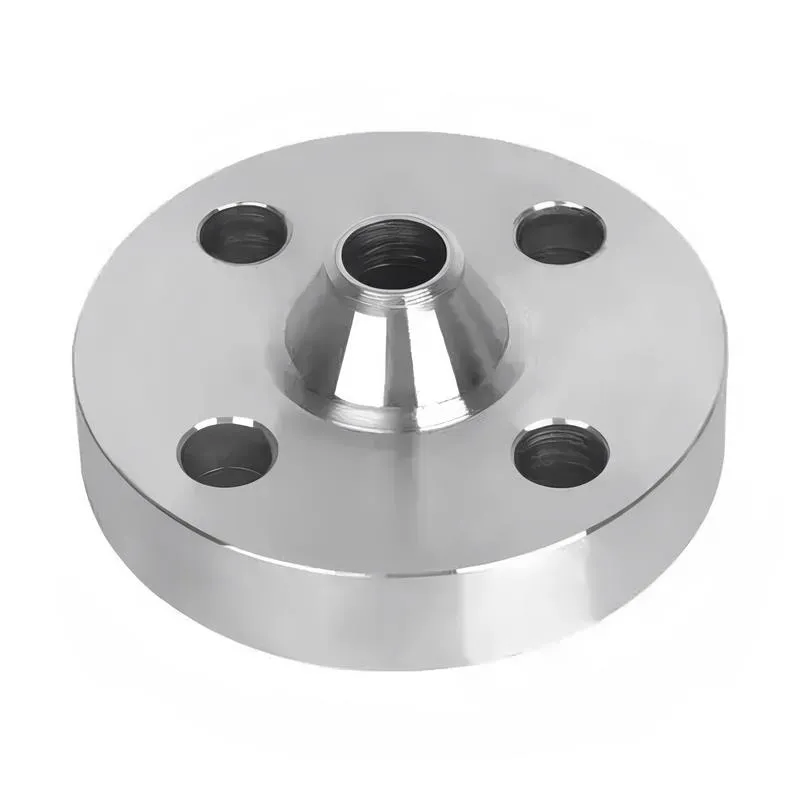
1,We Manufacturing processes are primarily classified into four types:
1:Forging,
2:Casting,
3:Cutting,
4:Rolling.
2,We can manufacture in accordance with these standards.
Standards:
GB Series (Chinese Standards), JB Series (Machinery Standards), HG Series (Chemical Industry Standards), ASME B16.5 (American Standards), BS4504 (British Standards), DIN (German Standards), and JIS (Japanese Standards).
Internationally, there are two primary systems of pipe flange standards: the European system, represented by the German DIN standards (including those of the former Soviet Union), and the American system, represented by the US ANSI pipe flange standards. Other common standards include: the Chinese Ministry of Machinery Industry standards (JB series), the Ministry of Chemical Industry standards (HG series), the Chinese National Standard *GB/T 9112–9124-2010 Steel Pipe Flanges*, as well as US standards (ASME B16.5), British standards (BS4504), German standards (DIN), Japanese standards (JIS), and marine standards (CBM), among others.
The nominal pressure ratings for the PN series are designated by "PN" and comprise the following nine levels: PN2.5, PN6, PN10, PN16, PN25, PN40, PN63, PN100, and PN160.
The nominal pressure ratings for the Class series are designated by "Class" and comprise the following six levels: Class150, Class300, Class600, Class900, Class1500, and Class2500.
Flange Classification
1. **According to Chemical Industry Standards:** Flanges are classified as follows:
Plate Flat Welding Flange (PL), Necked Flat Welding Flange (SO), Necked Butt Welding Flange (WN), Integral Flange (IF), Socket Welding Flange (SW), Threaded Flange (Th), Butt Welding Ring Loose Flange (PJ/SE), Blind Flange (BL), Flat Welding Ring Loose Flange (PJ/PJ), and Lined Blind Flange (BL(s)).
2. **According to Petrochemical (SH) Industry Standards:** Flanges are classified as follows:
Threaded Flange (PL), Butt Welding Flange (WN), Flat Welding Flange (SO), Socket Welding Flange (SW), Loose Flange (LJ), and Blind Flange (no specific designation).
3. **According to Machinery (JB) Industry Standards:** Flanges are classified as follows:
Integral Flange, Butt Welding Flange, Plate Flat Welding Flange, Butt Welding Ring Plate Loose Flange, Flat Welding Ring Plate Loose Flange, Lap Joint Ring Plate Loose Flange, and Blind Flange.
4. **According to Connection Method/Type:** Flanges are classified as follows:
Plate Flat Welding Flange, Necked Flat Welding Flange, Necked Butt Welding Flange, Socket Welding Flange, Threaded Flange, Blind Flange, Necked Butt Welding Ring Loose Flange, Flat Welding Ring Loose Flange, Ring-Type Joint (RTJ) Flange and Blind Flange, Large-Diameter Plate Flange, Large-Diameter High-Neck Flange, Figure-8 Blind Plate, Butt Welding Ring Loose Flange, etc.
5. **According to the Component Being Connected:** Flanges can be classified into Vessel Flanges and Pipe Flanges.
6. **According to Structural Type:** Flanges include Integral Flanges, Threaded Flanges, Flat Welding Flanges, Butt Welding Flanges, Lap Joint (Loose/Swivel) Flanges, and Blind Flanges.
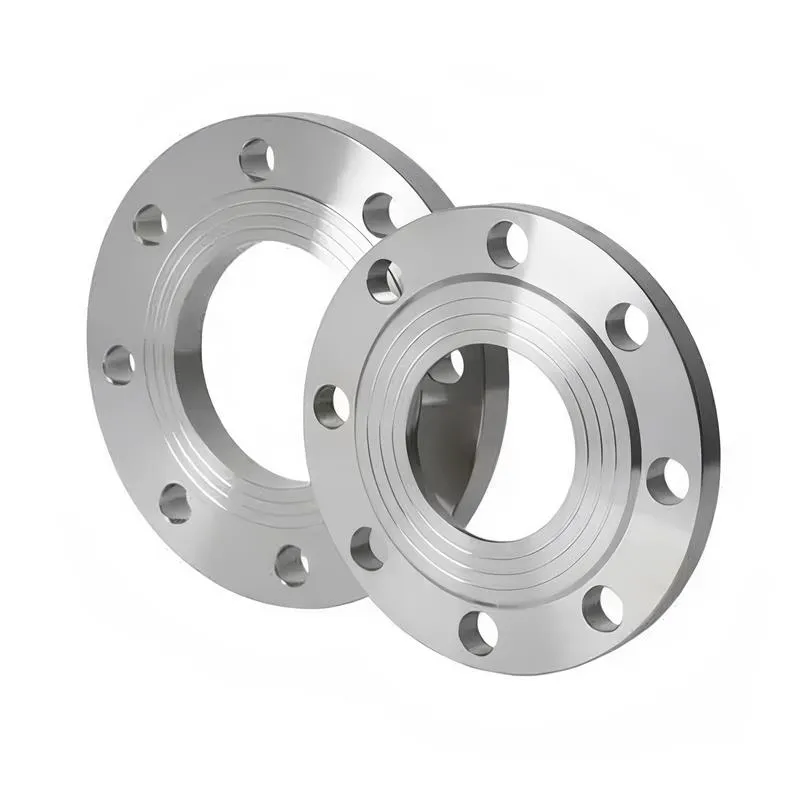
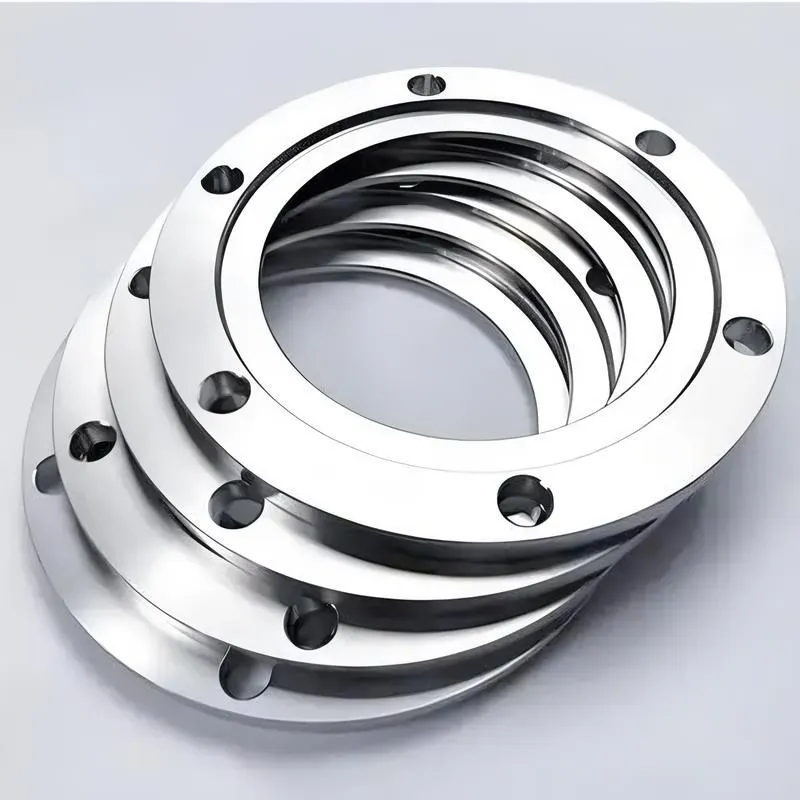
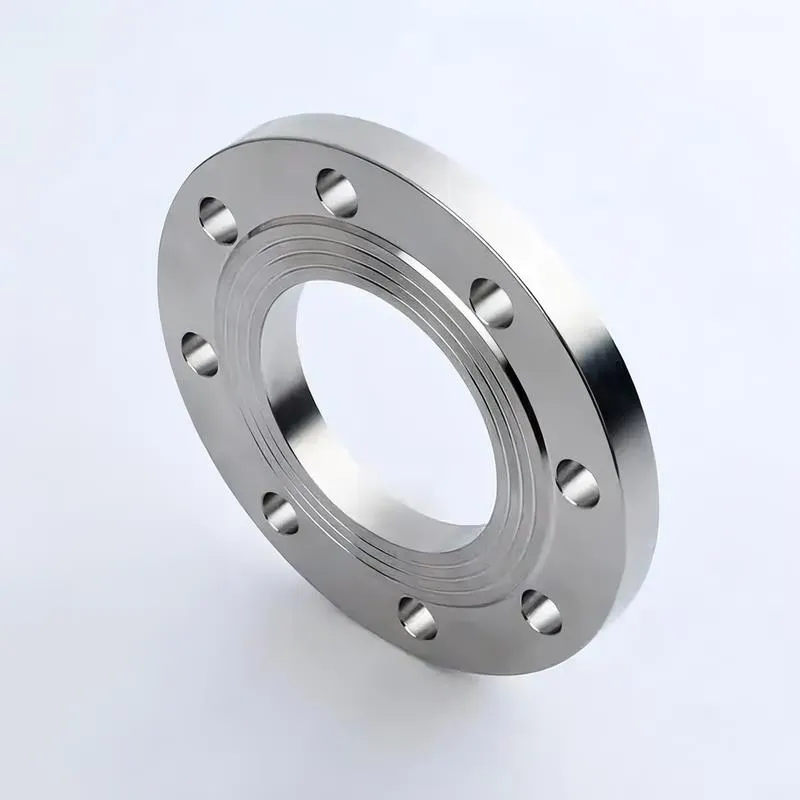
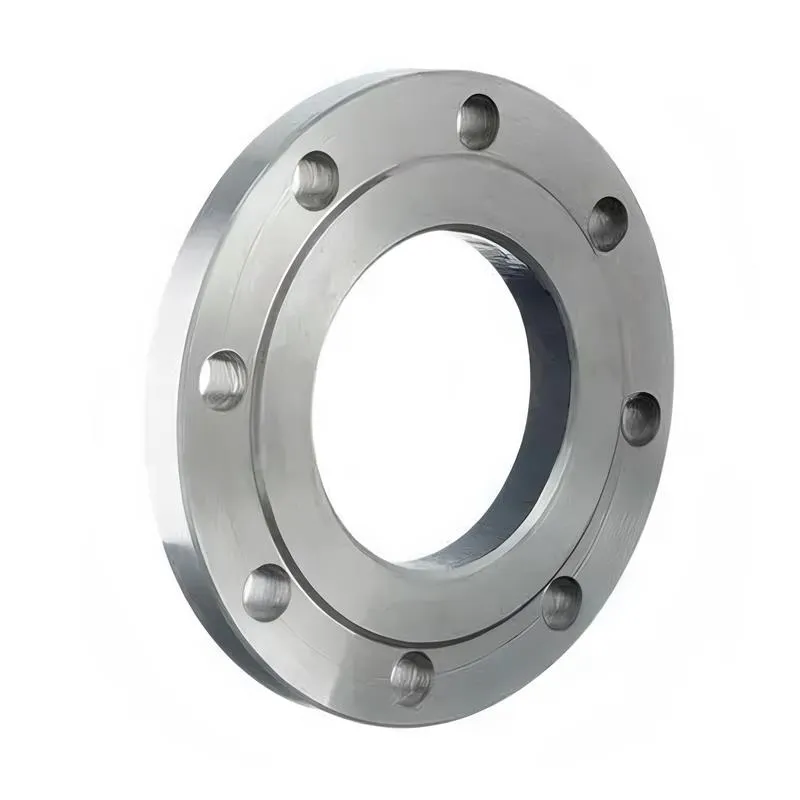
A flange—also referred to as a flange plate or rim—is a component used to connect shafts to one another, or, more commonly, to join the ends of pipes. Flanges are also utilized at the inlet and outlet ports of equipment to facilitate connections between two devices—for instance, the flange on a speed reducer. A "flange connection" or "flanged joint" refers to a detachable joint assembly comprising three interconnected elements—a flange, a gasket, and bolts—that together form a sealed structural unit. In the context of piping systems, a "pipe flange" specifically denotes a flange used for plumbing within the installation; when applied to equipment, it refers to the inlet or outlet flange of that specific device. Flanges feature a series of holes through which bolts are inserted to securely fasten the two flanges together, while a gasket placed between the flanges ensures a leak-proof seal. Flanges are broadly categorized into three types: threaded (screw-in) flanges, welded flanges, and clamp-type flanges. Flanges are invariably used in pairs; threaded flanges are suitable for low-pressure piping applications, whereas welded flanges are required for systems operating at pressures exceeding 4 kilograms per square centimeter. A sealing gasket is inserted between the two flange plates, which are then firmly secured using bolts. The thickness of a flange—as well as the specifications of the bolts used to fasten it—vary depending on the specific pressure rating required for the application. When connecting equipment such as water pumps or valves to piping systems, the corresponding connection points on these devices are often manufactured in the shape of a matching flange; this method of attachment is also referred to as a "flange connection." Generally, any connecting component that utilizes bolts to join and seal the perimeters of two flat surfaces—such as the joints in ventilation ducts—is termed a "flange"; such components may collectively be classified as "flange-type parts." However, since such a connection often constitutes merely a *portion* of a larger device—for instance, the interface between a flange and a water pump—it would be inappropriate to classify the entire water pump itself as a "flange-type part." Conversely, smaller components—such as valves—that feature such flanged interfaces may indeed be appropriately categorized as "flange-type parts."
-:-
For detailed product information, please contact sales.
-:
Crucible Steel Flange CPM® 10V® (AISI A11) Tool Steel Flange Product Information
-:-
For detailed product information, please contact sales.
-:
Crucible Steel Flange CPM® 10V® (AISI A11) Tool Steel Flange Synonyms
-:-
For detailed product information, please contact sales.
-:
Crucible Steel CPM® 10V® (AISI A11) Tool Steel Product Information
-:-
For detailed product information, please contact sales.
-:
# **Technical Datasheet: Crucible CPM® 10V® (AISI A11) Tool Steel**
---
## **1. Product Overview**
**Crucible CPM® 10V®** is an ultra-premium **powder metallurgy (PM), high-carbon, high-vanadium cold work tool steel** recognized as **AISI Type A11**. It represents the pinnacle of wear-resistant tool steel technology, engineered to deliver **unmatched resistance to abrasive and adhesive wear** under severe service conditions. Manufactured via Crucible's proprietary **CPM (Crucible Particle Metallurgy)** process, this alloy features an exceptionally high volume of ultra-hard vanadium carbides uniformly dispersed in a refined, tough matrix.
CPM 10V is specifically formulated for applications where **wear is the sole and overwhelming failure mechanism**, outperforming all conventional tool steels and rivaling cemented carbides in many abrasive scenarios while offering superior toughness. The "10V" designation signifies its nominal **10% vanadium content**, the highest among commercially significant tool steels, which directly drives its legendary wear life. It is the material of last resort before moving to monolithic carbide or ceramic components.
---
## **2. Key International Standards & Designations**
| Country/System | Standard Designation | Equivalent/Notes |
| :--- | :--- | :--- |
| **USA (Crucible)** | **CPM® 10V®** | Proprietary PM Tool Steel |
| **USA (AISI/SAE)** | **AISI A11** | Official AISI Classification |
| **USA (ASTM)** | **ASTM A681** | Grade A11 |
| **ISO** | **No direct equivalent** | Proprietary composition |
| **Europe (EN)** | **No direct equivalent** | - |
| **Germany (DIN/W-Nr.)** | **No direct equivalent** | - |
| **Common Industry Names** | **"Super Wear Steel"**, Ultra-High Vanadium PM Steel | - |
| **Comparable Grades** | **Böhler K390, Uddeholm VANADIS 10** | Similar PM high-vanadium steels |
**Note:** As **AISI A11**, CPM 10V has a formal standard classification, distinguishing it from other proprietary PM grades. Its performance, however, is defined by the CPM manufacturing process.
---
## **3. Chemical Composition (Typical %)**
The composition is aggressively optimized to maximize the volume of hard, wear-resistant vanadium carbides.
| Element | Weight % (Typical) | Metallurgical Function |
| :--- | :--- | :--- |
| **Carbon (C)** | **2.45** | Extremely high carbon content to stoichiometrically match the vanadium, ensuring complete formation of **vanadium carbide (VC)** and providing a hard martensitic matrix. |
| **Vanadium (V)** | **9.75** | **The defining element.** Forms an extremely high volume **(~20-25%)** of very hard, fine **primary MC-type vanadium carbides (2800-3000 HV)**. This is the direct source of its **unrivaled wear resistance**. |
| **Chromium (Cr)** | 5.25 | Provides hardenability for air quenching, contributes to some secondary carbide formation (M₇C₃), and enhances corrosion resistance. |
| **Molybdenum (Mo)** | 1.30 | Enhances hardenability, refines grain structure, improves toughness, and contributes to secondary hardening during tempering. |
| **Silicon (Si)** | 0.90 | Deoxidizer, solid solution strengthener, and increases tempering resistance. |
| **Manganese (Mn)** | 0.50 | Aids hardenability. |
**Key Microstructural Advantage of CPM Process:**
- **Maximum Carbide Volume with Uniformity:** Achieves the highest possible volume of wear-resistant carbides in a usable engineering material, with perfect dispersion.
- **Fine Carbide Size:** Carbides are extremely fine (typically 2-4 microns), eliminating the brittleness associated with large carbides in wrought high-vanadium steels.
- **Isotropic Properties:** Uniform mechanical behavior in all directions due to absence of segregation.
- **Enables the Composition:** The CPM process is **essential** to make this chemistry practical; conventional production would result in an unusably brittle material.
---
## **4. Physical & Mechanical Properties**
### **4.1 Standard Heat Treatment**
* **Annealing:** Heat to 870-900°C (1600-1650°F), slow furnace cool. Annealed hardness: **~250-270 HB**.
* **Preheating:** **Critical.** Double preheat at 650°C (1200°F) and 850°C (1560°F).
* **Austenitizing:** **1120-1150°C (2050-2100°F).** High temperature required to put sufficient carbon into solution. Precise control (±5°C) is essential. Salt or vacuum furnace required.
* **Quenching:** **Air cool or high-pressure gas quench.**
* **Tempering:** **Double or triple tempering mandatory.** Temper at **525-550°C (975-1025°F)** for 2+ hours each. **Cryogenic treatment** (-75°C/-100°F) between quenching and tempering is highly recommended.
* **Expected Hardness:** **60-62 HRC** (after tempering at 540°C). Can be tempered as low as 58 HRC for maximum toughness or as high as 63-64 HRC for pure wear.
### **4.2 Mechanical Properties (Hardened & Triple Tempered @ 540°C to ~61 HRC)**
| Property | Value / Rating | Context & Comparison |
| :--- | :--- | :--- |
| **Hardness** | **60 - 62 HRC** (standard range) | Very high, but its wear resistance far exceeds other steels at the same hardness. |
| **Abrasive Wear Resistance** | **Exceptional / Best-in-Class (Tool Steels)** | **5-15x better than D2**, **2-3x better than CPM 9V** in severe abrasion tests. Approaches some grades of cemented carbide. |
| **Adhesive Wear/Galling Resistance** | **Excellent** | High carbide volume resists material pickup. |
| **Impact Toughness (Charpy)** | **Low to Moderate (15-25 J)** | **Its primary trade-off.** Adequate for steady, high-pressure loads but not for impact. Significantly lower than CPM 9V, but higher than cemented carbide. |
| **Transverse Rupture Strength (TRS)** | **2,800 - 3,400 MPa** | Respectable for its wear level, but lower than tougher PM steels like 9V. |
| **Compressive Strength** | ~ 2,900 - 3,300 MPa | Excellent. |
| **Dimensional Stability** | **Excellent** | Air quenching and uniform structure minimize distortion. |
| **Grindability** | **Fair (A remarkable achievement)** | Given its carbide volume, grindability is good. **Diamond or CBN wheels are required** for efficient grinding. |
### **4.3 Physical Properties (Approximate)**
* Density: 7.50 g/cm³
* Thermal Conductivity: ~22 W/m·K (Low)
* Coefficient of Thermal Expansion: 10.5 x 10⁻⁶/K (20-400°C)
* Modulus of Elasticity: 205-210 GPa
---
## **5. Typical Product Applications**
CPM 10V is reserved for **extreme, pure-wear applications** where no other steel provides adequate life and carbide is too brittle.
* **Severe Abrasion Tooling:**
* **Blank & Punch Dies:** For **carbon fiber composites, fiberglass, advanced ceramics, abrasive papers, reinforced plastics with mineral/glass fillers.**
* **Powder Compaction Tools:** For metal, ceramic, and pharmaceutical powders.
* **Extrusion Dies & Screw Tips:** For highly filled, abrasive plastics.
* **Wear Parts for Abrasive Media:**
* **Slurry Pump Components** (seals, impellers, liners) handling sand, ash, or ores.
* **Shot Blasting Nozzles and Blade Liners.**
* **Knives and Cutters** for recycling abrasive materials (e.g., circuit boards, fiberglass).
* **Specialized Cutting & Forming:**
* **Thread Rolling Dies** for very hard or abrasive wires.
* **Cold Forging Dies and Punches** for abrasive materials.
* **Wear Guides and Rolls** in continuous abrasive environments.
---
## **6. Processing & Manufacturing Guidelines**
* **Machinability (Annealed):** **Very Poor.** The high volume of hard carbides is extremely abrasive. Requires **CBN or premium carbide tooling**, very rigid setups, low speeds, and light feeds.
* **Grindability:** **Fair.** **Diamond or CBN grinding wheels are mandatory** for any significant material removal. Aluminum oxide wheels are ineffective. Use light passes and ample coolant.
* **EDM Machining:** **The preferred machining method** for complex shapes in the hardened state. Produces good results. A low-temperature stress relief after EDM is recommended.
* **Wire EDM:** Excellent. Provides good accuracy and surface finish for this difficult-to-machine material.
* **Polishability:** **Very Good to Excellent.** Despite its hardness, the fine, uniform carbide structure allows it to be polished to a high luster (Ra < 0.05 µm), which is beneficial for plastic molds handling abrasive filled materials.
---
## **7. Comparative Performance & Selection Notes**
| Criterion | **CPM 10V (A11)** | **CPM 9V** | **Cemented Carbide** | **Ceramic (Al₂O₃/Si₃N₄)** |
| :--- | :--- | :--- | :--- | :--- |
| **Abrasive Wear Resistance** | **Best (Tool Steel)** | Extreme | **Higher** | **Higher** |
| **Toughness/Impact Resistance** | Low | **Very High** | **Very Low** | **Extremely Low** |
| **Compressive Strength** | High | High | **Very High** | High |
| **Cost** | Very High | High | Moderate-High | High |
| **Primary Niche** | **Extreme Wear, Need for Some Toughness** | **Wear + High Toughness** | **Pure Wear, No Shock** | **High-Speed, High-Temp Wear** |
**When to Choose CPM 10V:**
1. **Wear is the absolute, dominant, and only significant failure mode.**
2. The application involves **continuous, severe abrasion** (e.g., processing composites, minerals, powders).
3. **Conventional steels (D2, M4, even CPM 9V) fail too quickly.**
4. The component **must withstand clamping forces, moderate uneven loading, or requires a complexity of shape** that is impractical or too brittle in carbide.
**The Critical Trade-off:** **CPM 10V sacrifices toughness for the ultimate in wear resistance.** Do not select it for applications with any appreciable shock or impact.
---
## **8. Conclusion**
**Crucible CPM® 10V® (AISI A11) is the definitive benchmark for wear resistance in the realm of tool steels.** It occupies a unique and critical performance niche, offering wear performance that bridges the gap between the toughest tool steels and the most wear-resistant (but brittle) carbides and ceramics.
Its value is not in versatility, but in **specialized supremacy**. For the specific set of applications characterized by **unrelenting abrasive or adhesive wear under high pressure**, CPM 10V delivers:
- **Dramatically extended service life**, reducing machine downtime and improving operational efficiency.
- **Reliable performance** in shapes and applications where carbide would fracture.
- **The capability to manufacture complex geometries** via EDM that are impossible with sintered carbide.
Choosing CPM 10V is a **highly focused engineering decision** for situations where wear-related costs are prohibitive. Its premium price is justified by extraordinary performance in its specialized domain, making it the ultimate wear steel solution where nothing else lasts.
---
-:-
For detailed product information, please contact sales.
-:
Crucible Steel CPM® 10V® (AISI A11) Tool Steel Specification
Dimensions
Size:
Diameter 20-1000 mm Length <5230 mm
Size:We can customized as required
Standard:
Per your request or drawing
We can customized as required
Properties(Theoretical)
Chemical Composition
-:-
For detailed product information, please contact sales.
-:
Crucible Steel CPM® 10V® (AISI A11) Tool Steel Properties
-:-
For detailed product information, please contact sales.
-:
Applications of Crucible Steel Flange CPM® 10V® (AISI A11) Tool Steel Flange
-:-
For detailed product information, please contact sales.
-:
Chemical Identifiers Crucible Steel Flange CPM® 10V® (AISI A11) Tool Steel Flange
-:-
For detailed product information, please contact sales.
-:
Packing of Crucible Steel Flange CPM® 10V® (AISI A11) Tool Steel Flange
-:-
For detailed product information, please contact sales.
-:
Standard Packing:
-:-
For detailed product information, please contact sales.
-:
Typical bulk packaging includes palletized plastic 5 gallon/25 kg. pails, fiber and Steel Flange drums to 1 ton super sacks in full container (FCL) or truck load (T/L) quantities. Research and sample quantities and hygroscopic, oxidizing or other air sensitive materials may be packaged under argon or vacuum. Solutions are packaged in polypropylene, plastic or glass jars up to palletized 1701 gallon liquid totes Special package is available on request. E FORUs’ is carefully handled to minimize damage during storage and transportation and to preserve the quality of our products in their original condition