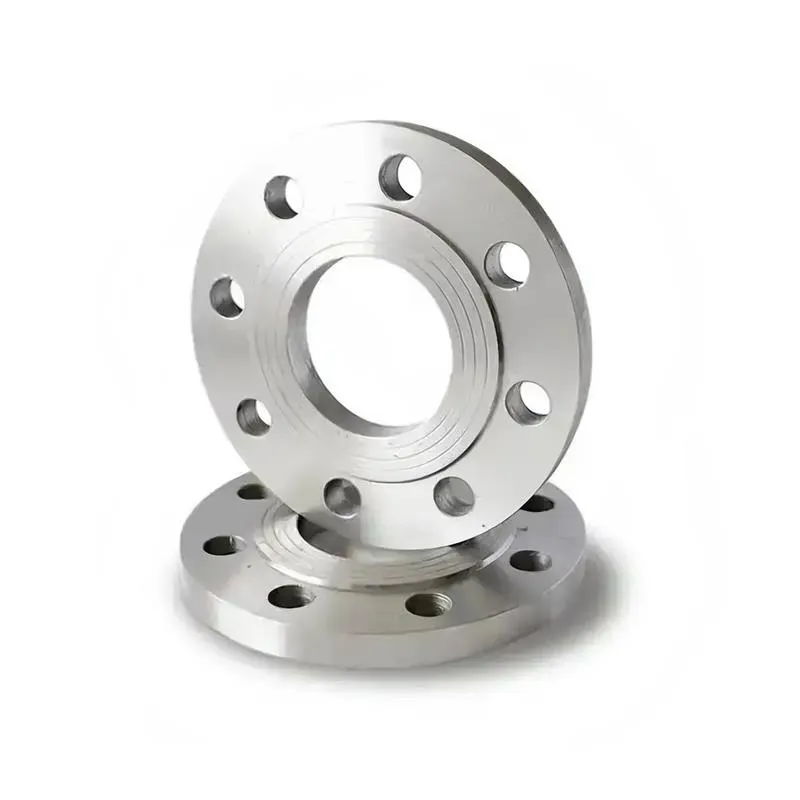
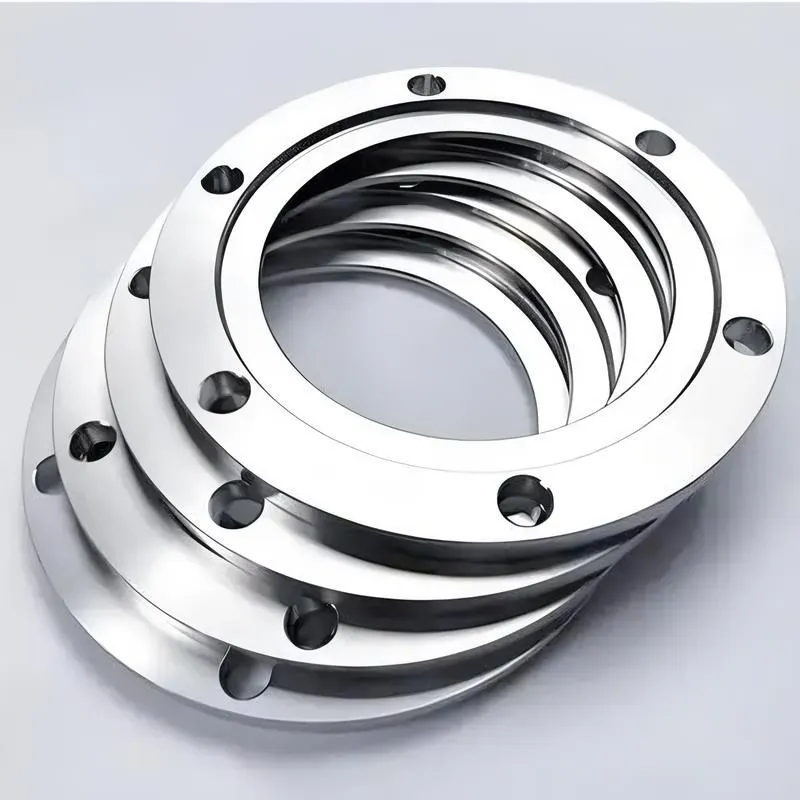
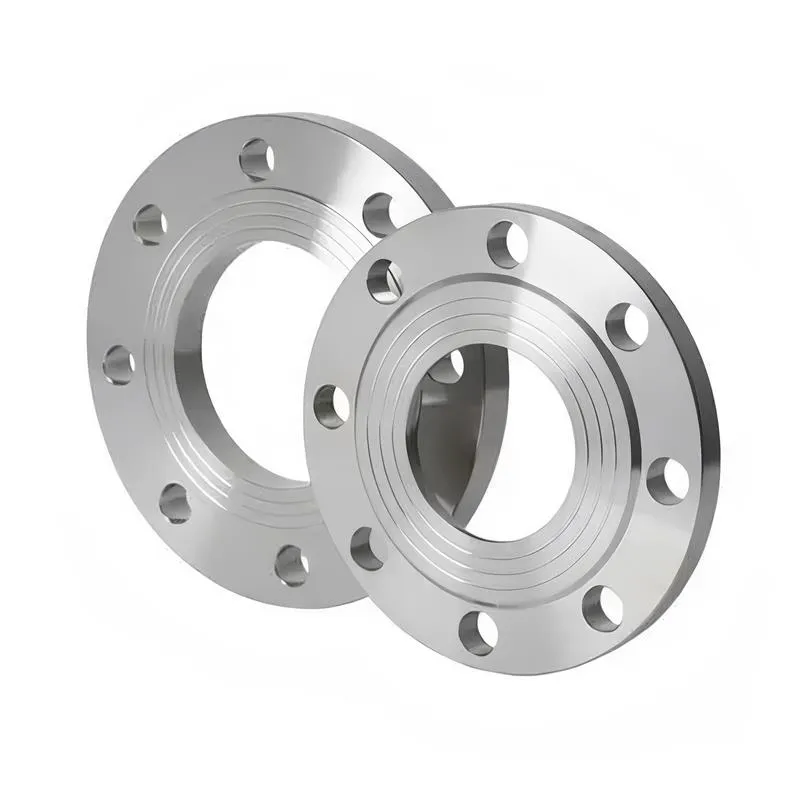
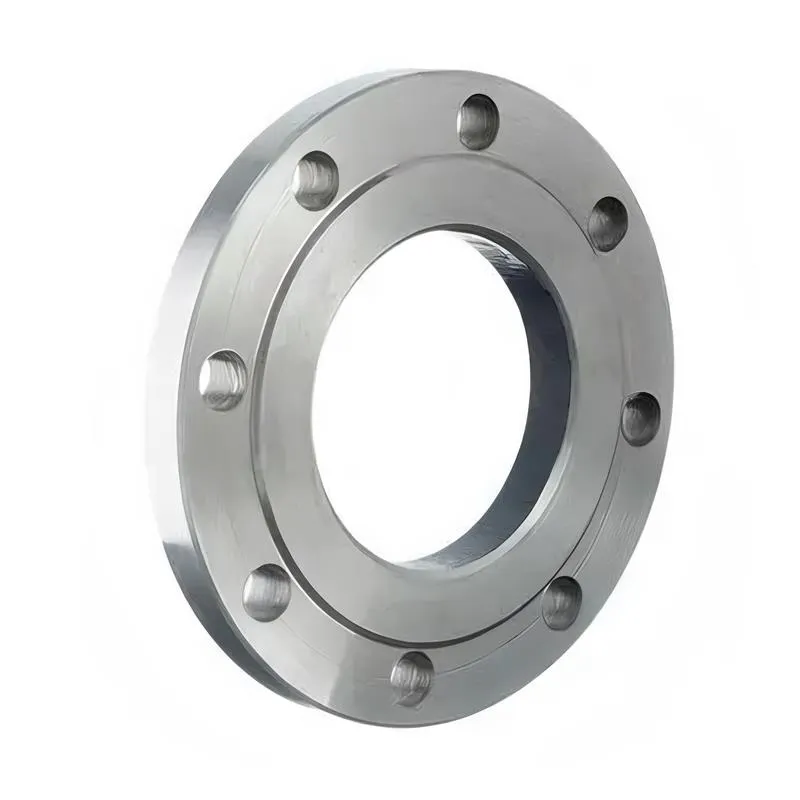
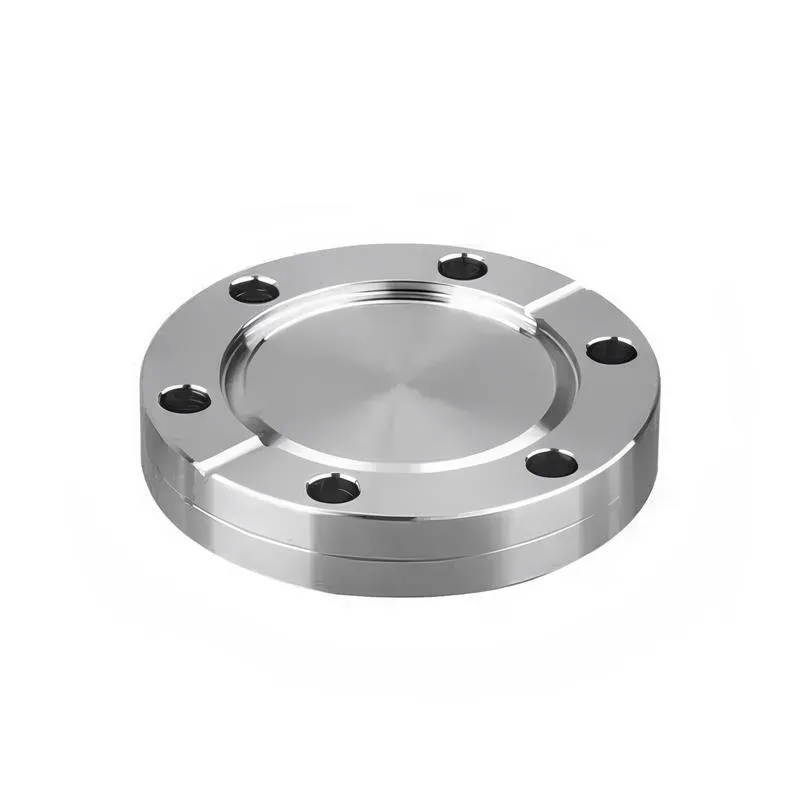
1,We Manufacturing processes are primarily classified into four types:
1:Forging,
2:Casting,
3:Cutting,
4:Rolling.
2,We can manufacture in accordance with these standards.
Standards:
GB Series (Chinese Standards), JB Series (Machinery Standards), HG Series (Chemical Industry Standards), ASME B16.5 (American Standards), BS4504 (British Standards), DIN (German Standards), and JIS (Japanese Standards).
Internationally, there are two primary systems of pipe flange standards: the European system, represented by the German DIN standards (including those of the former Soviet Union), and the American system, represented by the US ANSI pipe flange standards. Other common standards include: the Chinese Ministry of Machinery Industry standards (JB series), the Ministry of Chemical Industry standards (HG series), the Chinese National Standard *GB/T 9112–9124-2010 Steel Pipe Flanges*, as well as US standards (ASME B16.5), British standards (BS4504), German standards (DIN), Japanese standards (JIS), and marine standards (CBM), among others.
The nominal pressure ratings for the PN series are designated by "PN" and comprise the following nine levels: PN2.5, PN6, PN10, PN16, PN25, PN40, PN63, PN100, and PN160.
The nominal pressure ratings for the Class series are designated by "Class" and comprise the following six levels: Class150, Class300, Class600, Class900, Class1500, and Class2500.
Flange Classification
1. **According to Chemical Industry Standards:** Flanges are classified as follows:
Plate Flat Welding Flange (PL), Necked Flat Welding Flange (SO), Necked Butt Welding Flange (WN), Integral Flange (IF), Socket Welding Flange (SW), Threaded Flange (Th), Butt Welding Ring Loose Flange (PJ/SE), Blind Flange (BL), Flat Welding Ring Loose Flange (PJ/PJ), and Lined Blind Flange (BL(s)).
2. **According to Petrochemical (SH) Industry Standards:** Flanges are classified as follows:
Threaded Flange (PL), Butt Welding Flange (WN), Flat Welding Flange (SO), Socket Welding Flange (SW), Loose Flange (LJ), and Blind Flange (no specific designation).
3. **According to Machinery (JB) Industry Standards:** Flanges are classified as follows:
Integral Flange, Butt Welding Flange, Plate Flat Welding Flange, Butt Welding Ring Plate Loose Flange, Flat Welding Ring Plate Loose Flange, Lap Joint Ring Plate Loose Flange, and Blind Flange.
4. **According to Connection Method/Type:** Flanges are classified as follows:
Plate Flat Welding Flange, Necked Flat Welding Flange, Necked Butt Welding Flange, Socket Welding Flange, Threaded Flange, Blind Flange, Necked Butt Welding Ring Loose Flange, Flat Welding Ring Loose Flange, Ring-Type Joint (RTJ) Flange and Blind Flange, Large-Diameter Plate Flange, Large-Diameter High-Neck Flange, Figure-8 Blind Plate, Butt Welding Ring Loose Flange, etc.
5. **According to the Component Being Connected:** Flanges can be classified into Vessel Flanges and Pipe Flanges.
6. **According to Structural Type:** Flanges include Integral Flanges, Threaded Flanges, Flat Welding Flanges, Butt Welding Flanges, Lap Joint (Loose/Swivel) Flanges, and Blind Flanges.
A flange—also referred to as a flange plate or rim—is a component used to connect shafts to one another, or, more commonly, to join the ends of pipes. Flanges are also utilized at the inlet and outlet ports of equipment to facilitate connections between two devices—for instance, the flange on a speed reducer. A "flange connection" or "flanged joint" refers to a detachable joint assembly comprising three interconnected elements—a flange, a gasket, and bolts—that together form a sealed structural unit. In the context of piping systems, a "pipe flange" specifically denotes a flange used for plumbing within the installation; when applied to equipment, it refers to the inlet or outlet flange of that specific device. Flanges feature a series of holes through which bolts are inserted to securely fasten the two flanges together, while a gasket placed between the flanges ensures a leak-proof seal. Flanges are broadly categorized into three types: threaded (screw-in) flanges, welded flanges, and clamp-type flanges. Flanges are invariably used in pairs; threaded flanges are suitable for low-pressure piping applications, whereas welded flanges are required for systems operating at pressures exceeding 4 kilograms per square centimeter. A sealing gasket is inserted between the two flange plates, which are then firmly secured using bolts. The thickness of a flange—as well as the specifications of the bolts used to fasten it—vary depending on the specific pressure rating required for the application. When connecting equipment such as water pumps or valves to piping systems, the corresponding connection points on these devices are often manufactured in the shape of a matching flange; this method of attachment is also referred to as a "flange connection." Generally, any connecting component that utilizes bolts to join and seal the perimeters of two flat surfaces—such as the joints in ventilation ducts—is termed a "flange"; such components may collectively be classified as "flange-type parts." However, since such a connection often constitutes merely a *portion* of a larger device—for instance, the interface between a flange and a water pump—it would be inappropriate to classify the entire water pump itself as a "flange-type part." Conversely, smaller components—such as valves—that feature such flanged interfaces may indeed be appropriately categorized as "flange-type parts."
-:-
For detailed product information, please contact sales.
-:
Latrobe Lescalloy® 52100 VAC-ARC High Performance Bearing Steel Flange Product Information
-:-
For detailed product information, please contact sales.
-:
Latrobe Lescalloy® 52100 VAC-ARC High Performance Bearing Steel Flange Synonyms
-:-
For detailed product information, please contact sales.
-:
Latrobe Lescalloy® 52100 VAC-ARC High Performance Bearing Steel Product Information
-:-
For detailed product information, please contact sales.
-:
# Product Datasheet: Latrobe Lescalloy® 52100 VAC-ARC High Performance Bearing Steel
## 1. Product Overview
**Latrobe Lescalloy® 52100 VAC-ARC** is a premium-grade, high-carbon, high-chromium bearing steel produced through advanced vacuum arc remelting (VAR) technology. This specialized manufacturing process results in exceptional steel cleanliness, improved fatigue life, and superior microstructural homogeneity compared to conventionally melted 52100 steel. Designed for the most demanding bearing applications, Lescalloy® 52100 VAR offers extended service life, enhanced reliability, and improved performance in critical rotating equipment.
## 2. Key Advantages & Characteristics
- **Superior Steel Cleanliness**: VAR process dramatically reduces oxide and sulfide inclusions
- **Enhanced Fatigue Life**: Cleaner steel with finer microstructure provides significantly improved rolling contact fatigue resistance
- **Excellent Dimensional Stability**: Uniform microstructure minimizes distortion during heat treatment
- **Superior Toughness**: Refined grain structure and reduced segregation enhance impact resistance
- **Improved Machinability**: Consistent microstructure allows better machining control
- **Reduced Defect Rates**: Lower inclusion content decreases manufacturing scrap and field failures
## 3. Chemical Composition (ASTM A295 Specification)
### 3.1 Standard Composition (wt.%)
| Element | Standard Range | Typical Value | Purpose |
|---------|----------------|---------------|---------|
| Carbon (C) | 0.98-1.10 | 1.00 | Primary hardenability, carbide formation |
| Chromium (Cr) | 1.30-1.60 | 1.45 | Hardness, wear resistance, corrosion resistance |
| Manganese (Mn) | 0.25-0.45 | 0.35 | Hardenability, deoxidizer |
| Silicon (Si) | 0.15-0.35 | 0.25 | Deoxidizer, strength |
| Phosphorus (P) | ≤0.025 | 0.015 | Impurity control |
| Sulfur (S) | ≤0.025 | 0.010 | Impurity control |
| Molybdenum (Mo) | ≤0.10 | 0.05 | Optional, enhances hardenability |
| Nickel (Ni) | ≤0.25 | 0.15 | Optional, improves toughness |
| Copper (Cu) | ≤0.35 | 0.20 | Residual |
| Iron (Fe) | Balance | Balance | Matrix |
### 3.2 VAR-Specific Enhancements
- **Oxygen Content**: ≤15 ppm (vs. 20-30 ppm in conventional 52100)
- **Titanium Content**: ≤30 ppm (reduced to prevent TiN inclusion formation)
- **Calcium Treatment**: Optional for inclusion shape control
- **Microcleanliness**: ASTM E45 Method A, Plate 1: ≤0.5 (Thin series), ≤0.5 (Heavy series)
## 4. Manufacturing Process
### 4.1 Vacuum Arc Remelting (VAR) Process
```
1. Primary Melting
• Electric Arc Furnace (EAF) melting
• Secondary refining (Ladle Metallurgy)
• Continuous casting or ingot casting
2. Vacuum Arc Remelting
• Electrode preparation from primary melt
• Melting under high vacuum (0.1-10 Pa)
• Controlled solidification rate
• Directional solidification for reduced segregation
3. Post-Melting Processing
• Homogenization annealing
• Hot working (forging/rolling)
• Spheroidize annealing
• Final conditioning and inspection
```
### 4.2 Quality Control Parameters
| Parameter | Specification | Test Method |
|-----------|---------------|-------------|
| Inclusion Rating | ASTM E45 Method A | Microscopic examination |
| Segregation | Minimal centerline segregation | Macro-etch testing |
| Grain Size | ASTM 5-8 (after spheroidize anneal) | ASTM E112 |
| Ultrasonic Testing | Class 1 or better per AMS 2301 | Ultrasonic inspection |
| Hardness (Annealed) | 179-229 HB | Brinell hardness |
## 5. Physical & Mechanical Properties
### 5.1 Annealed Condition (Delivery State)
| Property | Value | Test Standard |
|----------|-------|---------------|
| Hardness | 179-229 HB (typically 201 HB) | ASTM E10 |
| Tensile Strength | 620-750 MPa | ASTM E8 |
| Yield Strength (0.2%) | 375-450 MPa | ASTM E8 |
| Elongation | 20-28% | ASTM E8 |
| Reduction of Area | 45-55% | ASTM E8 |
| Modulus of Elasticity | 203 GPa | Calculated |
| Density | 7.81 g/cm³ | ASTM B311 |
### 5.2 Heat Treated Condition (Typical)
| Property | Quenched & Tempered (Standard) | Case Carburized (Optional) |
|----------|-------------------------------|---------------------------|
| Hardness | 58-65 HRC | 58-65 HRC surface, 35-45 HRC core |
| Case Depth | N/A | 0.5-3.0 mm (as specified) |
| Tensile Strength | 1960-2250 MPa | 1500-1800 MPa |
| Yield Strength | 1650-1850 MPa | 1200-1400 MPa |
| Bending Fatigue Limit | 550-650 MPa | 600-700 MPa |
| Fracture Toughness | 18-22 MPa√m | 25-30 MPa√m |
### 5.3 Thermal Properties
| Property | Value | Conditions |
|----------|-------|-----------|
| Thermal Conductivity | 46.6 W/m·K | 20°C |
| Specific Heat | 475 J/kg·K | 20°C |
| Thermal Expansion | 11.0×10⁻⁶/°C | 20-100°C |
| Ac₁ Temperature | 730-750°C | - |
| Ac₃ Temperature | 770-790°C | - |
| Ms Temperature | 240-260°C | - |
## 6. Heat Treatment Guidelines
### 6.1 Standard Heat Treatment
```
1. Austenitizing
• Temperature: 830-850°C
• Atmosphere: Protective or neutral
• Time: 20-40 minutes per inch of thickness
2. Quenching
• Medium: Oil (fast quenching oil)
• Temperature: 50-80°C
• Agitation: Moderate to vigorous
3. Tempering
• Temperature: 150-200°C (standard bearing applications)
• Time: 1-2 hours minimum
• Cycles: Single or double temper
4. Optional Sub-zero Treatment
• Temperature: -70 to -100°C
• Time: 1-4 hours
• Purpose: Convert retained austenite
```
### 6.2 Special Heat Treatments
- **Bainitic Treatment**: Isothermal transformation at 230-280°C
- **Martempering**: Quench to above Ms, hold, then air cool
- **Austempering**: Isothermal transformation to lower bainite
## 7. International Standards & Specifications
### 7.1 Primary Specifications
| Standard | Designation | Grade/Class |
|----------|-------------|------------|
| ASTM A295 | 52100 | Standard grade |
| AMS 6440 | 52100 | Aerospace material specification |
| AMS 6444 | 52100 | Vacuum melted version |
| EN ISO 683-17 | 100Cr6 | European equivalent |
| JIS G4805 | SUJ2 | Japanese equivalent |
| GB/T 18254 | GCr15 | Chinese equivalent |
| DIN 17230 | 1.3505 | German material number |
### 7.2 Industry-Specific Standards
| Industry | Standard | Application |
|----------|----------|------------|
| Aerospace | AMS 2301 | Aircraft quality steel |
| Automotive | SAE J404 | Chemical composition |
| Bearing | ABMA/ANSI | Bearing component standards |
| Medical | ASTM F138/F139 | Modified for implant use |
| Tool & Die | ASTM A681 | Modified for tool applications |
## 8. Product Applications
### 8.1 High-Performance Bearings
- **Aerospace Bearings**: Jet engine main shaft bearings, auxiliary power unit bearings
- **Industrial Bearings**: High-speed spindle bearings, machine tool bearings
- **Automotive Bearings**: Wheel bearings, transmission bearings, differential bearings
- **Wind Energy**: Main shaft bearings, gearbox bearings
- **Medical Equipment**: High-speed dental drill bearings, surgical tool bearings
### 8.2 Specialized Components
- **Aerospace**: Landing gear components, actuator mechanisms, flight control bearings
- **Automotive**: CV joints, transmission gears, high-performance engine components
- **Industrial**: Precision gears, rollers, cam followers, tool holders
- **Medical**: Surgical instruments, orthopedic tooling, dental handpieces
- **Defense**: Gun mounts, turret bearings, missile guidance components
### 8.3 Advanced Applications
- **Racing Components**: High-performance engine bearings, transmission components
- **Robotics**: Precision robotic joints, harmonic drive components
- **Semiconductor**: Wafer handling components, precision positioning stages
- **Scientific Instruments**: High-vacuum components, precision measurement devices
## 9. Machining & Processing
### 9.1 Machinability
| Operation | Recommended Parameters | Notes |
|-----------|------------------------|-------|
| Turning | Speed: 60-120 m/min, Feed: 0.1-0.3 mm/rev | Use carbide or CBN tools |
| Milling | Speed: 80-150 m/min, Feed: 0.05-0.2 mm/tooth | Climb milling recommended |
| Drilling | Speed: 20-40 m/min, Feed: 0.05-0.15 mm/rev | Use HSS or carbide drills |
| Grinding | Wheel: Al₂O₃ or CBN, Speed: 25-35 m/s | Use ample coolant |
| Honing | Abrasive: Diamond or CBN, Pressure: 0.5-2.0 MPa | For final sizing |
### 9.2 Forming Operations
- **Cold Forming**: Limited due to high hardness in annealed state
- **Hot Forming**: Possible at 850-1150°C with proper tooling
- **Forging**: Recommended temperature range: 1050-900°C
- **Extrusion**: Specialized process requiring controlled conditions
## 10. Quality Assurance & Testing
### 10.1 Standard Testing
| Test | Standard | Frequency | Acceptance Criteria |
|------|----------|-----------|-------------------|
| Chemical Analysis | ASTM E415 | Each heat | Within specified range |
| Inclusion Rating | ASTM E45 | Each heat | Plate 1: ≤1.0 |
| Macro-etch | ASTM E381 | Each ingot | No significant defects |
| Ultrasonic | AMS 2301 | 100% | Class 1 or better |
| Hardness | ASTM E10 | Each lot | 179-229 HB |
| Grain Size | ASTM E112 | Each lot | 5-8 |
### 10.2 Advanced Testing (Optional)
- **Bending Fatigue Testing**: Per ISO 12107
- **Rolling Contact Fatigue**: Per ASTM STP 771
- **Fracture Toughness**: Per ASTM E1820
- **Residual Stress Analysis**: X-ray diffraction method
- **Microcleanliness**: Automated inclusion analysis (ASPEX, etc.)
### 10.3 Certifications & Documentation
- **Mill Test Certificates**: EN 10204 3.1 or 3.2
- **Traceability**: Complete heat-to-component tracking
- **Process Documentation**: Full VAR process records
- **Material Certifications**: ISO 9001, AS9100, NADCAP
## 11. Comparative Performance
### 11.1 vs. Conventional 52100
| Property | Lescalloy® 52100 VAR | Conventional 52100 | Improvement |
|----------|----------------------|-------------------|-------------|
| Fatigue Life (L₁₀) | 2-3× longer | Baseline | 100-200% |
| Inclusion Content | ≤0.5 | 1.5-2.5 | 70% reduction |
| Toughness (K₁C) | 20-22 MPa√m | 16-18 MPa√m | 20-25% |
| Distortion During HT | Minimal | Moderate | Significant |
| Scrap Rate | 30-50% lower | Baseline | Major improvement |
### 11.2 vs. Alternative Bearing Steels
| Steel Type | Typical Application | Advantages of 52100 VAR |
|------------|-------------------|-------------------------|
| M50 (AMS 6491) | High-temperature bearings | Better toughness, lower cost |
| 440C (AMS 5630) | Corrosion-resistant bearings | Superior fatigue life, cleaner |
| 8620 (AMS 6274) | Case-carburized bearings | Higher core strength, better RCF |
| Cronidur 30 | Corrosion/wear applications | Cost-effective for non-corrosive |
## 12. Technical Support & Services
### 12.1 Latrobe Specialty Support
- **Application Engineering**: Customized solutions for specific applications
- **Heat Treatment Consulting**: Optimized thermal processing recommendations
- **Failure Analysis**: Comprehensive metallurgical analysis services
- **Technical Training**: Customer education programs
### 12.2 Additional Services
- **Custom Melting**: Tailored chemistries for specific applications
- **Special Processing**: Custom heat treatment, surface treatments
- **Testing Services**: Complete mechanical and metallurgical testing
- **Just-in-Time Delivery**: Inventory management programs
---
## Technical Notice
The information contained in this datasheet represents typical values and characteristics of Latrobe Lescalloy® 52100 VAC-ARC steel. Actual properties may vary depending on specific processing conditions, heat treatment parameters, and component geometry. For critical applications, consultation with Latrobe technical personnel is strongly recommended.
**Safety Precautions**:
- Follow standard steel handling procedures
- Use appropriate PPE during machining and processing
- Observe heat treatment safety protocols
- Follow MSDS guidelines for all processing operations
**Document Control**:
- Document: LAT-52100VAR-DS-001
- Revision: 2.1
- Effective Date: [Current Date]
- Supersedes: All previous versions
**Contact Information**:
Latrobe Specialty Metals
[Company Address]
Technical Services: [Phone Number]
Email: [Technical Support Email]
Website: [Company Website]
---
*Lescalloy® is a registered trademark of Latrobe Specialty Metals. This information is proprietary and confidential. Reproduction or distribution without written permission is prohibited. Specifications subject to change without notice.*
-:-
For detailed product information, please contact sales.
-:
Latrobe Lescalloy® 52100 VAC-ARC High Performance Bearing Steel Specification
Dimensions
Size:
Diameter 20-1000 mm Length <5321 mm
Size:We can customized as required
Standard:
Per your request or drawing
We can customized as required
Properties(Theoretical)
Chemical Composition
-:-
For detailed product information, please contact sales.
-:
Latrobe Lescalloy® 52100 VAC-ARC High Performance Bearing Steel Properties
-:-
For detailed product information, please contact sales.
-:
Applications of Latrobe Lescalloy® 52100 VAC-ARC High Performance Bearing Steel Flange
-:-
For detailed product information, please contact sales.
-:
Chemical Identifiers Latrobe Lescalloy® 52100 VAC-ARC High Performance Bearing Steel Flange
-:-
For detailed product information, please contact sales.
-:
Packing of Latrobe Lescalloy® 52100 VAC-ARC High Performance Bearing Steel Flange
-:-
For detailed product information, please contact sales.
-:
Standard Packing:
-:-
For detailed product information, please contact sales.
-:
Typical bulk packaging includes palletized plastic 5 gallon/25 kg. pails, fiber and Steel Flange drums to 1 ton super sacks in full container (FCL) or truck load (T/L) quantities. Research and sample quantities and hygroscopic, oxidizing or other air sensitive materials may be packaged under argon or vacuum. Solutions are packaged in polypropylene, plastic or glass jars up to palletized 1792 gallon liquid totes Special package is available on request. E FORUs’ is carefully handled to minimize damage during storage and transportation and to preserve the quality of our products in their original condition