1,We Manufacturing processes are primarily classified into four types:
1:Forging,
2:Casting,
3:Cutting,
4:Rolling.
2,We can manufacture in accordance with these standards.
Standards:
GB Series (Chinese Standards), JB Series (Machinery Standards), HG Series (Chemical Industry Standards), ASME B16.5 (American Standards), BS4504 (British Standards), DIN (German Standards), and JIS (Japanese Standards).
Internationally, there are two primary systems of pipe flange standards: the European system, represented by the German DIN standards (including those of the former Soviet Union), and the American system, represented by the US ANSI pipe flange standards. Other common standards include: the Chinese Ministry of Machinery Industry standards (JB series), the Ministry of Chemical Industry standards (HG series), the Chinese National Standard *GB/T 9112–9124-2010 Steel Pipe Flanges*, as well as US standards (ASME B16.5), British standards (BS4504), German standards (DIN), Japanese standards (JIS), and marine standards (CBM), among others.
The nominal pressure ratings for the PN series are designated by "PN" and comprise the following nine levels: PN2.5, PN6, PN10, PN16, PN25, PN40, PN63, PN100, and PN160.
The nominal pressure ratings for the Class series are designated by "Class" and comprise the following six levels: Class150, Class300, Class600, Class900, Class1500, and Class2500.
Flange Classification
1. **According to Chemical Industry Standards:** Flanges are classified as follows:
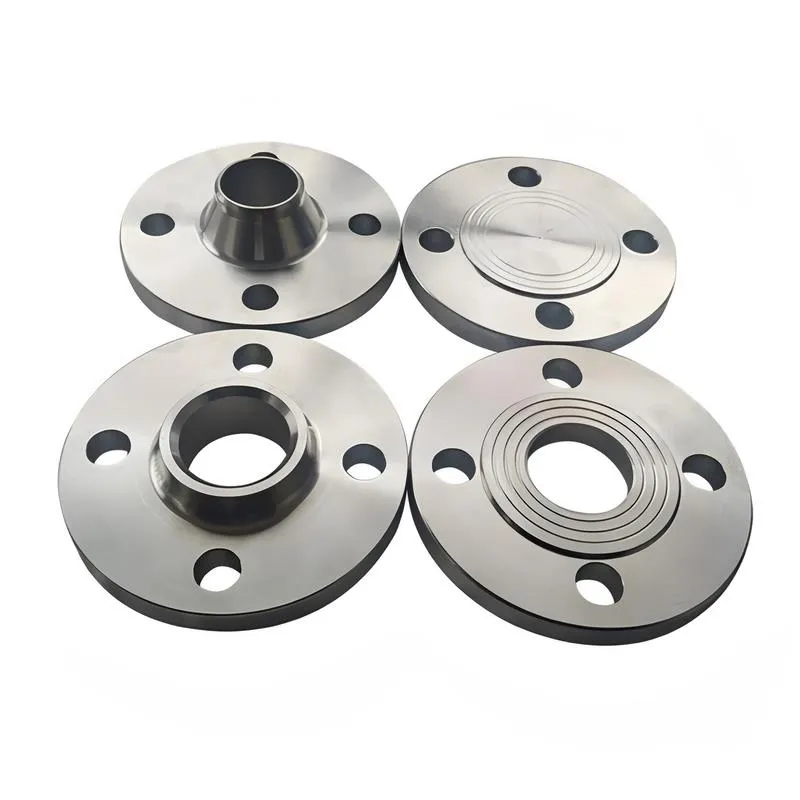
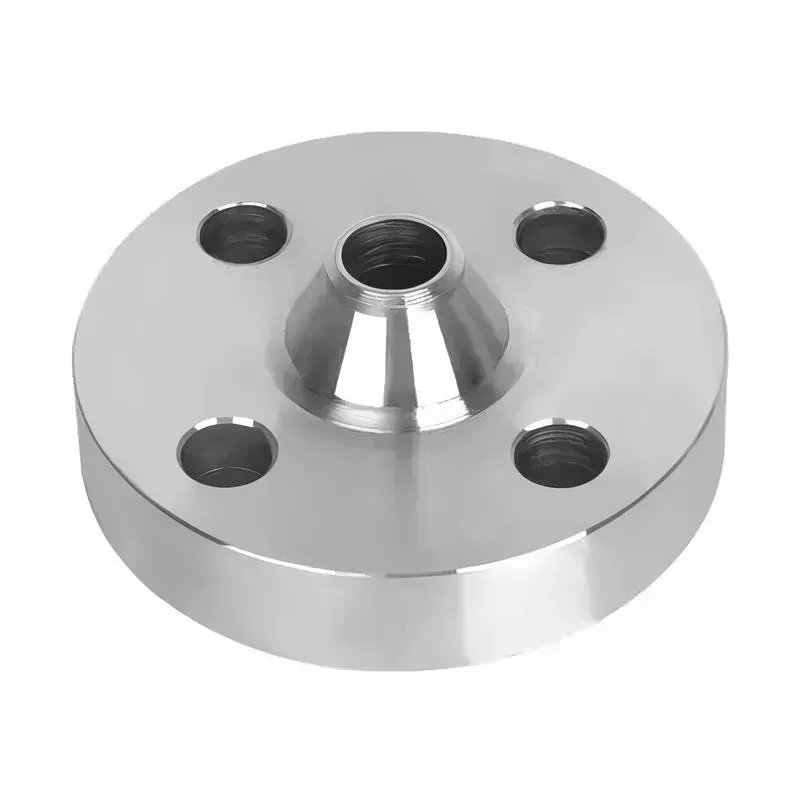
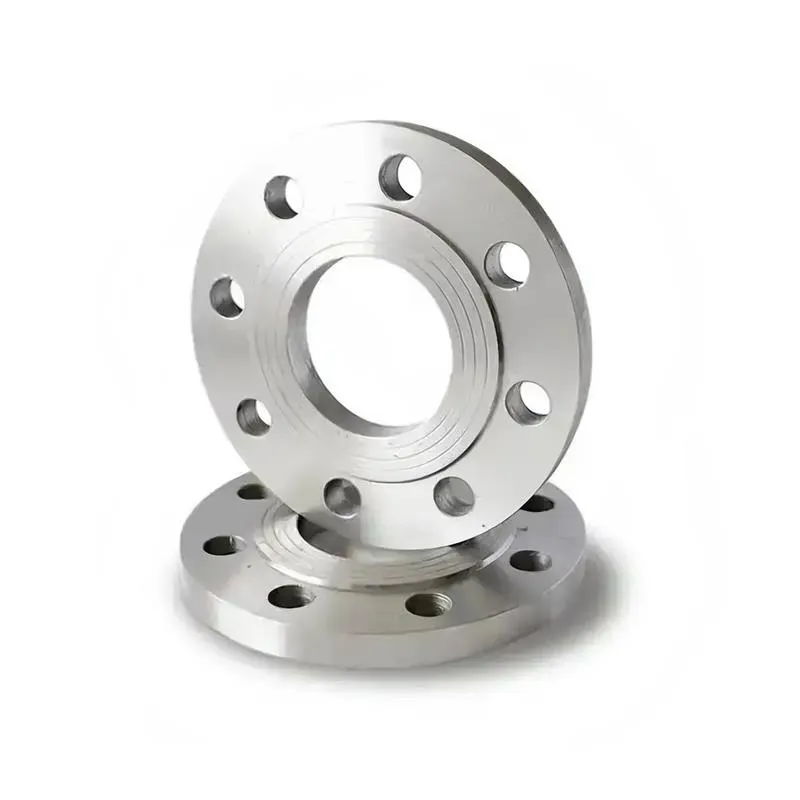
Plate Flat Welding Flange (PL), Necked Flat Welding Flange (SO), Necked Butt Welding Flange (WN), Integral Flange (IF), Socket Welding Flange (SW), Threaded Flange (Th), Butt Welding Ring Loose Flange (PJ/SE), Blind Flange (BL), Flat Welding Ring Loose Flange (PJ/PJ), and Lined Blind Flange (BL(s)).
2. **According to Petrochemical (SH) Industry Standards:** Flanges are classified as follows:
Threaded Flange (PL), Butt Welding Flange (WN), Flat Welding Flange (SO), Socket Welding Flange (SW), Loose Flange (LJ), and Blind Flange (no specific designation).
3. **According to Machinery (JB) Industry Standards:** Flanges are classified as follows:
Integral Flange, Butt Welding Flange, Plate Flat Welding Flange, Butt Welding Ring Plate Loose Flange, Flat Welding Ring Plate Loose Flange, Lap Joint Ring Plate Loose Flange, and Blind Flange.
4. **According to Connection Method/Type:** Flanges are classified as follows:
Plate Flat Welding Flange, Necked Flat Welding Flange, Necked Butt Welding Flange, Socket Welding Flange, Threaded Flange, Blind Flange, Necked Butt Welding Ring Loose Flange, Flat Welding Ring Loose Flange, Ring-Type Joint (RTJ) Flange and Blind Flange, Large-Diameter Plate Flange, Large-Diameter High-Neck Flange, Figure-8 Blind Plate, Butt Welding Ring Loose Flange, etc.
5. **According to the Component Being Connected:** Flanges can be classified into Vessel Flanges and Pipe Flanges.
6. **According to Structural Type:** Flanges include Integral Flanges, Threaded Flanges, Flat Welding Flanges, Butt Welding Flanges, Lap Joint (Loose/Swivel) Flanges, and Blind Flanges.
A flange—also referred to as a flange plate or rim—is a component used to connect shafts to one another, or, more commonly, to join the ends of pipes. Flanges are also utilized at the inlet and outlet ports of equipment to facilitate connections between two devices—for instance, the flange on a speed reducer. A "flange connection" or "flanged joint" refers to a detachable joint assembly comprising three interconnected elements—a flange, a gasket, and bolts—that together form a sealed structural unit. In the context of piping systems, a "pipe flange" specifically denotes a flange used for plumbing within the installation; when applied to equipment, it refers to the inlet or outlet flange of that specific device. Flanges feature a series of holes through which bolts are inserted to securely fasten the two flanges together, while a gasket placed between the flanges ensures a leak-proof seal. Flanges are broadly categorized into three types: threaded (screw-in) flanges, welded flanges, and clamp-type flanges. Flanges are invariably used in pairs; threaded flanges are suitable for low-pressure piping applications, whereas welded flanges are required for systems operating at pressures exceeding 4 kilograms per square centimeter. A sealing gasket is inserted between the two flange plates, which are then firmly secured using bolts. The thickness of a flange—as well as the specifications of the bolts used to fasten it—vary depending on the specific pressure rating required for the application. When connecting equipment such as water pumps or valves to piping systems, the corresponding connection points on these devices are often manufactured in the shape of a matching flange; this method of attachment is also referred to as a "flange connection." Generally, any connecting component that utilizes bolts to join and seal the perimeters of two flat surfaces—such as the joints in ventilation ducts—is termed a "flange"; such components may collectively be classified as "flange-type parts." However, since such a connection often constitutes merely a *portion* of a larger device—for instance, the interface between a flange and a water pump—it would be inappropriate to classify the entire water pump itself as a "flange-type part." Conversely, smaller components—such as valves—that feature such flanged interfaces may indeed be appropriately categorized as "flange-type parts."
-:-
For detailed product information, please contact sales.
-:
EN 1.0116 High Manganese, Structural, Hot Rolled, Quality Steel Flange Product Information
-:-
For detailed product information, please contact sales.
-:
EN 1.0116 High Manganese, Structural, Hot Rolled, Quality Steel Flange Synonyms
-:-
For detailed product information, please contact sales.
-:
EN 1.0116 High Manganese, Structural, Hot Rolled, Quality Steel Product Information
-:-
For detailed product information, please contact sales.
-:
# **Technical Datasheet: EN 1.0116 High Manganese Structural Steel**
**Designation: S235J2 (Under EN 10025-2) | Condition: Hot Rolled, Base Material**
## **1. PRODUCT OVERVIEW**
**EN 1.0116**, commercially designated **S235J2**, is a **premium-quality, high manganese, non-alloy structural steel** engineered specifically for **demanding applications requiring guaranteed low-temperature toughness**. As the highest toughness grade within the S235 steel family, it features **mandatory Charpy V-notch impact testing at -20°C** with a minimum requirement of 27 Joules. This certification makes it particularly suitable for **structural applications in cold climates**, for **dynamically loaded components**, and for **safety-critical structures** where resistance to brittle fracture is paramount.
Produced through **controlled rolling practices** with strict chemical composition limits and aluminum-killed fine-grained processing, S235J2 offers superior notch toughness compared to standard S235 grades. Its optimized manganese content (typically 1.00-1.40%) provides enhanced strength and toughness while maintaining excellent weldability. The "J2" designation represents the most stringent toughness classification in the EN 10025-2 standard for non-alloy structural steels, making this material a reliable choice for engineers designing structures exposed to sub-zero temperatures.
**Key Characteristics:**
- **Certified Low-Temperature Toughness:** Guaranteed minimum 27J impact energy at -20°C
- **Enhanced Quality Controls:** Stricter chemical limits and manufacturing controls than standard grades
- **Superior Fracture Resistance:** Excellent resistance to brittle fracture initiation in cold conditions
- **Cold Climate Suitability:** Designed for service temperatures down to approximately -30°C
- **Quality Fabrication Properties:** Maintains excellent weldability and formability despite enhanced toughness
---
## **2. CHEMICAL COMPOSITION**
**Compliance:** EN 10025-2:2019 - Hot rolled products of structural steels
*Product analysis limits - stricter than standard S235 grades*
| Element | Maximum (%) | Typical Range (%) | Metallurgical Function & Special Control |
|---------|------------|------------------|------------------------------------------|
| **Carbon (C)** | **0.17** | 0.10-0.15 | Deliberately controlled at lower range for optimal toughness |
| **Manganese (Mn)** | **1.40** | 1.15-1.35 | **Primary toughening element**; enhances low-temperature properties |
| **Phosphorus (P)** | **0.030** | ≤0.020 | Tighter control than standard grades to prevent cold shortness |
| **Sulfur (S)** | **0.030** | ≤0.015 | Reduced maximum for improved through-thickness properties |
| **Silicon (Si)** | **0.55** | 0.25-0.40 | Deoxidizer; contributes to strength while maintaining toughness |
| **Nitrogen (N)** | **0.012** | ≤0.008 | Tightly controlled to prevent strain aging embrittlement |
| **Aluminum, total (Alt)** | — | **0.020-0.060** | Enhanced grain refinement; typically 0.025-0.045% |
| **Copper (Cu)** *optional* | 0.55 | 0.20-0.35 | May be specified for weathering resistance (S235J2W variant) |
| **Chromium (Cr)** | 0.30 | ≤0.15 | Residual; strictly limited |
| **Nickel (Ni)** | 0.30 | ≤0.15 | Residual; strictly limited |
| **Vanadium (V)** | 0.05 | ≤0.03 | Optional microalloying for grain refinement |
| **Iron (Fe)** | Balance | Balance | Base metal |
**Critical Chemical Parameters for Enhanced Toughness:**
- **Carbon Equivalent (CEV):** 0.32-0.38% (typically at lower end for J2 grade)
- **Cracking Parameter (Pcm):** 0.18-0.22%
- **Manganese-to-Carbon Ratio:** Typically 8:1 to 12:1, optimizing low-temperature toughness
- **Deoxidation Practice:** Fully aluminum-killed with guaranteed fine grain structure
- **Impurity Control:** Reduced S and P maxima compared to JR and J0 grades
- **Grain Size:** ASTM 6 or finer guaranteed
---
## **3. PHYSICAL & MECHANICAL PROPERTIES**
### **A. Physical Properties (Typical at 20°C):**
- **Density:** 7.85 g/cm³
- **Modulus of Elasticity (E):** 210 GPa
- **Shear Modulus (G):** 81 GPa
- **Poisson's Ratio (ν):** 0.30
- **Coefficient of Thermal Expansion:** 11.8 × 10⁻⁶/K (20-100°C)
- **Thermal Conductivity:** 50 W/(m·K)
- **Specific Heat Capacity:** 450 J/(kg·K)
- **Electrical Resistivity:** 0.16 μΩ·m
- **Acoustic Velocity:** 5900 m/s (longitudinal), 3250 m/s (shear)
### **B. Standard Mechanical Properties (EN 10025-2):**
*Minimum values for nominal thickness t ≤ 16 mm*
| Property | Symbol | Minimum Value | Test Standard | Special Requirements |
|----------|--------|---------------|---------------|----------------------|
| **Yield Strength** | ReH | **235 MPa** | EN ISO 6892-1 | Upper yield strength or Rp0.2 |
| **Tensile Strength** | Rm | **360-510 MPa** | EN ISO 6892-1 | Must fall within specified range |
| **Minimum Elongation** | A₅ | **26%** | EN ISO 6892-1 | For t ≤ 40 mm; Lo=5.65√So |
| **Impact Energy** | KV | **27 J at -20°C** | EN ISO 148-1 | Charpy V-notch, longitudinal |
### **C. Thickness-Dependent Property Adjustments:**
| Thickness Range (mm) | Yield Strength Min (MPa) | Tensile Strength Range (MPa) | Impact Test Temperature |
|----------------------|--------------------------|------------------------------|--------------------------|
| **t ≤ 16** | 235 | 360-510 | -20°C |
| **16 < t ≤ 40** | 225 | 360-510 | -20°C |
| **40 < t ≤ 63** | 215 | 350-500 | -20°C |
| **63 < t ≤ 80** | 215 | 350-500 | -20°C |
| **80 < t ≤ 100** | 215 | 340-490 | -20°C |
### **D. Typical Achieved Properties (t = 10-20 mm):**
| Property | Typical Range | Average | Performance Significance |
|----------|---------------|---------|--------------------------|
| **Yield Strength** | 250-320 MPa | 285 MPa | Consistent safety margin above minimum |
| **Tensile Strength** | 380-460 MPa | 420 MPa | Optimal strength-toughness balance |
| **Elongation (A₅)** | 26-34% | 30% | Excellent ductility maintained |
| **Impact Energy (-20°C)** | 40-100 J | 70 J | Substantial toughness reserve |
| **Hardness (HB)** | 120-145 | 133 | Suitable for most fabrication |
| **Ductile-Brittle Transition** | -40°C to -60°C | -50°C | Superior low-temperature performance |
| **Fracture Toughness (K₁c)** | 70-110 MPa√m | 90 MPa√m | At -20°C |
| **Fatigue Strength** | 160-190 MPa | 175 MPa | At 2×10⁶ cycles (as-rolled) |
### **E. Special Toughness Characteristics:**
- **Notch Toughness:** Superior resistance to crack initiation at stress concentrators
- **Through-Thickness Consistency:** Minimal toughness degradation at centerline
- **Weld HAZ Toughness:** Good retention with proper welding procedures
- **Crack Arrest Properties:** Good resistance to rapid crack propagation
- **Dynamic Loading Performance:** Enhanced performance under impact conditions
---
## **4. FABRICATION & PROCESSING**
### **A. Forming & Cutting Operations:**
- **Cold Bending:** Minimum inside radius = **1.0 × t** (parallel to rolling), **1.5 × t** (perpendicular)
- **Hot Forming:** 850-1100°C maximum; may require normalization after forming
- **Cutting Methods:**
- **Plasma/Laser:** Recommended for precision work
- **Oxy-fuel:** Requires careful parameter control
- **Waterjet:** Ideal for complex shapes without thermal effects
- **Mechanical:** Band saws with appropriate tooth pitch
- **Springback:** Approximately 2-4° for 90° cold bends
### **B. Welding Procedures (Critical for Toughness Retention):**
**General Requirements:**
- **Preheating:** 50-100°C for t > 25 mm or highly restrained joints
- **Interpass Temperature:** Maximum 200-250°C
- **Heat Input Control:** 0.8-2.2 kJ/mm optimal for HAZ toughness
- **Post-Weld Cooling:** Controlled cooling recommended
**Recommended Welding Consumables (Matching Toughness):**
| Process | Consumable (EN ISO) | Toughness Classification | Application Notes |
|---------|---------------------|--------------------------|-------------------|
| **SMAW** | E 42 5 R C 12 | 47J at -30°C | Basic coated for low-temp applications |
| **GMAW** | G 46 7 M G3Si1 | 47J at -40°C | Requires proper shielding gas |
| **FCAW** | T 46 4 P C 1 H10 | 47J at -40°C | Self-shielded for outdoor work |
| **SAW** | S 46 6 + basic flux | 47J at -30°C | For thick-section welding |
**Welding Quality Requirements:**
- **Procedure Qualification:** Essential for critical applications
- **Consumable Selection:** Must match or exceed base metal toughness
- **Heat Input Limits:** Typically 2.5 kJ/mm maximum to prevent HAZ embrittlement
- **Post-Weld Treatment:** Stress relief at 580-620°C if required for highly restrained joints
### **C. Machining Parameters:**
- **Turning:** 90-150 m/min, feed 0.2-0.35 mm/rev
- **Milling:** 70-120 m/min, feed 0.1-0.25 mm/tooth
- **Drilling:** 20-40 m/min with regular pecking
- **Surface Finish:** Ra 3.2-6.3 μm achievable with proper techniques
---
## **5. TYPICAL APPLICATIONS**
### **A. Cold Climate Construction:**
- **Arctic & Subarctic Structures:** Industrial buildings, warehouses in Scandinavia, Canada, Russia
- **Mountain Region Infrastructure:** Ski resorts, alpine shelters, cable car supports
- **Winter Sports Facilities:** Ice rinks, ski jumps, bobsled tracks
- **Cold Storage Facilities:** Refrigerated warehouses, food processing plants
### **B. Infrastructure & Transportation:**
- **Cold Region Bridges:** Highway and railway bridges in severe winter areas
- **Offshore Structures:** Secondary structures in cold marine environments
- **Wind Energy:** Tower sections for cold climate installations
- **Railway Infrastructure:** Switch components, signal gantries exposed to winter conditions
### **C. Heavy Industry in Cold Regions:**
- **Mining Operations:** Equipment supports, headframes in northern regions
- **Oil & Gas:** Arctic exploration equipment, pipeline supports
- **Power Generation:** Hydroelectric structures in mountainous areas
- **Heavy Machinery:** Equipment operating in winter conditions
### **D. Safety-Critical Structures:**
- **Seismic-Resistant Buildings:** In cold climate seismic zones
- **Emergency Service Facilities:** Fire stations, hospitals in cold regions
- **Public Infrastructure:** Bus shelters, pedestrian bridges in cold climates
- **Evacuation Structures:** Emergency exits exposed to low temperatures
### **E. Specialized Applications:**
- **Mobile Equipment:** Snow removal vehicles, ice road trucks
- **Marine Applications:** Icebreaker components, polar research vessels
- **Transportation Containers:** ISO containers for cold climate service
- **Renewable Energy:** Solar tracker structures in cold environments
**Quality Application Focus:**
- **Structures with design temperatures ≤ -10°C**
- **Dynamically loaded structures** subject to impact or vibration
- **Safety-critical applications** where failure consequences are severe
- **Quality-certified projects** requiring verified material properties
---
## **6. INTERNATIONAL STANDARDS & EQUIVALENTS**
### **Primary Designations:**
- **EN Standard:** EN 10025-2:2019
- **Material Number:** 1.0116
- **Steel Name:** S235J2
- **Former Designation:** Fe 360 D (EN 10025:1990)
### **Global Structural Steel Equivalents:**
| Country/Standard | Equivalent Grade | Impact Test Temperature | Key Comparison Notes |
|-----------------|------------------|--------------------------|----------------------|
| **ISO** | ISO 630-2: E235D | -20°C | Nearly identical specifications |
| **USA (ASTM)** | ASTM A709 Gr. 36T2 | -18°C | Bridge steel with similar toughness |
| **USA (ASTM)** | ASTM A573 Gr. 65 | -18°C (optional) | Similar strength grade |
| **Germany (DIN)** | DIN EN 10025-2: S235J2 | -20°C | Direct adoption |
| **UK (BS)** | BS 4360: 50D | -20°C | Historical equivalent |
| **Japan (JIS)** | JIS G3106: SM490B | 0°C | Lower toughness requirement |
| **China (GB)** | GB/T 1591: Q235D | -20°C | Similar grade in Chinese system |
| **Canada** | CSA G40.21 275W | -20°C | Canadian equivalent for cold regions |
### **Comparison within EN 10025 S235 Family:**
| Grade | Impact Test Temp | Min Impact Energy | Typical Service Temp Range | Relative Cost Premium |
|-------|-----------------|-------------------|----------------------------|----------------------|
| **S235JR** | +20°C (optional) | N/A | >+5°C | Base |
| **S235JRG2** | +20°C (mandatory) | 27J | >0°C | +5-8% |
| **S235J0** | 0°C | 27J | -10°C to +40°C | +10-15% |
| **S235J2** | **-20°C** | **27J** | **-30°C to +40°C** | **+15-25%** |
---
## **7. QUALITY ASSURANCE & TESTING**
### **Mandatory Testing (EN 10025-2):**
1. **Tensile Test:** One test per batch ≤ 40 tonnes
2. **Impact Test:** One set (3 specimens) at -20°C per batch
3. **Bend Test:** 180° bend with mandrel diameter = 2a (if specified)
4. **Visual Inspection:** All surfaces for defects per standard requirements
### **Additional Testing for Critical Applications:**
- **Drop-Weight Tear Test (DWTT):** For fracture arrest assessment
- **CTOD Testing:** Crack Tip Opening Displacement for fracture mechanics analysis
- **Ultrasonic Testing:** Per EN 10160 for internal quality
- **Through-Thickness Testing:** Z-direction properties for highly restrained connections
- **Hardness Survey:** Multiple location verification
### **Certification Requirements:**
- **EN 10204 3.1 Certificate:** Standard delivery with manufacturer's declaration
- **3.2 Certificate:** Available with independent third-party inspection
- **Full Traceability:** Heat number tracking from melt to finished product
- **Test Reports:** Including impact test results at -20°C
### **Quality Control Standards:**
- **Chemical Analysis:** Verified against strict product analysis limits
- **Mechanical Properties:** Confirmed through destructive testing
- **Dimensional Accuracy:** Per EN standards for specific product forms
- **Surface Quality:** Free from harmful defects per standard requirements
---
## **8. DESIGN & SPECIFICATION CONSIDERATIONS**
### **Design Advantages:**
1. **Proven Cold Climate Performance:** Extensive track record in arctic and subarctic regions
2. **Safety Margin:** Certified -20°C toughness provides reliability in winter conditions
3. **Code Compliance:** Meets requirements of Eurocode 3 for structures down to -30°C
4. **Quality Assurance:** Stricter manufacturing controls than standard grades
5. **Fabrication Consistency:** Predictable behavior during welding and forming
### **Design Limitations:**
- **Not for Extreme Conditions:** Not suitable for sustained service below -40°C
- **Strength Reduction in Thick Sections:** Yield strength decreases for t > 40 mm
- **Welding Complexity:** Requires qualified procedures to maintain HAZ toughness
- **Availability:** May have longer lead times than standard grades
- **Cost Premium:** Approximately 15-25% higher than basic S235JR
### **Specification Best Practices:**
```plaintext
EN 10025-2 S235J2
Product Form: [Hot rolled sections/plate as required]
Thickness: [specify with tolerance]
Delivery Condition: As rolled (AR) or normalized (N) as required
Supplementary Requirements:
- Impact testing at -20°C with minimum 27J
- Certification: EN 10204 3.1 including test reports
- Maximum CEV: 0.38% (if required)
- Marking: Standard identification including grade designation
```
### **Design Recommendations:**
1. **Specify S235J2 when:**
- Design temperature ≤ -10°C
- Dynamic or impact loading is present
- Structure is safety-critical
- Located in regions with severe winters
2. **Consider alternatives when:**
- Service temperature consistently > 0°C (S235JR/J0 may suffice)
- Temperature consistently < -30°C (consider S355J2 or alloy steels)
- Very thick sections required (strength reduction may be significant)
- Budget constraints preclude the cost premium
---
## **9. ENVIRONMENTAL & SUSTAINABILITY**
### **Corrosion Protection:**
- **Painting Systems:** Epoxy primers with polyurethane topcoats recommended for cold climates
- **Galvanizing:** Suitable with proper surface preparation and process control
- **Weathering Steel:** S235J2W variant available for atmospheric corrosion resistance
- **Maintenance:** Regular inspection and touch-up as required, especially after winter conditions
### **Environmental Performance:**
- **Recyclability:** >95% recycling rate at end of life
- **Embodied Carbon:** Approximately 1.9-2.2 tCO₂/t (similar to other carbon steels)
- **Production Impact:** Lower than alloy steels due to simpler chemistry
- **Sustainable Sourcing:** Available with environmental product declarations from responsible producers
### **Life Cycle Considerations:**
- **Design Life:** 30-60 years with proper maintenance in cold climates
- **Maintenance Intervals:** May require more frequent inspection in severe winter conditions
- **End-of-Life Value:** High scrap value due to simple chemistry and easy recycling
- **Environmental Certifications:** Available from producers with environmental management systems
---
## **10. TECHNICAL SUMMARY**
**EN 1.0116 (S235J2)** represents the **premium toughness variant** within the S235 structural steel family, specifically engineered for **reliable performance in cold climate applications**. Its certified -20°C impact properties provide engineers with confidence in structural integrity under winter conditions, while maintaining the fabricability and economic advantages of carbon-manganese steels.
**Market Position & Usage:** S235J2 occupies a specialized but important niche in the structural steel market, representing approximately 10-15% of S235 category usage in cold climate regions. Its application is concentrated in:
- Northern European construction (Scandinavia, Baltic states, Russia)
- Canadian and Northern US infrastructure
- Alpine region projects
- Specialized industrial applications requiring cold temperature toughness
**Industry Trends:** Climate change adaptation and increasing infrastructure development in cold regions are expected to drive growing demand for toughness-guaranteed steels like S235J2. Additionally, the trend toward performance-based design codes favors materials with certified properties over historical prescriptive approaches.
**Selection Decision Framework:**
- **For moderate cold climates** (-10°C to -25°C design temperature): S235J2 provides optimal balance of performance and cost
- **For extremely cold conditions** (< -30°C): Consider S355J2 or microalloyed grades
- **For temperate climates with occasional cold snaps:** Evaluate whether S235J0 provides sufficient safety margin
- **Always consider:** Local material availability, fabricator experience, total project economics, and lifecycle costs
**Final Recommendation:** EN 1.0116 (S235J2) should be specified as the **default structural steel** for buildings and infrastructure in regions where winter design temperatures regularly fall below -10°C, particularly for safety-critical structures or those subject to dynamic loading. Its enhanced toughness properties provide valuable insurance against brittle fracture, justifying the modest cost premium over standard grades.
---
**Important Notice:** This technical datasheet provides general information based on standard specifications. For specific projects:
1. Consult the latest edition of EN 10025-2 and applicable national annexes
2. Review actual mill certificates for supplied material
3. Consider project-specific conditions including load patterns, connection details, and maintenance access
4. Engage qualified materials engineers for critical applications
5. Verify local availability and lead times before final specification
Properties may vary between manufacturers and production methods. Always confirm critical properties through project-specific testing when applications involve extreme conditions or safety-critical functions. For pressure equipment or other specialized applications, additional standards and requirements may apply beyond those described in this general structural steel datasheet.
-:-
For detailed product information, please contact sales.
-:
EN 1.0116 High Manganese, Structural, Hot Rolled, Quality Steel Specification
Dimensions
Size:
Diameter 20-1000 mm Length <5791 mm
Size:We can customized as required
Standard:
Per your request or drawing
We can customized as required
Properties(Theoretical)
Chemical Composition
-:-
For detailed product information, please contact sales.
-:
EN 1.0116 High Manganese, Structural, Hot Rolled, Quality Steel Properties
-:-
For detailed product information, please contact sales.
-:
Applications of EN 1.0116 High Manganese, Structural, Hot Rolled, Quality Steel Flange
-:-
For detailed product information, please contact sales.
-:
Chemical Identifiers EN 1.0116 High Manganese, Structural, Hot Rolled, Quality Steel Flange
-:-
For detailed product information, please contact sales.
-:
Packing of EN 1.0116 High Manganese, Structural, Hot Rolled, Quality Steel Flange
-:-
For detailed product information, please contact sales.
-:
Standard Packing:
-:-
For detailed product information, please contact sales.
-:
Typical bulk packaging includes palletized plastic 5 gallon/25 kg. pails, fiber and Steel Flange drums to 1 ton super sacks in full container (FCL) or truck load (T/L) quantities. Research and sample quantities and hygroscopic, oxidizing or other air sensitive materials may be packaged under argon or vacuum. Solutions are packaged in polypropylene, plastic or glass jars up to palletized 2262 gallon liquid totes Special package is available on request. E FORUs’ is carefully handled to minimize damage during storage and transportation and to preserve the quality of our products in their original condition