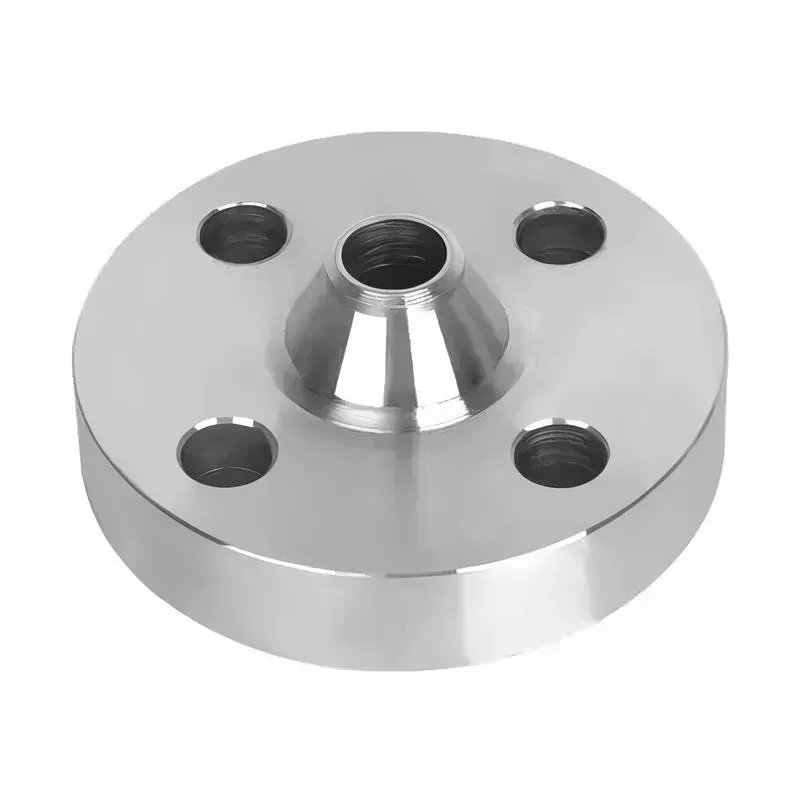
1,We Manufacturing processes are primarily classified into four types:
1:Forging,
2:Casting,
3:Cutting,
4:Rolling.
2,We can manufacture in accordance with these standards.
Standards:
GB Series (Chinese Standards), JB Series (Machinery Standards), HG Series (Chemical Industry Standards), ASME B16.5 (American Standards), BS4504 (British Standards), DIN (German Standards), and JIS (Japanese Standards).
Internationally, there are two primary systems of pipe flange standards: the European system, represented by the German DIN standards (including those of the former Soviet Union), and the American system, represented by the US ANSI pipe flange standards. Other common standards include: the Chinese Ministry of Machinery Industry standards (JB series), the Ministry of Chemical Industry standards (HG series), the Chinese National Standard *GB/T 9112–9124-2010 Steel Pipe Flanges*, as well as US standards (ASME B16.5), British standards (BS4504), German standards (DIN), Japanese standards (JIS), and marine standards (CBM), among others.
The nominal pressure ratings for the PN series are designated by "PN" and comprise the following nine levels: PN2.5, PN6, PN10, PN16, PN25, PN40, PN63, PN100, and PN160.
The nominal pressure ratings for the Class series are designated by "Class" and comprise the following six levels: Class150, Class300, Class600, Class900, Class1500, and Class2500.
Flange Classification
1. **According to Chemical Industry Standards:** Flanges are classified as follows:
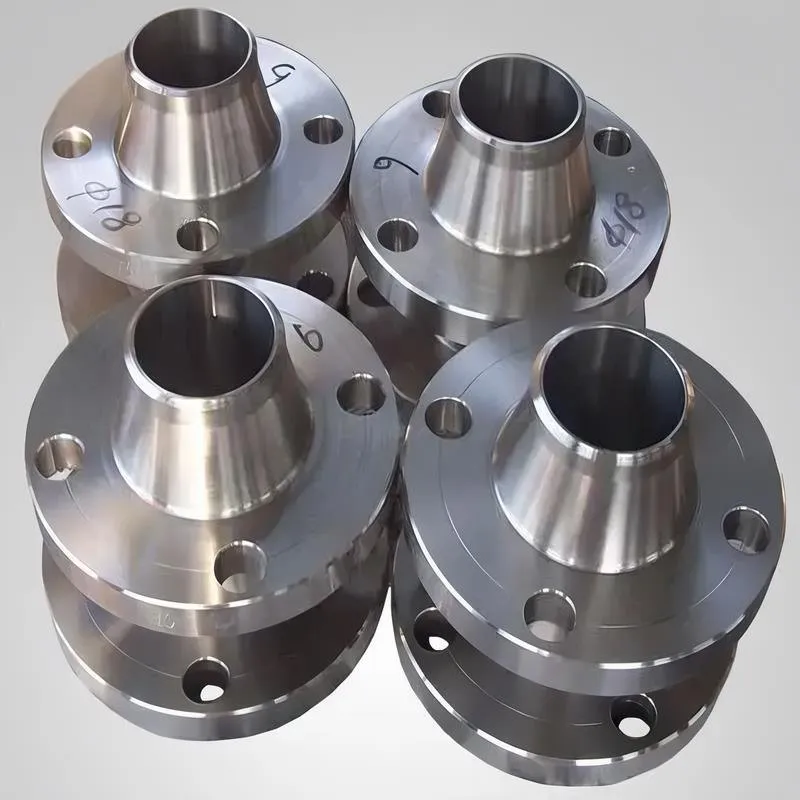
Plate Flat Welding Flange (PL), Necked Flat Welding Flange (SO), Necked Butt Welding Flange (WN), Integral Flange (IF), Socket Welding Flange (SW), Threaded Flange (Th), Butt Welding Ring Loose Flange (PJ/SE), Blind Flange (BL), Flat Welding Ring Loose Flange (PJ/PJ), and Lined Blind Flange (BL(s)).
2. **According to Petrochemical (SH) Industry Standards:** Flanges are classified as follows:
Threaded Flange (PL), Butt Welding Flange (WN), Flat Welding Flange (SO), Socket Welding Flange (SW), Loose Flange (LJ), and Blind Flange (no specific designation).
3. **According to Machinery (JB) Industry Standards:** Flanges are classified as follows:
Integral Flange, Butt Welding Flange, Plate Flat Welding Flange, Butt Welding Ring Plate Loose Flange, Flat Welding Ring Plate Loose Flange, Lap Joint Ring Plate Loose Flange, and Blind Flange.
4. **According to Connection Method/Type:** Flanges are classified as follows:
Plate Flat Welding Flange, Necked Flat Welding Flange, Necked Butt Welding Flange, Socket Welding Flange, Threaded Flange, Blind Flange, Necked Butt Welding Ring Loose Flange, Flat Welding Ring Loose Flange, Ring-Type Joint (RTJ) Flange and Blind Flange, Large-Diameter Plate Flange, Large-Diameter High-Neck Flange, Figure-8 Blind Plate, Butt Welding Ring Loose Flange, etc.
5. **According to the Component Being Connected:** Flanges can be classified into Vessel Flanges and Pipe Flanges.
6. **According to Structural Type:** Flanges include Integral Flanges, Threaded Flanges, Flat Welding Flanges, Butt Welding Flanges, Lap Joint (Loose/Swivel) Flanges, and Blind Flanges.
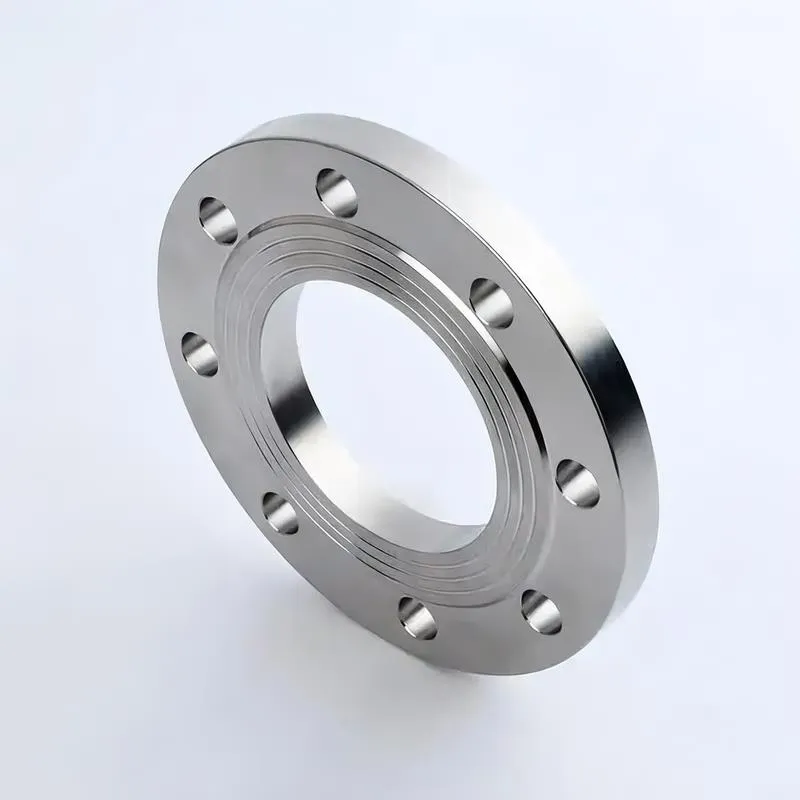
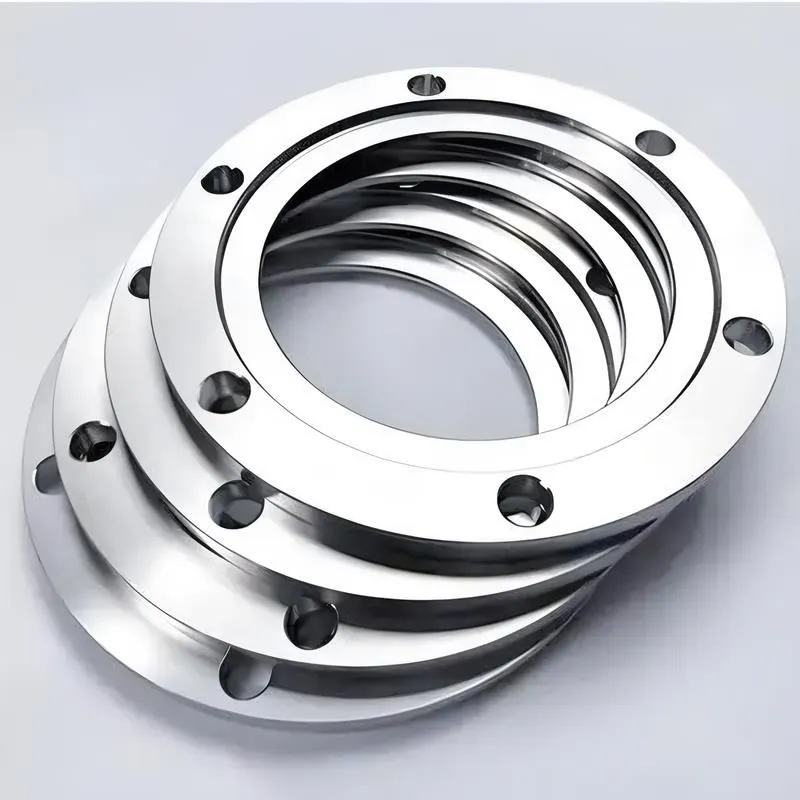
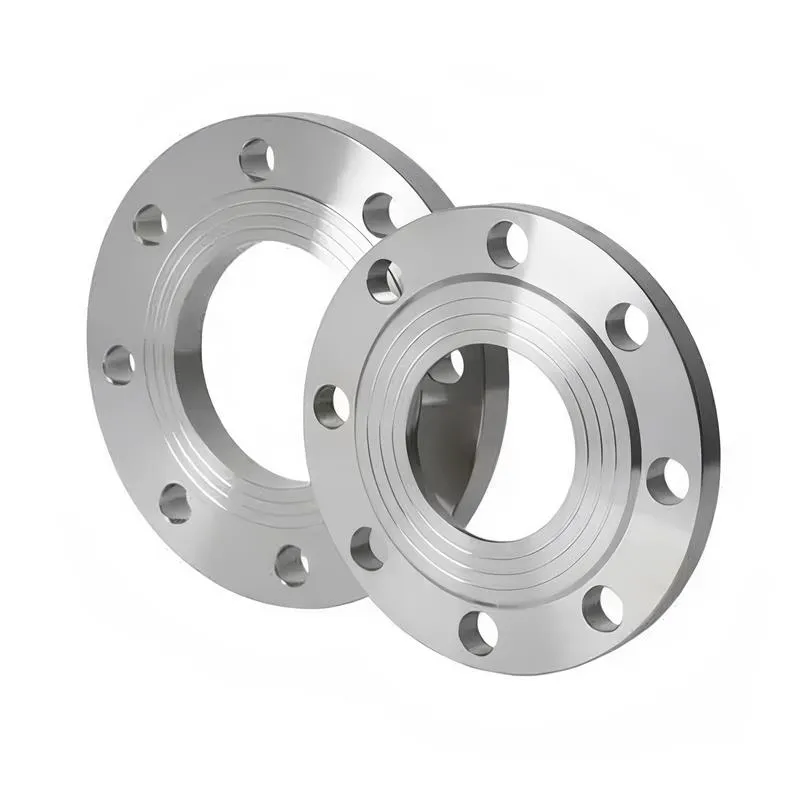
A flange—also referred to as a flange plate or rim—is a component used to connect shafts to one another, or, more commonly, to join the ends of pipes. Flanges are also utilized at the inlet and outlet ports of equipment to facilitate connections between two devices—for instance, the flange on a speed reducer. A "flange connection" or "flanged joint" refers to a detachable joint assembly comprising three interconnected elements—a flange, a gasket, and bolts—that together form a sealed structural unit. In the context of piping systems, a "pipe flange" specifically denotes a flange used for plumbing within the installation; when applied to equipment, it refers to the inlet or outlet flange of that specific device. Flanges feature a series of holes through which bolts are inserted to securely fasten the two flanges together, while a gasket placed between the flanges ensures a leak-proof seal. Flanges are broadly categorized into three types: threaded (screw-in) flanges, welded flanges, and clamp-type flanges. Flanges are invariably used in pairs; threaded flanges are suitable for low-pressure piping applications, whereas welded flanges are required for systems operating at pressures exceeding 4 kilograms per square centimeter. A sealing gasket is inserted between the two flange plates, which are then firmly secured using bolts. The thickness of a flange—as well as the specifications of the bolts used to fasten it—vary depending on the specific pressure rating required for the application. When connecting equipment such as water pumps or valves to piping systems, the corresponding connection points on these devices are often manufactured in the shape of a matching flange; this method of attachment is also referred to as a "flange connection." Generally, any connecting component that utilizes bolts to join and seal the perimeters of two flat surfaces—such as the joints in ventilation ducts—is termed a "flange"; such components may collectively be classified as "flange-type parts." However, since such a connection often constitutes merely a *portion* of a larger device—for instance, the interface between a flange and a water pump—it would be inappropriate to classify the entire water pump itself as a "flange-type part." Conversely, smaller components—such as valves—that feature such flanged interfaces may indeed be appropriately categorized as "flange-type parts."
-:-
For detailed product information, please contact sales.
-:
ASTM A148 Grade 130-115 Cast Steel Flange Product Information
-:-
For detailed product information, please contact sales.
-:
ASTM A148 Grade 130-115 Cast Steel Flange Synonyms
-:-
For detailed product information, please contact sales.
-:
ASTM A148 Grade 130-115 Cast Steel Product Information
-:-
For detailed product information, please contact sales.
-:
# **Product Name:** ASTM A148 Grade 130-115 Cast Steel
**Overview**
ASTM A148 Grade 130-115 is a **premium ultra-high-strength, quenched and tempered (Q&T) low-alloy cast steel**, representing one of the highest strength tiers within the ASTM A148 specification. Designated for the most demanding structural applications, it provides a **minimum tensile strength of 130 ksi (895 MPa) and a minimum yield strength of 115 ksi (795 MPa)**. Achieving this exceptional strength level requires precise alloy design, advanced melting practices, and a rigorously controlled heat treatment process. This grade is engineered for critical components where maximum load-bearing capacity in a minimal cross-section is paramount, and where it can be integrated into a design that accommodates its specialized fabrication requirements.
**Key International Standards & Designation**
* **Primary Standard:** **ASTM A148/A148M-21** - Standard Specification for Steel Castings, High Strength, for Structural Purposes.
* **Grade Designation:** **Grade 130-115**
* **130:** Minimum tensile strength in **kips per square inch (ksi)**, i.e., **130 ksi**.
* **115:** Minimum yield strength (0.2% offset) in **ksi**, i.e., **115 ksi**.
* **Metric Equivalents:** 130 ksi ≈ **895 MPa** (Tensile), 115 ksi ≈ **795 MPa** (Yield).
* **Heat Treatment:** **Mandatory and Critical.** Supplied exclusively in the **quenched and tempered (Q&T) condition**. The process is highly specialized, often involving precise austenitizing, aggressive quenching (frequently in polymer or intensive oil), and tempering to achieve the unique strength-toughness balance.
* **International Context:** There is no direct, ubiquitous equivalent. It occupies a niche similar to high-performance proprietary casting alloys or specific defense/aerospace specifications. In Europe, it might be compared to bespoke Q&T alloy steel grades.
**Chemical Composition (Heat Analysis, % by weight, typical for achieving 130-115 properties)**
Composition is optimized for supreme hardenability and strength, typically involving multiple alloying elements.
* **Carbon (C):** **0.25 - 0.35%** (Carefully balanced; sufficient for strength but controlled to maintain some toughness and weldability).
* **Manganese (Mn):** **0.80 - 1.20%**
* **Silicon (Si):** **0.20 - 0.60%**
* **Chromium (Cr):** **0.80 - 1.50%** (Essential for hardenability, strength, and tempering resistance).
* **Molybdenum (Mo):** **0.20 - 0.40%** (Critical for deep hardenability, high-temperature strength, and mitigating temper embrittlement).
* **Nickel (Ni):** **1.00 - 2.00%** (Commonly used to enhance hardenability, particularly in thick sections, and to improve low-temperature toughness).
* **Vanadium (V):** **May be added (e.g., 0.03-0.10%)** for grain refinement and secondary hardening during tempering.
* **Phosphorus (P):** **≤ 0.015%** (Very low - typical for premium grades).
* **Sulphur (S):** **≤ 0.015%** (Very low - for improved ductility and toughness).
**Physical & Mechanical Properties (in quenched and tempered condition)**
* **Tensile Strength (Rm):** **≥ 130 ksi (895 MPa)**
* **Yield Strength (Rp0.2):** **≥ 115 ksi (795 MPa)**
* **Elongation in 2 inches (50 mm):** **≥ 10%** (Minimum). Despite the extreme strength, it retains measurable ductility.
* **Reduction of Area:** **≥ 25%** (Minimum).
* **Hardness (Brinell):** Typically **300 - 360 HBW**. Approaching the upper limit for many conventional machining operations.
* **Impact Energy (Charpy V-Notch):** **MUST be explicitly specified.** Base standard does not require it. For this grade, impact properties are a key purchasing parameter. Typical specifications might require **15-20 ft-lb (20-27 J) at room or low temperature**, though achieving this at 130 ksi tensile is challenging and requires precise tempering.
* **Fracture Toughness (K1C):** Often a more relevant metric than Charpy for such high-strength materials. Can be specified as a supplementary requirement.
**Product Features**
1. **Extreme Strength-to-Weight Ratio:** Enables radical weight savings or the design of components to withstand extraordinary static and fatigue loads.
2. **High Hardness & Wear Resistance:** Offers inherent resistance to abrasive wear and deformation under high contact stresses.
3. **Controlled Fracture Resistance:** When properly processed, it can achieve adequate toughness for many high-strength applications, though it is inherently more brittle than lower-strength steels.
4. **Weldability (Highly Restricted):** Welding is **generally not recommended** and should be avoided in design. If absolutely necessary, it requires extreme measures: very high pre-heat (often >600°F / 315°C), post-heat, use of meticulously controlled low-hydrogen/high-nickel filler metals, and **mandatory, immediate Post-Weld Heat Treatment (PWHT)**. Weld repairs should be planned and executed by specialists.
5. **Machinability:** **Very Difficult to Poor.** Requires state-of-the-art CNC machines, premium carbide or cubic boron nitride (CBN) tooling, very conservative speeds/feeds, and often necessitates grinding or electrical discharge machining (EDM) for finishing.
**Typical Applications**
Reserved for the most critical, highly stressed components where performance outweighs cost and fabrication complexity.
* **Aerospace & Defense:** **Landing gear components, missile launch canisters, armored vehicle turret rings, helicopter rotor hubs**.
* **Oil & Gas (Downhole):** **Heavy-duty tool joints, mandrels, and components for ultra-deep drilling**.
* **High-Performance Racing:** **Critical suspension uprights, wheel hubs, gearbox casings, and chassis components** in top-tier motorsport.
* **Specialized Industrial Machinery:** **Giant press columns and platens, anvils for high-energy forging, rolls for extreme cold rolling**.
* **Advanced Robotics:** **Structural members and joints for high-payload, dynamic robotic arms**.
**Casting & Quality Supplements**
* **Casting Process:** Requires high-integrity methods such as **vacuum-assisted investment casting** or **electroslag remelting (ESR)** for the highest quality to minimize inclusions and segregation.
* **Heat Treatment:** The cycle is proprietary and critical. May involve **austempering** or **multiple tempering cycles** to optimize toughness.
* **Quality Assurance:** Beyond standard tensile testing, premium NDT is standard.
* **Essential Supplementary Requirements:**
* **Impact Testing (S-series):** Specify temperature and minimum energy.
* **Non-Destructive Testing:** **100% Radiographic (R1)** and/or **Ultrasonic (U1)** inspection per stringent acceptance criteria.
* **Hardness and Microstructure:** Hardness surveys and micrographic examination to ensure uniformity and proper tempering.
---
**Critical Procurement & Design Note**
1. **Expert Foundry Partnership is Mandatory:** This is not an off-the-shelf material. Success requires collaboration with a foundry specializing in ultra-high-strength steel castings from the design phase.
2. **Toughness is a Purchase, Not a Given:** The **Charpy or Fracture Toughness requirement is the single most important supplementary specification**. Define the service temperature and minimum acceptable energy.
3. **Design for Castability & Heat Treatment:** Minimize drastic section changes to avoid cracking during quenching. Design must accommodate distortion from aggressive heat treatment.
4. **Avoid Welding in Design:** This should be a primary design constraint. Use bolted or mechanical connections where possible.
5. **Complete Order Specification:** *"ASTM A148 Grade 130-115, Quenched and Tempered. Supplementary Requirements: S1 – Charpy V-Notch, 15 ft-lb (20 J) min at 70°F (21°C); U1 – Ultrasonic Examination to Class 1 per ASTM A609; R1 – Radiographic Examination to Class 1 per ASTM E446; H1 – Hardness Survey; Chemical Analysis Report."*
6. **Risk vs. Reward:** This grade pushes the boundaries of cast steel technology. Its use is justified only when no other material can meet the performance requirement, and the associated cost, lead time, and technical risk are acceptable.
-:-
For detailed product information, please contact sales.
-:
ASTM A148 Grade 130-115 Cast Steel Specification
Dimensions
Size:
Diameter 20-1000 mm Length <5850 mm
Size:We can customized as required
Standard:
Per your request or drawing
We can customized as required
Properties(Theoretical)
Chemical Composition
-:-
For detailed product information, please contact sales.
-:
ASTM A148 Grade 130-115 Cast Steel Properties
-:-
For detailed product information, please contact sales.
-:
Applications of ASTM A148 Grade 130-115 Cast Steel Flange
-:-
For detailed product information, please contact sales.
-:
Chemical Identifiers ASTM A148 Grade 130-115 Cast Steel Flange
-:-
For detailed product information, please contact sales.
-:
Packing of ASTM A148 Grade 130-115 Cast Steel Flange
-:-
For detailed product information, please contact sales.
-:
Standard Packing:
-:-
For detailed product information, please contact sales.
-:
Typical bulk packaging includes palletized plastic 5 gallon/25 kg. pails, fiber and Steel Flange drums to 1 ton super sacks in full container (FCL) or truck load (T/L) quantities. Research and sample quantities and hygroscopic, oxidizing or other air sensitive materials may be packaged under argon or vacuum. Solutions are packaged in polypropylene, plastic or glass jars up to palletized 2321 gallon liquid totes Special package is available on request. E FORUs’ is carefully handled to minimize damage during storage and transportation and to preserve the quality of our products in their original condition