1,We Manufacturing processes are primarily classified into four types:
1:Forging,
2:Casting,
3:Cutting,
4:Rolling.
2,We can manufacture in accordance with these standards.
Standards:
GB Series (Chinese Standards), JB Series (Machinery Standards), HG Series (Chemical Industry Standards), ASME B16.5 (American Standards), BS4504 (British Standards), DIN (German Standards), and JIS (Japanese Standards).
Internationally, there are two primary systems of pipe flange standards: the European system, represented by the German DIN standards (including those of the former Soviet Union), and the American system, represented by the US ANSI pipe flange standards. Other common standards include: the Chinese Ministry of Machinery Industry standards (JB series), the Ministry of Chemical Industry standards (HG series), the Chinese National Standard *GB/T 9112–9124-2010 Steel Pipe Flanges*, as well as US standards (ASME B16.5), British standards (BS4504), German standards (DIN), Japanese standards (JIS), and marine standards (CBM), among others.
The nominal pressure ratings for the PN series are designated by "PN" and comprise the following nine levels: PN2.5, PN6, PN10, PN16, PN25, PN40, PN63, PN100, and PN160.
The nominal pressure ratings for the Class series are designated by "Class" and comprise the following six levels: Class150, Class300, Class600, Class900, Class1500, and Class2500.
Flange Classification
1. **According to Chemical Industry Standards:** Flanges are classified as follows:
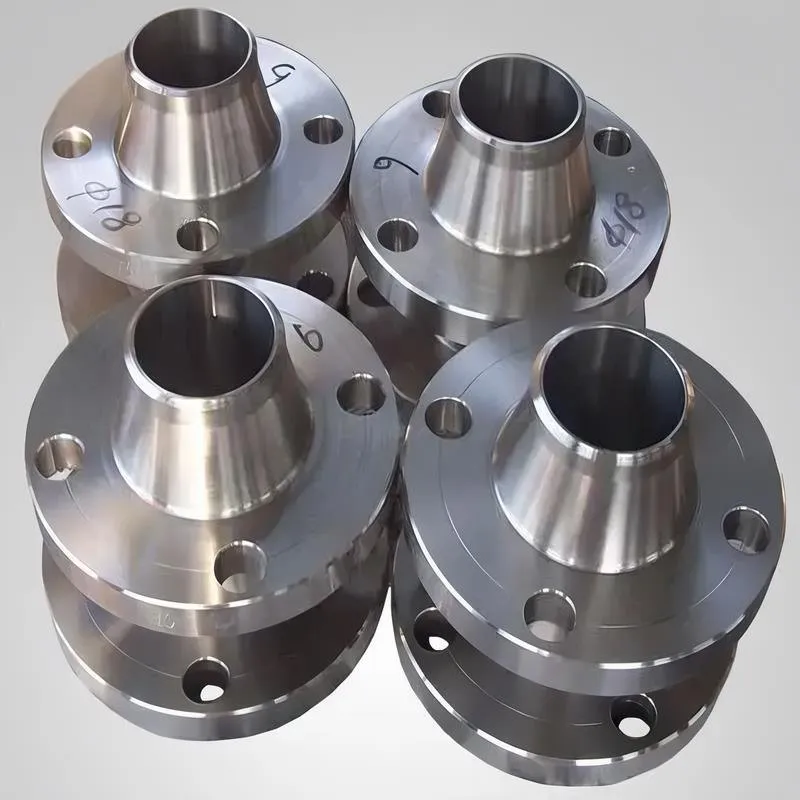
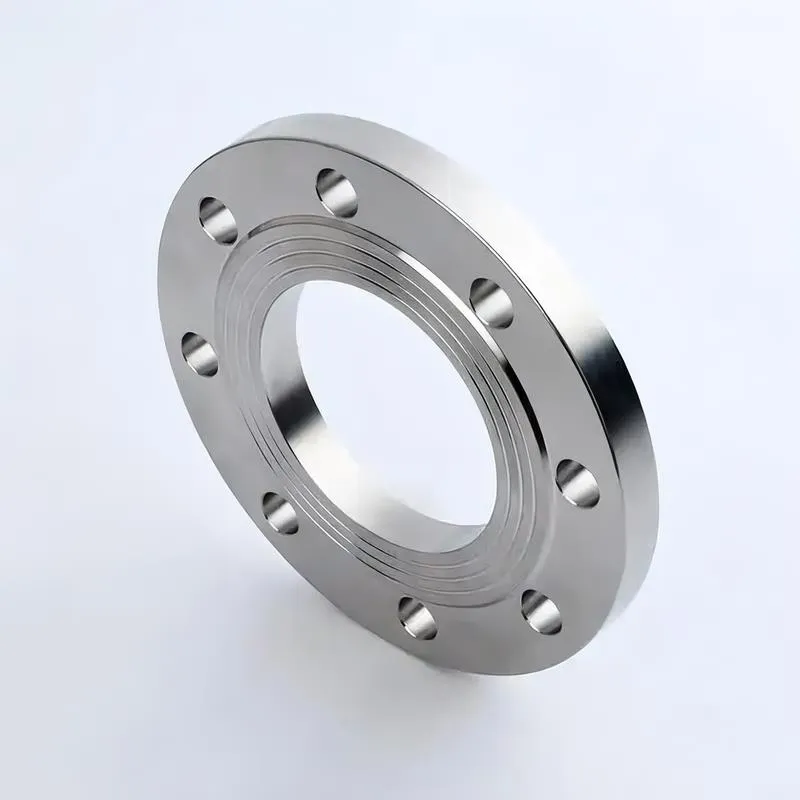
Plate Flat Welding Flange (PL), Necked Flat Welding Flange (SO), Necked Butt Welding Flange (WN), Integral Flange (IF), Socket Welding Flange (SW), Threaded Flange (Th), Butt Welding Ring Loose Flange (PJ/SE), Blind Flange (BL), Flat Welding Ring Loose Flange (PJ/PJ), and Lined Blind Flange (BL(s)).
2. **According to Petrochemical (SH) Industry Standards:** Flanges are classified as follows:
Threaded Flange (PL), Butt Welding Flange (WN), Flat Welding Flange (SO), Socket Welding Flange (SW), Loose Flange (LJ), and Blind Flange (no specific designation).
3. **According to Machinery (JB) Industry Standards:** Flanges are classified as follows:
Integral Flange, Butt Welding Flange, Plate Flat Welding Flange, Butt Welding Ring Plate Loose Flange, Flat Welding Ring Plate Loose Flange, Lap Joint Ring Plate Loose Flange, and Blind Flange.
4. **According to Connection Method/Type:** Flanges are classified as follows:
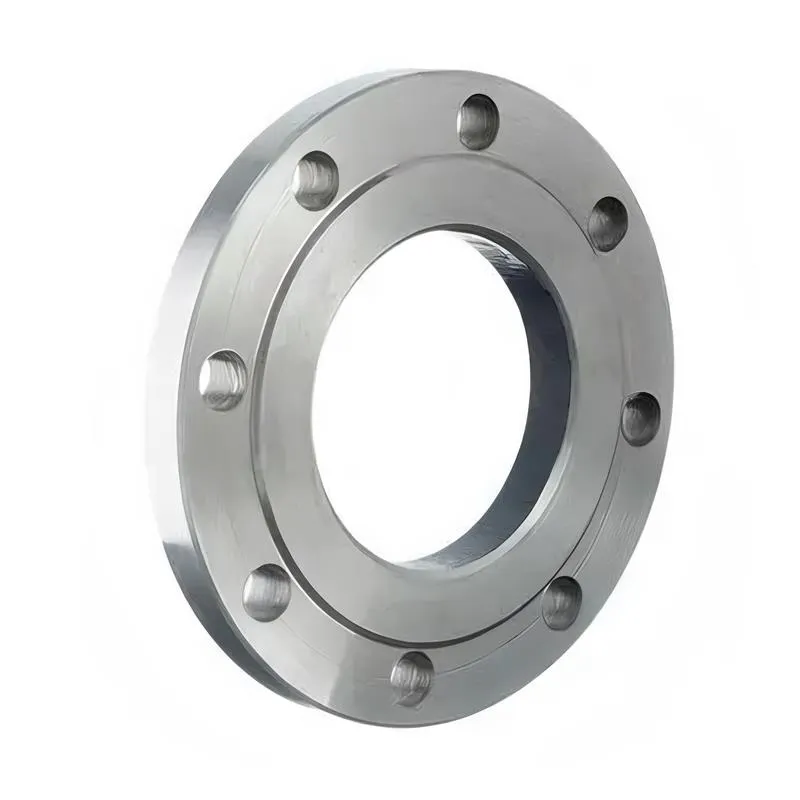
Plate Flat Welding Flange, Necked Flat Welding Flange, Necked Butt Welding Flange, Socket Welding Flange, Threaded Flange, Blind Flange, Necked Butt Welding Ring Loose Flange, Flat Welding Ring Loose Flange, Ring-Type Joint (RTJ) Flange and Blind Flange, Large-Diameter Plate Flange, Large-Diameter High-Neck Flange, Figure-8 Blind Plate, Butt Welding Ring Loose Flange, etc.
5. **According to the Component Being Connected:** Flanges can be classified into Vessel Flanges and Pipe Flanges.
6. **According to Structural Type:** Flanges include Integral Flanges, Threaded Flanges, Flat Welding Flanges, Butt Welding Flanges, Lap Joint (Loose/Swivel) Flanges, and Blind Flanges.
A flange—also referred to as a flange plate or rim—is a component used to connect shafts to one another, or, more commonly, to join the ends of pipes. Flanges are also utilized at the inlet and outlet ports of equipment to facilitate connections between two devices—for instance, the flange on a speed reducer. A "flange connection" or "flanged joint" refers to a detachable joint assembly comprising three interconnected elements—a flange, a gasket, and bolts—that together form a sealed structural unit. In the context of piping systems, a "pipe flange" specifically denotes a flange used for plumbing within the installation; when applied to equipment, it refers to the inlet or outlet flange of that specific device. Flanges feature a series of holes through which bolts are inserted to securely fasten the two flanges together, while a gasket placed between the flanges ensures a leak-proof seal. Flanges are broadly categorized into three types: threaded (screw-in) flanges, welded flanges, and clamp-type flanges. Flanges are invariably used in pairs; threaded flanges are suitable for low-pressure piping applications, whereas welded flanges are required for systems operating at pressures exceeding 4 kilograms per square centimeter. A sealing gasket is inserted between the two flange plates, which are then firmly secured using bolts. The thickness of a flange—as well as the specifications of the bolts used to fasten it—vary depending on the specific pressure rating required for the application. When connecting equipment such as water pumps or valves to piping systems, the corresponding connection points on these devices are often manufactured in the shape of a matching flange; this method of attachment is also referred to as a "flange connection." Generally, any connecting component that utilizes bolts to join and seal the perimeters of two flat surfaces—such as the joints in ventilation ducts—is termed a "flange"; such components may collectively be classified as "flange-type parts." However, since such a connection often constitutes merely a *portion* of a larger device—for instance, the interface between a flange and a water pump—it would be inappropriate to classify the entire water pump itself as a "flange-type part." Conversely, smaller components—such as valves—that feature such flanged interfaces may indeed be appropriately categorized as "flange-type parts."
-:-
For detailed product information, please contact sales.
-:
AISI 1144 Steel Flange, annealed at 790°C (1450°F) Product Information
-:-
For detailed product information, please contact sales.
-:
AISI 1144 Steel Flange, annealed at 790°C (1450°F) Synonyms
-:-
For detailed product information, please contact sales.
-:
AISI 1144 Steel, annealed at 790°C (1450°F) Product Information
-:-
For detailed product information, please contact sales.
-:
# **Product Technical Data Sheet: AISI 1144 Annealed Steel**
**Product Designation:** AISI 1144 / SAE 1144 Annealed Steel
**Heat Treatment:** Annealed at 790°C (1450°F), Slow Cooled
**Condition:** Fully Softened with Optimized Machinability
**Metallurgical State:** Spheroidized Carbides in Ferrite Matrix
**Key Benefit:** Maximum Machinability at Minimum Hardness
---
## **1. Overview**
AISI 1144 annealed at 790°C represents the **softest, most machinable condition** of this free-machining medium-carbon steel. The **annealing heat treatment** at 790°C followed by controlled slow cooling produces a microstructure of spheroidized carbides in a soft ferrite matrix, minimizing hardness while maximizing chip-breaking efficiency. This specific annealing temperature—carefully selected below the lower critical temperature (Ac₁ ≈ 725°C for 1144)—achieves **partial austenitization with full spheroidization**, creating ideal conditions for high-volume machining operations. The annealed condition transforms 1144 into a premium free-machining steel that combines the chip-breaking advantages of sulfur inclusions with the softness of a fully annealed structure, making it exceptional for **complex machining, high-speed production, and extended tool life applications**.
## **2. Chemical Composition (Weight %)**
*Standard AISI 1144 composition optimized for annealing response.*
| Element | Content Range (%) | Target Value (%) | Role in Annealed Condition |
|---------|------------------|-----------------|----------------------------|
| **Carbon (C)** | 0.40 - 0.48 | 0.44 | Forms spheroidal carbides during annealing, determines carbide volume |
| **Manganese (Mn)** | 1.35 - 1.65 | 1.50 | Controls cementite morphology, promotes spheroidization |
| **Silicon (Si)** | 0.15 - 0.35 | 0.25 | Retards carbide spheroidization, slightly increases hardness |
| **Phosphorus (P)** | ≤ 0.040 | 0.025 | Minimal effect in annealed state |
| **Sulfur (S)** | 0.24 - 0.33 | 0.28 | **Critical:** MnS inclusions remain stable, provide chip-breaking action |
| **Iron (Fe)** | Balance | Balance | Matrix element |
**Annealing Chemistry Considerations:**
- **Carbon Content:** Higher carbon (0.44% typical) provides more carbides for spheroidization
- **Manganese-Sulfur Ratio:** ~5.5:1 ensures all sulfur forms stable MnS
- **Silicon Level:** Moderately low to facilitate spheroidization
- **No Alloy Carbides:** Simple Fe₃C carbides spheroidize readily at 790°C
## **3. Physical Properties (Annealed Condition)**
| Property | Value | Unit | Characteristics |
|----------|-------|------|-----------------|
| **Density** | 7.87 | g/cm³ | Unchanged |
| **Melting Range** | 1425 - 1510 | °C | Solidus to liquidus |
| **Modulus of Elasticity** | 190 - 200 | GPa | 27.6 - 29.0 × 10⁶ psi (slightly reduced) |
| **Shear Modulus** | 75 - 78 | GPa | 10.9 - 11.3 × 10⁶ psi |
| **Poisson's Ratio** | 0.29 | - | - |
| **Thermal Conductivity** | 47.0 - 49.0 | W/m·K | At 100°C, improved by spheroidized structure |
| **Specific Heat Capacity** | 480 - 500 | J/kg·K | At 20°C |
| **Coefficient of Thermal Expansion** | 11.8 × 10⁻⁶ | /°C | 20-100°C range |
| **Electrical Resistivity** | 0.21 - 0.23 | μΩ·m | At 20°C, slightly increased |
| **Magnetic Properties** | Ferromagnetic | - | - |
## **4. Mechanical Properties (Annealed at 790°C)**
*Properties represent the softest achievable condition for 1144*
| Property | Value Range | Typical | Test Standard | Notes |
|----------|-------------|---------|---------------|-------|
| **Tensile Strength** | 480 - 580 MPa | 530 MPa | ASTM E8/E8M | 70-84 ksi |
| **Yield Strength (0.2%)** | 275 - 375 MPa | 325 MPa | ASTM E8/E8M | 40-54 ksi |
| **Elongation (in 50mm)** | 25 - 35% | 30% | ASTM E8/E8M | Excellent ductility |
| **Reduction of Area** | 50 - 65% | 58% | ASTM E8/E8M | - |
| **Hardness** | **12 - 18 HRC** | **15 HRC** | ASTM E18 | Brinell: 120-180 HBW |
| **Impact Energy (Charpy V)** | 35 - 55 J | 45 J | ASTM E23 | At 20°C |
| **Fatigue Strength** | 200 - 250 MPa | 225 MPa | Rotating bending | 10⁷ cycles, R=-1 |
| **Machinability Rating** | **85 - 95%** | **90%** | vs. 1212 steel as 100% | **Exceptional** |
| **Endurance Ratio** | 0.42 - 0.45 | 0.43 | Fatigue/UTS | - |
**Property Advantages of 790°C Annealing:**
- **Minimum Hardness:** Lowest achievable for 1144 chemistry
- **Maximum Machinability:** Optimal chip formation and tool life
- **Uniform Properties:** Consistent throughout cross-section
- **Good Formability:** Suitable for cold bending and forming
## **5. Annealing Process at 790°C**
### **Subcritical Annealing Process:**
1. **Heating:** Slow heating to **790°C (1450°F)** at 50-100°C/hour
- *Note: Below Ac₁ (~725°C), partial transformation occurs*
2. **Soaking:** 2-4 hours per inch of thickness at temperature
- Extended time for complete spheroidization
3. **Cooling:** Furnace cooling at 10-25°C/hour to 550°C
4. **Final Cooling:** Air cooling to room temperature
### **Microstructural Transformation:**
- **Initial Structure:** Lamellar pearlite (as-rolled) or martensite (hardened)
- **At 790°C:** Cementite lamellae fragment and spheroidize
- **Final Structure:** Spheroidal carbides in ferrite matrix
- **Carbide Size:** 0.5-2.0 μm diameter
- **Carbide Distribution:** Uniformly dispersed
- **Ferrite Grain Size:** ASTM 5-7 (coarse due to slow cooling)
### **790°C Temperature Rationale:**
- **Subcritical Annealing:** Below Ac₁ (~725°C), no austenite formation
- **Optimal Spheroidization:** Maximum carbide spheroidization rate
- **Energy Efficient:** Lower temperature reduces scaling and energy
- **Microstructural Control:** Preceeds grain growth and decarburization
## **6. Key Characteristics & Advantages**
### **Annealing Benefits for 1144:**
1. **Maximum Machinability:** Lowest hardness + sulfur inclusions = exceptional cutting
2. **Extended Tool Life:** Typically 40-60% longer than normalized condition
3. **Superior Chip Control:** Short, broken chips even at high feed rates
4. **Excellent Surface Finish:** Often achieves Ra 0.8-1.6 μm without grinding
5. **Minimal Work Hardening:** Reduced cutting forces and power requirements
### **Comparison with Other Conditions:**
| Property | As-Rolled 1144 | Normalized 1144 | **Annealed 1144 (790°C)** | Q&T 1144 |
|----------|---------------|-----------------|---------------------------|----------|
| **Hardness (HRC)** | 16-22 | 18-24 | **12-18** | 25-32 |
| **Machinability (%)** | 75-80 | 78-83 | **85-95** | 80-85 |
| **Tensile (MPa)** | 550-690 | 620-750 | **480-580** | 850-1000 |
| **Tool Life** | Good | Good | **Excellent** | Very Good |
| **Chip Control** | Good | Good | **Exceptional** | Very Good |
| **Cost Factor** | 1.0 | 1.1-1.3 | **1.2-1.5** | 1.5-2.0 |
## **7. Applications**
### **Primary Applications:**
**High-Volume Machined Components:**
- Automotive transmission parts (synchronizers, shift forks)
- Hydraulic valve bodies and manifolds
- Pump housings and impellers
- Compressor components
**Complex Precision Parts:**
- Instrumentation components
- Medical device parts
- Optical mounting hardware
- Electronic enclosure components
**Fastener & Connector Manufacturing:**
- High-strength bolt blanks
- Special fastener production
- Electrical connector bodies
- Fluid fitting components
**Prototype & Development Work:**
- Engineering prototypes
- Tooling tryouts
- Process development samples
- Fixture and jig components
### **Industry-Specific Applications:**
**Automotive Manufacturing:**
- Fuel system components
- Brake system parts
- Steering components
- Transmission valve bodies
**Aerospace (Non-critical):**
- Cabin interior components
- Accessory mounting brackets
- Non-structural fittings
- Ground support equipment
**Industrial Equipment:**
- Machine tool accessories
- Material handling components
- Packaging machinery parts
- Textile equipment components
## **8. International Standards & Equivalents**
### **Material Standards:**
| Standard System | Designation | Specification |
|----------------|-------------|---------------|
| **AISI/SAE (USA)** | 1144 | SAE J403, J404 |
| **ASTM (USA)** | **A29/A29M** | General Requirements for Steel Bars |
| **ASTM (USA)** | A576 | Carbon Steel Bars, Hot-Wrought |
| **UNS (USA)** | G11440 | Unified Numbering System |
| **ISO** | **ISO 683-18** | 44SMn28 |
| **DIN (Germany)** | 1.0762 | 9SMn28 |
| **JIS (Japan)** | SUM43 | Japanese equivalent |
| **GB (China)** | Y40Mn | Chinese standard |
### **Annealing Standards:**
- **AMS 2759:** Pyrometry Requirements for Heat Treatment
- **ASTM A255:** Standard Test Method for End-Quench Hardenability
- **ISO 4885:** Heat Treatment Vocabulary
- **ASTM E112:** Standard Test Methods for Determining Average Grain Size
## **9. Quality Assurance & Testing**
### **Standard Testing Requirements:**
1. **Hardness Verification:** Multiple points to ensure uniformity
2. **Microstructural Examination:** Carbide spheroidization assessment
3. **Mechanical Testing:** Tensile tests for reference properties
4. **Decarburization Check:** Maximum 0.3mm total depth
5. **Surface Quality:** Visual inspection for annealing defects
### **Annealing-Specific Quality Parameters:**
- **Spheroidization Rating:** ≥80% spheroidized carbides required
- **Hardness Uniformity:** ±5 HBW maximum variation
- **Surface Condition:** Minimal scaling, no excessive decarb
- **Microcleanliness:** MnS inclusion distribution assessment
### **Typical Tolerances & Conditions:**
| Parameter | Annealed Condition | Improvement over As-Rolled |
|-----------|-------------------|----------------------------|
| **Hardness Uniformity** | ±5 HBW | 70% improvement |
| **Machinability Consistency** | ±3% variation | 60% improvement |
| **Straightness** | ≤1.0 mm/m | May require straightening after annealing |
| **Surface Scale** | Light, easily removed | Similar to as-rolled |
## **10. Design & Manufacturing Guidelines**
### **Design Advantages:**
- **Complex Geometries:** Easily machined intricate shapes
- **Thin Sections:** Reduced risk of distortion during machining
- **Close Tolerances:** Consistent material allows tight dimension control
- **Fine Details:** Excellent for small features and fine pitches
### **Machining Performance:**
- **Cutting Speeds:** 50-80 m/min (165-260 SFM) for turning
- **Feed Rates:** 0.25-0.50 mm/rev (0.010-0.020 in/rev)
- **Tool Life:** 40-100% longer than normalized condition
- **Power Consumption:** 20-30% lower than harder conditions
- **Chip Formation:** Short, broken chips even at high speeds
### **Recommended Machining Parameters:**
| Operation | Speed (m/min) | Feed (mm/rev) | Depth of Cut (mm) | Tool Material |
|-----------|--------------|---------------|-------------------|---------------|
| **Turning** | 60-80 | 0.25-0.40 | 1.0-4.0 | Carbide |
| **Milling** | 50-70 | 0.10-0.25/tooth | 1.0-3.0 | Carbide |
| **Drilling** | 30-50 | 0.15-0.30/rev | Full diameter | HSS/Carbide |
| **Tapping** | 10-20 | Pitch determined | - | HSS |
### **Subsequent Processing Options:**
**Direct to Finished Part:**
- Machine to final dimensions
- Often no further heat treatment required
- Suitable for applications where annealed properties suffice
**Further Heat Treatment:**
- **Re-hardening:** Can be re-austenitized and quenched
- **Case Hardening:** Good substrate for carburizing
- **Induction Hardening:** Soft core with hard surface
**Cold Working:**
- Cold forming and drawing
- Thread rolling and forming
- Requires intermediate annealing if heavily worked
### **Economic Advantages:**
- **Reduced Machining Costs:** Higher speeds, longer tool life
- **Lower Power Requirements:** Reduced energy consumption
- **Minimal Scrap:** Better chip control reduces rework
- **Higher Production Rates:** Faster machining cycles
- **Total Cost:** Often lowest for high-volume machined parts
### **Limitations & Considerations:**
- **Low Strength:** Not suitable for load-bearing applications
- **Limited Wear Resistance:** Soft surface wears quickly
- **Weldability:** Poor due to sulfur content
- **Anisotropy:** Still present due to MnS inclusions
- **Subsequent Hardening:** Requires full re-austenitization
### **Special Handling Notes:**
- **Scale Removal:** Pickling or blasting recommended before machining
- **Storage:** Protect from rust - soft surface corrodes easily
- **Straightening:** May require after annealing due to stress relief
- **Identification:** Clearly mark as annealed to prevent misuse
---
**Technical Summary:**
AISI 1144 annealed at 790°C represents the ultimate optimization of this steel for machining applications. The subcritical annealing process transforms the microstructure into the ideal combination of soft ferrite matrix with well-dispersed spheroidal carbides, while preserving the beneficial MnS inclusions for chip control. This results in a material that machines with exceptional ease, producing excellent surface finishes with minimal tool wear. While sacrificing strength for machinability, this condition provides unbeatable economics for high-volume production of complex components.
**Application Selection Guidelines:**
```
High volume + complex machining → Choose annealed 1144
Strength required + some machining → Choose normalized or Q&T 1144
Low cost + simple shapes → Choose as-rolled 1144
Precision + no heat treatment → Choose cold finished 1144
```
**Industry Best Practices:**
1. **Verify Annealing Quality:** Check spheroidization and hardness
2. **Optimize Cutting Parameters:** Take advantage of soft condition
3. **Plan for Scale Removal:** Include in process planning
4. **Consider Final Properties:** Ensure annealed strength is sufficient
**Technical Note on 790°C Annealing:**
This specific temperature achieves optimal results because:
1. **Subcritical Processing:** Avoids austenite formation and grain growth
2. **Maximum Spheroidization:** Peak rate for cementite spheroidization
3. **Energy Efficient:** Lower temperature than full annealing
4. **Scale Control:** Minimal oxidation at this temperature
5. **Decarburization Minimized:** Lower temperature reduces carbon loss
**Annealing vs. Normalizing for Machining:**
- **Annealing (790°C):** Softer (12-18 HRC), better machinability, lower strength
- **Normalizing (900°C):** Harder (18-24 HRC), good machinability, higher strength
- **Choice depends on:** Required final strength vs. machining efficiency
**Future Processing from Annealed State:**
- Direct to finished component (most common)
- Re-hardening for improved strength
- Case hardening for wear resistance
- Cold working for specific properties
**Disclaimer:** This technical data sheet provides typical values for AISI 1144 annealed at 790°C. Actual properties depend on section size, cooling rate, and prior material condition. The softness of annealed material makes it susceptible to damage during handling and storage. For applications requiring specific mechanical properties, verify material certification and conduct application-specific testing. Annealed 1144 is not suitable for structural applications without subsequent heat treatment. The exceptional machinability comes at the expense of strength—ensure the final application requirements are compatible with annealed properties.
-:-
For detailed product information, please contact sales.
-:
AISI 1144 Steel, annealed at 790°C (1450°F) Specification
Dimensions
Size:
Diameter 20-1000 mm Length <6158 mm
Size:We can customized as required
Standard:
Per your request or drawing
We can customized as required
Properties(Theoretical)
Chemical Composition
-:-
For detailed product information, please contact sales.
-:
AISI 1144 Steel, annealed at 790°C (1450°F) Properties
-:-
For detailed product information, please contact sales.
-:
Applications of AISI 1144 Steel Flange, annealed at 790°C (1450°F)
-:-
For detailed product information, please contact sales.
-:
Chemical Identifiers AISI 1144 Steel Flange, annealed at 790°C (1450°F)
-:-
For detailed product information, please contact sales.
-:
Packing of AISI 1144 Steel Flange, annealed at 790°C (1450°F)
-:-
For detailed product information, please contact sales.
-:
Standard Packing:
-:-
For detailed product information, please contact sales.
-:
Typical bulk packaging includes palletized plastic 5 gallon/25 kg. pails, fiber and Steel Flange drums to 1 ton super sacks in full container (FCL) or truck load (T/L) quantities. Research and sample quantities and hygroscopic, oxidizing or other air sensitive materials may be packaged under argon or vacuum. Solutions are packaged in polypropylene, plastic or glass jars up to palletized 2629 gallon liquid totes Special package is available on request. E FORUs’ is carefully handled to minimize damage during storage and transportation and to preserve the quality of our products in their original condition