1,We Manufacturing processes are primarily classified into four types:
1:Forging,
2:Casting,
3:Cutting,
4:Rolling.
2,We can manufacture in accordance with these standards.
Standards:
GB Series (Chinese Standards), JB Series (Machinery Standards), HG Series (Chemical Industry Standards), ASME B16.5 (American Standards), BS4504 (British Standards), DIN (German Standards), and JIS (Japanese Standards).
Internationally, there are two primary systems of pipe flange standards: the European system, represented by the German DIN standards (including those of the former Soviet Union), and the American system, represented by the US ANSI pipe flange standards. Other common standards include: the Chinese Ministry of Machinery Industry standards (JB series), the Ministry of Chemical Industry standards (HG series), the Chinese National Standard *GB/T 9112–9124-2010 Steel Pipe Flanges*, as well as US standards (ASME B16.5), British standards (BS4504), German standards (DIN), Japanese standards (JIS), and marine standards (CBM), among others.
The nominal pressure ratings for the PN series are designated by "PN" and comprise the following nine levels: PN2.5, PN6, PN10, PN16, PN25, PN40, PN63, PN100, and PN160.
The nominal pressure ratings for the Class series are designated by "Class" and comprise the following six levels: Class150, Class300, Class600, Class900, Class1500, and Class2500.
Flange Classification
1. **According to Chemical Industry Standards:** Flanges are classified as follows:
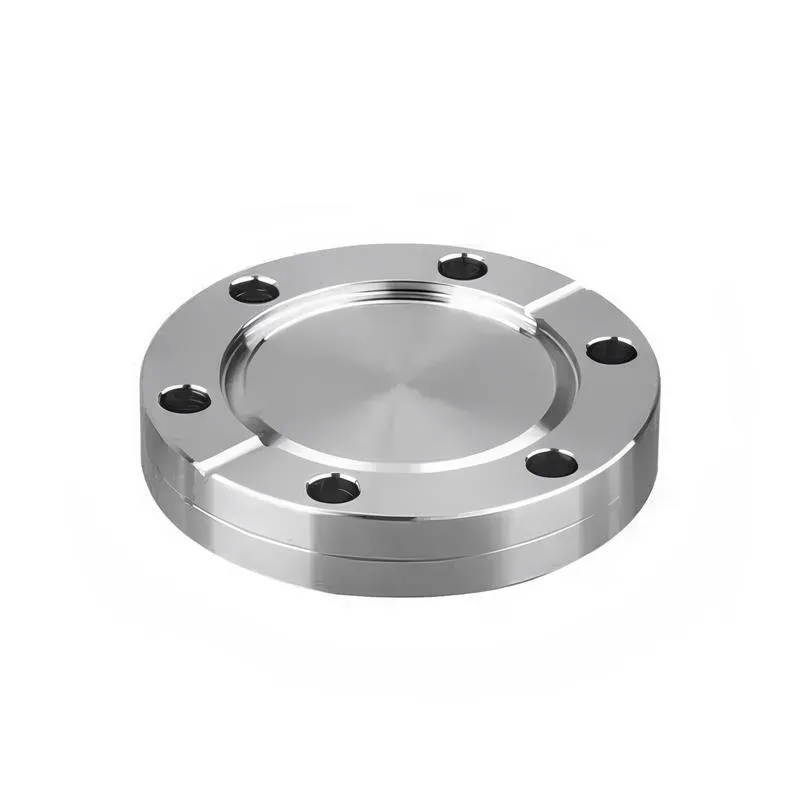
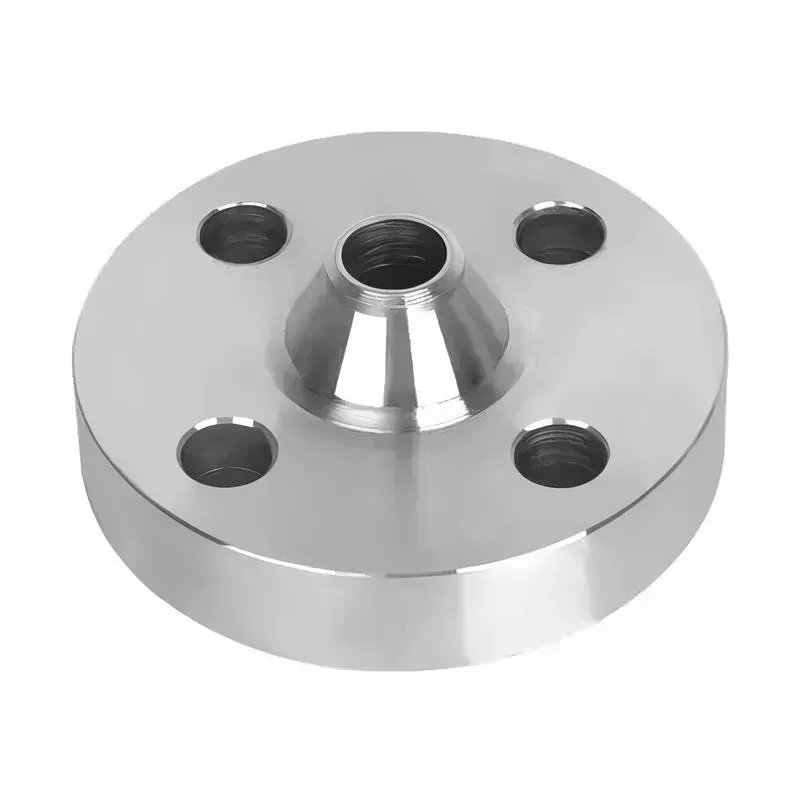
Plate Flat Welding Flange (PL), Necked Flat Welding Flange (SO), Necked Butt Welding Flange (WN), Integral Flange (IF), Socket Welding Flange (SW), Threaded Flange (Th), Butt Welding Ring Loose Flange (PJ/SE), Blind Flange (BL), Flat Welding Ring Loose Flange (PJ/PJ), and Lined Blind Flange (BL(s)).
2. **According to Petrochemical (SH) Industry Standards:** Flanges are classified as follows:
Threaded Flange (PL), Butt Welding Flange (WN), Flat Welding Flange (SO), Socket Welding Flange (SW), Loose Flange (LJ), and Blind Flange (no specific designation).
3. **According to Machinery (JB) Industry Standards:** Flanges are classified as follows:
Integral Flange, Butt Welding Flange, Plate Flat Welding Flange, Butt Welding Ring Plate Loose Flange, Flat Welding Ring Plate Loose Flange, Lap Joint Ring Plate Loose Flange, and Blind Flange.
4. **According to Connection Method/Type:** Flanges are classified as follows:
Plate Flat Welding Flange, Necked Flat Welding Flange, Necked Butt Welding Flange, Socket Welding Flange, Threaded Flange, Blind Flange, Necked Butt Welding Ring Loose Flange, Flat Welding Ring Loose Flange, Ring-Type Joint (RTJ) Flange and Blind Flange, Large-Diameter Plate Flange, Large-Diameter High-Neck Flange, Figure-8 Blind Plate, Butt Welding Ring Loose Flange, etc.
5. **According to the Component Being Connected:** Flanges can be classified into Vessel Flanges and Pipe Flanges.
6. **According to Structural Type:** Flanges include Integral Flanges, Threaded Flanges, Flat Welding Flanges, Butt Welding Flanges, Lap Joint (Loose/Swivel) Flanges, and Blind Flanges.
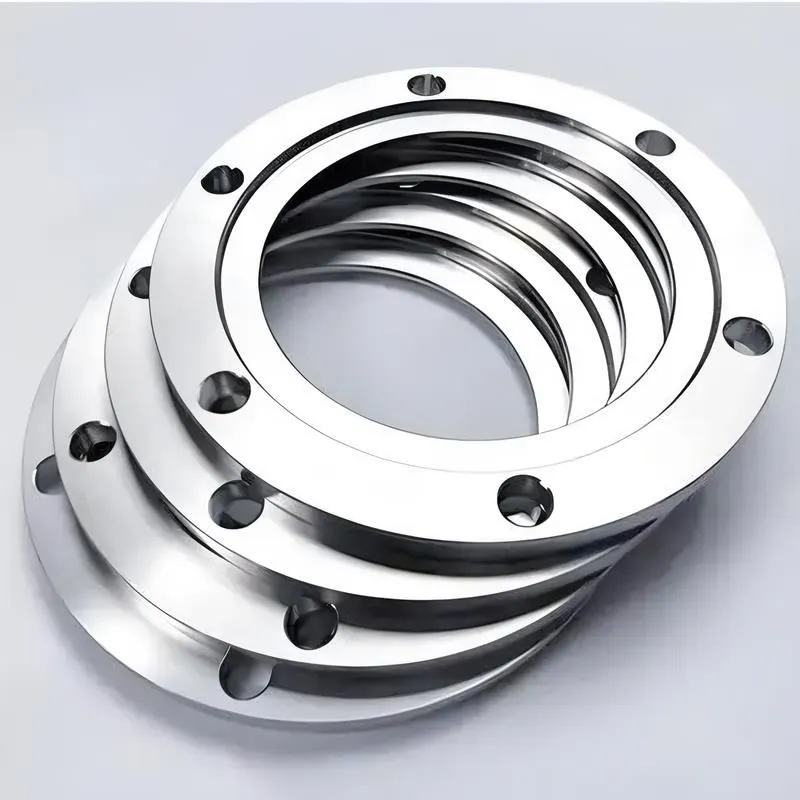
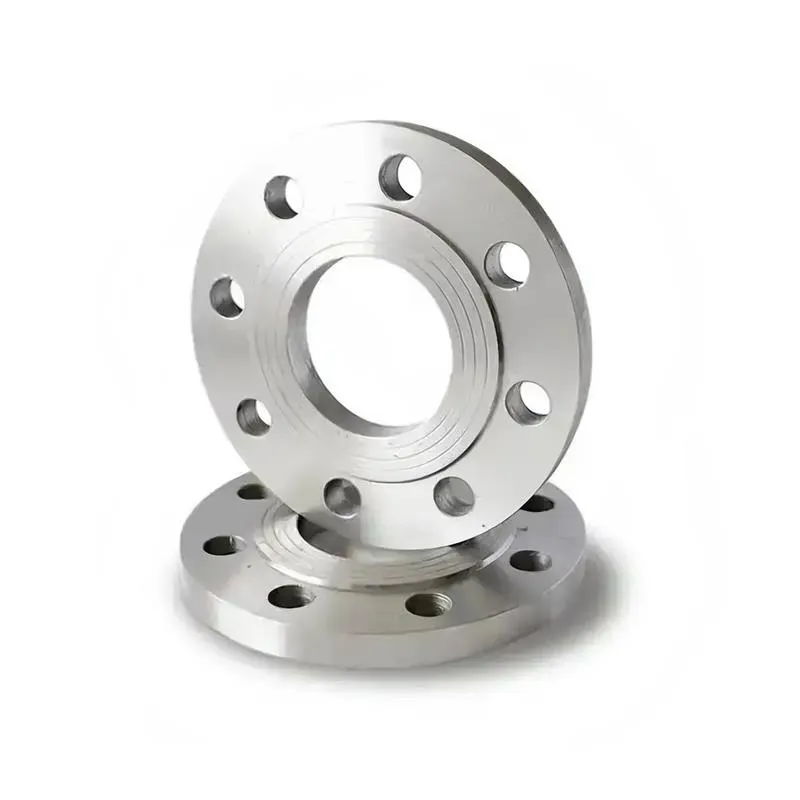
A flange—also referred to as a flange plate or rim—is a component used to connect shafts to one another, or, more commonly, to join the ends of pipes. Flanges are also utilized at the inlet and outlet ports of equipment to facilitate connections between two devices—for instance, the flange on a speed reducer. A "flange connection" or "flanged joint" refers to a detachable joint assembly comprising three interconnected elements—a flange, a gasket, and bolts—that together form a sealed structural unit. In the context of piping systems, a "pipe flange" specifically denotes a flange used for plumbing within the installation; when applied to equipment, it refers to the inlet or outlet flange of that specific device. Flanges feature a series of holes through which bolts are inserted to securely fasten the two flanges together, while a gasket placed between the flanges ensures a leak-proof seal. Flanges are broadly categorized into three types: threaded (screw-in) flanges, welded flanges, and clamp-type flanges. Flanges are invariably used in pairs; threaded flanges are suitable for low-pressure piping applications, whereas welded flanges are required for systems operating at pressures exceeding 4 kilograms per square centimeter. A sealing gasket is inserted between the two flange plates, which are then firmly secured using bolts. The thickness of a flange—as well as the specifications of the bolts used to fasten it—vary depending on the specific pressure rating required for the application. When connecting equipment such as water pumps or valves to piping systems, the corresponding connection points on these devices are often manufactured in the shape of a matching flange; this method of attachment is also referred to as a "flange connection." Generally, any connecting component that utilizes bolts to join and seal the perimeters of two flat surfaces—such as the joints in ventilation ducts—is termed a "flange"; such components may collectively be classified as "flange-type parts." However, since such a connection often constitutes merely a *portion* of a larger device—for instance, the interface between a flange and a water pump—it would be inappropriate to classify the entire water pump itself as a "flange-type part." Conversely, smaller components—such as valves—that feature such flanged interfaces may indeed be appropriately categorized as "flange-type parts."
-:-
For detailed product information, please contact sales.
-:
ASTM A27 Grade 65-35 Cast Carbon Steel Flange Product Information
-:-
For detailed product information, please contact sales.
-:
ASTM A27 Grade 65-35 Cast Carbon Steel Flange Synonyms
-:-
For detailed product information, please contact sales.
-:
ASTM A27 Grade 65-35 Cast Carbon Steel Product Information
-:-
For detailed product information, please contact sales.
-:
# **Product Datasheet: ASTM A27 Grade 65-35 Cast Carbon Steel**
## **1. Product Overview**
**ASTM A27 Grade 65-35** is a general-purpose **cast carbon steel** offering a higher strength level than Grade 60-30, while maintaining good weldability and ductility. Designated by its minimum mechanical properties (65 ksi tensile, 35 ksi yield), this grade is suitable for components requiring greater load-bearing capacity and moderate impact resistance under ambient conditions. It provides an economical solution for a wide range of structural and industrial castings, typically supplied in the as-cast or stress-relieved condition.
## **2. International Standards & Designations**
| System/Authority | Designation | Specification Title |
| :--- | :--- | :--- |
| **ASTM** | **A27/A27M** | Standard Specification for Steel Castings, Carbon, for General Application |
| **Grade** | **65-35 (Grade N-2)** | Standard Grade within A27 |
| **UNS** | J02501 | Unified Numbering System |
| **ASME** | SA-27 | ASME Boiler and Pressure Vessel Code Section II, Part A & B |
| **ISO** | ISO 3755 Grade 230-450 (Approx.) | Similar general engineering cast steel standard |
| **Common Names** | A27-65-35, Cast Steel 65-35, Medium Strength Carbon Cast Steel |
## **3. Chemical Composition (% by Weight)**
Grade 65-35 has a slightly elevated carbon content compared to Grade 60-30 to achieve higher strength, but remains within bounds for good weldability.
| Element | ASTM A27 Grade 65-35 Requirements | Typical % |
| :--- | :--- | :--- |
| **Carbon (C)** | 0.30% max | 0.25 - 0.30 |
| **Manganese (Mn)** | 0.60% min | 0.70 - 0.90 |
| **Phosphorus (P)** | 0.05% max | 0.035 - 0.045 |
| **Sulfur (S)** | 0.06% max | 0.035 - 0.045 |
| **Silicon (Si)** | 0.60% max | 0.20 - 0.40 |
| **Residuals** | Not specified individually; total alloy residuals limited | Trace amounts (Cr, Ni, Mo, Cu, V combined typically ≤ 1.00%) |
| **Iron (Fe)** | Balance | Balance |
**Note:** Mechanical properties are the governing criteria. The foundry may adjust chemistry within these limits to achieve the required strength, particularly in varying section sizes.
## **4. Mechanical & Physical Properties**
Minimum properties are as specified in ASTM A27 for separately cast test bars. Properties in actual castings may vary with section size and cooling rate.
| Property | Minimum Requirement | Typical Achieved Value | Test Standard |
| :--- | :--- | :--- | :--- |
| **Condition** | As-cast or Heat-Treated | Usually as-cast or stress-relieved | -- |
| **Tensile Strength** | **450 MPa (65,000 psi)** min | 480 - 580 MPa (70 - 84 ksi) | ASTM A370 |
| **Yield Strength** | **240 MPa (35,000 psi)** min | 275 - 350 MPa (40 - 51 ksi) | ASTM A370 |
| **Elongation (in 50mm / 2")** | **22%** min | 24% - 30% | ASTM A370 |
| **Reduction of Area** | **30%** min | 35% - 45% | ASTM A370 |
| **Hardness (Brinell)** | Not specified | 160 - 210 HBW | ASTM E10 |
| **Impact Toughness (Charpy V-notch)** | Not specified in base spec | Moderate at room temperature; decreases below 0°C (32°F) | ASTM A370 (if supplementary requirement specified) |
| **Modulus of Elasticity** | -- | 200 GPa (29 x 10⁶ psi) | -- |
| **Density** | -- | 7.85 g/cm³ (0.284 lb/in³) | -- |
| **Poisson's Ratio** | -- | 0.29 | -- |
## **5. Key Characteristics & Advantages**
* **Increased Strength:** Provides approximately 10% higher yield and tensile strength than Grade 60-30 for weight reduction or higher load capacity.
* **Good Weldability:** Despite higher carbon, it remains readily weldable with standard procedures. Preheat (e.g., 95-150°C / 200-300°F) is recommended for thicker sections (>50mm).
* **Good Machinability:** The as-cast ferritic-pearlitic microstructure allows for satisfactory machining with proper tool geometry and feeds/speeds.
* **Cost-Effective Strength:** Offers a higher strength-to-cost ratio compared to low-alloy cast steels for many applications.
* **Adequate Ductility:** Maintains sufficient elongation for components that may experience slight deformation.
* **Response to Heat Treatment:** Can be normalized, normalized and tempered, or annealed to refine grain structure, improve uniformity, or enhance machinability.
## **6. Primary Applications**
ASTM A27 Grade 65-35 is widely used in industrial and heavy equipment sectors for components subject to moderate stresses.
* **Industrial Machinery:** Gear blanks, press frames, rolling mill housings, crusher parts, and large pulleys.
* **Material Handling:** Crane sheaves, hook blocks, conveyor system components, and lifting lugs.
* **Construction & Mining Equipment:** Track links (non-wearing), counterweights, support brackets, and crusher jaws (for less abrasive service).
* **Valve and Pump Components:** Bodies, bonnets, and flanges for moderate-pressure service (non-critical).
* **Marine & Offshore:** Fairleads, anchor chocks, winch drums, and other deck machinery components.
* **Power Generation:** Non-critical structural supports and housings.
* **Railroad:** Draft sills, bolsters, and other freight car components.
## **7. Processing & Fabrication Guidelines**
* **Heat Treatment:** Often supplied in the as-cast condition. **Stress Relieving** (595-650°C / 1100-1200°F) is common to minimize residual casting stresses. **Normalizing** (900-925°C / 1650-1700°F) improves homogeneity and mechanical properties.
* **Machining:** Use positive rake tools with sharp edges. For harder spots or scale, carbide tooling is preferred. Adequate coolant is recommended.
* **Welding:** Follow low-carbon steel practices. Use low-hydrogen electrodes (e.g., AWS E7018) for best results. For sections >25mm (1 inch), a preheat of 95-150°C (200-300°F) is advisable. Post-weld stress relief is recommended for complex or highly restrained welds.
* **Surface Treatment:** Excellent candidate for painting, galvanizing, or powder coating. For improved wear resistance in specific areas, hardfacing overlay can be applied.
## **8. Limitations & Design Considerations**
* **Not for Low-Temperature Service:** Lacks guaranteed impact properties; not suitable for sub-zero (°C) applications without supplementary impact testing (per A27 Supplementary Requirement S1).
* **Section Sensitivity:** Mechanical properties, especially ductility, will decrease in heavier casting sections.
* **Not a Pressure-Rated Grade:** For pressure-retaining parts, consider ASTM A216 WCB or similar "pressure vessel quality" cast steels which have stricter quality controls and testing.
* **Moderate Wear Resistance:** Without surface hardening or overlay, its wear resistance is limited.
## **9. Quality Assurance & Testing**
* **Certification:** Material is supplied with a **Foundry Test Report** certifying compliance with ASTM A27 Grade 65-35, including heat chemistry and mechanical test results from separately cast keel blocks.
* **Testing:** Tensile testing is mandatory per heat. Hardness testing on castings is a common supplementary quality check.
* **Optional Tests:** Supplementary requirements (e.g., S1 for Charpy impact, S6 for special heat treatment) can be specified in the purchase order.
---
**Disclaimer:** This datasheet is for informational purposes. The complete and authoritative specifications are contained in the latest edition of **ASTM A27/A27M**. Final design and material selection must be based on specific service conditions and appropriate engineering analysis. Consult the foundry for properties in specific casting configurations.
-:-
For detailed product information, please contact sales.
-:
ASTM A27 Grade 65-35 Cast Carbon Steel Specification
Dimensions
Size:
Diameter 20-1000 mm Length <6403 mm
Size:We can customized as required
Standard:
Per your request or drawing
We can customized as required
Properties(Theoretical)
Chemical Composition
-:-
For detailed product information, please contact sales.
-:
ASTM A27 Grade 65-35 Cast Carbon Steel Properties
-:-
For detailed product information, please contact sales.
-:
Applications of ASTM A27 Grade 65-35 Cast Carbon Steel Flange
-:-
For detailed product information, please contact sales.
-:
Chemical Identifiers ASTM A27 Grade 65-35 Cast Carbon Steel Flange
-:-
For detailed product information, please contact sales.
-:
Packing of ASTM A27 Grade 65-35 Cast Carbon Steel Flange
-:-
For detailed product information, please contact sales.
-:
Standard Packing:
-:-
For detailed product information, please contact sales.
-:
Typical bulk packaging includes palletized plastic 5 gallon/25 kg. pails, fiber and Steel Flange drums to 1 ton super sacks in full container (FCL) or truck load (T/L) quantities. Research and sample quantities and hygroscopic, oxidizing or other air sensitive materials may be packaged under argon or vacuum. Solutions are packaged in polypropylene, plastic or glass jars up to palletized 2874 gallon liquid totes Special package is available on request. E FORUs’ is carefully handled to minimize damage during storage and transportation and to preserve the quality of our products in their original condition