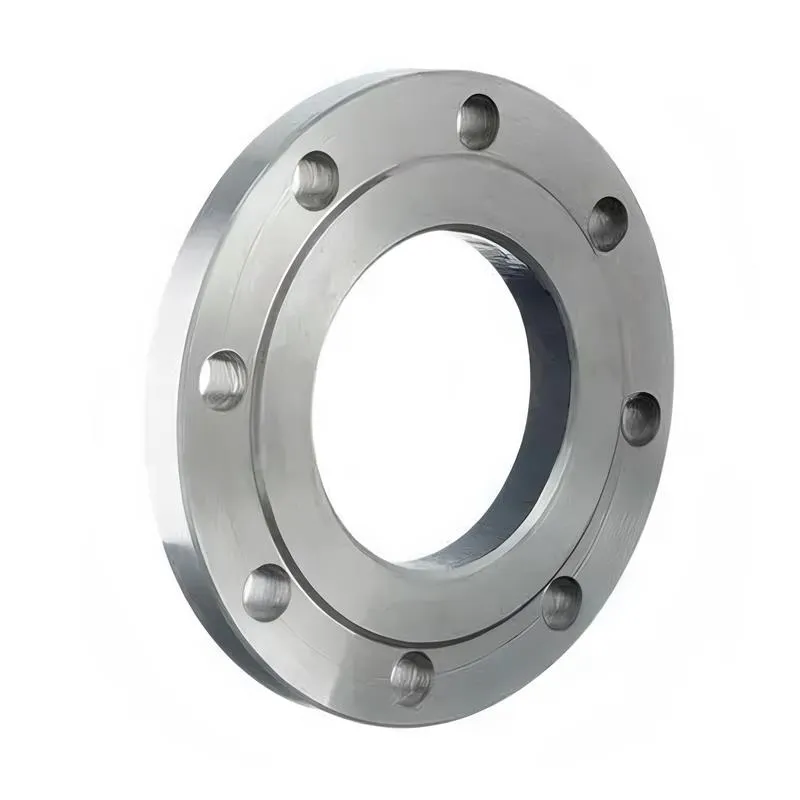
1,We Manufacturing processes are primarily classified into four types:
1:Forging,
2:Casting,
3:Cutting,
4:Rolling.
2,We can manufacture in accordance with these standards.
Standards:
GB Series (Chinese Standards), JB Series (Machinery Standards), HG Series (Chemical Industry Standards), ASME B16.5 (American Standards), BS4504 (British Standards), DIN (German Standards), and JIS (Japanese Standards).
Internationally, there are two primary systems of pipe flange standards: the European system, represented by the German DIN standards (including those of the former Soviet Union), and the American system, represented by the US ANSI pipe flange standards. Other common standards include: the Chinese Ministry of Machinery Industry standards (JB series), the Ministry of Chemical Industry standards (HG series), the Chinese National Standard *GB/T 9112–9124-2010 Steel Pipe Flanges*, as well as US standards (ASME B16.5), British standards (BS4504), German standards (DIN), Japanese standards (JIS), and marine standards (CBM), among others.
The nominal pressure ratings for the PN series are designated by "PN" and comprise the following nine levels: PN2.5, PN6, PN10, PN16, PN25, PN40, PN63, PN100, and PN160.
The nominal pressure ratings for the Class series are designated by "Class" and comprise the following six levels: Class150, Class300, Class600, Class900, Class1500, and Class2500.
Flange Classification
1. **According to Chemical Industry Standards:** Flanges are classified as follows:
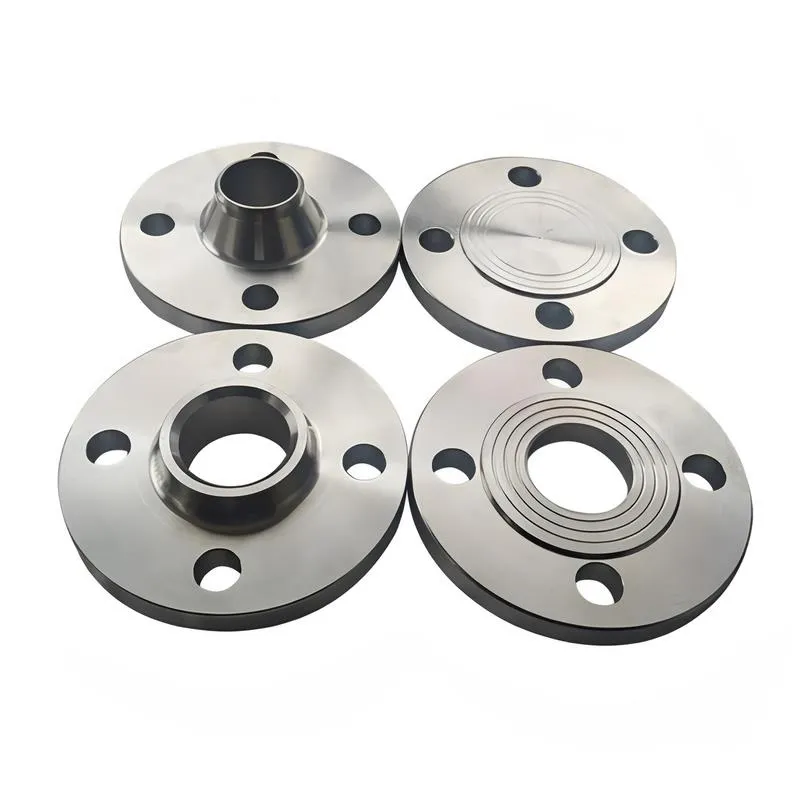
Plate Flat Welding Flange (PL), Necked Flat Welding Flange (SO), Necked Butt Welding Flange (WN), Integral Flange (IF), Socket Welding Flange (SW), Threaded Flange (Th), Butt Welding Ring Loose Flange (PJ/SE), Blind Flange (BL), Flat Welding Ring Loose Flange (PJ/PJ), and Lined Blind Flange (BL(s)).
2. **According to Petrochemical (SH) Industry Standards:** Flanges are classified as follows:
Threaded Flange (PL), Butt Welding Flange (WN), Flat Welding Flange (SO), Socket Welding Flange (SW), Loose Flange (LJ), and Blind Flange (no specific designation).
3. **According to Machinery (JB) Industry Standards:** Flanges are classified as follows:
Integral Flange, Butt Welding Flange, Plate Flat Welding Flange, Butt Welding Ring Plate Loose Flange, Flat Welding Ring Plate Loose Flange, Lap Joint Ring Plate Loose Flange, and Blind Flange.
4. **According to Connection Method/Type:** Flanges are classified as follows:
Plate Flat Welding Flange, Necked Flat Welding Flange, Necked Butt Welding Flange, Socket Welding Flange, Threaded Flange, Blind Flange, Necked Butt Welding Ring Loose Flange, Flat Welding Ring Loose Flange, Ring-Type Joint (RTJ) Flange and Blind Flange, Large-Diameter Plate Flange, Large-Diameter High-Neck Flange, Figure-8 Blind Plate, Butt Welding Ring Loose Flange, etc.
5. **According to the Component Being Connected:** Flanges can be classified into Vessel Flanges and Pipe Flanges.
6. **According to Structural Type:** Flanges include Integral Flanges, Threaded Flanges, Flat Welding Flanges, Butt Welding Flanges, Lap Joint (Loose/Swivel) Flanges, and Blind Flanges.
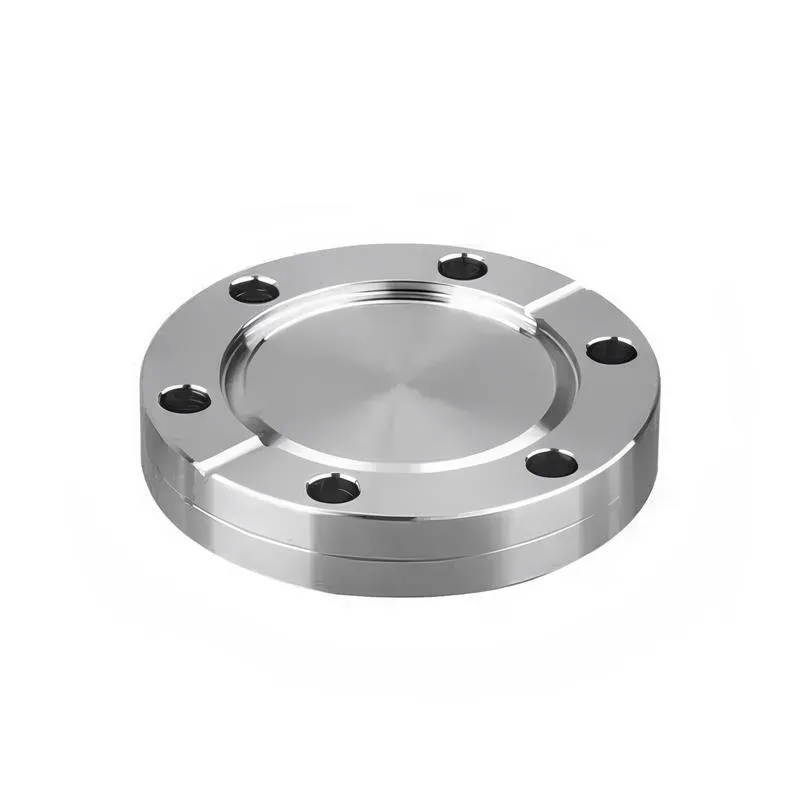
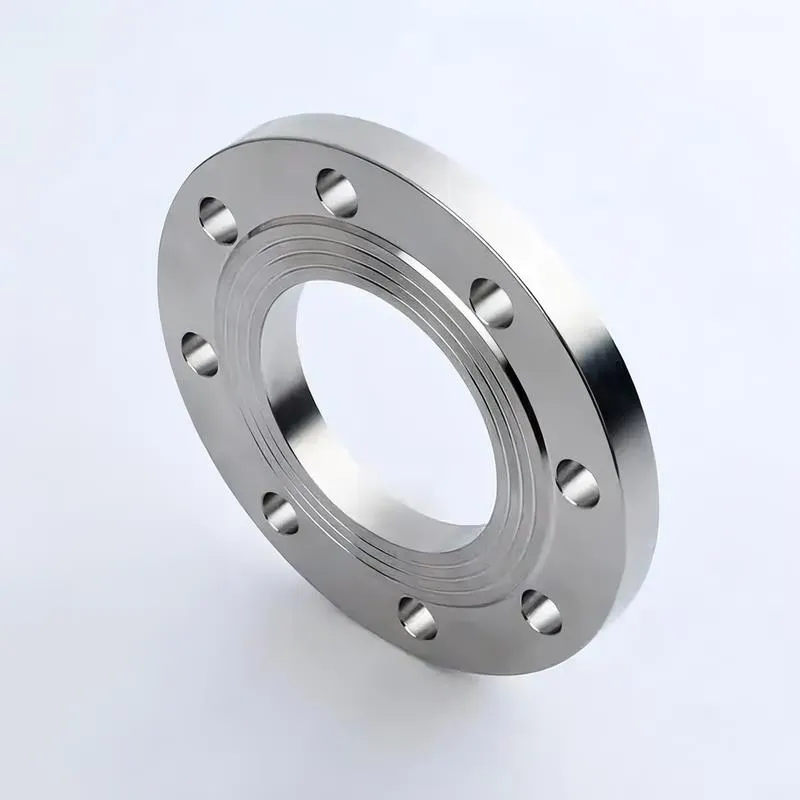
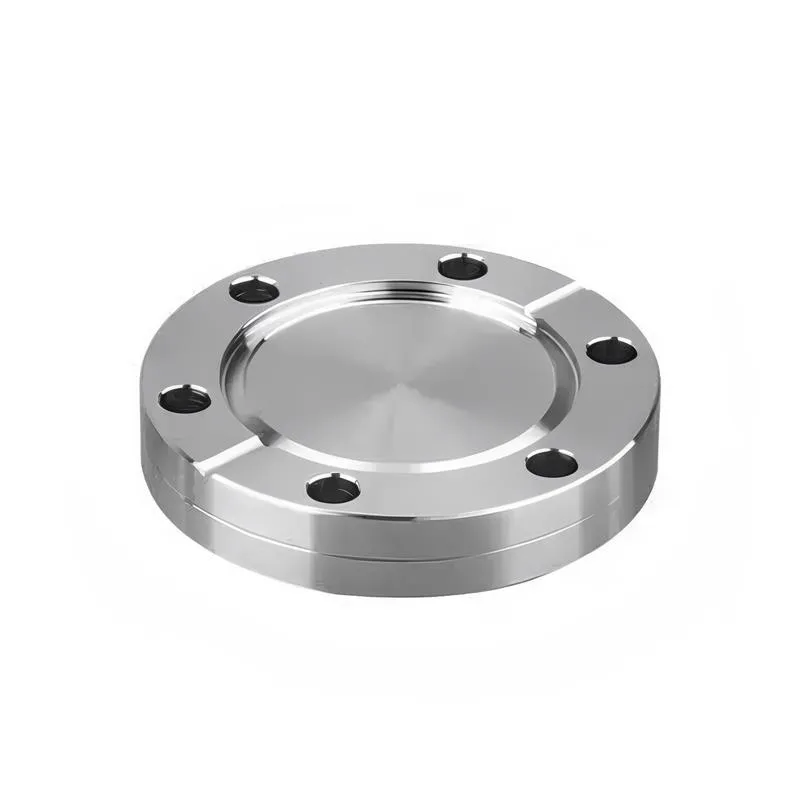
A flange—also referred to as a flange plate or rim—is a component used to connect shafts to one another, or, more commonly, to join the ends of pipes. Flanges are also utilized at the inlet and outlet ports of equipment to facilitate connections between two devices—for instance, the flange on a speed reducer. A "flange connection" or "flanged joint" refers to a detachable joint assembly comprising three interconnected elements—a flange, a gasket, and bolts—that together form a sealed structural unit. In the context of piping systems, a "pipe flange" specifically denotes a flange used for plumbing within the installation; when applied to equipment, it refers to the inlet or outlet flange of that specific device. Flanges feature a series of holes through which bolts are inserted to securely fasten the two flanges together, while a gasket placed between the flanges ensures a leak-proof seal. Flanges are broadly categorized into three types: threaded (screw-in) flanges, welded flanges, and clamp-type flanges. Flanges are invariably used in pairs; threaded flanges are suitable for low-pressure piping applications, whereas welded flanges are required for systems operating at pressures exceeding 4 kilograms per square centimeter. A sealing gasket is inserted between the two flange plates, which are then firmly secured using bolts. The thickness of a flange—as well as the specifications of the bolts used to fasten it—vary depending on the specific pressure rating required for the application. When connecting equipment such as water pumps or valves to piping systems, the corresponding connection points on these devices are often manufactured in the shape of a matching flange; this method of attachment is also referred to as a "flange connection." Generally, any connecting component that utilizes bolts to join and seal the perimeters of two flat surfaces—such as the joints in ventilation ducts—is termed a "flange"; such components may collectively be classified as "flange-type parts." However, since such a connection often constitutes merely a *portion* of a larger device—for instance, the interface between a flange and a water pump—it would be inappropriate to classify the entire water pump itself as a "flange-type part." Conversely, smaller components—such as valves—that feature such flanged interfaces may indeed be appropriately categorized as "flange-type parts."
-:-
For detailed product information, please contact sales.
-:
Latrobe Lescalloy® HP 9-4-30 VAC-ARC ; 13.5 in RCS Billet Size High Strength Alloy Steel Flange Product Information
-:-
For detailed product information, please contact sales.
-:
Latrobe Lescalloy® HP 9-4-30 VAC-ARC ; 13.5 in RCS Billet Size High Strength Alloy Steel Flange Synonyms
-:-
For detailed product information, please contact sales.
-:
Latrobe Lescalloy® HP 9-4-30 VAC-ARC ; 13.5 in RCS Billet Size High Strength Alloy Steel Product Information
-:-
For detailed product information, please contact sales.
-:
# **PRODUCT DATA SHEET: LATROBE LESCALLOY® HP 9-4-30 VAC-ARC**
## **EXECUTIVE SUMMARY: ULTRA-HEAVY SECTION HIGH-PERFORMANCE ALLOY FOR CRITICAL DEFENSE APPLICATIONS**
Latrobe Lescalloy® **HP 9-4-30 VAC-ARC** in **13.5-inch (343 mm) RCS (Roller Coil Spring) billet size** represents the pinnacle of ultra-heavy-section, ultra-high-strength steel technology specifically engineered for **next-generation defense systems, advanced aerospace components, and critical infrastructure**. This **9% nickel - 4% cobalt - 0.30% carbon martensitic steel**, refined through **Vacuum Arc Remelting (VAC-ARC)**, delivers an unparalleled combination of **minimum 260 ksi yield strength, exceptional fracture toughness, and deep hardenability** in massive cross-sections where conventional high-strength steels fail. The **13.5-inch billet size** is specifically optimized for **large-diameter power transmission shafts, naval propulsion components, and strategic missile systems** requiring guaranteed performance under extreme loading conditions.
Developed as a successor to HY-180 and AF1410 steels, HP 9-4-30 employs a sophisticated **secondary hardening system** that achieves peak strength through optimized tempering rather than quench sensitivity, making it uniquely suitable for ultra-heavy sections where quenching limitations would otherwise compromise core properties. The **VAC-ARC process** is absolutely essential at this diameter, ensuring chemical homogeneity, eliminating centerline segregation, and achieving the ultra-clean microstructure required for ballistic and fatigue-critical applications.
---
## **METALLURGICAL DESIGN PHILOSOPHY: SECONDARY HARDENING FOR MASSIVE SECTIONS**
### **Innovative Strengthening Mechanism**
HP 9-4-30 utilizes a **coherent precipitation strengthening system** fundamentally different from conventional quench-and-temper steels:
1. **Martensite Formation:** The 9% nickel content ensures complete transformation to martensite even with slow cooling rates inherent in 13.5-inch sections
2. **Secondary Hardening:** During tempering at 900-1000°F (482-538°C), fine alloy carbides (M₂C type) precipitate coherently within the martensite matrix, providing strength increases rather than decreases during tempering
3. **Toughness Retention:** The nickel-rich matrix and carefully controlled carbide morphology maintain exceptional fracture toughness even at 260+ ksi yield strength
### **VAC-ARC Criticality for 13.5-Inch Billets**
- **Segregation Control:** Prevents nickel and cobalt banding that would create planes of weakness in heavy forgings
- **Inclusion Engineering:** Reduces sulfide and oxide inclusions to <10 micron maximum size, critical for transverse properties in large diameters
- **Hydrogen Management:** Achieves hydrogen levels <0.5 ppm, eliminating risk of hydrogen-induced cracking in massive sections
- **Chemical Precision:** Maintains composition variation to <0.01% across 13.5-inch diameter
### **Specialized Processing for RCS Billet Configuration**
- **Controlled Forging:** Minimum 4:1 reduction ratio from ingot to billet for microstructure refinement
- **Optimized Heat Treatment:** Triple tempering cycles to ensure complete secondary hardening through entire cross-section
- **Property Verification:** Extensive testing at surface, quarter-depth, and centerline positions
---
## **CHEMICAL COMPOSITION: PRECISION OPTIMIZED FOR 13.5-INCH PERFORMANCE**
### **Master Chemistry Ranges**
| Element | Min (%) | Max (%) | Target (%) | Metallurgical Function in Heavy Sections |
|---------|---------|---------|------------|------------------------------------------|
| **Carbon** | 0.28 | 0.32 | 0.30 | Secondary hardening response, strength base |
| **Nickel** | 8.5 | 9.5 | 9.0 | Toughness, hardenability, austenite stability |
| **Cobalt** | 3.8 | 4.2 | 4.0 | Raises martensite start temperature, enhances secondary hardening |
| **Chromium** | 0.90 | 1.10 | 1.00 | Hardenability, corrosion resistance |
| **Molybdenum** | 1.00 | 1.20 | 1.10 | Secondary hardening carbide formation (M₂C) |
| **Silicon** | 0.10 | 0.20 | 0.15 | Deoxidation, solid solution strengthening |
| **Manganese** | 0.10 | 0.30 | 0.20 | Deoxidation, modest hardenability |
| **Vanadium** | 0.06 | 0.10 | 0.08 | Fine carbide formation, grain refinement |
| **Titanium** | 0.01 | 0.03 | 0.02 | Carbon nitride formation, grain control |
| **Sulfur** | — | 0.005 | 0.002 | Ultra-low for transverse ductility |
| **Phosphorus** | — | 0.008 | 0.004 | Controlled for toughness retention |
### **Critical Impurity Control (ppm maximum)**
| Element | Maximum Level | Control Rationale |
|---------|---------------|-------------------|
| **Oxygen** | 15 ppm | Inclusion control (VAR benefit) |
| **Hydrogen** | 0.5 ppm | HIC prevention in heavy sections (VAR benefit) |
| **Nitrogen** | 50 ppm | Titanium nitride control |
| **Tin** | 30 ppm | Temper embrittlement resistance |
| **Antimony** | 10 ppm | Temper embrittlement resistance |
| **Arsenic** | 30 ppm | Temper embrittlement resistance |
| **Copper** | 100 ppm | Hot working compatibility |
### **Micro-Alloying Additions**
- **Boron:** 0.001-0.003% (enhances hardenability at centerline)
- **Niobium:** 0.01-0.03% (optional for grain refinement in specific applications)
- **Zirconium:** 0.005-0.015% (sulfide shape control)
---
## **MECHANICAL PROPERTIES: GUARANTEED THROUGH 13.5-INCH CROSS-SECTION**
### **Minimum Guaranteed Properties (After Triple Temper)**
*Austenitize: 1650°F (899°C) × 8-10 hours, Oil Quench / Triple Temper: 950°F (510°C) × 4+4+4 hours*
| Property | Surface | 3.375" Depth | 6.75" Depth (Center) | Units | Test Standard |
|----------|---------|--------------|----------------------|--------|----------------|
| **Tensile Strength** | 280 | 275 | 270 | ksi | ASTM E8 |
| **0.2% Yield Strength** | 260 | 255 | 250 | ksi | ASTM E8 |
| **Elongation (4D)** | 12 | 10 | 8 | % | ASTM E8 |
| **Reduction of Area** | 45 | 40 | 35 | % | ASTM E8 |
| **Hardness** | 52-55 | 51-54 | 50-53 | HRC | ASTM E18 |
### **Enhanced Typical Properties (VAC-ARC Premium Quality)**
| Property | Typical Range | Notes for 13.5" Billet |
|----------|---------------|-------------------------|
| **Ultimate Tensile** | 285-295 ksi | Uniform within ±3% through section |
| **Yield Strength** | 265-275 ksi | Excellent for pressure vessel design |
| **True Fracture Strength** | 310-330 ksi | High strain hardening capacity |
| **Uniform Elongation** | 8-10% | Consistent through cross-section |
| **Total Elongation** | 10-14% | |
| **Reduction of Area** | 40-50% | Exceptional for 260+ ksi yield material |
### **Fracture Toughness Master Data**
| Orientation | Location | KIc | Charpy V-Notch (RT) | Test Temperature Range |
|-------------|----------|----------------|---------------------|------------------------|
| **L-T** | Surface | 120-150 ksi√in | 50-70 ft-lb | -40°F to +200°F |
| **L-T** | Center | 100-130 ksi√in | 40-60 ft-lb | -40°F to +200°F |
| **T-L** | Surface | 100-130 ksi√in | 35-55 ft-lb | -40°F to +200°F |
| **S-T** | Center | 80-110 ksi√in | 25-45 ft-lb | -40°F to +200°F |
*Note: Fracture toughness maintained at >100 ksi√in at centerline—unprecedented for 13.5-inch diameter at 260 ksi yield strength*
### **Fatigue & Endurance Performance**
| Loading Condition | Endurance Limit (10⁷ cycles) | Fatigue Ratio | Fatigue Crack Growth Rate (da/dN) @ ΔK=20 ksi√in |
|-------------------|----------------------------|---------------|-------------------------------------------------|
| **Rotating Bending** | 110-120 ksi | 0.42-0.46 | 2.0-3.5 × 10⁻⁵ in/cycle |
| **Axial (R=0.1)** | 100-110 ksi | 0.38-0.42 | 2.5-4.0 × 10⁻⁵ in/cycle |
| **Torsional** | 80-90 ksi | 0.30-0.34 | — |
| **Corrosion Fatigue (seawater)** | 60-70 ksi | 0.23-0.27 | 4.0-6.0 × 10⁻⁵ in/cycle |
### **Ballistic Performance Characteristics**
- **Areal Density Efficiency:** 1.4-1.6× RHA at equivalent weights
- **Multi-Hit Capability:** Exceptional due to high fracture toughness
- **Spall Resistance:** Minimal behind-armor debris generation
- **Oblique Impact Performance:** Maintains integrity at 60° incidence angles
### **Physical Properties**
| Property | Value | Units | Notes |
|----------|-------|--------|-------|
| **Density** | 0.284 lb/in³ | 7.86 g/cm³ | |
| **Elastic Modulus** | 29.0 × 10⁶ psi | 200 GPa | |
| **Shear Modulus** | 11.2 × 10⁶ psi | 77 GPa | |
| **Poisson's Ratio** | 0.29 | | |
| **Thermal Conductivity** | 21.5 BTU·in/(hr·ft²·°F) | 31.0 W/(m·K) @ 100°C | |
| **Specific Heat** | 0.11 BTU/(lb·°F) | 460 J/(kg·K) | |
| **Mean CTE (70-600°F)** | 6.3 × 10⁻⁶ /°F | 11.3 × 10⁻⁶ /K | |
| **Electrical Resistivity** | 45 μΩ·cm | | |
| **Magnetic Response** | Ferromagnetic | | Fully magnetic |
---
## **INTERNATIONAL STANDARDS & CERTIFICATION**
### **Primary Governing Specifications**
| Standard | Title | Application Notes |
|----------|-------|-------------------|
| **AMS 6517** | Steel Bars, Forgings, 9Ni-4Co-0.30C, Vacuum Melted, 260 ksi Yield Strength | Primary aerospace specification |
| **MIL-DTL-32375** | Armor Plate, High Hardness, Vacuum Melted | Class 2 requirements |
| **MIL-S-8949** | Secondary Hardening Steel Plate | Grade 9Ni-4Co-0.30C |
| **ASTM A579/A579M** | Superstrength Alloy Steel Forgings | Grade 9-4-30 |
### **Defense-Specific Standards**
- **NAVSEA S9074-AQ-GIB-010/278:** Requirements for Fabrication Welding of Naval Systems
- **MIL-STD-2154:** Inspection of Forgings
- **MIL-STD-1629:** Failure Modes, Effects and Criticality Analysis
- **DEF STAN 00-970:** Design and Airworthiness Requirements for Service Aircraft
### **Premium Quality Additions**
- **AMS 2301:** Premium Aircraft-Quality Steel Cleanliness (Fineness Rating A+)
- **AMS 2304:** Detection of Soft Carburization and Decarburization
- **AMS 2628:** Ultrasonic Inspection (Class AAA for 100% volumetric)
- **ASTM E588:** Detection of Large Inclusions by Ultrasonics
### **Customer-Specific Approvals**
- **Boeing:** BAC 5670, BAC 5613, BAC 5423
- **Lockheed Martin:** SP-R-02110, LM-SPEC-511
- **Northrop Grumman:** NGIS-M-130
- **General Dynamics:** GDMS-S-005
- **BAE Systems:** BAE-SPEC-001
---
## **APPLICATIONS: DEFINING NEXT-GENERATION DEFENSE SYSTEMS**
### **Naval & Marine Systems (Primary Application)**
- **Submarine Pressure Hull Components:** Strategic missile submarine hull sections, Virginia-class attack submarine components
- **Surface Combatant Armor:** Destroyer (DDG-1000) critical zone armor, cruiser belt armor
- **Aircraft Carrier Systems:** Elevator drive shafts, catapult components, arresting gear
- **Naval Gun Systems:** Advanced gun system (AGS) components, vertical launch system structures
### **Aerospace & Defense Systems**
- **Strategic Missile Components:** Ground-based strategic deterrent (GBSD) launch tubes, re-entry vehicle structures
- **Aircraft Armor:** Heavy-lift helicopter (CH-53K) armor seating, special operations aircraft armor
- **Space Launch Systems:** Mobile launcher platform components, flame trench armor
- **Armored Vehicles:** Next-generation combat vehicle (NGCV) hull components, turret structures
### **Energy & Critical Infrastructure**
- **Nuclear Power:** Spent fuel storage cask structural components, reactor pressure vessel supports
- **Oil & Gas:** Ultra-deepwater drilling riser components, subsea manifold structures
- **Power Generation:** Ultra-supercritical steam turbine rotor components
- **Research Facilities:** Particle accelerator beamline components, fusion reactor first wall supports
### **Emerging Defense Technologies**
- **Hypersonic Systems:** Vehicle structural components, thermal protection system supports
- **Directed Energy Weapons:** Mounting structures for high-energy laser systems
- **Electromagnetic Railguns:** Armature components, barrel structural elements
- **Counter-UAS Systems:** Mobile platform armor for drone defense systems
---
## **MANUFACTURING & FABRICATION: SPECIALIZED PROCESSING FOR 13.5-INCH BILLETS**
### **Heat Treatment Master Protocol**
#### **Phase 1: Austenitizing (Critical for Secondary Hardening)**
```
Temperature: 1650°F ±20°F (899°C ±11°C)
Soak Time: 8-10 hours (0.6-0.75 hours per inch)
Atmosphere: Protective (endothermic gas or vacuum)
Quenching: Agitated oil quench to below 150°F (66°C)
Documentation: Continuous 12-point temperature recording required
```
#### **Phase 2: Triple Tempering (Strength Development)**
```
First Temper: 950°F ±15°F (510°C ±8°C) × 4 hours, air cool
Second Temper: 950°F ±15°F (510°C ±8°C) × 4 hours, air cool
Third Temper: 950°F ±15°F (510°C ±8°C) × 4 hours, air cool
Verification: Hardness testing at 2" depth increments after each temper
```
### **Forging & Hot Working Guidelines**
- **Maximum Heating Temperature:** 2150°F (1177°C)
- **Minimum Forging Temperature:** 1600°F (871°C)
- **Reduction Ratio:** Minimum 4:1 from ingot to finished billet
- **Cooling After Forging:** Slow cool in furnace or under insulation to prevent cracking
### **Machining Guidelines for 13.5-Inch Billets**
#### **Annealed Condition (235-275 HB)**
- **Turning:** 150-200 SFM, 0.015-0.025 IPR, 0.250-0.500" DOC
- **Milling:** 100-150 SFM, 0.004-0.008 IPT, 0.100-0.250" axial DOC
- **Drilling:** 60-100 SFM, 0.003-0.006 IPR, high-pressure coolant required
- **Tooling:** Premium PVD-coated carbide (TiAlN/AlTiN) with reinforced geometries
- **Coolant:** 8-10% soluble oil with EP additives, 1000+ psi through-tool delivery
### **Welding Engineering Requirements**
#### **Pre-Welding Qualifications (Mandatory)**
- **Procedure Qualification:** AWS D1.1/D1.6 or ASME Section IX, Section III for nuclear
- **Welder Qualification:** All position certification with radiographic acceptance
- **Material Certification:** Verify heat treatment state and chemistry matching
- **NDT Certification:** Level III UT/RT personnel for critical welds
#### **Welding Parameters (SMAW/GTAW)**
```
Filler Metal: Matching composition (AWS A5.28 ER100S-G) or overalloyed nickel-base
Preheat: 400-500°F (204-260°C) minimum, interpass 400-600°F (204-316°C)
Post-Weld Heat Treatment: Full re-austenitize and triple temper required
NDT Requirements: 100% UT + RT for full penetration welds
```
### **Quality Assurance: Defense-Grade Requirements**
#### **Non-Destructive Examination**
- **Ultrasonic Testing:** 100% volumetric per AMS 2628 Class AAA
- **Phased Array UT:** Automated scanning with 0.5 mm resolution
- **Digital Radiography:** For weld and critical area examination
- **Magnetic Particle:** 100% surface with dual coil magnetization
- **Eddy Current:** For near-surface flaw detection in machined surfaces
#### **Destructive Testing Program**
- **Full Cross-Section Analysis:** Surface, quarter-depth, centerline testing
- **Fracture Toughness:** J-integral testing per ASTM E1820 at multiple temperatures
- **Ballistic Testing:** V50 testing per MIL-STD-662F for armor applications
- **Corrosion Testing:** ASTM G48, ASTM G36, ASTM B117 as required
#### **Dimensional Certification for 13.5-Inch RCS Billets**
- **Diameter Tolerance:** +0.000/-0.030" for as-forged condition
- **Length Tolerance:** ±0.5" for standard lengths
- **Straightness:** 0.050" TIR per foot maximum
- **Surface Condition:** Descaled, no seams or laps >0.010" deep
- **End Condition:** Square within 0.060", identified with heat number
---
## **TECHNICAL SUPPORT & ENGINEERING SERVICES**
### **Design Phase Collaboration**
- **Ballistic Performance Modeling:** LS-DYNA simulations for armor applications
- **Fracture Mechanics Analysis:** Fatigue crack growth and damage tolerance
- **Dynamic Analysis:** Vibration and shock analysis for naval applications
- **Thermal Analysis:** Heat treatment distortion prediction and mitigation
### **Manufacturing Support**
- **Forging Simulation:** DEFORM or QForm simulations for billet production
- **Heat Treatment Optimization:** Custom cycles for specific geometries
- **Welding Procedure Development:** Full qualification testing services
- **Machining Process Development:** Tooling and parameter optimization
### **Quality & Certification Support**
- **NADCAP Accreditation:** AC7004 (NDT), AC7114 (Heat Treat), AC7108 (Welding)
- **Source Inspection:** Customer witness program for defense contracts
- **First Article Inspection:** Comprehensive AS9102 documentation
- **Material Review Board:** Non-conformance disposition per MIL-STD-1520
### **Field Support & Failure Analysis**
- **Root Cause Analysis:** Advanced SEM/EDS, TEM, and fractography
- **Life Assessment:** Remaining life prediction for critical components
- **Repair Development:** Field weld repair procedures for maintenance
- **Training Programs:** Customer training on material specifications and processing
---
## **ORDERING & SUPPLY CHAIN INFORMATION**
### **Standard Product Identification**
```
LATROBE LESCALLOY® HP 9-4-30 VAC-ARC
Form: 13.5-inch RCS Billet
Specification: AMS 6517 / MIL-S-8949
Condition: Annealed, ready for forging/machining
Length: 120-240 inches (standard), custom available
Testing: Standard, Premium, or Nuclear Grade
```
### **Lead Time Requirements**
- **Standard Production:** 16-20 weeks (forging + heat treatment + testing)
- **Priority Defense Production:** 12-14 weeks (expedited processing)
- **Special Testing:** Additional 4-6 weeks for ballistic or nuclear qualification
- **Export Documentation:** Additional 2-3 weeks for ITAR-controlled shipments
### **Certification Levels**
| Level | Documentation | Testing Scope | Applications |
|-------|--------------|---------------|--------------|
| **Standard** | Mill Test Report | Chemistry, surface mechanicals | Commercial |
| **Premium** | Certified MTR | Multiple depth testing, full NDE | Aerospace/Defense |
| **Nuclear** | Full Pedigree | All tests + extended NDE, fracture toughness | Nuclear components |
| **Ballistic** | V50 Certification | Ballistic testing per MIL-STD-662F | Armor applications |
### **Packaging & Shipping for 13.5-Inch Billets**
- **Standard:** VCI paper wrap, steel banding, wooden cribbing
- **Premium:** Individual steel crates with environmental monitoring
- **Defense:** Serialized packaging with tamper-evident seals
- **Export:** ISPM-15 compliant, full export documentation suite
---
## **REGULATORY & COMPLIANCE**
### **Export Control Classification**
- **USML Category:** XIII(a)(1) - Armor plate over 3 inches
- **ECCN:** 1C116.b - Nickel-based superalloys for defense
- **ITAR Controlled:** Yes - Requires DSP-5 license with provisos
- **EAR License Exception:** Not available for this grade/size
### **Environmental & Safety Compliance**
- **RoHS/REACH:** Fully compliant
- **Prop 65 Warning:** Contains nickel, chromium, cobalt compounds
- **Safety Data Sheet:** Available upon request (HMIS Health: 1, Flammability: 0)
- **Recyclability:** 100% - Defense-grade scrap with certification
### **Industry Certifications**
- **AS9100D:** Aerospace Quality Management System
- **ISO 9001:2015:** Quality Management Systems
- **NADCAP:** AC7004 (NDT), AC7114 (Heat Treat), AC7108 (Welding)
- **NQA-1:** Nuclear Quality Assurance Program
- **MIL-STD-882E:** System Safety Engineering
---
## **DISCLAIMER & TECHNICAL NOTES**
### **Performance Limitations & Considerations**
- **Maximum Service Temperature:** 800°F (427°C) continuous exposure
- **Minimum Service Temperature:** -100°F (-73°C) without special consideration
- **Corrosion Resistance:** Requires protective coatings for marine service
- **Radiation Resistance:** Suitable for nuclear applications with proper qualification
### **Critical Processing Requirements**
1. **No Water Quenching:** Oil quench only to prevent cracking in heavy sections
2. **Temperature Uniformity:** ±20°F (±11°C) maximum gradient during heat treatment
3. **Triple Tempering Mandatory:** Single or double tempering unacceptable
4. **Welding Restrictions:** Full re-heat treatment required after welding
### **Technical Support Contact**
**Latrobe Specialty Metals Defense Applications Group**
Phone: +1-724-537-7800 (Defense Technical Services)
Email: defense.tech@latrobemetals.com
Emergency: +1-724-539-7800 (24/7 Defense Support)
**Revision:** HP9430-13.5-2024-01
**Effective Date:** January 2024
**Security Classification:** Distribution Statement C - Distribution authorized to U.S. Government Agencies only
*This datasheet contains proprietary information of Latrobe Specialty Metals and is subject to the International Traffic in Arms Regulations (ITAR). Unauthorized use, duplication, or disclosure is prohibited. For specific defense applications, consult with Latrobe Defense Applications Engineering.*
-:-
For detailed product information, please contact sales.
-:
Latrobe Lescalloy® HP 9-4-30 VAC-ARC ; 13.5 in RCS Billet Size High Strength Alloy Steel Specification
Dimensions
Size:
Diameter 20-1000 mm Length <6466 mm
Size:We can customized as required
Standard:
Per your request or drawing
We can customized as required
Properties(Theoretical)
Chemical Composition
-:-
For detailed product information, please contact sales.
-:
Latrobe Lescalloy® HP 9-4-30 VAC-ARC ; 13.5 in RCS Billet Size High Strength Alloy Steel Properties
-:-
For detailed product information, please contact sales.
-:
Applications of Latrobe Lescalloy® HP 9-4-30 VAC-ARC ; 13.5 in RCS Billet Size High Strength Alloy Steel Flange
-:-
For detailed product information, please contact sales.
-:
Chemical Identifiers Latrobe Lescalloy® HP 9-4-30 VAC-ARC ; 13.5 in RCS Billet Size High Strength Alloy Steel Flange
-:-
For detailed product information, please contact sales.
-:
Packing of Latrobe Lescalloy® HP 9-4-30 VAC-ARC ; 13.5 in RCS Billet Size High Strength Alloy Steel Flange
-:-
For detailed product information, please contact sales.
-:
Standard Packing:
-:-
For detailed product information, please contact sales.
-:
Typical bulk packaging includes palletized plastic 5 gallon/25 kg. pails, fiber and Steel Flange drums to 1 ton super sacks in full container (FCL) or truck load (T/L) quantities. Research and sample quantities and hygroscopic, oxidizing or other air sensitive materials may be packaged under argon or vacuum. Solutions are packaged in polypropylene, plastic or glass jars up to palletized 2937 gallon liquid totes Special package is available on request. E FORUs’ is carefully handled to minimize damage during storage and transportation and to preserve the quality of our products in their original condition