1,We Manufacturing processes are primarily classified into four types:
1:Forging,
2:Casting,
3:Cutting,
4:Rolling.
2,We can manufacture in accordance with these standards.
Standards:
GB Series (Chinese Standards), JB Series (Machinery Standards), HG Series (Chemical Industry Standards), ASME B16.5 (American Standards), BS4504 (British Standards), DIN (German Standards), and JIS (Japanese Standards).
Internationally, there are two primary systems of pipe flange standards: the European system, represented by the German DIN standards (including those of the former Soviet Union), and the American system, represented by the US ANSI pipe flange standards. Other common standards include: the Chinese Ministry of Machinery Industry standards (JB series), the Ministry of Chemical Industry standards (HG series), the Chinese National Standard *GB/T 9112–9124-2010 Steel Pipe Flanges*, as well as US standards (ASME B16.5), British standards (BS4504), German standards (DIN), Japanese standards (JIS), and marine standards (CBM), among others.
The nominal pressure ratings for the PN series are designated by "PN" and comprise the following nine levels: PN2.5, PN6, PN10, PN16, PN25, PN40, PN63, PN100, and PN160.
The nominal pressure ratings for the Class series are designated by "Class" and comprise the following six levels: Class150, Class300, Class600, Class900, Class1500, and Class2500.
Flange Classification
1. **According to Chemical Industry Standards:** Flanges are classified as follows:
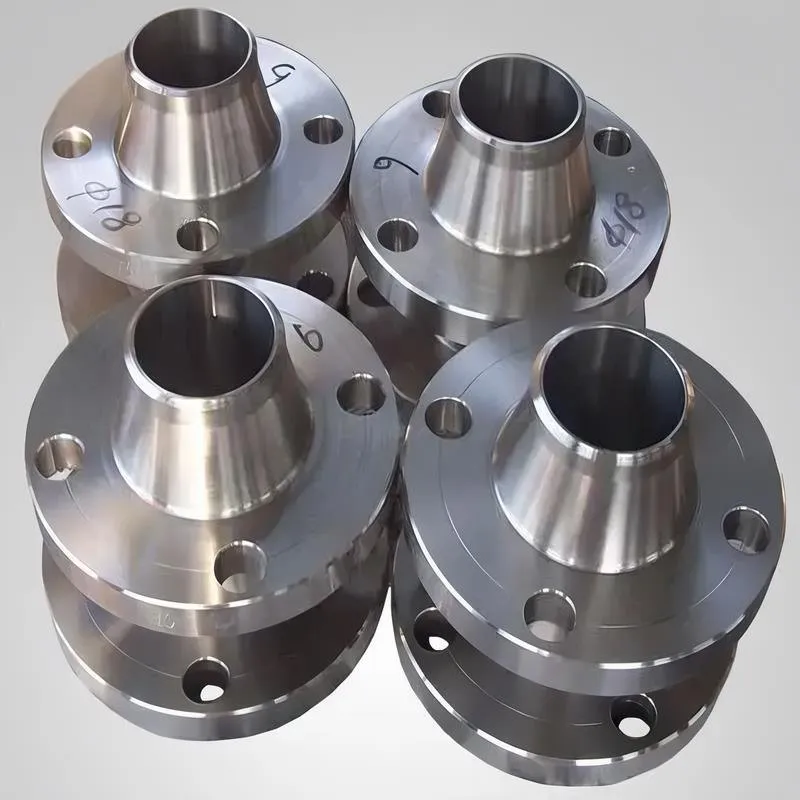
Plate Flat Welding Flange (PL), Necked Flat Welding Flange (SO), Necked Butt Welding Flange (WN), Integral Flange (IF), Socket Welding Flange (SW), Threaded Flange (Th), Butt Welding Ring Loose Flange (PJ/SE), Blind Flange (BL), Flat Welding Ring Loose Flange (PJ/PJ), and Lined Blind Flange (BL(s)).
2. **According to Petrochemical (SH) Industry Standards:** Flanges are classified as follows:
Threaded Flange (PL), Butt Welding Flange (WN), Flat Welding Flange (SO), Socket Welding Flange (SW), Loose Flange (LJ), and Blind Flange (no specific designation).
3. **According to Machinery (JB) Industry Standards:** Flanges are classified as follows:
Integral Flange, Butt Welding Flange, Plate Flat Welding Flange, Butt Welding Ring Plate Loose Flange, Flat Welding Ring Plate Loose Flange, Lap Joint Ring Plate Loose Flange, and Blind Flange.
4. **According to Connection Method/Type:** Flanges are classified as follows:
Plate Flat Welding Flange, Necked Flat Welding Flange, Necked Butt Welding Flange, Socket Welding Flange, Threaded Flange, Blind Flange, Necked Butt Welding Ring Loose Flange, Flat Welding Ring Loose Flange, Ring-Type Joint (RTJ) Flange and Blind Flange, Large-Diameter Plate Flange, Large-Diameter High-Neck Flange, Figure-8 Blind Plate, Butt Welding Ring Loose Flange, etc.
5. **According to the Component Being Connected:** Flanges can be classified into Vessel Flanges and Pipe Flanges.
6. **According to Structural Type:** Flanges include Integral Flanges, Threaded Flanges, Flat Welding Flanges, Butt Welding Flanges, Lap Joint (Loose/Swivel) Flanges, and Blind Flanges.
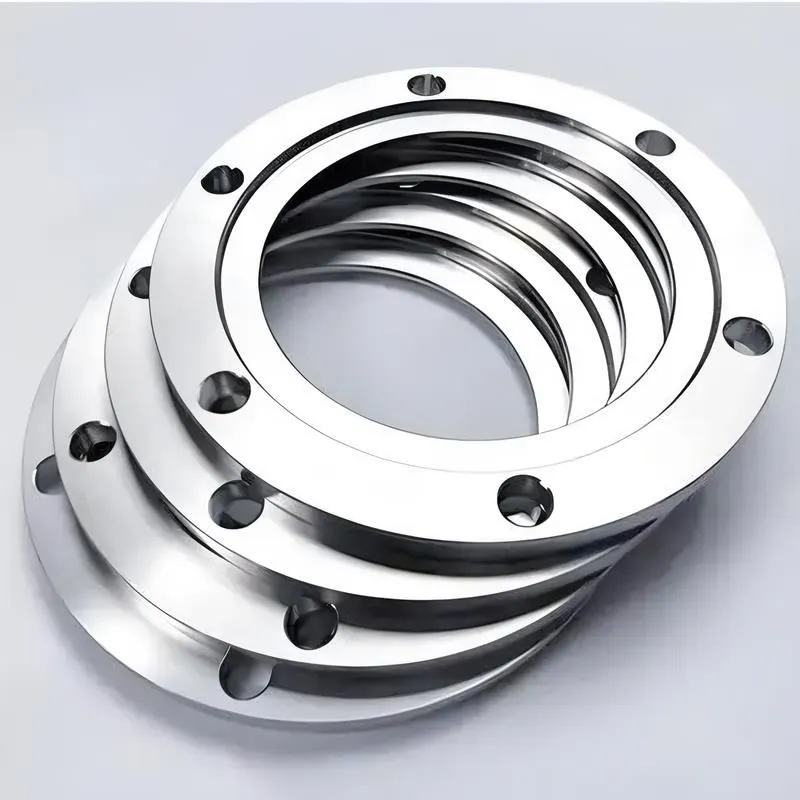
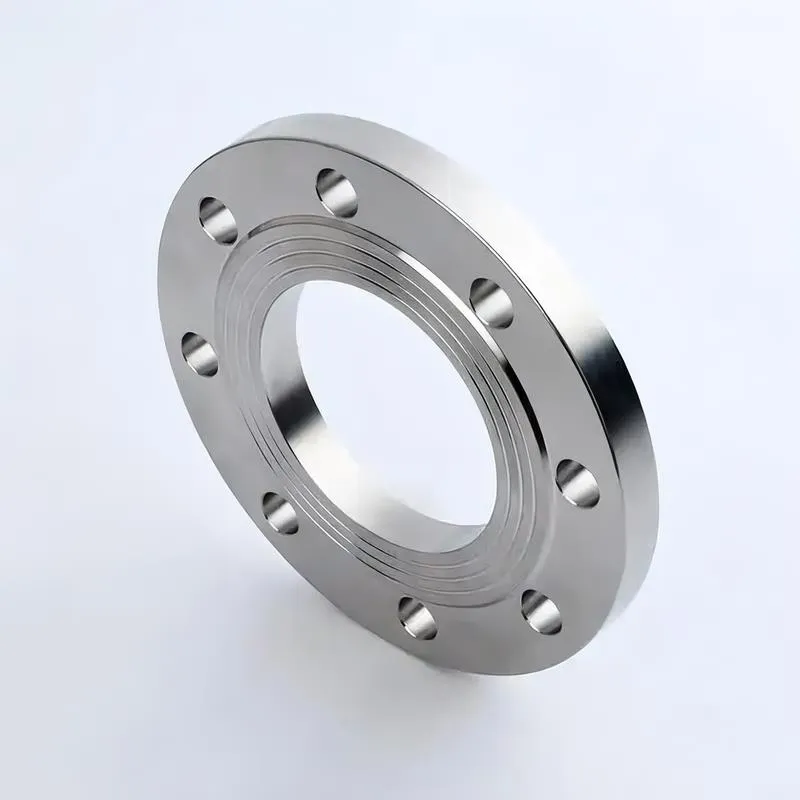
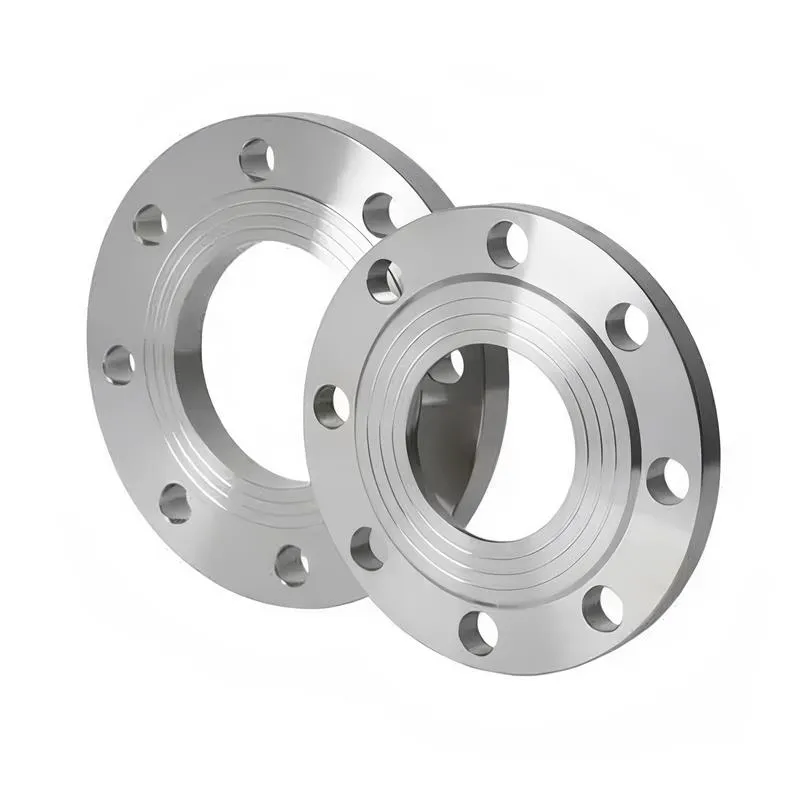
A flange—also referred to as a flange plate or rim—is a component used to connect shafts to one another, or, more commonly, to join the ends of pipes. Flanges are also utilized at the inlet and outlet ports of equipment to facilitate connections between two devices—for instance, the flange on a speed reducer. A "flange connection" or "flanged joint" refers to a detachable joint assembly comprising three interconnected elements—a flange, a gasket, and bolts—that together form a sealed structural unit. In the context of piping systems, a "pipe flange" specifically denotes a flange used for plumbing within the installation; when applied to equipment, it refers to the inlet or outlet flange of that specific device. Flanges feature a series of holes through which bolts are inserted to securely fasten the two flanges together, while a gasket placed between the flanges ensures a leak-proof seal. Flanges are broadly categorized into three types: threaded (screw-in) flanges, welded flanges, and clamp-type flanges. Flanges are invariably used in pairs; threaded flanges are suitable for low-pressure piping applications, whereas welded flanges are required for systems operating at pressures exceeding 4 kilograms per square centimeter. A sealing gasket is inserted between the two flange plates, which are then firmly secured using bolts. The thickness of a flange—as well as the specifications of the bolts used to fasten it—vary depending on the specific pressure rating required for the application. When connecting equipment such as water pumps or valves to piping systems, the corresponding connection points on these devices are often manufactured in the shape of a matching flange; this method of attachment is also referred to as a "flange connection." Generally, any connecting component that utilizes bolts to join and seal the perimeters of two flat surfaces—such as the joints in ventilation ducts—is termed a "flange"; such components may collectively be classified as "flange-type parts." However, since such a connection often constitutes merely a *portion* of a larger device—for instance, the interface between a flange and a water pump—it would be inappropriate to classify the entire water pump itself as a "flange-type part." Conversely, smaller components—such as valves—that feature such flanged interfaces may indeed be appropriately categorized as "flange-type parts."
-:-
For detailed product information, please contact sales.
-:
JIS SKS51 Low Alloy Tool Steel Flange Product Information
-:-
For detailed product information, please contact sales.
-:
JIS SKS51 Low Alloy Tool Steel Flange Synonyms
-:-
For detailed product information, please contact sales.
-:
JIS SKS51 Low Alloy Tool Steel Product Information
-:-
For detailed product information, please contact sales.
-:
# **Product Introduction: JIS SKS51 Low-Alloy Tool Steel**
## **Overview**
JIS SKS51 is a **chromium-tungsten alloyed** oil-hardening tool steel within the Japanese Industrial Standards (JIS) system, classified under the **SKS series (Tool Steels for Special Purposes)**. Characterized by its balanced composition of **chromium (0.50-1.00%) and tungsten (0.50-1.00%)**, SKS51 offers enhanced **wear resistance and hardenability** compared to plain carbon tool steels while maintaining good toughness and dimensional stability. This grade serves as a versatile, economical choice for various cold work applications requiring reliable performance under moderate service conditions.
**Key Advantages:**
- **Good Wear Resistance:** Tungsten and chromium carbides provide improved abrasion resistance
- **Excellent Hardenability:** Oil quenching ensures through-hardening in moderate sections
- **Minimal Distortion:** Superior dimensional stability compared to water-hardening grades
- **Good Toughness Profile:** Balanced alloying maintains adequate impact resistance
- **Cost-Effective:** Economical alternative to high-alloy tool steels for many applications
**Primary Considerations:**
- Moderate wear resistance compared to high-carbon, high-chromium grades
- Limited high-temperature performance (max service ~200°C)
- Requires proper heat treatment to achieve optimal properties
- Not suitable for severe impact or extreme abrasion applications
## **International Designations & Standards**
| Standard System | Designation | Note |
|----------------|-------------|------|
| **JIS (Japan)** | SKS51 | Primary specification |
| **ISO (International)** | ~**105WCr2** | Similar tungsten-chromium steel |
| **ASTM (USA)** | ~**O2** | Closest AISI equivalent (manganese-chromium oil-hardening) |
| **DIN (Germany)** | ~1.2510 | Equivalent to 105WCr2/O2 |
| **BS (UK)** | ~**BO1** | Similar oil-hardening grade |
| **GB (China)** | ~**9CrWMn** | Similar chromium-tungsten-manganese steel |
| **KS (Korea)** | ~**STS51** | Korean equivalent |
*Note: SKS51 is part of the widely standardized oil-hardening tool steel family, with close equivalents in most international standards.*
---
## **1. Chemical Composition (Typical, Weight %)**
The balanced alloying provides good hardenability with moderate wear resistance.
| Element | Content (%) | Role & Metallurgical Effect |
|---------|-------------|-----------------------------|
| **Carbon (C)** | 0.85 - 0.95 | Provides base hardness through martensite formation. Optimal level for balancing hardness and toughness. |
| **Tungsten (W)** | 0.50 - 1.00 | Forms hard tungsten carbides (WC, W₂C) that improve wear resistance and provide moderate hot hardness. |
| **Chromium (Cr)** | 0.50 - 1.00 | Enhances hardenability, contributes to wear resistance through chromium carbide formation (Cr₇C₃). |
| **Manganese (Mn)** | 0.90 - 1.20 | **Key element.** Significantly increases hardenability, enables oil quenching, and stabilizes austenite. |
| **Silicon (Si)** | 0.10 - 0.30 | Deoxidizer, provides solid solution strengthening, improves tempering resistance. |
| **Vanadium (V)** | ≤0.20 (Optional) | When present, refines grain size and improves toughness. |
| **Phosphorus (P)** | ≤0.030 | Harmful impurity; minimized to prevent embrittlement. |
| **Sulfur (S)** | ≤0.030 | Impurity; may be controlled for improved machinability. |
| **Iron (Fe)** | Balance | Matrix element. |
**Alloying Note:** The manganese content is critical for achieving sufficient hardenability for oil quenching, distinguishing it from water-hardening grades.
---
## **2. Physical & Mechanical Properties**
### **Physical Properties**
| Property | Typical Value | Conditions/Notes |
|----------|---------------|------------------|
| **Density** | 7.83 - 7.85 g/cm³ | At 20°C (68°F) |
| **Melting Range** | 1415 - 1435°C (2580 - 2615°F) | Liquidus to solidus range |
| **Thermal Conductivity** | 44 - 48 W/m·K | At 20°C (68°F) |
| **Specific Heat Capacity** | 465 - 485 J/kg·K | At 20°C (68°F) |
| **Coefficient of Thermal Expansion** | 11.8 - 12.3 × 10⁻⁶/K | 20-200°C (68-392°F) range |
| **Electrical Resistivity** | 0.26 - 0.30 μΩ·m | At 20°C (68°F) |
| **Elastic Modulus** | 205 - 210 GPa (29.7 - 30.5 × 10⁶ psi) | At room temperature |
### **Mechanical Properties (Heat-Treated Condition)**
| Property | Value Range | Heat Treatment Condition |
|----------|-------------|--------------------------|
| **Hardness (Annealed)** | 192 - 228 HB | Spheroidize annealed condition |
| **Hardness (Hardened)** | 58 - 62 HRC | Oil quenched from 780-820°C, tempered at 150-250°C |
| **Tensile Strength** | 1850 - 2050 MPa (268 - 297 ksi) | At 60-62 HRC |
| **Yield Strength (0.2% offset)** | 1550 - 1750 MPa (225 - 254 ksi) | At 60-62 HRC |
| **Compressive Strength** | 2250 - 2500 MPa (326 - 363 ksi) | At 60-62 HRC |
| **Impact Toughness (Charpy)** | 12 - 20 J (8.9 - 14.8 ft·lb) | At 60-62 HRC, unnotched |
| **Fatigue Endurance Limit** | 650 - 750 MPa (94 - 109 ksi) | Rotating bending, 10⁷ cycles |
| **Transverse Rupture Strength** | 2000 - 2300 MPa (290 - 334 ksi) | At 60-62 HRC |
### **Hardenability Characteristics**
| Distance from Quenched End (Jominy, 1/16 in) | 1 | 4 | 8 | 12 | 16 | 20 |
|---------------------------------------------|---|---|---|---|---|---|
| **Hardness (HRC)** | 61-63 | 60-62 | 59-61 | 58-60 | 57-59 | 56-58 |
**Section Hardening Capability:**
- **25mm (1") diameter:** Through-hardened to 58-60 HRC
- **50mm (2") diameter:** Surface 60-62 HRC, core 56-58 HRC
- **75mm (3") diameter:** Surface 59-61 HRC, core 54-56 HRC
- **100mm (4") diameter:** Surface 58-60 HRC, core 52-54 HRC
*Effective through-hardening depth: Approximately 50-60mm in oil quench.*
---
## **3. Product Applications**
### **Primary Application Areas**
**1. Cutting and Machining Tools:**
- Blanking and piercing dies for medium-duty applications
- Forming tools and bending dies
- Thread rolling dies and knurling tools
- Cutting knives for non-ferrous metals and plastics
**2. Precision Tooling and Gauges:**
- Plug gauges and ring gauges
- Jigs and fixtures for manufacturing
- Precision measuring instruments
- Machine tool components (bushings, guides)
**3. Mold and Die Applications:**
- Plastic injection molds for general-purpose resins
- Zinc die-casting molds (prototype or low-volume)
- Compression molds for rubber and plastics
- Glass molding tools
**4. General Tooling:**
- Hand tools requiring wear resistance
- Woodworking tools (planes, chisels)
- Agricultural implement parts
- Wear plates and machine components
### **Industry-Specific Applications**
| Industry | Typical SKS51 Components |
|----------|--------------------------|
| **Metal Stamping** | Progressive die inserts, punches, stripper plates |
| **Precision Engineering** | Gauges, jigs, fixtures, measuring tools |
| **Plastics Manufacturing** | Injection mold cores, cavities, ejector pins |
| **Automotive** | Trim dies, forming tools, prototype tooling |
| **General Manufacturing** | Cutting blades, shear tools, machine parts |
### **Service Performance Summary**
| Application Condition | SKS51 Performance | Recommended Hardness |
|----------------------|-------------------|----------------------|
| **Moderate Wear** | Good | 60-62 HRC |
| **Light to Medium Impact** | Good | 58-60 HRC |
| **Precision Dimension** | Very Good | 59-61 HRC |
| **Cutting Applications** | Good | 60-62 HRC |
| **Fatigue Loading** | Good | 58-60 HRC |
---
## **4. Heat Treatment Guidelines**
### **Annealing (Preparation for Machining)**
- **Process:** Full annealing or spheroidize annealing
- **Temperature:** 760-790°C (1400-1450°F)
- **Cooling:** Slow furnace cool at ≤20°C/hr to 550°C, then air cool
- **Resulting Hardness:** 192-228 HB (Brinell)
- **Microstructure:** Spheroidized carbides in ferrite matrix
### **Hardening (Austenitizing & Quenching)**
1. **Preheating:** Recommended for best results
- Temperature: 550-650°C (1020-1200°F)
- Time: 10-20 minutes per inch
2. **Austenitizing:**
- **Temperature:** 780-820°C (1435-1510°F)
- **Soaking Time:** 20-30 minutes per inch of thickness
- **Atmosphere:** Neutral to slightly carburizing preferred
- **Grain Size:** ASTM 8-10 achievable
3. **Quenching:**
- **Medium:** **Warm oil** (40-80°C / 100-175°F)
- **Agitation:** Moderate to vigorous agitation
- **Quench to:** 60-80°C (140-175°F) before tempering
- **Alternative:** Polymer quenchants for complex shapes
### **Tempering (Critical Process)**
- **Time to Temper:** Within 1-2 hours of quenching
- **Standard Practice:** Double tempering recommended
- First temper: 150-250°C (300-480°F) for 2+ hours
- Second temper: Same temperature, 2+ hours
- **Temperature-Hardness Relationship:**
- 150°C (300°F): 61-63 HRC
- 175°C (350°F): 60-62 HRC
- 200°C (400°F): 59-61 HRC
- 225°C (440°F): 58-60 HRC
- 250°C (480°F): 57-59 HRC
- 300°C (570°F): 55-57 HRC
### **Stress Relieving**
- **When:** After rough machining, before final hardening
- **Temperature:** 600-650°C (1110-1200°F)
- **Hold Time:** 1-2 hours per inch of thickness
- **Cooling:** Slow furnace cool
---
## **5. Machining & Fabrication**
### **Machinability (Annealed Condition)**
- **Relative Machinability:** 70-75% (compared to 1% carbon steel = 100%)
- **Cutting Tool Recommendations:**
- **Carbide:** C2-C6 grades for general machining
- **HSS:** M2 or equivalent for complex operations
- **Cutting Parameters:**
- **Turning:** 45-65 m/min (150-215 SFM) with carbide
- **Milling:** 30-45 m/min (100-150 SFM) with carbide
- **Drilling:** 15-25 m/min (50-80 SFM) with HSS
- **Tool Geometry:** Positive rake angles (5-10°)
- **Coolant:** Soluble oil or emulsion
### **Grinding (Hardened Condition)**
- **Wheel Selection:** Aluminum oxide (A46-J8-V)
- **Parameters:** Moderate speed, light feed
- **Coolant:** Ample flow to prevent overheating
- **Dressing:** Regular dressing for best results
### **Electrical Discharge Machining (EDM)**
- Suitable for both annealed and hardened conditions
- **Finishing:** Multiple skim cuts to minimize white layer
- **Post-EDM:** Low-temperature temper recommended
---
## **6. Comparative Analysis**
### **vs. Other SKS Series Grades**
| Property | SKS51 | SKS3 | SKS2 | SKS93 |
|----------|-------|------|------|-------|
| **Primary Alloying** | Cr-W-Mn | Cr-Mn | Higher Cr-W | Mn-Cr |
| **Hardening Method** | Oil | Oil | Oil | Oil |
| **Wear Resistance** | Good | Good | Very Good | Fair |
| **Toughness** | Good | Very Good | Good | Excellent |
| **Dimensional Stability** | Very Good | Excellent | Very Good | Good |
| **Typical Hardness** | 58-62 HRC | 58-62 HRC | 60-63 HRC | 56-60 HRC |
### **vs. International Equivalents**
| Aspect | JIS SKS51 | AISI O2 | DIN 1.2510 | ISO 105WCr2 |
|--------|-----------|---------|------------|--------------|
| **Carbon Range** | 0.85-0.95% | 0.85-0.95% | 0.90-1.00% | 0.90-1.05% |
| **Manganese** | 0.90-1.20% | 1.40-1.80% | 1.00-1.20% | 0.80-1.10% |
| **Tungsten** | 0.50-1.00% | 0.40-0.60% | 0.50-0.70% | 1.80-2.20% |
| **Hardening Temp** | 780-820°C | 780-820°C | 780-810°C | 800-830°C |
| **Typical Use** | General tooling | General tooling | Precision tools | Wear tools |
---
## **7. Quality Control & Inspection**
### **Material Specifications**
- **Decarburization:** Maximum 0.10mm per side on tooling stock
- **Surface Quality:** Free from seams, cracks, and excessive scale
- **Straightness:** Per JIS G4404 requirements
- **Dimensions:** Standard commercial tolerances apply
### **Testing Requirements**
- **Chemical Analysis:** Spectrographic analysis standard
- **Hardness Testing:** Brinell for annealed, Rockwell C for hardened
- **Microstructure:** Carbide distribution and grain size evaluation
- **Dimensional Inspection:** Per drawing specifications
---
## **8. Technical Recommendations**
### **Design Guidelines**
1. **Section Uniformity:** Maintain consistent wall thickness where possible
2. **Radii:** Minimum 1.0mm on internal corners
3. **Surface Finish:** Critical surfaces should be 1.6μm Ra or better
4. **Allowances:** Include 0.1-0.2mm per side for grinding
### **Heat Treatment Best Practices**
1. **Temperature Control:** Use calibrated pyrometers
2. **Quench Agitation:** Ensure uniform oil flow
3. **Tempering Consistency:** Maintain temperature within ±5°C
4. **Record Keeping:** Document all heat treatment parameters
### **Common Issues and Solutions**
| Problem | Likely Cause | Corrective Action |
|---------|--------------|-------------------|
| **Soft Spots** | Inadequate agitation, scale | Improve oil circulation, clean parts |
| **Excessive Distortion** | Uneven heating, poor fixturing | Use preheat, improve support |
| **Low Hardness** | Low austenitizing temperature | Verify temperature, increase if needed |
| **Cracking** | Too rapid quench, sharp corners | Use warmer oil, increase radii |
### **Safety Considerations**
- **Heat Treatment:** Standard furnace and oil quench safety procedures
- **Machining:** Use proper ventilation and dust collection
- **Handling:** Hardened tools have sharp edges
- **Storage:** Protect from corrosion with preventive coatings
---
## **Disclaimer**
This technical datasheet provides general information about JIS SKS51 tool steel based on standard specifications and typical industry practices. Actual properties and performance may vary depending on:
1. **Manufacturer's specific production methods** and quality systems
2. **Precise heat treatment parameters** and equipment capabilities
3. **Specific application conditions** and service requirements
4. **Tool design, manufacturing quality,** and maintenance practices
**Important Considerations:**
- SKS51 is a general-purpose tool steel suitable for many applications but not for extreme conditions
- Proper heat treatment is essential for achieving optimal properties
- Consider higher-alloy grades for severe wear or high-temperature applications
- Always consult with material specialists for critical applications
For current specifications and detailed technical data, refer to:
- JIS G4404: Tool Steels
- Manufacturer's technical datasheets
- Applicable industry standards and best practices
This information is intended for reference purposes and is subject to revision as standards and technology evolve. Users should verify specific requirements with their steel suppliers and technical consultants.
-:-
For detailed product information, please contact sales.
-:
JIS SKS51 Low Alloy Tool Steel Specification
Dimensions
Size:
Diameter 20-1000 mm Length <6713 mm
Size:We can customized as required
Standard:
Per your request or drawing
We can customized as required
Properties(Theoretical)
Chemical Composition
-:-
For detailed product information, please contact sales.
-:
JIS SKS51 Low Alloy Tool Steel Properties
-:-
For detailed product information, please contact sales.
-:
Applications of JIS SKS51 Low Alloy Tool Steel Flange
-:-
For detailed product information, please contact sales.
-:
Chemical Identifiers JIS SKS51 Low Alloy Tool Steel Flange
-:-
For detailed product information, please contact sales.
-:
Packing of JIS SKS51 Low Alloy Tool Steel Flange
-:-
For detailed product information, please contact sales.
-:
Standard Packing:
-:-
For detailed product information, please contact sales.
-:
Typical bulk packaging includes palletized plastic 5 gallon/25 kg. pails, fiber and Steel Flange drums to 1 ton super sacks in full container (FCL) or truck load (T/L) quantities. Research and sample quantities and hygroscopic, oxidizing or other air sensitive materials may be packaged under argon or vacuum. Solutions are packaged in polypropylene, plastic or glass jars up to palletized 3184 gallon liquid totes Special package is available on request. E FORUs’ is carefully handled to minimize damage during storage and transportation and to preserve the quality of our products in their original condition