1,We Manufacturing processes are primarily classified into four types:
1:Forging,
2:Casting,
3:Cutting,
4:Rolling.
2,We can manufacture in accordance with these standards.
Standards:
GB Series (Chinese Standards), JB Series (Machinery Standards), HG Series (Chemical Industry Standards), ASME B16.5 (American Standards), BS4504 (British Standards), DIN (German Standards), and JIS (Japanese Standards).
Internationally, there are two primary systems of pipe flange standards: the European system, represented by the German DIN standards (including those of the former Soviet Union), and the American system, represented by the US ANSI pipe flange standards. Other common standards include: the Chinese Ministry of Machinery Industry standards (JB series), the Ministry of Chemical Industry standards (HG series), the Chinese National Standard *GB/T 9112–9124-2010 Steel Pipe Flanges*, as well as US standards (ASME B16.5), British standards (BS4504), German standards (DIN), Japanese standards (JIS), and marine standards (CBM), among others.
The nominal pressure ratings for the PN series are designated by "PN" and comprise the following nine levels: PN2.5, PN6, PN10, PN16, PN25, PN40, PN63, PN100, and PN160.
The nominal pressure ratings for the Class series are designated by "Class" and comprise the following six levels: Class150, Class300, Class600, Class900, Class1500, and Class2500.
Flange Classification
1. **According to Chemical Industry Standards:** Flanges are classified as follows:
Plate Flat Welding Flange (PL), Necked Flat Welding Flange (SO), Necked Butt Welding Flange (WN), Integral Flange (IF), Socket Welding Flange (SW), Threaded Flange (Th), Butt Welding Ring Loose Flange (PJ/SE), Blind Flange (BL), Flat Welding Ring Loose Flange (PJ/PJ), and Lined Blind Flange (BL(s)).
2. **According to Petrochemical (SH) Industry Standards:** Flanges are classified as follows:
Threaded Flange (PL), Butt Welding Flange (WN), Flat Welding Flange (SO), Socket Welding Flange (SW), Loose Flange (LJ), and Blind Flange (no specific designation).
3. **According to Machinery (JB) Industry Standards:** Flanges are classified as follows:
Integral Flange, Butt Welding Flange, Plate Flat Welding Flange, Butt Welding Ring Plate Loose Flange, Flat Welding Ring Plate Loose Flange, Lap Joint Ring Plate Loose Flange, and Blind Flange.
4. **According to Connection Method/Type:** Flanges are classified as follows:
Plate Flat Welding Flange, Necked Flat Welding Flange, Necked Butt Welding Flange, Socket Welding Flange, Threaded Flange, Blind Flange, Necked Butt Welding Ring Loose Flange, Flat Welding Ring Loose Flange, Ring-Type Joint (RTJ) Flange and Blind Flange, Large-Diameter Plate Flange, Large-Diameter High-Neck Flange, Figure-8 Blind Plate, Butt Welding Ring Loose Flange, etc.
5. **According to the Component Being Connected:** Flanges can be classified into Vessel Flanges and Pipe Flanges.
6. **According to Structural Type:** Flanges include Integral Flanges, Threaded Flanges, Flat Welding Flanges, Butt Welding Flanges, Lap Joint (Loose/Swivel) Flanges, and Blind Flanges.
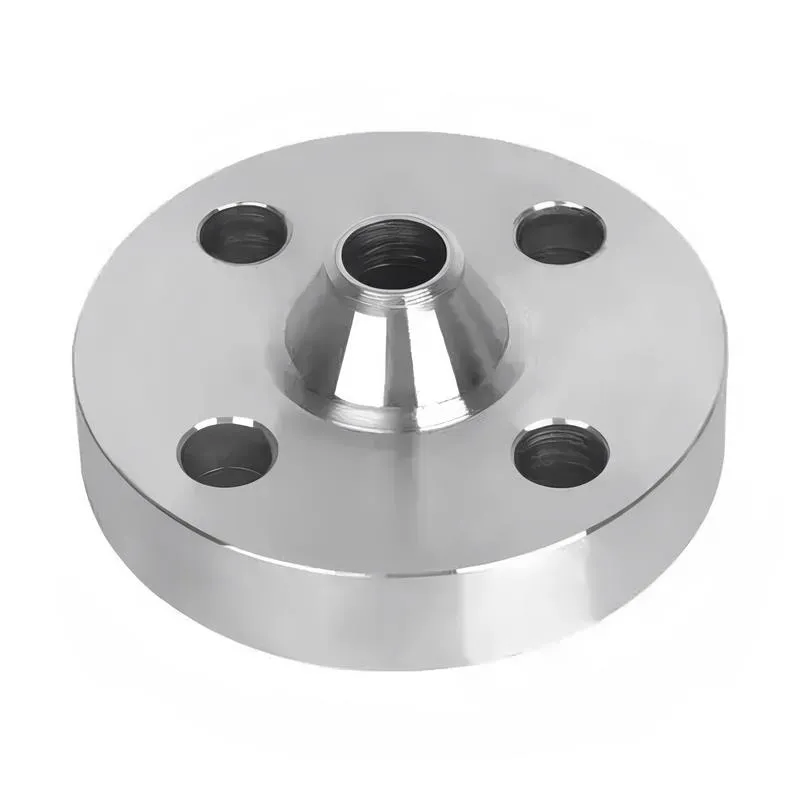
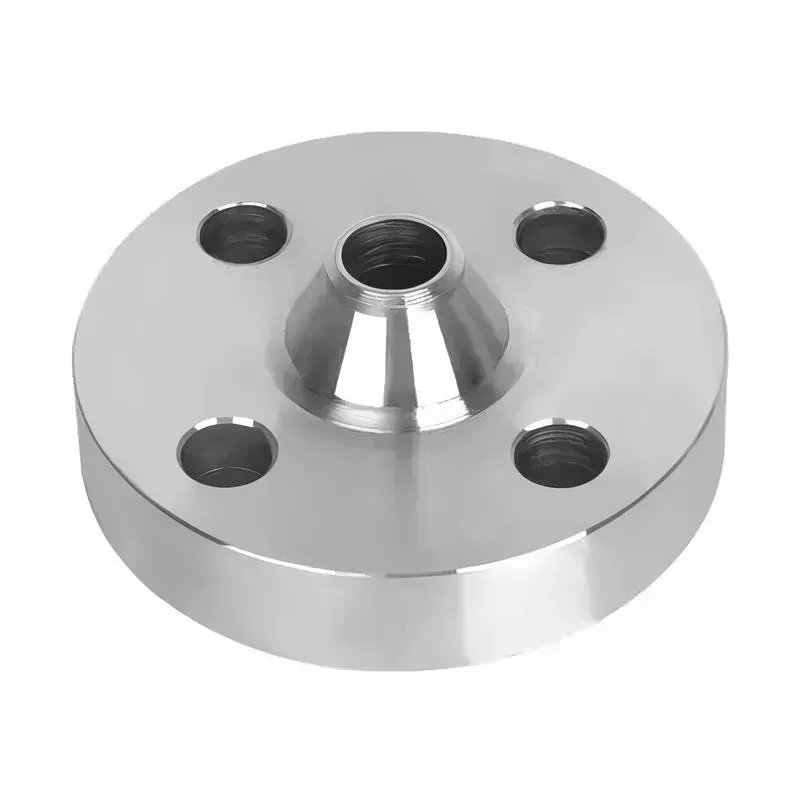
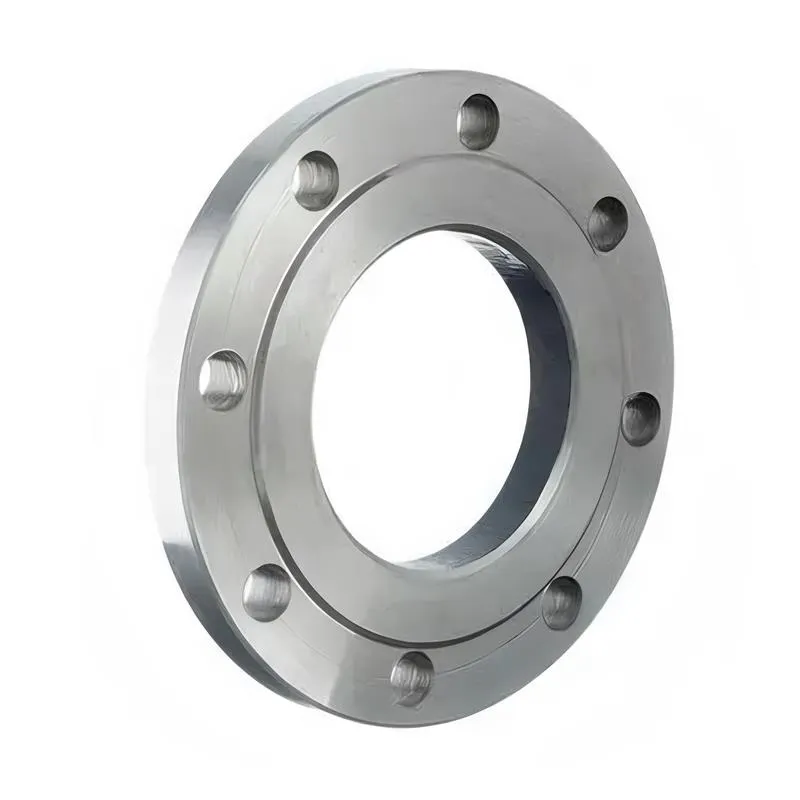
A flange—also referred to as a flange plate or rim—is a component used to connect shafts to one another, or, more commonly, to join the ends of pipes. Flanges are also utilized at the inlet and outlet ports of equipment to facilitate connections between two devices—for instance, the flange on a speed reducer. A "flange connection" or "flanged joint" refers to a detachable joint assembly comprising three interconnected elements—a flange, a gasket, and bolts—that together form a sealed structural unit. In the context of piping systems, a "pipe flange" specifically denotes a flange used for plumbing within the installation; when applied to equipment, it refers to the inlet or outlet flange of that specific device. Flanges feature a series of holes through which bolts are inserted to securely fasten the two flanges together, while a gasket placed between the flanges ensures a leak-proof seal. Flanges are broadly categorized into three types: threaded (screw-in) flanges, welded flanges, and clamp-type flanges. Flanges are invariably used in pairs; threaded flanges are suitable for low-pressure piping applications, whereas welded flanges are required for systems operating at pressures exceeding 4 kilograms per square centimeter. A sealing gasket is inserted between the two flange plates, which are then firmly secured using bolts. The thickness of a flange—as well as the specifications of the bolts used to fasten it—vary depending on the specific pressure rating required for the application. When connecting equipment such as water pumps or valves to piping systems, the corresponding connection points on these devices are often manufactured in the shape of a matching flange; this method of attachment is also referred to as a "flange connection." Generally, any connecting component that utilizes bolts to join and seal the perimeters of two flat surfaces—such as the joints in ventilation ducts—is termed a "flange"; such components may collectively be classified as "flange-type parts." However, since such a connection often constitutes merely a *portion* of a larger device—for instance, the interface between a flange and a water pump—it would be inappropriate to classify the entire water pump itself as a "flange-type part." Conversely, smaller components—such as valves—that feature such flanged interfaces may indeed be appropriately categorized as "flange-type parts."
-:-
For detailed product information, please contact sales.
-:
JIS SHK55 Molybdenum High Speed Tool Steel Flange Product Information
-:-
For detailed product information, please contact sales.
-:
JIS SHK55 Molybdenum High Speed Tool Steel Flange Synonyms
-:-
For detailed product information, please contact sales.
-:
JIS SHK55 Molybdenum High Speed Tool Steel Product Information
-:-
For detailed product information, please contact sales.
-:
# **JIS SKH55 Molybdenum High Speed Tool Steel**
**International Standard:** JIS G4403 (Japan Industrial Standard) - High-Speed Tool Steels
---
## **1. Overview**
JIS SKH55 is a **super high-performance molybdenum-cobalt high-speed steel** representing the Japanese equivalent to the globally renowned **AISI M42 grade**. Characterized by its **exceptionally high cobalt content (8.0-9.0%) and balanced carbon-vanadium composition**, this steel delivers **outstanding red hardness, superior hot hardness retention, and excellent wear resistance**. Designed for the most demanding high-speed machining applications, SKH55 maintains cutting edge integrity at extreme temperatures where other high-speed steels would soften, making it particularly suitable for machining superalloys, hardened steels, and other difficult-to-machine materials.
---
## **2. Chemical Composition (Typical Weight %)**
| Element | Content (%) |
| :------ | :---------- |
| C | 1.05–1.15 |
| Si | 0.15–0.50 |
| Mn | 0.15–0.40 |
| Cr | 3.50–4.25 |
| Mo | 9.00–10.00 |
| W | 1.20–1.80 |
| V | 1.00–1.25 |
| Co | 8.00–9.00 |
| P (max) | 0.030 |
| S (max) | 0.030 |
**Balance:** Iron (Fe).
**Key Characteristics:** The composition features **very high molybdenum (9-10%) with substantial cobalt (8-9%)**, creating a distinct molybdenum-rich matrix. The carbon content is balanced to optimize carbide formation without excessive brittleness, while the moderate vanadium provides good wear resistance. This composition differs significantly from the tungsten-rich T-series steels (like SKH3/SKH4) and represents the pinnacle of molybdenum-based super high-speed steels.
---
## **3. Physical & Mechanical Properties**
### **Physical Properties**
- **Density:** ~8.0 g/cm³ (slightly lower than tungsten-rich HSS)
- **Thermal Conductivity:** **Excellent** – Significantly higher than standard HSS due to high cobalt (~30-35 W/m·K at 20°C), aiding heat dissipation from the cutting edge.
- **Coefficient of Thermal Expansion:** ~11.8 ×10⁻⁶ /K (20–500°C)
- **Specific Heat Capacity:** ~0.46 kJ/kg·K
- **Magnetic Properties:** Generally magnetic in annealed and hardened conditions.
### **Mechanical Properties (Heat-Treated)**
- **Annealed Hardness:** ≤ 285 HB
- **Hardened & Tempered Hardness:** **67–70 HRC** (can achieve ultra-high hardness)
- **Red Hardness:** **Exceptional** – Maintains hardness effectively up to ~650°C, superior to most conventional HSS grades.
- **Hot Hardness at 600°C:** Typically ~58-60 HRC, significantly higher than M2 or M35 grades.
- **Transverse Rupture Strength:** 2,800–3,200 MPa (lower than M2 due to higher alloy content)
- **Compressive Strength:** 3,400–3,800 MPa
- **Toughness:** **Moderate to Low** – The high hardness and alloy content reduce impact resistance compared to lower-alloy HSS; best suited for continuous cuts.
---
## **4. Heat Treatment Specifications**
### **1. Annealing**
- **Temperature:** 850–900°C
- **Process:** Heat uniformly, hold for 2–4 hours, furnace cool slowly (15–20°C/h) to about 600°C, then air cool.
- **Resulting Hardness:** ≤ 285 HB
- **Spheroidize Annealing:** Recommended for best machinability and subsequent heat treatment response.
### **2. Stress Relieving**
- **Temperature:** 600–650°C (after rough machining)
- **Hold Time:** 1–2 hours per 25mm thickness
- **Purpose:** Minimize distortion during final hardening.
### **3. Hardening (Quenching)**
- **Preheating:** **Critical** – Multiple stages recommended:
- **First Preheat:** 400–500°C
- **Second Preheat:** 800–850°C
- **Austenitizing Temperature:** **1180–1210°C** (Precise control essential)
- **Soaking Time:** 2–4 minutes per 25mm section (shorter times for salt bath)
- **Quenching Medium:** Oil, air, or salt bath (oil quenching common for complex tools)
### **4. Tempering**
- **Mandatory Immediate Tempering:** Must begin when tool reaches 50–80°C.
- **Temperature Range:** 540–600°C
- **Cycle:** **Triple tempering essential** – Each cycle: 1–2 hours at temperature, air cool to room temperature.
- **Typical Process:** Temper at 560–580°C three times to achieve maximum secondary hardness and stability.
- **Hardness Development:** Exhibits strong secondary hardening response; final hardness typically 68–70 HRC.
### **5. Sub-Zero Treatment**
- **Optional but Beneficial:** Treatment at -70 to -100°C between quenching and tempering can help transform retained austenite, improving dimensional stability and slightly increasing hardness.
---
## **5. Key Features & Advantages**
1. **Exceptional Red Hardness & Hot Hardness:** The high cobalt content significantly enhances high-temperature hardness retention, allowing for higher cutting speeds without edge softening.
2. **Superior Wear Resistance:** Achieves and maintains ultra-high hardness (68-70 HRC), providing excellent resistance to flank wear and abrasion.
3. **Excellent Thermal Conductivity:** Cobalt improves heat dissipation from the cutting edge, reducing thermal damage to both tool and workpiece.
4. **Good Grindability:** Despite high hardness, the steel exhibits relatively good grindability when proper wheels and conditions are used.
5. **High Strength at Elevated Temperatures:** Maintains mechanical properties better than most HSS grades at operating temperatures.
**Trade-offs:**
- **Reduced Toughness:** Less suitable for interrupted cuts or impact loading compared to M2 or M35.
- **Higher Cost:** Significant cobalt content makes it more expensive than standard HSS grades.
- **Heat Treatment Sensitivity:** Requires precise control during hardening to avoid grain growth or insufficient carbide solution.
---
## **6. Typical Applications**
SKH55 is the **premium choice for the most demanding machining operations** where heat resistance is the primary limiting factor.
### **Primary Cutting Tool Applications:**
- **Machining Superalloys:**
- Nickel-based alloys (Inconel, Hastelloy, Waspaloy)
- Cobalt-based alloys
- Titanium alloys
- **Machining Hardened Steels:**
- Tool steels (hardened to 45-60 HRC)
- Die steels, bearing steels
- High-strength alloy steels
- **High-Speed Machining of Abrasive Materials:**
- High-silicon aluminum alloys
- Fiber-reinforced composites
- Hardened cast irons
- **Specific Tool Types:**
- **High-Performance End Mills:** For aerospace and mold & die applications
- **Solid Drills & Gun Drills:** For deep-hole drilling in tough materials
- **Thread Mills & Taps:** For precision threading in hardened materials
- **Broaches:** For finishing superalloy components
- **Gear Hobs:** For cutting hardened gears
- **Milling Cutters & Inserts:** For high-speed machining centers
### **Specialized Applications:**
- **Aerospace Manufacturing:** Critical for machining engine and structural components
- **Mold & Die Industry:** For machining hardened mold steels
- **Automotive Racing:** For machining high-strength, heat-resistant components
- **Medical Device Manufacturing:** For machining surgical implant materials
---
## **7. International Standard Equivalents**
| Standard | Grade Designation | Notes |
| :--------------- | :------------------ | :----------------------------------------- |
| **JIS** | SKH55 | Original specification (JIS G4403) |
| **AISI/SAE (USA)**| M42 | **Direct Equivalent** |
| **DIN (Germany)** | 1.3247 / HS2-9-1-8 | European standard equivalent |
| **ISO** | HS2-9-1-8 | International designation |
| **GB (China)** | W2Mo9Cr4VCo8 | Chinese equivalent |
| **UNS** | T11342 | Unified Numbering System |
| **AFNOR (France)**| Z110DKCWV 09-08-04-02 | French standard |
---
## **8. Machining & Fabrication Guidelines**
### **Machining (In Annealed State):**
- **Moderate Machinability:** More difficult than lower-alloy steels but machinable with proper techniques.
- **Tooling:** Use carbide tools with positive rake angles.
- **Parameters:** Moderate speeds and feeds with ample coolant.
- **Work Hardening:** Be aware of potential work hardening; use consistent feed rates.
### **Grinding:**
- **Good Grindability for its Hardness:** Cobalt content aids in heat dissipation.
- **Wheel Selection:**
- **Primary Choice:** Cubic Boron Nitride (CBN) wheels for efficiency
- **Alternative:** Premium aluminum oxide or ceramic alumina wheels
- **Practice:** Use sharp wheels, light infeeds, and **copious coolant** to prevent thermal damage
- **Dressing:** Frequent dressing maintains wheel sharpness and prevents glazing
### **Electrical Discharge Machining (EDM):**
- **Commonly Used:** Effective for machining complex shapes in hardened state
- **Post-EDM Requirement:** **Must remove recast layer** completely by grinding or polishing
- **Stress Relief:** Low-temperature tempering (300–350°C) recommended after EDM
### **Welding:**
- **Generally Not Recommended:** High crack sensitivity
- **Specialized Repair Only:** If necessary, requires:
- High preheat (500–550°C)
- Matching high-cobalt HSS filler material
- Controlled interpass temperatures
- Immediate post-weld tempering (550–600°C)
- **Consider Alternative:** Brazing or mechanical attachment preferred
---
## **9. Surface Treatment**
SKH55 responds excellently to modern surface treatments:
1. **PVD Coatings (Primary Enhancement):**
- **TiAlN, AlTiN:** Excellent for high-temperature applications
- **AlCrN:** Superior oxidation resistance
- **TiSiN:** Ultra-hard nanocomposite coating
- **Benefits:** Reduce friction, provide thermal barrier, prevent material adhesion, extend tool life 3-5 times
2. **Nitriding:**
- **Process:** Gas or plasma nitriding at 480–520°C
- **Case Depth:** 0.05–0.15 mm
- **Surface Hardness:** 1100–1300 HV
- **Consideration:** Ensure temperature is below final tempering temperature
3. **Steam Treatment:**
- Forms black oxide layer (Fe₃O₄)
- Improves corrosion resistance and chip flow
- Reduces friction in cutting operations
---
## **10. Quality Control & Inspection**
### **Chemical Analysis:**
- Spectrometry for each melt
- Verify cobalt, molybdenum, and vanadium content
### **Hardness Testing:**
- Rockwell C scale for hardened material
- Multiple points to ensure uniformity
### **Microstructure Examination:**
- Carbide distribution and size
- Grain size assessment (ASTM 8 or finer desired)
- Freedom from defects, segregation, or abnormal structures
### **Non-Destructive Testing:**
- Ultrasonic testing for larger sections
- Magnetic particle inspection for surface cracks
---
## **11. Comparison with Related Grades**
| Property | SKH55 (M42) | SKH51 (M2) | SKH52 (M35) | SKH3 (T4) |
|-----------------|-------------|------------|-------------|-----------|
| **Cobalt Content** | 8-9% | <0.5% | 5% | 4-5% |
| **Max Hardness** | 68-70 HRC | 64-66 HRC | 65-67 HRC | 65-67 HRC |
| **Red Hardness** | Excellent | Good | Very Good | Very Good |
| **Toughness** | Moderate | Good | Good | Moderate |
| **Cost** | Highest | Low | Medium | High |
| **Primary Use** | Superalloys, Hard Materials | General Purpose | High-Temp Applications | Heavy-Duty Cutting |
---
## **12. Storage & Handling**
### **Storage Conditions:**
- Dry, temperature-controlled environment
- Protective coating or VCI paper to prevent corrosion
- Proper support to prevent bending or distortion
### **Safety Considerations:**
- Use appropriate PPE during machining and grinding
- Ensure proper ventilation during heat treatment
- Handle hardened tools carefully to prevent injury from sharp edges
### **Tool Management:**
- Regular inspection for wear and damage
- Proper resharpening techniques to maintain performance
- Controlled storage to prevent damage to cutting edges
---
## **13. Summary**
JIS SKH55 (AISI M42) represents the **pinnacle of conventional molybdenum-based high-speed steel technology**. Its unique combination of **very high molybdenum, substantial cobalt, and balanced carbon-vanadium** creates a material capable of withstanding the extreme thermal and mechanical demands of modern high-performance machining.
**Select SKH55 when:**
1. Machining **superalloys, titanium, or hardened steels** (45+ HRC)
2. **Cutting speeds and temperatures** exceed the capabilities of M2 or M35
3. **Tool life limited by thermal softening** rather than mechanical fracture
4. **Dry or high-speed machining** applications where heat dissipation is critical
5. **Premium performance justifies higher material cost**
**Performance Limitations:**
- Not optimal for highly interrupted cuts or impact loading
- Requires careful heat treatment and grinding practices
- Higher initial cost than standard HSS grades
**Strategic Position:** SKH55 fills the critical performance gap between conventional HSS (M2/M35) and more expensive alternatives like powder metallurgy HSS or carbide. It offers the **best combination of ultra-high hardness and red hardness** in wrought high-speed steel form, making it the material of choice for the most challenging machining applications where HSS tools are still preferred or required.
For manufacturers dealing with advanced materials and demanding production schedules, SKH55 provides the **technological edge needed to maintain productivity, precision, and tool life** in competitive machining environments. Its proven performance across aerospace, automotive, and precision manufacturing sectors ensures its continued relevance as a premium tool material solution.
-:-
For detailed product information, please contact sales.
-:
JIS SHK55 Molybdenum High Speed Tool Steel Specification
Dimensions
Size:
Diameter 20-1000 mm Length <6814 mm
Size:We can customized as required
Standard:
Per your request or drawing
We can customized as required
Properties(Theoretical)
Chemical Composition
-:-
For detailed product information, please contact sales.
-:
JIS SHK55 Molybdenum High Speed Tool Steel Properties
-:-
For detailed product information, please contact sales.
-:
Applications of JIS SHK55 Molybdenum High Speed Tool Steel Flange
-:-
For detailed product information, please contact sales.
-:
Chemical Identifiers JIS SHK55 Molybdenum High Speed Tool Steel Flange
-:-
For detailed product information, please contact sales.
-:
Packing of JIS SHK55 Molybdenum High Speed Tool Steel Flange
-:-
For detailed product information, please contact sales.
-:
Standard Packing:
-:-
For detailed product information, please contact sales.
-:
Typical bulk packaging includes palletized plastic 5 gallon/25 kg. pails, fiber and Steel Flange drums to 1 ton super sacks in full container (FCL) or truck load (T/L) quantities. Research and sample quantities and hygroscopic, oxidizing or other air sensitive materials may be packaged under argon or vacuum. Solutions are packaged in polypropylene, plastic or glass jars up to palletized 3285 gallon liquid totes Special package is available on request. E FORUs’ is carefully handled to minimize damage during storage and transportation and to preserve the quality of our products in their original condition