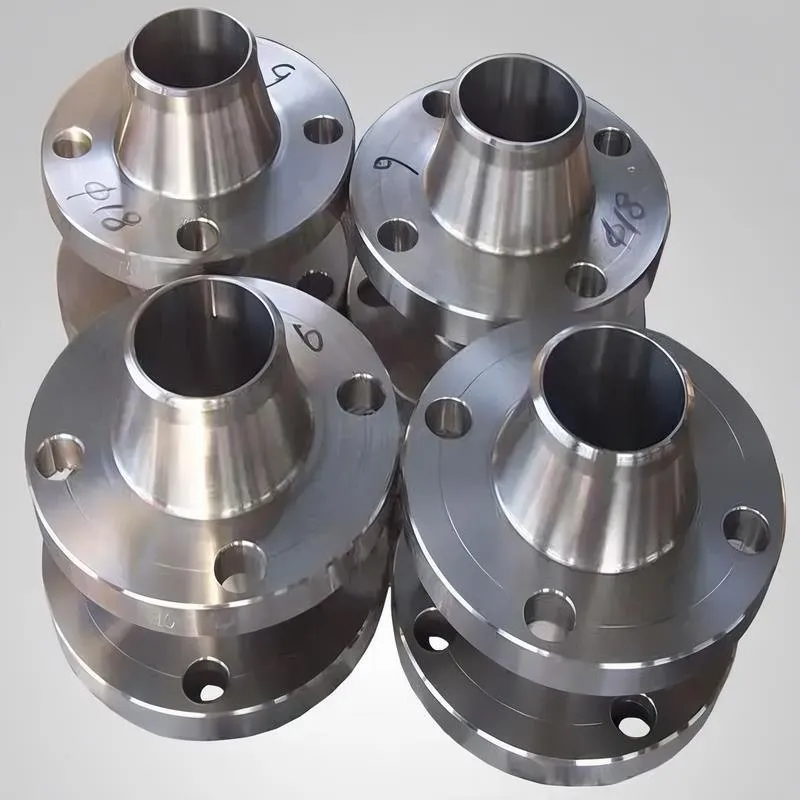
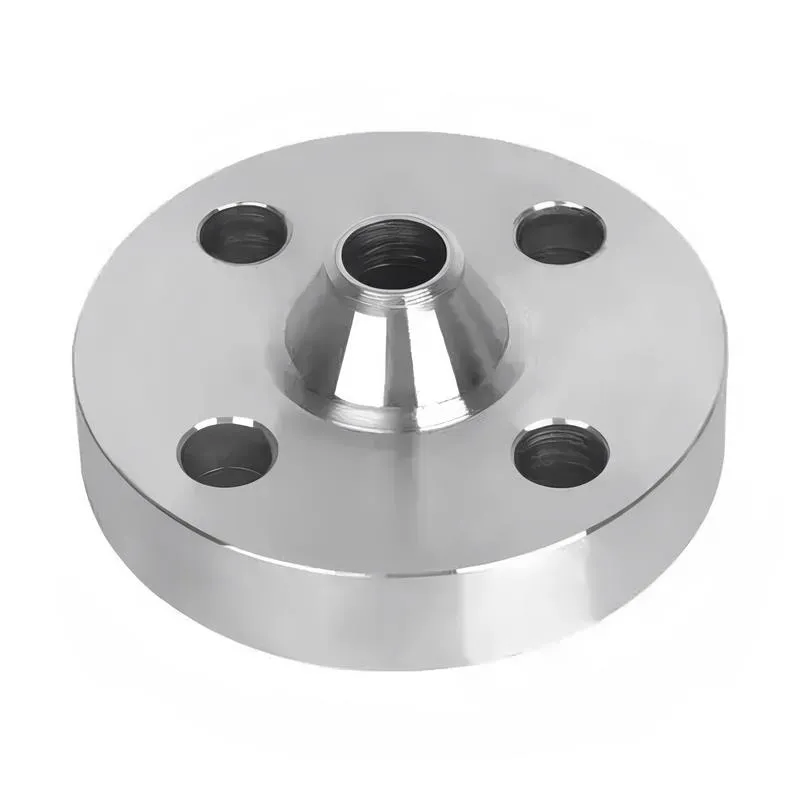
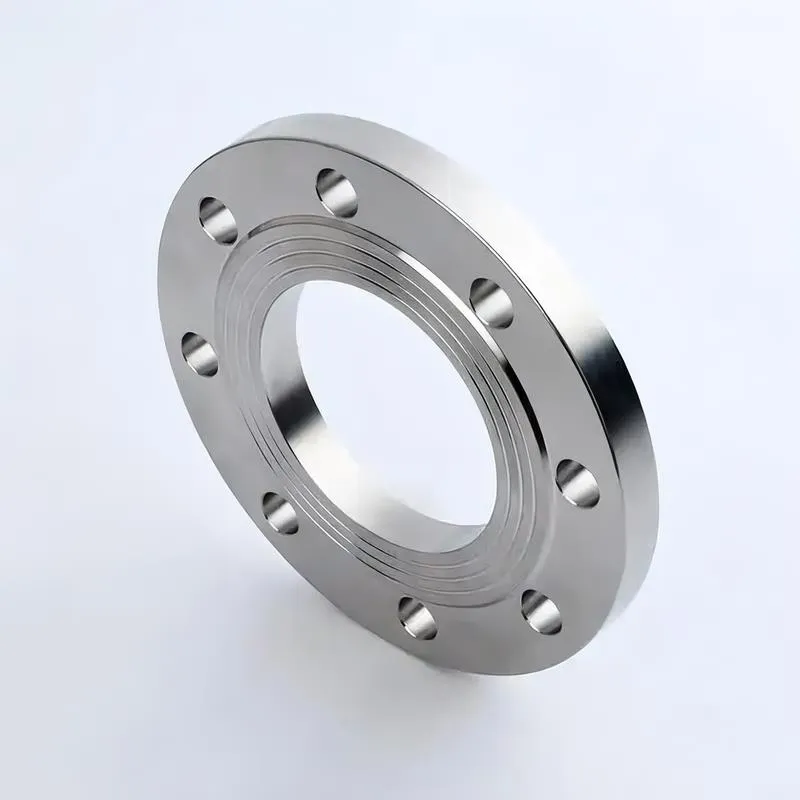
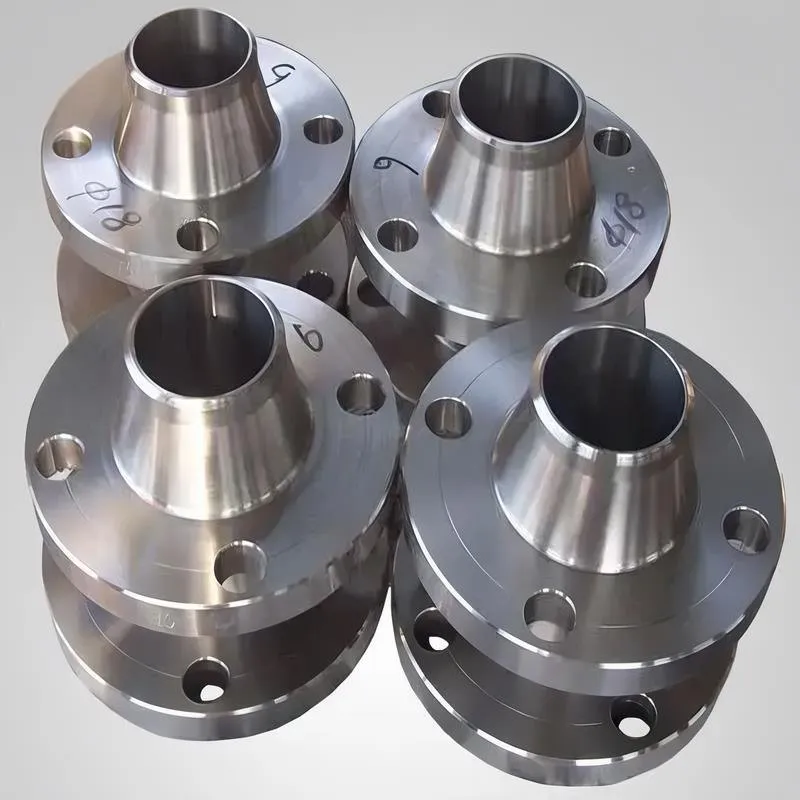
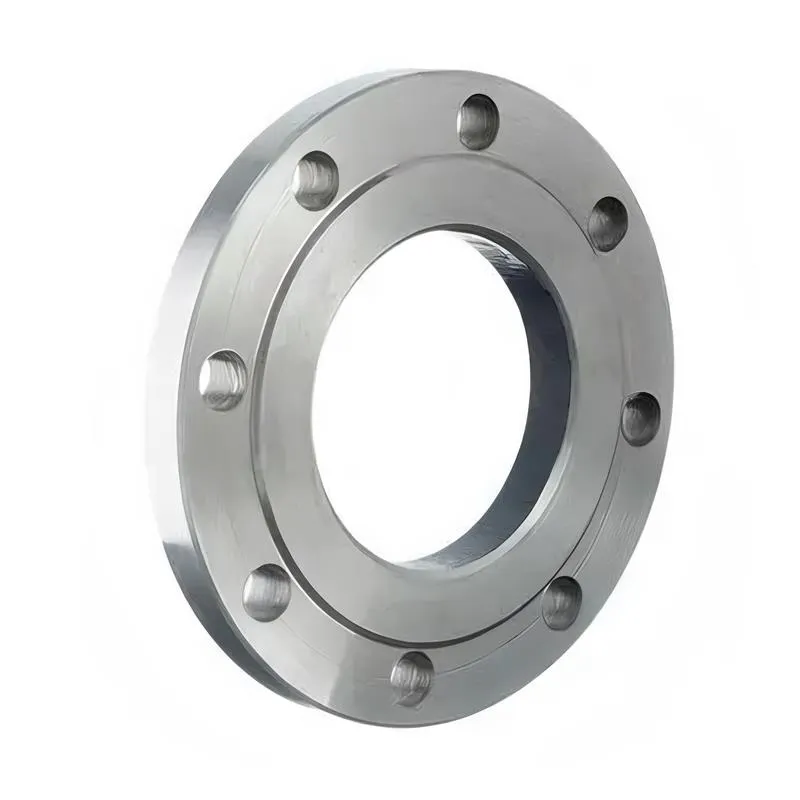
1,We Manufacturing processes are primarily classified into four types:
1:Forging,
2:Casting,
3:Cutting,
4:Rolling.
2,We can manufacture in accordance with these standards.
Standards:
GB Series (Chinese Standards), JB Series (Machinery Standards), HG Series (Chemical Industry Standards), ASME B16.5 (American Standards), BS4504 (British Standards), DIN (German Standards), and JIS (Japanese Standards).
Internationally, there are two primary systems of pipe flange standards: the European system, represented by the German DIN standards (including those of the former Soviet Union), and the American system, represented by the US ANSI pipe flange standards. Other common standards include: the Chinese Ministry of Machinery Industry standards (JB series), the Ministry of Chemical Industry standards (HG series), the Chinese National Standard *GB/T 9112–9124-2010 Steel Pipe Flanges*, as well as US standards (ASME B16.5), British standards (BS4504), German standards (DIN), Japanese standards (JIS), and marine standards (CBM), among others.
The nominal pressure ratings for the PN series are designated by "PN" and comprise the following nine levels: PN2.5, PN6, PN10, PN16, PN25, PN40, PN63, PN100, and PN160.
The nominal pressure ratings for the Class series are designated by "Class" and comprise the following six levels: Class150, Class300, Class600, Class900, Class1500, and Class2500.
Flange Classification
1. **According to Chemical Industry Standards:** Flanges are classified as follows:
Plate Flat Welding Flange (PL), Necked Flat Welding Flange (SO), Necked Butt Welding Flange (WN), Integral Flange (IF), Socket Welding Flange (SW), Threaded Flange (Th), Butt Welding Ring Loose Flange (PJ/SE), Blind Flange (BL), Flat Welding Ring Loose Flange (PJ/PJ), and Lined Blind Flange (BL(s)).
2. **According to Petrochemical (SH) Industry Standards:** Flanges are classified as follows:
Threaded Flange (PL), Butt Welding Flange (WN), Flat Welding Flange (SO), Socket Welding Flange (SW), Loose Flange (LJ), and Blind Flange (no specific designation).
3. **According to Machinery (JB) Industry Standards:** Flanges are classified as follows:
Integral Flange, Butt Welding Flange, Plate Flat Welding Flange, Butt Welding Ring Plate Loose Flange, Flat Welding Ring Plate Loose Flange, Lap Joint Ring Plate Loose Flange, and Blind Flange.
4. **According to Connection Method/Type:** Flanges are classified as follows:
Plate Flat Welding Flange, Necked Flat Welding Flange, Necked Butt Welding Flange, Socket Welding Flange, Threaded Flange, Blind Flange, Necked Butt Welding Ring Loose Flange, Flat Welding Ring Loose Flange, Ring-Type Joint (RTJ) Flange and Blind Flange, Large-Diameter Plate Flange, Large-Diameter High-Neck Flange, Figure-8 Blind Plate, Butt Welding Ring Loose Flange, etc.
5. **According to the Component Being Connected:** Flanges can be classified into Vessel Flanges and Pipe Flanges.
6. **According to Structural Type:** Flanges include Integral Flanges, Threaded Flanges, Flat Welding Flanges, Butt Welding Flanges, Lap Joint (Loose/Swivel) Flanges, and Blind Flanges.
A flange—also referred to as a flange plate or rim—is a component used to connect shafts to one another, or, more commonly, to join the ends of pipes. Flanges are also utilized at the inlet and outlet ports of equipment to facilitate connections between two devices—for instance, the flange on a speed reducer. A "flange connection" or "flanged joint" refers to a detachable joint assembly comprising three interconnected elements—a flange, a gasket, and bolts—that together form a sealed structural unit. In the context of piping systems, a "pipe flange" specifically denotes a flange used for plumbing within the installation; when applied to equipment, it refers to the inlet or outlet flange of that specific device. Flanges feature a series of holes through which bolts are inserted to securely fasten the two flanges together, while a gasket placed between the flanges ensures a leak-proof seal. Flanges are broadly categorized into three types: threaded (screw-in) flanges, welded flanges, and clamp-type flanges. Flanges are invariably used in pairs; threaded flanges are suitable for low-pressure piping applications, whereas welded flanges are required for systems operating at pressures exceeding 4 kilograms per square centimeter. A sealing gasket is inserted between the two flange plates, which are then firmly secured using bolts. The thickness of a flange—as well as the specifications of the bolts used to fasten it—vary depending on the specific pressure rating required for the application. When connecting equipment such as water pumps or valves to piping systems, the corresponding connection points on these devices are often manufactured in the shape of a matching flange; this method of attachment is also referred to as a "flange connection." Generally, any connecting component that utilizes bolts to join and seal the perimeters of two flat surfaces—such as the joints in ventilation ducts—is termed a "flange"; such components may collectively be classified as "flange-type parts." However, since such a connection often constitutes merely a *portion* of a larger device—for instance, the interface between a flange and a water pump—it would be inappropriate to classify the entire water pump itself as a "flange-type part." Conversely, smaller components—such as valves—that feature such flanged interfaces may indeed be appropriately categorized as "flange-type parts."
-:-
For detailed product information, please contact sales.
-:
Bohler-Uddeholm UDDEHOLM Vancron 40 nitrided powder tool Steel Flange Product Information
-:-
For detailed product information, please contact sales.
-:
Bohler-Uddeholm UDDEHOLM Vancron 40 nitrided powder tool Steel Flange Synonyms
-:-
For detailed product information, please contact sales.
-:
Bohler-Uddeholm UDDEHOLM Vancron 40 nitrided powder tool steel Product Information
-:-
For detailed product information, please contact sales.
-:
# **Böhler-Uddeholm UDDEHOLM Vancron 40 Nitriding Powder Metallurgy Tool Steel**
## **Product Overview**
**UDDEHOLM Vancron 40** is a revolutionary **nitrogen-alloyed, powder metallurgy (PM) cold work tool steel** specifically engineered to provide **exceptional resistance to adhesive wear (galling) and abrasive wear**. Unlike conventional tool steels, Vancron 40 incorporates **nitrogen into its base chemistry**, and when combined with its proprietary PM manufacturing and a specialized **low-temperature nitriding process**, it develops an extremely hard, corrosion-resistant surface layer with outstanding anti-galling properties. This makes it the premier choice for applications involving **stainless steel, aluminum, and other sticky or abrasive materials** where traditional tool steels fail prematurely due to material pickup and scoring.
---
## **1. Key Characteristics & Advantages**
* **Superior Anti-Galling/Anti-Sticking Properties:** Exceptional resistance to adhesive wear (material pickup), making it ideal for forming, drawing, and blanking stainless steel, aluminum, and copper alloys without the need for lubricants in many cases.
* **Extreme Surface Hardness:** After the recommended nitriding treatment, surface hardness can exceed **1300 HV** (equivalent to ~72 HRC), providing outstanding wear and abrasion resistance.
* **Good Toughness Core:** Maintains a tough, ductile core (~58-60 HRC) that supports the hard surface layer and resists chipping and catastrophic failure.
* **Excellent Corrosion Resistance:** The nitrogen-rich surface layer and chromium content provide significantly better corrosion resistance than conventional tool steels, approaching that of some stainless grades.
* **Low Friction Surface:** The nitrided layer exhibits a low coefficient of friction against many metals, reducing forming forces and improving material flow.
* **Powder Metallurgy Homogeneity:** Uniform, fine microstructure ensures consistent performance, excellent polishability, and isotropic properties.
* **Reduced Lubrication Dependency:** Can often operate with minimal or no lubrication, reducing production costs and environmental impact.
---
## **2. Typical Chemical Composition (Weight %)**
The unique chemistry of Vancron 40 is the foundation of its performance, with **Nitrogen (N)** as the critical alloying element.
| Element | Carbon (C) | Chromium (Cr) | Molybdenum (Mo) | Vanadium (V) | **Nitrogen (N)** | Silicon (Si) |
| :--- | :---: | :---: | :---: | :---: | :---: | :---: |
| **Content** | **0.50** | **8.00** | **1.50** | **0.50** | **0.40** | **0.40** |
**Alloying Rationale:**
* **Nitrogen (0.40%):** The key innovation. Alloyed directly into the steel, it enables the formation of a unique, hard, and stable nitride layer during subsequent surface treatment. It also strengthens the matrix and enhances corrosion resistance.
* **Chromium (8.0%):** Provides hardenability, forms hard carbides for wear resistance, and is essential for forming chromium nitrides during nitriding, contributing to the extreme surface hardness.
* **Carbon, Molybdenum, Vanadium:** Provide a balanced matrix for core toughness, strength, and secondary hardening.
* **Powder Metallurgy Process:** Essential for homogeneously distributing the nitrogen and other alloying elements, preventing brittleness and ensuring a uniform response to nitriding.
---
## **3. Physical & Mechanical Properties**
### **Physical Properties (Core):**
* **Density:** ~7.7 g/cm³
* **Thermal Conductivity:** ~22 W/(m·K) at 20°C
* **Modulus of Elasticity:** ~210 GPa
### **Heat Treatment & Mechanical Data:**
* **Soft Annealed Hardness:** ~250 HBW
* **Core Heat Treatment (Prior to Nitriding):**
* **Austenitizing:** 1080-1120°C (1975-2050°F)
* **Quenching:** Oil or gas.
* **Tempering:** 500-550°C (930-1020°F), double temper. **Achieves core hardness of 58-60 HRC.**
* **Surface Treatment (Mandatory for Optimal Performance):**
* **Process:** Salt bath nitriding, plasma nitriding, or gas nitriding at **~500°C (930°F)**.
* **Resulting Surface Layer:** A compound layer (white layer) of **CrN and other alloy nitrides**.
* **Surface Hardness:** **1100 - 1400 HV** (typically >1200 HV).
* **Case Depth:** Up to ~0.15 mm.
* **Dimensional Change:** Minimal growth during nitriding (<0.05%).
---
## **4. Primary Applications**
Vancron 40 is uniquely suited for applications where adhesive wear is the primary failure mechanism.
* **Forming & Drawing of Stainless Steel:**
* Punches, dies, and inserts for deep drawing, bending, and forming of austenitic stainless steels (304, 316) without galling.
* **Blankng & Punching of Non-Ferrous Metals:**
* Progressive dies for aluminum, copper, and brass components, especially in dry or near-dry conditions.
* **Extrusion Tools:**
* Dies and mandrels for cold extrusion of aluminum and soft alloys.
* **Powder Compaction Tools:**
* Punches and dies for metal powder pressing, where anti-sticking is critical for part release.
* **Plastic Injection Molds:**
* For abrasive and corrosive plastics (e.g., PVC, filled polymers), benefiting from both wear and corrosion resistance.
* **Thread Rolling & Forming:**
* Dies for forming threads on stainless steel and aluminum parts.
* **Cutting & Slitting Knives:** For non-ferrous metals and composites.
---
## **5. Relevant International Standards & Comparable Grades**
Vancron 40 is a patented, proprietary material. There is **no direct equivalent** in standard tool steel classifications due to its nitrogen-alloyed chemistry.
| Category | Grade / Designation | Key Difference / Note |
| :--- | :--- | :--- |
| **Proprietary (Uddeholm)** | **VANCRON 40** | The reference nitrogen-alloyed, anti-galling PM tool steel. |
| **PM Tool Steel** | **VANADIS 4 Extra, ELMAX** | High wear-resistant PM steels, but without nitrogen alloying and specialized anti-galling properties. They rely on carbide hardness, not nitride surface layers. |
| **Nitrided Tool Steels** | **Nitrided H13, Nitrided D2** | These are standard steels *post-treated* with nitriding. Vancron 40 is *designed from the outset* for nitriding, with nitrogen in solution, resulting in a superior, more stable, and harder nitride layer. |
| **Stainless Tool Steel** | **STAVAX ESR, MIRRAX** | Offer corrosion resistance but lack the extreme anti-galling and surface hardness of nitrided Vancron 40. |
| **International** | **N/A** | No ISO, DIN, AISI, or JIS standard covers this specific nitrogen-alloyed chemistry for tooling. |
**Classification:** It is most accurately described as a **"Nitrogen-Alloyed Powder Metallurgy Anti-Galling Tool Steel."**
---
## **6. Processing & Fabrication Guidelines**
* **Supply Form:** Bars, blocks, and pre-finished blanks.
* **Machining:** Perform all machining **before the final nitriding treatment** and after the core hardening/tempering (58-60 HRC). Machining in this state is more demanding than annealed steel but feasible with carbide tools. **Do not machine after nitriding.**
* **Grinding/Finishing:** Final grinding and polishing should be completed **before nitriding**. The nitrided layer is too hard to machine economically.
* **Core Heat Treatment:** Standard for a high-alloy PM steel. Requires controlled atmosphere.
* **Nitriding Treatment (Critical Step):**
* Must be performed **after all machining, grinding, and polishing**.
* **Salt bath nitriding (QPQ®-type process)** often yields the best results.
* Temperature must be kept **below the final tempering temperature** of the core (e.g., <550°C) to avoid softening the core.
* **Post-Nitriding:** Only very light honing or polishing is possible. The component is ready for use.
* **Welding:** Not recommended after nitriding. If necessary, the nitrided layer must be completely removed in the weld area, and post-weld heat treatment and re-nitriding are required.
---
## **7. Conclusion**
**UDDEHOLM Vancron 40** represents a **paradigm shift in tool steel design**, moving beyond reliance solely on carbide hardness to address the pervasive problem of adhesive wear through **metallurgical innovation**. By integrating nitrogen into the alloy and optimizing the steel for a specific nitriding response, it creates a surface engineered to resist material pickup under the most challenging conditions.
For toolmakers and manufacturers struggling with galling, scoring, and premature failure when working with stainless steel, aluminum, and other "sticky" metals, Vancron 40 offers a transformative solution. It dramatically extends tool life, improves part quality by eliminating scratches and pick-up marks, and can streamline production by reducing lubrication needs. It is a specialized, high-value material that solves specific, costly industrial problems where conventional materials consistently fall short.
-:-
For detailed product information, please contact sales.
-:
Bohler-Uddeholm UDDEHOLM Vancron 40 nitrided powder tool steel Specification
Dimensions
Size:
Diameter 20-1000 mm Length <6896 mm
Size:We can customized as required
Standard:
Per your request or drawing
We can customized as required
Properties(Theoretical)
Chemical Composition
-:-
For detailed product information, please contact sales.
-:
Bohler-Uddeholm UDDEHOLM Vancron 40 nitrided powder tool steel Properties
-:-
For detailed product information, please contact sales.
-:
Applications of Bohler-Uddeholm UDDEHOLM Vancron 40 nitrided powder tool Steel Flange
-:-
For detailed product information, please contact sales.
-:
Chemical Identifiers Bohler-Uddeholm UDDEHOLM Vancron 40 nitrided powder tool Steel Flange
-:-
For detailed product information, please contact sales.
-:
Packing of Bohler-Uddeholm UDDEHOLM Vancron 40 nitrided powder tool Steel Flange
-:-
For detailed product information, please contact sales.
-:
Standard Packing:
-:-
For detailed product information, please contact sales.
-:
Typical bulk packaging includes palletized plastic 5 gallon/25 kg. pails, fiber and Steel Flange drums to 1 ton super sacks in full container (FCL) or truck load (T/L) quantities. Research and sample quantities and hygroscopic, oxidizing or other air sensitive materials may be packaged under argon or vacuum. Solutions are packaged in polypropylene, plastic or glass jars up to palletized 3367 gallon liquid totes Special package is available on request. E FORUs’ is carefully handled to minimize damage during storage and transportation and to preserve the quality of our products in their original condition