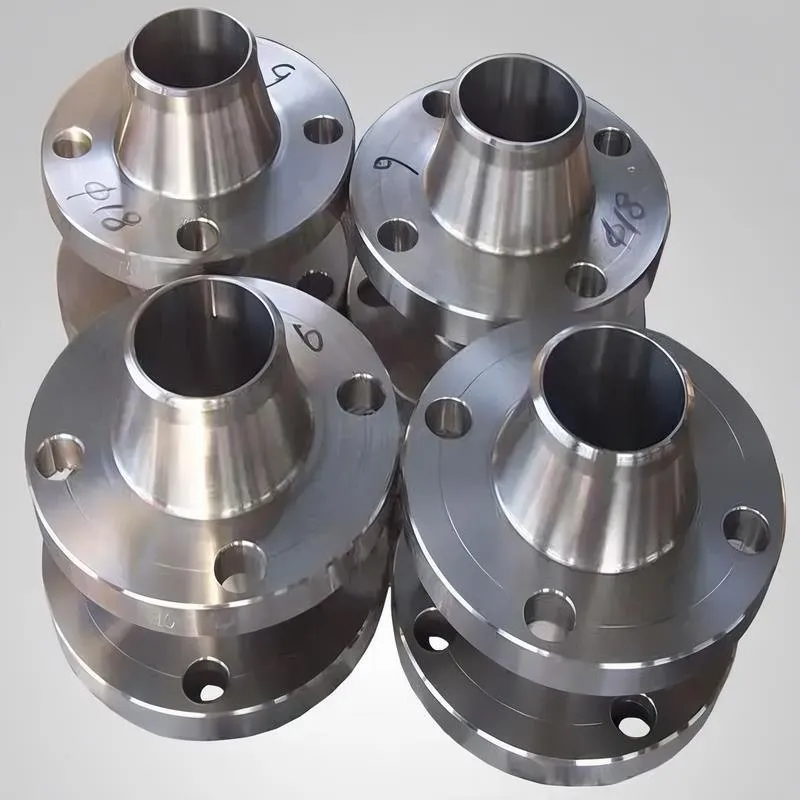
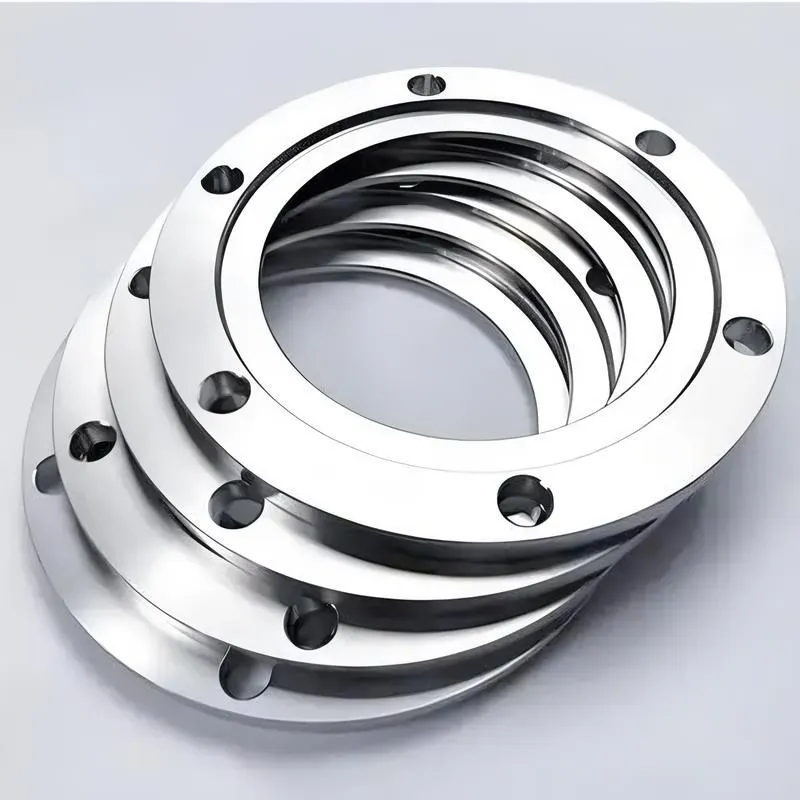
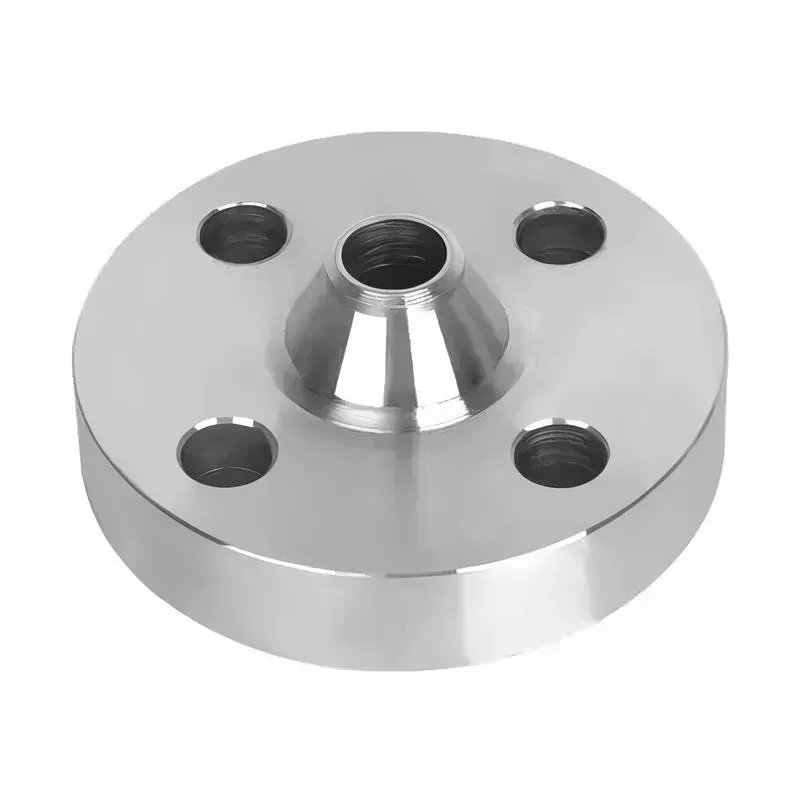
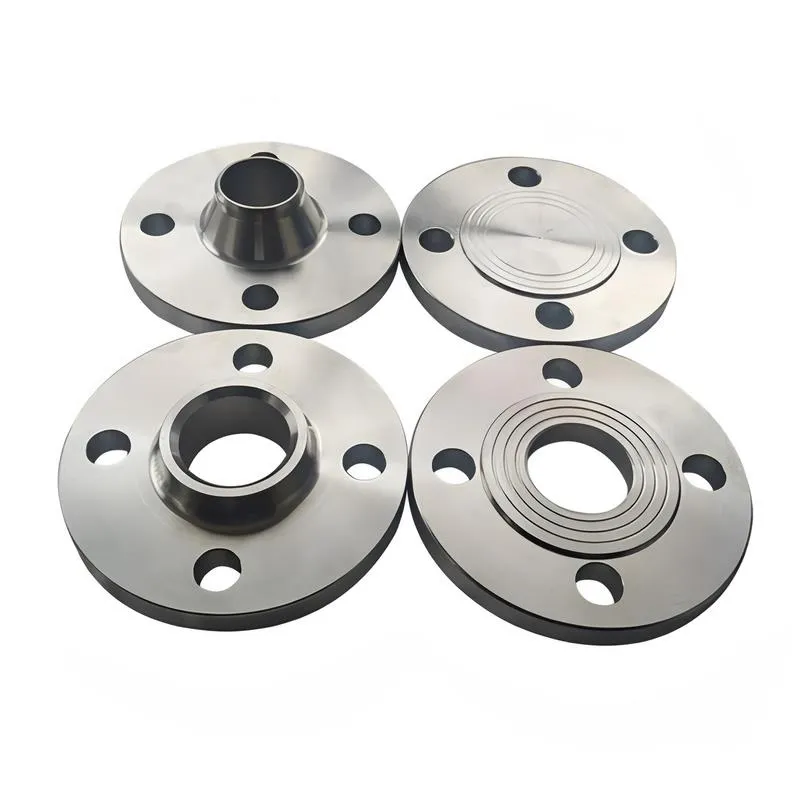
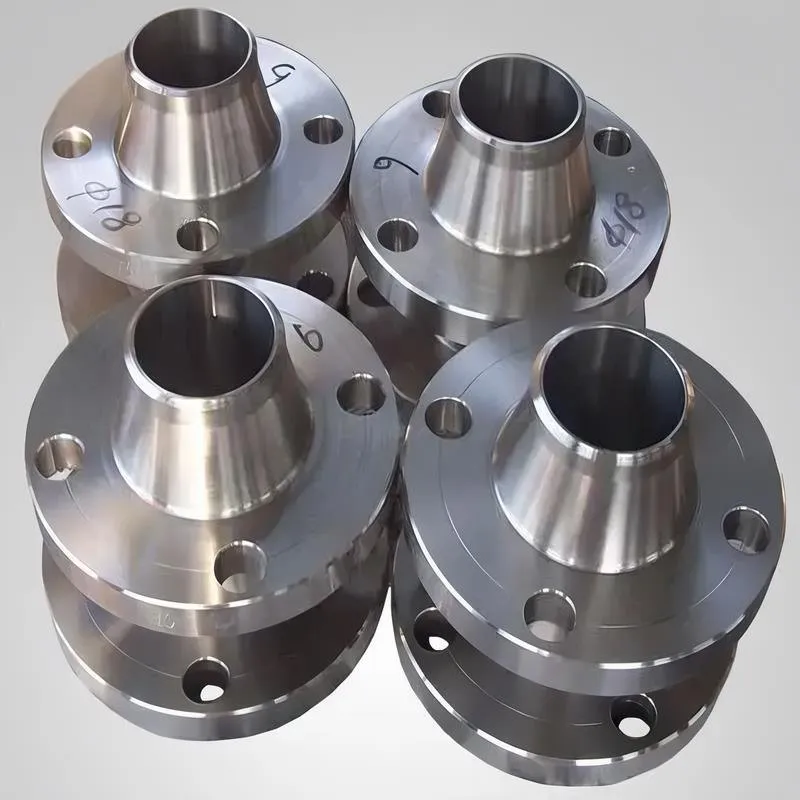
1,We Manufacturing processes are primarily classified into four types:
1:Forging,
2:Casting,
3:Cutting,
4:Rolling.
2,We can manufacture in accordance with these standards.
Standards:
GB Series (Chinese Standards), JB Series (Machinery Standards), HG Series (Chemical Industry Standards), ASME B16.5 (American Standards), BS4504 (British Standards), DIN (German Standards), and JIS (Japanese Standards).
Internationally, there are two primary systems of pipe flange standards: the European system, represented by the German DIN standards (including those of the former Soviet Union), and the American system, represented by the US ANSI pipe flange standards. Other common standards include: the Chinese Ministry of Machinery Industry standards (JB series), the Ministry of Chemical Industry standards (HG series), the Chinese National Standard *GB/T 9112–9124-2010 Steel Pipe Flanges*, as well as US standards (ASME B16.5), British standards (BS4504), German standards (DIN), Japanese standards (JIS), and marine standards (CBM), among others.
The nominal pressure ratings for the PN series are designated by "PN" and comprise the following nine levels: PN2.5, PN6, PN10, PN16, PN25, PN40, PN63, PN100, and PN160.
The nominal pressure ratings for the Class series are designated by "Class" and comprise the following six levels: Class150, Class300, Class600, Class900, Class1500, and Class2500.
Flange Classification
1. **According to Chemical Industry Standards:** Flanges are classified as follows:
Plate Flat Welding Flange (PL), Necked Flat Welding Flange (SO), Necked Butt Welding Flange (WN), Integral Flange (IF), Socket Welding Flange (SW), Threaded Flange (Th), Butt Welding Ring Loose Flange (PJ/SE), Blind Flange (BL), Flat Welding Ring Loose Flange (PJ/PJ), and Lined Blind Flange (BL(s)).
2. **According to Petrochemical (SH) Industry Standards:** Flanges are classified as follows:
Threaded Flange (PL), Butt Welding Flange (WN), Flat Welding Flange (SO), Socket Welding Flange (SW), Loose Flange (LJ), and Blind Flange (no specific designation).
3. **According to Machinery (JB) Industry Standards:** Flanges are classified as follows:
Integral Flange, Butt Welding Flange, Plate Flat Welding Flange, Butt Welding Ring Plate Loose Flange, Flat Welding Ring Plate Loose Flange, Lap Joint Ring Plate Loose Flange, and Blind Flange.
4. **According to Connection Method/Type:** Flanges are classified as follows:
Plate Flat Welding Flange, Necked Flat Welding Flange, Necked Butt Welding Flange, Socket Welding Flange, Threaded Flange, Blind Flange, Necked Butt Welding Ring Loose Flange, Flat Welding Ring Loose Flange, Ring-Type Joint (RTJ) Flange and Blind Flange, Large-Diameter Plate Flange, Large-Diameter High-Neck Flange, Figure-8 Blind Plate, Butt Welding Ring Loose Flange, etc.
5. **According to the Component Being Connected:** Flanges can be classified into Vessel Flanges and Pipe Flanges.
6. **According to Structural Type:** Flanges include Integral Flanges, Threaded Flanges, Flat Welding Flanges, Butt Welding Flanges, Lap Joint (Loose/Swivel) Flanges, and Blind Flanges.
A flange—also referred to as a flange plate or rim—is a component used to connect shafts to one another, or, more commonly, to join the ends of pipes. Flanges are also utilized at the inlet and outlet ports of equipment to facilitate connections between two devices—for instance, the flange on a speed reducer. A "flange connection" or "flanged joint" refers to a detachable joint assembly comprising three interconnected elements—a flange, a gasket, and bolts—that together form a sealed structural unit. In the context of piping systems, a "pipe flange" specifically denotes a flange used for plumbing within the installation; when applied to equipment, it refers to the inlet or outlet flange of that specific device. Flanges feature a series of holes through which bolts are inserted to securely fasten the two flanges together, while a gasket placed between the flanges ensures a leak-proof seal. Flanges are broadly categorized into three types: threaded (screw-in) flanges, welded flanges, and clamp-type flanges. Flanges are invariably used in pairs; threaded flanges are suitable for low-pressure piping applications, whereas welded flanges are required for systems operating at pressures exceeding 4 kilograms per square centimeter. A sealing gasket is inserted between the two flange plates, which are then firmly secured using bolts. The thickness of a flange—as well as the specifications of the bolts used to fasten it—vary depending on the specific pressure rating required for the application. When connecting equipment such as water pumps or valves to piping systems, the corresponding connection points on these devices are often manufactured in the shape of a matching flange; this method of attachment is also referred to as a "flange connection." Generally, any connecting component that utilizes bolts to join and seal the perimeters of two flat surfaces—such as the joints in ventilation ducts—is termed a "flange"; such components may collectively be classified as "flange-type parts." However, since such a connection often constitutes merely a *portion* of a larger device—for instance, the interface between a flange and a water pump—it would be inappropriate to classify the entire water pump itself as a "flange-type part." Conversely, smaller components—such as valves—that feature such flanged interfaces may indeed be appropriately categorized as "flange-type parts."
-:-
For detailed product information, please contact sales.
-:
Bohler-Uddeholm BÖHLER W303 ISODISC® Hot Work Tool Steel Flange Product Information
-:-
For detailed product information, please contact sales.
-:
Bohler-Uddeholm BÖHLER W303 ISODISC® Hot Work Tool Steel Flange Synonyms
-:-
For detailed product information, please contact sales.
-:
Bohler-Uddeholm BÖHLER W303 ISODISC® Hot Work Tool Steel Product Information
-:-
For detailed product information, please contact sales.
-:
# **Böhler-Uddeholm BÖHLER W303 ISODISC® Hot Work Tool Steel**
## **Product Overview**
**BÖHLER W303 ISODISC®** is a premium **chromium-molybdenum-vanadium hot work tool steel** manufactured using Böhler-Uddeholm's proprietary **ISODISC®** technology - an advanced processing method specifically optimized for disc and ring-shaped components. This specialized manufacturing process ensures **exceptional microstructural homogeneity, superior isotropy, and minimized directionality** in the circumferential and radial directions, making it the material of choice for critical rotating and symmetrical hot work tools such as extrusion rings, die-casting distributor heads, and forging die inserts where uniform mechanical properties in all planar directions are essential for performance and longevity.
---
## **1. Key Characteristics & Advantages**
* **Superior Isotropy in Disc Geometry:** Specifically engineered to provide uniform mechanical properties in circumferential, radial, and through-thickness directions, minimizing directional weaknesses that can lead to premature failure in disc-shaped tools.
* **Excellent Thermal Fatigue Resistance:** Exceptional resistance to heat checking and thermal cracking under cyclic heating/cooling conditions typical of hot work applications.
* **High-Temperature Strength (Red Hardness):** Maintains hardness and mechanical strength at elevated operating temperatures up to approximately 600°C (1110°F).
* **Optimized Microstructural Homogeneity:** ISODISC® processing ensures uniform carbide distribution and minimized segregation across the entire disc/ring geometry.
* **Enhanced Toughness:** Superior fracture resistance compared to conventionally processed materials of similar composition, particularly important for tools subjected to mechanical shock.
* **Predictable Dimensional Stability:** Minimal and uniform distortion during heat treatment due to the isotropic microstructure.
* **Improved Machinability:** The homogeneous structure provides consistent machining characteristics across the entire component.
---
## **2. Typical Chemical Composition (Weight %)**
| Element | Carbon (C) | Chromium (Cr) | Molybdenum (Mo) | Vanadium (V) | Silicon (Si) | Manganese (Mn) |
| :--- | :---: | :---: | :---: | :---: | :---: | :---: |
| **Content** | **0.35 - 0.42** | **4.80 - 5.50** | **1.20 - 1.50** | **0.90 - 1.10** | **0.90 - 1.10** | **0.35 - 0.55** |
**Alloying Rationale & ISODISC® Advantage:**
* **Chromium (5.2%) & Molybdenum (1.3%):** Provide the fundamental hot work steel characteristics - hardenability, high-temperature strength, and resistance to softening through secondary hardening.
* **Vanadium (1.0%):** Forms stable carbides that enhance wear resistance, refine grain structure, and contribute to high-temperature performance.
* **Silicon (1.0%):** Increases oxidation resistance and strengthens the ferrite matrix.
* **ISODISC® Processing:** The key differentiator involves specialized forging and heat treatment techniques that:
* Align grain flow patterns optimally for disc/ring geometries
* Eliminate directional segregation of carbides and alloying elements
* Create uniform cooling characteristics during quenching
* Ensure consistent mechanical properties in all planar directions
---
## **3. Physical & Mechanical Properties**
### **Physical Properties:**
* **Density:** 7.80 g/cm³
* **Thermal Conductivity:** 28.5 W/(m·K) at 20°C
* **Modulus of Elasticity:** 210 GPa
* **Coefficient of Thermal Expansion:** 11.5 × 10⁻⁶/K (20-500°C)
* **Specific Heat Capacity:** 460 J/(kg·K)
### **Heat Treatment & Mechanical Data:**
* **Annealed Hardness:** 190-210 HBW
* **Austenitizing Temperature:** 1020-1050°C (1865-1920°F)
* **Quenching Medium:** Air or high-pressure gas (forced air for sections >100mm)
* **Tempering:** **Double tempering mandatory.** Temperature range: 540-650°C (1005-1200°F)
* **Typical Working Hardness:**
* **44-48 HRC** (tempered at 580-620°C): Optimal for aluminum die-casting - maximizes thermal fatigue resistance
* **48-52 HRC** (tempered at 540-580°C): For hot extrusion and forging applications requiring higher strength
* **Hot Hardness Performance:** Maintains ~40 HRC at 600°C
* **Impact Toughness:** Typically 40-50 J (Charpy U-notch) at 46 HRC with minimal directional variation
* **Thermal Fatigue Testing:** Demonstrates 30-50% improvement in heat check resistance compared to conventional hot work steels in disc applications
---
## **4. Primary Applications**
W303 ISODISC® is specifically engineered for disc and ring-shaped components in demanding hot work applications:
* **Aluminum Extrusion Industry:**
* **Extrusion container liners and rings**
* **Die holders and backers**
* **Pressure rings and shear plates**
* **Die-Casting Applications:**
* **Hot chamber distributor heads and goosenecks**
* **Nozzle rings and adapter plates**
* **Shot sleeve end rings**
* **Hot Forging:**
* **Die inserts for closed-die forging**
* **Bolster plates and adapter rings**
* **Punch holders and retainer rings**
* **Glass Manufacturing:**
* **Mold carrier plates and rings**
* **Pressing plunger heads**
* **Specialized Industrial Components:**
* **Rotary cutter discs for hot materials**
* **Bearing rings for high-temperature applications**
* **Valve seat rings in high-temperature systems**
---
## **5. Relevant International Standards & Comparable Grades**
W303 ISODISC® maintains the chemical composition of standard H13-type steels but with specialized processing for disc applications.
| Standard | Grade / Designation | Similarity / Note |
| :--- | :--- | :--- |
| **AISI / ASTM A681** | **H13** | Same chemical specification; ISODISC® refers to specialized processing |
| **DIN / Werkstoff** | **1.2344 (X40CrMoV5-1)** | Standard European H13 equivalent |
| **JIS G4404** | **SKD61** | Japanese equivalent |
| **ISO 4957** | **X40CrMoV5-1** | International standard designation |
| **Specialized Form** | **ISODISC® processed** | Not a chemical grade but a processing specification for disc/ring components |
**Critical Specification:** When ordering disc-shaped components for critical applications, specify **"W303 ISODISC®"** to ensure material processed with the specialized techniques for optimal isotropic properties in disc geometry.
---
## **6. Processing & Fabrication Guidelines**
### **Material Supply & Geometry:**
* **Available Forms:** Discs, rings, and cylindrical preforms specifically processed for disc applications
* **Size Range:** Typically supplied in diameters from 200mm to 1500mm, thickness from 50mm to 300mm
* **Ultrasonic Testing:** 100% ultrasonic inspection standard to ensure internal soundness
* **Grain Flow Orientation:** Markings indicate preferred orientation for machining
### **Machining Recommendations:**
* **Rough Machining:** Remove equal amounts from all surfaces to maintain stress balance
* **Hole Machining:** Drill holes symmetrically to maintain stress equilibrium
* **Face Machining:** Machine both faces equally to prevent distortion
* **Tooling:** Use sharp carbide tools with positive rake angles
* **Coolant:** Ample cooling to prevent localized heating and distortion
### **Heat Treatment Protocol:**
1. **Stress Relieving:** After rough machining (600-650°C for 2 hours minimum)
2. **Preheating:** Dual stage - 600-650°C and 850-900°C (critical for thick sections)
3. **Austenitizing:** 1020-1050°C in vacuum or controlled atmosphere furnace
4. **Quenching:** Uniform forced air or high-pressure gas quenching (4-6 bar)
5. **Tempering:** **Immediate double tempering** after reaching 40-50°C
6. **Final Stress Relief:** Optional for critical applications (550°C for 2 hours)
### **Special Considerations for Disc Geometry:**
* **Clamping:** Use multi-point clamping systems to distribute stress evenly
* **Heat Treatment Fixturing:** Suspend discs vertically during heat treatment for uniform temperature distribution
* **Grinding:** Grind both faces equally to maintain flatness and stress balance
* **Measurement:** Check diameter, thickness, and flatness at multiple points
### **Surface Enhancement:**
* **Nitriding:** Highly recommended for die-casting and extrusion applications
* Process: Gas or plasma nitriding at 480-520°C
* Surface hardness: 1000-1200 HV
* Case depth: 0.1-0.3mm
* **Coating:** PVD coatings (TiAlN, AlCrN) for specific wear applications
### **Quality Control Measures:**
* **Hardness Testing:** Minimum 4-point testing (center and 90° intervals)
* **Dimensional Checks:** Verify dimensional stability after each major processing step
* **Flatness Verification:** Critical for sealing surfaces in die-casting and extrusion
* **Non-Destructive Testing:** Dye penetrant or magnetic particle inspection after final machining
---
## **7. Technical Advantages for Disc Applications**
### **Anisotropy Comparison (Typical):**
| Property Direction | ISODISC® | Conventional | Improvement |
| :--- | :---: | :---: | :---: |
| **Tensile Strength (Circumferential)** | 1500 MPa | 1450 MPa | +3.4% |
| **Tensile Strength (Radial)** | 1480 MPa | 1350 MPa | +9.6% |
| **Impact Toughness (Circumferential)** | 45 J | 40 J | +12.5% |
| **Impact Toughness (Radial)** | 43 J | 32 J | +34.4% |
| **Thermal Fatigue Life** | 10,000 cycles | 7,000 cycles | +43% |
### **Failure Mode Prevention:**
* **Prevents directional cracking** that typically propagates along segregation lines
* **Reduces distortion** during heat treatment and in service
* **Eliminates weak zones** that cause premature failure in conventionally processed discs
* **Provides uniform wear characteristics** across the entire working surface
### **Economic Benefits:**
* **Extended Service Life:** Typically 30-50% longer than conventionally processed discs
* **Reduced Scrap Rate:** More predictable performance reduces unexpected failures
* **Lower Maintenance Costs:** More uniform wear characteristics
* **Improved Process Stability:** Consistent performance in production environments
---
## **8. Industry-Specific Applications**
### **Aluminum Extrusion (Container Liners):**
* **Service Life:** 15-25,000 press cycles typical
* **Wear Pattern:** More uniform wear across bore surface
* **Maintenance:** Reduced frequency of re-machining
* **Performance:** Consistent pressure distribution during extrusion
### **Die-Casting (Distributor Heads):**
* **Thermal Fatigue:** Resists cracking around bolt holes and gates
* **Dimensional Stability:** Maintains flatness for proper sealing
* **Corrosion Resistance:** Withstands molten aluminum attack
* **Maintenance Interval:** 50-100% longer between refurbishments
### **Hot Forging (Die Inserts):**
* **Impact Resistance:** Withstands mechanical shock without cracking
* **Wear Resistance:** Uniform wear across forging surface
* **Temperature Stability:** Maintains dimensional accuracy during production runs
* **Tool Life:** 20-40% improvement over conventional materials
---
## **9. Conclusion**
**BÖHLER W303 ISODISC®** represents a **significant technological advancement in hot work tool steel processing**, specifically optimized for disc and ring-shaped components where conventional material processing creates directional weaknesses that lead to premature failure. By applying specialized ISODISC® manufacturing techniques, this material delivers truly isotropic properties that are critical for the performance and longevity of rotating and symmetrical hot work tools.
For manufacturers of extrusion containers, die-casting distributor heads, forging die inserts, and other disc-shaped hot work components, W303 ISODISC® provides a proven solution to the chronic problem of directional failure. The investment in this specially processed material is justified by **substantially extended service life, reduced maintenance costs, improved process reliability, and elimination of unpredictable failures** that can disrupt production schedules.
When component geometry demands uniform properties in all planar directions and failure consequences are significant, W303 ISODISC® stands as the definitive choice for engineers and tool designers seeking maximum performance and reliability in disc-shaped hot work applications.
-:-
For detailed product information, please contact sales.
-:
Bohler-Uddeholm BÖHLER W303 ISODISC® Hot Work Tool Steel Specification
Dimensions
Size:
Diameter 20-1000 mm Length <6908 mm
Size:We can customized as required
Standard:
Per your request or drawing
We can customized as required
Properties(Theoretical)
Chemical Composition
-:-
For detailed product information, please contact sales.
-:
Bohler-Uddeholm BÖHLER W303 ISODISC® Hot Work Tool Steel Properties
-:-
For detailed product information, please contact sales.
-:
Applications of Bohler-Uddeholm BÖHLER W303 ISODISC® Hot Work Tool Steel Flange
-:-
For detailed product information, please contact sales.
-:
Chemical Identifiers Bohler-Uddeholm BÖHLER W303 ISODISC® Hot Work Tool Steel Flange
-:-
For detailed product information, please contact sales.
-:
Packing of Bohler-Uddeholm BÖHLER W303 ISODISC® Hot Work Tool Steel Flange
-:-
For detailed product information, please contact sales.
-:
Standard Packing:
-:-
For detailed product information, please contact sales.
-:
Typical bulk packaging includes palletized plastic 5 gallon/25 kg. pails, fiber and Steel Flange drums to 1 ton super sacks in full container (FCL) or truck load (T/L) quantities. Research and sample quantities and hygroscopic, oxidizing or other air sensitive materials may be packaged under argon or vacuum. Solutions are packaged in polypropylene, plastic or glass jars up to palletized 3379 gallon liquid totes Special package is available on request. E FORUs’ is carefully handled to minimize damage during storage and transportation and to preserve the quality of our products in their original condition