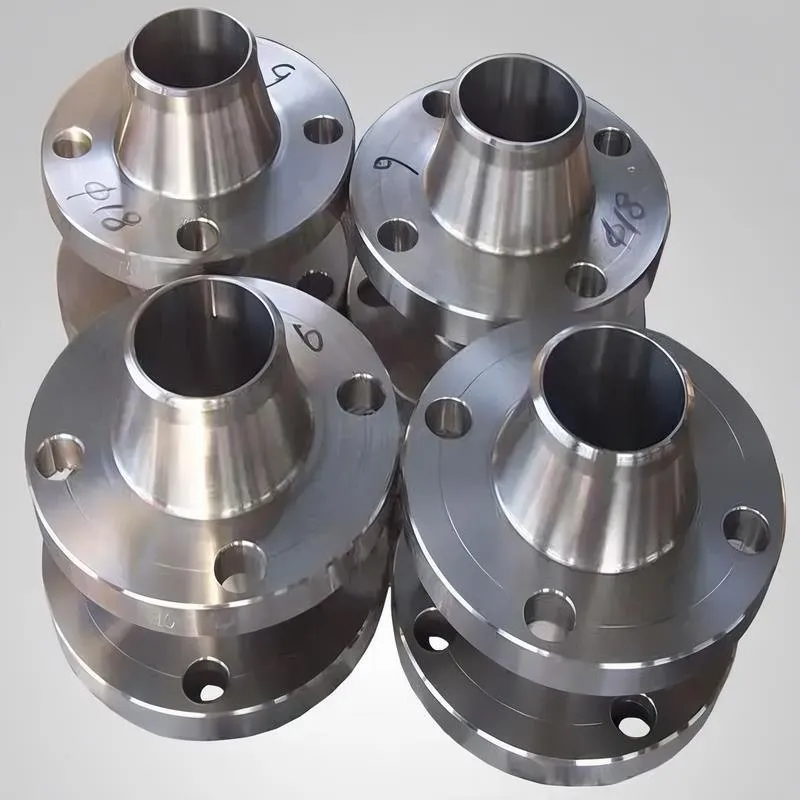
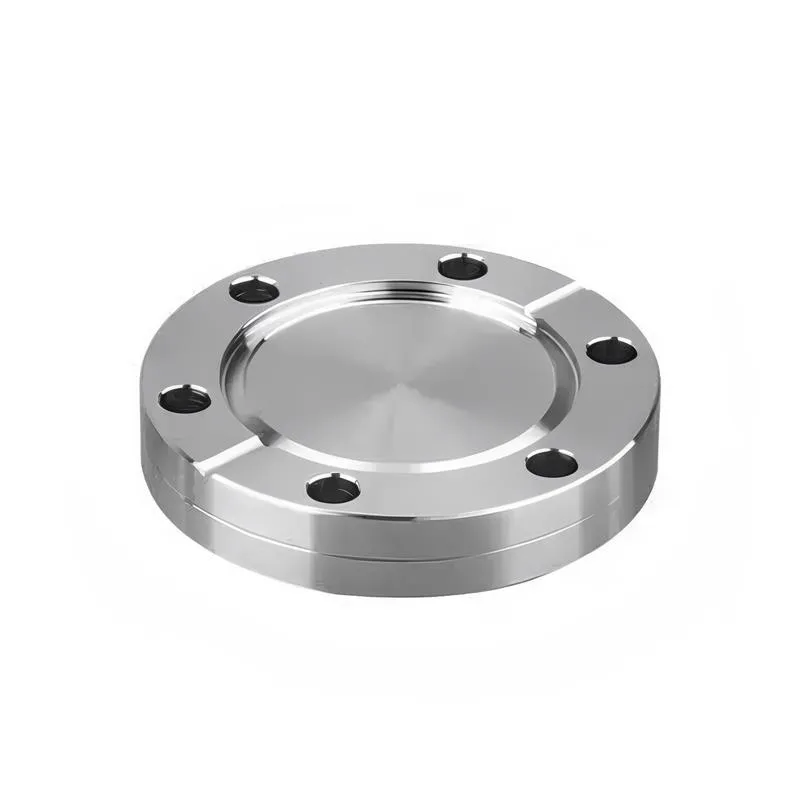
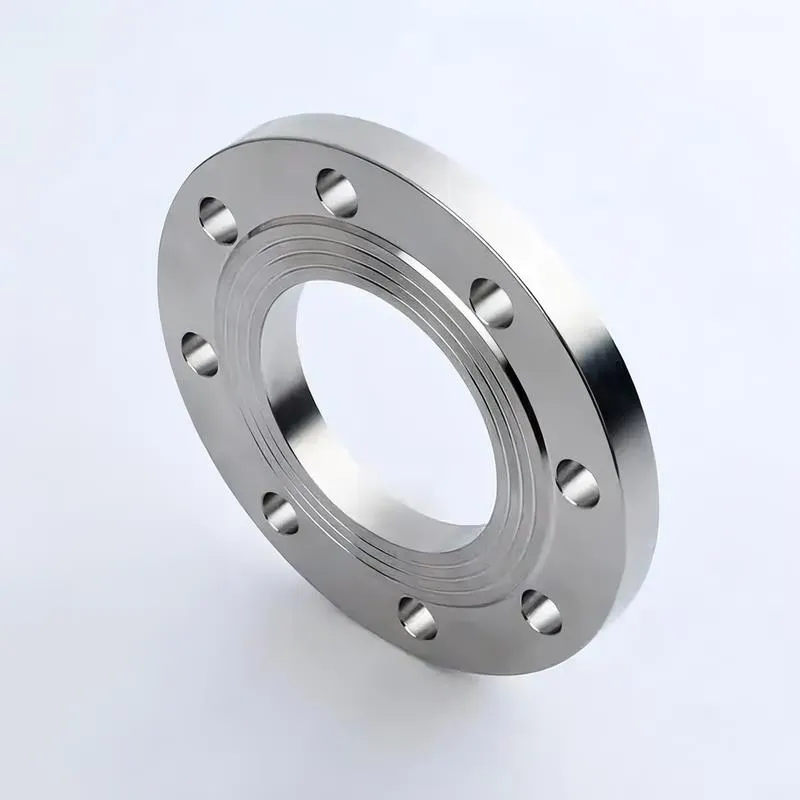
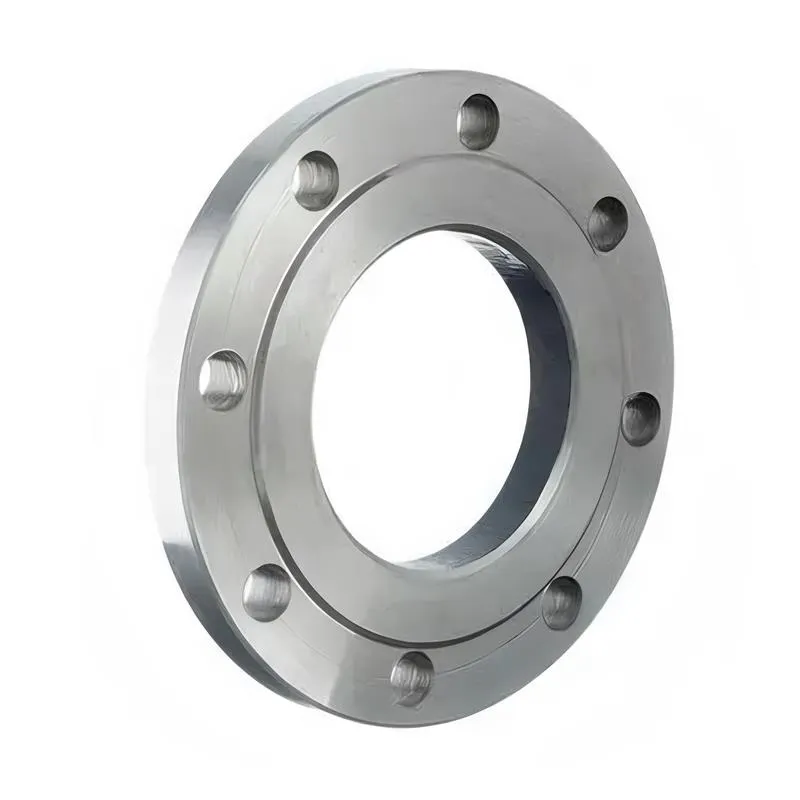
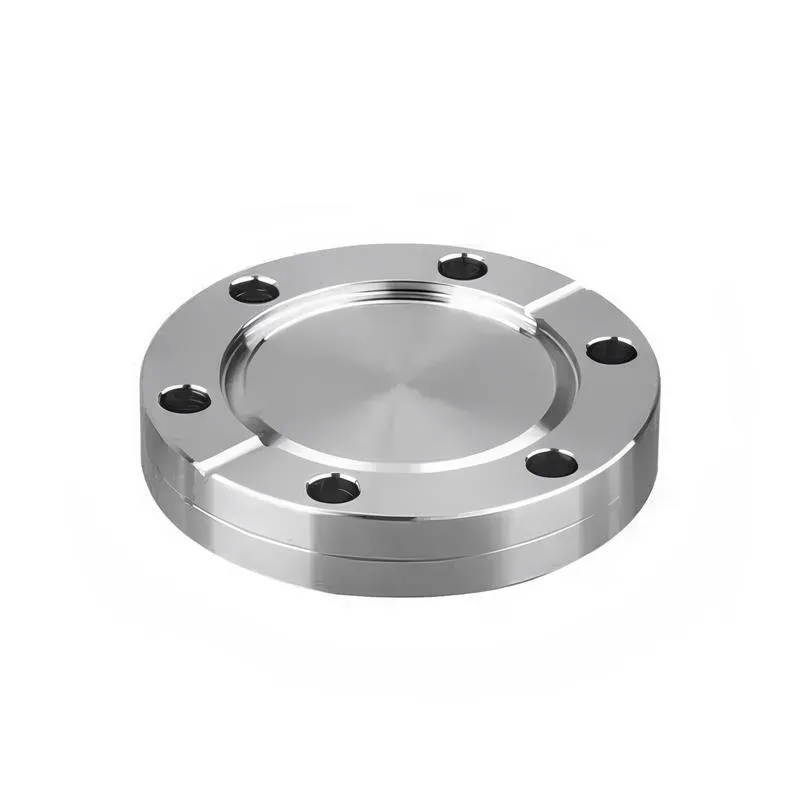
Carpenter,Micro-Melt® 10 Tough Treated Tool Steel Flange (AISI A11)
Product Code : FL-Steel-1600-CU
We provide Carpenter,Micro-Melt® 10 Tough Treated Tool Steel Flange (AISI A11) Manufacturing types: Forging, Casting, Cutting, Rolling.We can manufacture in accordance with these standards.GB/T 9112–9124-2010 Steel Pipe Flanges , JB Series , HG Series, ASME B16.5, BS4504, DIN , JIS,CBM,etc
1,We Manufacturing processes are primarily classified into four types:
1:Forging,
2:Casting,
3:Cutting,
4:Rolling.
2,We can manufacture in accordance with these standards.
Standards:
GB Series (Chinese Standards), JB Series (Machinery Standards), HG Series (Chemical Industry Standards), ASME B16.5 (American Standards), BS4504 (British Standards), DIN (German Standards), and JIS (Japanese Standards).
Internationally, there are two primary systems of pipe flange standards: the European system, represented by the German DIN standards (including those of the former Soviet Union), and the American system, represented by the US ANSI pipe flange standards. Other common standards include: the Chinese Ministry of Machinery Industry standards (JB series), the Ministry of Chemical Industry standards (HG series), the Chinese National Standard *GB/T 9112–9124-2010 Steel Pipe Flanges*, as well as US standards (ASME B16.5), British standards (BS4504), German standards (DIN), Japanese standards (JIS), and marine standards (CBM), among others.
The nominal pressure ratings for the PN series are designated by "PN" and comprise the following nine levels: PN2.5, PN6, PN10, PN16, PN25, PN40, PN63, PN100, and PN160.
The nominal pressure ratings for the Class series are designated by "Class" and comprise the following six levels: Class150, Class300, Class600, Class900, Class1500, and Class2500.
Flange Classification
1. **According to Chemical Industry Standards:** Flanges are classified as follows:
Plate Flat Welding Flange (PL), Necked Flat Welding Flange (SO), Necked Butt Welding Flange (WN), Integral Flange (IF), Socket Welding Flange (SW), Threaded Flange (Th), Butt Welding Ring Loose Flange (PJ/SE), Blind Flange (BL), Flat Welding Ring Loose Flange (PJ/PJ), and Lined Blind Flange (BL(s)).
2. **According to Petrochemical (SH) Industry Standards:** Flanges are classified as follows:
Threaded Flange (PL), Butt Welding Flange (WN), Flat Welding Flange (SO), Socket Welding Flange (SW), Loose Flange (LJ), and Blind Flange (no specific designation).
3. **According to Machinery (JB) Industry Standards:** Flanges are classified as follows:
Integral Flange, Butt Welding Flange, Plate Flat Welding Flange, Butt Welding Ring Plate Loose Flange, Flat Welding Ring Plate Loose Flange, Lap Joint Ring Plate Loose Flange, and Blind Flange.
4. **According to Connection Method/Type:** Flanges are classified as follows:
Plate Flat Welding Flange, Necked Flat Welding Flange, Necked Butt Welding Flange, Socket Welding Flange, Threaded Flange, Blind Flange, Necked Butt Welding Ring Loose Flange, Flat Welding Ring Loose Flange, Ring-Type Joint (RTJ) Flange and Blind Flange, Large-Diameter Plate Flange, Large-Diameter High-Neck Flange, Figure-8 Blind Plate, Butt Welding Ring Loose Flange, etc.
5. **According to the Component Being Connected:** Flanges can be classified into Vessel Flanges and Pipe Flanges.
6. **According to Structural Type:** Flanges include Integral Flanges, Threaded Flanges, Flat Welding Flanges, Butt Welding Flanges, Lap Joint (Loose/Swivel) Flanges, and Blind Flanges.
A flange—also referred to as a flange plate or rim—is a component used to connect shafts to one another, or, more commonly, to join the ends of pipes. Flanges are also utilized at the inlet and outlet ports of equipment to facilitate connections between two devices—for instance, the flange on a speed reducer. A "flange connection" or "flanged joint" refers to a detachable joint assembly comprising three interconnected elements—a flange, a gasket, and bolts—that together form a sealed structural unit. In the context of piping systems, a "pipe flange" specifically denotes a flange used for plumbing within the installation; when applied to equipment, it refers to the inlet or outlet flange of that specific device. Flanges feature a series of holes through which bolts are inserted to securely fasten the two flanges together, while a gasket placed between the flanges ensures a leak-proof seal. Flanges are broadly categorized into three types: threaded (screw-in) flanges, welded flanges, and clamp-type flanges. Flanges are invariably used in pairs; threaded flanges are suitable for low-pressure piping applications, whereas welded flanges are required for systems operating at pressures exceeding 4 kilograms per square centimeter. A sealing gasket is inserted between the two flange plates, which are then firmly secured using bolts. The thickness of a flange—as well as the specifications of the bolts used to fasten it—vary depending on the specific pressure rating required for the application. When connecting equipment such as water pumps or valves to piping systems, the corresponding connection points on these devices are often manufactured in the shape of a matching flange; this method of attachment is also referred to as a "flange connection." Generally, any connecting component that utilizes bolts to join and seal the perimeters of two flat surfaces—such as the joints in ventilation ducts—is termed a "flange"; such components may collectively be classified as "flange-type parts." However, since such a connection often constitutes merely a *portion* of a larger device—for instance, the interface between a flange and a water pump—it would be inappropriate to classify the entire water pump itself as a "flange-type part." Conversely, smaller components—such as valves—that feature such flanged interfaces may indeed be appropriately categorized as "flange-type parts."
-:-
For detailed product information, please contact sales.
-:
Carpenter Micro-Melt® 10 Tough Treated Tool Steel Flange (AISI A11) Product Information
-:-
For detailed product information, please contact sales.
-:
Carpenter Micro-Melt® 10 Tough Treated Tool Steel Flange (AISI A11) Synonyms
-:-
For detailed product information, please contact sales.
-:
Carpenter Micro-Melt® 10 Tough Treated Tool Steel (AISI A11) Product Information
-:-
For detailed product information, please contact sales.
-:
### **Carpenter Micro-Melt® 10 Tough Treated Tool Steel (AISI A11): Optimized for Maximum Toughness in Severe Service**
**Product Overview**
Carpenter Micro-Melt® 10 Tough Treated represents a specific heat treatment optimization of the renowned CPM 10V alloy (AISI A11 Type). While the base steel is celebrated for its ultra-high wear resistance, this “Tough Treated” variant is tempered to a **lower final hardness** to prioritize **exceptional fracture toughness and impact strength**. This makes it a specialized solution for applications where the extreme abrasion resistance of standard CPM 10V is required, but the tool or component is also subjected to high shock loads, bending stresses, or risks of chipping and catastrophic failure. The powder metallurgy (PM) process ensures this toughness is achieved uniformly, free from the weak points caused by carbide segregation.
**Key Advantages of the Tough Treated Condition**
* **Superior Fracture Toughness:** By tempering at higher temperatures (or multiple cycles), this condition sacrifices some peak hardness to gain dramatically increased resistance to crack initiation and propagation compared to the standard “wear” temper (64-66 HRC).
* **Retained High Wear Resistance:** Even at lower hardness, the very high volume of hard vanadium carbides (VC) ensures wear resistance that far surpasses conventional tool steels like D2 or M2 at any hardness.
* **Excellent Shock Load Capacity:** Ideal for applications involving intermittent heavy impacts or uneven loading.
* **Improved Stress Relief:** The extended or higher-temperature tempering process provides excellent dimensional stability and relieves internal stresses more thoroughly.
* **Reliability in Complex Shapes:** The enhanced toughness reduces the risk of failure in tools with sharp corners, thin sections, or stress concentrators.
**Typical Chemical Composition (%)**
The chemical composition is identical to the standard Micro-Melt 10V / A11 grade.
| Element | Carbon (C) | Chromium (Cr) | Vanadium (V) | Molybdenum (Mo) | Tungsten (W) | Cobalt (Co) |
| :--- | :---: | :---: | :---: | :---: | :---: | :---: |
| **Content** | 2.30-2.50 | 4.75-5.25 | 9.00-10.00 | 1.15-1.35 | 5.00-5.50 | 9.50-10.50 |
*Additional Elements:* Manganese (Mn): ≤0.50%, Silicon (Si): ≤0.50%
**Physical & Mechanical Properties (Tough Treated Condition)**
* **Typical Hardness Range:** **58 - 62 HRC.** The most common range is **59-61 HRC**, where the optimal balance of toughness and retained wear resistance is achieved.
* **Density:** 7.92 g/cm³ (0.286 lb/in³)
* **Fracture Toughness (K꜀):** Significantly higher than the standard 64-66 HRC condition. Exact values are proprietary but can be several times greater than conventional tool steels at equivalent hardness.
* **Transverse Rupture Strength:** Very high, reflecting its excellent load-bearing capacity under bending stresses.
* **Compressive Strength:** > 2,700 MPa (~390 ksi) – remains exceptionally high despite lower hardness.
* **Abrasion Resistance:** Still outstanding, typically 2-4 times better than fully hardened D2 tool steel.
**Heat Treatment Philosophy (How “Tough Treated” is Achieved)**
The “Tough Treated” condition follows the same austenitizing and quenching process as the standard grade but differs in tempering:
1. **Austenitizing:** 1175-1230°C (2150-2250°F).
2. **Quenching:** Air cool.
3. **Tempering (Key Difference):** Multiple tempering cycles (typically triple temper) at **higher temperatures**, often in the range of **565-620°C (1050-1150°F)**. This higher tempering temperature reduces hardness but dramatically increases toughness and ductility. The exact cycle is carefully controlled to achieve the specified final hardness and properties.
**International Standards & Cross-References**
| Standard System | Designation | Notes |
| :--- | :--- | :--- |
| **Carpenter** | Micro-Melt 10 Tough Treated | Proprietary heat-treated condition of CPM 10V |
| **AISI** | A11 (Type) | Base alloy classification |
| **UNS** | T61010 | Same as standard 10V |
| **Common Reference** | CPM 10V - High Toughness Temper | Industry-recognized description |
**Typical Applications**
This condition is specified for the most demanding applications where both severe abrasion and high mechanical shock are present.
1. **Severe Punching & Shearing:**
* Punches and dies for **high-strength, abrasive materials** (e.g., hardened steel strips, composites, reinforced plastics) where standard tools chip or break.
* Heavy-duty industrial shear blades subject to intermittent shock loads and abrasion.
2. **Mining & Mineral Processing:**
* Wear parts in crushing and grinding equipment that experience both extreme abrasion and impact (e.g., classifier wheels, wear liners in certain zones).
* Tooling for processing highly abrasive ores where fracture resistance is as critical as wear life.
3. **Specialized Cutting Tools:**
* Knives for cutting **abrasive and tough composites** (e.g., carbon fiber, fiberglass with metal backing) where edge integrity is paramount.
* Blades in size reduction equipment handling mixed, unpredictable feedstocks.
4. **Forming & Forging Tooling:**
* Wear inserts in hot or cold forging dies where abrasion is high and mechanical fatigue from repeated impact is a concern.
* Guide rails and wear plates in high-pressure environments prone to shock loading.
5. **Advanced Manufacturing:**
* Tooling for additive manufacturing or handling of abrasive metal/ceramic powders.
* Components in equipment processing filled polymers under high pressure.
**Conclusion**
Carpenter Micro-Melt® 10 Tough Treated Tool Steel solves a critical engineering challenge: achieving legendary wear resistance in environments too punishing for even the hardest tool steels. By intelligently tempering the ultra-wear-resistant A11/10V composition to a lower hardness, it unlocks a level of toughness that allows it to survive where other materials fail. It is the ultimate choice not just for how long a tool lasts, but for ensuring it completes its service life without sudden, catastrophic failure under extreme duress. When your application demands both the abrasion resistance of ceramic-like surfaces and the mechanical resilience of a tough steel, the “Tough Treated” condition provides the engineered solution.
-:-
For detailed product information, please contact sales.
-:
Carpenter Micro-Melt® 10 Tough Treated Tool Steel (AISI A11) Specification
Dimensions
Size:
Diameter 20-1000 mm Length <6926 mm
Size:We can customized as required
Standard:
Per your request or drawing
We can customized as required
Properties(Theoretical)
Chemical Composition
-:-
For detailed product information, please contact sales.
-:
Carpenter Micro-Melt® 10 Tough Treated Tool Steel (AISI A11) Properties
-:-
For detailed product information, please contact sales.
-:
Applications of Carpenter Micro-Melt® 10 Tough Treated Tool Steel Flange (AISI A11)
-:-
For detailed product information, please contact sales.
-:
Chemical Identifiers Carpenter Micro-Melt® 10 Tough Treated Tool Steel Flange (AISI A11)
-:-
For detailed product information, please contact sales.
-:
Packing of Carpenter Micro-Melt® 10 Tough Treated Tool Steel Flange (AISI A11)
-:-
For detailed product information, please contact sales.
-:
Standard Packing:
-:-
For detailed product information, please contact sales.
-:
Typical bulk packaging includes palletized plastic 5 gallon/25 kg. pails, fiber and Steel Flange drums to 1 ton super sacks in full container (FCL) or truck load (T/L) quantities. Research and sample quantities and hygroscopic, oxidizing or other air sensitive materials may be packaged under argon or vacuum. Solutions are packaged in polypropylene, plastic or glass jars up to palletized 3397 gallon liquid totes Special package is available on request. E FORUs’ is carefully handled to minimize damage during storage and transportation and to preserve the quality of our products in their original condition