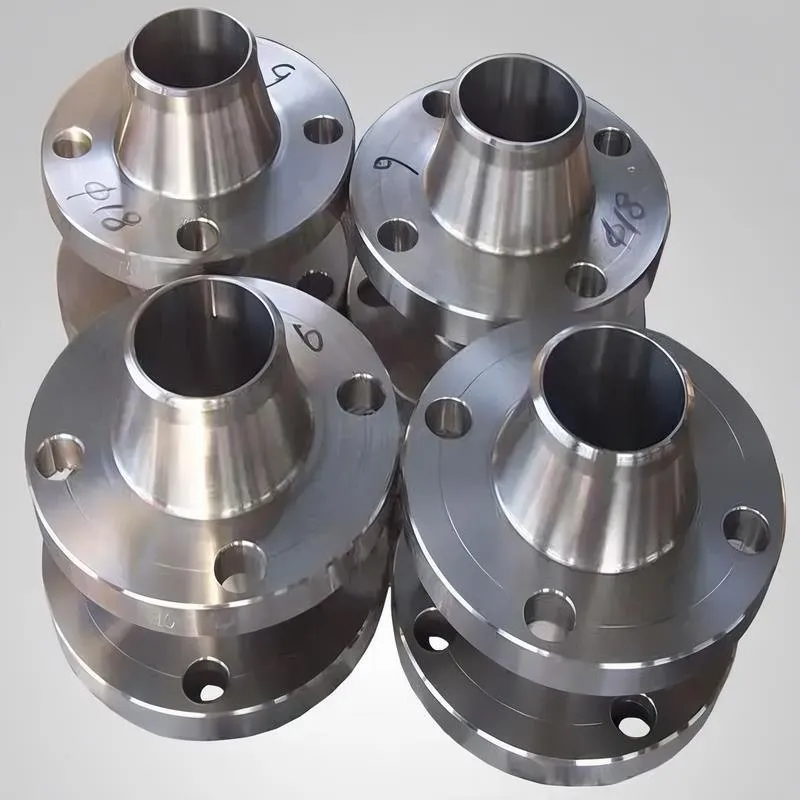
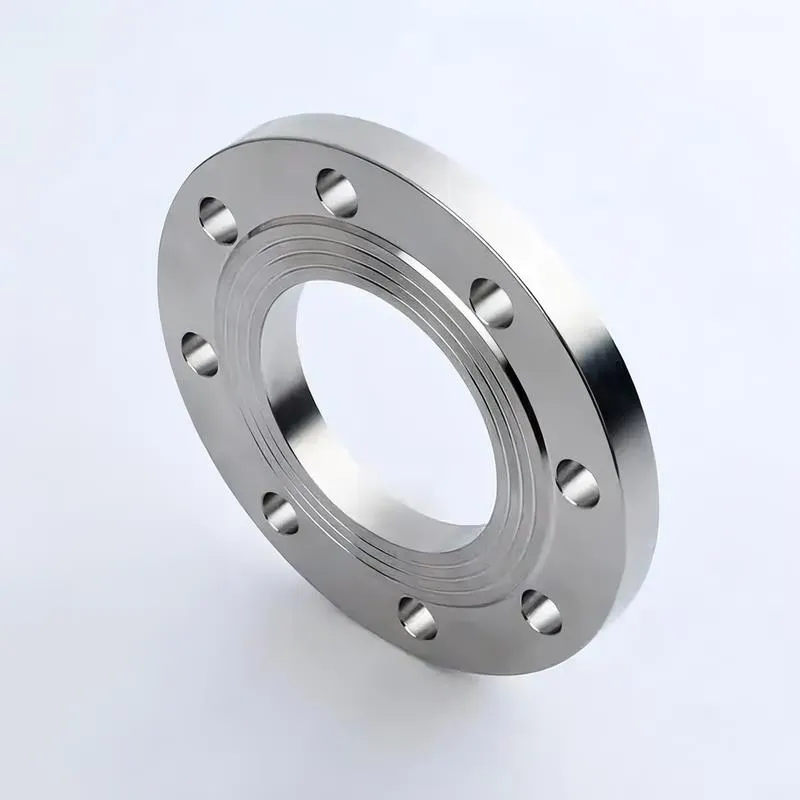
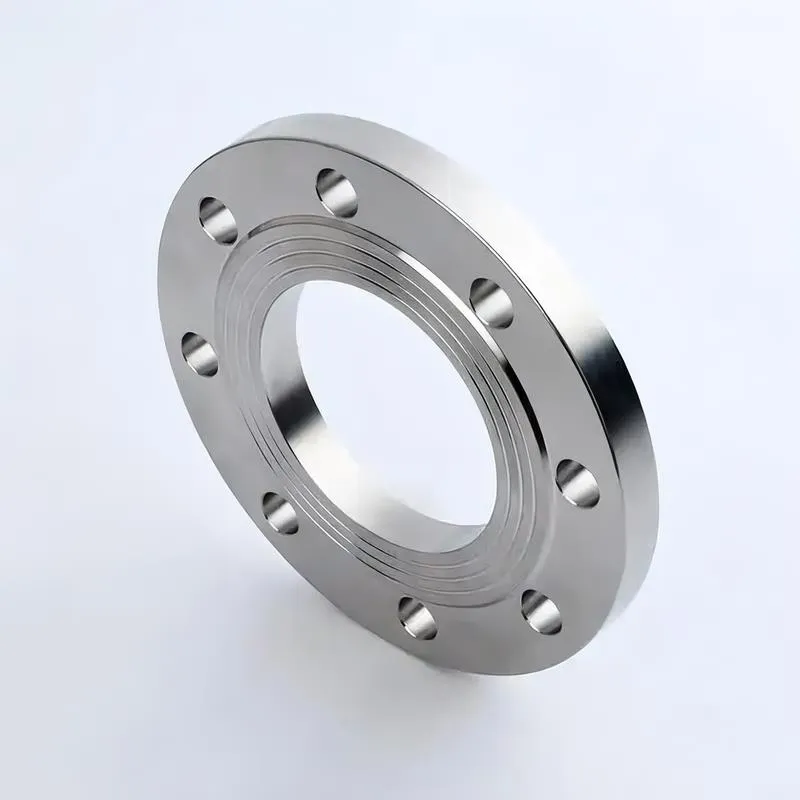
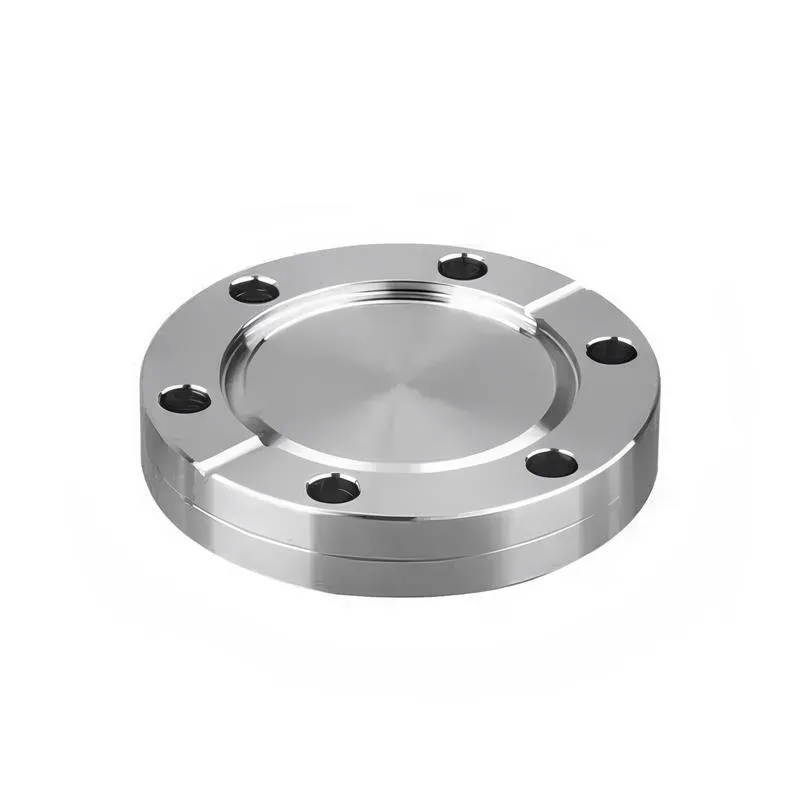
1,We Manufacturing processes are primarily classified into four types:
1:Forging,
2:Casting,
3:Cutting,
4:Rolling.
2,We can manufacture in accordance with these standards.
Standards:
GB Series (Chinese Standards), JB Series (Machinery Standards), HG Series (Chemical Industry Standards), ASME B16.5 (American Standards), BS4504 (British Standards), DIN (German Standards), and JIS (Japanese Standards).
Internationally, there are two primary systems of pipe flange standards: the European system, represented by the German DIN standards (including those of the former Soviet Union), and the American system, represented by the US ANSI pipe flange standards. Other common standards include: the Chinese Ministry of Machinery Industry standards (JB series), the Ministry of Chemical Industry standards (HG series), the Chinese National Standard *GB/T 9112–9124-2010 Steel Pipe Flanges*, as well as US standards (ASME B16.5), British standards (BS4504), German standards (DIN), Japanese standards (JIS), and marine standards (CBM), among others.
The nominal pressure ratings for the PN series are designated by "PN" and comprise the following nine levels: PN2.5, PN6, PN10, PN16, PN25, PN40, PN63, PN100, and PN160.
The nominal pressure ratings for the Class series are designated by "Class" and comprise the following six levels: Class150, Class300, Class600, Class900, Class1500, and Class2500.
Flange Classification
1. **According to Chemical Industry Standards:** Flanges are classified as follows:
Plate Flat Welding Flange (PL), Necked Flat Welding Flange (SO), Necked Butt Welding Flange (WN), Integral Flange (IF), Socket Welding Flange (SW), Threaded Flange (Th), Butt Welding Ring Loose Flange (PJ/SE), Blind Flange (BL), Flat Welding Ring Loose Flange (PJ/PJ), and Lined Blind Flange (BL(s)).
2. **According to Petrochemical (SH) Industry Standards:** Flanges are classified as follows:
Threaded Flange (PL), Butt Welding Flange (WN), Flat Welding Flange (SO), Socket Welding Flange (SW), Loose Flange (LJ), and Blind Flange (no specific designation).
3. **According to Machinery (JB) Industry Standards:** Flanges are classified as follows:
Integral Flange, Butt Welding Flange, Plate Flat Welding Flange, Butt Welding Ring Plate Loose Flange, Flat Welding Ring Plate Loose Flange, Lap Joint Ring Plate Loose Flange, and Blind Flange.
4. **According to Connection Method/Type:** Flanges are classified as follows:
Plate Flat Welding Flange, Necked Flat Welding Flange, Necked Butt Welding Flange, Socket Welding Flange, Threaded Flange, Blind Flange, Necked Butt Welding Ring Loose Flange, Flat Welding Ring Loose Flange, Ring-Type Joint (RTJ) Flange and Blind Flange, Large-Diameter Plate Flange, Large-Diameter High-Neck Flange, Figure-8 Blind Plate, Butt Welding Ring Loose Flange, etc.
5. **According to the Component Being Connected:** Flanges can be classified into Vessel Flanges and Pipe Flanges.
6. **According to Structural Type:** Flanges include Integral Flanges, Threaded Flanges, Flat Welding Flanges, Butt Welding Flanges, Lap Joint (Loose/Swivel) Flanges, and Blind Flanges.
A flange—also referred to as a flange plate or rim—is a component used to connect shafts to one another, or, more commonly, to join the ends of pipes. Flanges are also utilized at the inlet and outlet ports of equipment to facilitate connections between two devices—for instance, the flange on a speed reducer. A "flange connection" or "flanged joint" refers to a detachable joint assembly comprising three interconnected elements—a flange, a gasket, and bolts—that together form a sealed structural unit. In the context of piping systems, a "pipe flange" specifically denotes a flange used for plumbing within the installation; when applied to equipment, it refers to the inlet or outlet flange of that specific device. Flanges feature a series of holes through which bolts are inserted to securely fasten the two flanges together, while a gasket placed between the flanges ensures a leak-proof seal. Flanges are broadly categorized into three types: threaded (screw-in) flanges, welded flanges, and clamp-type flanges. Flanges are invariably used in pairs; threaded flanges are suitable for low-pressure piping applications, whereas welded flanges are required for systems operating at pressures exceeding 4 kilograms per square centimeter. A sealing gasket is inserted between the two flange plates, which are then firmly secured using bolts. The thickness of a flange—as well as the specifications of the bolts used to fasten it—vary depending on the specific pressure rating required for the application. When connecting equipment such as water pumps or valves to piping systems, the corresponding connection points on these devices are often manufactured in the shape of a matching flange; this method of attachment is also referred to as a "flange connection." Generally, any connecting component that utilizes bolts to join and seal the perimeters of two flat surfaces—such as the joints in ventilation ducts—is termed a "flange"; such components may collectively be classified as "flange-type parts." However, since such a connection often constitutes merely a *portion* of a larger device—for instance, the interface between a flange and a water pump—it would be inappropriate to classify the entire water pump itself as a "flange-type part." Conversely, smaller components—such as valves—that feature such flanged interfaces may indeed be appropriately categorized as "flange-type parts."
-:-
For detailed product information, please contact sales.
-:
Crucible Steel Flange HALCOMB® 218 Tool Steel Flange, AISI H11 Product Information
-:-
For detailed product information, please contact sales.
-:
Crucible Steel Flange HALCOMB® 218 Tool Steel Flange, AISI H11 Synonyms
-:-
For detailed product information, please contact sales.
-:
Crucible Steel HALCOMB® 218 Tool Steel, AISI H11 Product Information
-:-
For detailed product information, please contact sales.
-:
# **Product Introduction: Crucible Steel HALCOMB® 218 (AISI H11) Tool Steel**
Crucible Steel HALCOMB® 218 is a premium, air-hardening, chromium-molybdenum-vanadium hot work tool steel conforming to the AISI H11 specification. Positioned as a high-toughness member of the hot work steel family, HALCOMB® 218 is renowned for its **exceptional combination of high impact toughness, good thermal fatigue resistance, and excellent dimensional stability**. It occupies a unique niche between the more common H13 and shock-resistant tool steels, offering a solution for applications demanding superior resistance to mechanical and thermal shock in high-temperature environments.
Engineered with a slightly lower carbon content than H13 but a similar chromium and molybdenum base, H11 is specifically formulated to prioritize toughness and ductility. This makes HALCOMB® 218 the material of choice for tools and dies subjected to severe mechanical stress, intermittent loading, or rapid thermal cycling where the risk of brittle fracture is high. It is particularly valued in industries where tool failure from cracking under shock loading is a primary concern, and where moderate wear resistance and high hot strength are sufficient.
---
## **1. Chemical Composition (Weight %)**
The composition of H11 is optimized for a balance of toughness, hardenability, and hot strength.
| **Element** | **Carbon (C)** | **Chromium (Cr)** | **Molybdenum (Mo)** | **Vanadium (V)** | **Silicon (Si)** |
| :--- | :--- | :--- | :--- | :--- | :--- |
| **Content** | 0.33 - 0.43 | 4.75 - 5.50 | 1.10 - 1.60 | 0.30 - 0.60 | 0.80 - 1.20 |
| **Role** | Provides base strength and hardness. Kept at the lower end of hot work steel ranges to maximize core toughness. | Primary contributor to deep air hardenability, hot hardness, and oxidation resistance. | Enhances hardenability, hot strength, and resistance to tempering. Critical for maintaining properties at elevated temperatures. | Forms fine, stable vanadium carbides that enhance wear resistance, refine grain structure, and improve toughness. | Improves oxidation resistance and provides solid solution strengthening at high temperatures. |
*Note: Iron (Fe) constitutes the remainder. Compared to H13, H11 has slightly lower carbon and vanadium, prioritizing toughness over peak wear resistance/hardness.*
---
## **2. Physical & Mechanical Properties**
*Typical properties after proper heat treatment to a common working hardness of 40-48 HRC (softer than H13 to maximize toughness).*
* **Density:** ~7.80 g/cm³ (0.282 lb/in³)
* **Modulus of Elasticity:** ~210 GPa (30.5 x 10⁶ psi)
* **Thermal Conductivity:** ~25 W/m·K at 20°C (similar to H13).
* **Coefficient of Thermal Expansion:** ~11.5 x 10⁻⁶/°C (20-200°C)
* **Impact Toughness:** **Exceptional (for a hot work steel).** This is the hallmark property of H11. It exhibits significantly higher Charpy impact values than H13, especially at room and elevated temperatures, providing outstanding resistance to shock fracture.
* **Thermal Fatigue Resistance:** **Very Good.** Its good ductility and thermal conductivity help resist the initiation and propagation of heat-check cracks, though slightly less than the optimally balanced H13 at equivalent hardness.
* **Hot Hardness & Temper Resistance:** **Good.** Maintains useful hardness and strength at temperatures up to approximately 540°C (1000°F), though slightly lower than H13 at higher temperatures due to lower alloy content.
* **Wear Resistance:** **Adequate to Good.** Lower than H13 due to lower carbon and vanadium. Suitable for many applications, but not for highly abrasive conditions without surface treatment (e.g., nitriding).
* **Dimensional Stability:** **Excellent.** Air hardening provides minimal distortion, crucial for complex tools.
---
## **3. Heat Treatment**
Heat treatment aims to develop the high toughness characteristic of the grade.
* **Annealing:** Heat to 845-870°C (1555-1600°F), slow cool. Annealed hardness: 192-229 HB.
* **Stress Relieving:** 650-675°C (1200-1250°F), hold, then slow cool.
* **Preheating:** **Critical.** Preheat thoroughly at 790-815°C (1450-1500°F).
* **Austenitizing:** **995-1025°C (1825-1875°F).** A common range is **1000-1010°C (1830-1850°F)**. Using the lower end of the range maximizes toughness.
* **Quenching:** **Air quench** (forced air preferred) or high-pressure gas quench.
* **Tempering:** **Mandatory Double or Triple Temper.** Temper immediately after quenching. **Minimum of two tempers**, each for 2+ hours.
* **Must be tempered to a minimum of 540°C (1000°F)** or higher to develop adequate toughness and relieve quenching stresses. A typical range for achieving 42-46 HRC is **565-595°C (1050-1105°F)**.
* **Never use in the as-quenched state.**
---
## **4. Key Applications**
HALCOMB® 218 (H11) is specified for hot work applications where shock resistance and prevention of catastrophic failure are paramount.
* **High-Impact Forging Dies:** Dies for hammer forging, especially for large or complex steel forgings where mechanical shock is extreme.
* **Hot Shear Blades and Punches:** For cutting hot billets, bars, and rods.
* **Mandrels and Piercing Tools:** In hot extrusion and piercing operations subject to high stress.
* **Components for High-Temperature Presses:** Rams, plungers, and tool holders.
* **Aluminum Extrusion Dies:** Particularly for high-stress applications or complex hollow profiles.
* **Die Casting Tooling:** Where thermal shock resistance is critical, such as in certain cores and unsupported sections.
* **Structural Components in High-Temperature Machinery.**
---
## **5. International Standards & Cross-References**
Crucible HALCOMB® 218 conforms to the AISI H11 specification.
* **AISI/SAE:** **H11**
* **UNS:** T20811
* **European (EN):** **1.2343** (X38CrMoV5-1)
* **Japanese (JIS):** **SKD6** (Note: SKD6 is often closer to H11, while SKD61 is closer to H13).
* **ISO:** HS 6-5-2 (approximate classification)
* **Common Trade Names:** H11 Tool Steel, Hot Work Steel H11.
---
## **6. Advantages & Limitations**
**Advantages:**
* **Unmatched Toughness in Hot Work:** Provides the highest impact resistance among standard hot work die steels, reducing the risk of sudden die failure.
* **Excellent Thermal Shock Resistance:** Can withstand rapid temperature changes better than higher-hardness hot work steels.
* **Good Dimensional Stability:** Air hardening minimizes distortion.
* **Good Combination of Strength and Ductility at High Temperature.**
* **Good Machinability (Annealed):** Better than many higher-alloy tool steels.
**Limitations:**
* **Lower Wear Resistance than H13:** Not suitable for highly abrasive applications without surface hardening.
* **Lower Hot Hardness than H13/H10:** Softer at high operating temperatures, limiting its use in the most severe high-temperature applications.
* **Not a General-Purpose Replacement for H13:** Its use is justified specifically where toughness is the limiting factor.
* **Requires Careful Heat Treatment:** Must be tempered at high temperatures to achieve its characteristic toughness.
---
## **7. Summary**
**Crucible Steel HALCOMB® 218 (AISI H11) is the definitive high-toughness hot work tool steel, engineered for reliability under extreme mechanical and thermal stress.** It solves the critical problem of catastrophic die fracture in high-impact forging, shearing, and demanding extrusion applications. While it sacrifices some wear resistance and peak hot hardness compared to H13, it gains an unparalleled margin of safety against brittle failure. For tooling engineers and manufacturers in heavy forging and metalforming industries, where an unexpected die break can cause massive downtime and safety hazards, H11 provides the robust, shock-absorbing backbone that ensures process stability and tooling longevity. It is the material of choice when the primary design criterion is to ensure the tool survives the impact, not just the heat.
-:-
For detailed product information, please contact sales.
-:
Crucible Steel HALCOMB® 218 Tool Steel, AISI H11 Specification
Dimensions
Size:
Diameter 20-1000 mm Length <6993 mm
Size:We can customized as required
Standard:
Per your request or drawing
We can customized as required
Properties(Theoretical)
Chemical Composition
-:-
For detailed product information, please contact sales.
-:
Crucible Steel HALCOMB® 218 Tool Steel, AISI H11 Properties
-:-
For detailed product information, please contact sales.
-:
Applications of Crucible Steel Flange HALCOMB® 218 Tool Steel Flange, AISI H11
-:-
For detailed product information, please contact sales.
-:
Chemical Identifiers Crucible Steel Flange HALCOMB® 218 Tool Steel Flange, AISI H11
-:-
For detailed product information, please contact sales.
-:
Packing of Crucible Steel Flange HALCOMB® 218 Tool Steel Flange, AISI H11
-:-
For detailed product information, please contact sales.
-:
Standard Packing:
-:-
For detailed product information, please contact sales.
-:
Typical bulk packaging includes palletized plastic 5 gallon/25 kg. pails, fiber and Steel Flange drums to 1 ton super sacks in full container (FCL) or truck load (T/L) quantities. Research and sample quantities and hygroscopic, oxidizing or other air sensitive materials may be packaged under argon or vacuum. Solutions are packaged in polypropylene, plastic or glass jars up to palletized 3464 gallon liquid totes Special package is available on request. E FORUs’ is carefully handled to minimize damage during storage and transportation and to preserve the quality of our products in their original condition