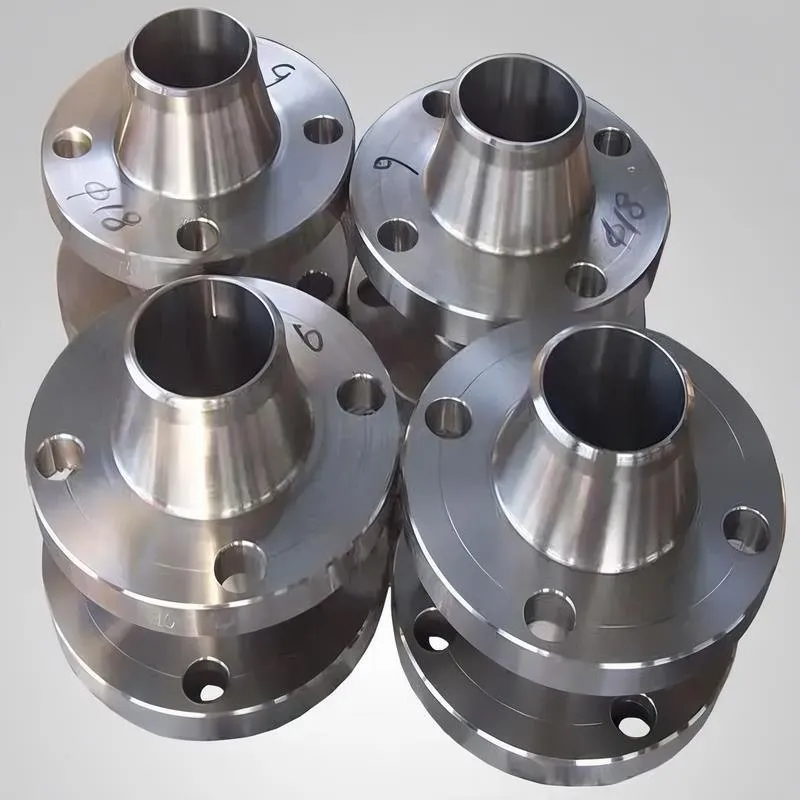
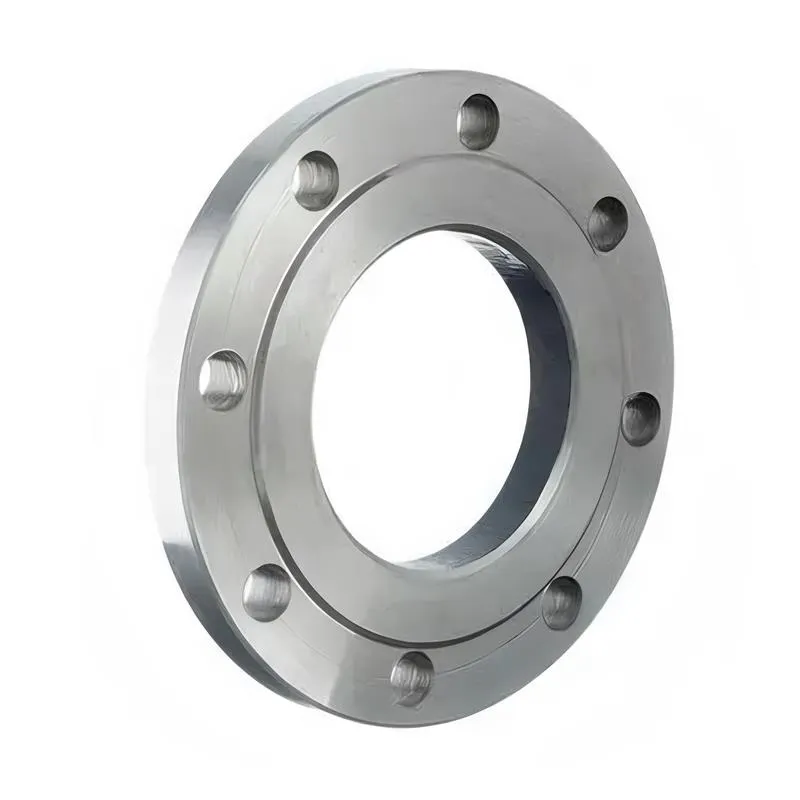
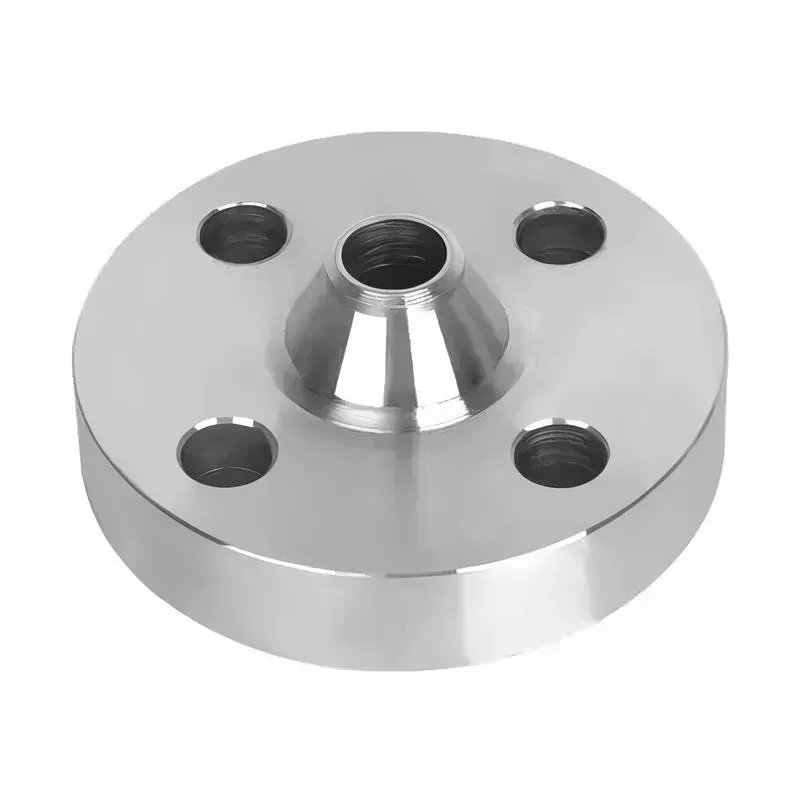
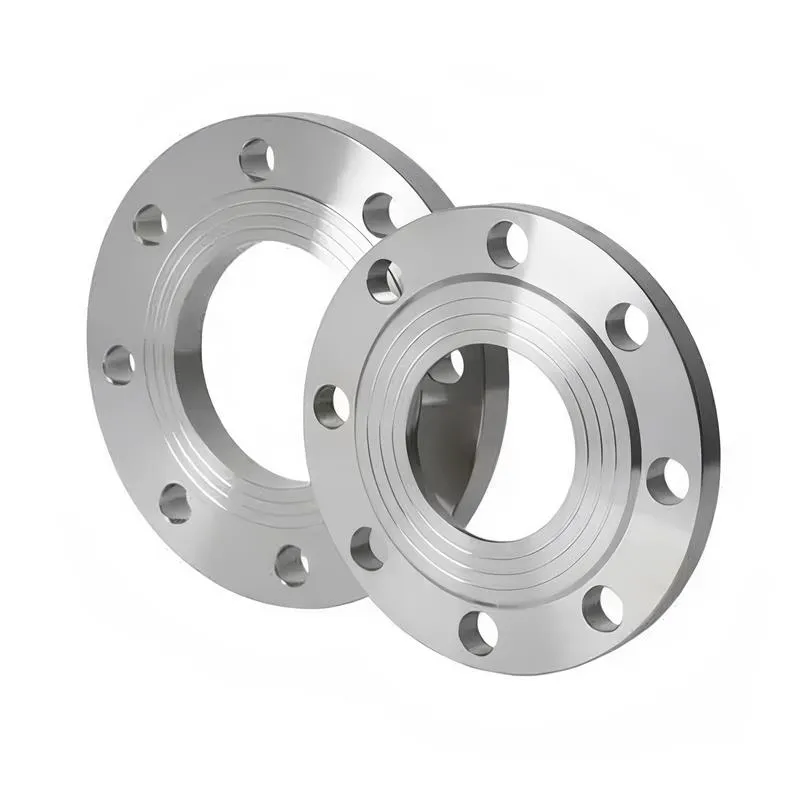
1,We Manufacturing processes are primarily classified into four types:
1:Forging,
2:Casting,
3:Cutting,
4:Rolling.
2,We can manufacture in accordance with these standards.
Standards:
GB Series (Chinese Standards), JB Series (Machinery Standards), HG Series (Chemical Industry Standards), ASME B16.5 (American Standards), BS4504 (British Standards), DIN (German Standards), and JIS (Japanese Standards).
Internationally, there are two primary systems of pipe flange standards: the European system, represented by the German DIN standards (including those of the former Soviet Union), and the American system, represented by the US ANSI pipe flange standards. Other common standards include: the Chinese Ministry of Machinery Industry standards (JB series), the Ministry of Chemical Industry standards (HG series), the Chinese National Standard *GB/T 9112–9124-2010 Steel Pipe Flanges*, as well as US standards (ASME B16.5), British standards (BS4504), German standards (DIN), Japanese standards (JIS), and marine standards (CBM), among others.
The nominal pressure ratings for the PN series are designated by "PN" and comprise the following nine levels: PN2.5, PN6, PN10, PN16, PN25, PN40, PN63, PN100, and PN160.
The nominal pressure ratings for the Class series are designated by "Class" and comprise the following six levels: Class150, Class300, Class600, Class900, Class1500, and Class2500.
Flange Classification
1. **According to Chemical Industry Standards:** Flanges are classified as follows:
Plate Flat Welding Flange (PL), Necked Flat Welding Flange (SO), Necked Butt Welding Flange (WN), Integral Flange (IF), Socket Welding Flange (SW), Threaded Flange (Th), Butt Welding Ring Loose Flange (PJ/SE), Blind Flange (BL), Flat Welding Ring Loose Flange (PJ/PJ), and Lined Blind Flange (BL(s)).
2. **According to Petrochemical (SH) Industry Standards:** Flanges are classified as follows:
Threaded Flange (PL), Butt Welding Flange (WN), Flat Welding Flange (SO), Socket Welding Flange (SW), Loose Flange (LJ), and Blind Flange (no specific designation).
3. **According to Machinery (JB) Industry Standards:** Flanges are classified as follows:
Integral Flange, Butt Welding Flange, Plate Flat Welding Flange, Butt Welding Ring Plate Loose Flange, Flat Welding Ring Plate Loose Flange, Lap Joint Ring Plate Loose Flange, and Blind Flange.
4. **According to Connection Method/Type:** Flanges are classified as follows:
Plate Flat Welding Flange, Necked Flat Welding Flange, Necked Butt Welding Flange, Socket Welding Flange, Threaded Flange, Blind Flange, Necked Butt Welding Ring Loose Flange, Flat Welding Ring Loose Flange, Ring-Type Joint (RTJ) Flange and Blind Flange, Large-Diameter Plate Flange, Large-Diameter High-Neck Flange, Figure-8 Blind Plate, Butt Welding Ring Loose Flange, etc.
5. **According to the Component Being Connected:** Flanges can be classified into Vessel Flanges and Pipe Flanges.
6. **According to Structural Type:** Flanges include Integral Flanges, Threaded Flanges, Flat Welding Flanges, Butt Welding Flanges, Lap Joint (Loose/Swivel) Flanges, and Blind Flanges.
A flange—also referred to as a flange plate or rim—is a component used to connect shafts to one another, or, more commonly, to join the ends of pipes. Flanges are also utilized at the inlet and outlet ports of equipment to facilitate connections between two devices—for instance, the flange on a speed reducer. A "flange connection" or "flanged joint" refers to a detachable joint assembly comprising three interconnected elements—a flange, a gasket, and bolts—that together form a sealed structural unit. In the context of piping systems, a "pipe flange" specifically denotes a flange used for plumbing within the installation; when applied to equipment, it refers to the inlet or outlet flange of that specific device. Flanges feature a series of holes through which bolts are inserted to securely fasten the two flanges together, while a gasket placed between the flanges ensures a leak-proof seal. Flanges are broadly categorized into three types: threaded (screw-in) flanges, welded flanges, and clamp-type flanges. Flanges are invariably used in pairs; threaded flanges are suitable for low-pressure piping applications, whereas welded flanges are required for systems operating at pressures exceeding 4 kilograms per square centimeter. A sealing gasket is inserted between the two flange plates, which are then firmly secured using bolts. The thickness of a flange—as well as the specifications of the bolts used to fasten it—vary depending on the specific pressure rating required for the application. When connecting equipment such as water pumps or valves to piping systems, the corresponding connection points on these devices are often manufactured in the shape of a matching flange; this method of attachment is also referred to as a "flange connection." Generally, any connecting component that utilizes bolts to join and seal the perimeters of two flat surfaces—such as the joints in ventilation ducts—is termed a "flange"; such components may collectively be classified as "flange-type parts." However, since such a connection often constitutes merely a *portion* of a larger device—for instance, the interface between a flange and a water pump—it would be inappropriate to classify the entire water pump itself as a "flange-type part." Conversely, smaller components—such as valves—that feature such flanged interfaces may indeed be appropriately categorized as "flange-type parts."
-:-
For detailed product information, please contact sales.
-:
International Mold Steel Flange NAK55 Precipitation Hardened Mold Steel Flange Product Information
-:-
For detailed product information, please contact sales.
-:
International Mold Steel Flange NAK55 Precipitation Hardened Mold Steel Flange Synonyms
-:-
For detailed product information, please contact sales.
-:
International Mold Steel NAK55 Precipitation Hardened Mold Steel Product Information
-:-
For detailed product information, please contact sales.
-:
# **Product Introduction: International Mold Steel NAK55 Precipitation Hardened Mold Steel**
International Mold Steel (IMS) NAK55 is a premium, nickel-aluminum (Ni-Al) precipitation hardening mold steel supplied in a solution-treated and pre-aged condition. It is renowned for its **exceptional combination of high hardness (40-43 HRC) in the as-supplied state, outstanding machinability, superior polishability, and excellent dimensional stability**. Unlike conventional quenched and tempered steels, NAK55 achieves its hardness through a dispersion of fine intermetallic compounds (Ni₃Al) formed during a controlled aging process, which occurs without the phase transformation and associated distortion of martensitic hardening.
This steel is specifically engineered for the production of **high-precision, long-run plastic injection molds and die-casting molds** requiring superior surface finishes and minimal post-machining distortion. Its unique metallurgy allows it to be machined, polished, and textured in its hard state, streamlining the mold-making process and reducing the risks associated with heat treatment. NAK55 is a cornerstone material in industries demanding the highest levels of surface quality and dimensional accuracy, such as optical components, consumer electronics, and automotive interiors.
---
## **1. Chemical Composition (Weight %)**
The composition is a nickel-aluminum alloy system with added sulfur for machinability and chromium for hardenability/corrosion resistance.
| **Element** | **Nickel (Ni)** | **Aluminum (Al)** | **Chromium (Cr)** | **Molybdenum (Mo)** | **Copper (Cu)** | **Sulfur (S)** |
| :--- | :--- | :--- | :--- | :--- | :--- | :--- |
| **Content** | **2.80 - 3.50** | **1.00 - 1.50** | **0.80 - 1.30** | **0.20 - 0.50** | **0.80 - 1.30** | **0.05 - 0.12** |
| **Role** | **Primary hardening element.** Forms the hardening precipitate Ni₃Al (gamma prime phase) with Aluminum during aging, providing strength and hardness without martensitic transformation. | Partners with Nickel to form the age-hardening Ni₃Al precipitates. | Enhances hardenability of the matrix during solution treatment and provides mild corrosion resistance. | Increases strength and refines the grain structure. | Contributes to age hardening and improves corrosion resistance. | Forms manganese sulfide (MnS) inclusions that act as chip breakers, granting **exceptional free-machining characteristics** in the hardened state. |
*Note: Iron (Fe) constitutes the remainder. Manganese (Mn) is present to balance the sulfur. This is a low-carbon, precipitation-hardening alloy steel.*
---
## **2. Physical & Mechanical Properties**
*Supplied in a solution-treated and pre-aged condition with a uniform hardness of 40-43 HRC.*
* **Density:** ~7.8 g/cm³
* **Modulus of Elasticity:** ~190-200 GPa (slightly lower than tool steels due to microstructure)
* **Thermal Conductivity:** Moderate.
* **As-Supplied Hardness:** **40 - 43 HRC.** This pre-hardened state allows for direct machining of complex geometries without subsequent heat treatment.
* **Machinability:** **Exceptional.** One of its most celebrated features. It machines with ease, producing short, broken chips and yielding excellent surface finishes even at high hardness, dramatically reducing tool wear and machining time.
* **Polishability:** **Superb.** Capable of achieving ultra-high mirror finishes (e.g., SPI-A1, #12000+ grit) due to its fine, uniform, and non-directional microstructure free of hard carbides. Ideal for optical and high-gloss parts.
* **Photographic Etchability (Texturing):** **Excellent.** Produces sharp, consistent textures with high definition.
* **Dimensional Stability:** **Excellent.** No phase change occurs during final aging or in service under typical molding temperatures (<300°C/570°F), ensuring minimal movement after machining.
* **Toughness & Wear Resistance:** **Good.** Adequate for most plastic injection molding applications. For molding highly abrasive filled materials (e.g., glass fiber), nitriding can be applied to enhance surface wear resistance.
* **Weldability:** Fair to good with proper procedure (pre-heat, specific electrodes). Weld repairs are common.
---
## **3. Processing & Thermal Treatment**
NAK55 follows a specific thermal cycle set by the mill; the mold maker primarily performs machining and finishing.
1. **Mill Processing:** The steel undergoes **Solution Treatment** (heated to dissolve alloying elements) followed by quenching and a **Pre-Aging** process. It is supplied in this hardened (40-43 HRC), stabilized condition.
2. **Machining (User):** The mold maker machines the steel directly in its hard state. No customer annealing or hardening is required or possible.
3. **Aging (Optional - User):** After machining, a low-temperature **Aging Treatment** (450-500°C / 840-930°F for several hours) may be performed to relieve machining stresses and slightly increase hardness (by 1-2 HRC). This is often done for high-precision molds.
4. **Finishing:** Excellent response to polishing, texturing, and coating (e.g., Ni-P plating, DLC).
5. **Nitriding:** Commonly applied to increase surface hardness to 65-70 HV for improved wear and anti-sticking properties.
---
## **4. Key Applications**
NAK55 is the material of choice for high-end, precision plastic injection molds requiring flawless surfaces and stability.
* **Optical Molds:** For lenses, light guides, reflectors, and display components.
* **High-Gloss & Appearance Parts Molds:** For automotive interiors (dashboards, trim), consumer electronics (housings, bezels), and appliances.
* **Molds for Engineering Plastics:** Including ABS, PC, PC/ABS, POM, and nylon (unfilled or mildly filled).
* **Die-Casting Molds for Zinc & Magnesium** (for lower melting point alloys).
* **Large, Complex Cavity & Core Inserts** where machining in a pre-hardened state reduces risk.
---
## **5. International Standards & Cross-References**
NAK55 is a Japanese-origin, proprietary grade that has become an industry benchmark. It is part of the "NAK" series of precipitation-hardening mold steels.
* **JIS:** No official JIS designation. It is a proprietary trade name.
* **AISI/SAE:** No direct equivalent. Functionally similar in application to pre-hardened mold steels like P20, but with a different hardening mechanism and superior polishability.
* **European (EN):** No direct equivalent. The closest in concept are special Ni-Al age-hardening steels.
* **Common Trade Names/Equivalents:**
* **Daido NAK55** (the original manufacturer's grade).
* **Hitachi HPM75** (similar Ni-Al age-hardening steel).
* **Uddeholm Unimax** (Different chemistry, but similar pre-hardened, high-polish application).
* **Böhler M333 (Isodur 333)**.
---
## **6. Advantages & Limitations**
**Advantages:**
* **Machinability in Hard State:** Unmatched ease of machining at 40+ HRC, saving time and cost.
* **Superb Polishability & Texture Reproduction:** Delivers the highest surface quality.
* **Dimensional Stability:** Eliminates risks of distortion from post-machining heat treatment.
* **Good Overall Performance:** Balanced hardness, toughness, and wear resistance for most molding needs.
* **Proven Track Record:** An industry standard for high-quality molds for decades.
**Limitations:**
* **Lower Maximum Hardness:** Not suitable for applications requiring core hardness above ~43 HRC.
* **Moderate Wear Resistance vs. Tool Steels:** Requires nitriding for highly abrasive plastics.
* **Not a Hot Work Steel:** Limited to lower-temperature molding applications.
* **Higher Cost:** More expensive than standard pre-hardened steels like P20.
* **Limited Weldability:** Requires expertise for successful repairs.
---
## **7. Summary**
**International Mold Steel NAK55 is the definitive high-performance, pre-hardened mold steel for applications where surface perfection, dimensional accuracy, and machining efficiency are non-negotiable.** Its unique precipitation-hardening metallurgy provides a "best of both worlds" scenario: the hardness needed for production longevity and the workability of a much softer steel. By enabling complex molds to be machined to a mirror finish directly from a hardened block, NAK55 reduces lead times, mitigates manufacturing risks, and ensures the highest possible quality for molded plastic parts. It remains the gold standard for mold makers serving the optical, automotive, and high-end consumer goods industries.
-:-
For detailed product information, please contact sales.
-:
International Mold Steel NAK55 Precipitation Hardened Mold Steel Specification
Dimensions
Size:
Diameter 20-1000 mm Length <7004 mm
Size:We can customized as required
Standard:
Per your request or drawing
We can customized as required
Properties(Theoretical)
Chemical Composition
-:-
For detailed product information, please contact sales.
-:
International Mold Steel NAK55 Precipitation Hardened Mold Steel Properties
-:-
For detailed product information, please contact sales.
-:
Applications of International Mold Steel Flange NAK55 Precipitation Hardened Mold Steel Flange
-:-
For detailed product information, please contact sales.
-:
Chemical Identifiers International Mold Steel Flange NAK55 Precipitation Hardened Mold Steel Flange
-:-
For detailed product information, please contact sales.
-:
Packing of International Mold Steel Flange NAK55 Precipitation Hardened Mold Steel Flange
-:-
For detailed product information, please contact sales.
-:
Standard Packing:
-:-
For detailed product information, please contact sales.
-:
Typical bulk packaging includes palletized plastic 5 gallon/25 kg. pails, fiber and Steel Flange drums to 1 ton super sacks in full container (FCL) or truck load (T/L) quantities. Research and sample quantities and hygroscopic, oxidizing or other air sensitive materials may be packaged under argon or vacuum. Solutions are packaged in polypropylene, plastic or glass jars up to palletized 3475 gallon liquid totes Special package is available on request. E FORUs’ is carefully handled to minimize damage during storage and transportation and to preserve the quality of our products in their original condition