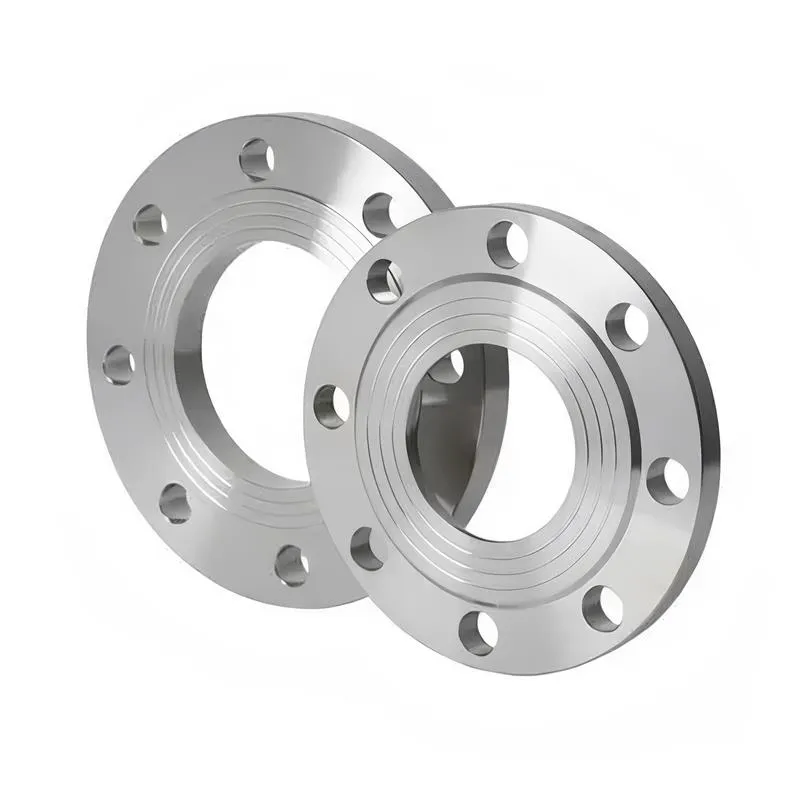
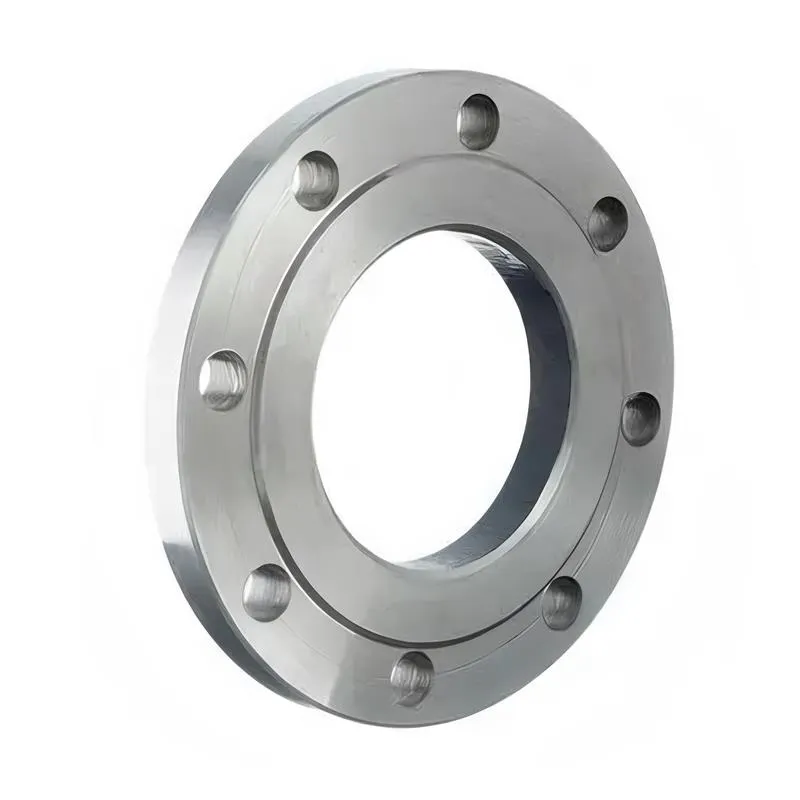
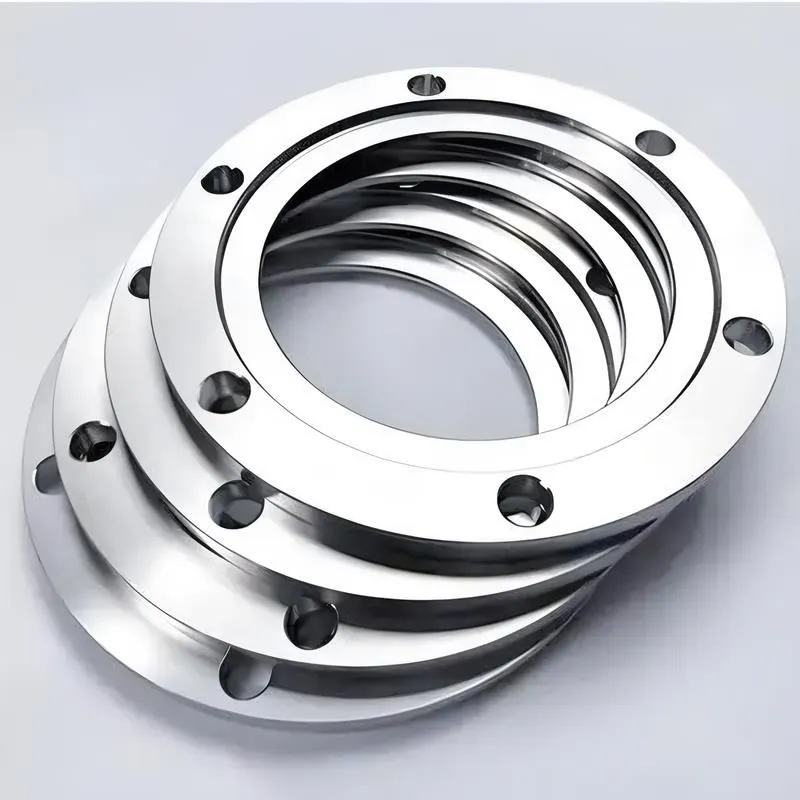
1,We Manufacturing processes are primarily classified into four types:
1:Forging,
2:Casting,
3:Cutting,
4:Rolling.
2,We can manufacture in accordance with these standards.
Standards:
GB Series (Chinese Standards), JB Series (Machinery Standards), HG Series (Chemical Industry Standards), ASME B16.5 (American Standards), BS4504 (British Standards), DIN (German Standards), and JIS (Japanese Standards).
Internationally, there are two primary systems of pipe flange standards: the European system, represented by the German DIN standards (including those of the former Soviet Union), and the American system, represented by the US ANSI pipe flange standards. Other common standards include: the Chinese Ministry of Machinery Industry standards (JB series), the Ministry of Chemical Industry standards (HG series), the Chinese National Standard *GB/T 9112–9124-2010 Steel Pipe Flanges*, as well as US standards (ASME B16.5), British standards (BS4504), German standards (DIN), Japanese standards (JIS), and marine standards (CBM), among others.
The nominal pressure ratings for the PN series are designated by "PN" and comprise the following nine levels: PN2.5, PN6, PN10, PN16, PN25, PN40, PN63, PN100, and PN160.
The nominal pressure ratings for the Class series are designated by "Class" and comprise the following six levels: Class150, Class300, Class600, Class900, Class1500, and Class2500.
Flange Classification
1. **According to Chemical Industry Standards:** Flanges are classified as follows:
Plate Flat Welding Flange (PL), Necked Flat Welding Flange (SO), Necked Butt Welding Flange (WN), Integral Flange (IF), Socket Welding Flange (SW), Threaded Flange (Th), Butt Welding Ring Loose Flange (PJ/SE), Blind Flange (BL), Flat Welding Ring Loose Flange (PJ/PJ), and Lined Blind Flange (BL(s)).
2. **According to Petrochemical (SH) Industry Standards:** Flanges are classified as follows:
Threaded Flange (PL), Butt Welding Flange (WN), Flat Welding Flange (SO), Socket Welding Flange (SW), Loose Flange (LJ), and Blind Flange (no specific designation).
3. **According to Machinery (JB) Industry Standards:** Flanges are classified as follows:
Integral Flange, Butt Welding Flange, Plate Flat Welding Flange, Butt Welding Ring Plate Loose Flange, Flat Welding Ring Plate Loose Flange, Lap Joint Ring Plate Loose Flange, and Blind Flange.
4. **According to Connection Method/Type:** Flanges are classified as follows:
Plate Flat Welding Flange, Necked Flat Welding Flange, Necked Butt Welding Flange, Socket Welding Flange, Threaded Flange, Blind Flange, Necked Butt Welding Ring Loose Flange, Flat Welding Ring Loose Flange, Ring-Type Joint (RTJ) Flange and Blind Flange, Large-Diameter Plate Flange, Large-Diameter High-Neck Flange, Figure-8 Blind Plate, Butt Welding Ring Loose Flange, etc.
5. **According to the Component Being Connected:** Flanges can be classified into Vessel Flanges and Pipe Flanges.
6. **According to Structural Type:** Flanges include Integral Flanges, Threaded Flanges, Flat Welding Flanges, Butt Welding Flanges, Lap Joint (Loose/Swivel) Flanges, and Blind Flanges.
A flange—also referred to as a flange plate or rim—is a component used to connect shafts to one another, or, more commonly, to join the ends of pipes. Flanges are also utilized at the inlet and outlet ports of equipment to facilitate connections between two devices—for instance, the flange on a speed reducer. A "flange connection" or "flanged joint" refers to a detachable joint assembly comprising three interconnected elements—a flange, a gasket, and bolts—that together form a sealed structural unit. In the context of piping systems, a "pipe flange" specifically denotes a flange used for plumbing within the installation; when applied to equipment, it refers to the inlet or outlet flange of that specific device. Flanges feature a series of holes through which bolts are inserted to securely fasten the two flanges together, while a gasket placed between the flanges ensures a leak-proof seal. Flanges are broadly categorized into three types: threaded (screw-in) flanges, welded flanges, and clamp-type flanges. Flanges are invariably used in pairs; threaded flanges are suitable for low-pressure piping applications, whereas welded flanges are required for systems operating at pressures exceeding 4 kilograms per square centimeter. A sealing gasket is inserted between the two flange plates, which are then firmly secured using bolts. The thickness of a flange—as well as the specifications of the bolts used to fasten it—vary depending on the specific pressure rating required for the application. When connecting equipment such as water pumps or valves to piping systems, the corresponding connection points on these devices are often manufactured in the shape of a matching flange; this method of attachment is also referred to as a "flange connection." Generally, any connecting component that utilizes bolts to join and seal the perimeters of two flat surfaces—such as the joints in ventilation ducts—is termed a "flange"; such components may collectively be classified as "flange-type parts." However, since such a connection often constitutes merely a *portion* of a larger device—for instance, the interface between a flange and a water pump—it would be inappropriate to classify the entire water pump itself as a "flange-type part." Conversely, smaller components—such as valves—that feature such flanged interfaces may indeed be appropriately categorized as "flange-type parts."
-:-
For detailed product information, please contact sales.
-:
International Mold Steel Flange Daido DRM2 Matrix High-Speed Steel Flange Product Information
-:-
For detailed product information, please contact sales.
-:
International Mold Steel Flange Daido DRM2 Matrix High-Speed Steel Flange Synonyms
-:-
For detailed product information, please contact sales.
-:
International Mold Steel Daido DRM2 Matrix High-Speed Steel Product Information
-:-
For detailed product information, please contact sales.
-:
# **Product Introduction: Daido DRM2 (DEX40) Powder Metallurgy (PM) Matrix High-Speed Steel**
## **1. Overview**
**Daido DRM2 (commercial name: DEX40)** is a **premium-grade, powder metallurgy (PM) processed, cobalt-alloyed matrix high-speed steel** engineered for the most demanding applications requiring the ultimate combination of **wear resistance, high-temperature hardness (red hardness), and strength**. As an enhanced variant of the DRM1 series, DRM2 incorporates a significant cobalt content, elevating its performance into the realm of **super high-speed steels**. It is specifically designed for tools and dies that operate under extreme conditions of abrasion, high pressure, and elevated temperatures where conventional tool steels fail prematurely. The PM manufacturing process ensures an **ultra-fine, homogeneous distribution of hard carbides** within a tough metallic matrix, delivering unparalleled consistency and isotropic properties for precision tooling applications.
## **2. International Standards & Specifications**
DRM2 is a proprietary, high-performance PM steel from Daido Steel, designed to exceed the capabilities of standard high-speed steel classifications.
* **Primary Manufacturer Standard:**
* **Daido Steel DRM2 / DEX40:** Proprietary specification for this cobalt-containing powder metallurgy matrix steel.
* **Material Classification & Comparative Grades:**
* **Type:** **Cobalt-alloyed Powder Metallurgy High-Speed Steel (PM-HSS)**.
* **Performance Benchmark:** Positioned as a superior alternative to premium conventional high-speed steels such as **AISI M42 (1.3247)** and **AISI M35 (1.3243)**, offering better toughness, grindability, and consistency due to its PM structure.
* **International PM Steel Equivalents:** Occupies a similar performance tier as other top-tier cobalt-containing PM steels:
* **Böhler S590 MICROCLEAN** (Austria)
* **Uddeholm ASP 2060** (Sweden)
* **ASSAB V-10** (Sweden)
* **ISO 4957:** Would fall under alloy tool steel groups for high-speed applications, but is a specific proprietary PM grade.
## **3. Chemical Composition (Weight %, Typical)**
The composition is optimized for maximum carbide volume and high-temperature stability through strategic additions of cobalt, tungsten, and vanadium.
| Element | Typical Range (%) | Role & Benefit |
| :--- | :--- | :--- |
| **Carbon (C)** | 1.25 – 1.45 | Balanced to form a high volume of hard carbides while maintaining matrix integrity. Slightly lower than DRM1 to accommodate cobalt's effect on hardenability and toughness. |
| **Chromium (Cr)** | 3.80 – 4.50 | Provides hardenability and contributes to general corrosion and wear resistance through chromium carbide formation. |
| **Molybdenum (Mo)** | 4.50 – 5.50 | A primary alloying element. Enhances hardenability, refines grain structure, and contributes to secondary hardening and hot strength. |
| **Tungsten (W)** | 9.00 – 10.00 | **High tungsten content** for exceptional **hot hardness (red hardness)** and wear resistance. Forms very stable tungsten carbides. |
| **Vanadium (V)** | 3.00 – 4.00 | **Critical for abrasion resistance.** Forms extremely hard **vanadium carbides (VC)**. The PM process allows a high volume of these fine carbides without compromising structural integrity. |
| **Cobalt (Co)** | 7.50 – 8.50 | **The key differentiator from DRM1.** Cobalt does not form carbides but **dissolves in the matrix**, significantly increasing **high-temperature strength, hot hardness, and tempering resistance**. It allows the steel to retain hardness at temperatures exceeding 600°C. |
| **Matrix Composition:** The synergistic combination of fine, hard (W, V, Mo)C carbides in a Co-strengthened ferrous matrix delivers its world-class properties.
## **4. Typical Physical & Mechanical Properties (Heat Treated)**
* **Recommended Heat Treatment:**
* **Preheating:** 800-850°C (1470-1560°F) - **Crucial** due to high alloy content and risk of thermal shock.
* **Austenitizing (Hardening):** 1180-1220°C (2155-2230°F). Precise temperature control is essential.
* **Quenching:** Oil, high-pressure gas, or salt bath.
* **Tempering:** **Triple tempering is mandatory.** Typical tempering range: 540-580°C (1000-1080°F). Exhibits a pronounced secondary hardening peak.
* **Mechanical Properties (Hardened & Triple Tempered):**
* **Hardness:** **66 – 68 HRC** (achievable and typical). Very high as-tempered hardness.
* **Hot Hardness (Red Hardness):** **Exceptional.** Can retain over 60 HRC at temperatures above 600°C, a defining characteristic enabled by cobalt.
* **Compressive Strength:** Extremely high (>3500 MPa), suitable for the most severe forming operations.
* **Bending Strength:** Good for its extreme hardness level, but the material is optimized for wear/heat resistance rather than high impact loads.
* **Impact Toughness:** Moderate. The high cobalt and carbide content prioritize wear and hot hardness over toughness. It is more brittle than DRM1 but offers comparable or better toughness than conventionally melted cobalt HSS grades (like M42) due to the fine PM structure.
* **Abrasion Resistance:** **Outstanding.** Among the highest of all commercially available tool steels, due to the combined effect of high vanadium carbide content and a very hard matrix.
* **Physical Properties:**
* **Density:** ~8.3 g/cm³
* **Modulus of Elasticity:** ~210 GPa
* **Thermal Conductivity:** Moderate, typical for high-alloy HSS.
## **5. Product Application**
DRM2 is selected for the most severe applications where extreme wear, high pressure, and frictional heating are simultaneous challenges.
* **High-Performance Cutting Tools (Limited):**
* **Premium Cutting Inserts** for machining superalloys, hardened steels, and abrasive composites.
* **Broaches** and **Gear Hobs** for difficult-to-machine materials.
* **Severe Cold Work Applications:**
* **Cold Extrusion Punches and Dies** for steel and high-strength alloys, where frictional heating is significant.
* **Thread Rolling Dies** for hard materials.
* **Fine Blanking Punches and Dies** for the hardest and most abrasive sheet materials.
* **Wear Parts under High Temperature:**
* **Hot Work Tooling Inserts** where temperatures are lower than for H13-type steels but wear is extreme (e.g., certain forging die inserts).
* **Wear-resistant Guides and Components** in high-temperature machinery.
* **Plastic Injection Molds:**
* **Cavities and Cores for Extremely Abrasive & Reinforced Plastics** (e.g., high-percentage glass fiber, carbon fiber, ceramic-filled polymers) where high cycle counts generate heat.
## **6. Key Features & Advantages**
* **Unrivaled Hot Hardness (Red Hardness):** The high cobalt content allows it to maintain a much higher percentage of its room-temperature hardness at elevated service temperatures (600°C+), a critical property for high-speed or high-friction applications.
* **Extreme Abrasion/Wear Resistance:** The combination of a high volume of ultra-hard vanadium carbides and a very hard, cobalt-strengthened matrix provides arguably the best wear resistance available in a commercial tool steel.
* **High Temper Resistance:** Excellent resistance to softening during prolonged exposure to operating heat.
* **Superior Grindability:** Despite its extreme hardness, the fine, uniform PM carbide structure makes it significantly easier to grind than conventional cobalt HSS grades, reducing processing time and improving surface finish quality.
* **Excellent Dimensional Stability:** Predictable and minimal size change during heat treatment due to the homogeneous PM structure.
* **Isotropic Properties:** Uniform performance in all directions, free from the directional weaknesses caused by carbide banding in conventionally cast steels.
## **7. Processing Guidelines**
* **Machining (Annealed State):** Difficult. Requires rigid setups, sharp carbide tools, and conservative parameters. Pre-hardening is not applicable; it is supplied annealed.
* **Grinding:** Use premium CBN or diamond-coated wheels for best results. Its PM structure offers better grindability than its conventional counterparts.
* **Electrical Discharge Machining (EDM):** Can be performed. A stress-relief temper after roughing is highly recommended.
* **Heat Treatment:** **Complex and critical.** Must be performed in vacuum or protective atmosphere furnaces with precise temperature control. **Triple tempering is non-negotiable** to achieve full hardness, transform retained austenite, and develop optimal properties.
* **Surface Treatments:** An excellent substrate for advanced PVD (AlCrN, TiSiN) and CVD coatings, which can further enhance performance in specific applications.
**Summary:**
Daido DRM2 (DEX40) represents the pinnacle of wear-resistant, cobalt-containing matrix high-speed steel technology. It is a specialized, high-cost material reserved for applications where its extraordinary hot hardness and abrasion resistance directly solve critical failure modes that lower-grade steels cannot address. By leveraging powder metallurgy to combine high levels of cobalt, tungsten, and vanadium, it delivers a level of performance consistency and property balance unattainable with conventional melting. For toolmakers facing the most extreme conditions of wear, pressure, and heat, DRM2 offers a definitive solution to extend tool life and ensure process reliability.
-:-
For detailed product information, please contact sales.
-:
International Mold Steel Daido DRM2 Matrix High-Speed Steel Specification
Dimensions
Size:
Diameter 20-1000 mm Length <7035 mm
Size:We can customized as required
Standard:
Per your request or drawing
We can customized as required
Properties(Theoretical)
Chemical Composition
-:-
For detailed product information, please contact sales.
-:
International Mold Steel Daido DRM2 Matrix High-Speed Steel Properties
-:-
For detailed product information, please contact sales.
-:
Applications of International Mold Steel Flange Daido DRM2 Matrix High-Speed Steel Flange
-:-
For detailed product information, please contact sales.
-:
Chemical Identifiers International Mold Steel Flange Daido DRM2 Matrix High-Speed Steel Flange
-:-
For detailed product information, please contact sales.
-:
Packing of International Mold Steel Flange Daido DRM2 Matrix High-Speed Steel Flange
-:-
For detailed product information, please contact sales.
-:
Standard Packing:
-:-
For detailed product information, please contact sales.
-:
Typical bulk packaging includes palletized plastic 5 gallon/25 kg. pails, fiber and Steel Flange drums to 1 ton super sacks in full container (FCL) or truck load (T/L) quantities. Research and sample quantities and hygroscopic, oxidizing or other air sensitive materials may be packaged under argon or vacuum. Solutions are packaged in polypropylene, plastic or glass jars up to palletized 3506 gallon liquid totes Special package is available on request. E FORUs’ is carefully handled to minimize damage during storage and transportation and to preserve the quality of our products in their original condition