Astralloy 8000® Abrasion-Resistant Steel Flange
Product Code : FL-Steel-1745-CU
We provide Astralloy 8000® Abrasion-Resistant Steel Flange Manufacturing types: Forging, Casting, Cutting, Rolling.We can manufacture in accordance with these standards.GB/T 9112–9124-2010 Steel Pipe Flanges , JB Series , HG Series, ASME B16.5, BS4504, DIN , JIS,CBM,etc
1,We Manufacturing processes are primarily classified into four types:
1:Forging,
2:Casting,
3:Cutting,
4:Rolling.
2,We can manufacture in accordance with these standards.
Standards:
GB Series (Chinese Standards), JB Series (Machinery Standards), HG Series (Chemical Industry Standards), ASME B16.5 (American Standards), BS4504 (British Standards), DIN (German Standards), and JIS (Japanese Standards).
Internationally, there are two primary systems of pipe flange standards: the European system, represented by the German DIN standards (including those of the former Soviet Union), and the American system, represented by the US ANSI pipe flange standards. Other common standards include: the Chinese Ministry of Machinery Industry standards (JB series), the Ministry of Chemical Industry standards (HG series), the Chinese National Standard *GB/T 9112–9124-2010 Steel Pipe Flanges*, as well as US standards (ASME B16.5), British standards (BS4504), German standards (DIN), Japanese standards (JIS), and marine standards (CBM), among others.
The nominal pressure ratings for the PN series are designated by "PN" and comprise the following nine levels: PN2.5, PN6, PN10, PN16, PN25, PN40, PN63, PN100, and PN160.
The nominal pressure ratings for the Class series are designated by "Class" and comprise the following six levels: Class150, Class300, Class600, Class900, Class1500, and Class2500.
Flange Classification
1. **According to Chemical Industry Standards:** Flanges are classified as follows:
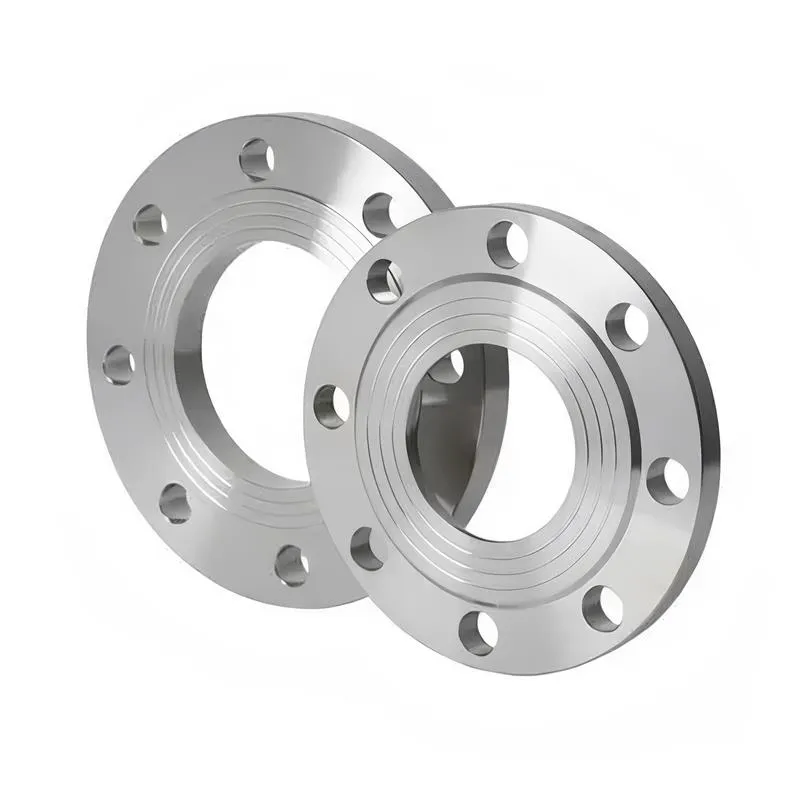
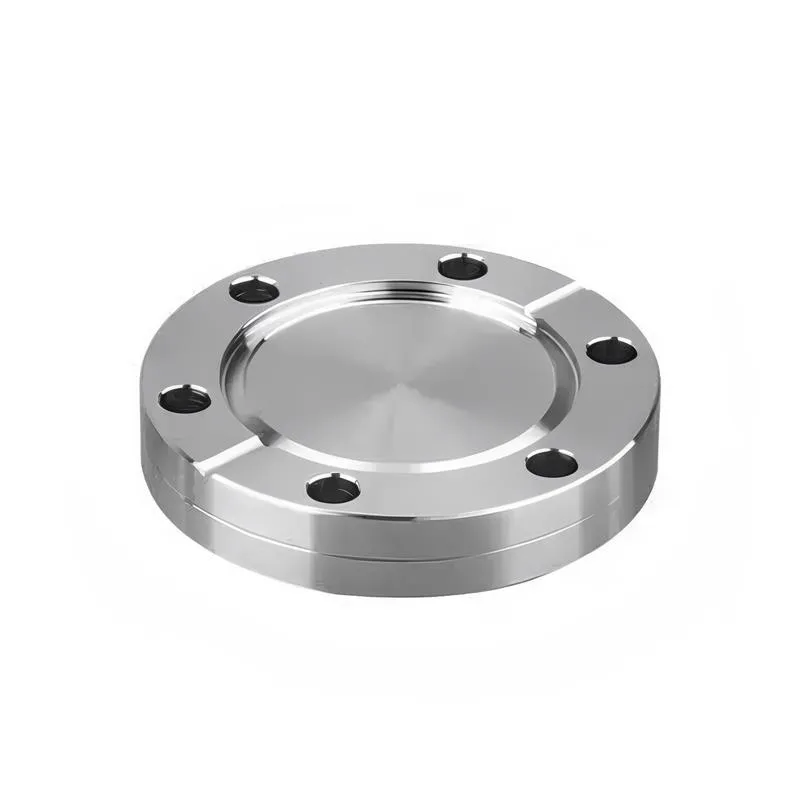
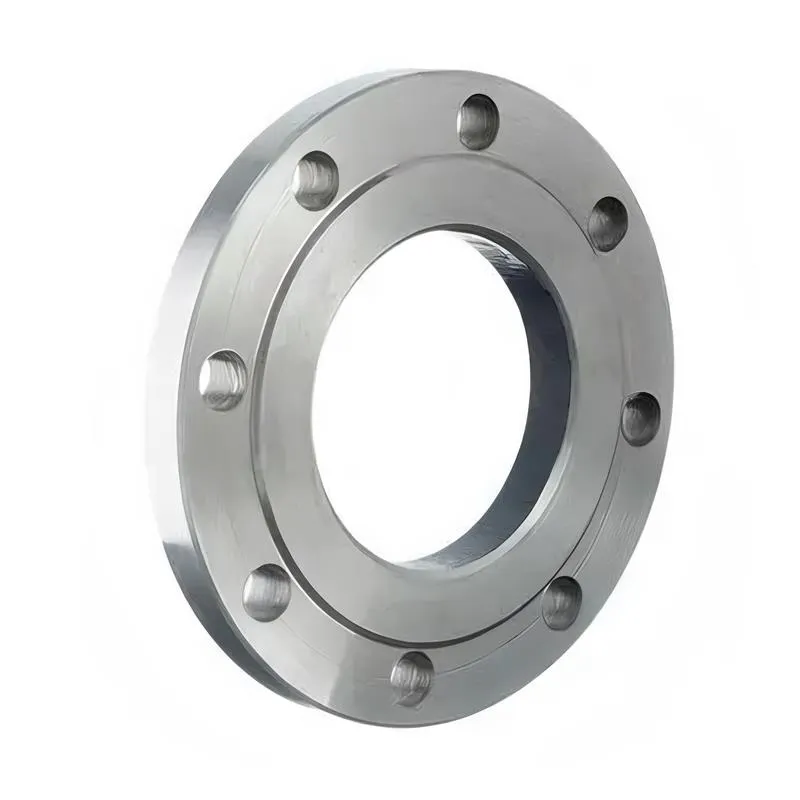
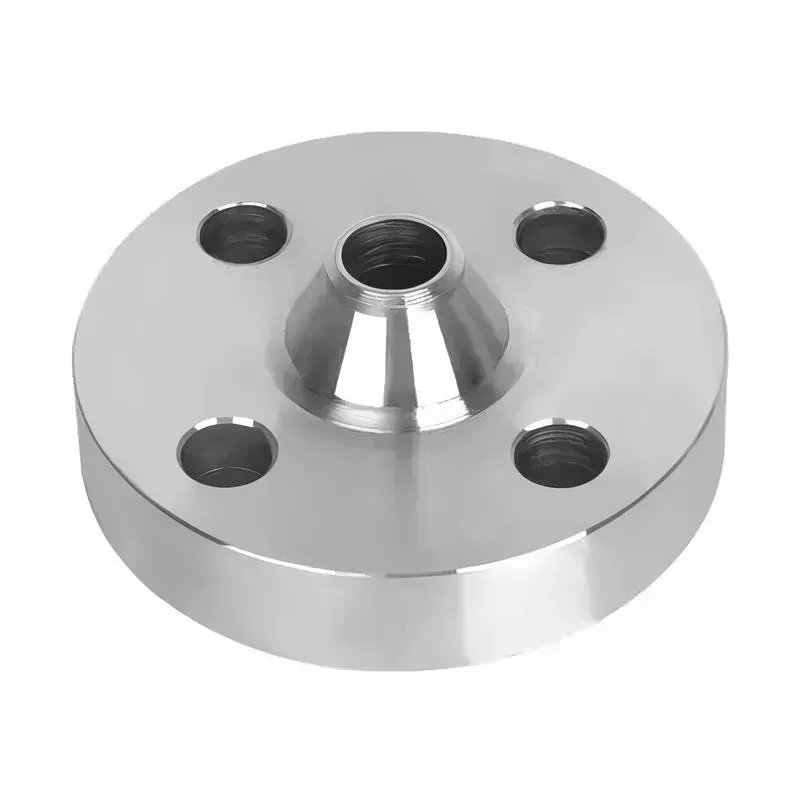
Plate Flat Welding Flange (PL), Necked Flat Welding Flange (SO), Necked Butt Welding Flange (WN), Integral Flange (IF), Socket Welding Flange (SW), Threaded Flange (Th), Butt Welding Ring Loose Flange (PJ/SE), Blind Flange (BL), Flat Welding Ring Loose Flange (PJ/PJ), and Lined Blind Flange (BL(s)).
2. **According to Petrochemical (SH) Industry Standards:** Flanges are classified as follows:
Threaded Flange (PL), Butt Welding Flange (WN), Flat Welding Flange (SO), Socket Welding Flange (SW), Loose Flange (LJ), and Blind Flange (no specific designation).
3. **According to Machinery (JB) Industry Standards:** Flanges are classified as follows:
Integral Flange, Butt Welding Flange, Plate Flat Welding Flange, Butt Welding Ring Plate Loose Flange, Flat Welding Ring Plate Loose Flange, Lap Joint Ring Plate Loose Flange, and Blind Flange.
4. **According to Connection Method/Type:** Flanges are classified as follows:
Plate Flat Welding Flange, Necked Flat Welding Flange, Necked Butt Welding Flange, Socket Welding Flange, Threaded Flange, Blind Flange, Necked Butt Welding Ring Loose Flange, Flat Welding Ring Loose Flange, Ring-Type Joint (RTJ) Flange and Blind Flange, Large-Diameter Plate Flange, Large-Diameter High-Neck Flange, Figure-8 Blind Plate, Butt Welding Ring Loose Flange, etc.
5. **According to the Component Being Connected:** Flanges can be classified into Vessel Flanges and Pipe Flanges.
6. **According to Structural Type:** Flanges include Integral Flanges, Threaded Flanges, Flat Welding Flanges, Butt Welding Flanges, Lap Joint (Loose/Swivel) Flanges, and Blind Flanges.
A flange—also referred to as a flange plate or rim—is a component used to connect shafts to one another, or, more commonly, to join the ends of pipes. Flanges are also utilized at the inlet and outlet ports of equipment to facilitate connections between two devices—for instance, the flange on a speed reducer. A "flange connection" or "flanged joint" refers to a detachable joint assembly comprising three interconnected elements—a flange, a gasket, and bolts—that together form a sealed structural unit. In the context of piping systems, a "pipe flange" specifically denotes a flange used for plumbing within the installation; when applied to equipment, it refers to the inlet or outlet flange of that specific device. Flanges feature a series of holes through which bolts are inserted to securely fasten the two flanges together, while a gasket placed between the flanges ensures a leak-proof seal. Flanges are broadly categorized into three types: threaded (screw-in) flanges, welded flanges, and clamp-type flanges. Flanges are invariably used in pairs; threaded flanges are suitable for low-pressure piping applications, whereas welded flanges are required for systems operating at pressures exceeding 4 kilograms per square centimeter. A sealing gasket is inserted between the two flange plates, which are then firmly secured using bolts. The thickness of a flange—as well as the specifications of the bolts used to fasten it—vary depending on the specific pressure rating required for the application. When connecting equipment such as water pumps or valves to piping systems, the corresponding connection points on these devices are often manufactured in the shape of a matching flange; this method of attachment is also referred to as a "flange connection." Generally, any connecting component that utilizes bolts to join and seal the perimeters of two flat surfaces—such as the joints in ventilation ducts—is termed a "flange"; such components may collectively be classified as "flange-type parts." However, since such a connection often constitutes merely a *portion* of a larger device—for instance, the interface between a flange and a water pump—it would be inappropriate to classify the entire water pump itself as a "flange-type part." Conversely, smaller components—such as valves—that feature such flanged interfaces may indeed be appropriately categorized as "flange-type parts."
-:-
For detailed product information, please contact sales.
-:
Astralloy 8000® Abrasion-Resistant Steel Flange Product Information
-:-
For detailed product information, please contact sales.
-:
Astralloy 8000® Abrasion-Resistant Steel Flange Synonyms
-:-
For detailed product information, please contact sales.
-:
Astralloy 8000® Abrasion-Resistant Steel Product Information
-:-
For detailed product information, please contact sales.
-:
# Astralloy 8000® Abrasion-Resistant Steel Plate
## Product Overview
Astralloy 8000® is an ultra-high hardness, through-hardened abrasion-resistant steel plate engineered for extreme wear applications where maximum resistance to sliding abrasion is required. This premium alloy steel delivers consistent **500 Brinell (HB)** minimum hardness throughout the entire plate thickness, providing superior wear life in highly abrasive environments without the need for additional heat treatment by the end user.
## Key Features & Advantages
- **Guaranteed Hardness:** Minimum 500 HB (53 HRC) hardness throughout the entire plate thickness
- **Ready-to-Use Condition:** Supplied in the fully hardened and tempered condition, eliminating the need for post-fabrication heat treatment
- **Excellent Weldability:** Specifically formulated for improved weldability compared to conventional 500 HB steels
- **Good Formability:** Can be cold-formed within recommended radii, facilitating component manufacturing
- **Superior Abrasion Resistance:** Outperforms lower hardness AR steels (AR400, AR450) in severe abrasion applications
- **Impact Toughness:** Balanced chemistry provides better impact resistance than cast materials of similar hardness
## Chemical Composition (Typical Weight %)
Astralloy 8000® features a carefully balanced alloy design optimized for both hardness and toughness:
| Element | Composition (%) | Element | Composition (%) |
|---------|----------------|---------|----------------|
| Carbon (C) | 0.30 - 0.35 | Chromium (Cr) | 0.80 - 1.20 |
| Manganese (Mn) | 1.20 - 1.60 | Molybdenum (Mo) | 0.20 - 0.40 |
| Silicon (Si) | 0.40 - 0.70 | Boron (B) | 0.001 - 0.005 |
| Phosphorus (P) | ≤ 0.020 | Sulfur (S) | ≤ 0.010 |
| **Optional Additions:** | Nickel (Ni), Vanadium (V) for enhanced properties |
## Physical & Mechanical Properties
### Mechanical Properties (Typical)
- **Hardness:** 500 - 550 HB (53 - 55 HRC) minimum throughout thickness
- **Yield Strength:** ≥ 1450 MPa (210 ksi)
- **Tensile Strength:** ≥ 1600 MPa (232 ksi)
- **Elongation in 2" (50 mm):** 10 - 14%
- **Charpy V-Notch Impact (at -20°C/-4°F):** ≥ 20 J (15 ft-lb)
### Physical Properties
- **Density:** 7.85 g/cm³ (0.284 lb/in³)
- **Modulus of Elasticity:** 200 GPa (29 × 10⁶ psi)
- **Thermal Conductivity:** 42 W/m·K at 20°C
- **Coefficient of Thermal Expansion:** 11.5 × 10⁻⁶/°C (20-100°C)
## Processing Characteristics
### Machining
- Requires carbide-tipped or ceramic cutting tools
- Recommended slow speeds with positive rake angles
- Adequate cooling/lubrication essential for tool life
### Welding
- **Preheat:** 150-200°C (300-400°F) for thicknesses > 12 mm
- **Interpass Temperature:** Maintain below 250°C (480°F)
- **Recommended Electrodes:** Matching or slightly undermatching strength (500-550 MPa yield)
- **Post-Weld Heat Treatment:** Generally not required for most applications
### Forming
- Minimum bend radii: 5 × plate thickness (90° bend)
- Cold forming possible with proper equipment and techniques
## International Standards & Equivalents
Astralloy 8000® meets or exceeds multiple international abrasion-resistant steel specifications:
| Standard | Grade | Specification |
|----------|-------|---------------|
| **ASTM A514/A517** | Grade S | High-yield-strength, quenched & tempered alloy steel |
| **EN 10025-6** | S500Q/S500QL | Quenched and tempered fine grain structural steel |
| **ISO 4950-3** | Q550QR | High yield strength quenched and tempered plate |
| **JIS G3124** | SHY685 | High yield strength steel plates for welded structure |
| **AS/NZS 3678** | 500 | High-strength structural steel plate |
| **Common Industry Designation:** | AR500 | Abrasion-resistant steel, 500 HB hardness |
*Note: While Astralloy 8000® meets these general specifications, it offers proprietary enhancements in consistency, weldability, and through-hardness characteristics.*
## Typical Applications
### Mining & Mineral Processing
- Truck bed liners and hoppers
- Chute liners, feeders, and transfer points
- Shovel buckets and dipper teeth
- Screens and classifier components
### Construction & Earthmoving
- Excavator bucket wear plates and cutting edges
- Bulldozer end bits and cutting edges
- Loader bucket liners and side cutters
- Grader moldboard ends and cutting edges
### Aggregate & Cement Industries
- Crusher liners and impact plates
- Conveyor skirting and impact bars
- Pulverizer hammers and wear plates
- Fan blades and separator components
### Recycling & Scrap Processing
- Shredder hammers, caps, and grates
- Baler wear plates and guides
- Shear blades and anvils
- Sorting system wear components
### Agricultural Industry
- Combine harvester wear plates
- Grain handling system components
- Plow shares and cultivator points
- Fertilizer spreader components
## Available Forms & Sizes
- **Thickness Range:** 6 mm to 100 mm (1/4" to 4")
- **Width Range:** Up to 3650 mm (144")
- **Length Range:** Up to 15000 mm (590")
- **Surface Finish:** Mill scale or blasted/shot-peened as specified
- **Flatness:** Guaranteed to ASTM A6 requirements
## Quality Assurance
- Manufactured under ISO 9001 quality management systems
- 100% hardness testing to ensure through-thickness consistency
- Ultrasonic testing available per ASTM A578 standards
- Complete traceability from melt to final product
- Certified mill test reports with each shipment
---
**Disclaimer:** The information provided is for general reference only. Specific processing recommendations may vary based on application requirements, plate thickness, and fabrication methods. Always consult Astralloy's latest technical data sheets and processing guidelines for critical applications. "Astralloy" and "Astralloy 8000" are registered trademarks.
-:-
For detailed product information, please contact sales.
-:
Astralloy 8000® Abrasion-Resistant Steel Specification
Dimensions
Size:
Diameter 20-1000 mm Length <7073 mm
Size:We can customized as required
Standard:
Per your request or drawing
We can customized as required
Properties(Theoretical)
Chemical Composition
-:-
For detailed product information, please contact sales.
-:
Astralloy 8000® Abrasion-Resistant Steel Properties
-:-
For detailed product information, please contact sales.
-:
Applications of Astralloy 8000® Abrasion-Resistant Steel Flange
-:-
For detailed product information, please contact sales.
-:
Chemical Identifiers Astralloy 8000® Abrasion-Resistant Steel Flange
-:-
For detailed product information, please contact sales.
-:
Packing of Astralloy 8000® Abrasion-Resistant Steel Flange
-:-
For detailed product information, please contact sales.
-:
Standard Packing:
-:-
For detailed product information, please contact sales.
-:
Typical bulk packaging includes palletized plastic 5 gallon/25 kg. pails, fiber and Steel Flange drums to 1 ton super sacks in full container (FCL) or truck load (T/L) quantities. Research and sample quantities and hygroscopic, oxidizing or other air sensitive materials may be packaged under argon or vacuum. Solutions are packaged in polypropylene, plastic or glass jars up to palletized 3544 gallon liquid totes Special package is available on request. E FORUs’ is carefully handled to minimize damage during storage and transportation and to preserve the quality of our products in their original condition