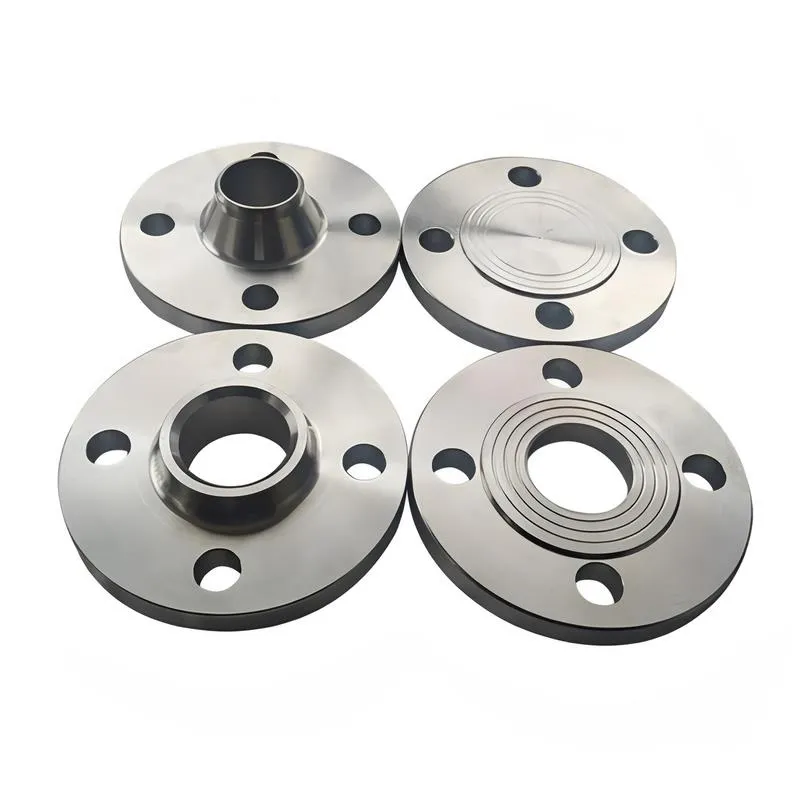
1,We Manufacturing processes are primarily classified into four types:
1:Forging,
2:Casting,
3:Cutting,
4:Rolling.
2,We can manufacture in accordance with these standards.
Standards:
GB Series (Chinese Standards), JB Series (Machinery Standards), HG Series (Chemical Industry Standards), ASME B16.5 (American Standards), BS4504 (British Standards), DIN (German Standards), and JIS (Japanese Standards).
Internationally, there are two primary systems of pipe flange standards: the European system, represented by the German DIN standards (including those of the former Soviet Union), and the American system, represented by the US ANSI pipe flange standards. Other common standards include: the Chinese Ministry of Machinery Industry standards (JB series), the Ministry of Chemical Industry standards (HG series), the Chinese National Standard *GB/T 9112–9124-2010 Steel Pipe Flanges*, as well as US standards (ASME B16.5), British standards (BS4504), German standards (DIN), Japanese standards (JIS), and marine standards (CBM), among others.
The nominal pressure ratings for the PN series are designated by "PN" and comprise the following nine levels: PN2.5, PN6, PN10, PN16, PN25, PN40, PN63, PN100, and PN160.
The nominal pressure ratings for the Class series are designated by "Class" and comprise the following six levels: Class150, Class300, Class600, Class900, Class1500, and Class2500.
Flange Classification
1. **According to Chemical Industry Standards:** Flanges are classified as follows:
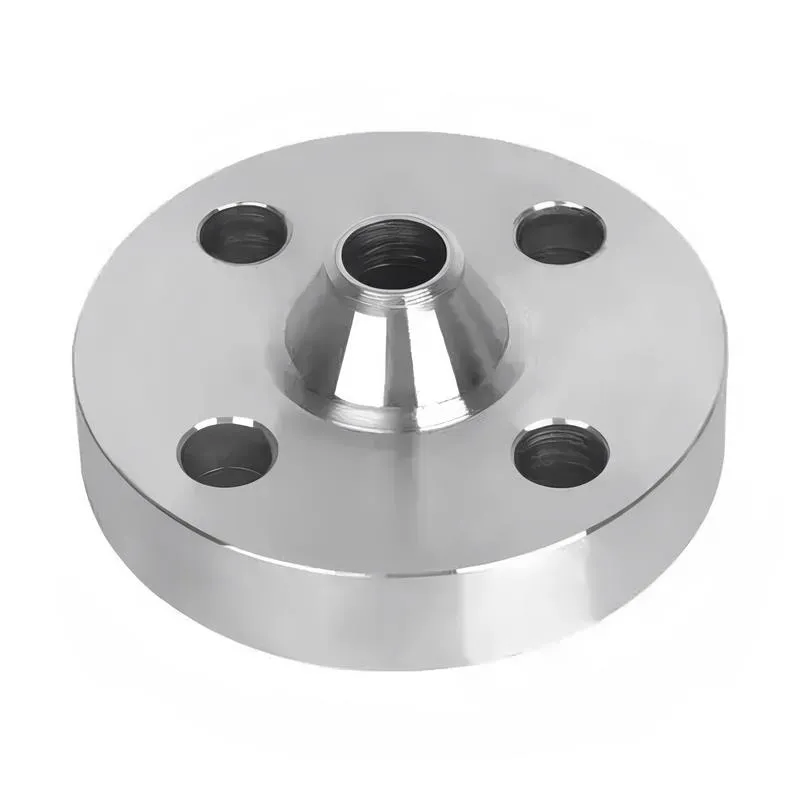
Plate Flat Welding Flange (PL), Necked Flat Welding Flange (SO), Necked Butt Welding Flange (WN), Integral Flange (IF), Socket Welding Flange (SW), Threaded Flange (Th), Butt Welding Ring Loose Flange (PJ/SE), Blind Flange (BL), Flat Welding Ring Loose Flange (PJ/PJ), and Lined Blind Flange (BL(s)).
2. **According to Petrochemical (SH) Industry Standards:** Flanges are classified as follows:
Threaded Flange (PL), Butt Welding Flange (WN), Flat Welding Flange (SO), Socket Welding Flange (SW), Loose Flange (LJ), and Blind Flange (no specific designation).
3. **According to Machinery (JB) Industry Standards:** Flanges are classified as follows:
Integral Flange, Butt Welding Flange, Plate Flat Welding Flange, Butt Welding Ring Plate Loose Flange, Flat Welding Ring Plate Loose Flange, Lap Joint Ring Plate Loose Flange, and Blind Flange.
4. **According to Connection Method/Type:** Flanges are classified as follows:
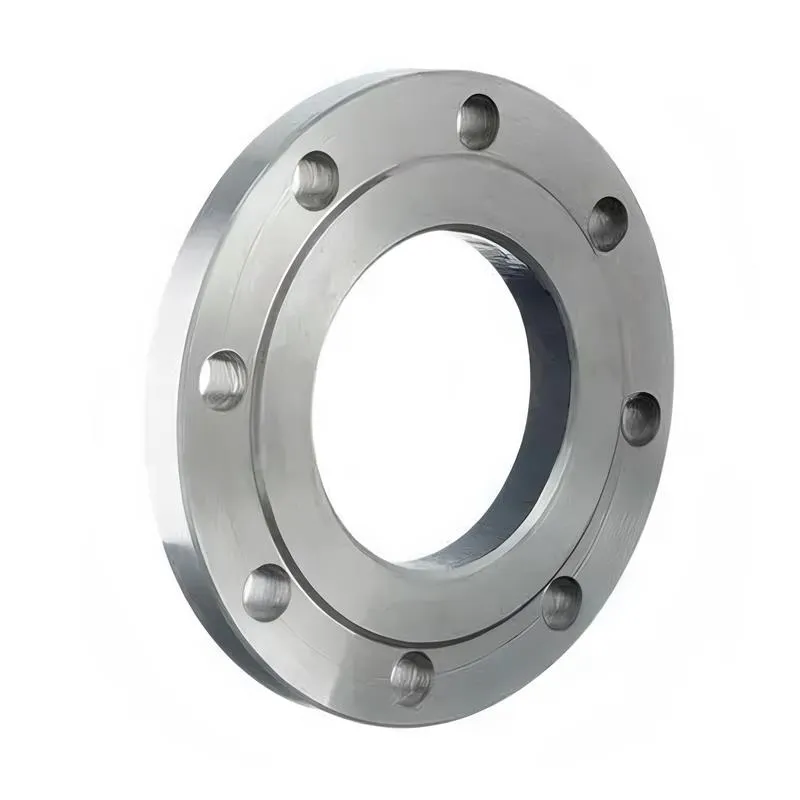
Plate Flat Welding Flange, Necked Flat Welding Flange, Necked Butt Welding Flange, Socket Welding Flange, Threaded Flange, Blind Flange, Necked Butt Welding Ring Loose Flange, Flat Welding Ring Loose Flange, Ring-Type Joint (RTJ) Flange and Blind Flange, Large-Diameter Plate Flange, Large-Diameter High-Neck Flange, Figure-8 Blind Plate, Butt Welding Ring Loose Flange, etc.
5. **According to the Component Being Connected:** Flanges can be classified into Vessel Flanges and Pipe Flanges.
6. **According to Structural Type:** Flanges include Integral Flanges, Threaded Flanges, Flat Welding Flanges, Butt Welding Flanges, Lap Joint (Loose/Swivel) Flanges, and Blind Flanges.
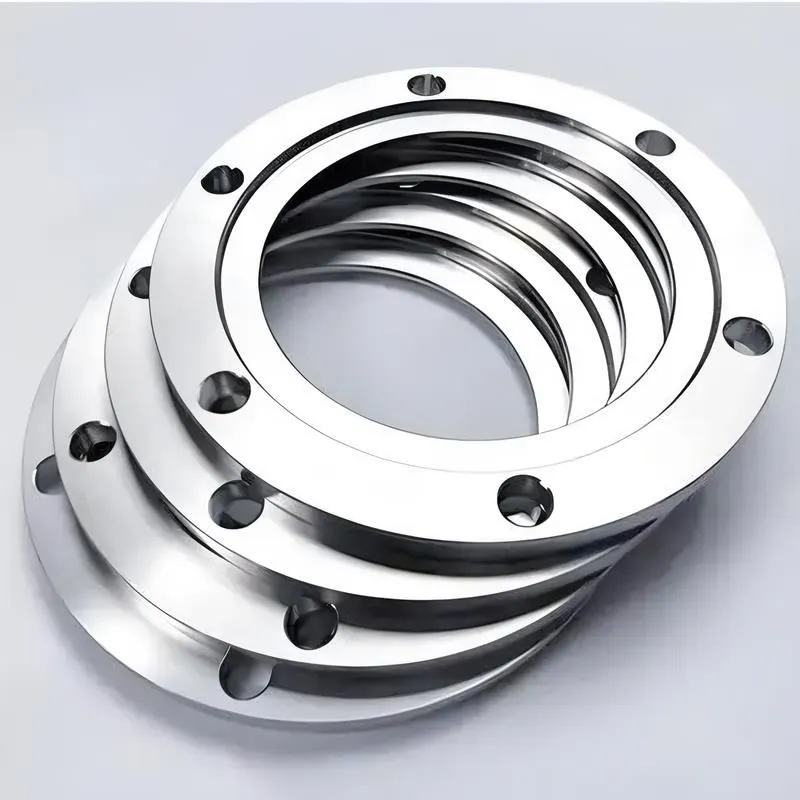
A flange—also referred to as a flange plate or rim—is a component used to connect shafts to one another, or, more commonly, to join the ends of pipes. Flanges are also utilized at the inlet and outlet ports of equipment to facilitate connections between two devices—for instance, the flange on a speed reducer. A "flange connection" or "flanged joint" refers to a detachable joint assembly comprising three interconnected elements—a flange, a gasket, and bolts—that together form a sealed structural unit. In the context of piping systems, a "pipe flange" specifically denotes a flange used for plumbing within the installation; when applied to equipment, it refers to the inlet or outlet flange of that specific device. Flanges feature a series of holes through which bolts are inserted to securely fasten the two flanges together, while a gasket placed between the flanges ensures a leak-proof seal. Flanges are broadly categorized into three types: threaded (screw-in) flanges, welded flanges, and clamp-type flanges. Flanges are invariably used in pairs; threaded flanges are suitable for low-pressure piping applications, whereas welded flanges are required for systems operating at pressures exceeding 4 kilograms per square centimeter. A sealing gasket is inserted between the two flange plates, which are then firmly secured using bolts. The thickness of a flange—as well as the specifications of the bolts used to fasten it—vary depending on the specific pressure rating required for the application. When connecting equipment such as water pumps or valves to piping systems, the corresponding connection points on these devices are often manufactured in the shape of a matching flange; this method of attachment is also referred to as a "flange connection." Generally, any connecting component that utilizes bolts to join and seal the perimeters of two flat surfaces—such as the joints in ventilation ducts—is termed a "flange"; such components may collectively be classified as "flange-type parts." However, since such a connection often constitutes merely a *portion* of a larger device—for instance, the interface between a flange and a water pump—it would be inappropriate to classify the entire water pump itself as a "flange-type part." Conversely, smaller components—such as valves—that feature such flanged interfaces may indeed be appropriately categorized as "flange-type parts."
-:-
For detailed product information, please contact sales.
-:
ATI Allvac® VascoMax® T-250 Specialty Steel Flange, Heat Treatment: 816°C (1500°F) + Age Product Information
-:-
For detailed product information, please contact sales.
-:
ATI Allvac® VascoMax® T-250 Specialty Steel Flange, Heat Treatment: 816°C (1500°F) + Age Synonyms
-:-
For detailed product information, please contact sales.
-:
ATI Allvac® VascoMax® T-250 Specialty Steel, Heat Treatment: 816°C (1500°F) + Age Product Information
-:-
For detailed product information, please contact sales.
-:
# ATI Allvac® VascoMax® T-250 Specialty Steel
## High-Strength, High-Toughness 10Ni-8Co-4Cr Maraging Steel | Heat Treated to 816°C + Age
---
### **Product Overview**
ATI Allvac® VascoMax® T-250 is a **10% Nickel - 8% Cobalt - 4% Chromium maraging steel** designed to achieve a nominal yield strength of **250 ksi (≈1725 MPa)**. Unlike the classic 18Ni maraging steels, the T-250 grade utilizes a **lower nickel, chromium-containing chemistry** that provides a distinct set of advantages: **superior fracture toughness at equivalent strength levels, excellent stress corrosion cracking (SCC) resistance, and enhanced hardenability for larger sections**. The specified heat treatment of **austenitizing at 816°C (1500°F) followed by precipitation aging** optimizes this alloy for applications requiring an **exceptional balance of strength, toughness, and environmental resistance**, particularly in large aerospace structural components.
---
### **Chemical Composition (Weight %)**
| Element | Min (%) | Max (%) | Typical (%) | Metallurgical Function & Rationale |
|---------|---------|---------|-------------|------------------------------------|
| **Nickel (Ni)** | 9.0 | 10.0 | 9.5 | **Lower than 18Ni grades.** Sufficient to form a tough, low-carbon martensite. Reduces cost and improves weldability slightly. |
| **Cobalt (Co)** | 7.5 | 8.5 | 8.0 | Drives molybdenum into precipitation; provides solid solution strengthening. Lower than C-250, reducing cost. |
| **Chromium (Cr)** | **3.5** | **4.5** | **4.0** | **Key Differentiator.** Provides **markedly improved corrosion and oxidation resistance** compared to non-Cr maraging steels. Enhances hardenability. |
| **Molybdenum (Mo)** | 4.0 | 5.0 | 4.5 | Primary precipitation hardener (forms Ni₃Mo, Fe₂Mo). |
| **Titanium (Ti)** | 0.5 | 1.0 | 0.7 | Secondary precipitation hardener (forms Ni₃Ti). Level balanced for toughness. |
| **Aluminum (Al)** | 0.05 | 0.15 | 0.10 | Deoxidizer. |
| **Carbon (C)** | — | 0.03 | ≤0.01 | Ultra-low for maximum toughness. |
| **Manganese (Mn)** | — | 0.10 | 0.05 | Residual. |
| **Silicon (Si)** | — | 0.10 | 0.05 | Residual. |
| **Boron (B)** | — | 0.005 | 0.003 | Enhances hardenability. |
| **Zirconium (Zr)** | — | 0.02 | 0.01 | Grain refiner. |
| **Sulfur (S)** | — | 0.010 | ≤0.005 | Impurity control. |
| **Phosphorus (P)** | — | 0.010 | ≤0.005 | Impurity control. |
| **Iron (Fe)** | Balance | — | — | Base element. |
**Core Identity:** The **10Ni-8Co-4Cr** system distinguishes T-250 from the **18Ni-9Co-0Cr** system of VascoMax C-250. The addition of **4% Chromium** is transformative for environmental resistance.
---
### **Recommended Heat Treatment**
1. **Austenitizing (Solution Treatment):**
* **Temperature:** **816°C (1500°F)** ± 10°C
* **Time:** 1 hour per inch of thickness, then **Air Cool** or **Oil Quench** (for very thick sections > 150mm).
* **Purpose:** The lower austenitizing temperature (vs. 927°C for 18Ni grades) is sufficient due to the lower nickel content, reducing energy cost and potential for grain growth.
2. **Aging (Precipitation Hardening):**
* **Temperature:** **482°C (900°F)** ± 5°C
* **Time:** 3-6 hours, then **Air Cool**.
* **Metallurgical State:** Achieves peak strength through precipitation of intermetallic phases. The presence of Cr may lead to minor secondary carbide precipitation, contributing to stability.
---
### **Mechanical Properties (After 816°C Austenitize + Aged)**
*Typical minimum guaranteed values in peak-aged condition (Longitudinal).*
| Property | Minimum Guaranteed | Typical Achieved | Test Standard | Advantage vs. C-250 |
|----------|-------------------|------------------|---------------|---------------------|
| **0.2% Yield Strength (YS)** | 1655 MPa (240 ksi) | 1725 - 1790 MPa (250 - 260 ksi) | ASTM E8 | Slightly lower or comparable. |
| **Ultimate Tensile Strength (UTS)** | 1725 MPa (250 ksi) | 1790 - 1860 MPa (260 - 270 ksi) | ASTM E8 | |
| **Elongation (in 50 mm)** | 10% | 12 - 14% | ASTM E8 | **Superior ductility.** |
| **Reduction of Area (RA)** | 50% | 55 - 65% | ASTM E8 | **Superior ductility.** |
| **Hardness** | 48 HRC | 49 - 51 HRC | ASTM E18 | Slightly lower. |
| **Fracture Toughness (KIC)** | **100 MPa√m** | **110 - 130 MPa√m** | ASTM E399 | **Key Advantage: 30-50% higher than C-250.** |
| **Modulus of Elasticity** | 180 GPa | 185 - 190 GPa | ASTM E111 | Similar. |
| **Stress Corrosion Threshold (KISCC)** | **Report - Very High** | Significantly higher than non-Cr grades | ASTM E1681 | **Key Advantage due to 4% Cr.** |
---
### **Physical Properties (Aged Condition, 20°C)**
| Property | Value |
|----------|-------|
| **Density** | ~8.00 g/cm³ |
| **Thermal Conductivity** | 20 - 22 W/m·K |
| **Coefficient of Thermal Expansion** | 10.5 - 11.5 x 10⁻⁶ /°C (20-100°C) |
| **Electrical Resistivity** | ~0.65 μΩ·m |
| **Magnetic Properties** | Ferromagnetic |
---
### **Key Characteristics & Advantages**
* **Exceptional Fracture Toughness:** The standout feature. Offers **KIC > 110 MPa√m** at 250 ksi YS, enabling robust damage-tolerant design.
* **Excellent Stress Corrosion Cracking (SCC) Resistance:** The 4% Cr content provides inherent resistance to chloride-induced SCC, making it suitable for marine and high-humidity aerospace environments.
* **Good General Corrosion/Oxidation Resistance:** Superior to standard maraging steels; can be used with less aggressive coating systems.
* **Superior Hardenability:** The Cr and lower Ni content allow through-hardening of **very thick sections (up to 300mm/12 inches)** with air cooling, reducing quench cracking risk.
* **Good Weldability:** The lower carbon equivalent and Cr content can improve weldability compared to some ultra-high-strength steels.
---
### **International Standards & Designations**
This grade is covered under specific aerospace and proprietary standards.
| Standard/System | Designation | Title / Notes |
|----------------|-------------|---------------|
| **Aerospace Material Spec (AMS)** | **AMS 6529** | Common specification for this alloy type. May specify 10Ni-8Co-2Cr-1Mo or similar variants; T-250 meets or exceeds its requirements. |
| **Aerospace Material Spec (AMS)** | **AMS 6512** | Sometimes referenced for 10Ni-8Co-4Cr steels. |
| **Proprietary/Trade Name** | **ATI Allvac VascoMax T-250** | Primary commercial name. |
| **Military Standard** | May be called out in system-specific **MIL** standards. | |
| **Common Reference** | **10Ni-8Co-4Cr Maraging Steel** | Descriptive industry name. |
---
### **Primary Applications**
T-250 is selected for **large, critical structural components** where **toughness, reliability, and environmental resistance are as important as high strength.**
1. **Aerospace & Defense (Primary Use):**
* **Large Aircraft Landing Gear Components:** Forgings for main beams, trucks, and pistons for commercial wide-body (e.g., Boeing 777, 787) and military transport aircraft. Its **thick-section hardenability and toughness are ideal.**
* **Rocket Motor Casings and Launch Vehicle Structures** for heavy-lift applications.
* **Helicopter Rotor Hubs and Drive Shafts.**
* **Marine and Carrier-Based Aircraft Components** due to its superior SCC resistance.
2. **Energy & Industrial:**
* **Components for High-Pressure Isostatic Presses (HIP).**
* **Large Shafts and Rolls** in heavy machinery.
* **Tooling for Large Composite Molding.**
3. **Marine & Offshore:**
* **Critical Fasteners and Connectors** in offshore platforms and subsea systems.
* **Components for Deep-Sea Exploration Vehicles.**
---
### **Fabrication & Processing Guidelines**
* **Machining:** Excellent machinability in the annealed condition (~30 HRC). Softer than annealed 18Ni grades.
* **Forming:** All forming should be done in the annealed state.
* **Welding:** Use GTAW (TIG) with a **matching or over-matching filler metal** (e.g., similar 10Ni-8Co-Cr filler). Pre-heat is generally not required for thin sections. **Post-Weld Heat Treatment (PWHT)** is recommended for critical applications: re-solution treat at 816°C and re-age.
* **Heat Treatment:** The lower austenitizing temperature (816°C) is an energy-saving advantage. Air cooling is sufficient for most sections, simplifying processing of large parts.
* **Corrosion Protection:** While significantly better than non-Cr grades, it is **not stainless.** For harsh environments, **cadmium plating, electroless nickel, or high-performance paint systems** are still recommended. The improved base corrosion resistance provides better backup protection if the coating is damaged.
---
### **Comparison with VascoMax C-250 (18Ni-12Co)**
| Feature | **VascoMax T-250** (10Ni-8Co-4Cr) | **VascoMax C-250** (18Ni-12Co) |
|---------|-----------------------------------|--------------------------------|
| **Yield Strength** | ~1725-1790 MPa | ~1725-1790 MPa |
| **Fracture Toughness (KIC)** | **Very High (110-130 MPa√m)** | High (55-75 MPa√m) |
| **SCC Resistance** | **Excellent (Due to 4% Cr)** | Good |
| **Hardenability** | **Excellent (Air hardens >300mm)** | Good (Air hardens ~150mm) |
| **Austenitizing Temp** | **Lower (816°C / 1500°F)** | Higher (927°C / 1700°F) |
| **Relative Cost** | **Lower (Less Ni & Co)** | Higher |
| **Typical Use** | **Large, tough structures (Landing Gears)** | High-performance fittings, cases |
---
### **Summary**
**ATI Allvac® VascoMax® T-250**, processed via **816°C (1500°F) austenitize and age**, is the **premier choice for engineering large, ultra-high-strength components that cannot afford to fail.** Its **10Ni-8Co-4Cr chemistry** represents an optimized alternative to the classic 18Ni maraging steels, trading a small amount of absolute strength potential for **dramatic gains in fracture toughness, environmental resistance, and thick-section capability.**
It is the material that enables the **safe, reliable, and efficient design of mega-structures** like main landing gears for the world's largest aircraft, where the consequences of brittle fracture are catastrophic. For engineers seeking the **ultimate in damage tolerance and reliability at the 250 ksi strength level**, particularly in large cross-sections or aggressive environments, T-250 is the unequivocal technical leader.
-:-
For detailed product information, please contact sales.
-:
ATI Allvac® VascoMax® T-250 Specialty Steel, Heat Treatment: 816°C (1500°F) + Age Specification
Dimensions
Size:
Diameter 20-1000 mm Length <7364 mm
Size:We can customized as required
Standard:
Per your request or drawing
We can customized as required
Properties(Theoretical)
Chemical Composition
-:-
For detailed product information, please contact sales.
-:
ATI Allvac® VascoMax® T-250 Specialty Steel, Heat Treatment: 816°C (1500°F) + Age Properties
-:-
For detailed product information, please contact sales.
-:
Applications of ATI Allvac® VascoMax® T-250 Specialty Steel Flange, Heat Treatment: 816°C (1500°F) + Age
-:-
For detailed product information, please contact sales.
-:
Chemical Identifiers ATI Allvac® VascoMax® T-250 Specialty Steel Flange, Heat Treatment: 816°C (1500°F) + Age
-:-
For detailed product information, please contact sales.
-:
Packing of ATI Allvac® VascoMax® T-250 Specialty Steel Flange, Heat Treatment: 816°C (1500°F) + Age
-:-
For detailed product information, please contact sales.
-:
Standard Packing:
-:-
For detailed product information, please contact sales.
-:
Typical bulk packaging includes palletized plastic 5 gallon/25 kg. pails, fiber and Steel Flange drums to 1 ton super sacks in full container (FCL) or truck load (T/L) quantities. Research and sample quantities and hygroscopic, oxidizing or other air sensitive materials may be packaged under argon or vacuum. Solutions are packaged in polypropylene, plastic or glass jars up to palletized 3835 gallon liquid totes Special package is available on request. E FORUs’ is carefully handled to minimize damage during storage and transportation and to preserve the quality of our products in their original condition