1,We Manufacturing processes are primarily classified into four types:
1:Forging,
2:Casting,
3:Cutting,
4:Rolling.
2,We can manufacture in accordance with these standards.
Standards:
GB Series (Chinese Standards), JB Series (Machinery Standards), HG Series (Chemical Industry Standards), ASME B16.5 (American Standards), BS4504 (British Standards), DIN (German Standards), and JIS (Japanese Standards).
Internationally, there are two primary systems of pipe flange standards: the European system, represented by the German DIN standards (including those of the former Soviet Union), and the American system, represented by the US ANSI pipe flange standards. Other common standards include: the Chinese Ministry of Machinery Industry standards (JB series), the Ministry of Chemical Industry standards (HG series), the Chinese National Standard *GB/T 9112–9124-2010 Steel Pipe Flanges*, as well as US standards (ASME B16.5), British standards (BS4504), German standards (DIN), Japanese standards (JIS), and marine standards (CBM), among others.
The nominal pressure ratings for the PN series are designated by "PN" and comprise the following nine levels: PN2.5, PN6, PN10, PN16, PN25, PN40, PN63, PN100, and PN160.
The nominal pressure ratings for the Class series are designated by "Class" and comprise the following six levels: Class150, Class300, Class600, Class900, Class1500, and Class2500.
Flange Classification
1. **According to Chemical Industry Standards:** Flanges are classified as follows:
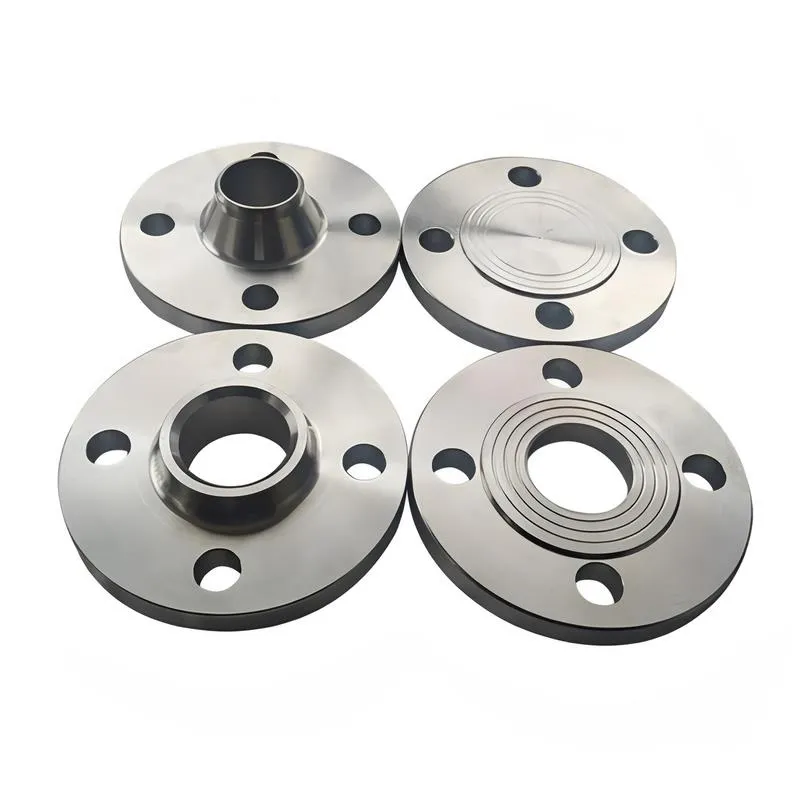
Plate Flat Welding Flange (PL), Necked Flat Welding Flange (SO), Necked Butt Welding Flange (WN), Integral Flange (IF), Socket Welding Flange (SW), Threaded Flange (Th), Butt Welding Ring Loose Flange (PJ/SE), Blind Flange (BL), Flat Welding Ring Loose Flange (PJ/PJ), and Lined Blind Flange (BL(s)).
2. **According to Petrochemical (SH) Industry Standards:** Flanges are classified as follows:
Threaded Flange (PL), Butt Welding Flange (WN), Flat Welding Flange (SO), Socket Welding Flange (SW), Loose Flange (LJ), and Blind Flange (no specific designation).
3. **According to Machinery (JB) Industry Standards:** Flanges are classified as follows:
Integral Flange, Butt Welding Flange, Plate Flat Welding Flange, Butt Welding Ring Plate Loose Flange, Flat Welding Ring Plate Loose Flange, Lap Joint Ring Plate Loose Flange, and Blind Flange.
4. **According to Connection Method/Type:** Flanges are classified as follows:
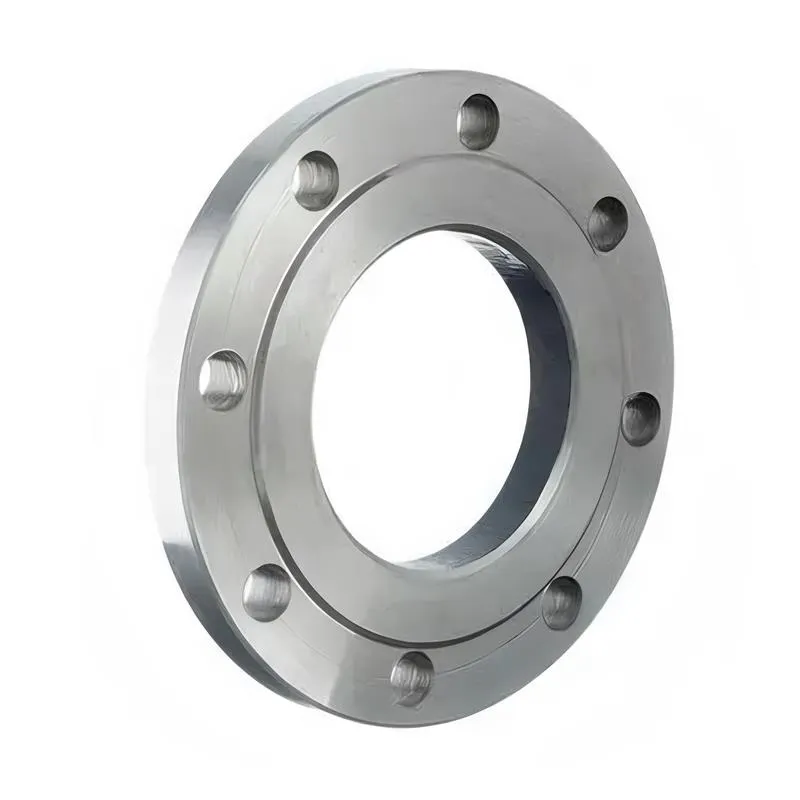
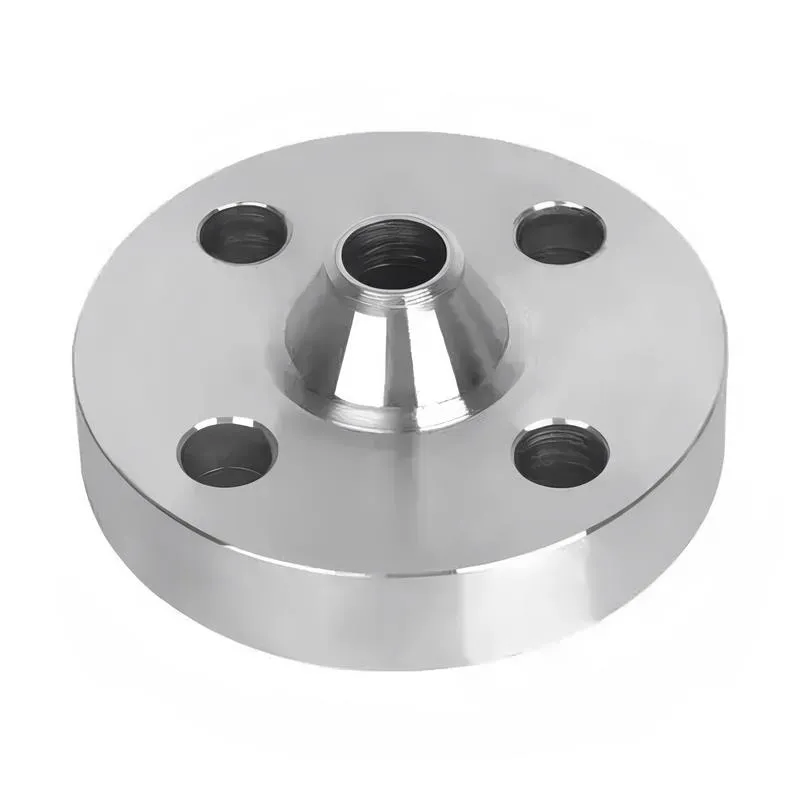
Plate Flat Welding Flange, Necked Flat Welding Flange, Necked Butt Welding Flange, Socket Welding Flange, Threaded Flange, Blind Flange, Necked Butt Welding Ring Loose Flange, Flat Welding Ring Loose Flange, Ring-Type Joint (RTJ) Flange and Blind Flange, Large-Diameter Plate Flange, Large-Diameter High-Neck Flange, Figure-8 Blind Plate, Butt Welding Ring Loose Flange, etc.
5. **According to the Component Being Connected:** Flanges can be classified into Vessel Flanges and Pipe Flanges.
6. **According to Structural Type:** Flanges include Integral Flanges, Threaded Flanges, Flat Welding Flanges, Butt Welding Flanges, Lap Joint (Loose/Swivel) Flanges, and Blind Flanges.
A flange—also referred to as a flange plate or rim—is a component used to connect shafts to one another, or, more commonly, to join the ends of pipes. Flanges are also utilized at the inlet and outlet ports of equipment to facilitate connections between two devices—for instance, the flange on a speed reducer. A "flange connection" or "flanged joint" refers to a detachable joint assembly comprising three interconnected elements—a flange, a gasket, and bolts—that together form a sealed structural unit. In the context of piping systems, a "pipe flange" specifically denotes a flange used for plumbing within the installation; when applied to equipment, it refers to the inlet or outlet flange of that specific device. Flanges feature a series of holes through which bolts are inserted to securely fasten the two flanges together, while a gasket placed between the flanges ensures a leak-proof seal. Flanges are broadly categorized into three types: threaded (screw-in) flanges, welded flanges, and clamp-type flanges. Flanges are invariably used in pairs; threaded flanges are suitable for low-pressure piping applications, whereas welded flanges are required for systems operating at pressures exceeding 4 kilograms per square centimeter. A sealing gasket is inserted between the two flange plates, which are then firmly secured using bolts. The thickness of a flange—as well as the specifications of the bolts used to fasten it—vary depending on the specific pressure rating required for the application. When connecting equipment such as water pumps or valves to piping systems, the corresponding connection points on these devices are often manufactured in the shape of a matching flange; this method of attachment is also referred to as a "flange connection." Generally, any connecting component that utilizes bolts to join and seal the perimeters of two flat surfaces—such as the joints in ventilation ducts—is termed a "flange"; such components may collectively be classified as "flange-type parts." However, since such a connection often constitutes merely a *portion* of a larger device—for instance, the interface between a flange and a water pump—it would be inappropriate to classify the entire water pump itself as a "flange-type part." Conversely, smaller components—such as valves—that feature such flanged interfaces may indeed be appropriately categorized as "flange-type parts."
-:-
For detailed product information, please contact sales.
-:
EOS Flexline MaragingSteel Flange MS1 DMSL on EOS M 400 Product Information
-:-
For detailed product information, please contact sales.
-:
EOS Flexline MaragingSteel Flange MS1 DMSL on EOS M 400 Synonyms
-:-
For detailed product information, please contact sales.
-:
EOS Flexline MaragingSteel MS1 DMSL on EOS M 400 Product Information
-:-
For detailed product information, please contact sales.
-:
# EOS Flexline MaragingSteel MS1
## DMSL on EOS M 400 Industrial Production System
---
### **Product Overview**
**EOS Flexline MaragingSteel MS1** is the **high-throughput, production-optimized** variant of the established maraging steel powder, specifically engineered for the **EOS M 400 series** of large-format, quad-laser Direct Metal Selective Laser Melting (DMSL) systems. This material-machine ecosystem is designed for **industrial-scale, serial production** of ultra-high-strength (≥1950 MPa UTS) components. The "Flexline" designation signifies a **pre-validated and standardized material offering** with guaranteed process parameters, ensuring consistent, repeatable results for factory-floor manufacturing. The **EOS M 400's 400 x 400 mm build platform and 400W lasers** enable the production of large single parts or high-volume batches, making it the definitive solution for **additive manufacturing of maraging steel at production volumes.**
---
### **Chemical Composition (Weight %) - Flexline Production Powder**
*Engineered for exceptional batch-to-batch consistency and multi-laser stability.*
| Element | Flexline MS1 Specification | Rationale for M 400 Production |
|---------|----------------------------|--------------------------------|
| **Nickel (Ni)** | 17.5 - 18.5 | Tightened range ensures uniform martensitic transformation and aging response across large build volumes. |
| **Cobalt (Co)** | 9.0 - 9.5 | Optimized for consistent precipitation kinetics in high-productivity builds. |
| **Molybdenum (Mo)** | 4.7 - 5.1 | Primary hardener; controlled to prevent micro-segregation in fast-cooling multi-laser process. |
| **Titanium (Ti)** | 0.65 - 0.75 | Narrow band minimizes variation in as-built strength and aging peak. |
| **Aluminum (Al)** | 0.06 - 0.10 | Precise control for oxide layer management and powder flow in automated handling. |
| **Carbon (C)** | ≤ 0.02 | **Lower maximum** than standard MS1 to enhance weldability and toughness in high-stress, large parts. |
| **Oxygen (O)** | **≤ 0.06% (600 ppm)** | **Premium low-oxygen grade.** Critical for achieving high ductility and fatigue life in production parts; minimizes risk of inclusion-related failures. |
| **Nitrogen (N)** | ≤ 0.03% | Stringently low to prevent nitride formation. |
| **Iron (Fe)** | Balance | Base. |
**Flexline Powder Specification (M 400 Optimized):**
* **Particle Size Distribution:** **15 - 45 µm** (Fine distribution for excellent surface finish and detail resolution on large parts).
* **Morphology:** >98% spherical, satellite-free.
* **Flowability:** Hall Flow < 26 s/50g (Superior for reliable, high-speed recoating over 400mm).
* **Bulk Density:** > 4.2 g/cm³.
* **Supply Form:** Sealed in **ISO Containers (e.g., 400 kg)** for integration with automated powder handling systems like the **EOS Powder Management Station (PMS)**.
---
### **EOS M 400 System & Industrial DMSL Process**
**System Configuration:**
* **Platform:** **EOS M 400-4** (Quad 400W lasers) or **M 400-1** (Single 1kW laser).
* **Build Volume:** **400 x 400 x 400 mm** (Industry-leading large format).
* **Lasers:** **4 x 400W fiber lasers** (standard) with independent scanners.
* **Atmosphere:** **Nitrogen (N₂)** or Argon. N₂ is standard for MS1, offering **lower operational cost and faster purge times** without compromising properties.
* **Layer Thickness:** **40 µm** (Standard), 60 µm (High Rate), 30 µm (High Detail).
* **Process Control:** Integrated **EOSTATE Suite** for live monitoring of melt pool, layer, and atmosphere across all four lasers.
**Build Strategy for Production:**
* **Dynamic Load Balancing:** Intelligent software distributes scan vectors to keep all four lasers continuously active, maximizing machine utilization.
* **"Core-Skin" Parameters:** Often used for large parts: high-speed core melting with optimized surface parameters for contour quality.
* **Integrated Support:** Automated support generation optimized for large overhangs and easy removal in batch processing.
---
### **Standardized Flexline Heat Treatment Cycle**
*Pre-defined for guaranteed results.*
1. **Stress Relief (In-Situ/Post-Build):**
* Option: **In-Situ Stress Relief** during build (available on M 400).
* Standard: 650°C for 2-4 hours, furnace cool.
2. **Solution Annealing:** 820°C ± 10°C (3-6 hours depending on mass), vacuum/inert gas, furnace cool.
3. **Aging:** **480°C for 8 hours**, air cool. *(Extended time ensures uniformity in large, dense sections).*
---
### **Mechanical Properties (After Full Flexline HT)**
*Guaranteed minimums for XY plane with standard 40µm parameters. Data is statistically validated from production runs.*
| Property | Guaranteed Minimum (XY) | Typical Production Range (XY) | Anisotropy (Z vs. XY) | Test Standard |
|----------|-------------------------|-------------------------------|----------------------|---------------|
| **Ultimate Tensile Strength** | 1950 MPa | 2000 - 2100 MPa | -5% to -8% | ASTM E8 / ISO 6892-1 |
| **0.2% Yield Strength** | 1900 MPa | 1950 - 2050 MPa | -5% to -8% | ASTM E8 |
| **Elongation** | 8% | 9 - 12% | -20% to -30% | ASTM E8 |
| **Hardness** | 50 HRC | 52 - 54 HRC | Isotropic | ASTM E18 |
| **Fatigue Strength (10⁷, R=-1, Machined)** | 500 MPa | 550 - 650 MPa | -10% to -15% | ASTM E466 |
| **Fracture Toughness (KIC)** | 55 MPa√m | 60 - 75 MPa√m | -15% to -25% | ASTM E399 |
| **Relative Density** | 99.7% | **99.9 - 99.95%** | - | ASTM B962 / µCT |
**Production Consistency:** Key performance indicator (KPI) for M 400. Property variation across build plate and between builds is typically **< 2% (1σ)**.
---
### **Physical Properties**
| Property | Value (Aged) |
|----------|--------------|
| **Density** | 8.01 g/cm³ |
| **Thermal Conductivity** | 20 W/(m·K) |
| **CTE (20-100°C)** | 10.8 x 10⁻⁶ /K |
---
### **International Standards & Production Certification**
* **Machine Qualification:** EOS M 400 system certified to **ISO/ASTM 52920** (AM System Performance).
* **Material Certification:** Flexline MS1 supplied with **EN 10204 3.2 Certificate** including full chemistry, PSD, and property data from reference builds.
* **Process Standards:**
* **ISO/ASTM 52941** (PBF Machine Standards).
* **SAE AMS7003** (LPBF Maraging Steel Process Spec).
* **Aerospace:** Compliant with **Boeing BMS7-400**, **Airbus AIP**, **NADCAP AMS7000** audit criteria.
* **Quality System:** Integrated **EOS QM Suite** for part traceability, parameter management, and report generation.
---
### **Primary Applications (Industrial Production Focus)**
1. **Automotive & Consumer Goods Tooling (High-Volume):**
* **Series production of conformal-cooled injection molds** for bumper fascias, dashboards, electronic housings.
* **High-pressure die-casting inserts** for automotive structural parts.
2. **Aerospace & Defense (Certified Parts):**
* **Large, integrated structural brackets** and **wing components** (e.g., UAV spars).
* **Satellite chassis and antenna supports** in single-piece construction.
* **Engine nacelle components** and **landing gear prototypes/production parts**.
3. **Energy & Heavy Industry:**
* **Large valve bodies, pump impellers, and turbomachinery components** with internal cooling.
* **Molds for composite wind turbine blades**.
4. **Motor Sports & High-Performance:**
* **Monocoque chassis components, suspension uprights, and gearbox casings** in small batch series.
---
### **Design for Production on M 400 (Flexline Philosophy)**
* **Design for Additive Manufacturing (DfAM) Rules:** Pre-validated guidelines for **minimum feature size (0.5mm)**, **self-supporting angles (30° for down-skins)**, and **channel diameters (3mm min)**.
* **Batch Nesting:** Software-optimized nesting for **multiple, identical, or family parts** to maximize platform utilization.
* **Support Minimization:** Use of **cellular or tree-like support structures** reducible via EOSTATE Optimizer to minimize post-processing time and material use.
**Integrated Production Workflow:**
1. **Data Preparation:** EOS PRECISION (or 3DXpert) with automated support generation and build simulation.
2. **Automated Build:** Integrated with **Powder Management Station (PMS)** for automated powder sieving, recycling, and feeding.
3. **Post-Processing:** **Automated depowdering stations**, followed by **CNC machining centers** for batch fixture machining of critical features.
4. **Heat Treatment:** Batch processing in **industrial-scale vacuum furnaces**.
5. **Quality Assurance:** **In-process monitoring** (EOSTATE) + **post-process CT scanning** of sampled parts + **destructive testing** of witness specimens from each build job.
---
### **Economic & Operational Advantages**
* **Lowest Cost-Per-Part:** Achieved through high build rates, large batch sizes, and high material reuse rates (>95% powder recyclability).
* **Predictable Lead Times:** Stable, validated process minimizes failed builds.
* **Factory Integration:** Designed for **lights-out manufacturing** with automated powder handling and part removal.
* **Material Efficiency:** Near-net-shape production minimizes waste of high-value maraging steel.
---
### **Summary**
**EOS Flexline MaragingSteel MS1** on the **EOS M 400** platform represents the **culmination of additive manufacturing industrialization** for ultra-high-strength steels. It moves beyond prototyping and tooling into the realm of **certified, serial production of end-use load-bearing components**. The "Flexline" ecosystem—combining **premium, consistent powder, a robust quad-laser production machine, and a fully validated process**—provides manufacturers with a **turnkey production solution** that delivers **repeatable material properties at industrial scale**. This system is engineered for manufacturers who require the **geometric freedom and performance benefits of AM** for **large or volume-produced parts**, with the **reliability, consistency, and total cost-of-ownership metrics** demanded by modern digital factories. It is the platform of choice for **scaling maraging steel AM into true production.**
-:-
For detailed product information, please contact sales.
-:
EOS Flexline MaragingSteel MS1 DMSL on EOS M 400 Specification
Dimensions
Size:
Diameter 20-1000 mm Length <7368 mm
Size:We can customized as required
Standard:
Per your request or drawing
We can customized as required
Properties(Theoretical)
Chemical Composition
-:-
For detailed product information, please contact sales.
-:
EOS Flexline MaragingSteel MS1 DMSL on EOS M 400 Properties
-:-
For detailed product information, please contact sales.
-:
Applications of EOS Flexline MaragingSteel Flange MS1 DMSL on EOS M 400
-:-
For detailed product information, please contact sales.
-:
Chemical Identifiers EOS Flexline MaragingSteel Flange MS1 DMSL on EOS M 400
-:-
For detailed product information, please contact sales.
-:
Packing of EOS Flexline MaragingSteel Flange MS1 DMSL on EOS M 400
-:-
For detailed product information, please contact sales.
-:
Standard Packing:
-:-
For detailed product information, please contact sales.
-:
Typical bulk packaging includes palletized plastic 5 gallon/25 kg. pails, fiber and Steel Flange drums to 1 ton super sacks in full container (FCL) or truck load (T/L) quantities. Research and sample quantities and hygroscopic, oxidizing or other air sensitive materials may be packaged under argon or vacuum. Solutions are packaged in polypropylene, plastic or glass jars up to palletized 3839 gallon liquid totes Special package is available on request. E FORUs’ is carefully handled to minimize damage during storage and transportation and to preserve the quality of our products in their original condition