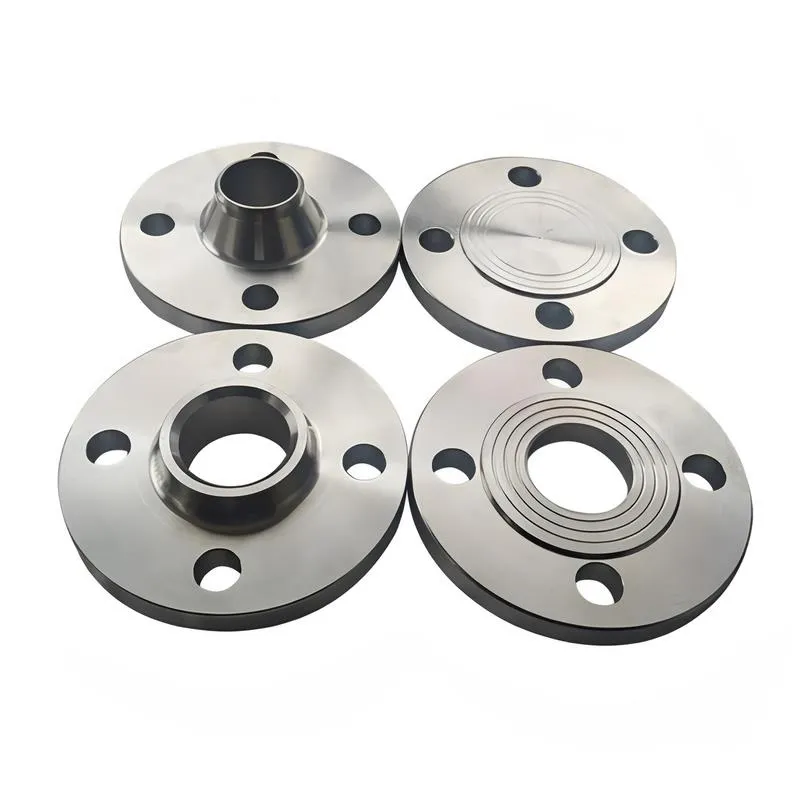
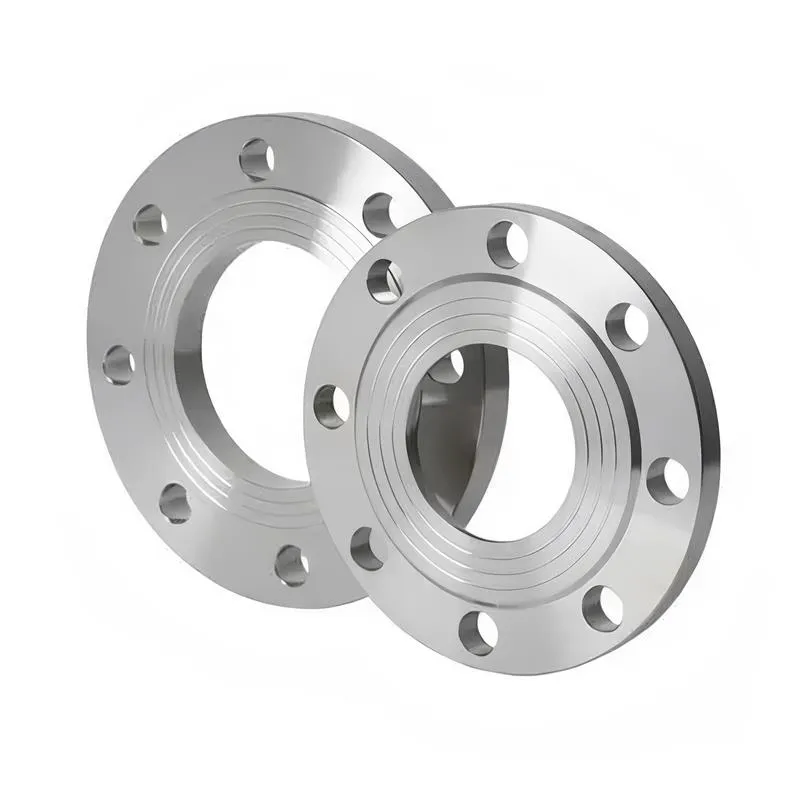
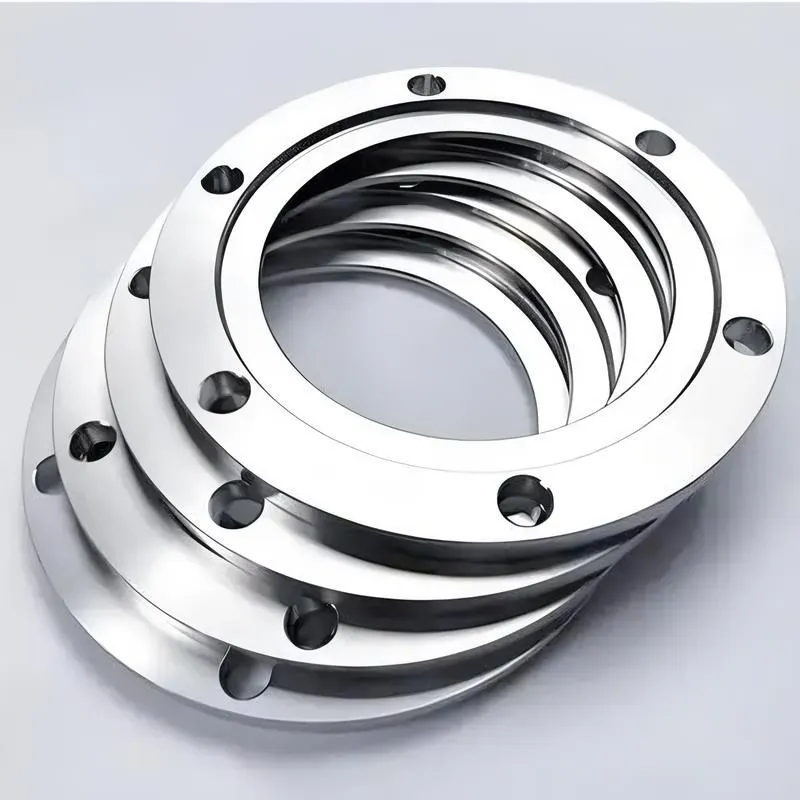
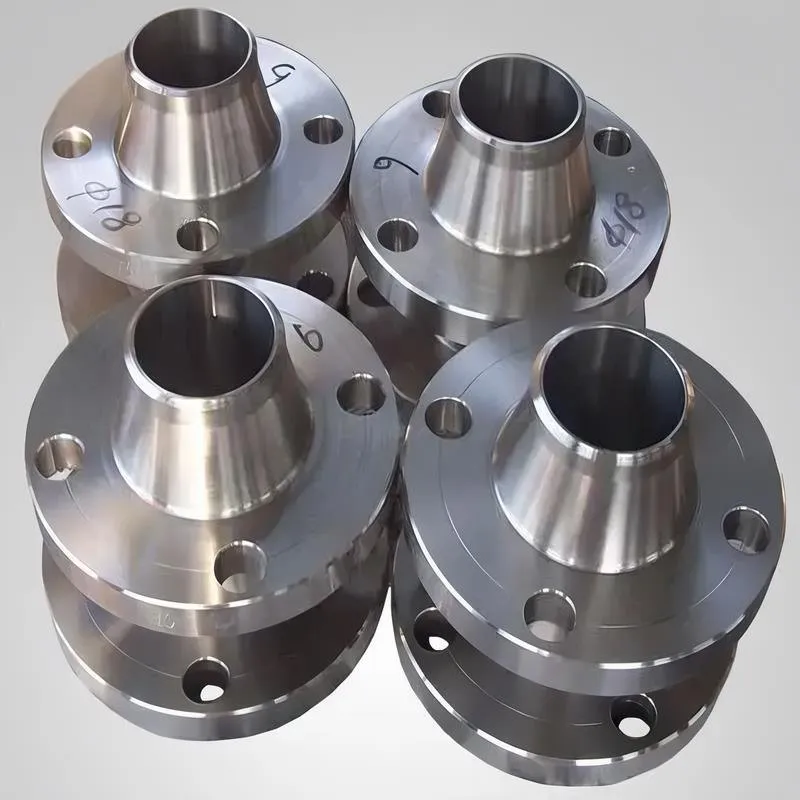
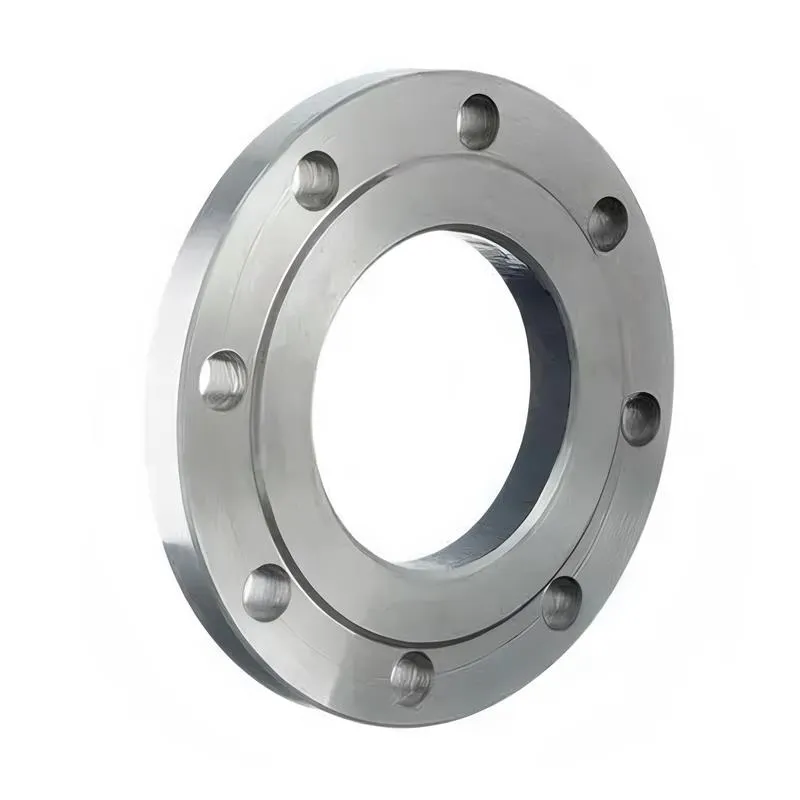
1,We Manufacturing processes are primarily classified into four types:
1:Forging,
2:Casting,
3:Cutting,
4:Rolling.
2,We can manufacture in accordance with these standards.
Standards:
GB Series (Chinese Standards), JB Series (Machinery Standards), HG Series (Chemical Industry Standards), ASME B16.5 (American Standards), BS4504 (British Standards), DIN (German Standards), and JIS (Japanese Standards).
Internationally, there are two primary systems of pipe flange standards: the European system, represented by the German DIN standards (including those of the former Soviet Union), and the American system, represented by the US ANSI pipe flange standards. Other common standards include: the Chinese Ministry of Machinery Industry standards (JB series), the Ministry of Chemical Industry standards (HG series), the Chinese National Standard *GB/T 9112–9124-2010 Steel Pipe Flanges*, as well as US standards (ASME B16.5), British standards (BS4504), German standards (DIN), Japanese standards (JIS), and marine standards (CBM), among others.
The nominal pressure ratings for the PN series are designated by "PN" and comprise the following nine levels: PN2.5, PN6, PN10, PN16, PN25, PN40, PN63, PN100, and PN160.
The nominal pressure ratings for the Class series are designated by "Class" and comprise the following six levels: Class150, Class300, Class600, Class900, Class1500, and Class2500.
Flange Classification
1. **According to Chemical Industry Standards:** Flanges are classified as follows:
Plate Flat Welding Flange (PL), Necked Flat Welding Flange (SO), Necked Butt Welding Flange (WN), Integral Flange (IF), Socket Welding Flange (SW), Threaded Flange (Th), Butt Welding Ring Loose Flange (PJ/SE), Blind Flange (BL), Flat Welding Ring Loose Flange (PJ/PJ), and Lined Blind Flange (BL(s)).
2. **According to Petrochemical (SH) Industry Standards:** Flanges are classified as follows:
Threaded Flange (PL), Butt Welding Flange (WN), Flat Welding Flange (SO), Socket Welding Flange (SW), Loose Flange (LJ), and Blind Flange (no specific designation).
3. **According to Machinery (JB) Industry Standards:** Flanges are classified as follows:
Integral Flange, Butt Welding Flange, Plate Flat Welding Flange, Butt Welding Ring Plate Loose Flange, Flat Welding Ring Plate Loose Flange, Lap Joint Ring Plate Loose Flange, and Blind Flange.
4. **According to Connection Method/Type:** Flanges are classified as follows:
Plate Flat Welding Flange, Necked Flat Welding Flange, Necked Butt Welding Flange, Socket Welding Flange, Threaded Flange, Blind Flange, Necked Butt Welding Ring Loose Flange, Flat Welding Ring Loose Flange, Ring-Type Joint (RTJ) Flange and Blind Flange, Large-Diameter Plate Flange, Large-Diameter High-Neck Flange, Figure-8 Blind Plate, Butt Welding Ring Loose Flange, etc.
5. **According to the Component Being Connected:** Flanges can be classified into Vessel Flanges and Pipe Flanges.
6. **According to Structural Type:** Flanges include Integral Flanges, Threaded Flanges, Flat Welding Flanges, Butt Welding Flanges, Lap Joint (Loose/Swivel) Flanges, and Blind Flanges.
A flange—also referred to as a flange plate or rim—is a component used to connect shafts to one another, or, more commonly, to join the ends of pipes. Flanges are also utilized at the inlet and outlet ports of equipment to facilitate connections between two devices—for instance, the flange on a speed reducer. A "flange connection" or "flanged joint" refers to a detachable joint assembly comprising three interconnected elements—a flange, a gasket, and bolts—that together form a sealed structural unit. In the context of piping systems, a "pipe flange" specifically denotes a flange used for plumbing within the installation; when applied to equipment, it refers to the inlet or outlet flange of that specific device. Flanges feature a series of holes through which bolts are inserted to securely fasten the two flanges together, while a gasket placed between the flanges ensures a leak-proof seal. Flanges are broadly categorized into three types: threaded (screw-in) flanges, welded flanges, and clamp-type flanges. Flanges are invariably used in pairs; threaded flanges are suitable for low-pressure piping applications, whereas welded flanges are required for systems operating at pressures exceeding 4 kilograms per square centimeter. A sealing gasket is inserted between the two flange plates, which are then firmly secured using bolts. The thickness of a flange—as well as the specifications of the bolts used to fasten it—vary depending on the specific pressure rating required for the application. When connecting equipment such as water pumps or valves to piping systems, the corresponding connection points on these devices are often manufactured in the shape of a matching flange; this method of attachment is also referred to as a "flange connection." Generally, any connecting component that utilizes bolts to join and seal the perimeters of two flat surfaces—such as the joints in ventilation ducts—is termed a "flange"; such components may collectively be classified as "flange-type parts." However, since such a connection often constitutes merely a *portion* of a larger device—for instance, the interface between a flange and a water pump—it would be inappropriate to classify the entire water pump itself as a "flange-type part." Conversely, smaller components—such as valves—that feature such flanged interfaces may indeed be appropriately categorized as "flange-type parts."
-:-
For detailed product information, please contact sales.
-:
Special Metals UDIMET® Alloy 250 Maraging Steel Flange Product Information
-:-
For detailed product information, please contact sales.
-:
Special Metals UDIMET® Alloy 250 Maraging Steel Flange Synonyms
-:-
For detailed product information, please contact sales.
-:
Special Metals UDIMET® Alloy 250 Maraging Steel Product Information
-:-
For detailed product information, please contact sales.
-:
# Special Metals UDIMET® Alloy 250
## Premium Nickel-Cobalt Maraging Steel
---
### **Product Overview**
**Special Metals UDIMET® Alloy 250** is a **premium, high-strength nickel-cobalt maraging steel** developed for the most demanding aerospace and industrial applications. While bearing the **"250" designation** indicating a target yield strength of **250 ksi (≈1725 MPa)**, this alloy is distinct from conventional iron-based 18Ni maraging steels. It is more accurately classified as a **high-strength, age-hardenable, low-carbon nickel-cobalt superalloy variant**, offering an exceptional combination of ultra-high strength, excellent fracture toughness, and superior stress corrosion cracking resistance. Primarily supplied as billet, bar, and forging stock, it is a critical material for components where reliability under extreme stress is paramount.
---
### **Chemical Composition (Weight %)**
*Unique nickel-cobalt system with controlled iron content.*
| Element | Min (%) | Max (%) | Typical (%) | Metallurgical Function |
|---------|---------|---------|-------------|------------------------|
| **Nickel (Ni)** | **Balance** | - | ~40 - 45 | Primary matrix element; forms a tough, ductile austenitic/martensitic matrix capable of high alloying. |
| **Cobalt (Co)** | 15.0 | 17.0 | 16.0 | Major solid solution strengthener; controls precipitation kinetics of Mo and Ti. |
| **Chromium (Cr)** | - | 0.50 | 0.20 | Residual; kept very low to maximize age-hardening response and minimize sigma phase risk. |
| **Molybdenum (Mo)** | 4.0 | 5.0 | 4.5 | Primary precipitation hardener; forms Ni₃Mo and other intermetallic phases. |
| **Titanium (Ti)** | 1.0 | 1.5 | 1.3 | Key precipitation hardener; forms Ni₃Ti. |
| **Aluminum (Al)** | 0.10 | 0.30 | 0.20 | Forms strengthening γ' (Ni₃Al) precipitates; contributes to age hardening. |
| **Carbon (C)** | - | 0.03 | 0.01 | Ultra-low to prevent carbide formation and maintain toughness. |
| **Boron (B)** | 0.003 | 0.008 | 0.005 | Enhances grain boundary strength and hardenability. |
| **Zirconium (Zr)** | 0.01 | 0.05 | 0.03 | Powerful grain refiner; improves notch toughness. |
| **Iron (Fe)** | - | 5.0 | ~3.0 | Controlled residual; not the base element as in 18Ni grades. |
| **Manganese (Mn)** | - | 0.10 | 0.05 | Residual. |
| **Silicon (Si)** | - | 0.10 | 0.05 | Residual. |
| **Sulfur (S)** | - | 0.010 | 0.003 | Impurity control. |
| **Phosphorus (P)** | - | 0.015 | 0.005 | Impurity control. |
**Core Distinction:** This is a **nickel-based alloy** (Ni ~40-45% balance) with significant cobalt (~16%), fundamentally different from **iron-based 18Ni maraging steels** (Fe balance, Ni ~18%).
---
### **Standard Heat Treatment**
To develop its optimal properties, UDIMET® Alloy 250 requires a precise multi-step heat treatment:
1. **Solution Annealing:**
* **Temperature:** **980°C - 1010°C (1800°F - 1850°F)**
* **Time:** 1-2 hours per inch of section, followed by rapid quench (Oil or Forced Air).
* **Purpose:** Dissolves all precipitates, homogenizes the alloy, and creates a supersaturated solid solution.
2. **Aging (Precipitation Hardening):**
* **Temperature:** **730°C - 760°C (1350°F - 1400°F)**
* **Time:** 4 - 16 hours (typically 8 hours), followed by air cooling.
* **Purpose:** Precipitates a fine, uniform dispersion of intermetallic phases (γ' - Ni₃(Al,Ti), and Ni₃Mo), resulting in peak strength and hardness.
* **Note:** The aging temperature is **significantly higher** than that for 18Ni maraging steels (480°C), reflecting its different metallurgical system.
---
### **Mechanical Properties (After Full Heat Treatment)**
*Typical minimum or average values for longitudinal direction in bar/forging product.*
| Property | Typical Value Range | Test Standard | Key Advantage |
|----------|-------------------|---------------|---------------|
| **0.2% Yield Strength (YS)** | **1650 - 1800 MPa (239 - 261 ksi)** | ASTM E8 | Meets 250 ksi nominal target. |
| **Ultimate Tensile Strength (UTS)** | 1800 - 1950 MPa (261 - 283 ksi) | ASTM E8 | |
| **Elongation (in 50 mm)** | **10 - 15%** | ASTM E8 | **Exceptional ductility** for this strength level. |
| **Reduction of Area (RA)** | **25 - 40%** | ASTM E8 | Good ductility indicator. |
| **Hardness** | 44 - 48 HRC | ASTM E18 | |
| **Fracture Toughness (KIC)** | **90 - 130 MPa√m** | ASTM E399 | **Outstanding toughness** - a primary selling point vs. other 250 ksi materials. |
| **Impact Energy (Charpy V)** | 40 - 70 J | ASTM E23 | Very high impact resistance. |
| **Modulus of Elasticity** | 190 - 205 GPa (27.5 - 29.7 x 10⁶ psi) | ASTM E111 | Slightly higher than steel. |
**Primary Performance Advantages:**
1. **Superior Toughness-Ductility Combination:** At the 250 ksi yield strength level, it offers **significantly higher fracture toughness and elongation** than iron-based maraging steels or low-alloy ultra-high-strength steels (e.g., 4340M, AerMet® 100).
2. **Excellent Stress Corrosion Cracking (SCC) Resistance:** The nickel-rich matrix provides inherent resistance to SCC in chloride and other aggressive environments.
3. **Good Weldability:** Can be welded using matching filler metals and proper procedures, with post-weld heat treatment to restore properties.
---
### **Physical Properties (Aged Condition)**
| Property | Value (at 20°C) |
|----------|------------------|
| **Density** | ~8.2 g/cm³ (0.296 lb/in³) |
| **Melting Range** | ~1350 - 1400°C (2460 - 2550°F) |
| **Thermal Conductivity** | 15 - 18 W/(m·K) |
| **Coefficient of Thermal Expansion** | 12.0 - 13.5 x 10⁻⁶/°C (20-100°C) |
| **Electrical Resistivity** | ~0.85 µΩ·m |
| **Magnetic Permeability** | Essentially non-magnetic in aged condition. |
---
### **Key Characteristics & Application Advantages**
* **Damage Tolerant:** Its high fracture toughness allows for damage-tolerant design philosophies, providing a safety margin against flaw growth.
* **High Strength-to-Weight Ratio:** While denser than steel, its superior strength provides excellent specific strength.
* **Resistance to Hydrogen Embrittlement:** Better inherent resistance than many ultra-high-strength steels.
* **Machinability (Annealed Condition):** Can be machined in the solution-annealed condition with appropriate tooling and techniques.
---
### **International Standards & Designations**
* **Proprietary Alloy:** UDIMET® Alloy 250 is a trademarked, proprietary alloy of **Special Metals Corporation** (now part of **PCC** - Precision Castparts Corp.).
* **Aerospace Specifications:** Commonly procured to:
* **AMS 5545** (Nickel Alloy, Corrosion and Heat-Resistant, Sheet, Strip, and Plate 43Ni - 16Co - 4.5Mo - 1.3Ti - 0.20Al Solution Heat Treated and Aged)
* **AMS 5546** (Same, for Bar and Forging)
* **Customer-specific** Source Control Drawings (SCDs) from major aerospace primes.
* **UNS Number:** **N07252** (occasionally referenced).
* **Common Names:** Often simply called **"Alloy 250"** or **"UDIMET 250"**.
---
### **Primary Applications**
UDIMET® Alloy 250 is specified for **critical, high-integrity aerospace components** where its unique balance of properties justifies its premium cost.
1. **Aerospace Fasteners & Bolting (Primary Use):**
* **Ultra-High-Strength Bolts, Studs, and Nuts** for critical airframe and engine applications (e.g., main landing gear attachments, engine mount bolts).
* **Fasteners for Space Launch Vehicles.**
2. **Airframe & Engine Structural Components:**
* **High-Stress Landing Gear Components** (pins, links, actuators) in military and commercial aircraft.
* **Engine Mounts, Pylons, and Brackets.**
* **Rotor Hubs and Drive Components** for helicopters.
3. **Defense & Ordnance:**
* **Components for Gun Systems** (recoil mechanisms, breech rings).
* **Critical Structural Parts** in missiles and armored vehicles.
4. **High-Performance Industrial:**
* **Shafts, Spindles, and Components** for high-load machinery requiring high toughness.
* **Components for Isostatic Pressing Tools.**
---
### **Fabrication & Processing Notes**
* **Forging & Forming:** Requires hot working in the temperature range of **1050°C - 1200°C (1920°F - 2190°F)**. Good forgeability.
* **Machining:** Best performed in the **solution-annealed condition**. Use positive rake carbide tools, heavy feeds, and slow speeds. Generates stringy chips.
* **Welding:** **Gas Tungsten Arc Welding (GTAW/TIG)** is the preferred method, using a **matching filler metal** (e.g., UDIMET® 250 filler). **Full post-weld heat treatment** (solution + age) is **essential** to restore properties in the heat-affected zone.
* **Heat Treatment:** Must be performed in controlled atmosphere furnaces (vacuum or inert gas) to prevent surface oxidation and contamination.
* **Corrosion Protection:** While more corrosion resistant than steels, it is not a "stainless" alloy. For harsh environments, protective coatings (e.g., electroless nickel, specialized paints) are recommended.
---
### **Comparison with Competing Materials**
| Property | **UDIMET® Alloy 250** (Ni-Co) | **18Ni-250 (C-250)** (Fe-Ni) | **AerMet® 100** (Fe-Ni-Co) |
|----------|-------------------------------|------------------------------|----------------------------|
| **Base System** | **Nickel-Cobalt** | Iron-Nickel | Iron-Nickel-Cobalt |
| **Typical YS** | 1650-1800 MPa | 1725-1790 MPa | 1725-1790 MPa |
| **Fracture Toughness (KIC)** | **Very High (90-130 MPa√m)** | High (55-75 MPa√m) | High (110-130 MPa√m) |
| **Aging Temperature** | **High (~730°C)** | Low (~480°C) | Low (~480°C) |
| **Magnetic Response** | **Essentially Non-Magnetic** | Ferromagnetic | Ferromagnetic |
| **Relative Cost** | **Highest** | High | High |
---
### **Summary**
**Special Metals UDIMET® Alloy 250** is a **premium, nickel-based maraging alloy** that occupies a unique niche in the ultra-high-strength materials landscape. It sacrifices a small amount of absolute yield strength compared to the hardest iron-based grades to deliver **exceptional fracture toughness, ductility, and corrosion resistance** at the 250 ksi strength level. This makes it the **material of choice for fracture-critical aerospace fasteners and components** where catastrophic failure is not an option. Its high nickel and cobalt content contribute to its cost, but for applications where **reliability, damage tolerance, and performance in aggressive environments** are the primary design drivers, UDIMET® Alloy 250 provides an unparalleled solution. It exemplifies the principle that in advanced engineering, **the optimal material is not always the one with the highest strength, but the one with the best overall balance of properties** for the specific mission.
-:-
For detailed product information, please contact sales.
-:
Special Metals UDIMET® Alloy 250 Maraging Steel Specification
Dimensions
Size:
Diameter 20-1000 mm Length <7372 mm
Size:We can customized as required
Standard:
Per your request or drawing
We can customized as required
Properties(Theoretical)
Chemical Composition
-:-
For detailed product information, please contact sales.
-:
Special Metals UDIMET® Alloy 250 Maraging Steel Properties
-:-
For detailed product information, please contact sales.
-:
Applications of Special Metals UDIMET® Alloy 250 Maraging Steel Flange
-:-
For detailed product information, please contact sales.
-:
Chemical Identifiers Special Metals UDIMET® Alloy 250 Maraging Steel Flange
-:-
For detailed product information, please contact sales.
-:
Packing of Special Metals UDIMET® Alloy 250 Maraging Steel Flange
-:-
For detailed product information, please contact sales.
-:
Standard Packing:
-:-
For detailed product information, please contact sales.
-:
Typical bulk packaging includes palletized plastic 5 gallon/25 kg. pails, fiber and Steel Flange drums to 1 ton super sacks in full container (FCL) or truck load (T/L) quantities. Research and sample quantities and hygroscopic, oxidizing or other air sensitive materials may be packaged under argon or vacuum. Solutions are packaged in polypropylene, plastic or glass jars up to palletized 3843 gallon liquid totes Special package is available on request. E FORUs’ is carefully handled to minimize damage during storage and transportation and to preserve the quality of our products in their original condition