1,We Manufacturing processes are primarily classified into four types:
1:Forging,
2:Casting,
3:Cutting,
4:Rolling.
2,We can manufacture in accordance with these standards.
Standards:
GB Series (Chinese Standards), JB Series (Machinery Standards), HG Series (Chemical Industry Standards), ASME B16.5 (American Standards), BS4504 (British Standards), DIN (German Standards), and JIS (Japanese Standards).
Internationally, there are two primary systems of pipe flange standards: the European system, represented by the German DIN standards (including those of the former Soviet Union), and the American system, represented by the US ANSI pipe flange standards. Other common standards include: the Chinese Ministry of Machinery Industry standards (JB series), the Ministry of Chemical Industry standards (HG series), the Chinese National Standard *GB/T 9112–9124-2010 Steel Pipe Flanges*, as well as US standards (ASME B16.5), British standards (BS4504), German standards (DIN), Japanese standards (JIS), and marine standards (CBM), among others.
The nominal pressure ratings for the PN series are designated by "PN" and comprise the following nine levels: PN2.5, PN6, PN10, PN16, PN25, PN40, PN63, PN100, and PN160.
The nominal pressure ratings for the Class series are designated by "Class" and comprise the following six levels: Class150, Class300, Class600, Class900, Class1500, and Class2500.
Flange Classification
1. **According to Chemical Industry Standards:** Flanges are classified as follows:
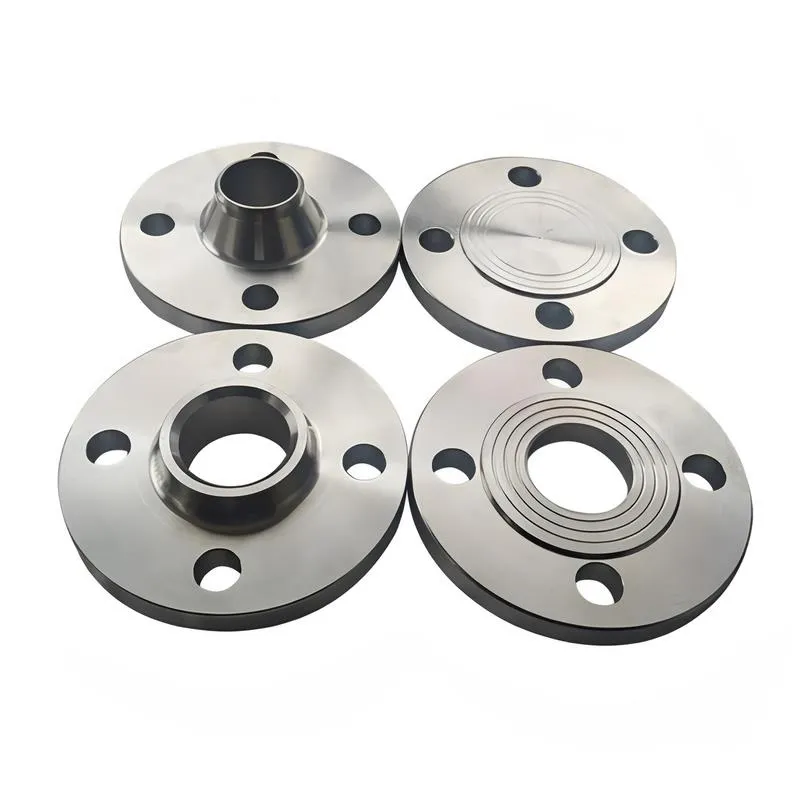
Plate Flat Welding Flange (PL), Necked Flat Welding Flange (SO), Necked Butt Welding Flange (WN), Integral Flange (IF), Socket Welding Flange (SW), Threaded Flange (Th), Butt Welding Ring Loose Flange (PJ/SE), Blind Flange (BL), Flat Welding Ring Loose Flange (PJ/PJ), and Lined Blind Flange (BL(s)).
2. **According to Petrochemical (SH) Industry Standards:** Flanges are classified as follows:
Threaded Flange (PL), Butt Welding Flange (WN), Flat Welding Flange (SO), Socket Welding Flange (SW), Loose Flange (LJ), and Blind Flange (no specific designation).
3. **According to Machinery (JB) Industry Standards:** Flanges are classified as follows:
Integral Flange, Butt Welding Flange, Plate Flat Welding Flange, Butt Welding Ring Plate Loose Flange, Flat Welding Ring Plate Loose Flange, Lap Joint Ring Plate Loose Flange, and Blind Flange.
4. **According to Connection Method/Type:** Flanges are classified as follows:
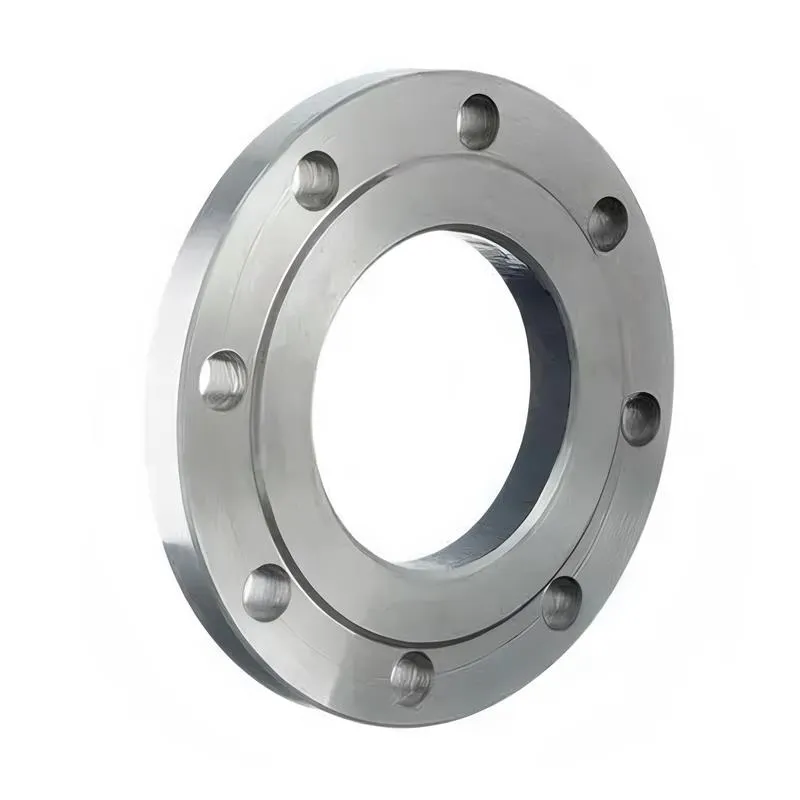
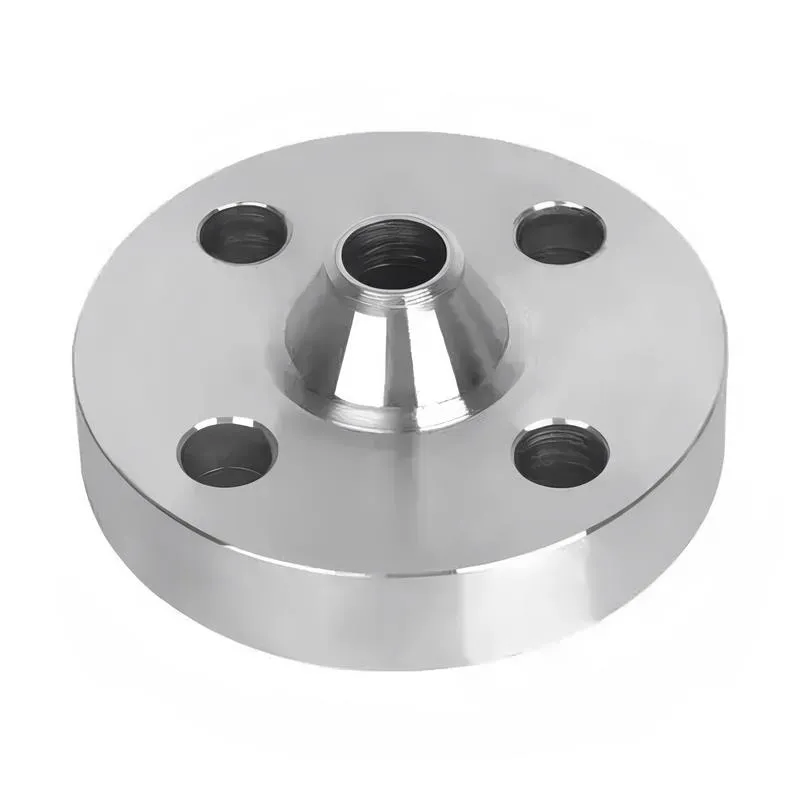
Plate Flat Welding Flange, Necked Flat Welding Flange, Necked Butt Welding Flange, Socket Welding Flange, Threaded Flange, Blind Flange, Necked Butt Welding Ring Loose Flange, Flat Welding Ring Loose Flange, Ring-Type Joint (RTJ) Flange and Blind Flange, Large-Diameter Plate Flange, Large-Diameter High-Neck Flange, Figure-8 Blind Plate, Butt Welding Ring Loose Flange, etc.
5. **According to the Component Being Connected:** Flanges can be classified into Vessel Flanges and Pipe Flanges.
6. **According to Structural Type:** Flanges include Integral Flanges, Threaded Flanges, Flat Welding Flanges, Butt Welding Flanges, Lap Joint (Loose/Swivel) Flanges, and Blind Flanges.
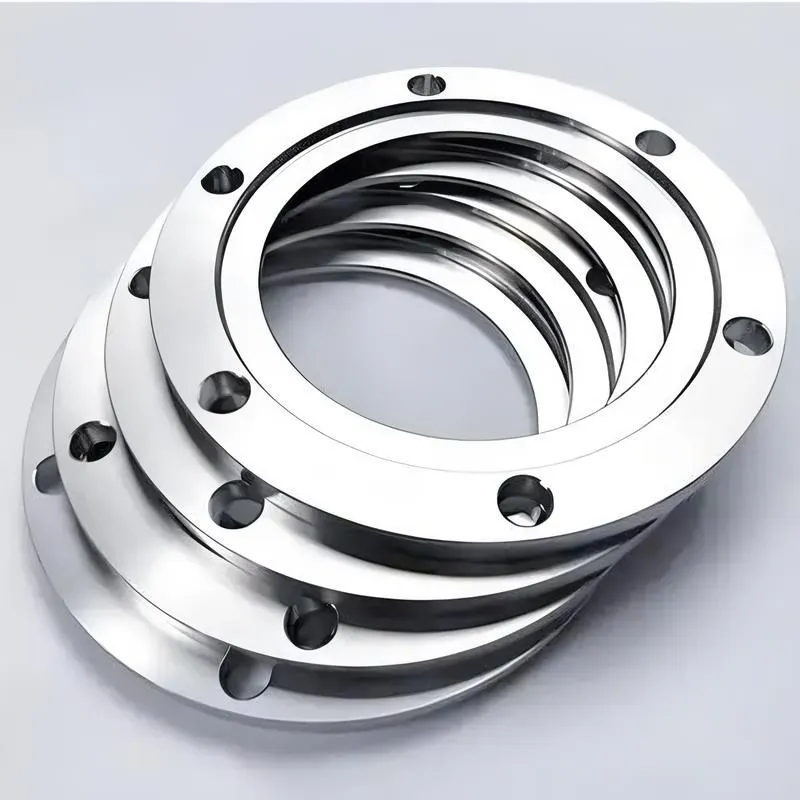
A flange—also referred to as a flange plate or rim—is a component used to connect shafts to one another, or, more commonly, to join the ends of pipes. Flanges are also utilized at the inlet and outlet ports of equipment to facilitate connections between two devices—for instance, the flange on a speed reducer. A "flange connection" or "flanged joint" refers to a detachable joint assembly comprising three interconnected elements—a flange, a gasket, and bolts—that together form a sealed structural unit. In the context of piping systems, a "pipe flange" specifically denotes a flange used for plumbing within the installation; when applied to equipment, it refers to the inlet or outlet flange of that specific device. Flanges feature a series of holes through which bolts are inserted to securely fasten the two flanges together, while a gasket placed between the flanges ensures a leak-proof seal. Flanges are broadly categorized into three types: threaded (screw-in) flanges, welded flanges, and clamp-type flanges. Flanges are invariably used in pairs; threaded flanges are suitable for low-pressure piping applications, whereas welded flanges are required for systems operating at pressures exceeding 4 kilograms per square centimeter. A sealing gasket is inserted between the two flange plates, which are then firmly secured using bolts. The thickness of a flange—as well as the specifications of the bolts used to fasten it—vary depending on the specific pressure rating required for the application. When connecting equipment such as water pumps or valves to piping systems, the corresponding connection points on these devices are often manufactured in the shape of a matching flange; this method of attachment is also referred to as a "flange connection." Generally, any connecting component that utilizes bolts to join and seal the perimeters of two flat surfaces—such as the joints in ventilation ducts—is termed a "flange"; such components may collectively be classified as "flange-type parts." However, since such a connection often constitutes merely a *portion* of a larger device—for instance, the interface between a flange and a water pump—it would be inappropriate to classify the entire water pump itself as a "flange-type part." Conversely, smaller components—such as valves—that feature such flanged interfaces may indeed be appropriately categorized as "flange-type parts."
-:-
For detailed product information, please contact sales.
-:
PSM Industries Ferro-TiC® PK Maraging Steel Flange Product Information
-:-
For detailed product information, please contact sales.
-:
PSM Industries Ferro-TiC® PK Maraging Steel Flange Synonyms
-:-
For detailed product information, please contact sales.
-:
PSM Industries Ferro-TiC® PK Maraging Steel Product Information
-:-
For detailed product information, please contact sales.
-:
# PSM Industries Ferro-TiC® PK Maraging Steel
---
## **Product Overview**
**PSM Industries Ferro-TiC® PK** is an **innovative, titanium carbide-reinforced metal matrix composite (MMC)** that combines the **high toughness and ductility of a maraging steel matrix** with the **extreme hardness and wear resistance of titanium carbide (TiC) particles**. Unlike conventional maraging steels that achieve strength through precipitation hardening alone, Ferro-TiC® PK utilizes a **duplex hardening mechanism**: the maraging matrix provides high strength and toughness, while a **high volume fraction (40-50%) of uniformly distributed, fine TiC ceramic particles** delivers exceptional resistance to abrasion, erosion, and galling. This material is typically produced via **powder metallurgy (PM) and hot isostatic pressing (HIP)** and is **impossible to produce by conventional melting and casting**.
---
## **Composition & Microstructure**
Ferro-TiC® PK is a composite material with two distinct phases:
| Component | Content (Typical Vol. %) | Description & Function |
|-----------|--------------------------|------------------------|
| **Metal Matrix** | 50 - 60% | **Premium Maraging Steel.** Similar to 18Ni-300 grade. Provides high toughness, ductility, and background strength. Can be precipitation hardened. |
| **Reinforcement Phase** | **40 - 50%** | **Fine, Hard Titanium Carbide (TiC) Particles.**
• Particle Size: Typically 1 - 5 µm
• Hardness: ~3000 - 3200 HV (≈95 HRA)
• Function: Provides extreme **abrasive wear resistance, low friction coefficient, and high hot hardness.** |
| **Key Result:** A **continuous, interconnected network of ultra-hard TiC particles** within a tough steel matrix, forming a "skeleton" of ceramic that resists wear while the metal matrix absorbs impact energy.
**Typical Matrix Chemistry (Approximate):**
* **Iron (Fe):** Balance
* **Nickel (Ni):** ~15-18%
* **Cobalt (Co):** ~8-10%
* **Molybdenum (Mo):** ~4-5%
* **Titanium (Ti):** Matrix contribution separate from TiC particles.
* **Carbon (C):** Mostly bound in TiC; minimal free carbon.
---
## **Manufacturing Process**
1. **Powder Production:** Pre-alloyed maraging steel powder and fine TiC ceramic powder are **mechanically blended** to achieve a homogeneous mixture.
2. **Consolidation:** The powder blend is loaded into a can and **degassed**, then consolidated via **Hot Isostatic Pressing (HIP)** at high temperature and pressure (e.g., 1150°C, 100 MPa). This creates a fully dense, near-net-shape billet.
3. **Forming:** The HIP'd billet can be **hot worked (forging, extrusion)** to refine the microstructure and produce final forms (bars, plates, near-net shapes).
4. **Heat Treatment:** The material undergoes standard **maraging heat treatment**:
* **Solution Anneal:** ~820°C, air cool.
* **Aging:** ~480°C for 3-6 hours, air cool.
* *This hardens the steel matrix, "locking" the TiC particles in place.*
---
## **Mechanical & Physical Properties**
*Properties are highly anisotropic due to the aligned TiC network formed during hot working. Values are typical for longitudinal direction.*
| Property | Typical Value | Notes |
|----------|--------------|-------|
| **Density** | **6.4 - 6.6 g/cm³** | **Significantly lighter than tool steel (~7.8 g/cm³) and tungsten carbide (~14-15 g/cm³).** A key advantage. |
| **Hardness** | **68 - 72 HRC** (Matrix: ~54 HRC) | Hardness is dominated by the TiC phase. Extraordinarily high for a "steel". |
| **Ultimate Compressive Strength** | 3000 - 3500 MPa | Excellent for resisting crushing loads. |
| **Transverse Rupture Strength (TRS)** | 2000 - 2500 MPa | Measures resistance to brittle fracture under bending. |
| **Fracture Toughness (KIC)** | **20 - 35 MPa√m** | **Significantly lower than monolithic maraging steel (~80 MPa√m).** The material is **brittle** compared to its matrix. Design must avoid stress concentrations. |
| **Modulus of Elasticity** | **280 - 320 GPa** | **Much stiffer than steel (~210 GPa).** |
| **Coefficient of Thermal Expansion** | **9 - 10 x 10⁻⁶ /K** | Lower than steel, closer to carbide. Important for thermal stress management. |
| **Abrasive Wear Resistance** | **Superior to D2, M2, and even some grades of tungsten carbide.** | Primary performance feature. |
| **Impact Resistance** | Moderate | Better than cemented carbides but inferior to tool steels. |
---
## **Key Characteristics & Advantages**
1. **Extreme Wear Resistance:** The primary reason for selection. Outlasts most tool steels by a factor of 5-50x in abrasive applications.
2. **High Hardness with Moderate Toughness:** A unique combination bridging the gap between **hard but brittle ceramics** and **tough but softer tool steels**.
3. **Lightweight:** ~20% lighter than tool steel, offering weight savings in dynamic components.
4. **Good Corrosion Resistance:** The maraging matrix provides better corrosion resistance than many high-carbon tool steels.
5. **High Stiffness:** Reduces deflection under load.
6. **Good High-Temperature Performance:** Retains hardness better than high-speed steels at temperatures above 500°C.
---
## **Limitations & Challenges**
* **Low Fracture Toughness:** Brittle compared to monolithic metals. **Notch-sensitive**.
* **Difficult and Costly Machining:** Can **only** be machined in the **soft, solution-annealed condition** using **polycrystalline diamond (PCD)** or **cubic boron nitride (CBN)** tooling. **Grinding** is the primary finishing method after heat treatment. Electrical Discharge Machining (EDM) is possible but slow.
* **High Cost:** Raw materials and processing (PM/HIP) are expensive.
* **Limited Forms:** Primarily available as simple shapes (bars, rods, plates, custom preforms) due to manufacturing constraints.
* **Design Sensitivity:** Requires careful, robust design with generous radii and avoidance of tensile stress concentrations.
---
## **International Standards & Designations**
* **Proprietary Material:** Ferro-TiC® is a registered trademark of **PSM Industries** (Precision Specialty Metals, USA). There is no direct ASTM, ISO, or DIN equivalent.
* **Classification:** It is typically classified as a **Metal Matrix Composite (MMC)** or a **Ceramic-Metal Composite**.
* **Specification:** Governed by **PSM's internal material specifications** and **customer-source control drawings**. Key guaranteed parameters include TiC volume %, hardness, and TRS.
---
## **Primary Applications**
Ferro-TiC® PK is used in **severe wear applications** where conventional materials fail prematurely.
1. **Metalforming & Forging:**
* **Extrusion Dies and Liners** for copper, aluminum, and steel (especially for abrasive alloys).
* **Hot and Cold Forging Dies** (inserts, punches, mandrels).
* **Piercing Points and Mandrels** for tube mills.
2. **Abrasive Material Processing:**
* **Wear Liners, Guides, and Nozzles** in shot blast and sandblast equipment.
* **Pump Casings, Impellers, and Sealing Rings** for slurry handling.
* **Knives and Cutters** for chopping fibrous or abrasive materials.
3. **Tooling for Composites & Plastics:**
* **Molds and Dies for Glass-Fiber Reinforced Plastic (GFRP)** and carbon fiber composites.
* **Wear parts in injection molding machines** processing filled plastics (e.g., glass-filled nylon).
4. **Oil & Gas:**
* **Downhole Tool Components** (wear sleeves, stabilizer blades) subject to sand abrasion.
* **Valve Trim** in high-pressure let-down service.
5. **Aerospace & Defense:**
* **Wear-resistant components** in actuation systems exposed to debris.
* **Specialized tooling** for composite airframe manufacture.
---
## **Fabrication & Design Guidelines**
* **Design Philosophy:** **"Strong in compression, weak in tension."** Design parts to be loaded in **compression** or **shear**. Avoid bending and tensile stresses.
* **Geometry:** Use **generous fillet radii** (minimum 1.5mm), **avoid sharp corners**, and design with **uniform sections** to prevent stress concentrations.
* **Joining:** **Not weldable.** Components are typically used as monolithic inserts, mechanically clamped or shrink-fitted into tougher steel holders/backings.
* **Finishing:** After HIP and heat treatment, final shaping is done almost exclusively by **grinding** with diamond or CBN wheels. **Laser cutting and EDM are possible but not preferred for bulk material removal.**
---
## **Comparison with Competing Materials**
| Material | Hardness (HRC) | Wear Resistance | Toughness | Machinability | Relative Cost |
|----------|---------------|-----------------|-----------|---------------|---------------|
| **Ferro-TiC® PK** | **68-72** | **Exceptional** | **Low** | **Very Poor** | **Very High** |
| **Cemented Tungsten Carbide** | 70-75 | **Exceptional** | **Very Low** | **EDM/Grind Only** | **High** |
| **CPM 10V / CPM 15V** | 62-66 | Excellent | Moderate | Poor | High |
| **D2 Tool Steel** | 58-62 | Good | Good | Good (Annealed) | Moderate |
| **18Ni Maraging Steel** | 52-54 | Fair | **Excellent** | Excellent (Annealed) | High |
---
## **Summary**
**PSM Industries Ferro-TiC® PK** is a **highly specialized, premium composite material** that solves extreme wear problems where traditional metals fail. It is **not a general-purpose steel** but a **wear-resistant engineering component** in material form. Its success hinges on leveraging its **ceramic-like hardness and wear resistance** while mitigating its **inherent brittleness** through intelligent, compressive-load-based design and robust mounting in ductile support structures. For engineers battling **severe abrasion, erosion, or galling**, and for whom component lifetime is the primary economic driver, Ferro-TiC® PK offers a performance solution that can drastically reduce downtime and operating costs, justifying its high initial price and demanding fabrication requirements.
-:-
For detailed product information, please contact sales.
-:
PSM Industries Ferro-TiC® PK Maraging Steel Specification
Dimensions
Size:
Diameter 20-1000 mm Length <7374 mm
Size:We can customized as required
Standard:
Per your request or drawing
We can customized as required
Properties(Theoretical)
Chemical Composition
-:-
For detailed product information, please contact sales.
-:
PSM Industries Ferro-TiC® PK Maraging Steel Properties
-:-
For detailed product information, please contact sales.
-:
Applications of PSM Industries Ferro-TiC® PK Maraging Steel Flange
-:-
For detailed product information, please contact sales.
-:
Chemical Identifiers PSM Industries Ferro-TiC® PK Maraging Steel Flange
-:-
For detailed product information, please contact sales.
-:
Packing of PSM Industries Ferro-TiC® PK Maraging Steel Flange
-:-
For detailed product information, please contact sales.
-:
Standard Packing:
-:-
For detailed product information, please contact sales.
-:
Typical bulk packaging includes palletized plastic 5 gallon/25 kg. pails, fiber and Steel Flange drums to 1 ton super sacks in full container (FCL) or truck load (T/L) quantities. Research and sample quantities and hygroscopic, oxidizing or other air sensitive materials may be packaged under argon or vacuum. Solutions are packaged in polypropylene, plastic or glass jars up to palletized 3845 gallon liquid totes Special package is available on request. E FORUs’ is carefully handled to minimize damage during storage and transportation and to preserve the quality of our products in their original condition