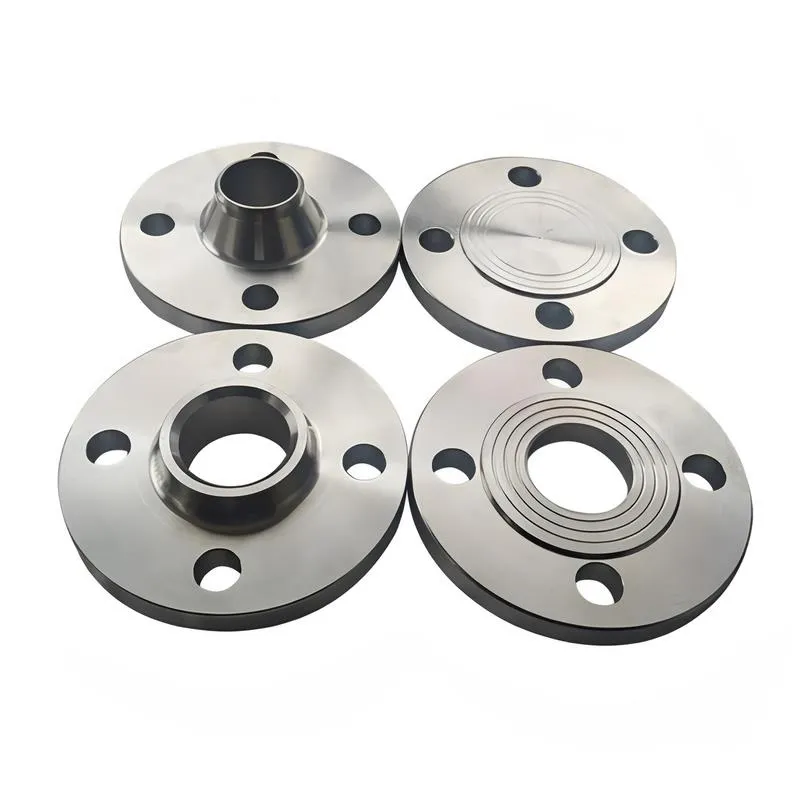
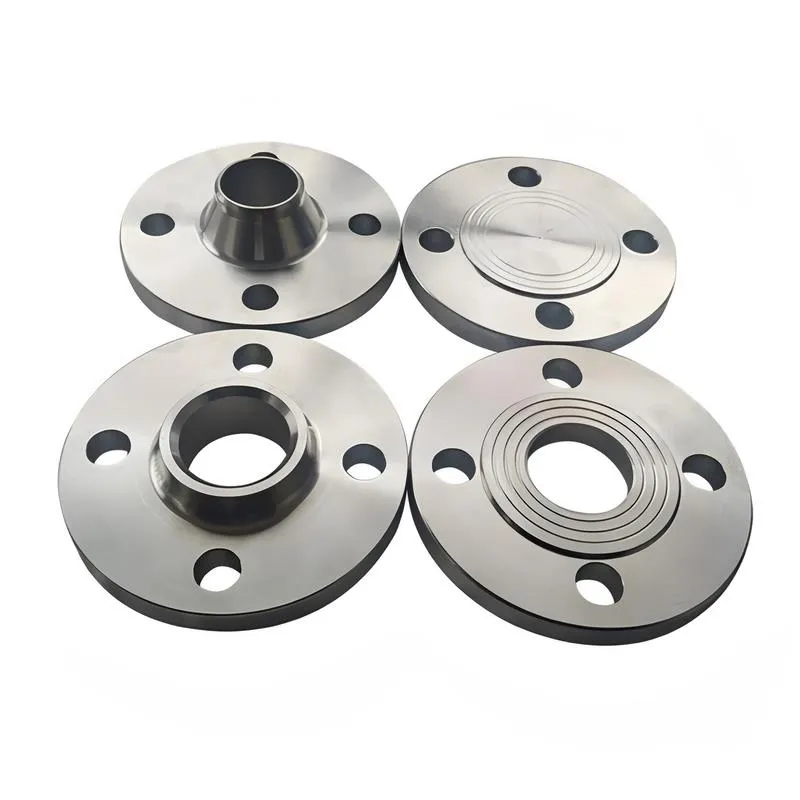
1,We Manufacturing processes are primarily classified into four types:
1:Forging,
2:Casting,
3:Cutting,
4:Rolling.
2,We can manufacture in accordance with these standards.
Standards:
GB Series (Chinese Standards), JB Series (Machinery Standards), HG Series (Chemical Industry Standards), ASME B16.5 (American Standards), BS4504 (British Standards), DIN (German Standards), and JIS (Japanese Standards).
Internationally, there are two primary systems of pipe flange standards: the European system, represented by the German DIN standards (including those of the former Soviet Union), and the American system, represented by the US ANSI pipe flange standards. Other common standards include: the Chinese Ministry of Machinery Industry standards (JB series), the Ministry of Chemical Industry standards (HG series), the Chinese National Standard *GB/T 9112–9124-2010 Steel Pipe Flanges*, as well as US standards (ASME B16.5), British standards (BS4504), German standards (DIN), Japanese standards (JIS), and marine standards (CBM), among others.
The nominal pressure ratings for the PN series are designated by "PN" and comprise the following nine levels: PN2.5, PN6, PN10, PN16, PN25, PN40, PN63, PN100, and PN160.
The nominal pressure ratings for the Class series are designated by "Class" and comprise the following six levels: Class150, Class300, Class600, Class900, Class1500, and Class2500.
Flange Classification
1. **According to Chemical Industry Standards:** Flanges are classified as follows:
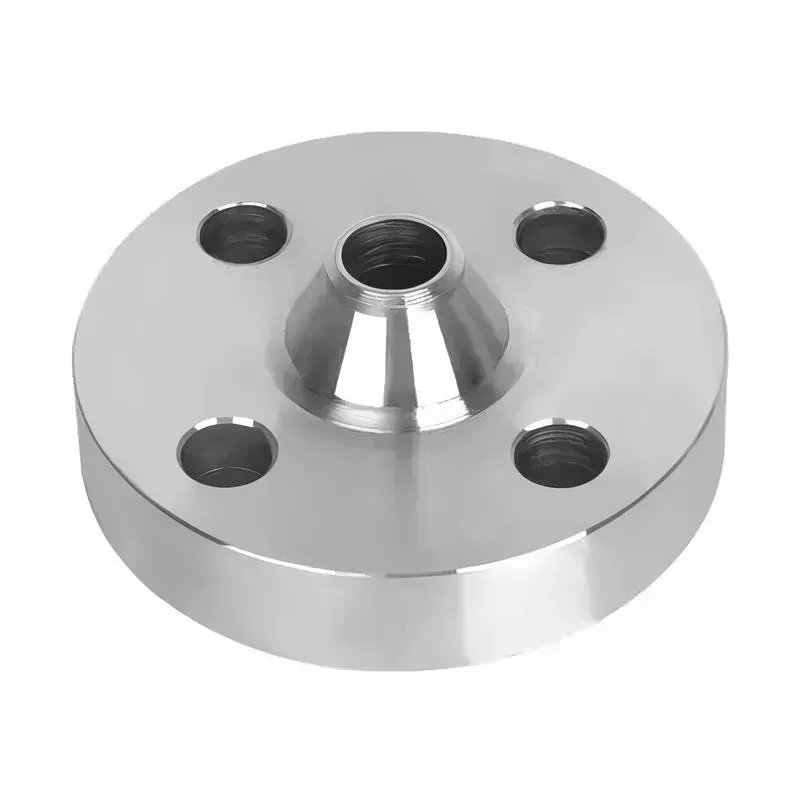
Plate Flat Welding Flange (PL), Necked Flat Welding Flange (SO), Necked Butt Welding Flange (WN), Integral Flange (IF), Socket Welding Flange (SW), Threaded Flange (Th), Butt Welding Ring Loose Flange (PJ/SE), Blind Flange (BL), Flat Welding Ring Loose Flange (PJ/PJ), and Lined Blind Flange (BL(s)).
2. **According to Petrochemical (SH) Industry Standards:** Flanges are classified as follows:
Threaded Flange (PL), Butt Welding Flange (WN), Flat Welding Flange (SO), Socket Welding Flange (SW), Loose Flange (LJ), and Blind Flange (no specific designation).
3. **According to Machinery (JB) Industry Standards:** Flanges are classified as follows:
Integral Flange, Butt Welding Flange, Plate Flat Welding Flange, Butt Welding Ring Plate Loose Flange, Flat Welding Ring Plate Loose Flange, Lap Joint Ring Plate Loose Flange, and Blind Flange.
4. **According to Connection Method/Type:** Flanges are classified as follows:
Plate Flat Welding Flange, Necked Flat Welding Flange, Necked Butt Welding Flange, Socket Welding Flange, Threaded Flange, Blind Flange, Necked Butt Welding Ring Loose Flange, Flat Welding Ring Loose Flange, Ring-Type Joint (RTJ) Flange and Blind Flange, Large-Diameter Plate Flange, Large-Diameter High-Neck Flange, Figure-8 Blind Plate, Butt Welding Ring Loose Flange, etc.
5. **According to the Component Being Connected:** Flanges can be classified into Vessel Flanges and Pipe Flanges.
6. **According to Structural Type:** Flanges include Integral Flanges, Threaded Flanges, Flat Welding Flanges, Butt Welding Flanges, Lap Joint (Loose/Swivel) Flanges, and Blind Flanges.
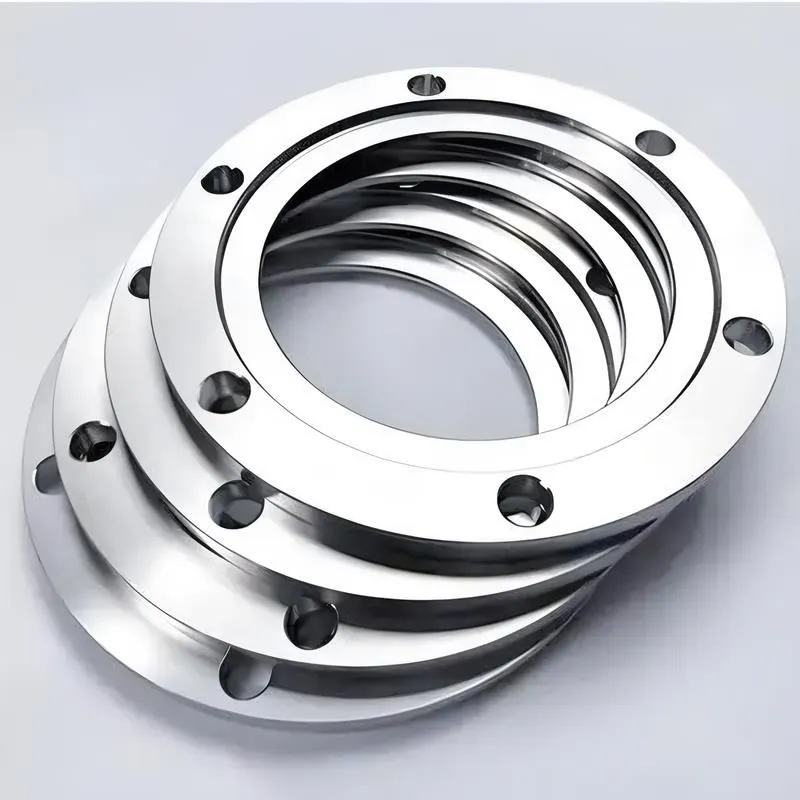
A flange—also referred to as a flange plate or rim—is a component used to connect shafts to one another, or, more commonly, to join the ends of pipes. Flanges are also utilized at the inlet and outlet ports of equipment to facilitate connections between two devices—for instance, the flange on a speed reducer. A "flange connection" or "flanged joint" refers to a detachable joint assembly comprising three interconnected elements—a flange, a gasket, and bolts—that together form a sealed structural unit. In the context of piping systems, a "pipe flange" specifically denotes a flange used for plumbing within the installation; when applied to equipment, it refers to the inlet or outlet flange of that specific device. Flanges feature a series of holes through which bolts are inserted to securely fasten the two flanges together, while a gasket placed between the flanges ensures a leak-proof seal. Flanges are broadly categorized into three types: threaded (screw-in) flanges, welded flanges, and clamp-type flanges. Flanges are invariably used in pairs; threaded flanges are suitable for low-pressure piping applications, whereas welded flanges are required for systems operating at pressures exceeding 4 kilograms per square centimeter. A sealing gasket is inserted between the two flange plates, which are then firmly secured using bolts. The thickness of a flange—as well as the specifications of the bolts used to fasten it—vary depending on the specific pressure rating required for the application. When connecting equipment such as water pumps or valves to piping systems, the corresponding connection points on these devices are often manufactured in the shape of a matching flange; this method of attachment is also referred to as a "flange connection." Generally, any connecting component that utilizes bolts to join and seal the perimeters of two flat surfaces—such as the joints in ventilation ducts—is termed a "flange"; such components may collectively be classified as "flange-type parts." However, since such a connection often constitutes merely a *portion* of a larger device—for instance, the interface between a flange and a water pump—it would be inappropriate to classify the entire water pump itself as a "flange-type part." Conversely, smaller components—such as valves—that feature such flanged interfaces may indeed be appropriately categorized as "flange-type parts."
-:-
For detailed product information, please contact sales.
-:
Sandvik 13C23; Razor blade Steel Flange Strip Product Information
-:-
For detailed product information, please contact sales.
-:
Sandvik 13C23; Razor blade Steel Flange Strip Synonyms
-:-
For detailed product information, please contact sales.
-:
Sandvik 13C23; Razor blade steel Strip Product Information
-:-
For detailed product information, please contact sales.
-:
## **Sandvik 13C23 Razor Blade Steel Strip – Ultra-Precision Martensitic Stainless Steel for Supreme Edge Applications**
### **Product Overview**
Sandvik 13C23 is a proprietary **ultra-high-precision martensitic stainless steel** strip engineered specifically for the most demanding edge applications, most notably premium razor blades. Developed through Sandvik's advanced metallurgical and precision rolling technologies, this grade represents the pinnacle of **edge sharpness, edge stability, and corrosion resistance** in a hardened strip. It is designed to be formed, heat-treated, and coated to achieve a cutting edge that is atomically keen, durable, and resistant to shaving-induced corrosion.
### **Key Advantages**
* **Unparalleled Edge Sharpness:** Extremely fine and uniform carbide structure allows for the formation of a consistently razor-sharp, stable edge apex.
* **Superior Edge Retention:** Maintains sharpness over multiple uses due to high attainable hardness and wear resistance.
* **Excellent Corrosion Resistance:** Specifically formulated to withstand the corrosive environment of shaving (water, soap, skin oils, and oxidation) without degrading the edge.
* **Exceptional Strip Quality:** Features mirror-like surface finish, flawless flatness, and ultra-tight thickness tolerances (±0.001mm or better) critical for high-speed automated blade production.
* **Optimal Coatings Substrate:** The pristine surface and consistent microstructure provide an ideal foundation for advanced edge coatings (e.g., PTFE, chromium, diamond-like carbon).
### **Chemical Composition (Typical, wt%)**
The chemistry is meticulously balanced to form a fine martensitic matrix with minimal but optimally sized carbides.
| Element | Content (%) | Element | Content (%) |
| :--- | :--- | :--- | :--- |
| **Carbon (C)** | 0.68 | **Chromium (Cr)** | 13.30 |
| **Silicon (Si)** | 0.40 | **Manganese (Mn)** | 0.45 |
| **Molybdenum (Mo)** | 0.10 | **Sulfur (S)** | ≤ 0.002 (Ultra-Low) |
| **Phosphorus (P)** | ≤ 0.020 | **Iron (Fe)** | Balance |
**Critical Note:** The precise carbon and chromium balance, along with ultra-low sulfur, is essential for creating the fine, hard martensite and chromium carbides necessary for the blade's performance, while minimizing inclusion-based edge defects.
### **Physical & Mechanical Properties**
#### **Properties in Annealed Condition (as supplied strip):**
* **Density:** 7.7 g/cm³
* **Hardness:** ~190 HB
* **Tensile Strength:** ~700 MPa
* **Microstructure:** Spheroidized carbide structure for optimal formability prior to hardening.
#### **Properties after Final Hardening & Tempering (for blade application):**
* **Final Hardness:** **Typically 580 - 630 HV (≈56-58 HRC)**. *Note: Razor blade hardness is often measured in HV for precision on thin edges.*
* **Tensile Strength:** 2100 – 2300 MPa
* **Elastic Limit:** Exceptionally high, allowing the thin edge to flex without permanent deformation.
* **Fatigue Resistance:** Excellent, to withstand cyclic micro-stresses during use.
#### **Corrosion Resistance:**
* Engineered specifically for wet-shave environments. Superior to many standard stainless grades in resisting pitting and edge oxidation caused by soap and water.
### **International Standards & Approvals**
Sandvik 13C23 is a highly specialized, proprietary grade developed specifically for the razor blade industry.
* **Primary Specification:** **Sandvik 13C23** is the defining industry standard for premium razor blade steel.
* **General Classification:** Falls within the family of martensitic stainless cutlery steels.
* **Comparable/Related Standards:**
* **EN / Euronorm:** Similar to but more precise than 1.4028 (X30Cr13).
* **AISI:** Loosely analogous to a modified 420HC or 440A, but with significantly tighter controls.
* **Industry Recognition:** The grade name **13C23** is globally recognized and specified by leading razor blade manufacturers worldwide.
### **Product Applications**
The primary and optimized application is **razor blades**, but its properties make it suitable for other ultra-precision edges.
* **Primary Application:**
* **Premium disposable razor blade strips** (twin, triple, quadruple, quintuple blades)
* **System razor blades** (cartridge inserts)
* **Single-edge industrial razor blades**
* **Secondary Precision Applications:**
* **Surgical Scalpels and Microtome Blades:** Where extreme sharpness and sterility are required.
* **Precision Cutting Tools:** For electronics (e.g., flex circuit cutting), film slitting, and sample preparation.
* **High-End Craft & Hobby Blades:** For model building and precision crafts.
### **Processing Guidelines for Blade Manufacture**
The processing of 13C23 is a highly controlled, multi-step procedure:
1. **Forming (Annealed State):** The strip is stamped/blanked into blade profiles using precision progressive dies.
2. **Heat Treatment:**
* **Austenitizing:** In controlled atmosphere furnaces at ~1060-1080°C.
* **Quenching:** Rapid cooling (typically gas or specialized quench) to achieve full martensitic transformation.
* **Tempering:** Low-temperature tempering (~150-200°C) to relieve stresses and achieve the final balance of hardness and toughness.
3. **Edge Grinding & Honing:** The cutting edge is created through a series of精密磨削 (precision grinding), stropping, and honing operations to achieve a micron-level sharp edge.
4. **Coating:** Edges are typically coated with layers such as **Chromium (Cr)** for corrosion resistance and **Polytetrafluoroethylene (PTFE)** or other polymers for lubricity and comfort.
5. **Assembly & Packaging:** Blades are assembled into cartridges or packaged under sterile/clean conditions.
### **Availability**
Supplied as world's highest quality cold-rolled strip for precision blade making.
* **Thickness:** Ultra-thin gauges, typically **0.060 mm to 0.150 mm** (60-150 microns), with extraordinary tolerance control.
* **Width:** As required, typically slitted to precise widths for multi-blade production.
* **Condition:** Soft Annealed, with a flawless, bright (mirror) finish.
* **Dimensional Tolerances:** Meets or exceeds the most stringent razor industry specifications for thickness, width, flatness (camber), and surface roughness.
---
**Confidentiality Note:** The exact processing parameters (heat treatment cycles, coating formulations) are often proprietary to the blade manufacturer and are the result of extensive R&D. This datasheet describes the base material.
**Technical Collaboration:** Successful use of Sandvik 13C23 requires deep collaboration between Sandvik's metallurgists and the blade manufacturer's engineers to optimize the entire value chain from strip to finished blade. Sandvik provides extensive technical support for this purpose.
-:-
For detailed product information, please contact sales.
-:
Sandvik 13C23; Razor blade steel Strip Specification
Dimensions
Size:
Diameter 20-1000 mm Length <7443 mm
Size:We can customized as required
Standard:
Per your request or drawing
We can customized as required
Properties(Theoretical)
Chemical Composition
-:-
For detailed product information, please contact sales.
-:
Sandvik 13C23; Razor blade steel Strip Properties
-:-
For detailed product information, please contact sales.
-:
Applications of Sandvik 13C23; Razor blade Steel Flange Strip
-:-
For detailed product information, please contact sales.
-:
Chemical Identifiers Sandvik 13C23; Razor blade Steel Flange Strip
-:-
For detailed product information, please contact sales.
-:
Packing of Sandvik 13C23; Razor blade Steel Flange Strip
-:-
For detailed product information, please contact sales.
-:
Standard Packing:
-:-
For detailed product information, please contact sales.
-:
Typical bulk packaging includes palletized plastic 5 gallon/25 kg. pails, fiber and Steel Flange drums to 1 ton super sacks in full container (FCL) or truck load (T/L) quantities. Research and sample quantities and hygroscopic, oxidizing or other air sensitive materials may be packaged under argon or vacuum. Solutions are packaged in polypropylene, plastic or glass jars up to palletized 3914 gallon liquid totes Special package is available on request. E FORUs’ is carefully handled to minimize damage during storage and transportation and to preserve the quality of our products in their original condition