1,We Manufacturing processes are primarily classified into four types:
1:Forging,
2:Casting,
3:Cutting,
4:Rolling.
2,We can manufacture in accordance with these standards.
Standards:
GB Series (Chinese Standards), JB Series (Machinery Standards), HG Series (Chemical Industry Standards), ASME B16.5 (American Standards), BS4504 (British Standards), DIN (German Standards), and JIS (Japanese Standards).
Internationally, there are two primary systems of pipe flange standards: the European system, represented by the German DIN standards (including those of the former Soviet Union), and the American system, represented by the US ANSI pipe flange standards. Other common standards include: the Chinese Ministry of Machinery Industry standards (JB series), the Ministry of Chemical Industry standards (HG series), the Chinese National Standard *GB/T 9112–9124-2010 Steel Pipe Flanges*, as well as US standards (ASME B16.5), British standards (BS4504), German standards (DIN), Japanese standards (JIS), and marine standards (CBM), among others.
The nominal pressure ratings for the PN series are designated by "PN" and comprise the following nine levels: PN2.5, PN6, PN10, PN16, PN25, PN40, PN63, PN100, and PN160.
The nominal pressure ratings for the Class series are designated by "Class" and comprise the following six levels: Class150, Class300, Class600, Class900, Class1500, and Class2500.
Flange Classification
1. **According to Chemical Industry Standards:** Flanges are classified as follows:
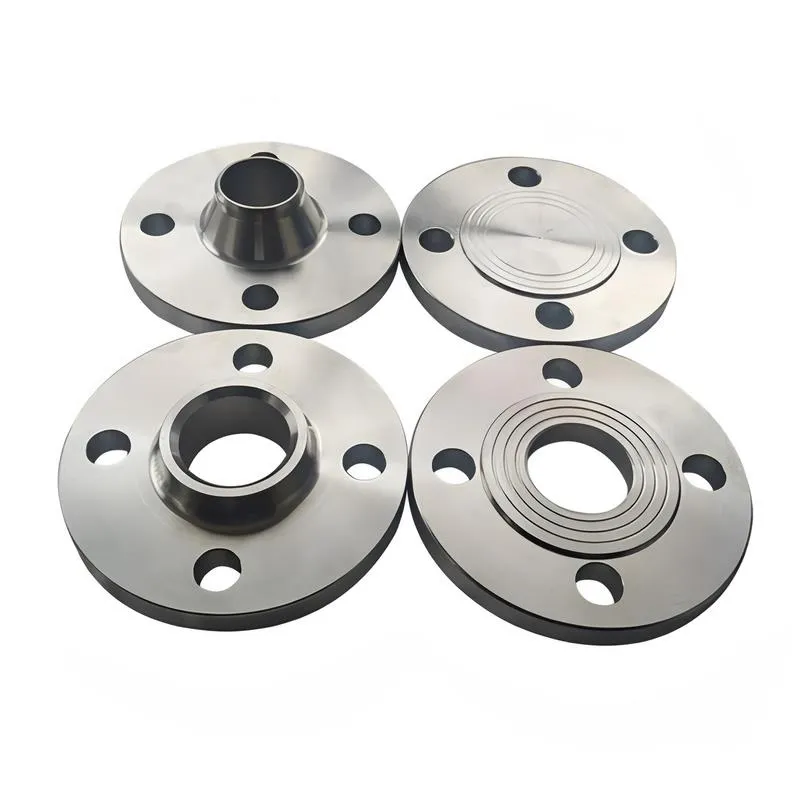
Plate Flat Welding Flange (PL), Necked Flat Welding Flange (SO), Necked Butt Welding Flange (WN), Integral Flange (IF), Socket Welding Flange (SW), Threaded Flange (Th), Butt Welding Ring Loose Flange (PJ/SE), Blind Flange (BL), Flat Welding Ring Loose Flange (PJ/PJ), and Lined Blind Flange (BL(s)).
2. **According to Petrochemical (SH) Industry Standards:** Flanges are classified as follows:
Threaded Flange (PL), Butt Welding Flange (WN), Flat Welding Flange (SO), Socket Welding Flange (SW), Loose Flange (LJ), and Blind Flange (no specific designation).
3. **According to Machinery (JB) Industry Standards:** Flanges are classified as follows:
Integral Flange, Butt Welding Flange, Plate Flat Welding Flange, Butt Welding Ring Plate Loose Flange, Flat Welding Ring Plate Loose Flange, Lap Joint Ring Plate Loose Flange, and Blind Flange.
4. **According to Connection Method/Type:** Flanges are classified as follows:
Plate Flat Welding Flange, Necked Flat Welding Flange, Necked Butt Welding Flange, Socket Welding Flange, Threaded Flange, Blind Flange, Necked Butt Welding Ring Loose Flange, Flat Welding Ring Loose Flange, Ring-Type Joint (RTJ) Flange and Blind Flange, Large-Diameter Plate Flange, Large-Diameter High-Neck Flange, Figure-8 Blind Plate, Butt Welding Ring Loose Flange, etc.
5. **According to the Component Being Connected:** Flanges can be classified into Vessel Flanges and Pipe Flanges.
6. **According to Structural Type:** Flanges include Integral Flanges, Threaded Flanges, Flat Welding Flanges, Butt Welding Flanges, Lap Joint (Loose/Swivel) Flanges, and Blind Flanges.
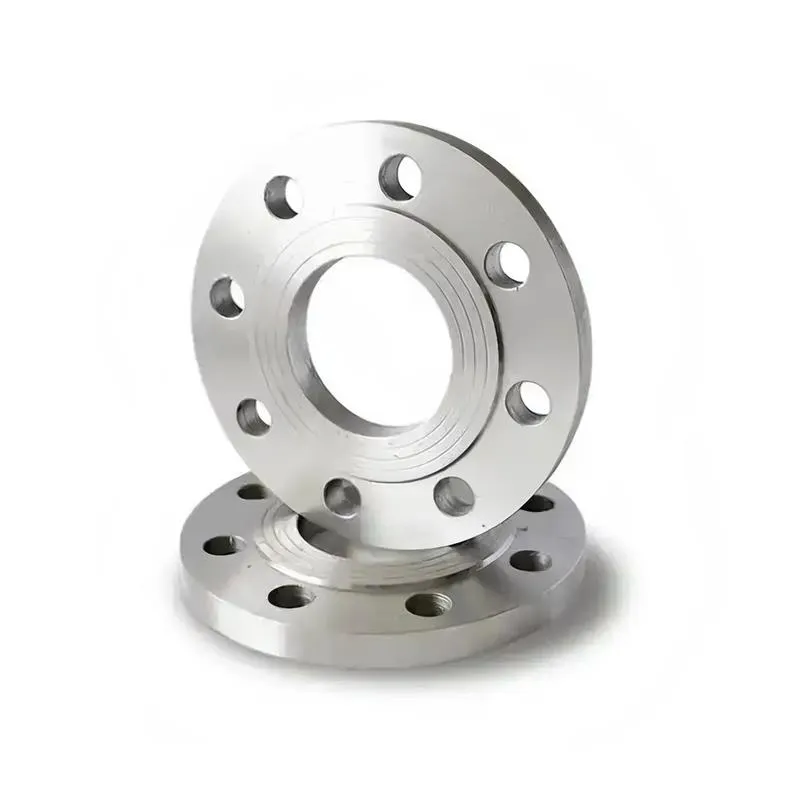
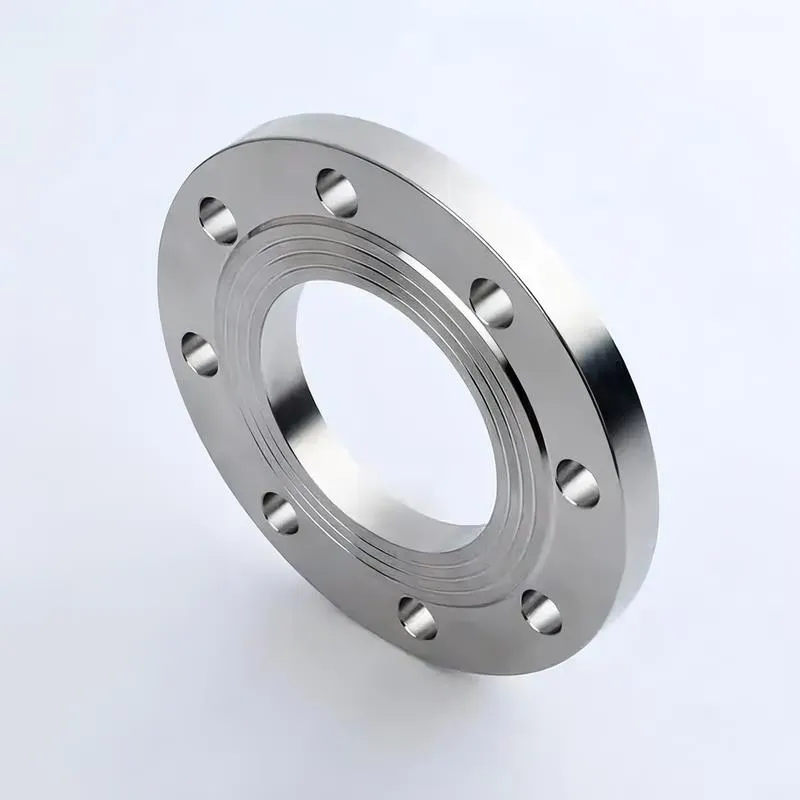
A flange—also referred to as a flange plate or rim—is a component used to connect shafts to one another, or, more commonly, to join the ends of pipes. Flanges are also utilized at the inlet and outlet ports of equipment to facilitate connections between two devices—for instance, the flange on a speed reducer. A "flange connection" or "flanged joint" refers to a detachable joint assembly comprising three interconnected elements—a flange, a gasket, and bolts—that together form a sealed structural unit. In the context of piping systems, a "pipe flange" specifically denotes a flange used for plumbing within the installation; when applied to equipment, it refers to the inlet or outlet flange of that specific device. Flanges feature a series of holes through which bolts are inserted to securely fasten the two flanges together, while a gasket placed between the flanges ensures a leak-proof seal. Flanges are broadly categorized into three types: threaded (screw-in) flanges, welded flanges, and clamp-type flanges. Flanges are invariably used in pairs; threaded flanges are suitable for low-pressure piping applications, whereas welded flanges are required for systems operating at pressures exceeding 4 kilograms per square centimeter. A sealing gasket is inserted between the two flange plates, which are then firmly secured using bolts. The thickness of a flange—as well as the specifications of the bolts used to fasten it—vary depending on the specific pressure rating required for the application. When connecting equipment such as water pumps or valves to piping systems, the corresponding connection points on these devices are often manufactured in the shape of a matching flange; this method of attachment is also referred to as a "flange connection." Generally, any connecting component that utilizes bolts to join and seal the perimeters of two flat surfaces—such as the joints in ventilation ducts—is termed a "flange"; such components may collectively be classified as "flange-type parts." However, since such a connection often constitutes merely a *portion* of a larger device—for instance, the interface between a flange and a water pump—it would be inappropriate to classify the entire water pump itself as a "flange-type part." Conversely, smaller components—such as valves—that feature such flanged interfaces may indeed be appropriately categorized as "flange-type parts."
-:-
For detailed product information, please contact sales.
-:
Latrobe Staminal™ Shock Resisting Die Steel Flange Product Information
-:-
For detailed product information, please contact sales.
-:
Latrobe Staminal™ Shock Resisting Die Steel Flange Synonyms
-:-
For detailed product information, please contact sales.
-:
Latrobe Staminal™ Shock Resisting Die Steel Product Information
-:-
For detailed product information, please contact sales.
-:
# **Product Introduction: Latrobe Staminal™ Shock-Resisting Die Steel**
**Latrobe Staminal™** is a specialized, **high-performance, vacuum-degassed shock-resisting die steel** engineered for demanding cold forging, cold heading, and high-impact die applications. This premium-grade material represents an advanced evolution of traditional shock-resisting steels, offering superior combination of **exceptional toughness, high compressive strength, and enhanced fatigue resistance**. Developed specifically for die applications subjected to extreme cyclic loading and impact stresses, Staminal™ provides extended service life and reliability in the most punishing industrial environments.
Unlike conventional shock steels, Staminal™ incorporates advanced melting technology and optimized alloy design to deliver **improved micro-cleanliness, uniform carbide distribution, and superior isotropic properties**. This results in consistent performance across all orientations, reduced risk of premature failure, and enhanced resistance to cracking under high-stress conditions.
---
## **1. Chemical Composition**
Latrobe Staminal™ features a carefully balanced, proprietary composition optimized for maximum die life under impact loading:
| Element | Approximate Content (%) | Primary Function |
| :--- | :--- | :--- |
| Carbon (C) | 0.45 - 0.55 | Provides core strength while maintaining toughness |
| Silicon (Si) | 0.80 - 1.20 | Enhances toughness, fatigue strength, and temper resistance |
| Chromium (Cr) | 1.00 - 1.50 | Improves hardenability and moderate wear resistance |
| Molybdenum (Mo) | 0.30 - 0.60 | Enhances toughness and hardenability |
| Vanadium (V) | 0.05 - 0.15 | Refines grain structure, improves toughness |
| Nickel (Ni) | 0.20 - 0.50 | **Key addition** - dramatically increases toughness |
| Manganese (Mn) | 0.60 - 0.90 | Improves hardenability and strength |
| **Balance** | Iron (Fe) | |
*Note: Exact proprietary composition is optimized by Latrobe Specialty Steel. Contains carefully controlled micro-alloying elements for enhanced performance.*
---
## **2. Physical & Mechanical Properties**
### **Annealed Condition Properties:**
- **Hardness:** 185 - 215 HB (Brinell)
- **Machinability:** Good (approximately 50% of 1% carbon steel standard)
- **Microcleanliness:** ASTM E45 Method A: A ≤ 1.0, B ≤ 1.0, C ≤ 0.5, D ≤ 1.0
- **Grain Size:** ASTM 7-8 (fine, uniform structure)
- **Ultrasonic Quality:** Meets ASTM A388 Class A requirements
### **Heat Treatment Characteristics:**
- **Hardening Method:** Air hardening (primary) or oil quenching
- **Austenitizing Temperature:** 830°C - 860°C (1525°F - 1580°F)
- **Preheating:** 650°C (1200°F) and 790°C (1450°F) recommended
- **Quenching:** Still air, forced air, or oil (depending on section size and complexity)
- **Tempering Range:** 200°C - 550°C (390°F - 1020°F)
### **Hardened & Tempered Properties:**
- **Optimal Hardness Range:** **54 - 58 HRC** (for cold forging dies)
- **Charpy Impact Value (unnotched):** **90 - 130 J** (at 54-56 HRC) - **Exceptional**
- **Transverse Rupture Strength:** 3,900 - 4,500 MPa
- **Compressive Yield Strength:** 2,300 - 2,700 MPa
- **Fatigue Strength:** 1,150 - 1,350 MPa (10⁷ cycles, R = -1)
- **Fracture Toughness (K₁C):** 80 - 100 MPa·√m
- **Key Characteristics:**
- **Superior Impact Toughness:** Exceeds conventional S-series steels
- **Excellent Fatigue Resistance:** Ideal for high-cycle applications
- **Minimal Distortion:** Consistent dimensional stability
- **Isotropic Properties:** Uniform strength in all directions
- **Good Thermal Conductivity:** 36.0 W/m·K at 20°C
---
## **3. International Standards & Cross-Reference**
As a proprietary die steel, Staminal™ is compared to various international standards:
| Country/Region | Comparable Standard | Similar Grade |
| :--- | :--- | :--- |
| **United States** | Proprietary | Enhanced S5/S7 type |
| **Europe** | DIN/EN | Similar to 1.2714 modified |
| **Japan** | JIS | Similar to SKT4 enhanced |
| **Common Reference** | Industry | Premium shock-resisting die steel |
| **Alternative Grades** | Commercial | Often compared to superior-quality AISI S5/S7 |
*Note: Staminal™ exceeds the minimum requirements of standard shock steel specifications due to its enhanced manufacturing and alloy design.*
---
## **4. Product Applications**
### **Primary Die Applications:**
- **Cold Forging Dies:** For bolts, nuts, screws, and fasteners
- **Cold Heading Dies:** Punches, inserts, and die rings
- **Extrusion Dies:** For cold extrusion of metals
- **Thread Rolling Dies:** Particularly for high-strength materials
- **Nut Forming Tools:** All types of nut production dies
### **High-Impact Tooling:**
- **Heavy Stamping Dies:** For thick materials and high-tonnage presses
- **Shear Blades and Cut-Off Dies:** For bar and wire cutting
- **Punching Tools:** For structural components and heavy plate
- **Bolt Making Tools:** From wire to finished product
### **Specialized Industrial Applications:**
- **Mining Tool Components:** Subjected to extreme impact
- **Railroad Tooling:** Spike drivers, track maintenance tools
- **Construction Equipment Dies:** For pile driving and foundation work
- **Recycling Equipment:** Shear blades and processing tools
### **Performance Advantages in Die Service:**
- **Extended Die Life:** 30-50% longer than conventional shock steels
- **Reduced Downtime:** Lower frequency of die changes
- **Improved Consistency:** More uniform part production
- **Reduced Polishing:** Maintains surface finish longer
---
## **5. Processing Guidelines**
### **Machining (Annealed State):**
- **Turning Speed:** 25-35 m/min (80-115 ft/min)
- **Feed Rate:** 0.15-0.25 mm/rev (0.006-0.010 in/rev)
- **Tool Material:** Premium carbide with positive rake geometry
- **Surface Finish:** Can achieve Ra < 1.6 μm with proper technique
- **Coolant:** Essential for heat control and chip evacuation
### **Optimal Heat Treatment for Dies:**
1. **Stress Relieving:** 600°C (1110°F) after rough machining, slow cool
2. **Preheating:** 650°C (1200°F) for 45 min/inch, then 800°C (1470°F) for 30 min/inch
3. **Austenitizing:** 845°C (1555°F) for 25-35 minutes per inch
4. **Quenching:** Air cool in still air (recommended for complex dies)
5. **Tempering:** Double temper minimum
- First temper: 450°C (840°F) for 2 hours, air cool
- Second temper: 430°C (805°F) for 2 hours, air cool
- Target hardness: 55-57 HRC for optimal performance
### **Special Processing Considerations:**
- **Nitriding:** Can be applied for increased surface hardness (750-900 HV)
- **Surface Treatments:** TiN, TiCN, or DLC coatings compatible
- **EDM Machining:** Use fine finish settings and temper afterwards
- **Welding Repair:** Possible with proper procedure (preheat to 300°C/570°F)
### **Grinding for Die Applications:**
- **Wheel Selection:** CBN or aluminum oxide, medium hardness
- **Coolant:** High-pressure coolant recommended
- **Parameters:** Light passes (≤ 0.025mm) to prevent thermal damage
- **Surface Finish:** Can achieve mirror finishes for critical applications
---
## **6. Performance Comparison**
### **vs. Conventional S7 Steel:**
- **Staminal™:** 20-30% higher impact toughness, better fatigue life
- **S7:** Lower cost, wider availability
- **Die Life:** Staminal™ typically provides 30-50% longer service life
### **vs. H13 Hot Work Steel:**
- **Staminal™:** Superior room temperature impact strength
- **H13:** Better for elevated temperature applications (>400°C/750°F)
- **Applications:** Staminal™ for cold work, H13 for hot work
### **vs. High-Speed Steels:**
- **Staminal™:** 3-5 times higher toughness, better impact resistance
- **HSS:** Higher wear resistance, better for cutting applications
- **Optimal Use:** Staminal™ for impact, HSS for wear-dominated applications
---
## **7. Technical Advantages for Die Applications**
### **Extended Die Life Mechanisms:**
1. **Superior Toughness:** Resists crack initiation and propagation
2. **Enhanced Fatigue Resistance:** Withstands high-cycle loading
3. **Isotropic Structure:** Uniform properties prevent directional weaknesses
4. **Fine Grain Structure:** Improved resistance to fatigue and impact
### **Economic Benefits:**
- **Reduced Tooling Costs:** Longer life reduces annual die expenditure
- **Increased Production:** Less downtime for die changes
- **Improved Quality:** Consistent performance throughout die life
- **Lower Maintenance:** Reduced polishing and repair frequency
### **Design Flexibility:**
- **Complex Geometies:** Suitable for intricate die designs
- **Thin Sections:** Can be used in delicate die features
- **Large Dies:** Consistent properties in large cross-sections
- **Precision Applications:** Maintains dimensional accuracy
---
## **8. Quality Assurance & Traceability**
### **Manufacturing Standards:**
- **Melting:** Electric arc furnace + ladle refining + vacuum degassing
- **Forging:** Controlled thermo-mechanical processing
- **Heat Treatment:** Computer-controlled annealing cycles
- **Testing:** Full mechanical and metallurgical testing
### **Certification Package:**
- Chemical analysis certificate
- Mechanical properties report
- Ultrasonic inspection report (upon request)
- Microcleanliness assessment
- Grain size certification
- Full traceability to melt number
### **Quality Control Parameters:**
- Hardness uniformity: ±10 HB throughout stock
- Decarburization: < 0.25mm per side
- Surface quality: Free of seams and cracks
- Straightness: Meets ASTM A484 requirements
---
## **9. Application Engineering Guidelines**
### **Die Design Recommendations:**
- **Corner Radii:** Minimum 1.0mm (0.040") for stress reduction
- **Section Transitions:** Gradual changes preferred
- **Surface Finish:** Ra 0.4-0.8 μm optimal for most applications
- **Tolerance:** ±0.025mm achievable with proper processing
### **Optimal Service Conditions:**
- **Operating Temperature:** Up to 250°C (480°F) continuous
- **Impact Energy:** Optimal for 50-500 J impact range
- **Cyclic Loading:** Excellent for 10⁴-10⁷ cycle applications
- **Lubrication:** Essential for maximum die life
### **Maintenance Schedule:**
- **Regular Inspection:** Every 50,000 cycles for critical dies
- **Preventive Maintenance:** Polish when surface roughness exceeds Ra 1.6 μm
- **Reconditioning:** Can typically be reworked 3-5 times
- **Retirement Criteria:** When crack length exceeds 1mm or wear > 0.5mm
---
## **10. Case Studies & Performance Data**
### **Cold Heading Applications:**
- **Material:** Stainless steel bolts
- **Previous Steel:** AISI S7
- **Staminal™ Improvement:** 45% longer die life
- **Cost Savings:** 38% reduction in tooling cost per part
### **Cold Forging Applications:**
- **Component:** Automotive fasteners
- **Production Rate:** 120 parts/minute
- **Die Life Improvement:** 52% increase over conventional steel
- **Quality Improvement:** Reduced scrap rate by 28%
### **Thread Rolling Applications:**
- **Material:** Alloy steel Grade 8.8
- **Tool Life:** 210,000 cycles vs. 140,000 with S7
- **Maintenance:** 40% less frequent polishing required
- **Overall Efficiency:** 22% improvement in throughput
---
**Technical Summary:** Latrobe Staminal™ represents a **significant advancement in shock-resisting die steel technology**, specifically engineered to meet the escalating demands of modern cold forming operations. Through optimized alloy design and advanced manufacturing techniques, it delivers superior toughness, enhanced fatigue resistance, and extended service life compared to conventional shock steels. While representing a premium investment, Staminal™ offers compelling economic benefits through reduced downtime, longer tool life, and improved production consistency in demanding die applications.
**Industry Validation:** Staminal™ has been proven in production environments worldwide, consistently delivering performance improvements in cold forging, cold heading, and high-impact die applications across automotive, aerospace, fastener, and general manufacturing industries.
**Application Note:** For maximum benefit, Staminal™ should be paired with appropriate die design, proper heat treatment, and optimal operating practices. Consultation with application engineers is recommended for specific applications.
**Disclaimer:** Performance data based on field experience and laboratory testing. Actual results may vary based on specific application conditions, heat treatment, and operating parameters. Always conduct testing under your specific conditions before full implementation.
-:-
For detailed product information, please contact sales.
-:
Latrobe Staminal™ Shock Resisting Die Steel Specification
Dimensions
Size:
Diameter 20-1000 mm Length <7205 mm
Size:We can customized as required
Standard:
Per your request or drawing
We can customized as required
Properties(Theoretical)
Chemical Composition
-:-
For detailed product information, please contact sales.
-:
Latrobe Staminal™ Shock Resisting Die Steel Properties
-:-
For detailed product information, please contact sales.
-:
Applications of Latrobe Staminal™ Shock Resisting Die Steel Flange
-:-
For detailed product information, please contact sales.
-:
Chemical Identifiers Latrobe Staminal™ Shock Resisting Die Steel Flange
-:-
For detailed product information, please contact sales.
-:
Packing of Latrobe Staminal™ Shock Resisting Die Steel Flange
-:-
For detailed product information, please contact sales.
-:
Standard Packing:
-:-
For detailed product information, please contact sales.
-:
Typical bulk packaging includes palletized plastic 5 gallon/25 kg. pails, fiber and Steel Flange drums to 1 ton super sacks in full container (FCL) or truck load (T/L) quantities. Research and sample quantities and hygroscopic, oxidizing or other air sensitive materials may be packaged under argon or vacuum. Solutions are packaged in polypropylene, plastic or glass jars up to palletized 3676 gallon liquid totes Special package is available on request. E FORUs’ is carefully handled to minimize damage during storage and transportation and to preserve the quality of our products in their original condition