1,We Manufacturing processes are primarily classified into four types:
1:Forging,
2:Casting,
3:Cutting,
4:Rolling.
2,We can manufacture in accordance with these standards.
Standards:
GB Series (Chinese Standards), JB Series (Machinery Standards), HG Series (Chemical Industry Standards), ASME B16.5 (American Standards), BS4504 (British Standards), DIN (German Standards), and JIS (Japanese Standards).
Internationally, there are two primary systems of pipe flange standards: the European system, represented by the German DIN standards (including those of the former Soviet Union), and the American system, represented by the US ANSI pipe flange standards. Other common standards include: the Chinese Ministry of Machinery Industry standards (JB series), the Ministry of Chemical Industry standards (HG series), the Chinese National Standard *GB/T 9112–9124-2010 Steel Pipe Flanges*, as well as US standards (ASME B16.5), British standards (BS4504), German standards (DIN), Japanese standards (JIS), and marine standards (CBM), among others.
The nominal pressure ratings for the PN series are designated by "PN" and comprise the following nine levels: PN2.5, PN6, PN10, PN16, PN25, PN40, PN63, PN100, and PN160.
The nominal pressure ratings for the Class series are designated by "Class" and comprise the following six levels: Class150, Class300, Class600, Class900, Class1500, and Class2500.
Flange Classification
1. **According to Chemical Industry Standards:** Flanges are classified as follows:
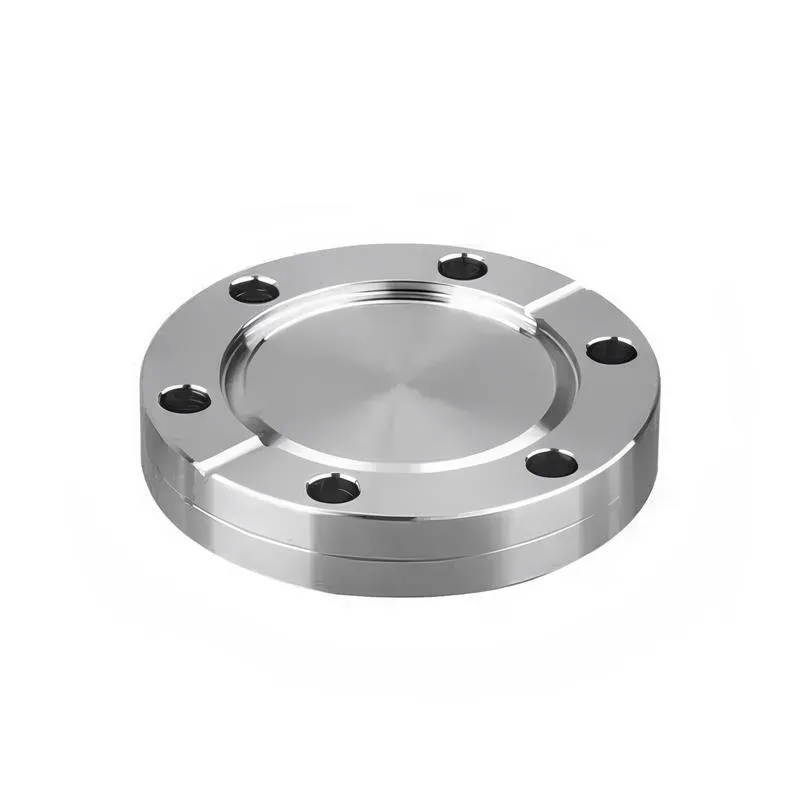
Plate Flat Welding Flange (PL), Necked Flat Welding Flange (SO), Necked Butt Welding Flange (WN), Integral Flange (IF), Socket Welding Flange (SW), Threaded Flange (Th), Butt Welding Ring Loose Flange (PJ/SE), Blind Flange (BL), Flat Welding Ring Loose Flange (PJ/PJ), and Lined Blind Flange (BL(s)).
2. **According to Petrochemical (SH) Industry Standards:** Flanges are classified as follows:
Threaded Flange (PL), Butt Welding Flange (WN), Flat Welding Flange (SO), Socket Welding Flange (SW), Loose Flange (LJ), and Blind Flange (no specific designation).
3. **According to Machinery (JB) Industry Standards:** Flanges are classified as follows:
Integral Flange, Butt Welding Flange, Plate Flat Welding Flange, Butt Welding Ring Plate Loose Flange, Flat Welding Ring Plate Loose Flange, Lap Joint Ring Plate Loose Flange, and Blind Flange.
4. **According to Connection Method/Type:** Flanges are classified as follows:
Plate Flat Welding Flange, Necked Flat Welding Flange, Necked Butt Welding Flange, Socket Welding Flange, Threaded Flange, Blind Flange, Necked Butt Welding Ring Loose Flange, Flat Welding Ring Loose Flange, Ring-Type Joint (RTJ) Flange and Blind Flange, Large-Diameter Plate Flange, Large-Diameter High-Neck Flange, Figure-8 Blind Plate, Butt Welding Ring Loose Flange, etc.
5. **According to the Component Being Connected:** Flanges can be classified into Vessel Flanges and Pipe Flanges.
6. **According to Structural Type:** Flanges include Integral Flanges, Threaded Flanges, Flat Welding Flanges, Butt Welding Flanges, Lap Joint (Loose/Swivel) Flanges, and Blind Flanges.
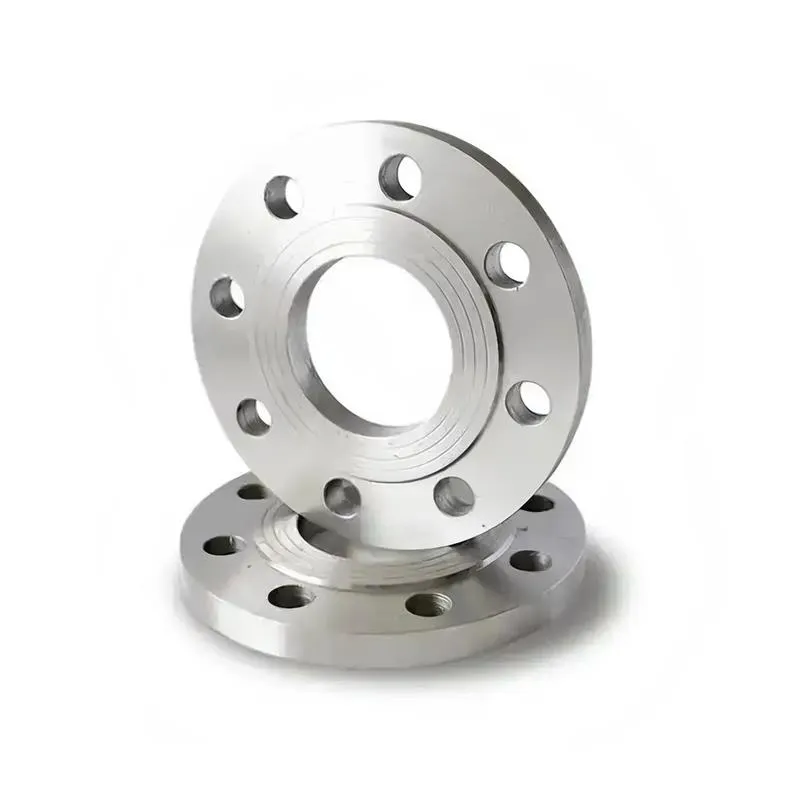
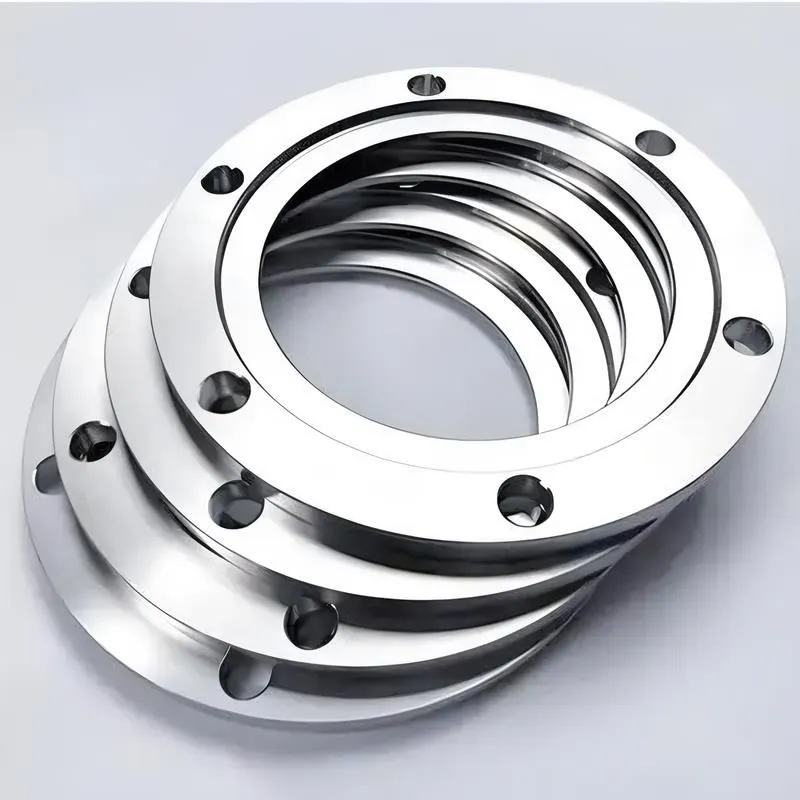
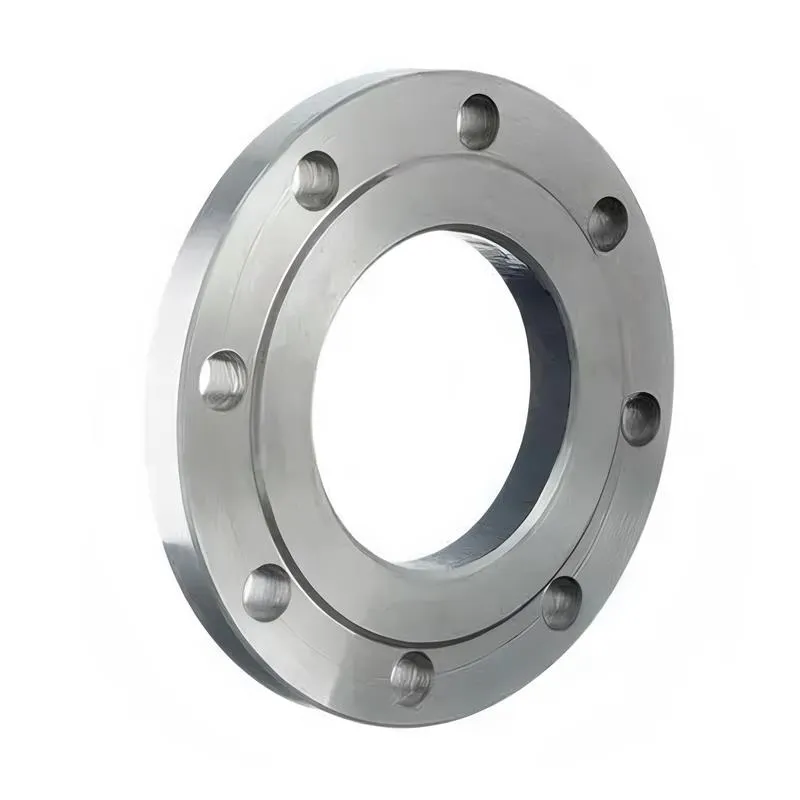
A flange—also referred to as a flange plate or rim—is a component used to connect shafts to one another, or, more commonly, to join the ends of pipes. Flanges are also utilized at the inlet and outlet ports of equipment to facilitate connections between two devices—for instance, the flange on a speed reducer. A "flange connection" or "flanged joint" refers to a detachable joint assembly comprising three interconnected elements—a flange, a gasket, and bolts—that together form a sealed structural unit. In the context of piping systems, a "pipe flange" specifically denotes a flange used for plumbing within the installation; when applied to equipment, it refers to the inlet or outlet flange of that specific device. Flanges feature a series of holes through which bolts are inserted to securely fasten the two flanges together, while a gasket placed between the flanges ensures a leak-proof seal. Flanges are broadly categorized into three types: threaded (screw-in) flanges, welded flanges, and clamp-type flanges. Flanges are invariably used in pairs; threaded flanges are suitable for low-pressure piping applications, whereas welded flanges are required for systems operating at pressures exceeding 4 kilograms per square centimeter. A sealing gasket is inserted between the two flange plates, which are then firmly secured using bolts. The thickness of a flange—as well as the specifications of the bolts used to fasten it—vary depending on the specific pressure rating required for the application. When connecting equipment such as water pumps or valves to piping systems, the corresponding connection points on these devices are often manufactured in the shape of a matching flange; this method of attachment is also referred to as a "flange connection." Generally, any connecting component that utilizes bolts to join and seal the perimeters of two flat surfaces—such as the joints in ventilation ducts—is termed a "flange"; such components may collectively be classified as "flange-type parts." However, since such a connection often constitutes merely a *portion* of a larger device—for instance, the interface between a flange and a water pump—it would be inappropriate to classify the entire water pump itself as a "flange-type part." Conversely, smaller components—such as valves—that feature such flanged interfaces may indeed be appropriately categorized as "flange-type parts."
-:-
For detailed product information, please contact sales.
-:
High-Nickel Ductile Iron Flange, corrosion resistant Product Information
-:-
For detailed product information, please contact sales.
-:
High-Nickel Ductile Iron Flange, corrosion resistant Synonyms
-:-
For detailed product information, please contact sales.
-:
High-Nickel Ductile Iron, corrosion resistant Product Information
-:-
For detailed product information, please contact sales.
-:
## **Product Introduction: High-Nickel Ductile Iron, Corrosion Resistant (Austenitic Ductile Iron)**
High-Nickel Ductile Iron, also known as **Austenitic Ductile Iron** or **Ni-Resist Ductile Iron**, represents a premium class of cast ferrous alloys engineered to deliver superior corrosion resistance combined with the mechanical strength and ductility of nodular graphite iron. By alloying with significant nickel content (typically 18-36%) and controlled additions of chromium, copper, and manganese, these materials develop a stable, non-magnetic austenitic matrix while retaining the advantageous spheroidal graphite morphology. This unique microstructure provides exceptional performance in aggressive chemical environments, high-temperature service, and applications requiring non-magnetic properties with high integrity.
These alloys are specified where standard ductile iron would suffer from rapid corrosion, graphitic corrosion, or excessive growth, and where the toughness and reliability of ductile iron are required alongside the chemical resistance of high-alloy materials.
---
### **1. Chemical Composition**
The corrosion and heat resistance are achieved through precise chemical balancing. Below is the composition range for several common grades, highlighting the role of key alloying elements.
**Typical Compositions of Major Grades:**
| Element | Grade D-2M (Type D-2) | Grade D-2M (Type D-2B) | Grade D-3M (Type D-3) | Grade D-5M (Type D-5) | Primary Function |
| :--- | :--- | :--- | :--- | :--- | :--- |
| **Nickel (Ni)** | 18.0 - 22.0% | 18.0 - 22.0% | 28.0 - 32.0% | 34.0 - 36.0% | **Austenite stabilizer**, provides base corrosion/heat resistance, improves toughness. |
| **Chromium (Cr)** | 1.75 - 2.50% | 2.75 - 3.50% | 2.75 - 3.50% | 1.75 - 2.50% | **Enhances oxidation & pitting resistance**, strengthens matrix. Higher Cr improves scaling resistance. |
| **Copper (Cu)** | 0.50 - 1.50% | ≤ 0.50% | ≤ 0.50% | ≤ 0.50% | **Improves corrosion resistance** in non-oxidizing acids (e.g., H₂SO₄) and seawater. |
| **Silicon (Si)** | 1.00 - 2.00% | 1.00 - 2.00% | 1.00 - 2.00% | 4.50 - 5.50% | **Graphitizer**, improves castability and **oxidation resistance**. High Si (D-5) gives superior acid resistance. |
| **Carbon (C)** | 2.60 - 3.00% | 2.60 - 3.00% | 2.40 - 2.90% | 2.40 - 2.90% | Ensures **nodular graphite formation** for ductility and thermal shock resistance. |
| **Manganese (Mn)** | 0.50 - 1.50% | 0.50 - 1.50% | 0.50 - 1.50% | 0.50 - 1.50% | **Neutralizes sulfur**, solid solution strengthener. |
| **Magnesium (Mg)** | 0.04 - 0.10% | 0.04 - 0.10% | 0.04 - 0.10% | 0.04 - 0.10% | **Essential nodularizing element** for spheroidal graphite. |
| **Iron (Fe)** | Balance | Balance | Balance | Balance | Base metal. |
---
### **2. Physical & Mechanical Properties**
The combination of an austenitic matrix and nodular graphite results in a distinct and favorable property profile.
| Property | Typical Value / Description |
| :--- | :--- |
| **Microstructure** | **Austenitic matrix with spheroidal graphite (nodules)** – Key differentiator from flake graphite Ni-Resist. |
| **Density** | ~7.3 g/cm³ (varies slightly with composition). |
| **Tensile Strength** | **415 - 550 MPa (60 - 80 ksi)** – Significantly higher than high-nickel gray iron. |
| **Yield Strength (0.2% Offset)** | **205 - 345 MPa (30 - 50 ksi)** |
| **Elongation** | **6 - 25%** (Varies by grade) – The hallmark property, providing **real ductility and impact resistance**. |
| **Hardness** | 140 - 250 HB |
| **Impact Resistance (Charpy V-Notch)** | **15 - 30 J (11 - 22 ft-lbf)** at room temperature – Good toughness. |
| **Thermal Expansion** | High (~18 x 10⁻⁶/°C), similar to austenitic stainless steels. |
| **Magnetic Properties** | **Non-magnetic** (austenitic). |
| **Machinability** | **Good** – Similar to or slightly better than austenitic stainless steels. Superior to many high-alloy cast materials. |
| **Corrosion Resistance** | **Excellent** – Resists seawater, alkalis, dilute sulfuric, phosphoric, and acetic acids. **Immune to graphitic corrosion**. High-Si grades (e.g., D-5) excel in hot, concentrated acids. |
---
### **3. Key Product Advantages & Characteristics**
* **Superior Strength & Ductility:** Combines high tensile strength with **meaningful elongation**, allowing for design under higher stresses and resistance to mechanical shock.
* **Exceptional Corrosion Resistance:** Outstanding resistance to a wide spectrum of corrosive media, with specific grades optimized for acids, alkalis, or seawater. **Fully resistant to graphitization.**
* **High-Temperature Performance:** Maintains strength and resists oxidation, scaling, and growth up to **~800°C (1470°F)** for many grades. High-Ni, high-Cr grades perform best.
* **Non-Magnetic & Dimensionally Stable:** Ideal for electrical/electronic housings and applications requiring thermal cycling stability.
* **Good Castability & Weldability:** Can be cast into complex shapes. Most grades are weldable with correct procedures and matching filler metals.
---
### **4. Product Applications**
High-Nickel Ductile Iron is the material of choice for **high-integrity components** in severe service environments:
* **Pumps, Valves & Compressors:** Casings, impellers, valve bodies, and trim for handling corrosive slurries, seawater, and aggressive chemicals.
* **Marine & Offshore:** High-strength seawater pump castings, propeller shaft sleeves, thrust washers, subsea components.
* **Chemical & Petrochemical:** Reactor parts, mixer blades, distillation column internals, heat exchanger parts, fittings for acid service.
* **Power Generation:** Critical components in **Flue Gas Desulfurization (FGD)** systems, such as absorber tower internals, agitators, and fan housings.
* **High-Temperature Service:** Turbocharger housings, exhaust manifolds, furnace parts, and hardware for heat treatment.
* **Specialized Applications:** Non-magnetic drill collar sleeves in oil & gas, components for cryogenic service, food processing equipment.
---
### **5. International Standards**
These materials are covered by comprehensive international standards, ensuring global consistency.
| Standard | Title / Scope | Common Designations |
| :--- | :--- | :--- |
| **ASTM A439** | *Standard Specification for Austenitic Ductile Iron Castings* | **Type D-2, D-2B, D-3, D-3A, D-4, D-5, D-5B** (The primary ASTM standard). |
| **ISO 2892** | *Austenitic cast irons* | **JS/CR/A20Ni2Cr2** (e.g., ISO 2892-JS/CR/A20Ni2Cr2 for a Grade D-2 equivalent). The global ISO designation system. |
| **EN 13835** | *Founding - Austenitic cast irons* (European Standard) | **EN-GJSA-XNiSiCr20-5-2** (e.g., for a high-Si, high-Ni type). Provides a systematic material number and symbol. |
| **DIN EN 13835** | German adoption of EN 13835. | Same as EN 13835. |
| **JIS G5513** | *Austenitic spheroidal graphite iron castings* (Japanese) | **FCD-NiCr202** (for D-2 type), **FCD-NiSiCr2052** (for D-5 type). |
---
### **Conclusion**
High-Nickel Ductile Iron is a **high-performance engineering alloy** that successfully merges the **corrosion and heat resistance of high-nickel alloys** with the **proven mechanical strength, ductility, and castability of ductile iron**. Its nodular graphite structure is the critical feature that differentiates it from its gray iron counterpart, providing **reliability in demanding, high-stress corrosive applications**. When specified according to internationally recognized standards such as **ASTM A439 or ISO 2892**, it offers designers a robust, cost-effective, and long-lasting solution for the most challenging industrial environments.
-:-
For detailed product information, please contact sales.
-:
High-Nickel Ductile Iron, corrosion resistant Specification
Dimensions
Size:
Diameter 20-1000 mm Length <6480 mm
Size:We can customized as required
Standard:
Per your request or drawing
We can customized as required
Properties(Theoretical)
Chemical Composition
-:-
For detailed product information, please contact sales.
-:
High-Nickel Ductile Iron, corrosion resistant Properties
-:-
For detailed product information, please contact sales.
-:
Applications of High-Nickel Ductile Iron Flange, corrosion resistant
-:-
For detailed product information, please contact sales.
-:
Chemical Identifiers High-Nickel Ductile Iron Flange, corrosion resistant
-:-
For detailed product information, please contact sales.
-:
Packing of High-Nickel Ductile Iron Flange, corrosion resistant
-:-
For detailed product information, please contact sales.
-:
Standard Packing:
-:-
For detailed product information, please contact sales.
-:
Typical bulk packaging includes palletized plastic 5 gallon/25 kg. pails, fiber and Steel Flange drums to 1 ton super sacks in full container (FCL) or truck load (T/L) quantities. Research and sample quantities and hygroscopic, oxidizing or other air sensitive materials may be packaged under argon or vacuum. Solutions are packaged in polypropylene, plastic or glass jars up to palletized 2951 gallon liquid totes Special package is available on request. E FORUs’ is carefully handled to minimize damage during storage and transportation and to preserve the quality of our products in their original condition