1,We Manufacturing processes are primarily classified into four types:
1:Forging,
2:Casting,
3:Cutting,
4:Rolling.
2,We can manufacture in accordance with these standards.
Standards:
GB Series (Chinese Standards), JB Series (Machinery Standards), HG Series (Chemical Industry Standards), ASME B16.5 (American Standards), BS4504 (British Standards), DIN (German Standards), and JIS (Japanese Standards).
Internationally, there are two primary systems of pipe flange standards: the European system, represented by the German DIN standards (including those of the former Soviet Union), and the American system, represented by the US ANSI pipe flange standards. Other common standards include: the Chinese Ministry of Machinery Industry standards (JB series), the Ministry of Chemical Industry standards (HG series), the Chinese National Standard *GB/T 9112–9124-2010 Steel Pipe Flanges*, as well as US standards (ASME B16.5), British standards (BS4504), German standards (DIN), Japanese standards (JIS), and marine standards (CBM), among others.
The nominal pressure ratings for the PN series are designated by "PN" and comprise the following nine levels: PN2.5, PN6, PN10, PN16, PN25, PN40, PN63, PN100, and PN160.
The nominal pressure ratings for the Class series are designated by "Class" and comprise the following six levels: Class150, Class300, Class600, Class900, Class1500, and Class2500.
Flange Classification
1. **According to Chemical Industry Standards:** Flanges are classified as follows:
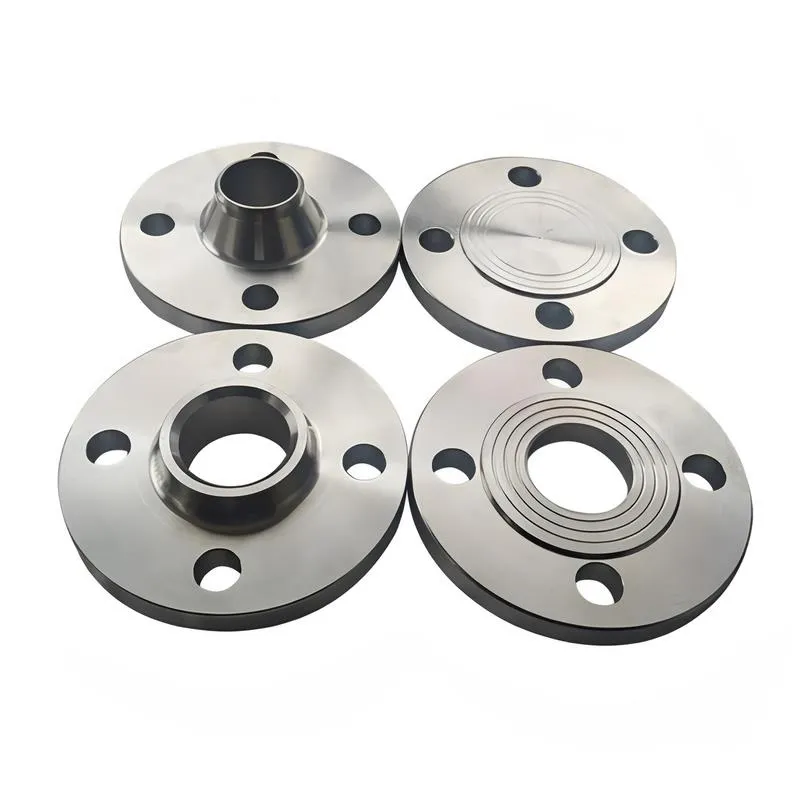
Plate Flat Welding Flange (PL), Necked Flat Welding Flange (SO), Necked Butt Welding Flange (WN), Integral Flange (IF), Socket Welding Flange (SW), Threaded Flange (Th), Butt Welding Ring Loose Flange (PJ/SE), Blind Flange (BL), Flat Welding Ring Loose Flange (PJ/PJ), and Lined Blind Flange (BL(s)).
2. **According to Petrochemical (SH) Industry Standards:** Flanges are classified as follows:
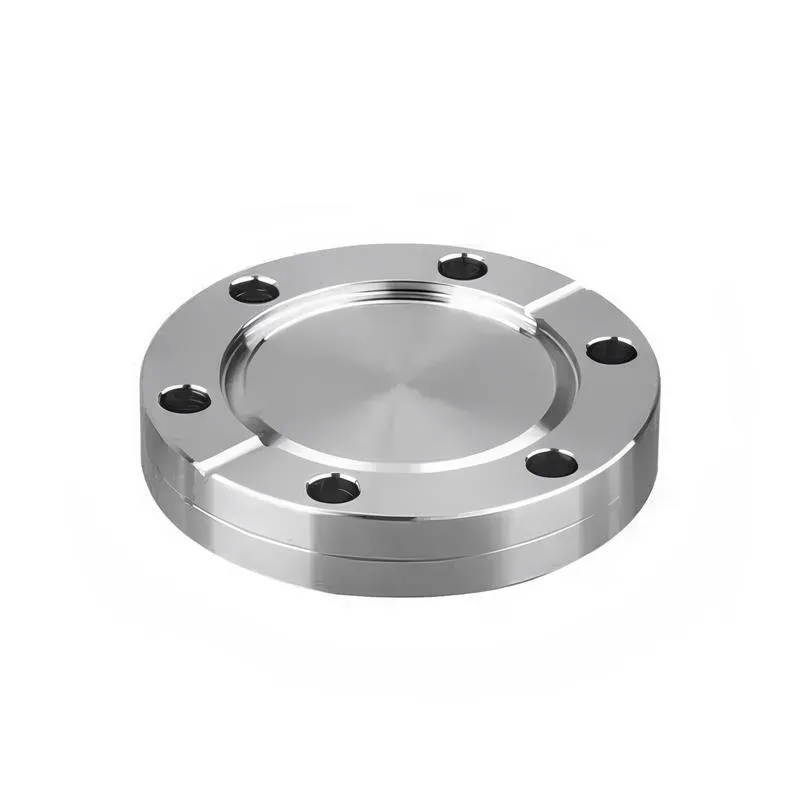
Threaded Flange (PL), Butt Welding Flange (WN), Flat Welding Flange (SO), Socket Welding Flange (SW), Loose Flange (LJ), and Blind Flange (no specific designation).
3. **According to Machinery (JB) Industry Standards:** Flanges are classified as follows:
Integral Flange, Butt Welding Flange, Plate Flat Welding Flange, Butt Welding Ring Plate Loose Flange, Flat Welding Ring Plate Loose Flange, Lap Joint Ring Plate Loose Flange, and Blind Flange.
4. **According to Connection Method/Type:** Flanges are classified as follows:
Plate Flat Welding Flange, Necked Flat Welding Flange, Necked Butt Welding Flange, Socket Welding Flange, Threaded Flange, Blind Flange, Necked Butt Welding Ring Loose Flange, Flat Welding Ring Loose Flange, Ring-Type Joint (RTJ) Flange and Blind Flange, Large-Diameter Plate Flange, Large-Diameter High-Neck Flange, Figure-8 Blind Plate, Butt Welding Ring Loose Flange, etc.
5. **According to the Component Being Connected:** Flanges can be classified into Vessel Flanges and Pipe Flanges.
6. **According to Structural Type:** Flanges include Integral Flanges, Threaded Flanges, Flat Welding Flanges, Butt Welding Flanges, Lap Joint (Loose/Swivel) Flanges, and Blind Flanges.
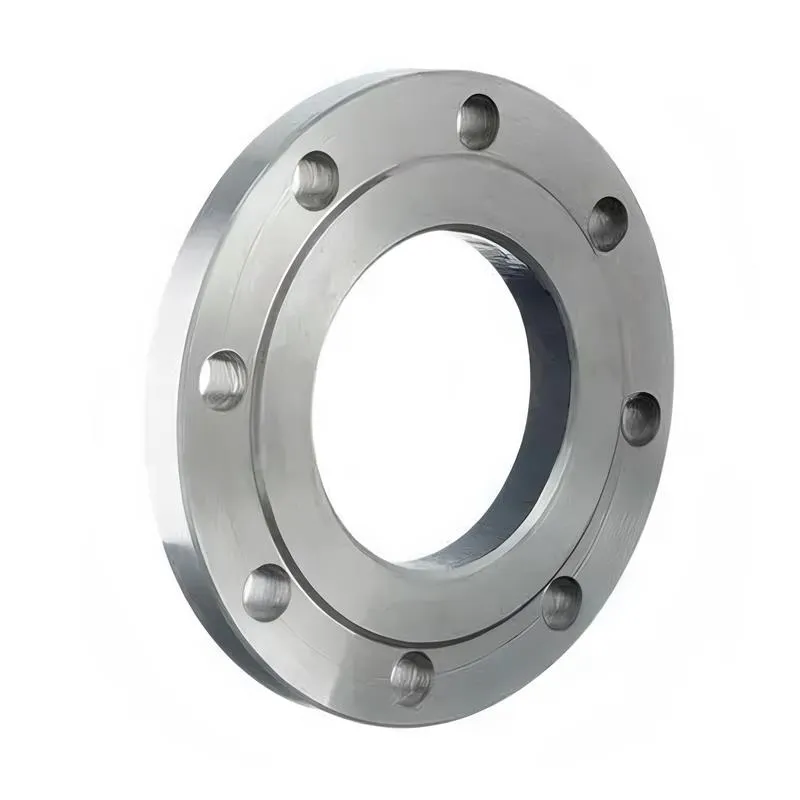
A flange—also referred to as a flange plate or rim—is a component used to connect shafts to one another, or, more commonly, to join the ends of pipes. Flanges are also utilized at the inlet and outlet ports of equipment to facilitate connections between two devices—for instance, the flange on a speed reducer. A "flange connection" or "flanged joint" refers to a detachable joint assembly comprising three interconnected elements—a flange, a gasket, and bolts—that together form a sealed structural unit. In the context of piping systems, a "pipe flange" specifically denotes a flange used for plumbing within the installation; when applied to equipment, it refers to the inlet or outlet flange of that specific device. Flanges feature a series of holes through which bolts are inserted to securely fasten the two flanges together, while a gasket placed between the flanges ensures a leak-proof seal. Flanges are broadly categorized into three types: threaded (screw-in) flanges, welded flanges, and clamp-type flanges. Flanges are invariably used in pairs; threaded flanges are suitable for low-pressure piping applications, whereas welded flanges are required for systems operating at pressures exceeding 4 kilograms per square centimeter. A sealing gasket is inserted between the two flange plates, which are then firmly secured using bolts. The thickness of a flange—as well as the specifications of the bolts used to fasten it—vary depending on the specific pressure rating required for the application. When connecting equipment such as water pumps or valves to piping systems, the corresponding connection points on these devices are often manufactured in the shape of a matching flange; this method of attachment is also referred to as a "flange connection." Generally, any connecting component that utilizes bolts to join and seal the perimeters of two flat surfaces—such as the joints in ventilation ducts—is termed a "flange"; such components may collectively be classified as "flange-type parts." However, since such a connection often constitutes merely a *portion* of a larger device—for instance, the interface between a flange and a water pump—it would be inappropriate to classify the entire water pump itself as a "flange-type part." Conversely, smaller components—such as valves—that feature such flanged interfaces may indeed be appropriately categorized as "flange-type parts."
-:-
For detailed product information, please contact sales.
-:
ASTM class 40 Standard gray Iron Flange test bars, as cast Product Information
-:-
For detailed product information, please contact sales.
-:
ASTM class 40 Standard gray Iron Flange test bars, as cast Synonyms
-:-
For detailed product information, please contact sales.
-:
ASTM class 40 Standard gray iron test bars, as cast Product Information
-:-
For detailed product information, please contact sales.
-:
## **Product Introduction: ASTM Class 40 Standard Gray Iron Test Bars, As-Cast**
ASTM Class 40 Standard Gray Iron Test Bars, in the as-cast condition, represent the ultimate benchmark for certifying the highest tier of standardized gray cast iron. These meticulously produced reference specimens serve as the conclusive empirical proof that a production melt achieves the extraordinary minimum tensile strength of 40,000 psi (276 MPa), placing it at the absolute frontier of conventional flake graphite iron performance. The "Class 40" designation denotes an iron engineered for the most demanding structural and wear applications, characterized by an ultra-fine, fully alloyed pearlitic matrix with refined graphite. The "As-Cast" condition is paramount, confirming that these near-theoretical properties are attained directly through master-level foundry process control—including high-purity charges, advanced alloying, and hyper-controlled solidification—without the safety net of post-casting heat treatment.
These test bars are the definitive arbiters of material excellence, providing the critical, objective link between an extreme-performance specification and the reality of molten metal processing for mission-critical components.
---
### **1. Chemical Composition of the Base Iron**
Achieving consistent Class 40 properties in the as-cast state requires laboratory-precision chemistry with strategic, multi-element alloying.
**Engineered Composition Profile (for Class 40 As-Cast Iron):**
| Element | Content (%) | Role in Achieving Class 40 Properties |
| :--- | :--- | :--- |
| **Carbon (C)** | **2.8 - 3.1** | Operated at the minimal threshold for stable gray iron formation. Maximizes the strong metallic matrix, minimizing graphite to approach a "steel-like" structure while retaining essential graphite benefits. |
| **Silicon (Si)** | **1.4 - 1.8** | Severely restricted. Provides just enough for inoculation response while forcefully suppressing any ferrite nucleation, driving a 100% fine pearlitic/bainitic transformation. |
| **Manganese (Mn)** | **0.8 - 1.2** | Critical transformation enforcer. High levels guarantee complete suppression of ferrite and ensure a fully pearlitic matrix even under variable cooling conditions. |
| **Chromium (Cr)** | **0.25 - 0.50** | **Essential alloyant.** Provides solid solution strengthening, forms fine (Cr,Fe)₇C₃ carbides for dispersion hardening, dramatically increases hardenability, and enhances oxidation resistance. A non-optional addition for Class 40. |
| **Molybdenum (Mo)** | **0.15 - 0.35** | **Key performance enhancer.** Synergizes with Cr to prevent pearlite coarsening, significantly boosts hardenability for thick sections, and improves elevated temperature strength and creep resistance. |
| **Copper (Cu)** | **0.40 - 0.80** | **Primary solid solution strengthener.** Potently strengthens the ferrite lamellae within pearlite, promotes matrix uniformity, and improves corrosion resistance. Critical for reaching the 276 MPa threshold. |
| **Nickel (Ni)** | **0.10 - 0.30** (Optional) | Used to improve toughness and hardenability without promoting graphite coarsening. |
| **Phosphorus (P)** | **≤ 0.06** | **Ultra-low limit.** Achieved via high-purity charges. Essential for maximizing thermal shock resistance and eliminating brittle intergranular networks that would cause premature failure at this strength level. |
| **Sulfur (S)** | **≤ 0.08** | **Stringently controlled.** Low levels improve hot ductility and reduce the risk of micro-shrinkage in the dense, low-graphite matrix. |
| **Iron (Fe)** | Balance (High Purity) | Base metal of controlled, low-residual composition. |
**Key Metallurgical Note:** The Carbon Equivalent (CE) for Class 40 iron is exceptionally low, typically **3.0 - 3.4**. This, combined with the powerful chilling effect of Cr and Mo, forces rapid solidification with significant undercooling. The result is a microstructure of **extremely fine pearlite (or pearlite/bainite mixtures) with undercooled (Type D) graphite**, which provides the necessary strength but demands exceptional foundry skill to avoid chill (white iron) formation.
---
### **2. Physical & Mechanical Properties (of the Test Bar & Material)**
The destruction of this test bar in a calibrated tensile machine is a high-stakes event that certifies an entire melt for premium applications.
| Property | Value / Description | Specification (ASTM A48) |
| :--- | :--- | :--- |
| **Tensile Strength, min** | **276 MPa (40,000 psi)** | **The Definitive, High-Performance Threshold.** The test bar must conclusively meet or exceed this value. |
| **Typical Tensile Strength** | 280 - 350 MPa (41 - 51 ksi) | - |
| **Hardness (Brinell)** | **~255 HB (Typical Range: 235 - 285 HB)** | Very high hardness is inherent to the microstructure. Often specified with tight tolerances. |
| **Microstructure (As-Cast)** | **Fully pearlitic or pearlitic/bainitic matrix with very fine, undercooled (Type D) and/or finely dispersed Type A graphite.** Matrix lamellar spacing is sub-micron. No free ferrite is permissible. | Microstructural conformance is almost always a mandatory supplementary requirement. |
| **Condition** | **As-Cast.** The properties are a direct testament to the foundry's ability to control solidification science at an advanced level. | - |
| **Test Bar Geometry** | Machined to aerospace-level tolerances from the standardized cast blank. Surface finish on the gauge length is critical to prevent premature failure from micro-notches. | Specified in ASTM A48. |
---
### **3. Key Purpose & Characteristics**
* **Certification for Extreme-Duty Applications:** Validates material for use in components where the 276 MPa minimum is a core design input for safety and performance (e.g., high-performance brakes, heavy-duty diesel heads).
* **Ultimate Foundry Process Validation:** Successfully producing as-cast Class 40 test bars consistently is a hallmark of world-class foundry capability, demonstrating mastery over inoculation, alloying, and cooling kinetics.
* **Risk Mitigation for High-Value Castings:** Provides unambiguous proof of material integrity for large, expensive, or safety-critical castings where failure cost is catastrophic.
* **Benchmark for Proprietary Alloys:** Serves as the standardized reference point against which proprietary ultra-high-strength gray irons are compared and validated.
---
### **4. Application & Use**
The use of Class 40 test bars is integral to qualification and release protocols for premium castings.
* **Mandatory Source Inspection & Lot Release:** For contracts specifying ASTM A48 Class 40, the testing and certification of these bars are non-negotiable prerequisites for shipment. Customer witnessing of tests is common.
* **Qualification of Foundry Processes:** A new foundry line or major process change must undergo a rigorous qualification run, producing a statistically significant number of Class 40 test bars to prove capability before production commences.
* **Research & Development Benchmark:** Used in metallurgical R&D to evaluate new alloy combinations or inoculation techniques aimed at pushing the boundaries of as-cast gray iron strength.
* **Arbitration Standard:** In the rare event of a material property dispute, the results from the certified, retained broken test bar halves serve as the primary evidence.
---
### **5. Governing Standards & Specifications**
Conformance is demonstrated through a rigorous, standardized chain of evidence.
| Standard | Title / Scope | Relevance to Class 40 As-Cast Test Bars |
| :--- | :--- | :--- |
| **ASTM A48/A48M** | *Standard Specification for Gray Iron Castings* | The governing specification, establishing the Class 40 grade and its 276 MPa requirement. |
| **ASTM E8/E8M** | *Standard Test Methods for Tension Testing of Metallic Materials* | Dictates the precise, calibrated methodology for the tensile test. |
| **ASTM A247** | *Evaluating Microstructure of Graphite in Iron Castings* | Routinely invoked to specify acceptable graphite forms (e.g., Types A and D, no Type C) and matrix requirements. |
| **ASTM A644** | *Terminology Relating to Iron Castings* | Ensures standardized language in test reports. |
| **ISO 185** | *Grey cast irons — Classification* | The international system's closest equivalent is **ISO Grade 350**, as Grade 400 is not commonly defined for flake graphite iron. Class 40 is a specialized, beyond-standard grade. |
| **SAE J431** | *Automotive Gray Iron Castings* | The related automotive specification is **SAE G4000**, representing a similar performance tier. |
**Certification & Reporting:** The **Certified Test Report** is a controlled, traceable document that must include, at minimum:
1. Full traceability to melt and pour.
2. ASTM A48 Class 40 designation.
3. Actual tensile strength (MPa/psi).
4. Confirmation of meeting the 276 MPa minimum.
5. Brinell hardness results.
6. Often, a statement of microstructural conformance per ASTM A247 or a customer-specific standard.
7. Signature of the responsible Quality or Metallurgy authority.
---
### **Conclusion**
ASTM Class 40 Standard Gray Iron Test Bars (As-Cast) are the **pinnacle of standardized material verification in the cast iron industry**. They represent the convergence of advanced metallurgical science and precision manufacturing, validating that gray iron can reliably achieve mechanical properties once thought exclusive to steel. For engineers designing the most demanding components and for foundries pushing the boundaries of their art, these test bars provide the indispensable, objective proof of capability. They are more than quality tools; they are the **material passports** that allow high-integrity castings to enter service in applications where performance and safety are paramount. In certifying the extreme, they uphold the very highest standards of engineering reliability.
-:-
For detailed product information, please contact sales.
-:
ASTM class 40 Standard gray iron test bars, as cast Specification
Dimensions
Size:
Diameter 20-1000 mm Length <6512 mm
Size:We can customized as required
Standard:
Per your request or drawing
We can customized as required
Properties(Theoretical)
Chemical Composition
-:-
For detailed product information, please contact sales.
-:
ASTM class 40 Standard gray iron test bars, as cast Properties
-:-
For detailed product information, please contact sales.
-:
Applications of ASTM class 40 Standard gray Iron Flange test bars, as cast
-:-
For detailed product information, please contact sales.
-:
Chemical Identifiers ASTM class 40 Standard gray Iron Flange test bars, as cast
-:-
For detailed product information, please contact sales.
-:
Packing of ASTM class 40 Standard gray Iron Flange test bars, as cast
-:-
For detailed product information, please contact sales.
-:
Standard Packing:
-:-
For detailed product information, please contact sales.
-:
Typical bulk packaging includes palletized plastic 5 gallon/25 kg. pails, fiber and Steel Flange drums to 1 ton super sacks in full container (FCL) or truck load (T/L) quantities. Research and sample quantities and hygroscopic, oxidizing or other air sensitive materials may be packaged under argon or vacuum. Solutions are packaged in polypropylene, plastic or glass jars up to palletized 2983 gallon liquid totes Special package is available on request. E FORUs’ is carefully handled to minimize damage during storage and transportation and to preserve the quality of our products in their original condition