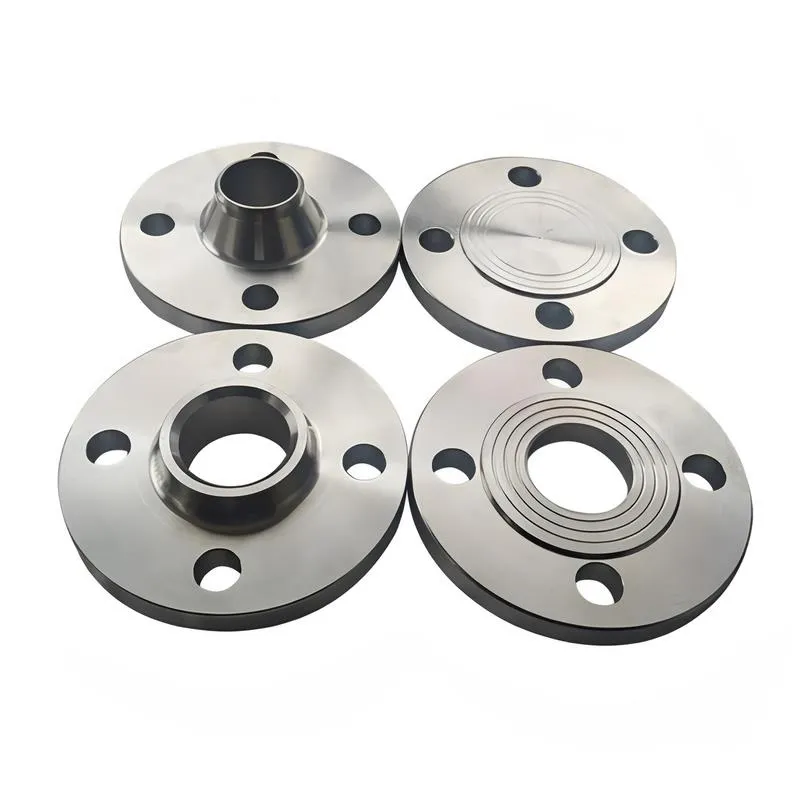
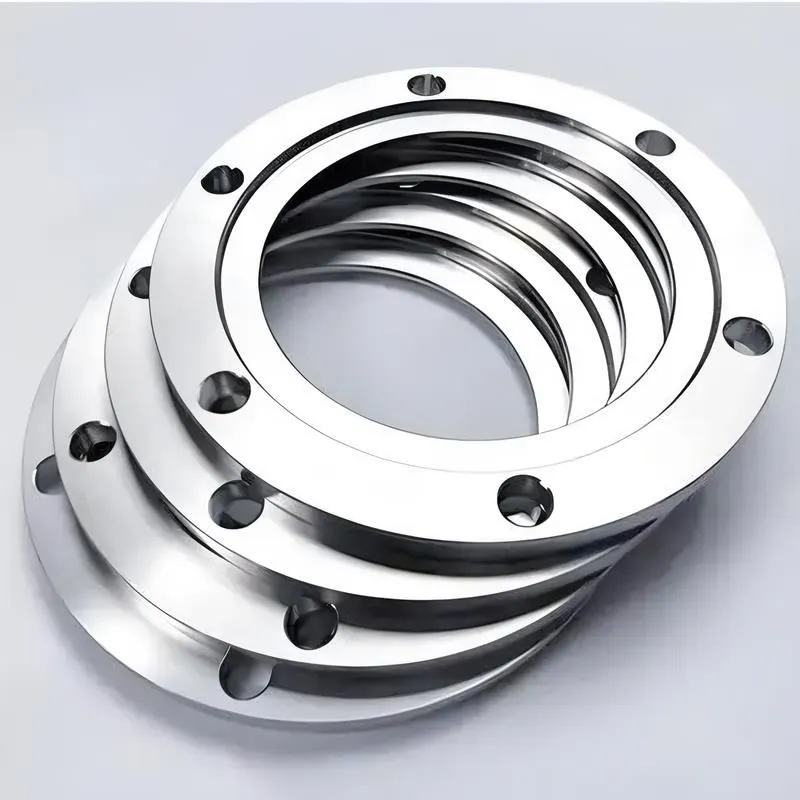
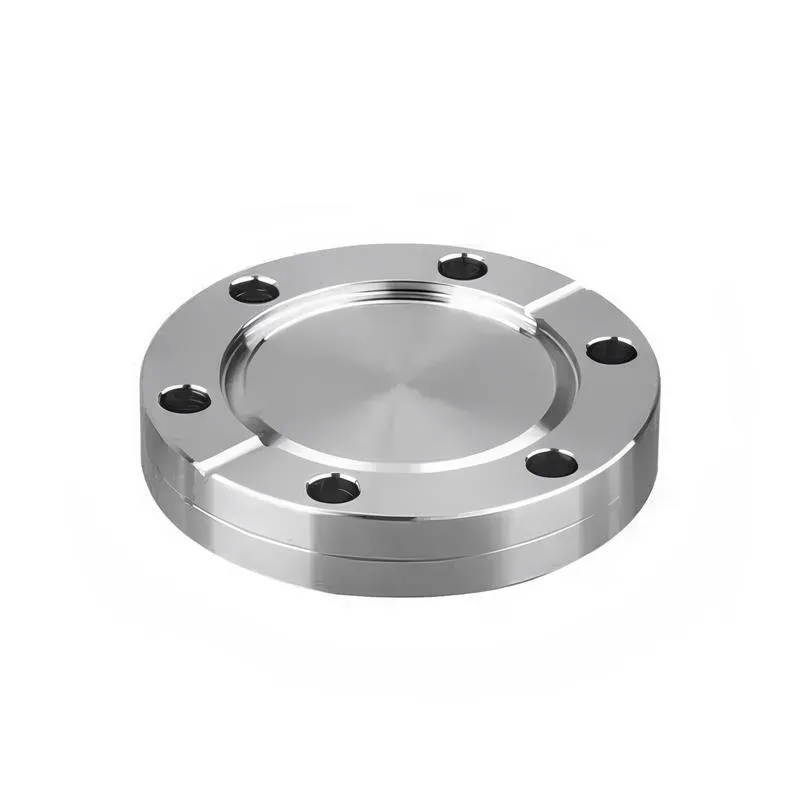
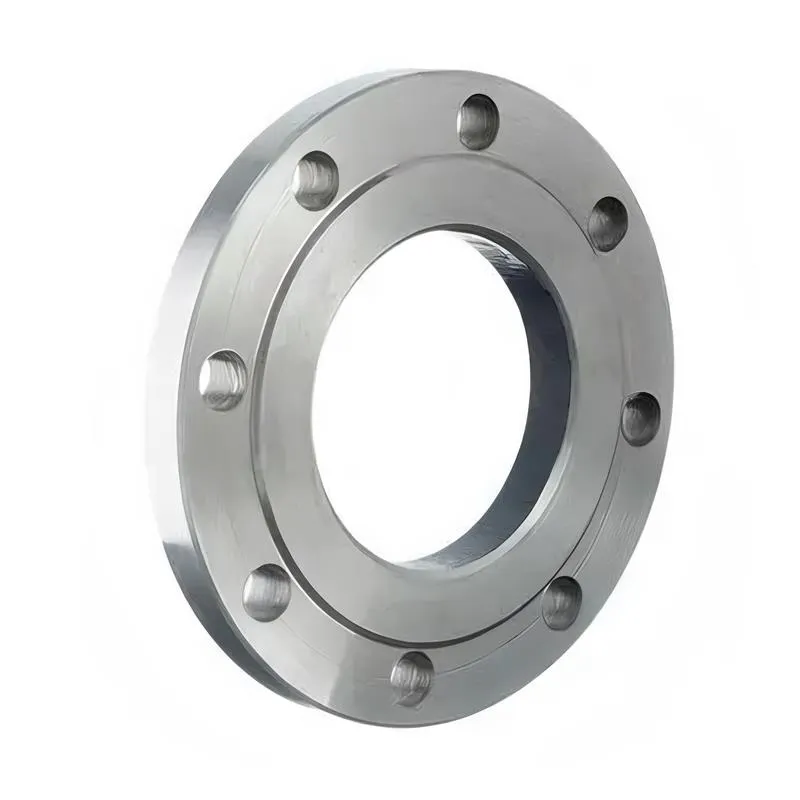
1,We Manufacturing processes are primarily classified into four types:
1:Forging,
2:Casting,
3:Cutting,
4:Rolling.
2,We can manufacture in accordance with these standards.
Standards:
GB Series (Chinese Standards), JB Series (Machinery Standards), HG Series (Chemical Industry Standards), ASME B16.5 (American Standards), BS4504 (British Standards), DIN (German Standards), and JIS (Japanese Standards).
Internationally, there are two primary systems of pipe flange standards: the European system, represented by the German DIN standards (including those of the former Soviet Union), and the American system, represented by the US ANSI pipe flange standards. Other common standards include: the Chinese Ministry of Machinery Industry standards (JB series), the Ministry of Chemical Industry standards (HG series), the Chinese National Standard *GB/T 9112–9124-2010 Steel Pipe Flanges*, as well as US standards (ASME B16.5), British standards (BS4504), German standards (DIN), Japanese standards (JIS), and marine standards (CBM), among others.
The nominal pressure ratings for the PN series are designated by "PN" and comprise the following nine levels: PN2.5, PN6, PN10, PN16, PN25, PN40, PN63, PN100, and PN160.
The nominal pressure ratings for the Class series are designated by "Class" and comprise the following six levels: Class150, Class300, Class600, Class900, Class1500, and Class2500.
Flange Classification
1. **According to Chemical Industry Standards:** Flanges are classified as follows:
Plate Flat Welding Flange (PL), Necked Flat Welding Flange (SO), Necked Butt Welding Flange (WN), Integral Flange (IF), Socket Welding Flange (SW), Threaded Flange (Th), Butt Welding Ring Loose Flange (PJ/SE), Blind Flange (BL), Flat Welding Ring Loose Flange (PJ/PJ), and Lined Blind Flange (BL(s)).
2. **According to Petrochemical (SH) Industry Standards:** Flanges are classified as follows:
Threaded Flange (PL), Butt Welding Flange (WN), Flat Welding Flange (SO), Socket Welding Flange (SW), Loose Flange (LJ), and Blind Flange (no specific designation).
3. **According to Machinery (JB) Industry Standards:** Flanges are classified as follows:
Integral Flange, Butt Welding Flange, Plate Flat Welding Flange, Butt Welding Ring Plate Loose Flange, Flat Welding Ring Plate Loose Flange, Lap Joint Ring Plate Loose Flange, and Blind Flange.
4. **According to Connection Method/Type:** Flanges are classified as follows:
Plate Flat Welding Flange, Necked Flat Welding Flange, Necked Butt Welding Flange, Socket Welding Flange, Threaded Flange, Blind Flange, Necked Butt Welding Ring Loose Flange, Flat Welding Ring Loose Flange, Ring-Type Joint (RTJ) Flange and Blind Flange, Large-Diameter Plate Flange, Large-Diameter High-Neck Flange, Figure-8 Blind Plate, Butt Welding Ring Loose Flange, etc.
5. **According to the Component Being Connected:** Flanges can be classified into Vessel Flanges and Pipe Flanges.
6. **According to Structural Type:** Flanges include Integral Flanges, Threaded Flanges, Flat Welding Flanges, Butt Welding Flanges, Lap Joint (Loose/Swivel) Flanges, and Blind Flanges.
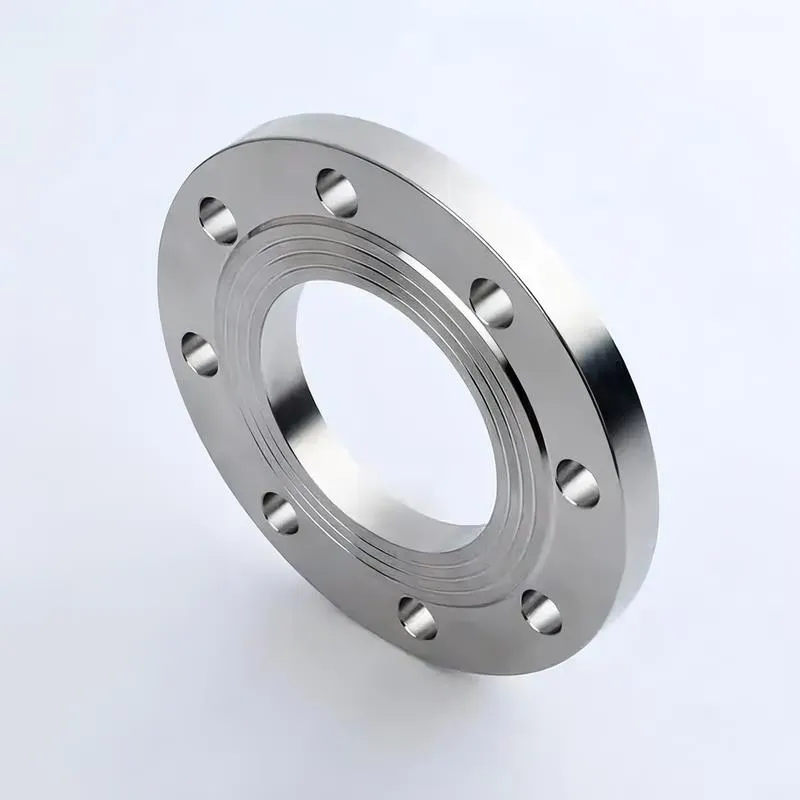
A flange—also referred to as a flange plate or rim—is a component used to connect shafts to one another, or, more commonly, to join the ends of pipes. Flanges are also utilized at the inlet and outlet ports of equipment to facilitate connections between two devices—for instance, the flange on a speed reducer. A "flange connection" or "flanged joint" refers to a detachable joint assembly comprising three interconnected elements—a flange, a gasket, and bolts—that together form a sealed structural unit. In the context of piping systems, a "pipe flange" specifically denotes a flange used for plumbing within the installation; when applied to equipment, it refers to the inlet or outlet flange of that specific device. Flanges feature a series of holes through which bolts are inserted to securely fasten the two flanges together, while a gasket placed between the flanges ensures a leak-proof seal. Flanges are broadly categorized into three types: threaded (screw-in) flanges, welded flanges, and clamp-type flanges. Flanges are invariably used in pairs; threaded flanges are suitable for low-pressure piping applications, whereas welded flanges are required for systems operating at pressures exceeding 4 kilograms per square centimeter. A sealing gasket is inserted between the two flange plates, which are then firmly secured using bolts. The thickness of a flange—as well as the specifications of the bolts used to fasten it—vary depending on the specific pressure rating required for the application. When connecting equipment such as water pumps or valves to piping systems, the corresponding connection points on these devices are often manufactured in the shape of a matching flange; this method of attachment is also referred to as a "flange connection." Generally, any connecting component that utilizes bolts to join and seal the perimeters of two flat surfaces—such as the joints in ventilation ducts—is termed a "flange"; such components may collectively be classified as "flange-type parts." However, since such a connection often constitutes merely a *portion* of a larger device—for instance, the interface between a flange and a water pump—it would be inappropriate to classify the entire water pump itself as a "flange-type part." Conversely, smaller components—such as valves—that feature such flanged interfaces may indeed be appropriately categorized as "flange-type parts."
-:-
For detailed product information, please contact sales.
-:
High Silicon Ductile Iron Flange at RT 4Si-2.0Mo nominal alloy content Product Information
-:-
For detailed product information, please contact sales.
-:
High Silicon Ductile Iron Flange at RT 4Si-2.0Mo nominal alloy content Synonyms
-:-
For detailed product information, please contact sales.
-:
High Silicon Ductile Iron at RT 4Si-2.0Mo nominal alloy content Product Information
-:-
For detailed product information, please contact sales.
-:
### **Product Technical Data Sheet: High Silicon Ductile Iron – RT Series (Nominal 4% Si - 2.0% Mo Alloy)**
---
#### **1. Product Overview**
**High Silicon Ductile Iron (HSDI) with nominal 4% Silicon and 2.0% Molybdenum (4Si-2.0Mo)** represents the **pinnacle of ferritic ductile iron metallurgy for extreme service**, pushing the very limits of solid-solution and precipitation strengthening. This ultra-high-performance alloy is engineered for applications where **absolute maximum creep resistance, unparalleled microstructural stability under sustained thermal-mechanical stress, and superior oxidation resistance at the threshold of ferritic stability (900-1000°C)** are critical. With the highest commercially viable molybdenum content in its class, this material is a **strategic alternative to high-nickel austenitic cast irons, nickel-based superalloys, and certain wrought heat-resistant steels**, offering significant cost and weight advantages for specialized high-temperature components where its unique balance of properties is indispensable.
---
#### **2. Governing Standards & Specifications**
This alloy operates at the frontier of material technology, governed by highly specialized and often proprietary standards.
* **Primary References:**
* **Advanced Proprietary/R&D Alloys:** Typically designated under specific research or commercial codes (e.g., **RT-4Mo2**, **Super-SiMo**). Represents the upper limit of standard SiMo-type ductile iron families.
* **Framework & Custom Standards:** While it conceptually fits within the **ISO 1083 / EN 1563** framework for alloyed spheroidal graphite irons, its specification is invariably a **custom, application-driven document** co-developed between the foundry and end-user.
* **Key Performance & Testing Standards:** ASTM E8/E21 (Tensile), E139/E292 (Creep & Stress Rupture), G54 (Oxidation), with an absolute requirement for **long-duration (1,000-10,000+ hour) validation testing**.
---
#### **3. Typical Chemical Composition**
The composition is a precise metallurgical recipe, optimized for peak high-temperature performance with extreme control over all elements.
| Element | Target Range (wt.%) | Critical Role & Rationale |
| :--- | :--- | :--- |
| **Carbon (C)** | **2.5 - 2.9** | **Very aggressively controlled.** Essential to balance the extreme graphitizing effect of high Si and Mo, preventing excessive carbon equivalent (>4.4), ensuring casting soundness, and avoiding the formation of primary or massive eutectic carbides which are detrimental to toughness. |
| **Silicon (Si)** | **3.8 - 4.2 (Nominal 4.0)** | **Fundamental Matrix Strengthener.** Provides **intense solid-solution strengthening**, dramatically raises the Ac1 transformation temperature to near **1000°C**, and ensures the formation of a highly protective, self-healing SiO₂-based oxide layer for **long-term oxidation resistance** in severe environments. |
| **Molybdenum (Mo)** | **1.9 - 2.1 (Nominal 2.0)** | **Ultimate Precipitation Strengthener.** At this level, Mo provides maximum **solid-solution strengthening** and promotes a dense, homogeneous dispersion of ultra-fine, highly stable Mo-rich carbides (M₆C, M₂₃C₆). This **maximizes short-term elevated-temperature strength, delivers exceptional creep and stress-rupture life by severely impeding dislocation and grain boundary movement, and provides outstanding resistance to microstructural degradation (coarsening, transformation)** over extended periods. |
| **Manganese (Mn)** | **≤ 0.08** | **Virtually eliminated.** Any significant Mn will combine with Si and Mo to form complex, brittle intermetallic phases (e.g., G-phase) at grain boundaries, catastrophically reducing ductility, toughness, and creep life. |
| **Phosphorus (P)** | **≤ 0.015** | **Near-absolute minimum.** Phosphorus embrittlement is critically severe; levels must be minimized via high-purity charge materials. |
| **Magnesium (Mg)** | 0.04 - 0.07 | Requires precise, powerful treatment to achieve and maintain full nodularity in the viscous, alloy-rich melt. |
| **Cerium (Ce)/Rare Earths** | **Mandatory** | Essential for effective nodularization and to completely neutralize all trace elements (Ti, Sb, Pb, Bi, As) that could interfere with graphite shape or promote harmful phases. |
| **Nickel (Ni), Copper (Cu)** | **≤ 0.10 each** | Intentionally excluded to maintain a purely ferritic, carbide-strengthened matrix and avoid any austenite stabilization. |
---
#### **4. Physical & Mechanical Properties**
This alloy defines the upper performance envelope for ferritic cast materials, with properties heavily skewed towards extreme temperature capability.
| Property | Typical Value (Room Temp) | Elevated Temperature Performance (e.g., 800-900°C / 1472-1652°F) |
| :--- | :--- | :--- |
| **Tensile Strength (UTS)** | **750 - 900 MPa (109 - 131 ksi)** | **Retains ~65-80% of RT UTS** at 800°C. Exceptional strength retention nearing the limits of ferritic stability. |
| **Yield Strength (0.2% YS)** | **600 - 750 MPa (87 - 109 ksi)** | **Retains ~70-85% of RT YS** at 800°C. Provides remarkable resistance to deformation under high stress at extreme temperatures. |
| **Elongation** | **2 - 6%** | Room-temperature ductility is very limited, reflecting its design as an ultra-high-strength, creep-dominated alloy. **Fracture toughness is moderate.** |
| **Hardness (HBW)** | 280 - 340 HBW | Extremely high, indicative of the intense matrix strengthening. |
| **Modulus of Elasticity** | ~140 - 150 GPa | Reduced due to significant alloying. |
| **Creep & Stress Rupture** | **Exceptional.** The 2.0% Mo content delivers the **highest rupture strength and longest creep life** in the SiMo family. **Capable of sustained operation under significant stress at 850-900°C**, a realm where few ferritic materials can compete. |
| **Oxidation Resistance** | **Outstanding.** The SiO₂ scale provides robust protection in oxidizing atmospheres up to **1000-1050°C (1832-1922°F)**. Mo may enhance scale adherence under thermal cycling. |
| **Thermal Conductivity** | **~22-26 W/m·K** | Lowest among high-Si ductile irons due to maximum alloying; a critical factor in thermal shock and heat transfer design. |
| **Thermal Fatigue Resistance** | **Excellent.** Very high strength resists crack initiation, but the low conductivity necessitates sophisticated design to manage steep thermal gradients. |
| **Microstructural Stability** | **Superlative.** Exhibits extraordinary resistance to grain growth, phase transformation, and carbide coarsening during prolonged exposure at the upper end of its service range, ensuring predictable long-term behavior. |
---
#### **5. Product Applications**
This alloy is specified for the most critical components in state-of-the-art high-temperature systems where failure is not an option.
* **Extreme-Performance Turbocharging:** **Turbine housings for mega-yacht, locomotive, and large stationary engines**, and **exhaust manifolds for top-tier racing applications** where gas temperatures can transiently exceed 1050°C.
* **Advanced Industrial Furnaces:** **Critical radiant tubes, retorts, and charge carriers** in high-temperature carburizing, sintering, and heat treatment furnaces operating continuously at 950-1100°C.
* **Power Generation (Advanced Concepts):** **High-temperature components for next-generation concentrated solar power (CSP) systems, advanced waste-heat boilers, and high-efficiency turbine exhaust systems.**
* **Chemical & Petrochemical (Severe Service):** **Internals for steam methane reformers, ethylene cracking furnace fixtures, and components in direct reduction iron (DRI) processes.**
* **Aerospace & Defense:** **Select components for auxiliary power units (APUs), exhaust systems for ground support equipment, and specialized high-temperature fixtures.**
---
#### **6. Fabrication & Processing Notes**
* **Melting & Casting:** **Demands elite foundry expertise.** The high Mo content severely reduces fluidity and increases the tendency for micro-shrinkage and hot tearing. **Advanced simulation, specialized mold design, and controlled pouring practices are mandatory.** Cooling rate control is critical to manage carbide distribution.
* **Heat Treatment:** Always supplied in a **carefully controlled subcritical anneal** to temper any as-cast carbides and ensure a stable, fully ferritic matrix. The high Ac1 temperature eliminates conventional hardening routes.
* **Machinability:** **Extremely Difficult to Unmachinable in Hardened State.** Almost all machining **must** be performed in a soft, annealed state prior to final heat treatment. Post-heat treatment finishing is restricted to **grinding, electro-discharge machining (EDM), or abrasive waterjet cutting**.
* **Weldability:** **Not Weldable.** The alloy is **fundamentally incompatible with fusion welding processes** for service parts. The HAZ will be irreparably embrittled. Design and procurement must assume **zero-weld fabrication and no in-service repair.**
---
#### **7. Ordering Information**
**Specify:** **"Ultra-High Performance Ductile Iron Castings, 4Si-2.0Mo Alloy, per [Exacting Proprietary/Project Specification XYZ-123]."**
**Critical Details to Provide (Non-Negotiable):**
* **Exact Chemical Composition** with forensic-level trace element reporting.
* **Guaranteed Mechanical Properties** across a temperature spectrum (RT, 700°C, 800°C, 850°C).
* **Performance-Based Certification:** Must include **long-term stress-rupture data** (e.g., 1000-hour rupture strength at target temperature) and **oxidation kinetics data**.
* **Comprehensive Certification Package:** Full chemical analysis, complete mechanical test reports (RT & HT), exhaustive microstructure analysis (including SEM/EDS for carbide morphology and distribution), and 100% NDT reports (Radiography for internal soundness, FPI for surface).
* **Pre-Production Qualification:** **Extended validation testing** on prototype castings, including **component-level thermal-mechanical fatigue testing** under simulated service conditions, is a standard prerequisite for production approval.
**The 4Si-2.0Mo High Silicon Ductile Iron alloy is not merely a material; it is a engineered solution for the thermal frontier. It represents the culmination of advanced metallurgy for designers and engineers who must operate reliably in environments where conventional materials have long since failed.**
-:-
For detailed product information, please contact sales.
-:
High Silicon Ductile Iron at RT 4Si-2.0Mo nominal alloy content Specification
Dimensions
Size:
Diameter 20-1000 mm Length <6547 mm
Size:We can customized as required
Standard:
Per your request or drawing
We can customized as required
Properties(Theoretical)
Chemical Composition
-:-
For detailed product information, please contact sales.
-:
High Silicon Ductile Iron at RT 4Si-2.0Mo nominal alloy content Properties
-:-
For detailed product information, please contact sales.
-:
Applications of High Silicon Ductile Iron Flange at RT 4Si-2.0Mo nominal alloy content
-:-
For detailed product information, please contact sales.
-:
Chemical Identifiers High Silicon Ductile Iron Flange at RT 4Si-2.0Mo nominal alloy content
-:-
For detailed product information, please contact sales.
-:
Packing of High Silicon Ductile Iron Flange at RT 4Si-2.0Mo nominal alloy content
-:-
For detailed product information, please contact sales.
-:
Standard Packing:
-:-
For detailed product information, please contact sales.
-:
Typical bulk packaging includes palletized plastic 5 gallon/25 kg. pails, fiber and Steel Flange drums to 1 ton super sacks in full container (FCL) or truck load (T/L) quantities. Research and sample quantities and hygroscopic, oxidizing or other air sensitive materials may be packaged under argon or vacuum. Solutions are packaged in polypropylene, plastic or glass jars up to palletized 3018 gallon liquid totes Special package is available on request. E FORUs’ is carefully handled to minimize damage during storage and transportation and to preserve the quality of our products in their original condition