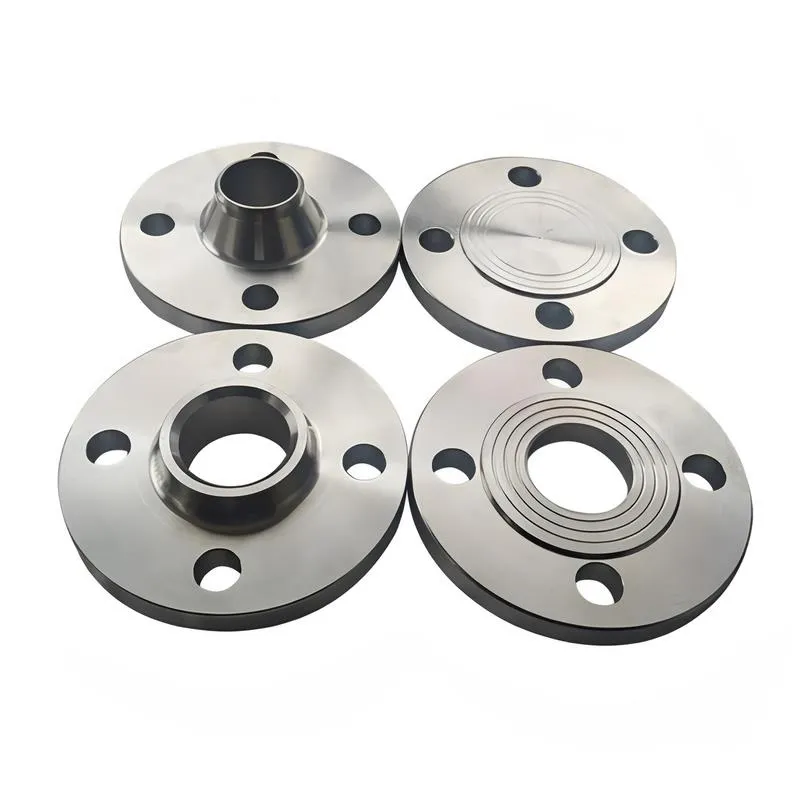
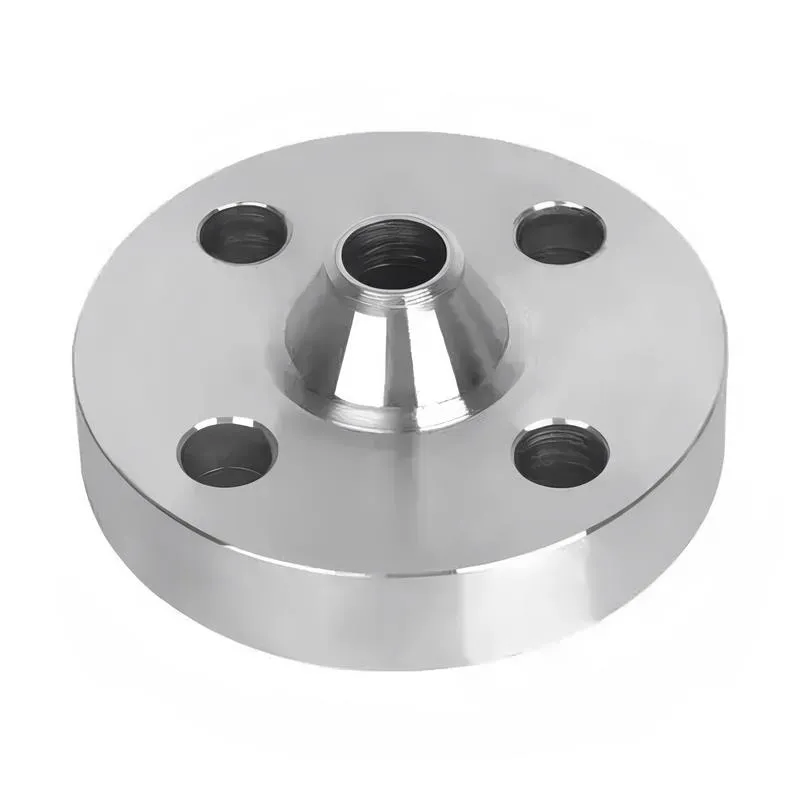
ASTM A897 Grade 5 (230-185-00 or 230-185-01) Austempered Ductile Iron Flange
Product Code : FL-Steel-3011-CU
We provide ASTM A897 Grade 5 (230-185-00 or 230-185-01) Austempered Ductile Iron Flange Manufacturing types: Forging, Casting, Cutting, Rolling.We can manufacture in accordance with these standards.GB/T 9112–9124-2010 Steel Pipe Flanges , JB Series , HG Series, ASME B16.5, BS4504, DIN , JIS,CBM,etc
1,We Manufacturing processes are primarily classified into four types:
1:Forging,
2:Casting,
3:Cutting,
4:Rolling.
2,We can manufacture in accordance with these standards.
Standards:
GB Series (Chinese Standards), JB Series (Machinery Standards), HG Series (Chemical Industry Standards), ASME B16.5 (American Standards), BS4504 (British Standards), DIN (German Standards), and JIS (Japanese Standards).
Internationally, there are two primary systems of pipe flange standards: the European system, represented by the German DIN standards (including those of the former Soviet Union), and the American system, represented by the US ANSI pipe flange standards. Other common standards include: the Chinese Ministry of Machinery Industry standards (JB series), the Ministry of Chemical Industry standards (HG series), the Chinese National Standard *GB/T 9112–9124-2010 Steel Pipe Flanges*, as well as US standards (ASME B16.5), British standards (BS4504), German standards (DIN), Japanese standards (JIS), and marine standards (CBM), among others.
The nominal pressure ratings for the PN series are designated by "PN" and comprise the following nine levels: PN2.5, PN6, PN10, PN16, PN25, PN40, PN63, PN100, and PN160.
The nominal pressure ratings for the Class series are designated by "Class" and comprise the following six levels: Class150, Class300, Class600, Class900, Class1500, and Class2500.
Flange Classification
1. **According to Chemical Industry Standards:** Flanges are classified as follows:
Plate Flat Welding Flange (PL), Necked Flat Welding Flange (SO), Necked Butt Welding Flange (WN), Integral Flange (IF), Socket Welding Flange (SW), Threaded Flange (Th), Butt Welding Ring Loose Flange (PJ/SE), Blind Flange (BL), Flat Welding Ring Loose Flange (PJ/PJ), and Lined Blind Flange (BL(s)).
2. **According to Petrochemical (SH) Industry Standards:** Flanges are classified as follows:
Threaded Flange (PL), Butt Welding Flange (WN), Flat Welding Flange (SO), Socket Welding Flange (SW), Loose Flange (LJ), and Blind Flange (no specific designation).
3. **According to Machinery (JB) Industry Standards:** Flanges are classified as follows:
Integral Flange, Butt Welding Flange, Plate Flat Welding Flange, Butt Welding Ring Plate Loose Flange, Flat Welding Ring Plate Loose Flange, Lap Joint Ring Plate Loose Flange, and Blind Flange.
4. **According to Connection Method/Type:** Flanges are classified as follows:
Plate Flat Welding Flange, Necked Flat Welding Flange, Necked Butt Welding Flange, Socket Welding Flange, Threaded Flange, Blind Flange, Necked Butt Welding Ring Loose Flange, Flat Welding Ring Loose Flange, Ring-Type Joint (RTJ) Flange and Blind Flange, Large-Diameter Plate Flange, Large-Diameter High-Neck Flange, Figure-8 Blind Plate, Butt Welding Ring Loose Flange, etc.
5. **According to the Component Being Connected:** Flanges can be classified into Vessel Flanges and Pipe Flanges.
6. **According to Structural Type:** Flanges include Integral Flanges, Threaded Flanges, Flat Welding Flanges, Butt Welding Flanges, Lap Joint (Loose/Swivel) Flanges, and Blind Flanges.
A flange—also referred to as a flange plate or rim—is a component used to connect shafts to one another, or, more commonly, to join the ends of pipes. Flanges are also utilized at the inlet and outlet ports of equipment to facilitate connections between two devices—for instance, the flange on a speed reducer. A "flange connection" or "flanged joint" refers to a detachable joint assembly comprising three interconnected elements—a flange, a gasket, and bolts—that together form a sealed structural unit. In the context of piping systems, a "pipe flange" specifically denotes a flange used for plumbing within the installation; when applied to equipment, it refers to the inlet or outlet flange of that specific device. Flanges feature a series of holes through which bolts are inserted to securely fasten the two flanges together, while a gasket placed between the flanges ensures a leak-proof seal. Flanges are broadly categorized into three types: threaded (screw-in) flanges, welded flanges, and clamp-type flanges. Flanges are invariably used in pairs; threaded flanges are suitable for low-pressure piping applications, whereas welded flanges are required for systems operating at pressures exceeding 4 kilograms per square centimeter. A sealing gasket is inserted between the two flange plates, which are then firmly secured using bolts. The thickness of a flange—as well as the specifications of the bolts used to fasten it—vary depending on the specific pressure rating required for the application. When connecting equipment such as water pumps or valves to piping systems, the corresponding connection points on these devices are often manufactured in the shape of a matching flange; this method of attachment is also referred to as a "flange connection." Generally, any connecting component that utilizes bolts to join and seal the perimeters of two flat surfaces—such as the joints in ventilation ducts—is termed a "flange"; such components may collectively be classified as "flange-type parts." However, since such a connection often constitutes merely a *portion* of a larger device—for instance, the interface between a flange and a water pump—it would be inappropriate to classify the entire water pump itself as a "flange-type part." Conversely, smaller components—such as valves—that feature such flanged interfaces may indeed be appropriately categorized as "flange-type parts."
-:-
For detailed product information, please contact sales.
-:
ASTM A897 Grade 5 (230-185-00 or 230-185-01) Austempered Ductile Iron Flange Product Information
-:-
For detailed product information, please contact sales.
-:
ASTM A897 Grade 5 (230-185-00 or 230-185-01) Austempered Ductile Iron Flange Synonyms
-:-
For detailed product information, please contact sales.
-:
ASTM A897 Grade 5 (230-185-00 or 230-185-01) Austempered Ductile Iron Product Information
-:-
For detailed product information, please contact sales.
-:
### **Product Technical Data Sheet: ASTM A897 Grade 5 Austempered Ductile Iron (Grade 230/185/00 or 230/185/01)**
---
#### **1. Product Overview**
**ASTM A897 Grade 5**, designated as **230/185/00 or 230/185/01**, represents the **absolute theoretical limit** of standardized Austempered Ductile Iron (ADI) performance. This grade defines the boundary conditions for what is mechanically possible through conventional austempering processes, with minimum tensile strength of **230 ksi (1586 MPa)**, yield strength of **185 ksi (1276 MPa)**, and elongation of **0-1%**. Grade 5 ADI pushes ductile iron technology into a realm where its mechanical properties **approach or exceed those of ultra-high-strength steels and some tool steels**, while maintaining the manufacturing advantages of cast components. This grade exists primarily as a **theoretical/experimental classification** and represents extreme material performance where ductility is sacrificed for ultimate strength.
---
#### **2. Governing Standards & Specifications**
This theoretical maximum grade is formally recognized in ASTM standards but rarely achieved in commercial production.
* **Primary Standard: ASTM A897/A897M** - *Standard Specification for Austempered Ductile Iron Castings*. The grade is designated as **230/185/00** or **230/185/01**.
* **International Context:**
* **ISO 17804:** No direct equivalent exists in standard ISO classifications, as this performance level exceeds typical commercial ADI ranges.
* **Status:** Grade 5 is generally considered a **theoretical maximum** or **experimental target** rather than a commercially viable production grade. It represents the upper bound of what austempering technology can potentially achieve under ideal laboratory conditions.
* **Key Testing Standards:**
* **Tensile Test:** ASTM E8 (with specialized extensometry)
* **Hardness:** ASTM E10 (Brinell), ASTM E18 (Rockwell C)
* **Fracture Toughness:** ASTM E399
* **Microstructure:** ASTM A247, often supplemented with SEM/TEM analysis
---
#### **3. Typical Chemical Composition (Theoretical/Optimized)**
Achieving Grade 5 properties would require near-perfect chemical optimization and processing.
| Element | Theoretical Optimal Range (%) | Critical Considerations for Grade 5 ADI |
| :--- | :--- | :--- |
| **Carbon (C)** | 3.3 - 3.6 | Minimized to reduce graphite content while maintaining ausferrite formation capability. |
| **Silicon (Si)** | 2.2 - 2.5 | Tightly optimized - must balance carbide suppression with austenite stabilization constraints. |
| **Manganese (Mn)** | **≤ 0.15** | Near elimination - segregation absolutely cannot be tolerated. |
| **Nickel (Ni)** | 1.5 - 2.5 | Essential for achieving necessary hardenability and microstructural stability. |
| **Molybdenum (Mo)** | **0.6 - 1.0** | Critical for deep hardenability at ultra-low transformation temperatures. |
| **Copper (Cu)** | 1.0 - 2.0 | Maximized for hardenability and matrix strengthening. |
| **Chromium (Cr)** | 0.2 - 0.5 | Added for additional hardenability and carbide control. |
| **Vanadium (V)** | 0.1 - 0.3 | May be added for grain refinement and precipitation strengthening. |
| **Magnesium (Mg)** | 0.04 - 0.07 | Ensures perfect nodularity. |
| **Trace Elements** | **Extremely low** | Near-steel purity levels required. |
---
#### **4. Physical & Mechanical Properties**
Grade 5 ADI represents the extreme limit of ferrous casting material performance.
| Property | Theoretical Minimum / Range | Performance Characteristics |
| :--- | :--- | :--- |
| **Tensile Strength, min.** | **230 ksi (1586 MPa)** | Comparable to maraging steels and high-end tool steels. |
| **Yield Strength (0.2% offset), min.** | **185 ksi (1276 MPa)** | Exceptionally high yield-to-tensile ratio (~0.80). |
| **Elongation, min.** | **0% (Grade 00) or 1% (Grade 01)** | Essentially brittle material - design must assume no plastic deformation. |
| **Hardness (Brinell)** | **495 - 600 HBW** | Typically 510-560 HBW (~52-55 HRC). Extreme wear resistance. |
| **Modulus of Elasticity** | 24 - 26 x 10⁶ psi (165 - 179 GPa) | May exhibit slight increase due to reduced graphite content. |
| **Charpy Impact (V-notch) @ 23°C** | **1 - 5 J (Theoretical)** | Very low impact resistance - catastrophic failure likely under shock loads. |
| **Fracture Toughness (KIC)** | **20 - 35 MPa√m (Estimated)** | Brittle fracture behavior expected. |
| **Fatigue Endurance Limit** | **630 - 800 MPa** (≈ 0.40-0.50 x UTS) | High but limited by lack of crack blunting mechanisms. |
| **Density** | ~7.2 g/cm³ (Slightly higher) | Reduced graphite content increases density slightly. |
| **Microstructure** | **Ultra-fine, carbide-containing ausferrite/bainite** with minimal retained austenite (<10%). Transformation at **150-200°C (300-390°F)** approaches practical limits. | May contain controlled carbides for additional strengthening. |
---
#### **5. Potential Applications (Theoretical)**
Grade 5 ADI would be considered only for the most extreme applications where ductility is irrelevant.
* **Armor & Ballistic Applications:** **Lightweight armor components** where maximum hardness and strength are paramount.
* **Specialized Tooling:** **Dies, molds, and cutting tools** requiring extreme wear resistance without impact loading.
* **High-Stress Static Components:** **Precision machine components** operating under constant high stress without shock.
* **Experimental Structures:** **Research applications** testing material performance limits.
* **Specialized Wear Parts:** **Extreme abrasion applications** where material loss is the primary failure mode.
---
#### **6. Processing Challenges & Limitations**
* **Heat Treatment Extremes:**
* Austenitizing: 900-950°C with precise atmosphere control
* Quench: Near-instantaneous transfer to very low temperature salt
* Transformation: 150-200°C for extended periods (4-8+ hours)
* Cooling: Very controlled to prevent thermal stresses
* **Critical Challenges:**
* **Quench cracking** is highly probable
* **Dimensional stability** is extremely difficult to maintain
* **Property consistency** across a casting is nearly impossible
* **Residual stresses** can approach material strength limits
* **Manufacturability:**
* **Unmachinable** in final condition
* **No weldability** - cannot be repaired or modified
* **Grinding only** for final dimensions
* **High rejection rates** expected
---
#### **7. Quality Assurance & Testing Requirements**
* **Process Control:** Requires laboratory-grade equipment and controls
* **Testing Protocol:**
* Multiple tensile tests with statistical analysis
* Full hardness mapping
* Advanced microstructure characterization (SEM, TEM, EBSD)
* Fracture mechanics testing
* **Residual stress analysis**
* **Inspection:** 100% non-destructive testing required
* **Certification:** Each component would require individual certification
---
#### **8. Commercial Viability & Ordering Considerations**
**Grade 5 ADI is not commercially available as a standard production material.**
**If specified, it would require:**
* **Research & Development Contract** rather than standard purchase order
* **Joint development program** between customer and specialist supplier
* **Prototype phase** with no guarantee of success
* **Extreme cost premium** (10-100x standard ADI grades)
* **Extended lead times** (6-18 months for development)
* **Acceptance of high risk** and potential failure
**Recommended Specification Approach:**
For applications requiring this performance level, consider:
1. **Redesign** to use Grade 4 ADI with modified geometry
2. **Alternative materials** (maraging steels, tool steels, composites)
3. **Hybrid solutions** combining ADI with other materials
4. **Performance testing** with Grade 4 to validate actual requirements
---
#### **9. Summary: Theoretical Maximum vs. Practical Reality**
**Grade 5 ADI represents the absolute boundary of austempered ductile iron technology:**
* **Theoretical Potential:** Demonstrates what might be possible under ideal laboratory conditions
* **Practical Reality:** Not commercially viable due to processing challenges and material limitations
* **Engineering Value:** Serves as a reference point for material development and understanding performance limits
* **Future Potential:** May become more accessible with advances in process control and alloy design
**For practical engineering applications, ASTM A897 Grade 4 (200/155/01 or 02) represents the current practical upper limit of commercially viable ADI performance. Grade 5 remains primarily a theoretical classification that guides research and development in advanced materials technology.**
**Note:** No known commercial applications currently use ASTM A897 Grade 5 ADI. All inquiries for this performance level should be directed to research institutions or specialized materials development laboratories rather than commercial foundries.
-:-
For detailed product information, please contact sales.
-:
ASTM A897 Grade 5 (230-185-00 or 230-185-01) Austempered Ductile Iron Specification
Dimensions
Size:
Diameter 20-1000 mm Length <6566 mm
Size:We can customized as required
Standard:
Per your request or drawing
We can customized as required
Properties(Theoretical)
Chemical Composition
-:-
For detailed product information, please contact sales.
-:
ASTM A897 Grade 5 (230-185-00 or 230-185-01) Austempered Ductile Iron Properties
-:-
For detailed product information, please contact sales.
-:
Applications of ASTM A897 Grade 5 (230-185-00 or 230-185-01) Austempered Ductile Iron Flange
-:-
For detailed product information, please contact sales.
-:
Chemical Identifiers ASTM A897 Grade 5 (230-185-00 or 230-185-01) Austempered Ductile Iron Flange
-:-
For detailed product information, please contact sales.
-:
Packing of ASTM A897 Grade 5 (230-185-00 or 230-185-01) Austempered Ductile Iron Flange
-:-
For detailed product information, please contact sales.
-:
Standard Packing:
-:-
For detailed product information, please contact sales.
-:
Typical bulk packaging includes palletized plastic 5 gallon/25 kg. pails, fiber and Steel Flange drums to 1 ton super sacks in full container (FCL) or truck load (T/L) quantities. Research and sample quantities and hygroscopic, oxidizing or other air sensitive materials may be packaged under argon or vacuum. Solutions are packaged in polypropylene, plastic or glass jars up to palletized 3037 gallon liquid totes Special package is available on request. E FORUs’ is carefully handled to minimize damage during storage and transportation and to preserve the quality of our products in their original condition