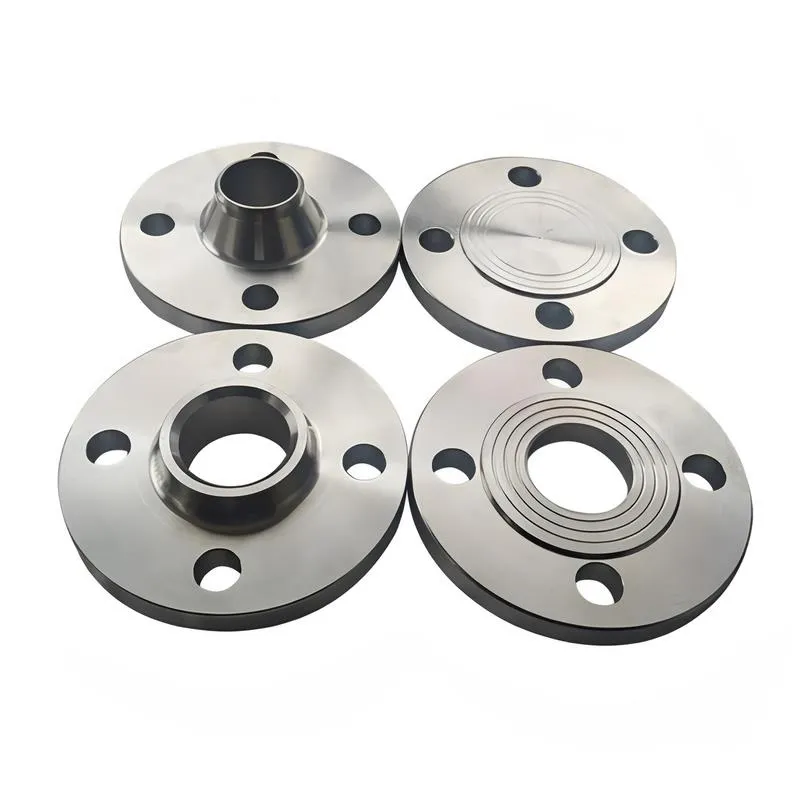
1,We Manufacturing processes are primarily classified into four types:
1:Forging,
2:Casting,
3:Cutting,
4:Rolling.
2,We can manufacture in accordance with these standards.
Standards:
GB Series (Chinese Standards), JB Series (Machinery Standards), HG Series (Chemical Industry Standards), ASME B16.5 (American Standards), BS4504 (British Standards), DIN (German Standards), and JIS (Japanese Standards).
Internationally, there are two primary systems of pipe flange standards: the European system, represented by the German DIN standards (including those of the former Soviet Union), and the American system, represented by the US ANSI pipe flange standards. Other common standards include: the Chinese Ministry of Machinery Industry standards (JB series), the Ministry of Chemical Industry standards (HG series), the Chinese National Standard *GB/T 9112–9124-2010 Steel Pipe Flanges*, as well as US standards (ASME B16.5), British standards (BS4504), German standards (DIN), Japanese standards (JIS), and marine standards (CBM), among others.
The nominal pressure ratings for the PN series are designated by "PN" and comprise the following nine levels: PN2.5, PN6, PN10, PN16, PN25, PN40, PN63, PN100, and PN160.
The nominal pressure ratings for the Class series are designated by "Class" and comprise the following six levels: Class150, Class300, Class600, Class900, Class1500, and Class2500.
Flange Classification
1. **According to Chemical Industry Standards:** Flanges are classified as follows:
Plate Flat Welding Flange (PL), Necked Flat Welding Flange (SO), Necked Butt Welding Flange (WN), Integral Flange (IF), Socket Welding Flange (SW), Threaded Flange (Th), Butt Welding Ring Loose Flange (PJ/SE), Blind Flange (BL), Flat Welding Ring Loose Flange (PJ/PJ), and Lined Blind Flange (BL(s)).
2. **According to Petrochemical (SH) Industry Standards:** Flanges are classified as follows:
Threaded Flange (PL), Butt Welding Flange (WN), Flat Welding Flange (SO), Socket Welding Flange (SW), Loose Flange (LJ), and Blind Flange (no specific designation).
3. **According to Machinery (JB) Industry Standards:** Flanges are classified as follows:
Integral Flange, Butt Welding Flange, Plate Flat Welding Flange, Butt Welding Ring Plate Loose Flange, Flat Welding Ring Plate Loose Flange, Lap Joint Ring Plate Loose Flange, and Blind Flange.
4. **According to Connection Method/Type:** Flanges are classified as follows:
Plate Flat Welding Flange, Necked Flat Welding Flange, Necked Butt Welding Flange, Socket Welding Flange, Threaded Flange, Blind Flange, Necked Butt Welding Ring Loose Flange, Flat Welding Ring Loose Flange, Ring-Type Joint (RTJ) Flange and Blind Flange, Large-Diameter Plate Flange, Large-Diameter High-Neck Flange, Figure-8 Blind Plate, Butt Welding Ring Loose Flange, etc.
5. **According to the Component Being Connected:** Flanges can be classified into Vessel Flanges and Pipe Flanges.
6. **According to Structural Type:** Flanges include Integral Flanges, Threaded Flanges, Flat Welding Flanges, Butt Welding Flanges, Lap Joint (Loose/Swivel) Flanges, and Blind Flanges.
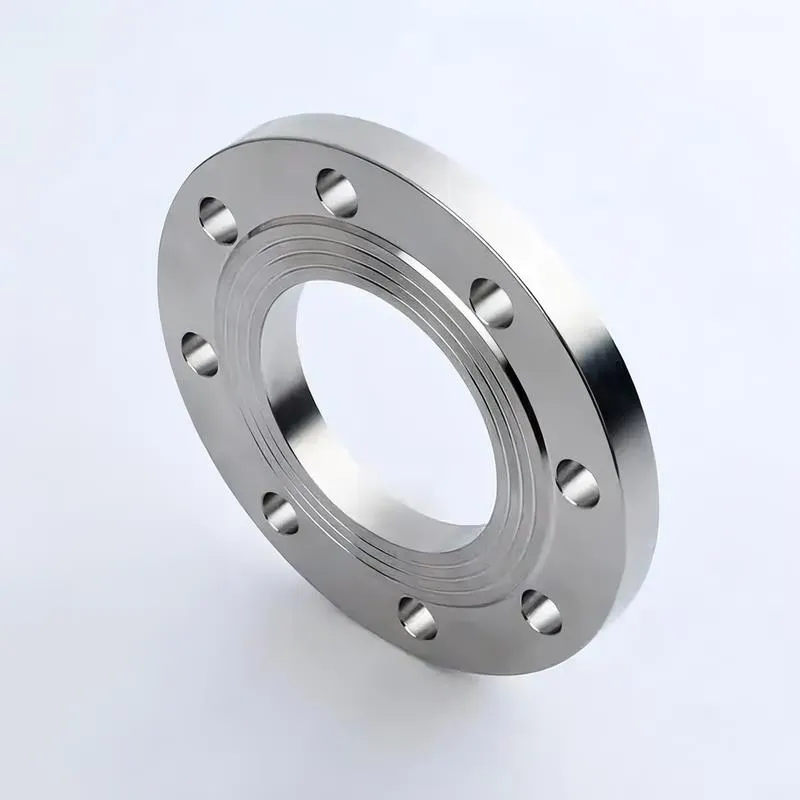
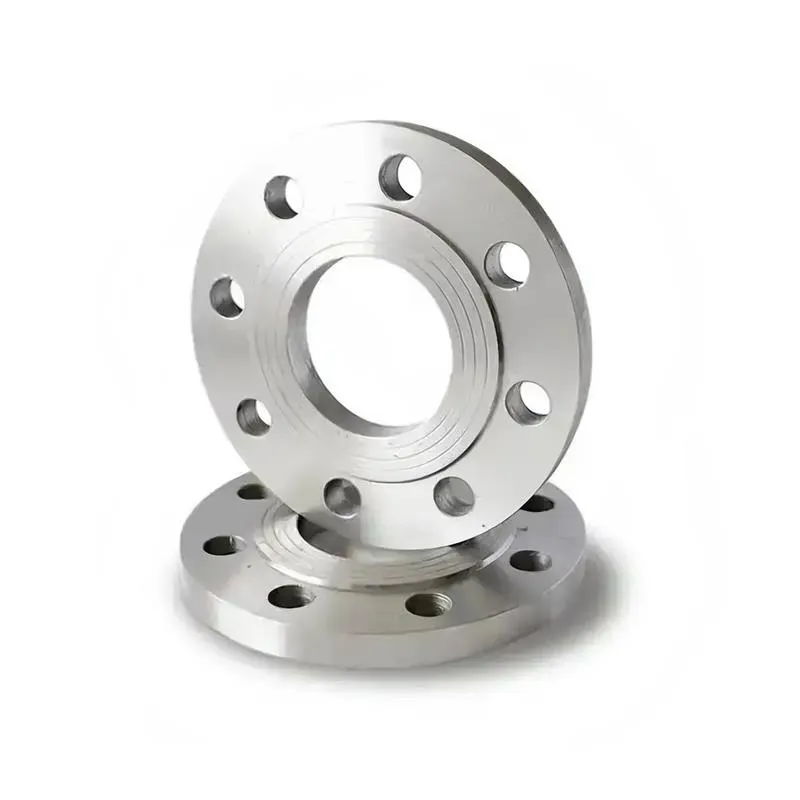
A flange—also referred to as a flange plate or rim—is a component used to connect shafts to one another, or, more commonly, to join the ends of pipes. Flanges are also utilized at the inlet and outlet ports of equipment to facilitate connections between two devices—for instance, the flange on a speed reducer. A "flange connection" or "flanged joint" refers to a detachable joint assembly comprising three interconnected elements—a flange, a gasket, and bolts—that together form a sealed structural unit. In the context of piping systems, a "pipe flange" specifically denotes a flange used for plumbing within the installation; when applied to equipment, it refers to the inlet or outlet flange of that specific device. Flanges feature a series of holes through which bolts are inserted to securely fasten the two flanges together, while a gasket placed between the flanges ensures a leak-proof seal. Flanges are broadly categorized into three types: threaded (screw-in) flanges, welded flanges, and clamp-type flanges. Flanges are invariably used in pairs; threaded flanges are suitable for low-pressure piping applications, whereas welded flanges are required for systems operating at pressures exceeding 4 kilograms per square centimeter. A sealing gasket is inserted between the two flange plates, which are then firmly secured using bolts. The thickness of a flange—as well as the specifications of the bolts used to fasten it—vary depending on the specific pressure rating required for the application. When connecting equipment such as water pumps or valves to piping systems, the corresponding connection points on these devices are often manufactured in the shape of a matching flange; this method of attachment is also referred to as a "flange connection." Generally, any connecting component that utilizes bolts to join and seal the perimeters of two flat surfaces—such as the joints in ventilation ducts—is termed a "flange"; such components may collectively be classified as "flange-type parts." However, since such a connection often constitutes merely a *portion* of a larger device—for instance, the interface between a flange and a water pump—it would be inappropriate to classify the entire water pump itself as a "flange-type part." Conversely, smaller components—such as valves—that feature such flanged interfaces may indeed be appropriately categorized as "flange-type parts."
-:-
For detailed product information, please contact sales.
-:
SAE J2477 AD 900 Automotive Austempered Ductile Iron Flange Product Information
-:-
For detailed product information, please contact sales.
-:
SAE J2477 AD 900 Automotive Austempered Ductile Iron Flange Synonyms
-:-
For detailed product information, please contact sales.
-:
SAE J2477 AD 900 Automotive Austempered Ductile Iron Product Information
-:-
For detailed product information, please contact sales.
-:
# **Product Technical Data Sheet: SAE J2477 AD 900 Automotive Austempered Ductile Iron (ADI)**
---
## **1. Product Overview**
**SAE J2477 AD 900** is a **high-performance automotive-grade Austempered Ductile Iron** specification developed by the Society of Automotive Engineers for applications requiring **exceptional strength, wear resistance, and fatigue performance**. With a minimum tensile strength of **900 MPa (130 ksi)**, this material represents the upper echelon of ADI grades specified for volume automotive production. Through the controlled austempering heat treatment, AD 900 develops an ultra-fine **ausferritic microstructure** that delivers a unique combination of **very high strength, good toughness, and superior fatigue resistance** – properties that enable the replacement of forged steel components with lightweight, complex castings. This grade is engineered for the most demanding powertrain, driveline, and chassis applications where both performance and durability are critical.
---
## **2. Governing Standards & Specifications**
This specification is part of SAE's standardized framework for advanced automotive materials.
* **Primary Standard:**
* **SAE J2477** - *Austempered Ductile (Nodular) Iron Castings (Automotive)*
* **Cross-Equivalencies:**
* **ASTM A897/A897M:** Directly equivalent to **Grade 900/650/09** (900 MPa UTS, 650 MPa YS, 9% elongation).
* **ISO 17804:** Corresponds to **ADI 900-650-09** or **JS/900/9/320/12**.
* **Automotive Quality Frameworks:**
* **IATF 16949** compliance required for suppliers.
* **PPAP (Production Part Approval Process)** mandatory for production parts.
* **Key Referenced Testing Standards:**
* **Tensile Test:** ASTM E8
* **Hardness:** ASTM E10 (Brinell)
* **Impact Test:** ASTM E23 (Charpy) – Often specified for critical components.
* **Microstructure:** ASTM A247
* **Fatigue Testing:** Component-specific protocols per customer requirements.
---
## **3. Typical Chemical Composition (Base Iron)**
Achieving AD 900 properties consistently in automotive production requires precise chemistry control and strategic alloying.
| Element | Target Range (%) | Critical Role for AD 900 |
| :--- | :--- | :--- |
| **Carbon (C)** | 3.5 - 3.8 | Provides carbon for the ausferrite reaction; balanced to optimize strength without compromising ductility. |
| **Silicon (Si)** | **2.4 - 2.7** | **Critical processing element.** Must be sufficient to suppress carbide formation during the rapid quench to low austempering temperatures, but controlled to prevent excessive austenite stabilization that could reduce strength. |
| **Manganese (Mn)** | **≤ 0.25** | **Stringently limited.** High Mn leads to segregation and formation of brittle phases in cell boundaries, severely impacting toughness and fatigue performance. |
| **Molybdenum (Mo)** | **0.25 - 0.45** | **Essential for hardenability.** Ensures full ausferritic transformation throughout the casting section, especially critical for the low austempering temperatures used for AD 900. |
| **Copper (Cu)** | **0.7 - 1.1** | **Primary alloying element.** Provides uniform hardenability and solid solution strengthening. Synergizes with Mo. |
| **Nickel (Ni)** | **0.5 - 1.2** | Often added with Mo, particularly for complex geometries or varying section sizes, to guarantee consistent through-hardening and improve toughness. |
| **Magnesium (Mg)** | 0.03 - 0.05 | Ensures high nodularity (>90%).
| **Trace Elements (Sn, Sb, etc.)** | **Minimized** | Strong pearlite promoters; must be controlled to allow the ausferritic transformation. |
---
## **4. Physical & Mechanical Properties**
AD 900 delivers premium performance characteristics tailored for highly stressed automotive components.
| Property | SAE J2477 AD 900 Requirement / Typical Value | Automotive Performance Significance |
| :--- | :--- | :--- |
| **Tensile Strength (UTS), min.** | **900 MPa (130 ksi)** | Strength level comparable to high-strength quenched & tempered steels (e.g., 4140), enabling direct replacement. |
| **Yield Strength (0.2% YS), min.** | **650 MPa (94 ksi)** | Very high resistance to plastic deformation; critical for components maintaining precise alignment under load (e.g., gears, bearings). |
| **Elongation, min.** | **9%** | **Maintains good ductility** despite high strength, providing essential damage tolerance and energy absorption capability. |
| **Hardness (Brinell)** | **302 - 363 HBW** | Typically 320-345 HBW. Provides excellent resistance to abrasive wear, pitting, and contact fatigue – crucial for gears and bearing surfaces. |
| **Modulus of Elasticity** | ~165 - 175 GPa | Maintains high stiffness. |
| **Charpy Impact (Unnotched)** | **40 - 70 J (Typical)** | Good impact resistance for high-strength material. |
| **Charpy Impact (V-notch)** | **Typically 12 - 20 J @ 23°C** | Adequate fracture toughness; design must manage stress concentrations. |
| **Fatigue Endurance Limit** | **~400 - 500 MPa** (≈ 0.44-0.56 x UTS) | **Exceptional.** A key advantage over steel at similar hardness, due to compressive surface stresses and crack-blunting graphite nodules. Directly translates to longer component life. |
| **Density** | **~7.1 g/cm³** | **~10% lighter than steel**, contributing to vehicle mass reduction and improved fuel economy/performance. |
| **Damping Capacity** | **~3-4 times greater than steel** | Significantly reduces noise and vibration – beneficial for NVH (Noise, Vibration, Harshness) in drivetrains and chassis. |
| **Microstructure** | **Very Fine Ausferrite** with a controlled amount of high-carbon austenite (typically 20-30%). Achieved via **austempering at 250-290°C (480-550°F)**. | This fine, low-temperature ausferrite provides the high strength and excellent fatigue properties. |
---
## **5. Product Applications in Automotive**
AD 900 is specified for the most highly stressed, safety-critical components in modern vehicles.
* **High-Performance Powertrain:**
* **Transmission gears (especially 1st, 2nd, reverse), synchronizer hubs, dog rings, and shift forks.**
* **Differential ring gears and pinions, limited-slip differential components.**
* **High-output engine components:** turbocharger linkages, high-stress brackets.
* **Chassis & Suspension (Premium/Performance Vehicles):**
* **Steering knuckles and uprights** for performance sedans, SUVs, and electric vehicles.
* **High-load suspension links and control arms.**
* **Driveline Components:**
* **Drive shafts, CV joints, and constant velocity joint components.**
* **Commercial & Heavy-Duty:**
* **Heavy-duty axle components, wheel hubs, and fifth-wheel plates.**
---
## **6. Austempering Process & Manufacturing Considerations**
* **Heat Treatment Process:** Requires more precise control than lower-grade ADI.
* **Austenitizing:** 870-900°C.
* **Quenching & Austempering:** Very rapid quench to **250-290°C** salt bath, held for 1.5-3 hours.
* **Cooling:** Air cool.
* **Process Sensitivity:** The **lower austempering temperature window** for AD 900 is narrower than for AD 750, demanding excellent furnace and salt bath control for consistent automotive production. **Statistical Process Control (SPC)** is essential.
* **Machinability:** **Difficult** in the austempered condition. Most high-volume production strategies involve:
* **Near-net-shape casting** to minimize machining.
* **Hard machining** with advanced carbide or ceramic tooling.
* **Machining in a soft, pearlitic condition** prior to austempering, followed by minimal finishing.
* **Weldability:** **Not Recommended.** The ausferritic microstructure is irreversibly damaged by welding heat.
* **Grindability:** Good. Can be ground to very fine surface finishes, important for gear teeth and bearing surfaces.
---
## **7. Quality Assurance & Automotive Compliance**
**Specify:** **"Austempered Ductile Iron Castings, SAE J2477 AD 900."**
**Mandatory Automotive Requirements:**
1. **Full Material Traceability:** Heat code to finished part.
2. **Comprehensive Certification:**
* MTR with full chemistry and mechanical properties (from separately cast test bars).
* Microstructure report per ASTM A247, confirming ausferritic matrix and nodularity.
* Austempering process certification (time/temperature charts).
3. **PPAP Submission:** Required at approved levels (Level 3 typical), including:
* Design Records, Process Flow, PFMEA, Control Plan.
* Initial Process Studies (e.g., hardness, microstructure capability).
* Dimensional results.
* Material/Performance test results.
* Part Submission Warrant (PSW).
4. **Non-Destructive Testing (NDT):** 100% visual inspection. **100% Magnetic Particle Inspection (MPI)** or **Fluorescent Penetrant Inspection (FPI)** is standard for critical surfaces (e.g., gear tooth roots, fillet radii).
5. **Component Testing:** Often required – e.g., gear single-tooth bending fatigue tests, contact fatigue tests, or full component durability testing.
---
## **8. Value Proposition & Design Guidelines**
**SAE J2477 AD 900 enables automotive engineers to:**
* **Replace Multiple Steel Parts** with a single, complex casting, reducing weight, assembly cost, and potential failure points.
* **Achieve Superior Fatigue Performance** in cyclic loading applications compared to equivalent-hardness steel.
* **Improve NVH Characteristics** through inherent material damping.
* **Reduce System Weight** directly, supporting OEM fuel economy and emissions targets.
**Critical Design Guidelines:**
* **Avoid Sharp Notches:** The high strength makes AD 900 notch-sensitive. Use generous fillet radii (minimum R = 2-3 mm).
* **Consider Residual Stresses:** The austempering process induces beneficial compressive surface stresses. Deep machining can relieve these.
* **Specify Surface Finish:** Critical for fatigue performance. Specify fine surface finishes on highly stressed areas.
**SAE J2477 AD 900 is a strategic enabler for next-generation automotive design, offering a high-performance, cost-effective, and lightweight solution for the most demanding applications in the vehicle.**
-:-
For detailed product information, please contact sales.
-:
SAE J2477 AD 900 Automotive Austempered Ductile Iron Specification
Dimensions
Size:
Diameter 20-1000 mm Length <6568 mm
Size:We can customized as required
Standard:
Per your request or drawing
We can customized as required
Properties(Theoretical)
Chemical Composition
-:-
For detailed product information, please contact sales.
-:
SAE J2477 AD 900 Automotive Austempered Ductile Iron Properties
-:-
For detailed product information, please contact sales.
-:
Applications of SAE J2477 AD 900 Automotive Austempered Ductile Iron Flange
-:-
For detailed product information, please contact sales.
-:
Chemical Identifiers SAE J2477 AD 900 Automotive Austempered Ductile Iron Flange
-:-
For detailed product information, please contact sales.
-:
Packing of SAE J2477 AD 900 Automotive Austempered Ductile Iron Flange
-:-
For detailed product information, please contact sales.
-:
Standard Packing:
-:-
For detailed product information, please contact sales.
-:
Typical bulk packaging includes palletized plastic 5 gallon/25 kg. pails, fiber and Steel Flange drums to 1 ton super sacks in full container (FCL) or truck load (T/L) quantities. Research and sample quantities and hygroscopic, oxidizing or other air sensitive materials may be packaged under argon or vacuum. Solutions are packaged in polypropylene, plastic or glass jars up to palletized 3039 gallon liquid totes Special package is available on request. E FORUs’ is carefully handled to minimize damage during storage and transportation and to preserve the quality of our products in their original condition