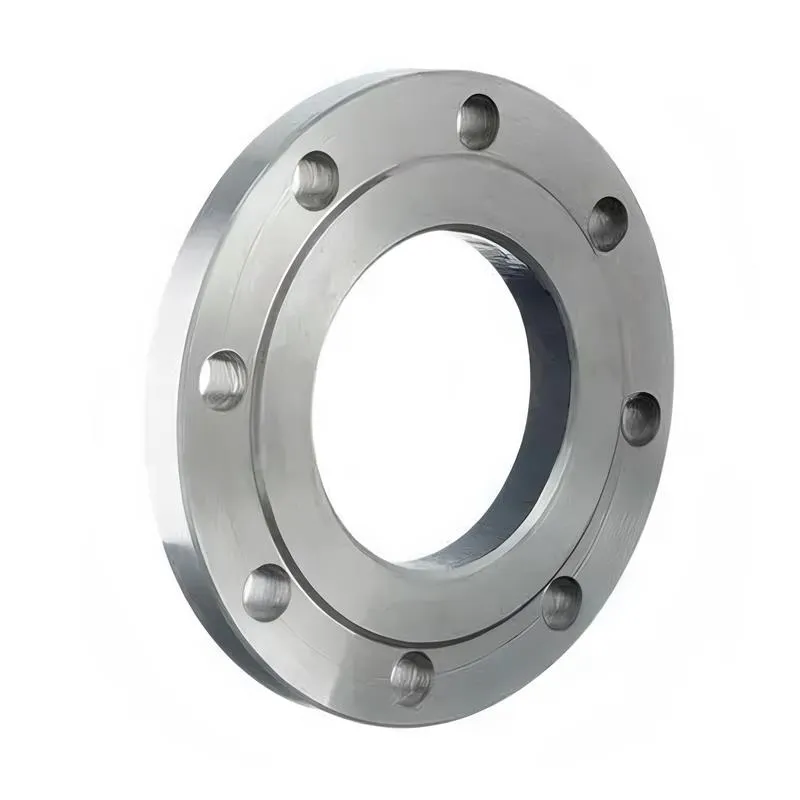
1,We Manufacturing processes are primarily classified into four types:
1:Forging,
2:Casting,
3:Cutting,
4:Rolling.
2,We can manufacture in accordance with these standards.
Standards:
GB Series (Chinese Standards), JB Series (Machinery Standards), HG Series (Chemical Industry Standards), ASME B16.5 (American Standards), BS4504 (British Standards), DIN (German Standards), and JIS (Japanese Standards).
Internationally, there are two primary systems of pipe flange standards: the European system, represented by the German DIN standards (including those of the former Soviet Union), and the American system, represented by the US ANSI pipe flange standards. Other common standards include: the Chinese Ministry of Machinery Industry standards (JB series), the Ministry of Chemical Industry standards (HG series), the Chinese National Standard *GB/T 9112–9124-2010 Steel Pipe Flanges*, as well as US standards (ASME B16.5), British standards (BS4504), German standards (DIN), Japanese standards (JIS), and marine standards (CBM), among others.
The nominal pressure ratings for the PN series are designated by "PN" and comprise the following nine levels: PN2.5, PN6, PN10, PN16, PN25, PN40, PN63, PN100, and PN160.
The nominal pressure ratings for the Class series are designated by "Class" and comprise the following six levels: Class150, Class300, Class600, Class900, Class1500, and Class2500.
Flange Classification
1. **According to Chemical Industry Standards:** Flanges are classified as follows:
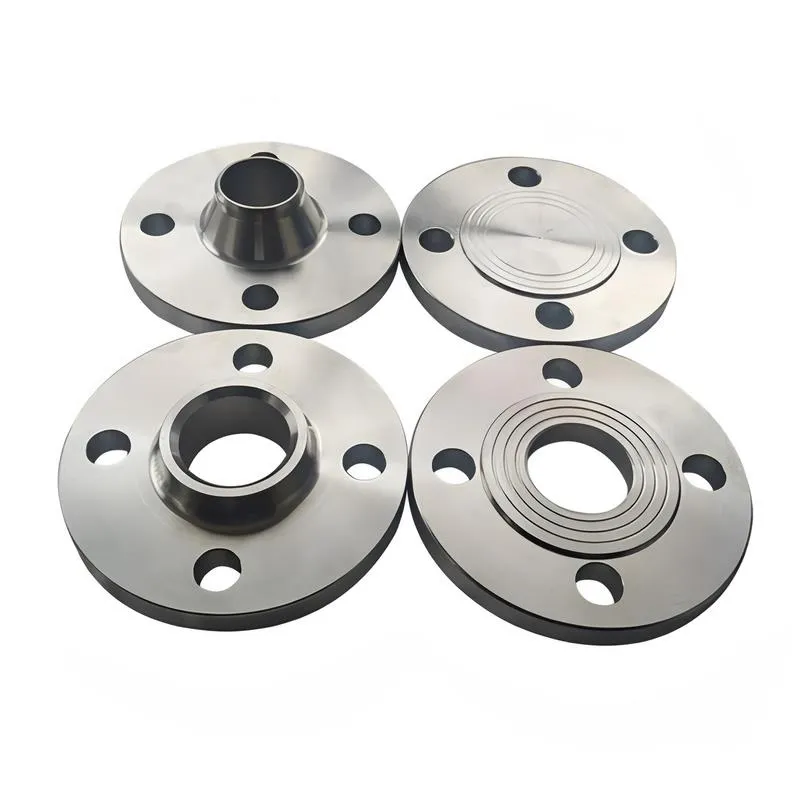
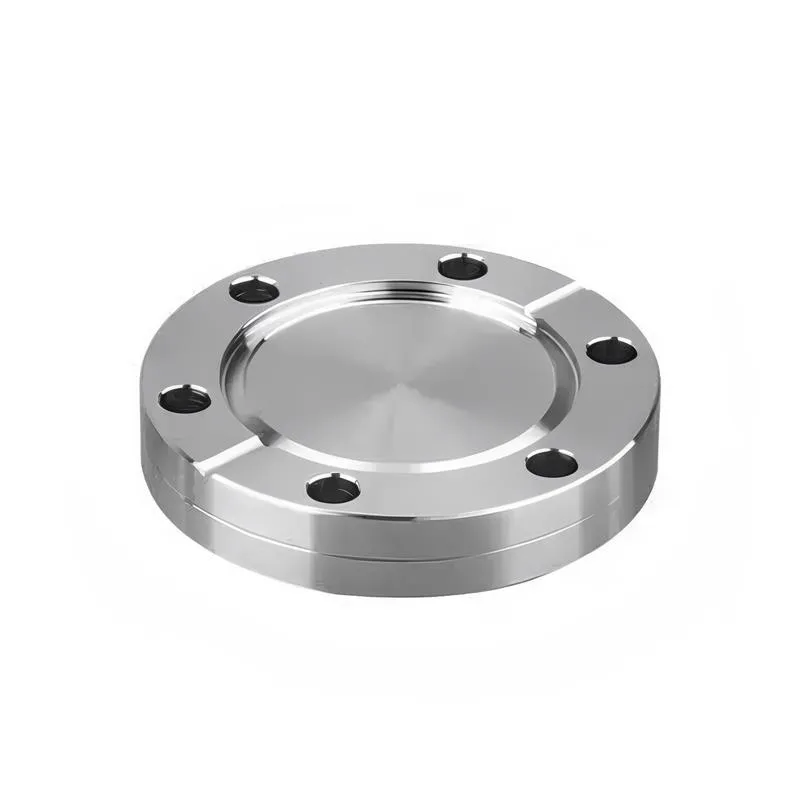
Plate Flat Welding Flange (PL), Necked Flat Welding Flange (SO), Necked Butt Welding Flange (WN), Integral Flange (IF), Socket Welding Flange (SW), Threaded Flange (Th), Butt Welding Ring Loose Flange (PJ/SE), Blind Flange (BL), Flat Welding Ring Loose Flange (PJ/PJ), and Lined Blind Flange (BL(s)).
2. **According to Petrochemical (SH) Industry Standards:** Flanges are classified as follows:
Threaded Flange (PL), Butt Welding Flange (WN), Flat Welding Flange (SO), Socket Welding Flange (SW), Loose Flange (LJ), and Blind Flange (no specific designation).
3. **According to Machinery (JB) Industry Standards:** Flanges are classified as follows:
Integral Flange, Butt Welding Flange, Plate Flat Welding Flange, Butt Welding Ring Plate Loose Flange, Flat Welding Ring Plate Loose Flange, Lap Joint Ring Plate Loose Flange, and Blind Flange.
4. **According to Connection Method/Type:** Flanges are classified as follows:
Plate Flat Welding Flange, Necked Flat Welding Flange, Necked Butt Welding Flange, Socket Welding Flange, Threaded Flange, Blind Flange, Necked Butt Welding Ring Loose Flange, Flat Welding Ring Loose Flange, Ring-Type Joint (RTJ) Flange and Blind Flange, Large-Diameter Plate Flange, Large-Diameter High-Neck Flange, Figure-8 Blind Plate, Butt Welding Ring Loose Flange, etc.
5. **According to the Component Being Connected:** Flanges can be classified into Vessel Flanges and Pipe Flanges.
6. **According to Structural Type:** Flanges include Integral Flanges, Threaded Flanges, Flat Welding Flanges, Butt Welding Flanges, Lap Joint (Loose/Swivel) Flanges, and Blind Flanges.
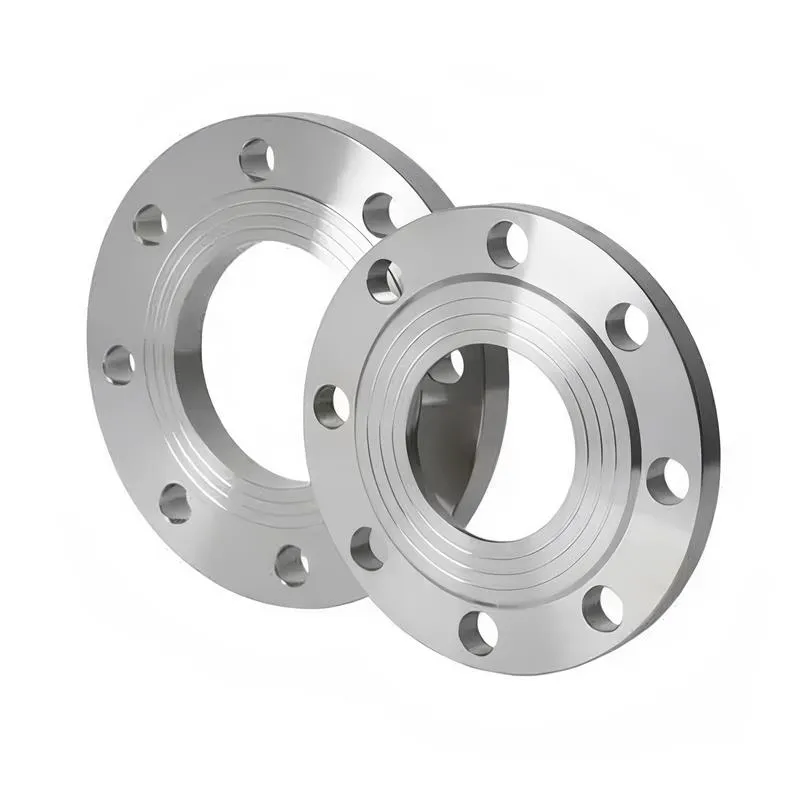
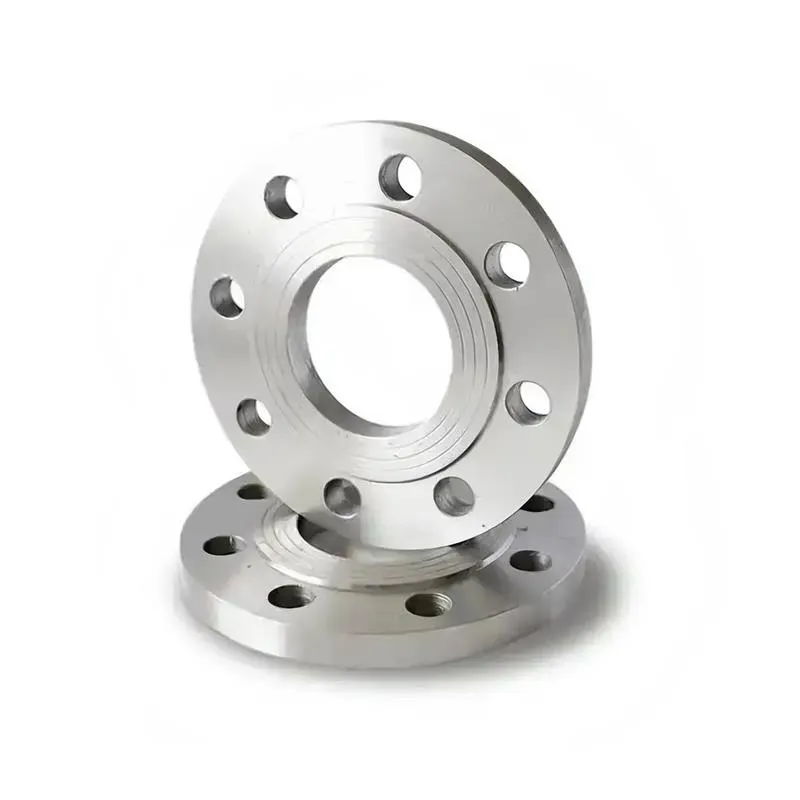
A flange—also referred to as a flange plate or rim—is a component used to connect shafts to one another, or, more commonly, to join the ends of pipes. Flanges are also utilized at the inlet and outlet ports of equipment to facilitate connections between two devices—for instance, the flange on a speed reducer. A "flange connection" or "flanged joint" refers to a detachable joint assembly comprising three interconnected elements—a flange, a gasket, and bolts—that together form a sealed structural unit. In the context of piping systems, a "pipe flange" specifically denotes a flange used for plumbing within the installation; when applied to equipment, it refers to the inlet or outlet flange of that specific device. Flanges feature a series of holes through which bolts are inserted to securely fasten the two flanges together, while a gasket placed between the flanges ensures a leak-proof seal. Flanges are broadly categorized into three types: threaded (screw-in) flanges, welded flanges, and clamp-type flanges. Flanges are invariably used in pairs; threaded flanges are suitable for low-pressure piping applications, whereas welded flanges are required for systems operating at pressures exceeding 4 kilograms per square centimeter. A sealing gasket is inserted between the two flange plates, which are then firmly secured using bolts. The thickness of a flange—as well as the specifications of the bolts used to fasten it—vary depending on the specific pressure rating required for the application. When connecting equipment such as water pumps or valves to piping systems, the corresponding connection points on these devices are often manufactured in the shape of a matching flange; this method of attachment is also referred to as a "flange connection." Generally, any connecting component that utilizes bolts to join and seal the perimeters of two flat surfaces—such as the joints in ventilation ducts—is termed a "flange"; such components may collectively be classified as "flange-type parts." However, since such a connection often constitutes merely a *portion* of a larger device—for instance, the interface between a flange and a water pump—it would be inappropriate to classify the entire water pump itself as a "flange-type part." Conversely, smaller components—such as valves—that feature such flanged interfaces may indeed be appropriately categorized as "flange-type parts."
-:-
For detailed product information, please contact sales.
-:
Meehanite GE-30 Flake Graphite Cast Iron Flange Product Information
-:-
For detailed product information, please contact sales.
-:
Meehanite GE-30 Flake Graphite Cast Iron Flange Synonyms
-:-
For detailed product information, please contact sales.
-:
Meehanite GE-30 Flake Graphite Cast Iron Product Information
-:-
For detailed product information, please contact sales.
-:
# **Meehanite® GE-30 Flake Graphite Cast Iron**
## **Product Overview**
**Meehanite GE-30** is a premium **high-machinability gray cast iron** produced under the stringent **Meehanite quality control system**, specifically engineered for applications requiring **exceptional machinability and superior surface finish quality** combined with good vibration damping and dimensional stability. The "GE" designation signifies **General Engineering** grade, while "30" indicates the minimum **tensile strength of 30 ksi (207 MPa)**.
This specialized material represents the optimal balance between machinability, cost-effectiveness, and functional performance in the gray iron family. Through the Meehanite controlled process, GE-30 develops a microstructure with favorable graphite morphology and matrix composition specifically tailored for high-volume machining operations where tool life, production speed, and surface quality are paramount.
---
## **1. International Standards & Specifications**
| **Standard System** | **Designation** | **Equivalent/Reference** | **Key Characteristics** |
|---------------------|-----------------|--------------------------|------------------------|
| **Meehanite System** | **Type GE-30** | Proprietary classification | Premium machinability grade |
| **ASTM International** | **A48 Class 30B** (Special) | Primary US equivalent | Tensile: 30 ksi min (207 MPa) |
| **ISO Standard** | **ISO 185 Grade 200** | International specification | Brinell hardness ~180-220 HB |
| **DIN Standard** | **GG-20** (Special Quality) | German standard | Medium-strength gray iron |
| **Japanese Standards** | **JIS G5501 FC200** | Japanese industrial standard | Low-to-medium strength grade |
| **SAE Automotive** | **J431 G3000** | Automotive standard | Similar automotive grade |
| **Common Names** | Free-Machining Gray Iron, High Production Grade, Machine Shop Gray Iron | Industry terminology | |
**Note:** Meehanite GE-30 represents a specialized machinability-optimized grade that provides superior cutting characteristics compared to conventional gray irons while maintaining adequate mechanical properties for general engineering applications.
---
## **2. Chemical Composition**
The chemistry of GE-30 is carefully balanced to promote optimal machining characteristics while maintaining sufficient strength and castability.
| **Element** | **Typical Range (% wt.)** | **Metallurgical Function** | **Machinability Enhancement** |
|-------------|---------------------------|---------------------------|------------------------------|
| **Carbon (C)** | 3.5 - 3.8 | Graphite former | Higher carbon increases graphite volume |
| **Silicon (Si)** | 2.2 - 2.7 | Graphitizer | Promotes larger graphite flakes |
| **Manganese (Mn)** | 0.5 - 0.8 | Sulfur control | Balanced for chip formation |
| **Phosphorus (P)** | 0.08 - 0.20 | Fluidity enhancer | Steadite formation aids chip breakage |
| **Sulfur (S)** | 0.08 - 0.14 | Chip breaker promotion | Controlled for optimal chip formation |
| **Chromium (Cr)** | ≤ 0.10 (max) | Minimized | Avoids hard carbide formation |
| **Molybdenum (Mo)** | ≤ 0.08 (max) | Minimized | Prevents work hardening tendency |
| **Lead (Pb)** | 0.05 - 0.15 (Optional) | Machinability enhancer | Promotes chip breaking (when specified) |
| **Tellurium (Te)** | Trace (Optional) | Chip control | Improves chip formation (when specified) |
| **Carbon Equivalent** | 4.3 - 4.6 | Machinability indicator | Higher CE promotes machinability |
| **Inoculants** | Specifically tailored | Graphite control | Promotes Type A graphite for machining |
**Microstructural Characteristics (Meehanite Controlled):**
- **Graphite Structure:** **Predominantly Type A**, Size 2-3 (large, well-formed flakes)
- **Graphite Distribution:** Uniform with good spacing
- **Matrix Structure:** **50-70% pearlite** with significant ferrite content
- **Carbide Content:** < 0.5% (minimized for tool life)
- **Phosphide Eutectic (Steadite):** 3-8% (promotes chip breaking)
- **Graphite Volume Fraction:** 12-15% (high for lubrication)
- **Flake Characteristics:** Large, well-dispersed flakes act as chip breakers
- **Unique Feature:** Optimized microstructure for minimal cutting forces and maximum tool life
---
## **3. Mechanical Properties**
### **Minimum Guaranteed Properties:**
- **Tensile Strength:** 30,000 psi minimum (207 MPa)
- **Brinell Hardness:** 180 - 220 HB
- **Modulus of Elasticity:** 12 - 14 × 10⁶ psi (83 - 97 GPa)
### **Detailed Property Profile:**
| **Property** | **Minimum** | **Typical** | **Maximum** | **Test Standard** |
|--------------|-------------|-------------|-------------|------------------|
| **Tensile Strength** | 30,000 psi (207 MPa) | 33,000 psi (228 MPa) | 36,000 psi (248 MPa) | ASTM A48 |
| **Compressive Strength** | 110,000 psi (758 MPa) | 120,000 psi (827 MPa) | 130,000 psi (896 MPa) | ASTM E9 |
| **Shear Strength** | 26,000 psi (179 MPa) | 28,000 psi (193 MPa) | 30,000 psi (207 MPa) | - |
| **Hardness (Brinell)** | 180 HB | 200 HB | 220 HB | ASTM E10 |
| **Elastic Modulus** | 12 × 10⁶ psi (83 GPa) | 13 × 10⁶ psi (90 GPa) | 14 × 10⁶ psi (97 GPa) | - |
| **Fatigue Strength** | 14,000 psi (97 MPa) | 16,000 psi (110 MPa) | 18,000 psi (124 MPa) | Rotating bending, 10⁷ cycles |
| **Transverse Strength** | Good | Very Good | Excellent | Foundry test bars |
### **Machinability Properties (Key Differentiator):**
| **Machinability Parameter** | **Performance Rating** | **Comparison to 1212 Steel** | **Application Impact** |
|---------------------------|------------------------|------------------------------|------------------------|
| **Relative Machinability** | **110-130%** | **Superior** | Higher production rates |
| **Tool Life** | **Excellent (5/5)** | 3-5× longer | Reduced tooling costs |
| **Surface Finish** | **Excellent (5/5)** | Superior | Reduced finishing operations |
| **Chip Control** | **Excellent (5/5)** | Superior | Improved safety and cleanup |
| **Cutting Forces** | **Low** | 40-50% lower | Smaller machines possible |
| **Power Consumption** | **Low** | 50-60% lower | Energy cost savings |
---
## **4. Physical Properties**
| **Property** | **Value** | **Machining Application Significance** |
|--------------|-----------|--------------------------------------|
| **Density** | 0.260 lb/in³ (7.20 g/cm³) | Standard for gray iron |
| **Thermal Conductivity** | 26-28 Btu/(ft·hr·°F) (45-48 W/m·K) | Excellent heat dissipation from cutting zone |
| **Coefficient of Thermal Expansion** | 6.2 × 10⁻⁶/°F (11.2 × 10⁻⁶/°C) | Good dimensional stability |
| **Specific Heat** | 0.12 Btu/(lb·°F) (500 J/kg·K) | Good heat absorption |
| **Damping Capacity** | **10-15× greater than steel** | **Excellent** for vibration-free machining |
| **Thermal Diffusivity** | High | Rapid heat transfer from cutting edge |
| **Acoustic Properties** | Excellent sound absorption | Reduced machine noise |
### **Machining-Specific Properties:**
- **Work Hardening Tendency:** Very low
- **Built-up Edge Formation:** Minimal
- **Chip Welding Tendency:** Low
- **Cutting Temperature:** Lower than most materials
- **Dimensional Stability:** Good during and after machining
---
## **5. Manufacturing & Processing Characteristics**
### **Casting Characteristics:**
- **Fluidity:** Excellent - suitable for complex, thin-section castings
- **Shrinkage:** Low - minimal risering requirements
- **Pattern Yield:** High - good dimensional accuracy
- **Machinability:** **Exceptional** (primary advantage)
### **Machinability Data by Operation:**
| **Operation** | **Cutting Speed** | **Feed Rate** | **Depth of Cut** | **Tool Life Expectancy** |
|---------------|-------------------|---------------|------------------|--------------------------|
| **Turning** | 600-1000 SFPM | 0.015-0.030 IPR | 0.250" maximum | 4-6× vs. steel |
| **Drilling** | 200-400 SFPM | 0.008-0.015 IPR | Full diameter | 3-5× vs. steel |
| **Milling** | 500-800 SFPM | 0.004-0.010 IPT | 0.150" maximum | 3-4× vs. steel |
| **Tapping** | 40-80 SFPM | N/A | N/A | 5-8× vs. steel |
| **Broaching** | 20-40 FPM | 0.003-0.006 IPT | Full depth | Excellent |
| **Sawing** | High | Normal | Full depth | Good blade life |
### **Recommended Tooling:**
- **Turning:** C2 carbide, positive rake geometry
- **Drilling:** High-speed steel, standard point
- **Milling:** Carbide or HSS with chip breakers
- **Tapping:** Spiral point for through holes
- **Threading:** Carbide inserts with sharp edges
### **Heat Treatment:**
- **Stress Relieving:** 900-1000°F (480-540°C) - optional for precision parts
- **Annealing:** Generally not required
- **Normalizing:** Rarely used
- **Surface Treatments:** Can be applied as needed
---
## **6. Quality Assurance (Meehanite System)**
### **Special Controls for GE-30:**
1. **Machinability Optimization:** Specific microstructure targets
2. **Hardness Control:** Tight range for consistent machining
3. **Graphite Structure:** Ensured Type A predominance
4. **Chip Control:** Microstructure optimized for chip formation
### **Testing Regimen:**
- **Mechanical Testing:** Standard tensile and hardness tests
- **Machinability Testing:** Optional tool life and surface finish tests
- **Microstructural Analysis:** Graphite and matrix evaluation
- **Chip Formation Analysis:** For critical applications
---
## **7. Industrial Applications**
### **Primary Machining-Intensive Applications:**
| **Application Area** | **Specific Components** | **Machining Requirements** | **Why GE-30?** |
|---------------------|-------------------------|---------------------------|----------------|
| **High-Volume Production** | Automotive brackets, fittings, housings | Fast cycle times, long tool life | Maximum production efficiency |
| **Complex Machined Parts** | Valve bodies, pump housings, manifolds | Multiple operations, tight tolerances | Consistent performance across operations |
| **Prototype Development** | Experimental components, one-off parts | Easy machining, good surface finish | Reduced development time and cost |
| **Educational/Model Making** | Demonstration parts, training components | Easy to machine with basic equipment | Forgiving material for learners |
| **Fixtures & Tooling** | Jigs, fixtures, checking fixtures | Precision machining, stability | Cost-effective tooling material |
| **Electrical Enclosures** | Boxes, covers, bases | Good appearance, flat surfaces | Excellent surface finish possible |
### **Specific Application Examples:**
**High-Volume Automotive Brackets:**
- **Requirements:** Fast machining, consistent quality, low cost
- **GE-30 Advantages:** Maximum tool life, high production rates
- **Typical Operations:** Drilling, tapping, milling, sawing
- **Production Rates:** Often 2-3× faster than steel alternatives
**Complex Hydraulic Manifolds:**
- **Requirements:** Multiple intersecting holes, good surface finish
- **GE-30 Advantages:** Easy drilling of deep holes, good chip evacuation
- **Machining Challenges:** Cross-hole intersections, thread quality
- **Finishing:** Often requires minimal deburring
**Machine Tool Fixtures:**
- **Requirements:** Precision flatness, stability, wear resistance
- **GE-30 Advantages:** Easy to machine to precise dimensions
- **Surface Treatment:** Often left as-machined or lightly coated
- **Accuracy:** Can maintain precision over time
**Prototype Components:**
- **Requirements:** Easy machining, quick turnaround
- **GE-30 Advantages:** Can be machined with basic equipment
- **Design Flexibility:** Easy to modify during development
- **Cost:** Low material and machining cost
---
## **8. Comparative Performance**
### **Machinability Comparison:**
| **Material** | **Relative Machinability** | **Tool Life** | **Surface Finish** | **Chip Control** |
|--------------|---------------------------|---------------|-------------------|------------------|
| **Meehanite GE-30** | **Excellent (5/5)** | **Excellent (5/5)** | **Excellent (5/5)** | **Excellent (5/5)** |
| **Standard Gray Iron** | Very Good (4/5) | Very Good (4/5) | Very Good (4/5) | Very Good (4/5) |
| **1212 Steel** | Good (3/5) | Fair (2/5) | Good (3/5) | Fair (2/5) |
| **6061 Aluminum** | Excellent (5/5) | Excellent (5/5) | Excellent (5/5) | Good (3/5) |
| **Brass C360** | Excellent (5/5) | Excellent (5/5) | Excellent (5/5) | Good (3/5) |
### **Economic Advantages:**
1. **Tooling Cost Reduction:** 60-80% lower than machining steel
2. **Production Rate Increase:** 50-100% faster than steel
3. **Energy Cost Reduction:** 40-60% lower power consumption
4. **Labor Efficiency:** Reduced operator attention required
5. **Scrap Reduction:** Fewer rejected parts due to machining issues
---
## **9. Design Guidelines**
### **Optimal Design Parameters:**
- **Minimum Section:** 0.15" (3.8 mm) for sound castings
- **Maximum Sound Section:** 1.5" (38 mm) without property issues
- **Machining Allowances:** Standard 1/8" per side typically adequate
- **Fillet Radii:** Minimum 0.03" (0.8 mm) on internal corners
- **Draft Angles:** 1-2° sufficient for most patterns
### **Design for Machinability:**
1. **Hole Placement:** Allow for standard drill sizes where possible
2. **Corner Radii:** Generous radii for end mill access
3. **Wall Uniformity:** Consistent thickness for stable machining
4. **Access Considerations:** Ensure tool clearance for all features
### **Limitations and Constraints:**
- **Strength Limitation:** Not for highly stressed applications
- **Impact Resistance:** Low - typical of gray iron
- **Wear Resistance:** Moderate - not for severe wear applications
- **Temperature Limit:** 750°F (400°C) maximum continuous
---
## **10. Economic & Manufacturing Considerations**
### **Cost Analysis:**
| **Cost Factor** | **GE-30 Advantage** | **Typical Savings** |
|-----------------|---------------------|---------------------|
| **Tooling Cost** | Excellent | 60-80% vs. steel |
| **Machine Time** | Excellent | 40-60% reduction |
| **Energy Cost** | Excellent | 50-70% reduction |
| **Labor Cost** | Good | 20-40% reduction |
| **Scrap Rate** | Good | 30-50% reduction |
| **Total Cost** | **Excellent** | **40-70% vs. steel** |
### **Production Planning:**
- **Batch Sizes:** Ideal for medium to high volumes
- **Lead Times:** Standard for gray iron castings
- **Quality Consistency:** Excellent through Meehanite system
- **Supply Chain:** Multiple licensed foundries available
---
## **Technical Summary**
**Meehanite GE-30 Flake Graphite Cast Iron** represents the **optimal solution for machining-intensive applications** requiring:
### **Key Performance Characteristics:**
1. **Exceptional Machinability:** Best in class for cast irons
2. **Superior Tool Life:** Dramatically reduced tooling costs
3. **Excellent Surface Finish:** Often eliminates secondary operations
4. **Good Damping Characteristics:** Vibration-free machining
5. **Cost-Effective Production:** Lowest total manufacturing cost
### **Application Selection Criteria:**
**Choose Meehanite GE-30 when:**
- Machining operations dominate manufacturing cost
- High production rates are required
- Tool life is a significant cost factor
- Good surface finish is needed without polishing
- Component operates with moderate mechanical loads
**Consider alternatives when:**
- High strength is required (>35 ksi tensile)
- Severe wear conditions are present
- Impact resistance is critical
- Very high temperatures are involved
- Corrosion resistance is primary concern
### **Economic Justification:**
- **Direct Cost Savings:** Lower machining costs vs. alternatives
- **Indirect Savings:** Reduced downtime for tool changes
- **Quality Benefits:** Consistent part quality
- **Flexibility:** Suitable for various production volumes
---
**Meehanite® is a registered trademark of Meehanite Technology Inc.** The GE-30 grade represents the pinnacle of machinability-optimized gray iron, providing manufacturing engineers with a material specifically designed for production efficiency. For applications where machining cost, production speed, and surface quality drive material selection, Meehanite GE-30 offers unbeatable value backed by rigorous quality controls and proven performance in demanding production environments.
-:-
For detailed product information, please contact sales.
-:
Meehanite GE-30 Flake Graphite Cast Iron Specification
Dimensions
Size:
Diameter 20-1000 mm Length <6617 mm
Size:We can customized as required
Standard:
Per your request or drawing
We can customized as required
Properties(Theoretical)
Chemical Composition
-:-
For detailed product information, please contact sales.
-:
Meehanite GE-30 Flake Graphite Cast Iron Properties
-:-
For detailed product information, please contact sales.
-:
Applications of Meehanite GE-30 Flake Graphite Cast Iron Flange
-:-
For detailed product information, please contact sales.
-:
Chemical Identifiers Meehanite GE-30 Flake Graphite Cast Iron Flange
-:-
For detailed product information, please contact sales.
-:
Packing of Meehanite GE-30 Flake Graphite Cast Iron Flange
-:-
For detailed product information, please contact sales.
-:
Standard Packing:
-:-
For detailed product information, please contact sales.
-:
Typical bulk packaging includes palletized plastic 5 gallon/25 kg. pails, fiber and Steel Flange drums to 1 ton super sacks in full container (FCL) or truck load (T/L) quantities. Research and sample quantities and hygroscopic, oxidizing or other air sensitive materials may be packaged under argon or vacuum. Solutions are packaged in polypropylene, plastic or glass jars up to palletized 3088 gallon liquid totes Special package is available on request. E FORUs’ is carefully handled to minimize damage during storage and transportation and to preserve the quality of our products in their original condition